Tag Archives: Football Manager

The Tantalizing Talent of Lille’s Nicolas Pépé

“It’s still early. Even with seven or eight games already played in Europe’s biggest leagues, the sample size is too small to come to concrete conclusions. A hot or cold streak can still change a club’s underlying numbers and their season projections in a meaningful way. But by this point, trends can develop. And things that have persisted over the duration of the season to date warrant further investigation. It’s possible to being to what’s likely to continue from what won’t. This is especially important when talking about young players who have performed at a higher level from last season and are perhaps in the beginning stages of ‘making the leap.'” StatsBomb

The Best Two Way Premier League Players

“Looking for players that contribute on both sides of the ball is often a difficult task. Separating out tactical responsibilities from player abilities, and individual shortcomings from schematic ones is always hard. Does a player not track back because he’s lazy or because he has instructions to remain high up the pitch? Does a midfielder keep passing it sideways because he cannot pick a forward pass or because the manager’s approach calls for conservative possession?” StatsBomb

Bundesliga Roundup: Schalke is Bad, Werder Bremen are Good and Favre is Favre

“The Bundesliga is in full swing. Bayern Munich, to nobody’s surprise, are way better than everybody else. Despite a late slip against Augsburg leading to a 1-1 draw, they remain by far the best team in Germany. Here’s what’s going on in the rest of the league.” StatsBomb

Claudio Taffarel on Alisson, Ederson and the history of Brazilian goalkeeping

“There’s a touch of Ginga about Alisson Becker: he moves with swagger, relieved from the chains that, in the past, often reduced goalkeepers to contorted figures. Liverpool’s No.1 invites opposition strikers to apply pressure before dribbling past – or even chipping the ball over – them. He displayed his great dexterity in the Reds’ 1-0 victory over Brighton, but his approach backfired against Leicester when Kelechi Iheanacho intercepted his improvised Cruyff turn and teed up Rachid Ghezzal for a simple finish.” The Set Pieces

The financial cracks in the foundations of German football

“A problem exists in German football. The latest crisis finds its origins in the foundations poured over the last dilemma nearly two decades ago. Following victory at the 1996 European Championships, Die Mannschaft imploded. Defeat in the World Cup Quarter Finals in 1998 was followed by first round elimination at the 2000 European Championships. Germany is not a nation to take such setback lightly. In the next decade, German football was revitalised at grassroots level.” Backpage Football

Atletico Madrid’s Slow Start

“Atletico Madrid are off to a curiously slow start. It’s the rare year where there might be some cracks at the top of La Liga. The departure of Cristiano Ronaldo from Real Madrid means there’s a crack of daylight at the top of the table. But, three games in, the perennial favorites, Barcelona, and Ronaldo-less Madrid are perfect and Diego Simeone’s team has already dropped five points. Is there anything amiss with Atletico, or have their opening three games been the kind of fluke that the next 35 games will make everybody forget?” StatsBomb

Tottenham’s Defensive Issues: Fixing the Right Side

“After a 3-0 victory at Old Trafford last Monday night, it would be easy to presume that Mauricio Pochettino would be overjoyed. In the moment, he made all the right noises but by the time Friday had come round and he was doing the pre-match press conference ahead of this weekend’s Watford game, his mood had soured. StatsBomb

Is Harry Kane Fine Now?

“Harry Kane scored a goal against Fulham last Saturday. It wasn’t a remarkable goal. Erik Lamela did most of the work driving through Fulham’s defense before freeing Kane on the left side of the penalty box. The Spurs striker cut back onto his right foot, shaking a defender to create enough space to finish precisely across the keeper, tucking the ball inside the right post. Fairly standard Kane type stuff. What makes that goal important is that for months Kane hasn’t been doing the standard stuff that turned him into a superstar.” StatsBomb

Unwavering in his philosophy, Marcelo Bielsa’s unique approach to the game is taking off at Leeds United


Marcelo Bielsa has never compromised his philosophy for anyone, after 30 years of coaching, and as he sits on top of a league he was told would be beyond him, why would he start now? Even after Leeds’ worst performance of the season last night at Swansea City, their 2-2 draw puts them just ahead of Middlesbrough at the top of the table on goal difference. It was a credit to their resilience, digging out a result when not playing well. But also to their ruthless manager, who hauled off key holding player Kalvin Phillips after 28 minutes, and left-winger Gjanni Alioski at the interval.” Independent (Video)

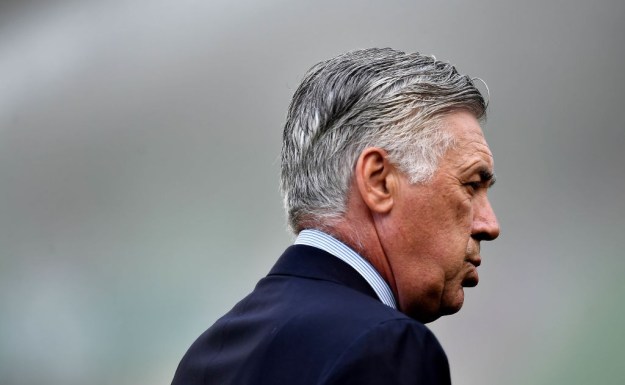
Carlo Ancelotti at Napoli: Tactical Approach & Key Players


“After three intense seasons in the Southern part of Italy, the love story between Maurizio Sarri & Napoli came to an end: despite the fact that they didn’t win any trophies (they eventually lost last season’s Serie A title race to Juventus despite racking up 91 points at the end of the campaign) under his tenure, Sarri built one of Europe’s most exciting teams to watch, using a 4-3-3 formation with a possession-based and attacking style of football. Despite losing the Tuscany-born coach this summer, the Partenopei found a rather decent substitute in the figure of Carlo Ancelotti.” Outside of the Boot

Harry Kane’s versatility for Tottenham makes him more than a pure goal scorer

“Let’s begin with a quiz question. Which club’s shirt number has been responsible for the most Premier League goals since the competition started in 1992? If you guessed Newcastle’s No. 9 shirt — they love their goal scorers at St James’ Park — you’d nearly be right. Were it not for a couple of seasons outside the top flight, Newcastle’s No. 9, with 298 goals, would be top dog. Manchester United’s No. 10 also features highly, with 297 goals, but was handicapped by being left vacant for a couple of seasons, while Arsenal’s No. 14 shirt (248) has been prolific this century but beforehand was worn by the somewhat rare goalscorer Martin Keown.” ESPN – Michael Cox (Video)

Barcelona Season Preview: Messi the Great Facilitator

“By any realistic measure Barcelona had a dominant season last year. They won their domestic league by 14 points, while losing only a single game. They also won their domestic cup. But Barcelona are a club destined to fail to live up to expectations that only they can set. And what came to define their season, more than the raging success of their domestic campaign, was a stunning Champions League quarterfinal defeat to Roma. And so it is that the team which ran up 93 points in La Liga set about correcting for a failed season.” StatsBomb

Timeless Marcelo Bielsa’s Argentina: Lost chances and broken hearts

“Over the last few weeks, Marcelo Bielsa has been in the spotlight over his new role as Leeds United’s manager. A man whose character often draws comparison to a great philosopher rather than a football persona, his radicalism and man management is worthy of any admiration in football. But long before Leeds United, 2 decades ago to be precise, El Loco was in charge of Argentina. Following their exit from the World Cup in France 98, Daniel Passarella had stepped down from his post. Prior to this, the 1978 World Cup winning captain had put together a team that was brimming with excitement.” FootyAnalyst

Tactical Analysis: France 1-0 Belgium | Set Piece Decides Game Dominated by Determined Defences

“France sealed their place in the World Cup final for just the third time in their history after a narrow victory over Belgium on Tuesday. As is common in the latter stages of knock-out competitions, the reluctance of both teams to give anything away made for a cagey game with few risks taken, inescapably creating a situation where the first goal would essentially prove decisive. With both sides desperately trying to avoid being the team that makes the crucial first mistake, it is probably unsurprising that the source of the winning goal ended up being a set piece; a detached moment of attacking freedom away from the rigid, careful flow of open play.” Outside of the Boot

Tactical Analysis: Croatia 2-1 England AET | Tenacious Croatia punish England’s complacency

“Croatia reached their first ever World Cup final after a two-goal fightback against England. Goals in the second halves of normal & extra time from Ivan Perišić and Mario Mandžukić respectively cancelled out the Three Lions‘ initial advantage courtesy of a Kieran Trippier free kick in what proved to be a very intense game.” Outside of the Boot

Tactical Analysis: Croatia 2-2 Russia | Modric and Rakitic make the difference

“You’d be forgiven if you didn’t expect the hosts Russia to reach the quarterfinals of the 2018 World Cup, yet here they were. After holding off Spain in the Round of 16, the Sbornaya met Croatia at Fisht Olympic Stadium in Sochi, who were looking to advance to the semifinals for the second time in the nation’s history. Russia had been playing in a 4-5-1 formation for all but one match this tournament. In what was considered an easy group, the defensive setup of a deep block and playing long balls and counter attacks proved successful, as they scored the second-most goals in the group stage with eight, tied with Group G runners-up England. Croatia’s tactics have been more varied on a match by match basis, with manager Zlatko Dalic often switching the formation and personnel.” Outside of the Boot

Tactical Analysis: Brazil 1-2 Belgium | Belgium Nick a Fortunate Win Through Decisive Counter-Attacks

“Brazil entered the 2018 World Cup as one of the favorites thanks to their athletic and/or defensively astute central midfielders Casemiro, Paulinho, and Fernandinho, and the fearsome left-sided trio of Marcelo, Coutinho, and Neymar. Understanding the threat the latter threesome posed, Belgium manager Roberto Martínez instructed his side to overload the right section of their midfield. This ploy forced the three tricksters to play through clogged spaces or switch play to the under-supported Willian. Eventually, the difficulty of building these types of attacks led to losses of possession that Belgium looked to convert into dangerous counter-attacks; Hazard and Lukaku led the way in this department with their dribbling, hold-up play, and aerial duels. This strategy, along with a handy own goal, provided Belgium with a two-goal cushion – something they held onto for dear life as Tite’s second half adjustments allowed Brazil to created chance after chance in a valiant losing effort.” Outside of the Boot

Tactical Analysis: Sweden 0-2 England | Patient England seal a win over cagey Sweden

“Charles Onwuakpa writes a tactical analysis of the World Cup quarter final that ended Sweden 0-2 England. Sweden v England was certainly one of the unexpected quarter-finals at this World Cup considering both team’s performances so far at this tournament. England, who have showcased a very positive & proactive possession-based football under Gareth Southgate, finished second behind Belgium in group G and put to an end a 22-year jinx with penalty shootouts as they defeated Colombia in the Round of 16.” Outside of the Boot

World Cup 2018 Best XI: France’s Champions Lead the Top Players in Russia


“After 64 games and more drama than any World Cup in at least 20 years, there’s one piece of business left to do: Pick a team of the tournament. It’s been picked as a team that might function together rather than just the 11 best players, and to avoid the temptation of packing it with France’s champions, a limit of four players per country has been self-imposed. In a 4-3-3 formation fit for the world stage, here is our 2018 World Cup Best XI.” SI – Jonathan Wilson

World Cup 2018 goal celebrations: A statistical analysis of unbridled joy


“How would you celebrate if you scored at a World Cup? A jig by the corner flag, an emphatic sprint, jump and punch of the air, an emotional tussle with the goalnet, or just run as fast and far as you can until someone finally, gleefully leaps on you? Whether you’re a Milla, a Josimar or a Tardelli kind of guy, there are plenty of ways with which to physically revel in what, for most players, is the once-or-twice-in-a-lifetime act of scoring on the world’s biggest stage. Goal celebrations – often just as complex, slow-motion-worthy and memorable as the goals themselves – are an art form. But, just like everything else, they’re moulded by cultural trends, context and just pure momentary instinct.” Telegraph

World Cup 2018: How Gareth Southgate’s tactical immaturity cost England their shot at the final


“For all the celebration of this new-look England side, Wednesday night’s 2-1 semi-final defeat by Croatia was characterised by an old failing: a refusal to adjust tactics to nullify the strength of the opposition and, more specifically, an insistence upon leaving two men upfront while being overrun in midfield. England started excellently, but their tactical inflexibility cost them a place in Sunday’s final. Gareth Southgate’s highly unusual 3-3-2-2 formation is essentially defined by two major features, which both contributed to England’s impressive first half performance.” Independent – Michael Cox

World Cup 2018: How France exposed Nacer Chadli and turned defence into attack to nullify Belgium’s flair


France’s 1-0 victory over Belgium wasn’t quite the match it might have been. With four of the world’s most exciting attacking talents on the pitch together, a variety of dynamic midfielders and centre-back pairings comfortable in a high defensive line, this could have been fast-paced, frantic, end-to-end. Instead, it was something different entirely, based around patience, turnovers and the odd counter-attack. It was intriguing rather than enthralling, and the first goal was always likely to be crucial. With the exception of Blaise Matuidi returning following suspension, Didier Deschamps’ starting XI is now set in stone.” Independent – Michael Cox

In Praise of Defensive Football

“A few years ago, at the beginning of a French course I was taking at Tel Aviv University, a new student entered the classroom. His face looked familiar. ‘It’s Dan Roman,’ I murmured to myself. Roman was a footballer who played for Maccabi Tel Aviv, my beloved team. In 2008, he’d set up a heroic, last-minute winning goal against Hapoel in the Tel Aviv derby. I sat with the Maccabi Ultras that game, a devoted and fanatic supporters’ organization composed of a couple hundred half-naked teenagers. The memory of the obscene gestures I’d made toward the Hapoel fans at the final whistle was still wonderfully fresh.” Popula

France’s Benchwarmers Are Worth More Than Most Starting Lineups

“France enters today’s semifinal match against neighboring Belgium as the favorite to win the 2018 World Cup. At least on paper, though, France has been the least remarkable team of the four that remain: Les Bleus have scored fewer goals than each of the other semifinalists, they’ve possessed less of the ball than two of the other semifinalists, and they’ve taken the fewest shots.” FiveThirtyEight

Semifinal questions: How do Belgium counter France’s front three? England speed or Croatia possession?

“The World Cup has reached the semifinal stage and it’s an all-European affair, with France facing Belgium on Tuesday, followed by Croatia vs. England the following day. Ahead of the final four, here is one key question that each team must answer.” ESPN – Michael Cox

Neymar Can’t Quite Copy Cruyff, Football Might Really Be Coming Home, and More Takeaways From the World Cup Quarterfinals


1. European dominance continues. When Germany won the 2014 World Cup, it was the first time any continent had produced three-straight World Cup winners. And after the elimination of Brazil and Uruguay on Friday, that streak will now extend to four. In 2002, it seemed like we might be seeing a challenge to world soccer’s established hierarchy. Senegal and the United States both made the quarterfinals, while South Korea and Turkey both advanced to the semifinals. Of course, it ended with Brazil and Germany, the two all-time great soccer-playing nations, in the final, but even that was something of a surprise, as they were ranked 11th and 10th, respectively, in the pre-tournament Elo Ratings.” The Ringer (Video)

Croatia scouting report: Luka Modric the key man but set-piece flaws abide

Set-piece frailties could play into England’s hands.  Luka Modric flagged up a weakness for Croatia without being asked. ‘We watched the [England] game today, we saw how good they are from dead-ball situations. We have to improve that element of our game.’ Freeze-frame Russia’s late equaliser from a free-kick and it is alarming just how much space Croatia gave their opponents. Seven of the 10 Croatia players in the area took up extremely deep starting positions, almost on the edge of the six-yard box. Just as significantly, none of them were ‘touch-tight’ on any of the Russian players.” Guardian

Pressing Issues at the World Cup

“One of the tactical questions heading into the World Cup was whether the modern popularity of pressing at club level would be replicated on the international stage. The best pressing teams are a meld of intelligent positioning and trigger movements, honed during hours on the training pitch, requiring intense and sustained athletic performance.” Stats Bomb

Tactical Analysis: Brazil 1-2 Belgium | Belgium Nick a Fortunate Win Through Decisive Counter-Attacks

“Brazil entered the 2018 World Cup as one of the favorites thanks to their athletic and/or defensively astute central midfielders Casemiro, Paulinho, and Fernandinho, and the fearsome left-sided trio of Marcelo, Coutinho, and Neymar. Understanding the threat the latter threesome posed, Belgium manager Roberto Martínez instructed his side to overload the right section of their midfield. This ploy forced the three tricksters to play through clogged spaces or switch play to the under-supported Willian. Eventually, the difficulty of building these types of attacks led to losses of possession that Belgium looked to convert into dangerous counter-attacks; Hazard and Lukaku led the way in this department with their dribbling, hold-up play, and aerial duels. This strategy, along with a handy own goal, provided Belgium with a two-goal cushion – something they held onto for dear life as Tite’s second half adjustments allowed Brazil to created chance after chance in a valiant losing effort.” Outside of the Boot (Video)

Eden Hazard’s World Cup brilliance could have long-term consequences

“There was a moment late in Belgium’s win over Brazil on Friday when Eden Hazard led a break. He charged into the opposition half, turned back inside and, as runners went by him, taking defenders with them, space opened up for a pass out to the left to the substitute Youri Tielemans. There was an overlap, a chance of a third goal that would have finished the game. Hazard saw it. He tried to play it. But his legs, for once, did not obey. The ball set off in the right direction but with nothing like enough pace; Marcelo intercepted. Hazard had essentially been too exhausted to pass a ball 40 yards. Like the rest of the team, he was spent.” Guardian – Jonathan Wilson

Romelu Lukaku gives Belgium clue to solving mystery of beating Brazil


“After all that there was no need for Belgium to be so coy. Roberto Martínez and his team had talked their way into this quarter-final like underdogs, twirling in deference to the extent that it seemed fair to wonder whether they might at least simulate a little swagger. But who needs to strut around when they can play some of the most dynamic, coruscating counterattacking international football in years? And who needs to parade on to the pitch when they have prepared to effect the kind of victory that might define a generation’s work? They lined up with a plan and it has taken them to within two games of a title that would make good every prediction, every breathless think-piece, every confident statement about Europe’s emerging force of the decade. Now Belgium, for all their false dawns, have at last found their level. On the eve of the game Romelu Lukaku had puffed out his cheeks and made a show of having to think very hard indeed about any possible weaknesses Brazil held.” Guardian

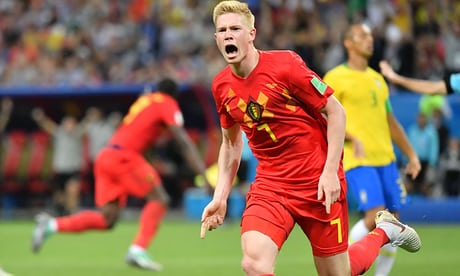
Brazil knocked out of World Cup by Kevin De Bruyne and brilliant Belgium
“In years to come, when this stadium is a crumbling white elephant, they will sit in almost empty stands, hear the wind whisper across the marsh that surrounds it and believe what they hear is the ghosts of giants. In three games, Kazan has claimed the winners of 11 World Cups. First Germany went, insipid against South Korea. Then, in a full-blooded epic, Argentina were blown away by France. And then fell the biggest of them all, Brazil, outwitted and outbattled by Belgium, who will face France in Tuesday’s semi-final. Brazil had chances. A few ricochets in the box did not fall their way.” Guardian

Brazil sent packing: Kevin De Bruyne’s magic fires up Belgium to knock Selecao out of World Cup
“Great World Cup games can be the epic comeback tale and others, like this one, are about how one team stands firm in the gale of a relentless attacking force, although quite how Belgium hung on to reach the semi-finals and send Brazil home they may never know. It was another Russia 2018 classic, featuring a Belgium side who plundered two goals against their famous opposition twice in the first 32 minutes after which the men in the yellow shirts would spend the next hour in thrilling perpetual chase. Led by their little general Philippe Coutinho, and perhaps with a little longer at their disposal, it would have been Brazil in the semi-final against France in St Petersburg on Tuesday. But instead the last South American side are out, beaten by the shrewdness of Kevin De Bruyne on the counter-attack and Marouane Fellaini and his fellow midfield sentry Axel Witsel, the two unmistakeable guardogs of this Belgium team. This was the golden generation of Belgium against a country where every generation is golden, and the great attacking talent of De Bruyne, Eden Hazard and Romelu Lukaku prevailed.” Telegraph

Thibaut Courtois’ Elastic Limbs Carry Belgium Into the World Cup Semifinals
“Belgium leaped out to a two-goal lead thanks to a Brazilian own goal and a surgical first-half counter from its front three of Eden Hazard, Romelu Lukaku, and Kevin De Bruyne. It held on to upset Brazil 2–1 thanks to its star goalkeeper, the elastic ectomorph Thibaut Courtois. Courtois stands 6-foot-5, with most of that length apparently in his neck and shins. When he stands in goal, his wingspan looks nearly infinite. Never has a real human looked more capable of stretching his limbs in the Mr. Fantastic/Elastigirl manner.” Slate
Uruguay 0 – 2 France

“France are into the semi-finals of the World Cup for the first time since 2006 after seeing off Uruguay with the help of a terrible error by goalkeeper Fernando Muslera. In terms of excitement, this quarter-final tie did not come close to Les Bleus’ win over Argentina in the last 16 but will still be remembered for the contrasting fates of the two goalkeepers, with Hugo Lloris producing a contender for save of the tournament while his opposite number made a mistake that was even more memorable.” BBC (Video)

Deschamps holds golden ticket but faces tough double for France glory
“Advantage France. On a cool summer’s day in Nizhny Novgorod, jewel of the upper Volga, Russia 2018 turned a slight but significant shade of blue. There are different ways of announcing yourself as the most likely winners of a World Cup. With nine days to go before the house lights come up the ideal outcome for Didier Deschamps’ France would have been a loosening of the throttle, a moment for those delicious attacking talents to click together and illuminate the late stages. There is of course a basic problem here. For that situation to arise it would be necessary for Didier Deschamps’ France to be somebody else’s France.” Guardian

If Belgium are to beat Brazil in their quarter-final, how can they do it?

“There was a spell, for the first 20 minutes or so, when it seemed Mexico might be able to trouble Brazil. Carlos Vela was getting the better of Fagner on the Brazil right and it felt that Mexico, as they had throughout the group stage, were struggling to convert decent positions into clear opportunities. But the longer the game went on, the more it became apparent that Brazil were comfortably holding Mexico at arm’s length. That first 20 minutes, though, perhaps offers Belgium the best hope there is.” Guardian – Jonathan Wilson

2018 World Cup Predictions


“The World Cup is back, and so is another edition of FiveThirtyEight’s World Cup predictions. For those of you familiar with our club soccer predictions or our 2014 World Cup forecast, much of our 2018 forecast will look familiar. We show the chance that each team will win, lose or tie every one of their matches, as well as a table that details how likely each team is to finish first or second in their group and advance to the knockout stage. This year, we’ve added a few features to our interactive graphics. We have a bracket that illustrates how likely each team is to make each knockout-round match that it can advance to, as well as its most likely opponents in those matches. …”
FiveThirtyEight
Metafilter: it’s coming to someone’s home. (Video)

Possession lost on the World Cup stage as defences learn to adapt

“No side, perhaps, is ever so much itself as when it is going out of the World Cup. When teams – or at least those with aspirations to the title – fail, they tend to fail in their own way, and become too much of themselves: self-parody is a perennial danger. And so Spain and Germany went out of the World Cup after anaemic performances in which they seemed to fetishise possession rather than it being a means to an end. That doesn’t mean juego de posicion football is over, as some of the more excitable voices on social media have claimed; it just means that two teams who played football infected by Pep Guardiola had bad tournaments. Sides who play post-Cruyffian football won the league in Spain, England and Germany, while Napoli came second in Serie A.” Guardian – Jonathan Wilson

Manager Oscar Tabarez Wields His Influence to Mold, Adapt, Embody Uruguay


“Oscar Washington Tabarez is fascinated by history. Barely a press conference goes by in which he doesn’t, in one of his typically thoughtful answers, illustrate a point with an example from a previous World Cup. You wonder how that plays in the dressing room, in the modern world of celebrity footballers who, by reputation at least, care for nothing but their next fancy car or watch. But then you see Luis Suarez sitting next to him, gazing at his manager with rapt attention. If there were any doubt before that Tabarez is the greatest figure in post-War Uruguayan football history, it has surely gone now.” SI – Jonathan Wilson

Uruguay is playing for you
“The knock came at four in morning on Sunday, April 15, 1984.  Dr. Vladimir Roslik of San Javier was informed by an officer of Uruguay’s 9th Cavalry Regiment that he was being arrested for questioning.  The next day Roslik’s wife was advised to collect her husband’s body from the Fray Bentos Hospital. Roslik, who attained his medical degree from Patrice Lumumba University in Moscow in 1969 was to be the last victim of Uruguay’s military dictatorship.” Africa is a Country

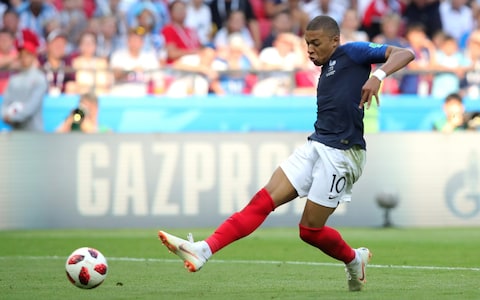
Kylian Mbappe in prime position for the Golden Ball despite just one truly good performance

“SOME feared the second round of the World Cup would prove underwhelming after an eventful group stage, but those fears now appear misplaced after a hugely entertaining four days in Russia. The second round featured nail-biting penalty shoot-outs, a major upset with Spain departing, and an all-time classic with France and Argentina’s seven-goal thriller. That game, with France prevailing, also proved crucial in the race for the Golden Ball. This round unquestionably belonged to one man: Kylian Mbappe. Fielded on the right of France’s 4-2-3-1 system against Argentina, he produced one of the most rampant, dominant performances you’ll ever witness at a World Cup.” Unibet – Michael Cox

England vs Colombia, World Cup 2018: Drop in performance raises question about Gareth Southgate’s tactical nous


“England finally ended their abysmal run in penalty shoot-outs with their second-round victory over Colombia, but a dramatic drop in performance towards the end of normal time raises a question about Gareth Southgate’s ability to influence matches tactically. Jose Pekerman spring a surprise with his team selection. Having previously used a 4-2-3-1 and experimented with a 4-3-3 in training, this was actually more of a midfield diamond. With James Rodriguez out, Juan Quintero played as the number 10, with Radamel Falcao upfront to the left, and Juan Cuadrado playing in a right-sided forward role. Quintero pushed forward to press England’s centre-backs three-against-three, but Pekerman’s approach was basically about keeping things tight in deeper positions, and guarding against England’s midfield runners.” Independent – Michael Cox

England’s unique 3-3-2-2 formation could cause Colombia headaches
“For all the optimism about Gareth Southgate’s side and their chances of winning the World Cup, it’s so often this stage — the first knockout round of a major tournament — in which England collapse. This is usually because England have appeared unprepared for the opposition’s approach, or at least too inflexible to guard against it. Germany’s counter-attacking speed wasn’t nullified in 2010. Andrea Pirlo’s deep-lying playmaking skills weren’t shut down in 2012. Iceland’s long throw proved fatal in 2016. Tactical naivety has constantly been England’s main problem.” ESPN – Michael Cox

World Cup 2018: How Blaise Matuidi laid the platform for Kylian Mbappe to put in the performance of the tournament

“Didier Deschamps appeared entirely unsure of his best system ahead of the opening game of this tournament, but recent World Cup winners have tended to suddenly find their optimum formation midway through the tournament. In 2002 Brazil clicked into gear once introducing a second holding midfielder, in 2006 Italy’s switch from 4-3-1-2 to 4-2-3-1 worked wonders, in 2010 Spain thrived once they added more directness and width to their attack, and Germany’s 2014 side changed considerably from their opening game to the final.” Independent – Michael Cox

Why Argentina’s road to World Cup failure is long, complicated and paved with greed and corruption
“… Sebastian Fest’s line in La Nación on the day of Argentina‘s World Cup 2018 elimination this weekend was so starkly poignant because it gets straight to the crux of the matter, cutting through every excuse offered and pointing straight to the institutional rot that is fundamentally to blame for Argentina’s ills. That bumpy road that ended in Kazan, Russia, in the baking summer of 2018 is our current waypoint but this path truly began all the way back in the mid-winter of Buenos Aires, Argentina, in 1978 on the day that the Albiceleste won their first-ever World Cup.” Independent

Kylian Mbappe destroys Argentina to send Lionel Messi and co home in World Cup thriller


“It is one of the gifts of being the most talented teenager footballer in the world that Kylian Mbappe makes fast defenders look slow and slow defenders look ridiculous, although in the end this was about bigger things than just a first half demolition of poor old Marcos Rojo. The 19-year-old’s savage turn of speed that won France the penalty for their first goal saw him flash before our eyes in real time while simultaneously the careers of half a dozen Argentinian defenders and midfielders were flashing before theirs. One of those moments that every old pro recognises when the legs are getting slower, the youngsters are getting quicker and the best they can hope for is to kick him before he reaches the area.” Telegraph

Welcome to Kylian Mbappé’s Coming Out Party
“It’s Kylian Mbappé’s world. We’re all just living in it—even Lionel Messi. Mbappé became the first teenager to score more than one goal in a World Cup knockout match since Pelé in 1958, as he tallied twice and drew a penalty. When the final whistle sounded, the scoreboard read 4-3 in favor of Les Bleus, and no player was more responsible for the victory than the youngest player on the field.” The Ringer (Video)

France 4 – 3 Argentina
“Kylian Mbappe announced himself on football’s biggest stage with two fine goals that gave France victory in a classic World Cup encounter with Argentina, and a place in the quarter-finals. Though much of the focus before the game was on Argentina superstar Lionel Messi, it was Mbappe who produced a brilliant performance that will linger long in the memory.” BBC (Video)

Fernando Hierro – Spain’s emergency manager with a pastoral touch


“The message arrived very late on the night Spain played their opening match against Portugal, so Miguel Linares did not see it until the following morning. When he looked at his phone, he says he could hardly believe it: it was from the national team manager, Fernando Hierro. The day before Linares had announced that, out of contract at 35, he was leaving second division Real Oviedo, where he had played for four seasons. During one of them – and not an especially successful one in 2016-17 – his manager had been Hierro, who now wrote from Russia to wish him well and offer thanks for everything he had done.” Guardian

50 Years Of World Cup Doppelgangers

“*FiveThirtyEight’s Modeled Event Soccer Similarity Index (MESSI) is a system that evaluates and compares player performances across 16 metrics. Each metric is measured on a per-match basis, and for each metric we calculate a z-score — the number of standard deviations above or below average for that World Cup. The similarity between players’ performances is based solely on the average between each of their 16 z-scores — in other words, comparisons match players who are good at similar parts of the game, but the model ignores details like a player’s age or position. Players must have played at least 30 minutes in a given World Cup to be included. Play styles are generated through k-means clustering. Only successful crosses, tackles, passes, take-ons and headers are counted, and tackles, interceptions and blocks are adjusted for the time of possession that the player’s team had during each match. Progressive passes and dribbles advance the ball at least 10 yards toward the opponent’s goal or into their box. Expected goals is the number of goals that our model thinks an average player would score based on the quality and quantity of shots taken, and non-shot expected goals is an estimate of the number of goals an average player’s non-shooting actions — passes, take-ons, interceptions, tackles and headers — would generate for his team.” FiveThirtyEight

World Cup 2018: Analysing the tactical flaws England will look to exploit against Colombia in the Round of 16


“If it remains difficult to judge England’s level of ability, after two victories against below-par opposition and a defeat with a second-string XI, something similar can be said of Colombia for very different reasons. Jose Pekerman’s side have blown hot and cold, with a fine 3-0 win over Poland sandwiched by a 2-1 defeat to Japan and a nervy 1-0 win over Senegal yesterday. The Japan loss was influenced heavily by the fact Colombia were down to ten men for almost the entire contest, and the Senegal performance was compromised by star man James Rodriguez clearly being unfit, lasting just half an hour. It seems unlikely he’ll be fit to start against England, and certainly won’t be 100% fit.” Independent – Michael Cox

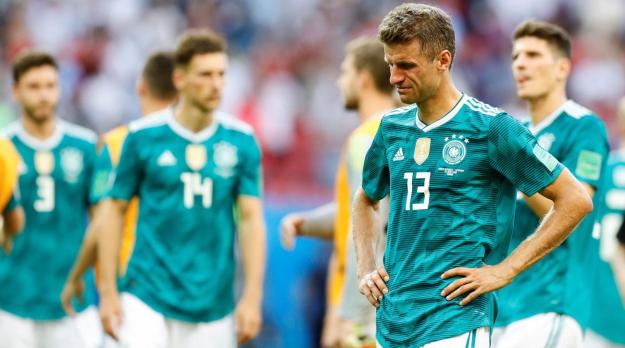
Arrogant Germany Accepts Its Shocking, Deserved World Cup Elimination


“KAZAN, Russia – Against Sweden, when Toni Kroos whipped in his late winner, the general feeling was that this was what Germany does. This was what it has been so good at over the years. Always, somehow, finding the vital goal at the final moment. Always somehow, finding a way through. This is the essence of being a Turniermannschaft–a tournament team–that no matter how badly actually plays, it always prevails.” SI – Jonathan Wilson

World Cup 2018: Germany boss Joachim Low admits side deserved to go out
“Germany manager Joachim Low says his side deserved to go out of the World Cup after they crashed out in the group stage in ‘historic’ fashion. The defending champions finished bottom of Group F after losing 2-0 to South Korea, the first time Germany have gone out in the first round of a World Cup since 1938. ‘This is something for us to reckon with,’ Low said. ‘This is historic. I am sure this will create some public uproar in Germany.’ Sweden won the group with a 3-0 win over Mexico at the same time, which meant Germany needed to win their game in Kazan.” BBC (Video)

Germany Flamed Out In Spectacular, Historic Fashion
“Say goodbye to another defending World Cup champion: Germany, the team that won it all four years ago, is officially out of the 2018 tournament. Despite ultimately only needing a win over South Korea — the fourth-worst team in the field, according to our pre-tournament soccer power index ratings — to advance to the knockout round, the Germans were upended 2-0 on Wednesday in what was easily the biggest upset of the World Cup thus far. (Going into the match, our model only gave South Korea a 5 percent probability of winning.)” FiveThirtyEight

Germany’s approach was football suicide – I’ve never seen such an experienced side so exposed
“England fans will have allowed themselves a satisfied smile as Germany made a shock World Cup exit. Some of those celebrations will not be so quiet. Opportunities to laugh at German football’s expense are rare. Such triumphalism should be accompanied with a warning. Remember what happened the  last time a German team were eliminated in the group stages of  a major tournament? It was Euro 2000. A restructure by the German football federation brought the World Cup 14 years later, as well as a few final and semi-final appearances in between. What has been clear over the course of three poor performances is that another rebuild of the German team is needed.” Telegraph – Jamie Carragher

Germany Is Out of the World Cup. Let’s All Laugh at Die Mannschaft.
“For the first time since 1954, Germany will not be exiting the World Cup’s group stage. South Korea stunned the defending champions 2–0 on Wednesday, sending Die Mannschaft to the bottom of Group F and out of the tournament for good. As a once unstoppable juggernaut heads home, the rest of the soccer world struggles to find a word to describe the joy it is feeling at Germany’s expense. While other nations ebb and flow between ‘golden generations’ and talent draughts, Germany chugs along with infuriating consistency.” Slate

‘Over and out’: media reacts to Germany’s World Cup exit
“In Germany. Niedergeschlagenheit (noun, feminine): Despondency. German football fans, who had never seen their country fall at the first hurdle of a World Cup finals before, will recognise it as they pick up their papers on Thursday morning. Their team, the holders and one of the pre-tournament favourites, finished bottom of Group F after a 2-0 defeat to South Korea on Wednesday. Bild. Germany’s most popular newspaper is ‘speechless’ as it contrasts its front page from June 2014 – after the national team inflicted a 7-1 semi-final defeat on Brazil on its way to winning the World Cup – with its Thursday edition. The headline is the same. The story is not.” Guardian

Nigeria vs Argentina: Ever Banega’s return frees Lionel Messi from creative duties to inspire victory

“Argentina required a late goal from a hugely unlikely source – the right boot of Marcos Rojo – but their approach throughout their 2-1 victory over Nigeria was at least an improvement upon past displays. How much credit manager Jorge Sampaoli can take remains questionable, however, after various reports Lionel Messi and Javier Mascherano are effectively now running the dressing room.” Independent – Michael Cox

What’s wrong with Argentina? We now value ‘balls’ more than talent
“So many things are wrong with Argentina we do not know what is wrong; so much is happening no one knows what is happening. You could start an article on the news pages with that same line but they fit on the sports pages too because these are turbulent times for our football. It was not always like this. For many years, football made up for our long political, social and economic decline.” Guardian

From Elimination to Elation: Argentina Somehow Staves Off Early World Cup Exit


“It’s probably best not even to try to make sense of it. You have Lionel Messi in your side. You bring on Sergio Aguero to play alongside Gonzalo Higuain in front of him. You have taken off Angel Di Maria. You have just brought on Cristian Pavon. None of them look like scoring. Passes are misplaced. The shape has gone. Every attempt to advance, it seems, runs into a Nigerian wall. It’s the same story as against Iceland, as against Croatia. All of the ball, no penetration. And then the goal comes. You make all your plans, you squeeze in as many gifted forwards as you can, and somehow the vital 86th-minute winner is scored by Marcos Rojo turning up with no justification whatsoever to volley in a rare accurate cross from Gabriel Mercado. With his wrong foot.” SI – Jonathan Wilson

Argentina Takes Its Bad Self to the Knockout Round
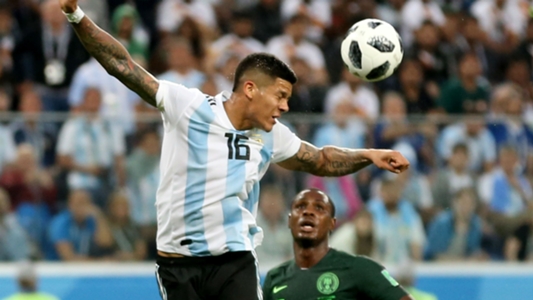
“With time running out and his team on the brink of group-stage elimination, everyone in the world knew there was only one man Argentina could count on to find the winner against Nigeria. Yes, Marcos Rojo, the versatile defender who made nine Premier League appearances for Manchester United this season. Scorer of four goals in the last four years for club and country. Perhaps the last person you might expect to save his country by scoring a late goal, other than Argentina forward and chronic international choker Gonzalo Higuain. Rojo’s claim, made in an interview after the game, that he told his teammates he was going to score is either a sign of a healthy, functioning ego or grounds for a psychiatric evaluation, even considering that one of those four goals in the last four years was the winner against Nigeria in the 2014 World Cup.” Slate

Argentina Survived the Group Stage. But How Far Can Messi Carry Them?
“On a team with Lionel Messi, Sergio Agüero, Gonzalo Higuaín, and Ángel Di María, few would have predicted that Marcos Rojo — yes, that Marcos Rojo; the one who scored just one goal in four seasons with Manchester United — would be the hero who put Argentina ahead of Nigeria and into the knockout stages.” The Ringer

Brazil, Spain, Germany, France failing to find attacking balance


Brazil – Neymar
“Football tactics are generally considered a mere necessary evil in football, discussed purely in terms of hampering individual freedom and disrupting opposition play. But tactical planning is also about attacking, about creating the right balance between different concepts to create a cohesive, harmonious but varied threat in the final third. Finding the balance in attack, combining different concepts and formulating how they come together smoothly is the most fascinating element of football strategy. An all-round attacking force offers various qualities: runs in behind, width to stretch play, movement to create gaps in the opposition, late runs from midfield, a target in the middle, a player between the lines to link play, and some degree of long-range, goal-scoring threat to ensure you don’t actually need to penetrate the defence. Limited to only three or four attacking individuals, however, coaches have a tricky balancing act. So far, none of the four favourites for World Cup 2018 — Brazil, Spain, Germany and France — have found the right balance.” ESPN – Michael Cox

The Sleepers To Watch In The World Cup Knockout Rounds

“The World Cup is not traditionally the tournament for underdogs. The trophy has been lifted by just eight countries — and five of those have won multiple times. But there’s usually enough room for a few Cinderella stories to creep into the knockout phase: Bulgaria (1994), South Korea (2002) and Turkey (2002) were unexpected semifinalists, while Cameroon (1990), Ghana (2010) and Costa Rica (2014) crashed the quarterfinals. At least one country seems to do this every four years. We see three teams that could fit the bill this summer. Before the tournament, each of them had no greater than a 3 percent chance of winning it all, according to FiveThirtyEight’s model, but each has performed well so far and could make a strong run in the knockout rounds.” FiveThirtyEight

Chaos as Poland falls to earth with a bump

“It seemed to come completely out of the blue. Poland, a side that had stormed through the Euro 2016 qualifiers, made it to the quarter finals of the main tournament, qualified again easily for the World Cup, in the top 10 in the world rankings, blessed with world class players like Robert Lewandowski, have somehow tumbled out of the World Cup with a whimper not a bang, totally devoid of any of the qualities that have been their trademark over the last four years or so. How did this disaster happen?” Rightbankwarsaw

Why do African countries hire non-African football coaches so much?

“It seemed strange when in the run-up to Afcon 2013, Nigeria’s coach Stephen Keshi forcefully criticised African football associations for their preference for white coaches. That when Zambia, until this week the great success story of African football, had Hervé Renard to thank for masterminding their unlikely triumph last year in Libreville. Yet Keshi has a point. The success of Zambia under Renard should not obscure the fact that African football administrators have always failed to appreciate and make use of its own resources and talent. This is true of football as it is of Africa’s national economies.” Africa is a Country

World Cup 2018: How Belgium Became Cool


“The only true Belgian, goes a long-running joke, is the king of the country. Riven by tensions between its French-speaking Walloons and Dutch-speaking Flemish, and with the identity of Brussels largely defined by it’s being the capital of Europe, rather than Belgium, the country’s existence as a unified nation often seems tenuous at best. But in the last decade, another national institution has come to symbolize what it means—or, at least, might mean—to be Belgian: the national soccer team, known as the Red Devils. Packed with star players well-known from their professional careers in the English Premier League (considered the world’s best), the national squad is also notably for its diversity, with many players from immigrant backgrounds. In 2014, the Belgian pop star Stromae wrote an anthem for the Red Devils and released a playful video with the coach and players. Heading into this year’s World Cup, the team embodies the contradictions, and possibilities, of an uncertain nation.” NYBooks

Belgium’s Last Stand
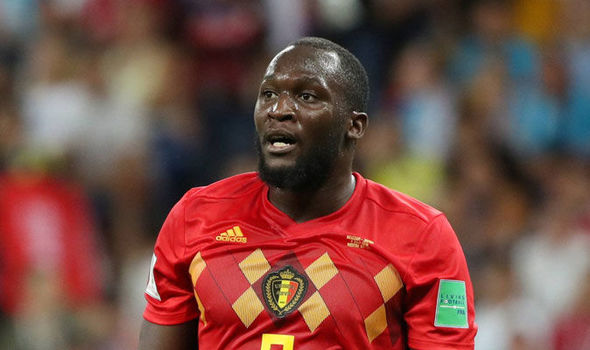
“In the span of about 30 minutes in the second half of their opener against Panama on Monday, Belgium displayed the heights of their potential, and the purest distillation of their flaws. After a first half with more squandered opportunities than most teams have in a full game, Belgium capitalized when Dries Mertens smacked a volley from the corner of the box past Jaime Penedo and into the back of the net. Just over 20 minutes later, Romelu Lukaku doubled his team’s lead, and then six minutes after that added a third goal for good measure. It was what happened between the Belgians’ opening goal and their second that was cause for concern.” The Ringer (Video)

Shambolic, frenzied, anarchic – and Argentina crisis has Messi at its heart


“It was in 1913 that Racing became the first non-Anglo side to win the Argentinian league title. For much of the century that has followed, Argentinian football has defined itself in opposition to the English, distancing itself from its British heritage. And yet, under pressure, in their frenzied desperation on Thursday, Argentina resembled nobody so much as England. This was shambolic. Too many players tried to do too much themselves. There was altogether too much running, too much frenzy, too many fouls conceded as they desperately tried to regain possession, too little thought. By the end, as Ivan Rakitic casually rolled in a sarcastic third for Croatia, Argentina were gone, any semblance of defensive structure blown to the winds.” Guardian – Jonathan Wilson (Video)

World Cup 2018: Jorge Sampaoli’s approach was an utter disaster that rendered Lionel Messi useless
“There was always a danger Argentina might flop at World Cup 2018, but it shouldn’t have been this pitiful. If Argentina were going to go down, they were going to go down fighting, with coach Jorge Sampaoli a noted advocate of aggressive pressing, attacking football and quick combination play. If those tactics exposed them defensively, it was a risk Sampaoli was willing to take. But the approach Sampaoli stumbled upon somehow provided all the drawbacks without any notable positives. Argentina didn’t press high, they didn’t attack relentlessly, and it’s difficult to recall any passing moves worth mentioning, yet they were still hopelessly open defensively, conceding space on the outside of their three-man defence readily. Only poor Croatian finishing prevented them from taking the lead earlier.” Independent – Michael Cox

Mentally and emotionally burned out, Lionel Messi crumbles under the burden of carrying Argentina at the World Cup
“By the time a humiliated Argentina emerged from the dressing room in Nizhny Novgorod, it was late – in so many ways. A stony-faced Lionel Messi at least led the way here, but this time with ample support as the entire squad followed tightly behind…and right on through the mixed zone without stopping once. Argentina were at last singing from the same hymn sheet in this World Cup by not saying anything all.” Independent

As fighters, as entertainers, as a team, this Argentina project has failed
“On 21 June 1978 Argentina’s World Cup defeat of Peru went down in history as one of the most controversial games ever. The goalfest and intelligent football that unfolded on that cold night in Rosario, as the wonderful Mario Kempes found his feet on his home turf of yesteryear, were eclipsed by allegations which kept conspiracy theorists and investigative journalists busy for years. Argentina, aware they needed to win by at least four goals to progress in their home tournament, triumphed 6-0 amid rumours that an exchange of grain between the countries had been brokered in the dressing room. They went on to lift the trophy.” Guardian (Video)

Russia Is Not This Good — Right?

“Before the 2018 World Cup kicked off last week at Luzhniki Stadium in Moscow, much had been written about why Russia was so bad at soccer. A convincing 5-0 opening match win over Saudi Arabia — Russia’s first win at the tournament since 2002 also matched its largest margin of victory at a World Cup — surely helped to allay some of those criticisms. But there was still no looking past the fact that the host nation ranked 70th in the FIFA world rankings and was looked at by bookmakers as a relative long shot to win the whole thing.” FiveThirtyEight

An Exorcism 40 Years in the Making

“It’s been 48 hours and I still can’t believe it: On Sunday, against all odds, Mexico beat Germany, reigning World Cup champion and undisputed machine of world soccer, in a stunning display of tactical brilliance, athletic prowess, and pure sporting hunger. Over the past decade, the Germans have methodically altered their approach to the game through an unprecedented development program that has radically altered the way the country plays the sport, teaching youngsters to forgo pure German strength and embrace possession and flair. The experiment reached its pinnacle four years ago in Brazil, where Germany destroyed the home team at its own game and won the tournament handily. The rest of the world could only watch in awe.” Slate

World Cup 2018: Diego Costa strikes lucky to down Iran and help Spain keep pace with Portugal

“Of course it was Diego Costa who broke the deadlock. He is a forward who bursts dreams as casually as others pop bubble-wrap, a player who, when his mood is right, gives the impression of being able to muster a goal from almost any circumstance. Half-chances, penalty box ricochets and opportunities wrestled from opposing centre-backs are his meat and drink. For 55 minutes, Spain had been held at arm’s length.” Independent – Jonathan Wilson

World Cup 2018: VAR helps tournament reach 10 penalties – so is it working?

“… The introduction of video assistant referees was one of the major issues heading into this World Cup and, as expected, it has been a near constant talking point during the first round of games. Four penalties have been given using VAR, while England and Brazil both had cause to be unhappy with the system. Like it or not, it is certainly having an impact – 10 penalties have been awarded in 17 matches. The World Cup record is 18 for an entire tournament.” BBC (Video)

Europe And South America Are Growing In Soccer Power — That Wasn’t Supposed To Happen


“If there’s been a dominant trend in the first week of the 2018 World Cup, perhaps it has been how well European nations from beyond the continent’s traditional giants have performed. Iceland, Switzerland, Serbia, Sweden, Croatia and Russia are all off to a strong start. This should be no surprise. Only two nations from outside Europe and South America have made the World Cup semifinals (the United States in the inaugural competition in 1930 and South Korea in 2002). In 20 previous World Cups, only 12 countries have reached the final — all from Europe or South America — and only eight sides have won the tournament.” FiveThirtyEight

The race for the Golden Ball is not all about Ronaldo, despite his matchday one heroics

“WORLD CUP 2018 was widely hyped as the tournament where Leo Messi might finally taste success at international level, after several disappointments in an Argentina shirt. After one complete round of the World Cup, however, it’s his long-time rival Cristiano Ronaldo who is the competition’s outstanding performer so far, after his hattrick in Portugal’s electrifying 3-3 draw with Spain. A World Cup hattrick is, in itself, a very rare occurrence. There were none in 2006, one in 2010 and two in 2014, so Ronaldo’s treble was clearly a significant achievement. It was also an unusual hattrick comprised of a penalty, a free-kick and a goal from open play.” UniBet – Michael Cox

Tunisia 1-2 England: Southgate’s men hold their nerve, stay patient and find a way to win

England defeated Tunisia 2-1 in Volgograd courtesy of good organisation in two different respects: a cohesive, unusual system in open play, and pre-planned set-piece routines. The former ensured England dominated, the latter provided the goals. Gareth Southgate has consistently deployed this 3-5-2 system since England clinched qualification for this tournament, and it’s proved difficult for opponents to cope with late midfield runs. While the three-man defence has made something of a comeback in the Premier League over the last couple of seasons, partly thanks to Antonio Conte’s impact at Chelsea, it’s generally structured as a 3-4-3 rather than 3-5-2, with two holding midfielders screening the defence, and two inside-forwards drifting inside.” Independent – Michael Cox

Tunisia 1-2 England: Southgate’s men hold their nerve, stay patient and find a way to win
“‘There are infinite routes to goal,’ the Uruguay manager Oscar Tabarez said after his side’s win over Egypt last Friday, ‘and all of them are equally valid.’ It’s just that the one England preferred to take – twice – was a Harry Kane header from a corner (much as Uruguay had opted for a Jose Gimenez header from a corner). There’s something a little odd about this bright new England, with its back three, its passing, its ace and its modernity scoring two from that most traditionally English of methods, but Gareth Southgate will not care and nor should any England fan. What was most impressive here was not so much the goals as the method.” Unibet – Jonathan Wilson