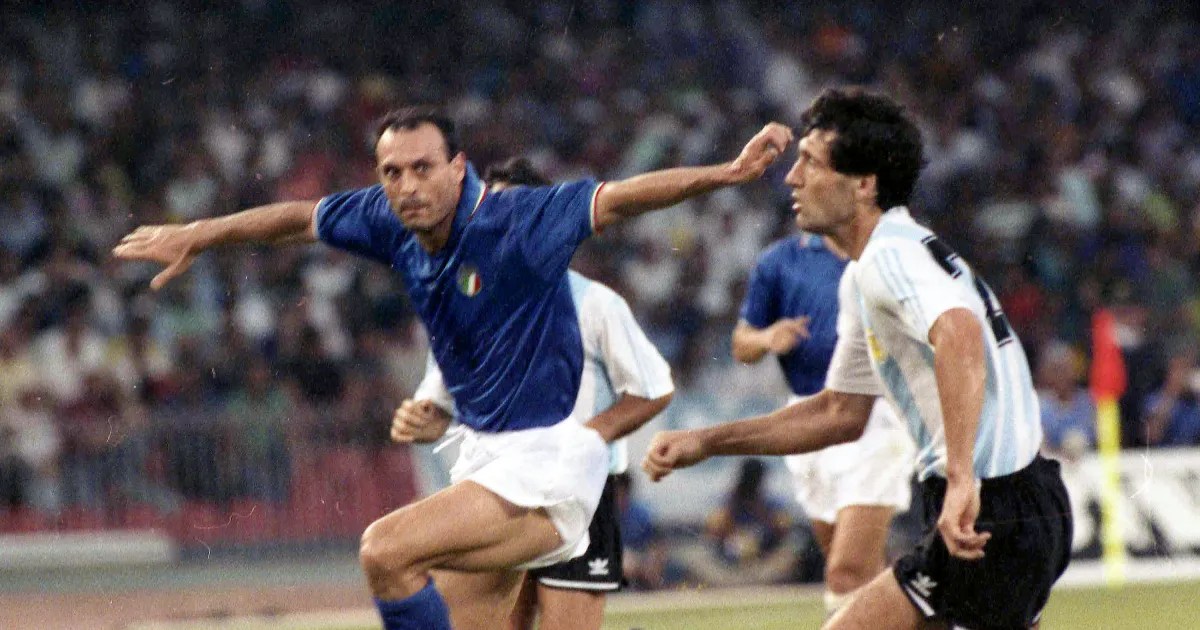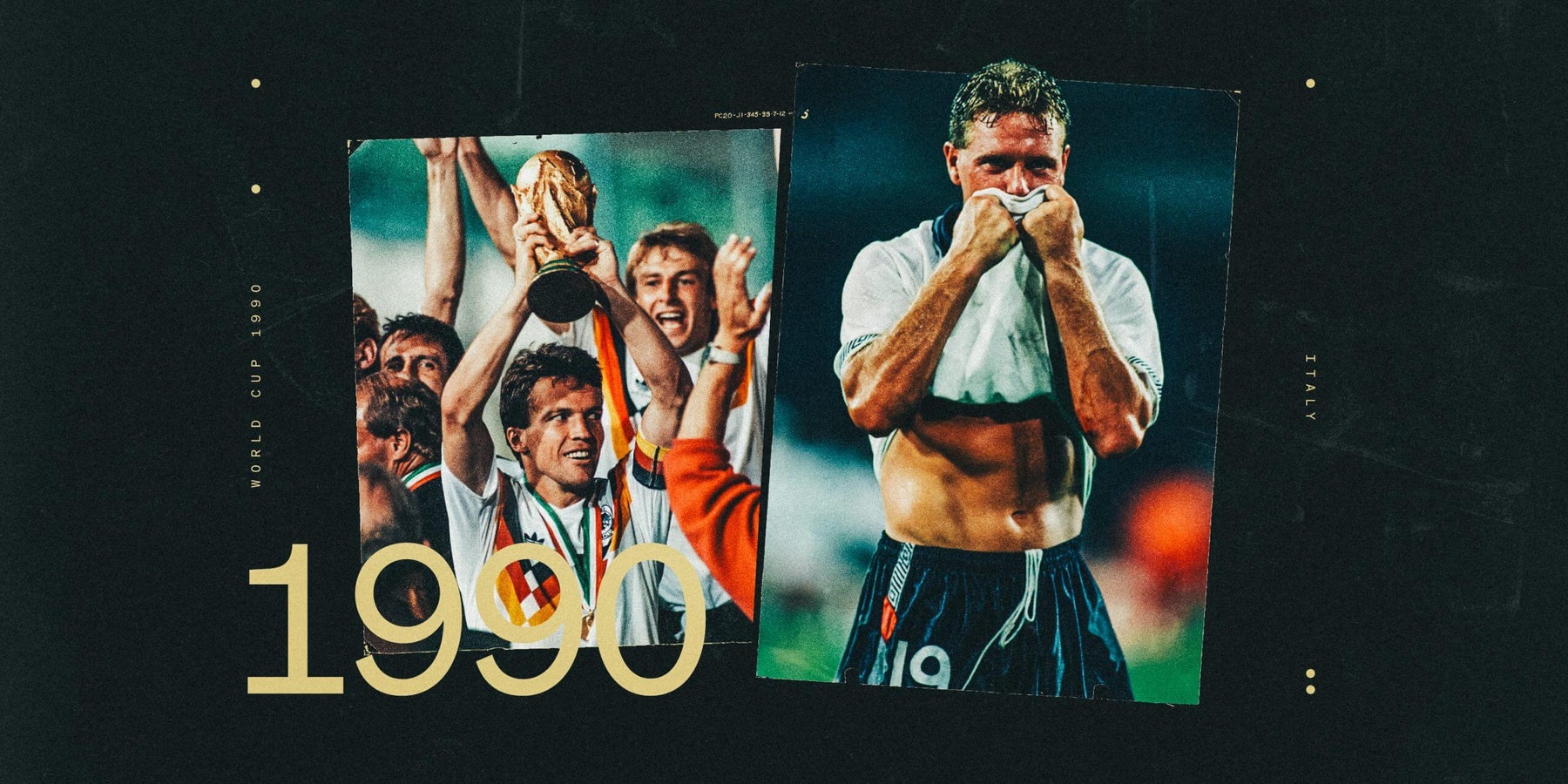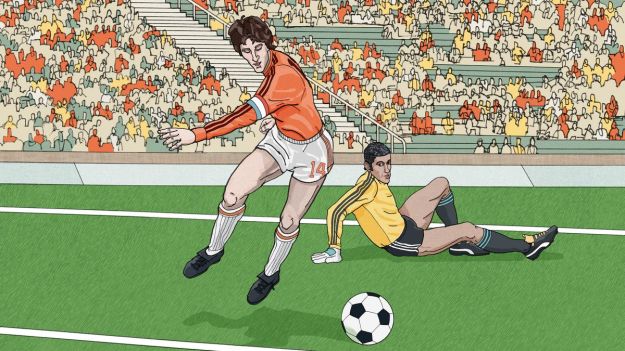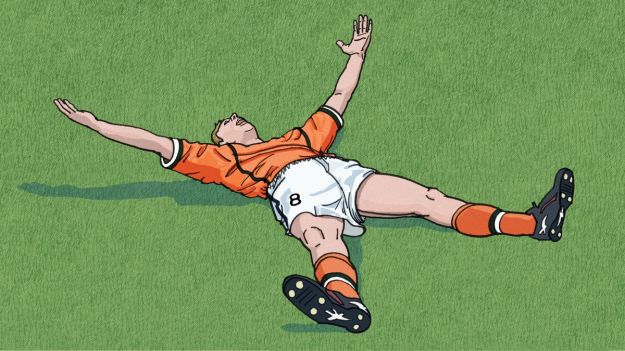
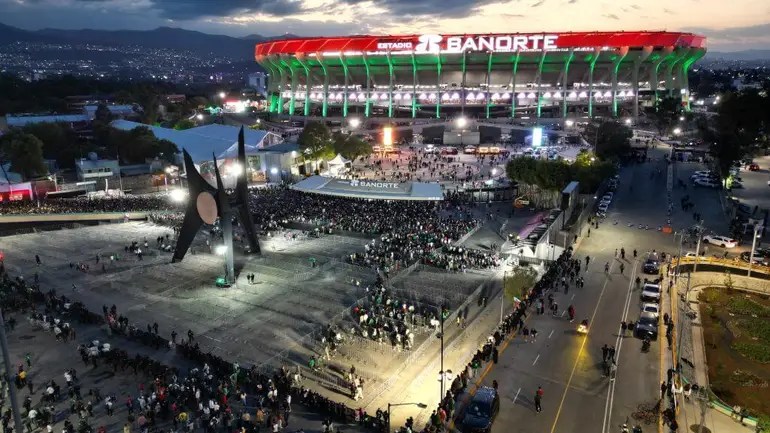
“This time, it’s West Germany in 1990. This is remembered as the most negative, defensive World Cup, supported by the lowest goals-per-game figure on record, 2.21. It was so disastrous that FIFA and IFAB felt compelled to improve the spectacle afterwards, largely by clamping down on dangerous tackles and introducing the backpass law — although not, as was floated by some, by increasing the size of the goals. West Germany won the competition in somewhat unglamorous fashion, as their key matches were dominated by penalties and opposition red cards. But in the group stage, they played some good football, and in the knockout stage, they at least attempted to, which was more than most of their opponents could claim. …”
NY Times/The Athletic – Michael Cox (Vidio)
Tag Archives: World Cup
Eight expectations about football from 25 years ago that have proven misguided
“In 2000, World Soccer magazine commemorated the new century by interviewing FIFA president Sepp Blatter. One of the questions forced him to reach for his crystal ball: ‘What will the next 100 years bring? I cannot look that far ahead,’ Blatter replied. ‘I will go as far as 25 years, however.’ So what did Blatter predict? ‘I will forecast no radical changes in that time,’ he said. Oh well. …”
NY Times/The Athletic – Michael Cox
How Argentina won the 1978 World Cup: Home-based talent, free-flowing football and peak Mario Kempes
“… Forty eight years after they were defeated in the first final over the water in Montevideo, Argentina finally won the World Cup, on home soil in Buenos Aires. This was the 11th World Cup, and now five had been won by the host nation. Argentina had been awarded the tournament 12 years beforehand, but the situation in the country had changed dramatically since then, with the government ousted by a military junta headed by General Jorge Rafael Videla. This was a period of serious violence in Argentina, with the most notable death in footballing terms being the assassination of General Omar Actis, the head of the World Cup organising committee. …”
NY Times/The Athletic (Video)
How West Germany won the 1974 World Cup: Beckenbauer as leader and tactician, and their own brand of Total Football
“… In a tournament compromised by wet weather and therefore boggy pitches, hosts West Germany were not overwhelmingly popular winners. Their 1972 European Championship-winning side had played open, expansive football, but that approach gave way to a more cautious, less spectacular approach here. A key difference was the decline of star midfielder Gunter Netzer, who had controversially left Borussia Monchengladbach for Real Madrid a year earlier, but endured a disastrous first season in La Liga, failing to score a single goal. …”
NY Times/The Athletic (Video) – Michael Cox

Booting the ball out from kick-off is a worrying trend – this rule change would curb it
“In 1991, England travelled to Poland for their final qualification match for Euro 92. It was a crucial contest: the winners would qualify for the tournament, with a draw favouring England. Considering the importance of the game, it was a surprise that England manager Graham Taylor handed debuts to two players: Queens Park Rangers winger Andy Sinton and Crystal Palace midfielder Andy Gray. The latter was given an unusual role for the game’s opening moments. With David Platt and Gary Lineker taking the kick-off, Gray was instructed to stand just behind them and launch a diagonal ball downfield towards the corner flag, and out for a Poland throw-in. …”
NY Times/The Athletic – Michael Cox
How Brazil won the 1970 World Cup: Pele’s return, a fearsome front five – but ‘an incompetent goalkeeper’

“… Mexico was a controversial choice as World Cup host in 1970, primarily because it was widely expected that the heat and altitude would result in poor football. Instead, Brazil turned on the style to become, almost without question, the most celebrated World Cup-winning side in history. It helped that the World Cup was now televised around the world — and for the first time, in colour. … Brazil triumphed amid a period of political turbulence back home, with a military dictatorship in place since 1964. ‘We had a fantastic side and everyone expected us to win, which gave me the shakes,’ Pele later said. ‘I was very nervous and under a lot of pressure. Maybe people have forgotten, but the political situation in Brazil was not good and we felt that we simply had to win the title. Thank God we were able to do it.’ And they did it in style. …”
NY Times/The Athletic
Introducing The Soccer 100: A celebration of the greatest players in the sport’s history

“… In the summer of 1981, six years old and bitten hard by the football bug, I used my pocket money to buy a book from a rummage sale. I never knew the book’s title. By the time I got my hands on it, it had lost its cover. But turning its dog-eared pages, causing its spine to creak horribly, felt like entering another world. Besides a chronicle of every World Cup from 1930 to 1974, it contained a list of the greatest players of all time. It was dominated by British players, some of them familiar, but sprinkled among them were exotic names I had never seen before, legendary players from far-off lands. …”
NY Times/The Athletic

Johan Cruyff
BBC debate is nostalgic reminder of English crisis never being far away
Graham Taylor argues with fourth official Markus Merk during England’s World Cup-qualifying defeat to Netherlands in October 1993. The match took place the night after the BBC’s On The Line was broadcast.
“Nostalgia for the 1990s remains heavy. Just look at all those stadiums and parks the Gallaghers are filling. Football from the late 20th century has a similar cachet. No video assistant referees, no sportswashing; just good, hard, honest, simple fare, when men were men and pressing was what you did to your Burton suit. If the past is a foreign country then a recent BBC Archive release is a primary source of a time when the continental import remained exotic and not the dominant division of labour. ‘Is English Football In Crisis?’ asks an edition of On The Line in October 1993, broadcast the night before Graham Taylor’s England played a key World Cup qualifier in Rotterdam. …”
Guardian (Video)
How Brazil won the 1962 World Cup: With Garrincha coming to the fore after Pele injury
“World Cup 1962, hosted in Chile, is up there with World Cup 1938 as the least fabled editions of the tournament. There’s a common link between them: they’re the only two World Cups where the defending champion has triumphed. And this one came as little surprise — it was almost impossible to find a tournament preview that didn’t imply that Brazil were strong favourites. …”
NY Times/The Athletic – Michael Cox
The history of the sash, a football shirt status symbol

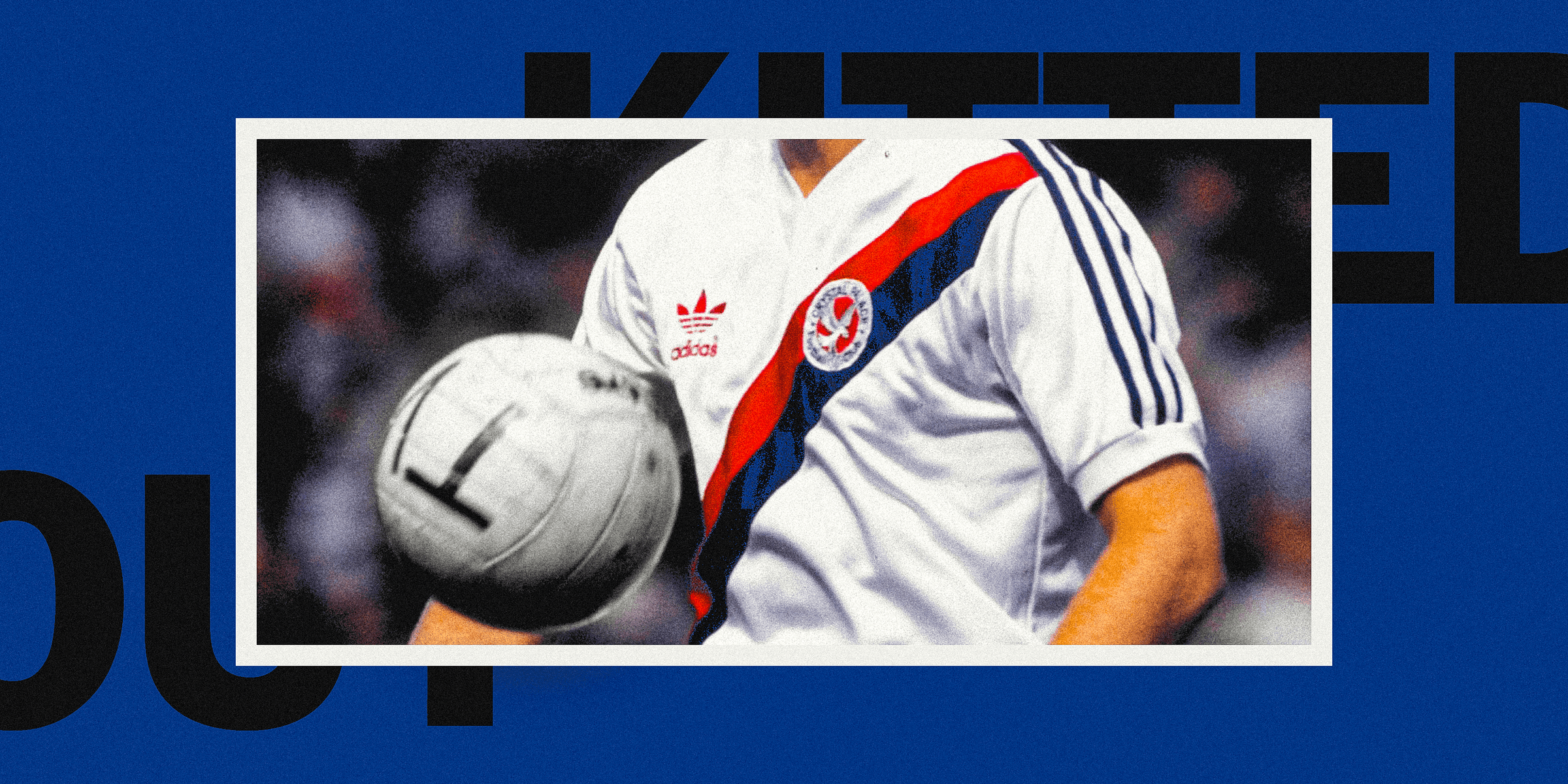
“Whether it is the red stripe of Peru, River Plate or Rayo Vallecano, the diagonal sash — in all its forms and colourways — is fundamental to football kit heritage. But where does it come from and who started the trend? That depends on who you ask. In their early days, football shirts were completely plain, so to distinguish two opposing teams, it is believed that a sash band was first introduced as a tool for players to differentiate between team-mates and the opposition. …”
NY Times/The Athletic
A History of Football Kit Design in England and Scotland

Peru, pictured at the 1936 Olympics, are classic purveyors of sashed shirts
How West Germany won the 1954 World Cup: Herberger tactics, injured Puskas, group stage mind games?

“…There are two clear examples in World Cup history of the most exciting team at the tournament, and the neutral’s favourites, being foiled by West Germany in the final. The most obvious example is the Netherlands in 1974, but two decades beforehand, Hungary experienced almost exactly the same thing. If anything, it was even more egregious because this legendary Hungary side had previously destroyed West Germany 8-3 in the group stage — a huge victory, even by the standards of a World Cup that featured a record goals-per-game tally of 5.38. At that point, there seemed little chance anyone would stop the Olympic champions Hungary, let alone the Germans. …”
NY Times/The Athletic – Michael Cox

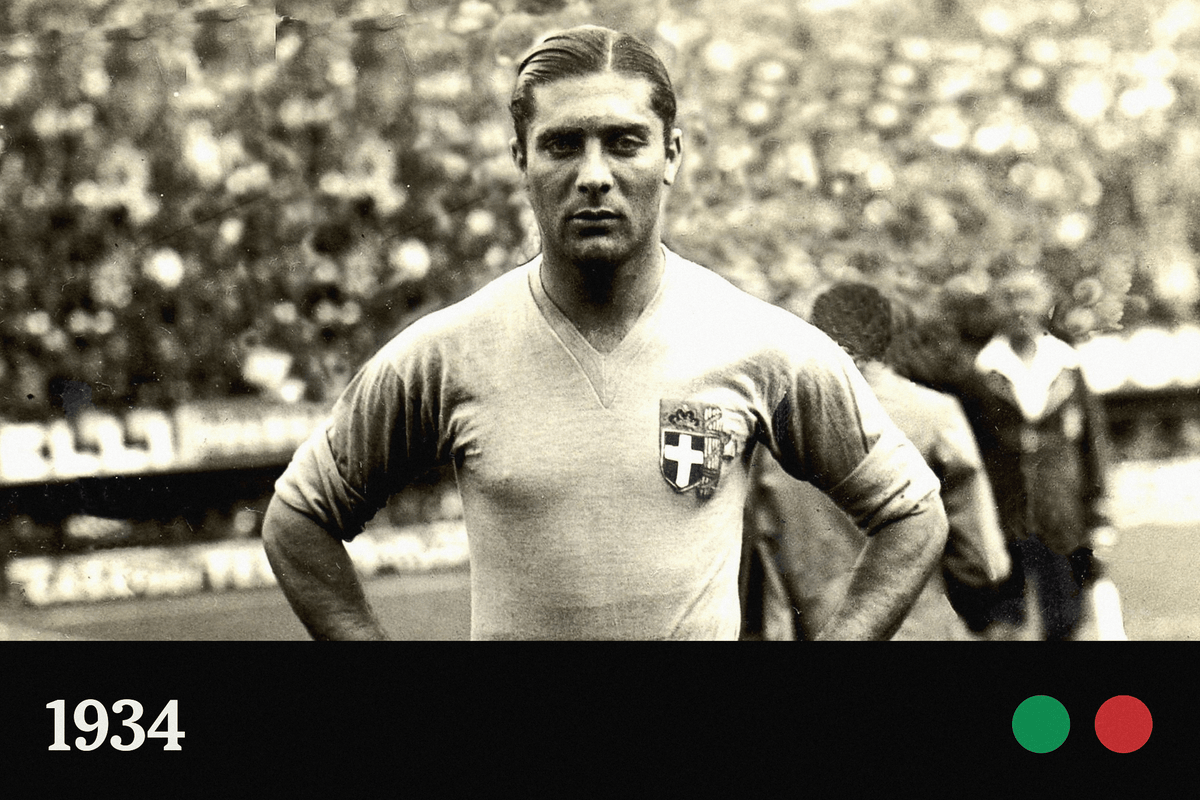
How Italy won the 1934 World Cup: A solid defence, the class of Giuseppe Meazza and help from the officials

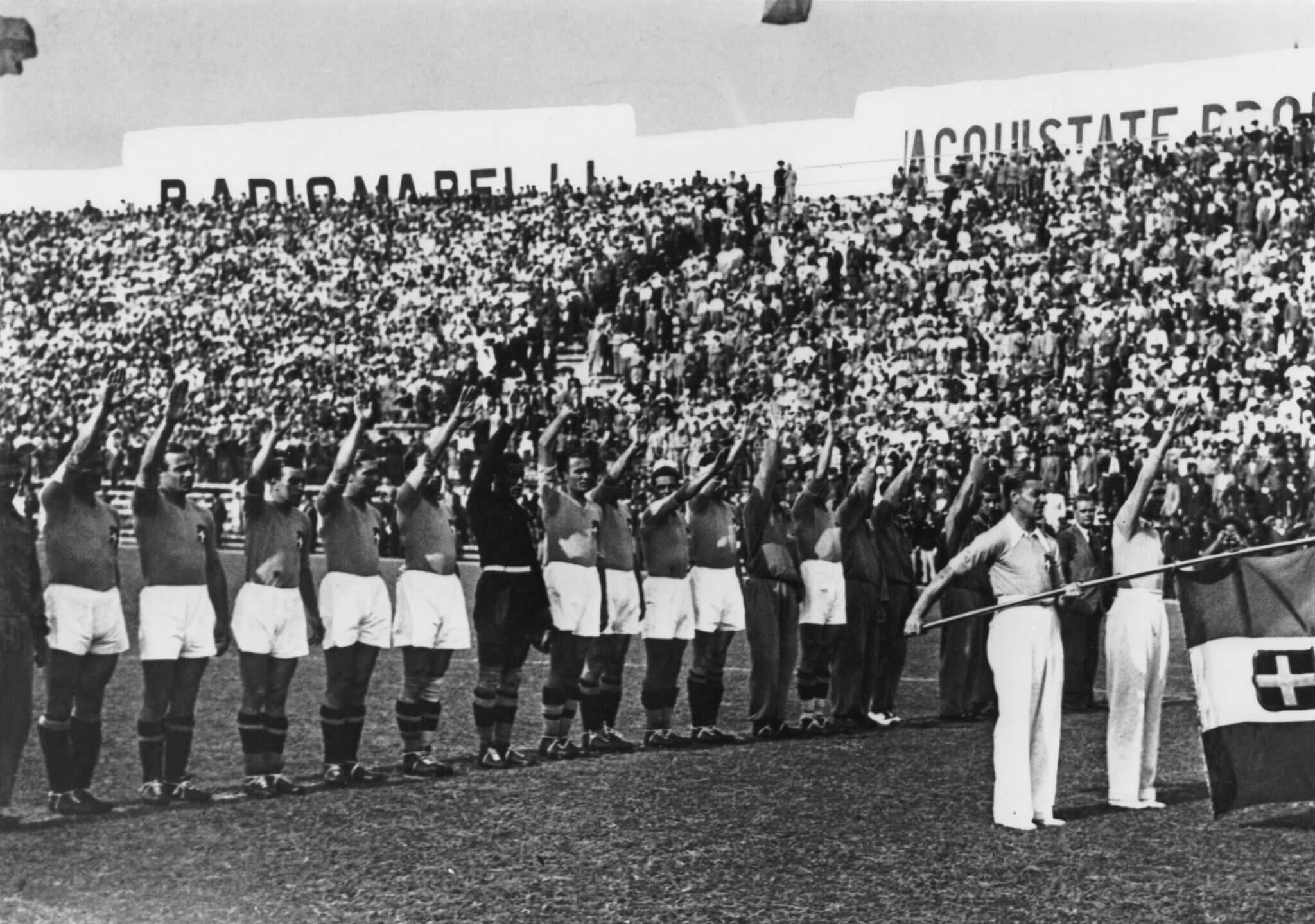
“Italy had wanted to host World Cup 1930, and refused to participate when it was instead awarded to Uruguay. So when Italy were granted the right to host World Cup 1934, Uruguay pulled the same trick and didn’t travel to Europe. Leaving aside the politics of it all, in a way you can’t blame them. This 16-team tournament was contested as a straight knockout competition, meaning Brazil and Argentina made extraordinarily long journeys by sea, only to play a single game in Italy. Uruguay’s victory four years earlier was heavily dependent upon home advantage, but Italy took that home advantage to a completely different level. They replicated Uruguay’s intense training camp in the period leading up to the tournament, but more significantly, this World Cup was blatantly used by fascist dictator Benito Mussolini as propaganda tool, and coach Vittorio Pozzo later claimed that ‘Il Duce’ had personally asked him to select only Fascist Party members for Italy’s squad, although the players claimed they were only really interested in football and had little choice but to ‘support’ the nationalistic cause. …”
NY Times/The Athletic – Michael Cox

The Italian team performing a fascist salute at the 1934 World Cup
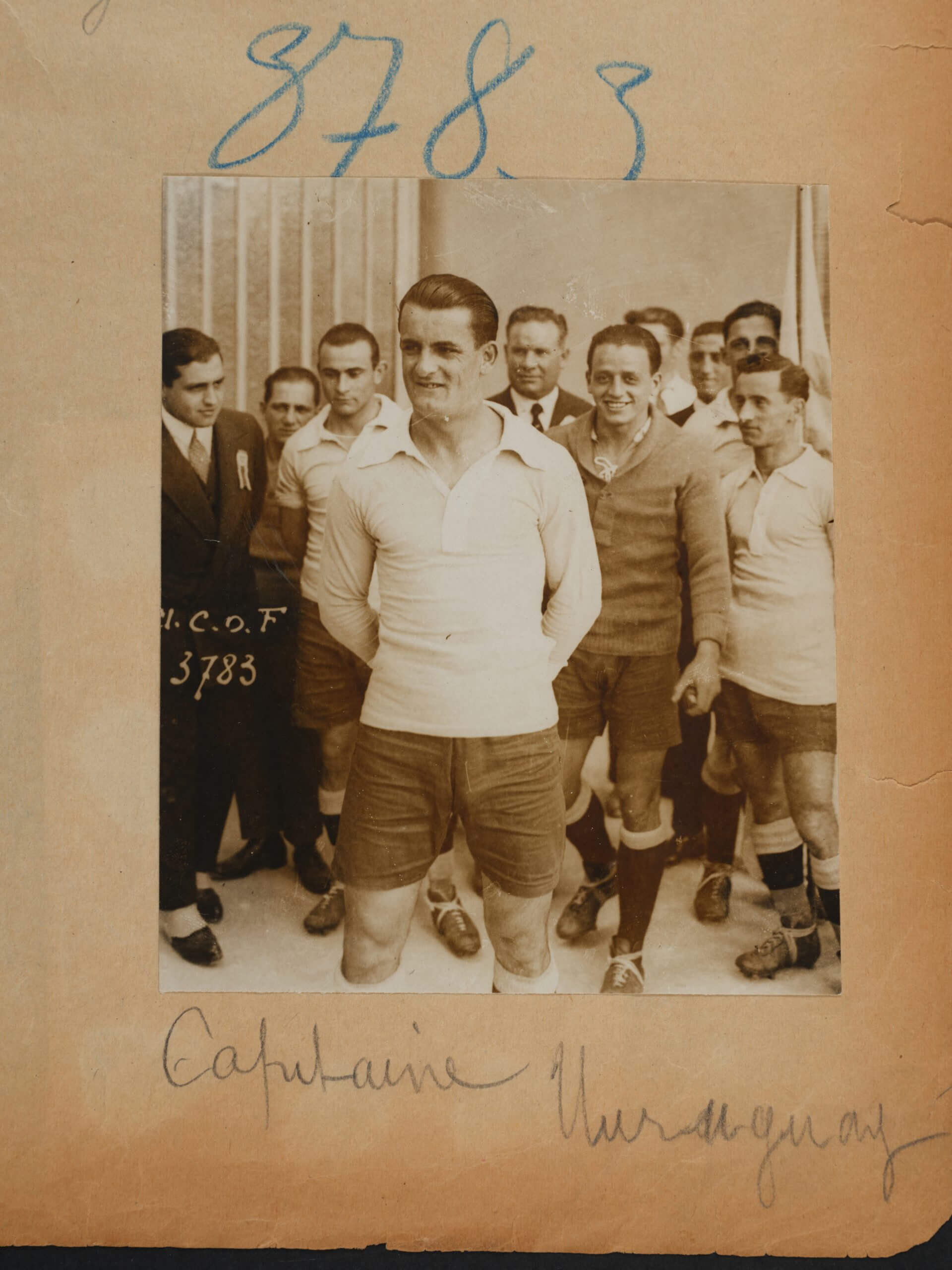
How Uruguay won the 1930 World Cup: Home advantage, breathing exercises and a final of two halves

Uruguay captain Jose Nasazzi: ‘The Grand Marshal’
“When Uruguay won the right to host the inaugural World Cup — partly based around the fact they were celebrating their centenary as a nation, and partly because they were considered the strongest side around after winning the 1924 and 1928 Olympic football tournaments — it was both a blessing and a curse. The curse was that they were handed only a year to put together a tournament of unprecedented size for a single sport. The inevitably-named Estadio Centenario, where Uruguay would play all their matches, was only declared ready five days into the tournament after three teams of workers constantly rotated around the clock on eight-hour shifts, so the hosts started later than everyone else. The 100,000-capacity arena was temporarily capped at 80,000, with scaffolding around the outside showing how recently the project had been finished. …”
NY Times/Athletic – Michael Cox

The French team pictured on their way to the tournament in Uruguay.
Best of 2024 from The Athletic UK: Our staff pick their favourite pieces (by their colleagues)

“We didn’t expect to write about flowery wallpapers in 2024, that’s for sure. Or Taylor Swift. We did expect to write about Jurgen Klopp, Erik ten Hag, and Lamine Yamal, and Andy Murray retiring. It was a wild old year in the world of sport and we wanted to take a moment to look back at — and celebrate — the excellent work of our writers over the past 12 months, covering not just football (soccer), but tennis, the Olympics, the Paralympics, and athletics, too. We wanted to know what they liked, too, so we asked them to nominate articles, podcasts or videos produced by their colleagues and tell us why. So here are all the pieces of work selected by writers, editors and producers on The Athletic UK and North American soccer staff (the editors in the U.S. did their own version of this, too). Enjoy! …”
NY Times/The Athletic (Video)

Johan Cruyff and the incredible wallpaper drawings that explain modern football
How Morocco’s World Cup Run Reignited a Debate on Soccer Colonialism
Larbi Ben Barek of Marseille and Eloy of Sedan during a French Cup quarterfinals match in 1954.
“The French soccer team knocked Morocco out of the World Cup last week, leading to many broken hearts across North Africa, the Middle East and, because of its history of colonial migration, France. France established a protectorate in Morocco that lasted from 1912 to 1956, effectively colonizing the country. So the match seemed the opportunity for a postcolonial reckoning, particularly after Morocco’s victory over two of its other ex-colonial powers, Spain and Portugal. But soccer between France and Morocco has always been a microcosm of imperial control. In Morocco, the French hoped to govern more peacefully and with a greater emphasis on soft power than they did in their occupation of neighboring Algeria. …”
New Lines Magazine
A postcolonial World Cup showdown for the ages
How soccer’s colonial past still plagues the game today
[PDF] Football and colonialism: body and popular culture in urban Mozambique
amazon: Football in the Middle East Edited by Abdullah Al-Arian, Football and Colonialism: Body and Popular Culture in Urban Mozambique
Hunger, pride, desperation. I feel everything for England. All of it

Celebrating scoring for England against Argentina in 1998
“I knocked on Graham Taylor’s door and cleared my throat. England had just drawn 1-1 with Brazil in a friendly match at Wembley and I hadn’t played. It was the night before the manager named his squad for the 1992 European Championship and I was desperate to be in it, so desperate that I was fizzy and fidgeting. I couldn’t wait a few more hours. And so there I was, inside his hotel room, asking the question. I was 21. I had only been around the team for three months. …”
NY Times/The Athletic
Adolf Hitler, Jesse Owens and Berlin’s Olympiastadion: the complicated history of Euro 2024 final venue
“The showpiece final of this summer’s European Championship, likely to attract a worldwide television audience in excess of 300 million people, will be played on July 14 at the Olympiastadion in Berlin — a stadium originally built and funded on the orders of Europe’s most notorious dictator, Adolf Hitler. Eighty-eight years have passed since the 1936 summer Olympic Games were also staged there, three years after Hitler, the leader of the Nazi Party, became the country’s chancellor and ruler. These days, it’s a 74,000-seat stadium with a sleek, modern roof, but the setting stands as a testament to a blood-soaked history. Over the next month, three group games, starting with Spain against Croatia on Saturday, will be played there, as well as a round of 16 match, a quarter-final and then the final itself. The hundreds of thousands of football supporters who descend on the Olympiastadion will be confronted by many of the features that distinguished this venue as a Nazi shrine almost a century ago. Since 1945, Germany has grappled with its history in a thoughtful way. …”
NY Times/The Athletic

Hitler during the opening ceremony of the 1936 Olympics
Cheick Tiote’s magic to ‘Crystanbul’ – our writers’ favourite comebacks

“As surprise results go, Bournemouth beating Luton Town at home would not usually register, but Andoni Iraola’s side became just the fifth side in Premier League history to come back from being 3-0 down at half-time to win, securing a 4-3 victory. The match was not broadcast live in the UK, but the result will live long in the memory of those who witnessed it at the Vitality Stadium. With that in mind, we asked our writers to pick their favourite comebacks they have seen live. It features EFL play-offs, Champions League and World Cup games and plenty from the Premier League. You can comment below, adding your favourites and debating where Bournemouth’s comeback ranks among the best ever… …”
The Athletic (Video)
Are the 2026 FIFA World Cup Qualifiers a new era for African Football?

Spain-Morocco match, Group B, 2018 FIFA World Cup.
“This week on the African Five-a-side podcast, we have a two editions of the African Football Roundup, adding a special extra episode as we preview the 2026 FIFA World Cup qualifiers in Africa and recap the handful of matches that have already been played. Matchday 1 will resume next week! Throughout the history of the FIFA World Cup, Africa has often found itself underrepresented. In 1966, the African continent boycotted the World Cup in England to send a message to FIFA that it demanded a guaranteed place at the tournament, which it subsequently secured in 1970. …”
Africa Is a Country (Audio)
Matchday 1: Kwame Nkrumah

Watching the game from the top of the Jamestown Lighthouse in Acrra, Ghana
“Episode 2 of Matchday 1 of the African-five-a side podcast continues to explore the stories of five African heads of state and their influence on football. This week, we’re introducing our central defender: the intellectual, inspiring, Dr. Kwame Nkrumah. As the first head of state of an independent Ghana, Nkrumah quickly understood the power of football as a unifying tool. He appointed Ohene Djan as the director of sports in 1960, and put in place structures to support the success of the national team, sometimes to the detriment of local clubs. Nkrumah’s interest in soccer was so great that he proposed the formation of a model club to offer leadership and inspiration to other clubs in the country. …”
Africa Is a Country (Audio)
Concacaf Revamps Nations League, Unveils Copa America and World Cup Qualifying
“The U.S. will have to win just one of two potential home-and-away series against Concacaf opposition to qualify for the 2024 Copa América, the regional governing body revealed Tuesday as it unveiled its ’23–25 senior men’s competition structure. Next year’s Copa América, which will be staged in the U.S., will include six Concacaf qualifiers alongside the 10 South American nations that traditionally contest the prestigious tournament. Those six Concacaf teams will be furnished by a revamped 2023–24 Nations League, which will be streamlined for the region’s top-ranked countries. The Americans will get their first crack at qualifying for the Copa this November. …”
SI
1930 FIFA World Cup Group 1
“Group 1 of the 1930 FIFA World Cup was one of four groups in the opening round of tournament. The group featured Argentina, Chile, France and Mexico. Play began on 13 July 1930 when France defeated Mexico 4–1 in the opening match. Lucien Laurent scored the first goal in World Cup history after 19 minutes to give his side the lead. France played again in the second fixture, suffering defeat against Argentina in a controversial match which saw the referee mistakenly blow the whistle for full-time six minutes early. …”
Wikipedia
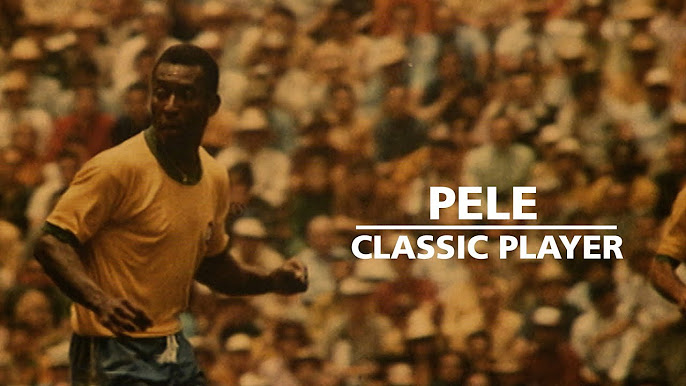
Celebrating Pele, the greatest player in World Cup history

“It is a matter of opinion whether Edson Arantes do Nascimento was the greatest footballer in the history of the world, but there’s little doubt he was the greatest footballer in the history of the World Cup. One simple fact concisely demonstrates that: Pele won it three times. No one else in history, man or woman, can match that. There was more to Pele than simply the World Cup. At club level, he won six Brazilian titles, two Copa Libertadores trophies and remains Santos’ all-time top goalscorer. He subsequently starred in the North American Soccer League for New York Cosmos. But no one has ever matched Pele’s World Cup record, achieved when international football, rather than club football, was unquestionably the most revered form of the game. …”
The Athletic
W – Pelé
*****Guardian – ‘A piece of footballing art’: six memorable moments from Pelé’s career
*****BBC – Pele: Goalscorer, World Cup winner, hero, icon and legend (Video)
*****NY Times: Pelé, a Name That Became Shorthand for Perfection (Video)
*****NY Times: Pelé, the Global Face of Soccer, Dies at 82 (Video)
*****NY Times: Pelé Will Live Forever
YouTube: Pele’s Top 5 Goals, Pele’s Best Skills
Ranking all 77 goals ever scored in the World Cup final

“Only 62 men have done it. They’ve used their right foot 43 times, their left foot 21 times. There have been a dozen headers, only five penalties and a solitary own goal (should Mario Mandzukic’s accidental flick-on make it 13 headers? We’re in uncharted territory already.) The average World Cup final goal is scored in the 55th minute — whatever that average manager said at the average half-time, it’s worked, on average — and has made the score, on average, 1.92-0.94. Let’s call it 2-1. Game on! …”
The Athletic (Video)
World Cup 2022: Vittorio Pozzo’s legacy and a record that is finally under threat

“When Didier Deschamps leads his France side out to face Argentina in Sunday’s World Cup final, he will be hoping to take a further big step towards becoming only the second manager to retain the trophy. Just two nations have managed to win back-to-back men’s World Cups, Italy in 1934 and 1938 and Brazil in 1958 and 1962, but with the Selecao job changing hands between successes, former Azzurri coach stands alone. Nicknamed Il Vecchio Maestro (the Old Master) in coaching circles, Pozzo was considered a visionary of the time and is credited as one of the minds behind the Metodo formation, the earliest example of the 4-3-3 we recognise today. …”
BBC
W – Vittorio Pozzo
The World Cup trophy: Stolen by robbers, found by a dog, weighs the same as a cat
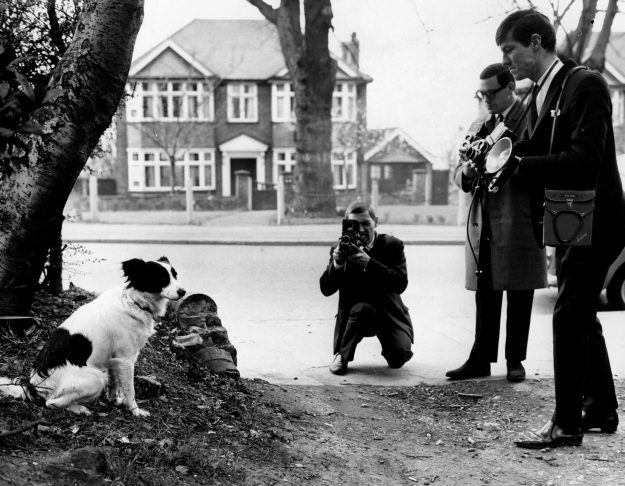
Pickles poses for photographers near the spot where he found the stolen trophy
“What do Franz Beckenbauer, Daniel Passarella, Dino Zoff, Diego Maradona, Lothar Matthaus, Dunga, Didier Deschamps, Cafu, Fabio Cannavaro, Iker Casillas, Philipp Lahm and Hugo Lloris have in common? Granted, as quiz questions go, it’s not the most taxing. The captains to have lifted the World Cup from 1974 are a distinct and illustrious group — one of a small number of people that are actually permitted to touch FIFA’s most iconic prize. …”
The Athletic (Video)
Brazil, 1970, and the Captivating Mythology of the ‘Beautiful Game’

“The Ringer’s 22 Goals: The Story of the World Cup, a podcast by Brian Phillips, tells the story of some of the most iconic goals and players in the history of the men’s FIFA World Cup. Every Wednesday, until the end of Qatar 2022, we’ll publish an adapted version of each 22 Goals episode. Today’s story involves a mesmerizing team goal from Brazil that changed the World Cup forever. …”
The Ringer (Video)
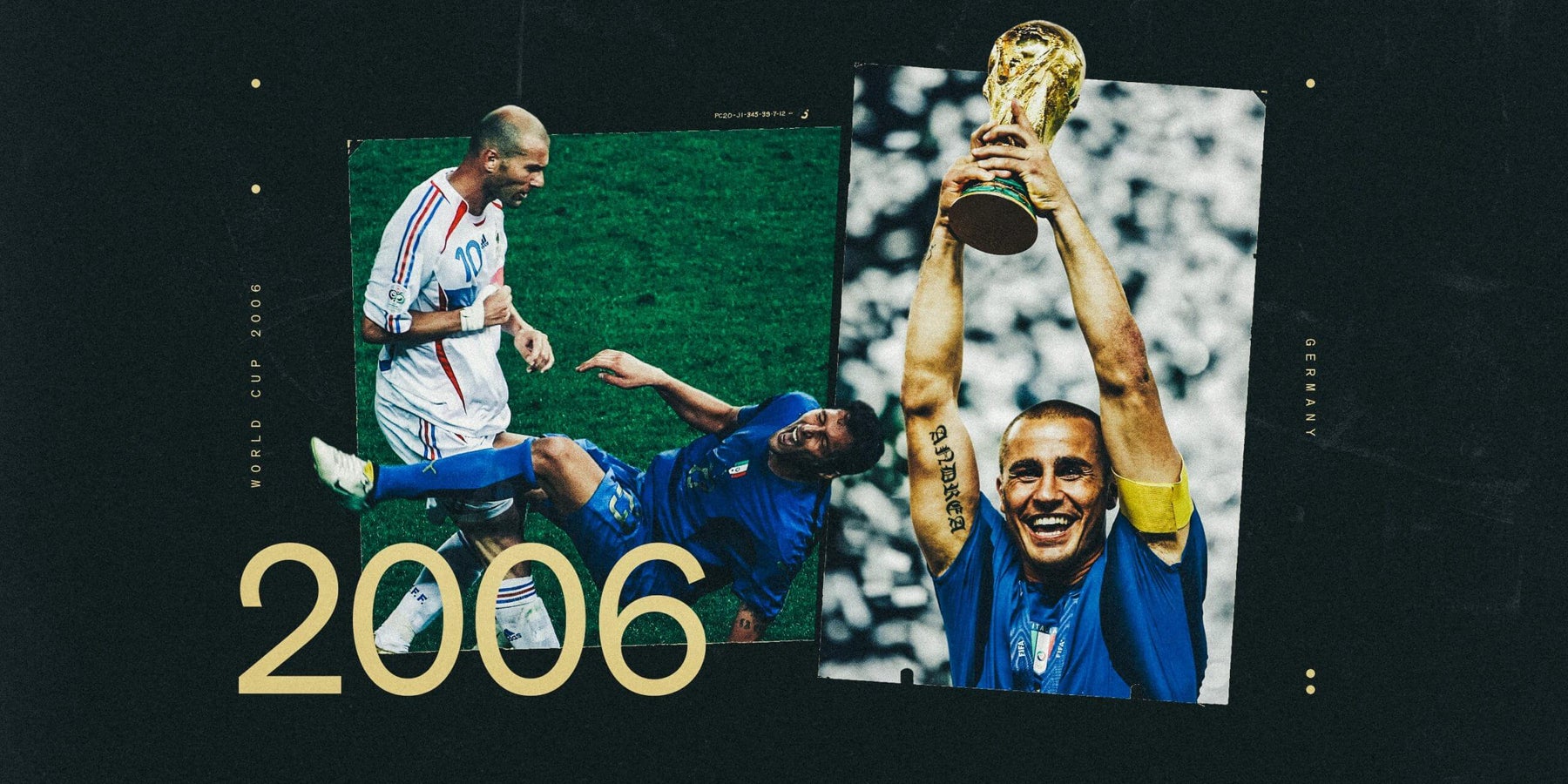
Five iconic matches from the 2006 World Cup
“The World Cup generates an entirely different feeling to club football. All the animosity that fuels and creates the excitement of the domestic leagues is forgotten for a month of national unity. Hailed as the pinnacle of a career, and due to its rarity, the international competition is placed in a dimension of untouchability for most players. The daring dream of bringing 30,875 carats of gold back to your homeland. This is what the World Cup offers. The 2006 World Cup tournament held in Germany remains my personal favourite. I watched every game I could, in the same living room, on the same sofa. …”
Football Paradise
This World Cup Needs the Spirit of Sócrates
“Sócrates may never have gone beyond the quarterfinals of the World Cup, but he remains one of the most iconic players in the history of the tournament. Instantly recognizable by his curly black hair, Che Guevara-esque beard, and the way he loomed over his opponents with his slender 6’4” frame, he looked every inch the revolutionary. At Mexico ’86, where he missed a fateful penalty as Brazil went out to France in a shootout in the quarters, he wore the headband — improvised from a teammate’s sock — which has come to define him in the mind’s eye of millions. …”
Jacobin
Ronaldo, Messi, and the World Cup As a Bad Barometer for Evaluating Legacy
“The Ringer’s 22 Goals: The Story of the World Cup, a podcast by Brian Phillips, tells the story of some of the most iconic goals and players in the history of the men’s FIFA World Cup. Every Wednesday, until the end of Qatar 2022, we’ll publish an adapted version of each 22 Goals episode. Today’s story involves the two defining stars of their generation and the confounding question of legacy. …”
The Ringer
Looking for this World Cup’s ‘Group of Death’? It doesn’t exist anymore. Here’s why…
“Whenever the draw for the World Cup is completed, the immediate task is figuring out which is the ‘group of death’. But the boring answer is that there generally isn’t one these days. Changes to the structure of the tournament mean four genuine contenders are less likely to be grouped together. This World Cup, however, is a slight exception. To explain why, here is a brief history of how the group of death gradually faded away. …”
The Athletic
W – Group of death
When Pelé met Banks: ‘Incredible – a move that required two geniuses’
“At last, on 7 June 1970, the champions, both old and new, met. After all the hype, hysteria and hyperbole in the heat of Mexico’s high-altitude Guadalajara, Brazil, the 1958 and 1962 World Cup winners, and England, the defending champions, were out to play a match that promised to stir the soul and marvel the mind. The world, once again, fawned over the Brazilians. …”
Guardian
Giovanni van Bronckhorst and the Irresistible Allure of the Long-Range Goal

“The Ringer’s 22 Goals: The Story of the World Cup, a podcast by Brian Phillips, tells the story of some of the most iconic goals and players in the history of the men’s FIFA World Cup. Every Wednesday, until the end of Qatar 2022, we’ll publish an adapted version of each 22 Goals episode. Today’s story involves an unlikely goal-scorer from 2010. …”
The Ringer (Video)
FIFA World Cup: La Coupe De La Gloire 1998
“The French team on home soil was always going to be in contention for the title of World Champion. France ’98 wasn’t short on drama and this is captured effectively in this film. …”
FIFA World Cup (Video) 1:25:36
The Curious Case of the World Cup Catfish
“Many of us have had that experience where we have been anticipating a film for many months, one whose cast and director are so good that it simply cannot fail, only to realize that, within the movie’s first few scenes, we are in for an epic disappointment. By the time we shuffle away from the cinema or forlornly fold our laptops closed, we are overwhelmed by that unique feeling: the ache of unsatisfying art. In extreme cases, our ache also carries a sense of betrayal: You promised us a rousing, soaring spectacle, and yet you presented us with something so different from and so far beneath our expectations. How could you? You catfished us. …”
The Ringer (Video)
World Cup Penalty Shootouts: The Facts
“There have been a host of penalty shootouts at World Cup tournaments since they were introduced ahead of the 1978 FIFA World Cup as a tiebreaker, but which countries have had the best shootout record and what nation is right to have the fear factor about the dreaded match-decider? We look at the facts around World Cup penalty shootouts ahead of this year’s tournament in Qatar. …”
The Analyst (Video)
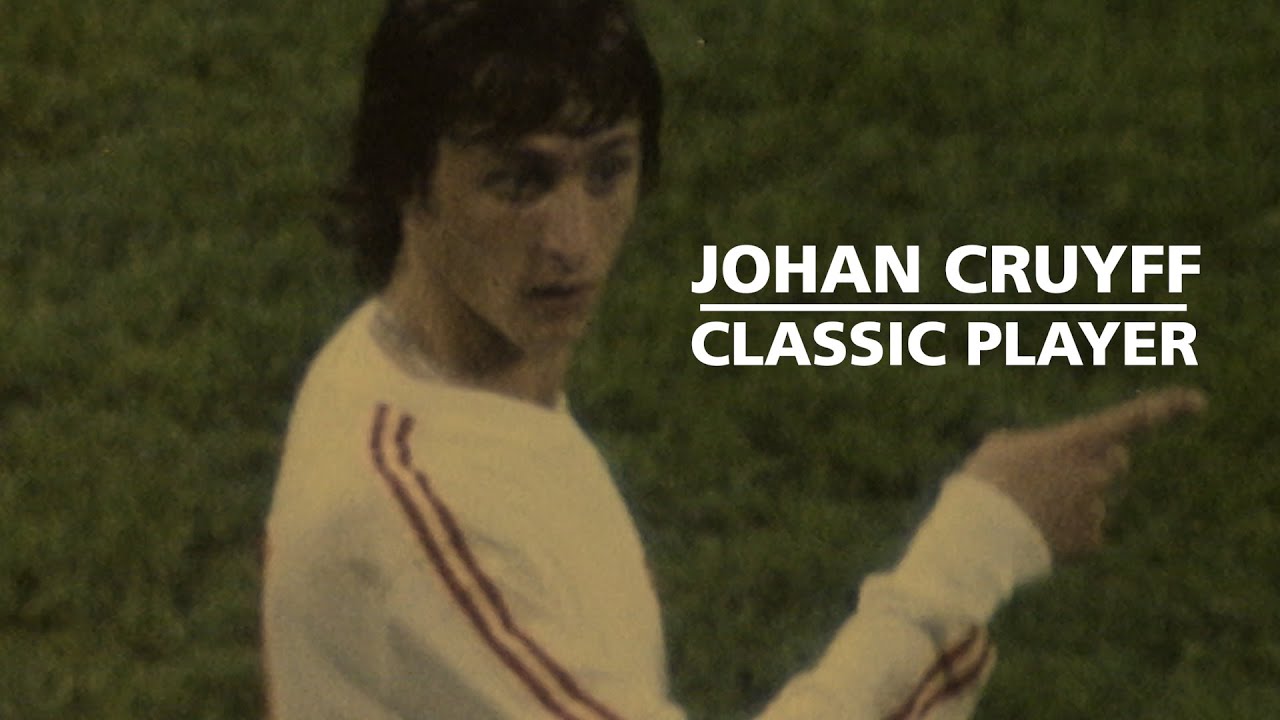
The Exhilarating, Confounding Genius of Johan Cruyff

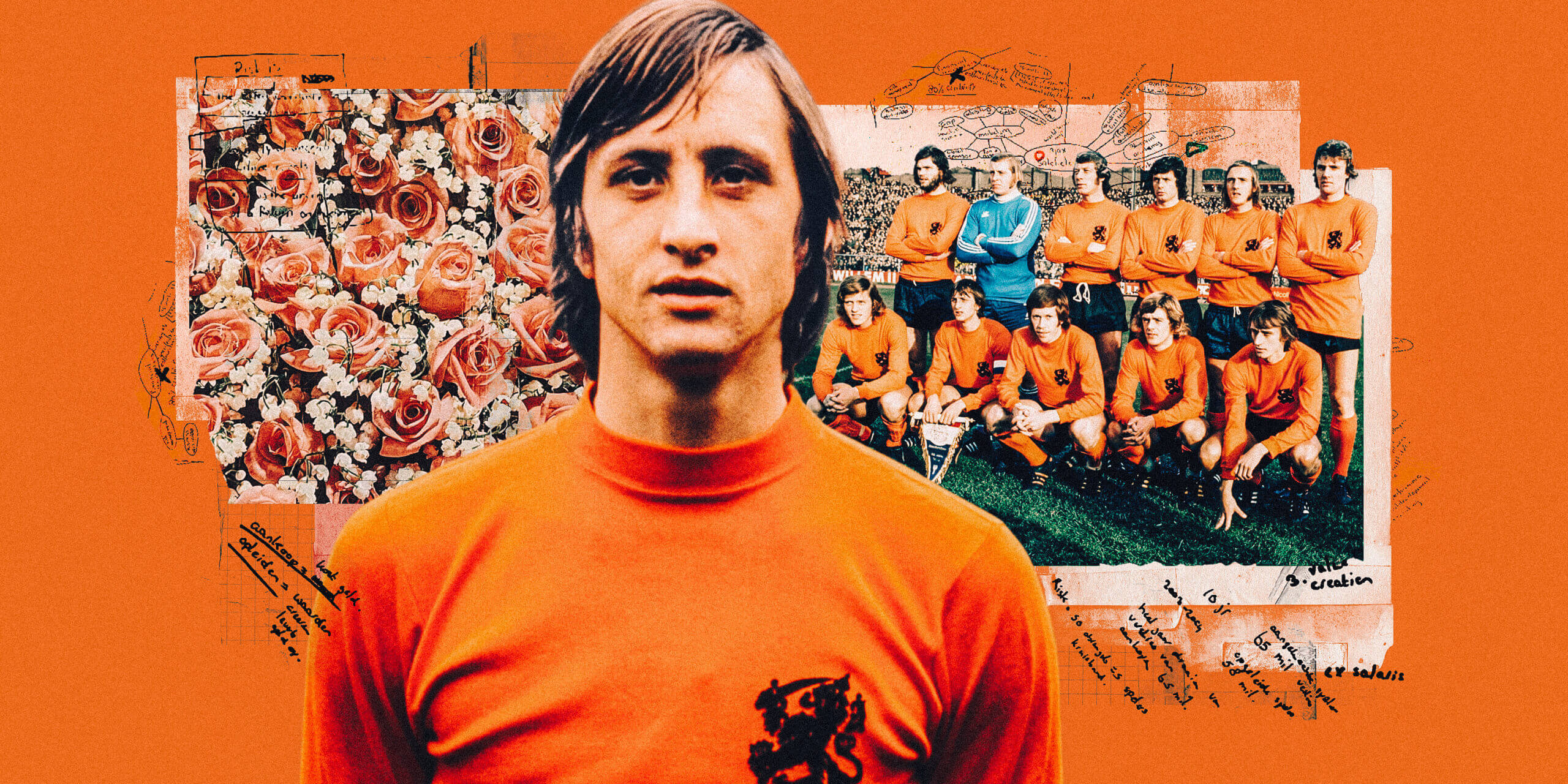
“The Ringer’s 22 Goals: The Story of the World Cup, a podcast by Brian Phillips, tells the story of some of the most iconic goals and players in the history of the men’s FIFA World Cup. Every Wednesday, until the end of Qatar 2022, we’ll publish an adapted version of each 22 Goals episode. Today’s story involves Johan Cruyff and the greatest team to not win a World Cup. …”
The Ringer (Video)
Football and Politics in South America
“Published in 1995 as part of Verso’s series of Critical Studies in Latin American and Iberian Culture, Tony Mason’s Passion of the People? Football in South America examines the centrality of the game to cultural life in Brazil, Argentina, and Uruguay over the course of the twentieth century. In the excerpt below, Mason reviews the points of contact between professional football and the state, with a particular emphasis on Argentina and Brazil. …”
Verso
Andrés Escobar, an Own Goal, and Tragedy at the 1994 World Cup
“The Ringer’s 22 Goals: The Story of the World Cup, a podcast by Brian Phillips, tells the story of some of the most iconic goals and players in the history of the men’s FIFA World Cup. Every Wednesday, until the end of Qatar 2022, we’ll publish an adapted version of each 22 Goals episode. Today’s story involves Andrés Escobar, an own goal, and tragedy in 1994. …”
The Ringer (Video)
Joe Gaetjens, and America’s Accidental Emergence on the World Cup Stage
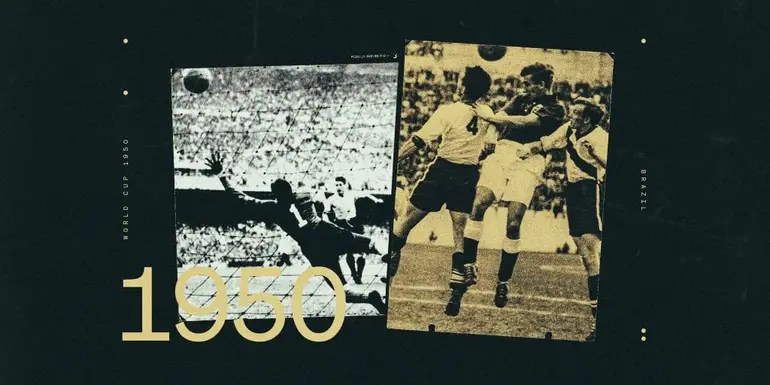
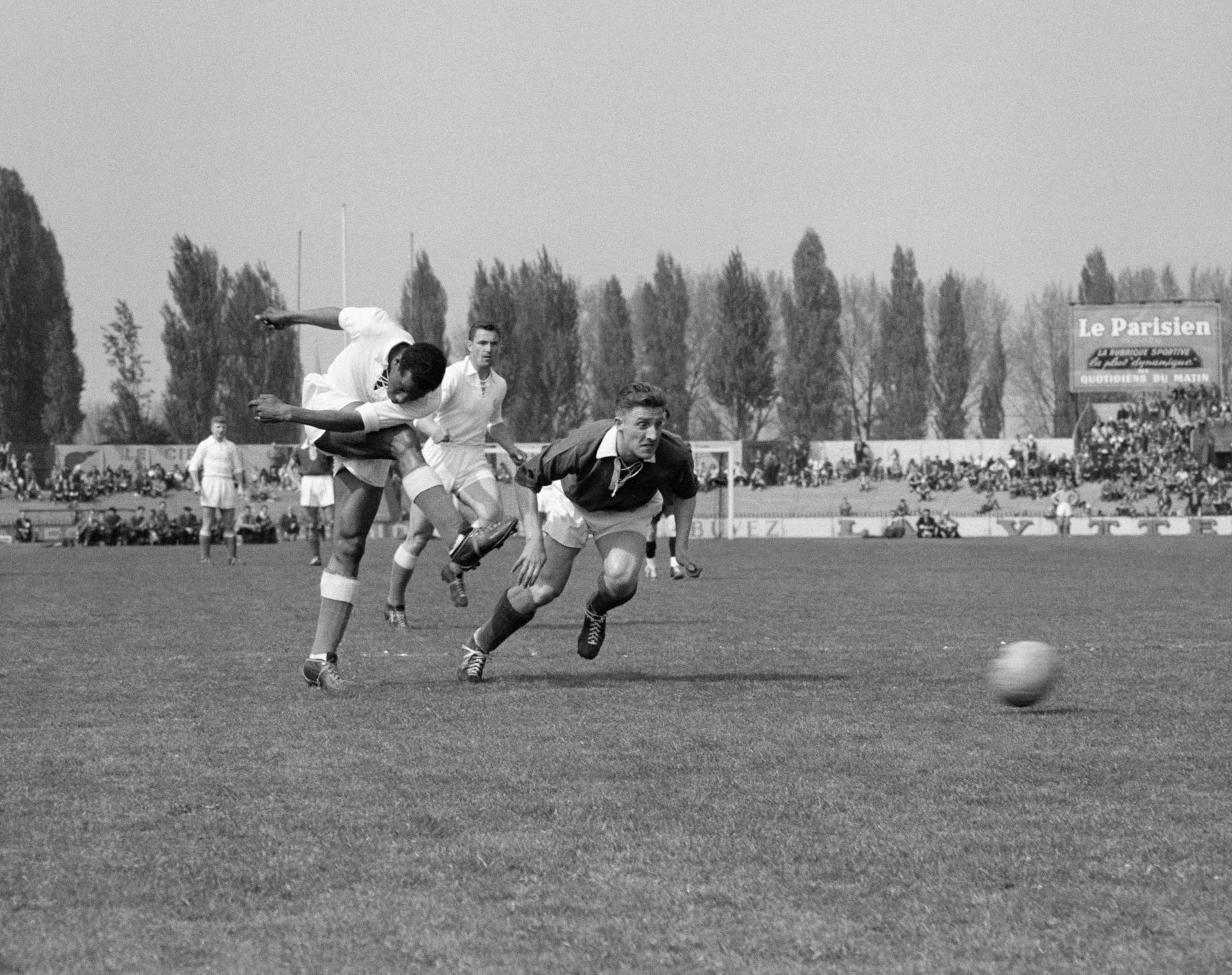
“The Ringer’s 22 Goals: The Story of the World Cup, a podcast by Brian Phillips, tells the story of some of the most iconic goals and players in the history of the men’s FIFA World Cup. Every Wednesday, until the end of Qatar 2022, we’ll publish an adapted version of each 22 Goals episode. Today’s story involves Joe Gaetjens and an assembly of amateur American players making history in 1950. …”
The Ringer (Video)
Geoff Hurst, a Dog Named Pickles, and the Curious Case of the Missing World Cup Trophy
“The Ringer’s 22 Goals: The Story of the World Cup, a podcast by Brian Phillips, tells the story of some of the most iconic goals and players in the history of the men’s FIFA World Cup. Every Wednesday, until the end of Qatar 2022, we’ll publish an adapted version of each 22 Goals episode. Today’s story involves Geoff Hurst, a dog named Pickles, and the curious case of missing World Cup trophy in England in 1966. …”
The Ringer – Brian Phillips (Video)
Panini World Cup stickers: The history, the joy, the mullets and more

“This is an excerpt from Greg Lansdowne’s chronicling of Panini’s World Cup Stickers: Panini Football Stickers – The Official Celebration. Lansdowne and Bloomsbury Press have graciously allowed us to run two more future excerpts — one on the 1994 World Cup set, and another highlighting some of the best hairstyles throughout the history of the sticker collection. …”
The Athletic
Marco Tardelli, and the Grandeur and Glory of a Goal Celebration
“The Ringer’s 22 Goals: The Story of the World Cup, a podcast by Brian Phillips, tells the story of some of the most iconic goals and players in the history of the men’s FIFA World Cup. Every Wednesday, until the end of Qatar 2022, we’ll publish an adapted version of each 22 Goals episode. Today’s story involves Marco Tardelli at the 1982 World Cup in Spain. …”
The Ringer (Video)
How to win the World Cup – Chris Evans (2022)

The art of international football management – by those who’ve done it: “The pinnacle of the game. A job reserved only for the very best. That was how an international manager’s role was viewed for decades. The World Cup was where the globe’s top coaches would meet in the dugout, just as the best players were doing so on the pitch. While the growing importance of domestic leagues and the Champions League has curbed international football’s reputation in the 21st century, there remains a special enchantment to leading a national team to glory. No other job in football gives a manager the chance to bring such unbridled joy to so many people. …”
Guardian
amazon
Most Goals Scored in a FIFA World Cup by One Player

“The only players to score nine or more goals in a single FIFA World Cup did so between 1950 and 1970 – a competition with nearly a century of history cramming its one-tournament stars into two decades. It seems the game’s defensive focus and organisation had yet to catch up to its emerging individual attacking skill. It was a time of free goals, and in some places free love, and if you weren’t around to experience it in person, you’re left with grainy video – and of course the numbers. None of the five players to score that many did it in more than six games while the modern-day format for World Cup tournaments has made it possible for top goalscorers to get seven in should they reach the last four. …”
The Analyst
Roger Milla, the Indomitable Lion Who Changed World Cup History
“The fifth installment in ‘22 Goals’ features the Cameroonian forward whose goal-scoring feats at the 1990 World Cup in Italy changed the perception of African soccer. By Brian Phillips”
The Ringer (Audio)
The Ringer – Brian Phillips
Dennis Bergkamp, the Non-Flying Dutchman Who Reimagined Space and Time

“The Ringer’s 22 Goals: The Story of the World Cup, a podcast by Brian Phillips, tells the story of some of the most iconic goals and players in the history of the men’s FIFA World Cup. Every Wednesday, until the end of Qatar 2022, we’ll publish an adapted version of each 22 Goals episode. Today’s story involves Dennis Bergkamp at the 1998 World Cup in France. …”
The Ringer (Audio/Video)
‘22 Goals’: Ronaldo, 2002 World Cup Final in Japan

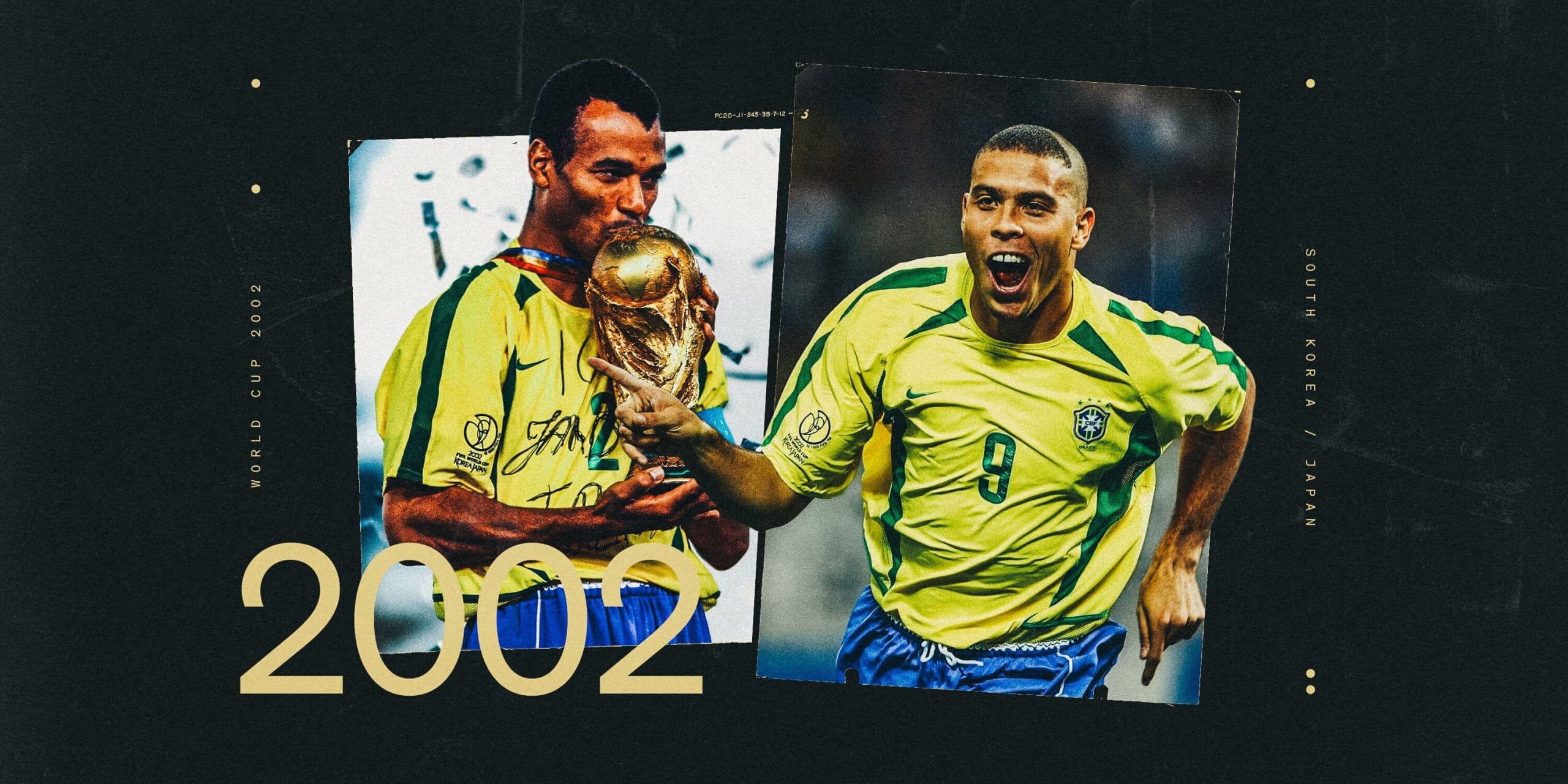
“As the 22nd men’s FIFA World Cup approaches in November 2022, The Ringer introduces 22 Goals, a podcast by Brian Phillips about the most iconic goals scored in the history of the World Cup. Every Wednesday, until the end of Qatar 2022, we’ll publish an adapted version of each 22 Goals episode. Today’s story involves the ‘original’ Ronaldo from the 2002 World Cup in South Korea and Japan. …”
The Ringer (Audio)
The Ringer – ‘22 Goals’: Diego Maradona, 1986 World Cup in Mexico (Audio)
Season of the Pitch
“‘The mindset was predisposed to be negative,’ the writer Pete Davies said not long ago. We were discussing English attitudes in the run-up to the 1990 World Cup—Italia ’90—the subject of his elating travelogue, All Played Out, often described as the greatest book about soccer. The national game had been in a bad way—the playing style primitive, the supporters feral. An article by Brian Glanville, a prominent reporter, carried the headline ‘England Abroad: Shame and Mediocrity.’ …”
BOOKFORUM
amazon: All Played Out: The Full Story of Italia ’90
Jack Kerouac and the Childish Art of Fantasy Football
“I have always had an uneasy and uncomfortable relationship with the work of Jack Kerouac. Even when I was what observers would have identified and described as an ‘impressionable’ youth prone to literary fads, carrying a battered copy of ‘On The Road’ in my limp, milky pale hand around with me, a battered copy that gained more visible prominence if it could be brandished within the promiscuous radius of half-closed, dreamy and cannabis occluded New Age girls’ eyes. I forced Kerouac’s faux hipster psychodramas and irresponsible frat boy antics down my throat, baulking on fayre that was trying too hard to be hip. …”
Football Paradise
El Dorado: When Colombia Learned Money Talks In Football
“It’s hard to picture a time when being a professional footballer at the highest level did not mean astronomical wealth and lavish lifestyles. Yet, that was the reality for many of the world’s biggest stars in the early days of organised, professional football. There are bountiful stories of some of England’s biggest stars having to take summer jobs just to pay their bills in the early days as the Football Association and FIFA kept a tight lid on pay. Disgruntlement over finances was a common theme amongst players. It wasn’t exclusive to England either as Argentina was having its own issues with player wages in 1949. … They would soon find a home in, of all places, Colombia. …”
Longball Football
Blood, sweat and speeding plastic: 48 hours at the foosball World Cup

“In his 1928 novel Nadja, French surrealism ace Andre Breton described the city of Nantes as ‘perhaps with Paris the only city in France where I have the impression that something worthwhile may happen to me’. To think that he was still a good 94 years away from having the chance to wander around the bowels of his local sports arena in a vain attempt to track down the anti-doping officials at the foosball World Cup. …”
The Athletic (Video)
The disappearance of Wee Willie McLean: Solving America’s oldest soccer mystery

“February 5, 1946. The entrance to Mount Pleasant Mental Health Center in Henry County, Iowa scales a gentle grade; a long, wide driveway passing through rows of oak trees, past manicured lawns and flowerbeds. If you’ve never been here, you’d assume you were entering the grounds of a botanical garden, or maybe an elegant estate. Then the facility’s main building comes into view, a brick-and-concrete goliath that eventually consumes your entire field of vision. It is cold, dark and imposing. Function over form, a warehouse for the unwanted. …”
The Athletic (Video)
W – Willie McLean (soccer, born 1904)
Jorge Luis Borges: “Soccer is Popular Because Stupidity is Popular”

June 2014: “… I don’t lose all my critical faculties, but I can’t help but love the World Cup even while recognizing the corruption, deepening poverty and exploitation, and host of other serious sociopolitical issues surrounding it. … In Argentina, as in many soccer-mad countries with deep social divides, gang violence is a routine part of futbol, part of what Argentine writer Jorge Luis Borges termed a horrible ‘idea of supremacy.’ Borges found it impossible to separate the fan culture from the game itself, once declaring, ‘soccer is popular because stupidity is popular.’ …”
Open Culture
New Republic: Why Did Borges Hate Soccer? (June 2014)
Tragedy and triumph: the remarkable tale of Croatia’s first football steps

Croatia’s Davor Suker celebrates after scoring in the 1998 World Cup semi-final against France.
“Igor Stimac, a 54-year-old Croatian man usually full of laughter and love, begins to cry as his memories grip him in a world darkened again by a devastating war. The fleeting tears of the former footballer fall for Ukraine and its people. They have suffered in a way that reminds Stimac of everything his own country endured during the terrible Balkans conflict that surrounded its independence from Yugoslavia almost 30 years ago. It was a time when football gained a rare real-life significance as, out of bloodshed and carnage, Croatia’s defiant, gifted and fiercely intelligent players lifted their young nation by lighting up Euro 96 and then leading France in the semi-finals of the 1998 World Cup in Paris. …”
Guardian
Croatian and Serbian Hooligans: Football Foes Share Love of Hate (June 2020)
Amateurs & A Yorkshireman: Sweden’s World Cup Finalists

“Following the 1958 World Cup final, the Swedish FA informed their English head coach, George Raynor, that he would be relieved of his duties. Far from being an acrimonious disagreement between two parties, this was the Swedes being self-aware. There was no way Raynor wouldn’t have offers flooding in from back home. They were wrong. …”
The Longball Football
W – 1958 FIFA World Cup Final
YouTube: Brasil 5 x 2 Sweden – 1958 World Cup Final Extended Goals & Highlights (Live)
About That Game: England 2-2 Argentina (1998)

“International football rivalries are rarely intercontinental, but the ill-feeling between Argentina and England is an exception. The rivalry emerged in the latter half of the 20th century, partly due to the 1982 Falklands War between Argentina and the United Kingdom, but also on the pitch thanks to controversial World Cup meetings between the two sides in 1966 and 1986. This meeting in 1998 certainly didn’t help to heal the rift. …”
The Analyst (Video)
Battle of Belfast 1957: When a match between Northern Ireland and Italy turned nasty

Cush scores again in the rearranged clash against Italy that Northern Ireland won 2-1
“The recent World Cup 2022 qualifying campaign saw Northern Ireland and Italy meet in the same group. It was only the second time the two have met each other in World Cup qualifying, prompting memories of the first time. A game which was infamously known as the ‘Battle of Belfast’. The circumstances surrounding this occasion were bizarre, yet not completely out of character with international football of the time. The two countries were pitted against each other in qualifying for the World Cup in Sweden 1958. Back then only 27 countries entered the European section, equally split into nine groups of three. …”
Football Pink
W – 1958 FIFA World Cup qualification – UEFA Group 8
YouTube: Ireland: 2 Italy: 1
Portugal 1986: Part 1: A Troubled Beginning, Part 2: The Saltillo Affair

“Playing in a World Cup is the pinnacle of a player or coach’s career. To test yourself in the world’s premier tournament is the ultimate challenge and a dream come true for many footballers. However, there are times when the dream of participating in a World Cup can turn into a nightmare. No country would have such a nightmare of a tournament than Portugal in 1986. Prior to the mid-1980s, Portugal were unable to build on the success of the 1960s, where Portugal finished third in the 1966 World Cup and Benfica won back to back European Cups in 1961/62 under the coaching of Béla Guttmann. Since then, Portugal had failed to qualify for a World Cup or European Championship. …”
Breaking the Lines: Part 1, Part 2
W – Saltillo Affair
The Saltillo affair – the story of Portugal at Mexico ’86
When Two Champions Leagues Titles in Eight Months Don’t Count

“Pitso Mosimane has done enough winning in the last year, plus change, to talk about nothing else. In November 2020, only three months after he was appointed manager of the Egyptian club Al Ahly, he won the African Champions League title. He did so by beating Zamalek, Al Ahly’s fiercest rival. The final was cast as the derby of the century. Nobody in Egypt thought it was an exaggeration. Eight months later, he repeated the trick. The calendar contracted and concentrated by the pandemic, Al Ahly returned to the Champions League final in July to face Kaizer Chiefs, the team Mosimane had supported as a child in South Africa. He won again. He was showered with golden ticker tape on the field, then presented with bouquets of roses by government grandees when he returned to Cairo. …”
NY Times