Tag Archives: Spain

Protests, Presidents and Promotion: The Rayo Vallecano Story

“Discounting Liverpool fans marching from a pub to the ground or Manchester United supporters wearing gold and green scarves to show their opposition to their owners, protest at football is not something we are used to in England. In Spain, public displays of disaffection by fans are a bit more common. In 2009, tens of thousands of Real Betis fans marched through the streets of Seville to demand the resignation of then president José León Gomez. Athletic Bilbao and Real Sociedad fans (and sometimes players) have long been known for publicly supporting the cause of Basque independence, while the same goes for Catalan self-determination at Barcelona.” In Bed With Mardona

Ronaldo and the Thief of Culture


Ronaldo
“Does anyone know who’s leading the Liga? No, not La Liga; the Liga, the Primeira Liga—Portugal’s first tier of domestic football. Does anyone know? Does anyone care? Heck, even I’ve been known to look past the Primeira Liga, and I’m Portuguese. That’s the lure of the fast-paced, money-rich, crowd-packed Premier Leagues and Bundesligas and La Ligas of this world, whose fan-friendly cable packages are often too much to resist when the alternative is a game between Paços de Ferreira and Olhanense in an empty back-lot stadium that wouldn’t make it in League Two in England. Most teams in the Championship have bigger attendances and heftier budgets than, oh, around 12 of the 16 teams in the Primeira Liga.” Run of Play

Year of Xavi


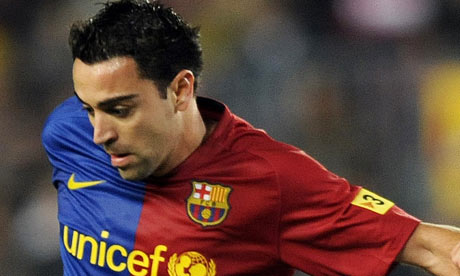
“Nearly two years ago, the Daily Mail’s Matt Lawton published a piece under what should surely be considered one of the most dunderheaded headlines in recent football journalism: ‘The best players of the world (and Xavi): Ronaldo crowned king of football.’ In the wake of Cristiano Ronaldo’s ascension as the world player of the year in 2009, Lawton took the time to cheekily ridicule Xavi Hernández, a player whose patience, measure, and impeccable sense of the tempo in attack and defense has helped to make Barcelona the best club side in Europe (arguably) and Spain the best national side in the world (most certainly).” Run of Play

The Question: How did tactics develop in 2010?

“In August, I wrote a piece for the Guardian’s pre-season supplement in which I speculated that, after the World Cup and Internazionale’s success in the Champions League, we may be about to witness a return to reactive football. Since when we’ve seen probably the most attacking Premier League in living memory, which goes to show two things: first, never believe anything anybody writes when trying to predict the future of football; and second, the World Cup is no longer a bellwether.” Guardian – Jonathan Wilson

Spanish Football in 2010: A Retrospective


“It’s been an historic year in the life of Spanish football. On the evening of the 11th July, with one swing of his right foot, Andrés Iniesta lit up Johannesburg to win his country its first World Cup and confirm Spain’s place at the very pinnacle of the global game. With La Liga commencing its annual winter hiatus next week, I thought I would use this week to review the year and give out some prestigious awards – Los Equalisers de Oro (The Golden Equalisers), as I like to call them.” The Equaliser

Spain: The Next Generation


“Since 2008, Spain, first under Luis Aragonés and then Vicente Del Bosque, have thrilled the world with their wonderfully aesthetic ‘Tiki Taka’ style of football. Reaping the benefits of a remarkably gifted generation, the likes of Xavi Hernández, Andrés Iniesta, Iker Casillas, Carles Puyol and David Villa have driven La Furia Roja to both the European and World titles.” (Equaliser Football)

Villarreal 1-1 Valencia: Emery’s three-man defence copes with two strikers, but not three

“Valencia had a specific plan to stifle Villarreal’s fluid 4-4-2 system – and it almost worked. The home side made one change from last week’s defeat to Barcelona. Mateo Musacchio was dropped in favour of the returning captain Gonzalo Rodriguez, so Carlos Marchena moved across to the left side of the centre-back pairing.’ (Zonal Marking)

Portugal 4 – 0 Spain


Cornelis Van Poelenburgh – View of the Campo Vaccino
“Portugal gained a measure of revenge for their World Cup exit at the hands of Spain by inflicting a heavy defeat on their Iberian neighbours in tonight’s friendly in Lisbon. Goals from Jorge Carlos Martins, visiting defender Sergio Ramos, who put into his own net, Helder Postiga and Hugo Almeida sealed a deserved win for the Portuguese, who were knocked out at the last-16 stage in South Africa as Spain went onto win their maiden World Cup crown.” (ESPN)

Portugal 4-0 Spain – Video Highlights, Recap, and Match Stats – Friendly
(The 90th Minute)

Lazio 0-2 Roma: two penalties settle tight game

“Two similar systems and little creativity in open play. Top of the table Lazio set up with a 4-3-1-2 formation, a shape they’ve used in roughly half of games so far, the other option being a 4-2-3-1. Tomasso Rocchi started his first game since mid-September upfront alongside Sergio Floccari, whilst Guglielmo Stendardo started in place of the suspended Giuseppe Biava at the back.” (Zonal Marking)

Sevilla 2-0 Valencia: Emery doesn’t change despite red card, both Manzano subs score
“Sevilla eventually broke through after Valencia’s Mehmet Topal was sent off in the first half. For the home side, only Martin Cacares remained from the back four that conceded five goals at the Nou Camp last week. Further forward, it was the same midfield and attack, with Frederic Kanoute pushed up closer to Luis Fabiano.” (Zonal Marking)

Spain yet to discover the root of cardiac problems among players

“When the final whistle blew, the cameras closed in as the two men embraced. These were not adversaries recognizing each other’s merits after the most honorable of contests. Nor were they teammates sharing the spoils of victory. In fact, they weren’t footballers at all. But they were heroes. Together, the two doctors, José Ignacio Garrido and Tomás Calero, had just saved someone’s life. Live on TV.” (SI)

Villarreal 2-0 Atletico: Villarreal impress with technical quality and ruthless finishing

“A 2-0 win that was both aesthetically impressive and quietly professional, as Villarreal move back up to second place. The home side fielded a narrow 4-4-2 / 4-2-2-2 with two quick forwards, and wide players looking to move into the centre of the pitch. Cani made a rare start on the left, whilst Gonzalo Rodriguez was played at centre-back alongside Carlos Marchena.” (Zonal Marking)

Villarreal’s South American-European fusion:
“If Jonathan Wilson’s explanation as to raison d’être of the 4-2-3-1 formation is true (affording licence to playmakers and dribblers in an age of increased physicality), then little wonder it first became popularised in Spain, that country that produces a phalanx of ball-players; players who would be miscast if they were to operate as traditional box-to-box dynamos in a 4-4-2. Witness, for example Roy Hodgson’s struggles to impart lessons on Liverpool’s more adept ball players, or more pointedly, Joe Cole’s entire history as a young footballer.” (santapelota)

Out of Villarreal’s old orange grove grows ‘the perfect football eco-system’
“It was Benjamin Franklin who said nothing in life is certain except death and taxes but what does he know? Sure, he built a few libraries and did some experiments with electricity and catheters and fireplaces and stuff, but he didn’t know the first thing about what really matters: football in Spain, that magical world where death and taxes aren’t certain at all; where football clubs owe the taxman €627,266,721.38; where a player literally came back from the dead this weekend – Salamanca player Miguel García’s heart stopped beating, the doctor who saved him revealing: ‘He was dead for 25 seconds’, and where it’s not just that death and taxes aren’t inevitable, it’s that plenty of other things are.” (Guardian)

Scotland 2-3 Spain: Scotland come back from two down, but plan B Llorente grabs winner

“Scotland scored two goals against the World Champions, but that still wasn’t enough to take any points from an exciting encounter. Craig Levein abandoned his midweek 4-6-0 formation in favour of a slightly more traditional 4-1-4-1 system, with Lee McCulloch between the lines of defence and attack, and the two wide players tucked in level with the midfield. Kenny Miller came in upfront.” (Zonal Marking)

Scotland 2 – 3 Spain

“Steven Naismith scored a goal he will never forget – but it was not enough to secure a point against Spain at Hampden. Naismith sparked an impressive comeback after Scotland had fallen behind to David Villa’s penalty and strike from Andres Iniesta, before a Gerard Pique own goal set the home side on course for a precious point.” (ESPN)

Scotland 2-3 Spain – Video Highlights, Recap, and Match Stats – Euro 2012 Qualifying
(The 90th Minute)

Archibald: Scots must capitalise on Xavi’s absence

“Reigning World and European champions Spain have an unblemished qualification record in Group I following consecutive victories over Liechtenstein and Lithuania, and former Scotland striker and La Liga aficionado Steve Archibald says his countrymen should count themselves lucky they’ll at least be spared the task of trying to stop two of the world’s best when the two sides clash on Tuesday.” (ESPN)

Spain’s ugliness a problem for Scotland

“It was the kind of game Harry Redknapp would have loved had he been a national team manager and widely successful at the job to boot. ‘I woz daaahn to the bare bones,” he would have tooted. “Eight of the lads wot were in the squad wot won the World Cup wasn’t abaaaht. But we dug deep, stuck the big lad up front with that kid that looks like an ‘amster aaaht wide and they done the business.'” (FourFourTwo)

Spain 3-1 Lithuania – Video Highlights, Recap, and Match Stats – Euro 2012 Qualifying


“Without Xavi and Fernando Torres available, Spain would get a 3-1 win to remain unbeaten in qualifying. Fernando Llorente led the way with two goals while David Silva had the third for Spain. Llorente’s goals were in the 47th minute and 56th minute and Silva’s was in the 79th minute.” (The 90th Minute)

Portugal 3 – 1 Denmark
“Nani grabbed two goals in the space of three minutes to set Portugal on course to victory over Denmark in coach Paulo Bento’s first game in charge. Although Ricardo Carvalho’s own goal 11 minutes from time gave Denmark a lifeline, Cristiano Ronaldo made sure of Portugal’s first win in Euro 2012 qualifying Group H with five minutes left.” (ESPN)

Portugal 3-1 Denmark – Video Highlights, Recap, and Match Stats – Euro 2012 Qualifying
“Portugal earned their first win of the group stage behind two goals from Nani. It was a much need for Portugal who had a draw and loss in their first two matches. They are now with four points, two behind leaders Norway, while Denmark are in third place with three points.” (The 90th Minute)

Ireland 2-3 Russia – Video Highlights, Recap, and Match Stats – Euro 2012 Qualifying
“Russia would get a much needed win as they scored three goals in the first 50 minutes and held onto that lead. It was a poor start for the Irish who conceded two first half goals. The goals were from Alexander Kerzhakov in the 11th minute and Alan Dzagoev in the 28th minute. Russia’s third goal came in the 50th minute from Roman Shirokov.” (The 90th Minute)

Czech Republic 1 – 0 Scotland
“Craig Levein’s decision to drop Kenny Miller and play a defensive line-up failed to pay off as Scotland suffered the first defeat of their Euro 2012 qualifying campaign against Czech Republic in Prague tonight.” (ESPN)

Czech Republic 1-0 Scotland – Video Highlights, Recap, and Match Stats – Euro 2012 Qualifying
“The Czechs would get their first win of qualifying while Scotland suffered their first defeat. It was a conservative start for Scotland who didn’t start Kenny Miller and were in a very defensive formation. Many will question if they weren’t aggressive enough and should have played a regular 4-4-2 formation.” (The 90th Minute)

Batista gives Argentina cause to wonder

“What might have been? It’s not two months since Spain won their first world title to continue an utterly dominant spell which had begun with their Euro 2008 triumph. At the same World Cup, Argentina initially sparkled but were ultimately humiliated when the going got tough. Yet now, with a manager who’s swept through like a new broom, Argentina are able to not just beat, but demolish, the newly-crowned champions of the world. It makes one wonder.” (ESPN)

Argentina 4-1 Spain: good audition for Batista


“Argentina beat Spain at their own game – passing them off the pitch, and finishing chances ruthlessly. Sergio Batista has replaced Diego Maradona as manager, but is not yet certain of the position on a full-time basis. He chose a 4-3-3 system, bringing back Javier Zanetti and Esteban Cambiasso, who had both been omitted from the World Cup squad. Ever Banega played in a tight midfield three, whilst the Messi-Tevez-Higuain trio was retained, in a different format.” (Zonal Marking)

Spain put to the sword
“Argentina handed Spain only their third defeat since 2006 after putting the reigning world and European champions to the sword early on in their friendly at the Monumental stadium in Buenos Aires. Lionel Messi and Gonzalo Higuain, two players who ply their trade in Spain, put Argentina two up inside the opening 14 minutes and Carlos Tevez made it 3-0 in the 34th minute following a costly slip by Jose Reina.” (ESPN)

Spain lose ‘the final that never was’
“See. Even when La Liga Loca is completely wrong, it’s right. While the blog was suggesting that the Argentina v Spain friendly was the flounciest of flimflams, something to tune into if there was nothing better to do of a Tuesday night, a channel-filler during the normal 35 minute blocks of adverts on TV and a chance to swoon at Santi Cazorla’s little hamster face, the Spanish press was happily hyping the game into something that resembled a meaningful game of football.” (FourFourTwo)

Argentina 4-1 Spain – Video Highlights, Recap, and Match Stats – Friendly
(The 90th Minute)

Belarus beat France, England cruise

“England opened their Euro 2012 qualifying campaign with a 4-0 win over Bulgaria, but Laurent Blanc’s first competitive game as France manager ended in a shock 1-0 defeat to Belarus and Portugal were held by Cyprus in an eight-goal thriller. Meanwhile, Spain cruised to a 4-0 win in Liechtenstein and Italy came from behind to beat Estonia.” (ESPN)

Torres grabs brace for Spain

“World champions Spain began the defence of their European Championship title with a thumping 4-0 win over outclassed Liechtenstein in Vaduz. Fernando Torres struck twice while David Villa and substitute David Silva were also on the scoresheet as the world’s top-ranked side, who this summer added the World Cup to the European crown they won two years ago in Austria and Switzerland, kicked off their Euro 2012 qualifying campaign in impressive style.” (ESPN)

Liechtenstein 0-4 Spain – Video Highlights, Recap, and Match Stats – Euro 2012 Qualifying
“The defending Euro champions, Spain, begin their qualification for Euro 2012 with a match against Liechtenstein. Spain were heavily favored heading into the match and anything less than a win would be very surprising.” (The 90th Minute)

Central players World Cup 2010

“Soccer analysis focuses on particular moments of the game, usually highlights or events preceding a goal. Goals are nice to watch and few events preceding the goal keep it comprehensible. Advanced chess players might be able to do better, but in general we memorize around seven to nine events. In the short term, judging player performance is based on seven to nine actions. Let alone putting those actions back in to team perspective.” (Sport Analysis)

My Favourite Footballer…Xavi Hernandez


Xavi Hernandez
“Great players can be measured in a variety of ways. Whether it’s a brimming medal cabinet or incomparable statistics you’re looking for, Xavi Hernández has it all. When this era is eventually consigned to the history books, we will look back and wax lyrical about the all-conquering Barcelona side and the European and World champions, Spain. Xavi has been the heartbeat of both.” (The Equaliser)

Will a defensive-minded World Cup mean a defensive-minded Premier League season?

“ZM was planning to publish an extended article about how the defensiveness of the World Cup could result in a more defensive Premiership season. However, Jonathan Wilson got there first and covered everything. The last time we had this was 2004, the year of the underdog – Jose Mourinho’s Porto won the Champions League and Otto Rehhagel’s Greece won the European Championships by playing defensive-minded football. The start of the next Premier League season was the most negative in the short history of the division, with Mourinho summing it up with his legendary ‘park the bus’ comment following a goalless draw against Tottenham.” (Zonal Marking)

The Match-Fixing Allegation Tainting Spanish Soccer

“As Spain continues to revel in reigning supreme after lifting soccer’s World Cup in South Africa last month, a match-fixing allegation is threatening to overshadow the start of the country’s top domestic league. The scandal surfaced when the main shareholder of second division team Hercules was allegedly caught on tape boasting that he paid €100,000 to the goalkeeper of the opposition side Cordoba to throw a match in May.” (TIME)

Moans and groans strike La Liga

“La Liga Loca loves a good moan. Really, really loves it. More than sleeping, in fact. And that show where Jennifer Love Hewitt talks to ghosts through the medium of her boobs. In a mere eight-minute spell this morning, LLL grumbled that someone else was using what the blog considers to be its personal lift. And that it had to wait at the traffic lights before it could cross the road. And that the newspaper kiosk attendant refused to acknowledge LLL’s presence, despite it playfully waving its AS in his grumpy face for a good ten seconds.” (FourFourTwo)

The Case for the US 4-3-3


Jozy Altidore
“As I promised at the end of that roster discussion, I am writing now to discuss US tactical strategy going forward into the 2014 World Cup cycle. In the last 4 years, outside of one disastrous night at the Saprissa, we’ve seen two lineup formations employed by Bob Bradley’s men – the traditional 4-4-2 and the traditional 4-5-1. In fact, what may shock some USMNT supporters who are less familiar with Bob’s lineup choices until recently, we didn’t settle into the 4-4-2 formation until the 2009 Confed. Cup where two things happened: 1.) Charlie Davies emerged as a viable option at striker. 2.) We used the 4-4-2 to beat Spain.” (Yanks are coming)

The Question: Is 4-2-1-3 the future?

“Evolution never stops. As the World Cup showed, 4‑2‑3‑1 has come to replace 4‑4‑2 as the universal default (18 of the 32 teams played some form of 4‑2‑3‑1 at some stage, with another three fielding a 4‑4‑2 that perhaps should have become 4‑2‑3‑1) so the system at the very highest level has already begun to mutate. Spain, by the end of the World Cup, had followed what Barcelona did at times last season, what Arsenal seemed to be reaching towards, and set up in a 4‑2‑1‑3.” (Guardian)

The Changing Landscape of FC Barcelona

“Today’s announcement that Rafa Márquez has agreed with the club to rescind his contract, making him eligible for a move to the New York Red Bulls, should come as no surprise to anyone. Márquez played for 7 years at FCB, amassing 242 appearances and 13 goals in all competitions. His first goal for us was in the 2-1 home win over Real Betis on November 9, 2003 while his last goal was this stunner of a freekick in the 4-0 home win over Racing Santander on February 20 of this year.” (ESPN)

Polishing the Future in Barcelona and Madrid

” Sports must sometimes send out the most confusing messages to its young. Over the past weeks, Spanish teams and athletes have been the best in the world in soccer, basketball, tennis and cycling. Yet the country’s two major sporting institutions, F.C. Barcelona and Real Madrid, pursue disparate philosophies in reaching for the major club trophies in soccer.” (NYT)

The curious reluctance to love the Spanish: Part 1, Barca

“A debate is raging on the excellent Minus the Shooting regarding the dissatisfaction wrought by Spain’s performance at the World Cup so far. A lot of really interesting points are being made about the cognitive dissonance of the media’s framing of Spain and the difficulty to be excited by the virtuosity inherent in their performances.” (Vieira’s Weary One)

On Losing


Paolo Uccello, The Battle of San Romano
“Now that the World Cup is over and the Spaniards and everyone else who admired their elegant way of playing soccer is happy, and the few nations whose teams either exceeded expectations or did okay in the month-long tournament have returned to their normal lives, the fans in underachieving countries are still fuming, many of them destined to recall for the rest of their days how their side either disgraced themselves, or were the victims of gross injustice. For those of them that have been following their national team for years, they’ve most likely already suffered more than any holy martyr in the history of the church, and yet it’s doubtful that even one of them will go to heaven, because they cursed and swore till they were blue in the face each time their team lost.” (NYR – Charles Simic)

New FIFA Rankings

“No surprise — Spain is the new No. 1 in the world rankings released by FIFA only days after the completion of the 2010 World Cup in South Africa. Brazil, ousted in South Africa by the Netherlands, was replaced by the Dutch as the No. 2 team in the world. The rest of the top five: Brazil, Germany and Argentina.” (NYT)

The W-W formation: the future?!

“It is hard to envisage how formations will evolve in response to the current formational hegemony 4-2-3-1. It is an adaptable format which matches up well against other approaches. Two defensive midfielders provide a shield for the back four, which allows the full-backs to advance. The attacking midfielder has the freedom in behind the centre-forward to influence forward play without being mired in the opposition’s central defence – and they also prevent the team from being outnumbered in midfield.” (World Cup College)

Brazilian league lacks bite

“Spain or Barcelona? No contest. Week in, week out, Barcelona combine the midfield interplay of Xavi and Iniesta with the cutting edge of Lionel Messi, Daniel Alves and co. The comparison serves to confirm the impression that these days club football is of a much higher standard than international – as long as we restrict the debate to the major European leagues. The big clubs in Spain, England, Italy and Germany are in front of the national teams because of the time their players spend together and because they count on the best talent from all over the planet. When the World Cup stops and domestic football returns, the level of play goes up.” (BBC – Tim Vickery)

Not For Glory Alone

“Two billion souls: One must begin with that. That’s how many people, or nearly so, sat or stood in view of television screens to watch twenty-two men kick a white ball around a green field on a warm July night in Berlin four years ago. The twenty-two men comprised the men’s national soccer teams of Italy and France. The occasion was the final game of the 2006 World Cup. The cagey match, as the world now knows, turned on an extraordinary event near its end when France’s captain and star, Zinedine Zidane, strode toward the Italian defender Marco Materazzi and, for reasons unknown, drove his bald pate into the taller man’s chest. The motion mimicked one he’d used a few minutes earlier to head a flighted ball inches over the Italians’ goal, coming ago nizingly close to winning the day for France. Now Zidane was expelled, his team was rattled, and a player in blue whose name few outside Umbria and Trieste recall darted inside a player in white and curled the ball inside the French goal with his left foot, cueing images, on countless flickering screens around the planet, of his countrymen celebrating Italy’s triumph in the floodlit waters of the Trevi fountain in Rome.” (Laphams Quarterly)

“They Didn’t Have to Deserve It … They Were Just Playing”


Andrés Iniesta
“His control of the ball, his first touch, looked just a tiny bit heavy by the exalted standards of Andrés Iniesta. The football popped up in the air and seemed to hang there, as Iniesta turned toward it with intent. Around the world we held our breath or shouted out or just waited to see if, after two hours of soccer, we would at last see a goal, and thus be spared the cheap drama of a penalty shootout to decide the destination of the World Cup trophy.” (counterpunch)

The final analysis, part four: second half changes on the flanks

“As the game wore on, Arjen Robben took up even more advanced and central positions when Holland had the ball. Indeed, the shot below sees Robben (green) about to race through for his one-on-one with Iker Casillas, and the Spain defence temporarily looks like a back three up against two strikers, with two man-markers and Gerard Pique (yellow) as the sweeper.” (Zonal Marking)

Del Bosque finally proves he’s far more than just a player’s coach


Vicente del Bosque
“‘Vicente del Bosque is a lovely man.’ Rarely has anyone been quite so damned with faint praise; never has a human strength been so readily and immediately presented as a professional weakness, a quality presumed to be a defect. Del Bosque is indeed a lovely man, a good man — impeccably polite, overwhelmingly decent. Loyal, humble, kindly, he is like a favorite uncle with a bushy ‘tache, a portly belly and the warmest of handshakes. But by extension, by definition, he is not much of a coach. After all, nice guys come last.” (SI)

Diego Forlan Deserves the Golden Ball

“World Cup 2010 has been done and dusted, as we have found a champion out of the 32 teams competing for the biggest prize of all in footballing universe, Spain, as well as Thomas Muller, the winner of the Golden Boot award and also for the young German to officially announce his arrival in world football. However, there’s still one more award which drew quite a lot of criticisms and that’s the Golden Ball award, awarded to the best player in the tournament. In World Cup 2010, the winner is Uruguay’s Diego Forlan, and many pundits and fans, especially Internazionale fans out there feel that Forlan is not a deserving recipient of this award, as they feel that Wesley Sneijder, the runners-up for the award, or in other words the Silver Ball winner of this tournament who should have been the recipient of the Golden Ball.” (Beopedia)

World Cup scouting: The 32 – Conclusions


Antonio Di Natale
“Starting with Nicolás Lodeiro back in December last year, Football Further selected 32 players to watch out for at the 2010 World Cup and then tracked their progress through the tournament via weekly scouting reports. Below is a full compilation of those reports, along with conclusions (and marks out of 10) on how each player performed.” (Football Further)

From Total to Anti-Football: Why Holland Lost, and I’m Glad

“Over the next couple of weeks, we’ll provide you with all the post-WC analysis you can handle, but for now, let’s talk about the final. As I was watching the game, I didn’t have a strong rooting interest either way, but I expected a great game. Both teams were stocked with All-Stars at virtually every position. The Spanish had won Euro; the Dutch were working on an undefeated tournament. Although the score line of a lot of the Spanish games this tournament were not as impressive as some of the other teams (Germany for example), anyone who watched a Spain game – watched the execution, understood their dominance on the ball, marveled at their ability to play ‘keep away’ after scoring a goal – knew that they were impressive. Meanwhile, the Dutch had seemingly rolled through the tournament and they managed to defeat mighty and heavily favored Brazil. This game was to be an epic showdown.” (Yanks are coming)

The final analysis, part three: brilliant Busquets

“As is customary after a Spain or Barcelona success, the performance of Sergio Busquets (two La Ligas, a Champions League and a World Cup after two seasons of professional football) has largely been ignored. In the World Cup final he was one of the key players for Spain – keeping Wesley Sneijder quiet, providing his usual solid, reliable passing from a deep midfield position, and dropping between his centre-backs to turn Spain’s 4-2-3-1 into something more like a 3-3-3-1 or 3-4-3 when in possession.” (Zonal Marking)

‘Octodamus’ and other surprises – Eduardo Galeano


Mensaje de Eduardo Galeano para América Latina Cartagena de Indias, Julio de 1997
“Pacho Marturana, a man with vast experience in these battles, says that football is a magical realm where anything can happen. And this World Cup has confirmed his words: it was an unusual World Cup. The 10 stadiums where the Cup was played were unusual, beautiful, immense, and cost a fortune. Who knows how South Africa will be able to keep these cement behemoths operating amid pulverising poverty? The Adidas Jabulani ball was unusual, slippery and half mad, fled hands and disobeyed feet. It was introduced despite players not liking it at all. But from their castle in Zurich, the tsars of football impose, they don’t propose. …” (Dispatch)

The final analysis, part two: different ways of dealing with wingers

“Giovanni van Bronckhorst’s lack of pace was cited as a potential weakness before every Holland game, and the Dutch captain seemed to acknowledge his weakness in that respect. Therefore, he made sure to stick tight to whichever winger he came up against. Here, Pedro comes very deep to get the ball, and van Bronckhorst tracks him all the way.” (Zonal Marking)

All Hail Spain, Champions Of The World

“Obviously, for a football snob like myself, even the best televised football is a poor substitute for watching a couple of Scottish lower league sides playing kick and rush on a muddy pitch, but I have to say I enjoyed that World Cup. More than any other since 1994, at least, though admittedly I didn’t watch so much of the last couple. Maybe there weren’t any real classic games like the Romania v Argentina game of that year, or France v Brazil from 1986, maybe there weren’t many outstanding individual performances, but after a quiet start it developed into an enthralling tournament.” (twohundredpercent)

World Cup 2010: A tactical review


Marcello Bielsa
“At the dawn of the tournament Football Further posed ten tactical questions that the World Cup would answer. Three days after Spain’s tense extra-time victory over the Netherlands in the final, the answers to those questions reflect a tournament in which defensive rigour was overwhelmingly de riguer and tactical innovation conspicious by its rarity.” (Football Further)

The final analysis, part one: the basic shapes, and pressing

“Here is Holland’s basic shape when they have the ball with their goalkeeper, Maarten Stekelenburg. This shows their defence (red), their holding midfielders (yellow), the attacking band of three (green) and the striker (blue). Note how wide their side is, starting from the centre-backs. Another interesting feature is how much more advanced Mark van Bommel (the right of the holding midfielders) is compared to Nigel de Jong.” (Zonal Minute)

Spain’s success could inspire Brazil’s return to attacking style

“The status of the Brazilian national team — and its value to its international sponsors — does not rest solely on the fact that it is the only country to have won the World Cup five times. It is a style thing. There is a way of playing associated with Brazil, joyful and expressive, which has made the Selecao a favorite of people all over the planet. Inventors of the joga bonito, Brazil is sold as the spiritual guardian of the game.” (SI)

A Reaction From the Streets of Catalonia


Catalan
“Standing on the streets of Barcelona – capital of Spain’s Catalonia region – last Saturday, one would have had no idea that the country was preparing to watch its national team compete in the World Cup the very next day. That afternoon, over a million people flooded the downtown to protest a decision issued Friday by the country’s constitutional court striking down some provisions of the territory’s 2006 autonomy statute.” (TNR)

Finale

“Two days after the World Cup final, the whole event seems slightly surreal. I’m returning from South Africa today, having survived on my last day here a gauntlet of baboons and a march up a gorgeous mountain, after arriving on the 26th of June just in time to see Ghana beat the U.S. I’ve had the privilege of watching seven games, including the Cape Town semi-final and the final in Johannesburg. I’ve come to know and love the vuvuzela — and, yes, I’m bringing one home to blow at Duke soccer matches this fall. It was rapture on many levels, and now it’s passed.” (Soccer Politics)

Spain’s Moral Victory


Nico Di Jerlando. …A MORAL VICTORY AND HIS SPIRIT LIVES ON FOREVER…
“Sunday was a moral victory: Spain clearly deserved to win not only the World Cup but also the actual game at hand. The great Johann Cruyff came out today and accused the Dutch of being anti-football and, among other crimes, ‘hermetic.’ He’s right about the anti-football. The Dutch strategy was as predicted: Mark van Bommel and Nigel de Jong set out to kick the Spanish into submission so Robben and Sneidjer would have a chance to win the game for Holland. Spain refused to let this happen and, as with Germany, imposed their methodical game of possession, albeit with more bruises, and won, as they so often did, 1-0.” (The Paris Review)

A Reaction From the Streets of Catalonia

“Standing on the streets of Barcelona – capital of Spain’s Catalonia region – last Saturday, one would have had no idea that the country was preparing to watch its national team compete in the World Cup the very next day. That afternoon, over a million people flooded the downtown to protest a decision issued Friday by the country’s constitutional court striking down some provisions of the territory’s 2006 autonomy statute. That legislation devolved a number of important powers to the region, but was challenged by the country’s conservative political party, the Partido Popular. In their ruling, the judges found that “Our constitution recognizes no nation but Spain,” in effect dealing a blow to Catalan nationalists.” (TNR)

“dick tuinder on holland winning the world cup” – dick tuinder

“Yes, I also hope for a dutch victory,
if only to reward the high expectations of the dutch,
and the incredible deception that awaits the populous
(and my dear son) in case of a spanish defeat.
Although it does seem that the spanish,
as a nation, need it more these days.

It has been complete madness these last few weeks here.
It lead me to the conclusion that people will take any
excuse to go out of their mind.
It is a most peculiar thing.
On the other hand, like that thing called love, it has a lot to do with beer.”

Spain 1-0 Holland: Iniesta settles a tight game


“Spain are the World Champions. They were the better side and played a more positive, cohesive brand of football throughout. There were no surprises when the team line-ups were announced just over an hour before kick-off, they were as predicted in the preview. Vicente del Bosque kept with the side that beat Germany in the semi-final, meaning Pedro Rodriguez started ahead of Fernando Torres. Holland, meanwhile, welcomed back Gregory van der Wiel and Nigel de Jong from suspension, meaning they returned to their first choice XI – as evidenced by them lining up with the numbers 1-11.” (Zonal Marking)

Spain dominates in distinctive way

“Now, that is a postmatch interview. And what a difference a month makes. At the end of Spain’s first match at this World Cup, a 1-0 loss to Switzerland, Sara Carbonero was waiting in the tunnel for Iker Casillas, clutching a microphone. Now, for those who have not been acquainted with her, Carbonero is a journalist and interviewer with the Spanish television channel TeleCinco. She is also Casillas’ girlfriend. Not that you would have known it as she held out the microphone and asked bluntly: “How did you manage to lose that?” Casillas barely looked her in the eye, mumbled some cliché and departed.” (SI)

It’s not the Cup, it’s the qualifying

“A European team has finally won the World Cup outside its home continent. More than that, for the first time since 1954, Europe is now ahead of South America in the number of World Cup wins – with a strong advantage. Europe has staged the tournament 10 times and South America just four – but in 2014 the World Cup will return to the continent of its birth for the first time in 36 years.” (BBC – Tim Vickery)

The 2010 World Cup Final: Netherlands 0-1

“It’s a curious sight. The BBC’s panel is sitting, for the first time in this tournament suited and booted, in its base studio outside the Green Point Stadium in Cape Town, almost eight hundred miles from Johannesberg, where the match itself is being played. It looks deserted, behind them. It probably is – everybody will be at home, watching the build-up to the 2010 World Cup final. Still, at least they won’t have anybody banging on the glass behind them and laughing at Alan Shearer’s male pattern baldness. The preamble to this match carries a somewhat curiously dislocated air to it. The Netherlands have never played Spain in either the European Championship or World Cup finals, so there is no historical precedent between the two teams that can particularly drawn upon, no matter how irrelevant it may be.” (twohundredpercent)