“After a defeat at Staines Town in their opening Blue Square South match of the season on Saturday afternoon, the real test followed for Lewes this evening. Tonight’s match against Thurrock wasn’t merely their first home match of the new season. It was the first test of a brave new world, the first chance to see if they have a chance of stabilising their club under new management.” (twohundredpercent)
Tag Archives: FIFA
Forced From Home
“Stay in the game long enough, doing whatever it is that keeps you afloat, and you’re bound to get the email – how do I become a soccer writer? How do I make money off my website? They come from kids and adults, from established bloggers and newly launched dreamers. …” (This is American Soccer)
TP Mazembe and the Congolese regeneration
“Ever since enjoying a golden period of success during the late sixties Congolese football has struggled to become an established and consistent force on the international stage, the national side only ever having qualified for one World Cup – a humiliating experience in the country’s former guise as Zaire in 1974 – and producing little in the way of top-class talent.” (The Equaliser)
The Horlicks That Is The Current Offside Law

Offside (association football)
“It’s a couple of months old now, but my attention was recently directed to this article by The Guardian’s Jonathan Wilson, eulogising the current offside law, or more to the point the current interpretation of it. Before I get down to the serious business of slagging it off let me acknowledge: it’s an interesting article, and most of Wilson’s historical analysis is probably fair. In particular, I agree with him on the benefit of the changes in the mid-90s when the interpretation of “interfering with play” was relaxed. These changes addressed that part of the issue to most peoples’ satisfaction, as well as stressing that benefit of the doubt should go to attackers, but still failed to relieve all the frustration that all football fans have with offside decisions much of the time. Wilson is right in noting that something further was required, but goes badly wrong in his analysis of what the actual problem was and thus ends up applauding a cackhanded solution.” (twohundredpercent)
The Question: Why is the modern offside law a work of genius?
“Nothing in football is so traduced as the offside law. Most seem to regard it as a piece of killjoy legislation, designed almost to prevent football producing too many goals and being too much fun, while for the punditocracy it has become the universal scapegoat, the thing that ‘nobody understands’. Just because Garth Crooks doesn’t get something, though, doesn’t make it a bad thing. The modern offside law may be the best thing that’s ever happened to football, and it is almost certainly the reason Barcelona have been so successful with a fleet of players whose obvious asset is their technique rather than their physique.” (Guardian – 13 April 2010 )
World Cup Technical Ecstasy
“Now that you know what Martin Samuel and Alan Shearer think, you might not be interested in any more expert views on the recently-finished World Cup. But amid the small print on the ‘past World Cups’ page of FIFA’s website is a link to a series of documents which provide a more fascinating insight into past tournaments than the title ‘Technical Study Group Report’ suggests. These reports were first commissioned after the 1966 finals in England, when national team coaches from the 16 finalists were interviewed to gauge their views on competition preparation and tactics.” (twohundredpercent)
The Question: Is the World Cup too big?
“I wasn’t quite as down on this World Cup as most people seem to have been, but these things are relative. I’d place it high above 2002 and just above 2006, but behind every other tournament in my lifetime, and I don’t think that’s just down to the weariness of age. For once, in fact, I seem largely to agree with what Sean Ingle says in this piece.” (Guardian)
New FIFA Rankings
“No surprise — Spain is the new No. 1 in the world rankings released by FIFA only days after the completion of the 2010 World Cup in South Africa. Brazil, ousted in South Africa by the Netherlands, was replaced by the Dutch as the No. 2 team in the world. The rest of the top five: Brazil, Germany and Argentina.” (NYT)
Paving The Way For South Africa 2010: Ydnekatchew Tessema, Forgotten Hero Of African Soccer
“National team player, national team coach for his country’s only major international triumph, co-founder of his continent’s FIFA confederation, president of that confederation for 15 years, and in many ways the man who set in motion the whole chain of events that led to South Africa becoming the first African nation to host the World Cup: the late Ethiopian visionary Ydnekatchew Tessema deserves greater prominence in the annals of soccer history than he has received. Tessema’s remarkable story intertwined with deconolisation, the fight against apartheid in South Africa and the battle for respect and opportunities for African soccer in the face of a Eurocentric FIFA.” (Pitch Invasion)
Football for All
“On the way home from Johannesburg, I picked up a copy of the Mail & Guardian, which calls itself “Africa’s Best Read.” Here’s the headline on the lead story that day: “Danny Jordaan’s brother cashes in on 2010.” The newspaper reported that a company controlled by Andrew Jordaan, brother of the head of the local organizing committee, is being paid around $15,000 a month by the World Cup’s official “hospitality-services” provider to serve as a “liaison” in one of the host cities. He also happened to own a share of a consortium that built one of the World Cup stadiums. Yes, indeed, the tournament seems to have been very hospitable to Jordaan frere.” (TNR)
Paying Peter Hargitay: The Price Of A World Cup Bid
“11.37-million Australian dollars: that’s the cost of paying two shady international lobbyists, Peter Hargitay and Fedor Radmann, to grease Australia’s 2022 World Cup bid for FIFA’s wheels. A couple of days ago, we commented on the revelations coming out in the Australian press about the suspect manner in which their World Cup bid was being made. That piece was on how Australia’s governing body, Football Federation Australia (FFA), and its bid team were taking advantage of FIFA’s lax and inadequate rules on gifts to FIFA Executive Committee members (the 24 of whom will decide on the hosts of the 2018 and 2022 World Cups in December).” (Pitch Invasion)
FIFA Plays Hard To Get With Technology
“The World Cup thus far has been less about the Beautiful Game on the field and more about the inexplicable refusal of Sepp Blatter and his clan to uphold FIFA’s own Fair Play Code of Conduct. In the wake of recent controversial decisions (or indecision – you make the call), the pressure is mounting on FIFA to stop making nonsensical excuses and step into the 21st Century and embrace the use of technology by game officials.” (Nutmeg Radio)
From Pastime to Industry: How Nineties Design Made the Sport

Adam Beebee, “Ultras”
“‘There’s no formula; (the concepts) just have to be emotionally loaded. It may be something I hear on the radio, or a lyric from a song… It’s a simple thing.’ Ed Ruscha (primarily noted as an artist) distills his methodology in this straightforward description, and Michael Beirut (a graphic designer) co-opts it in his collection of essays on design, chiefly to frame artistic process in terms of Beirut’s own profession. For creative endeavors related to the sport of association football, Ruscha’s words ring favorably.” (Pitch Invasion)
The World Cup For Everyone Else
“If you’re eager for the latest match analysis from the World Cup, which just got under way Monday in Malta, you’ve come to the right place. Provence kicked off the tournament with a stirring performance against Kingdom of the Two Sicilies. Iraqi Kurdistan, which hopes to host the tournament someday, looks like a fairly decent side, while the local Gozo team may have its hands full if it has to tangle with Padania.” (WSJ)
South Africa Pushes to Make the Cup Its Own
“The official mascot of Africa’s first World Cup — a stuffed leopard with spiked green hair — was made in China. The official World Cup anthem, “Waka Waka (This Time for Africa),” was written by the Colombian pop star Shakira. The official restaurant? McDonald’s. And with less than three weeks before the world’s most watched sporting event, only 36,000 of the almost three million tickets have been sold in Africa outside of South Africa itself, the host. On a continent whose people mostly live on the wrong side of the digital divide, tickets were mainly marketed online.” (NYT)
32 Teams: One Dream
Master and the apprentice
“Confidence is something José Mourinho has probably never lacked, but if one man more than any other helped the FC Internazionale Milano coach believe in himself, it could be the one who will try to deny him a second UEFA Champions League title on Saturday: FC Bayern München’s Louis Van Gaal.” (UEFA)
The Case Against The Play-Offs
“Depending on which levels of football you follow, you may not have noticed that we’re in the middle of play-off season. The Championship Play-Offs begin tomorrow as Nottingham Forest travel to Bloomfield Road, and the make up of the League One and Two Play-Offs this season will be decided tomorrow afternoon. As far as non-league is concerned, Oxford United and York City are selling tickets for their Wembley final a week on Sunday, and this Sunday, Fleetwood Town, and Bath City host Alfreton Town and Woking respectively for the right to play in the Blue Square Premier next season. Below the Blue Square the Play-Offs are already over, and the winners are already planning next season’s campaign at a new level. But while the Play-Offs produce money for the club and excitement for television and the neutrals – are the Play-Offs all they are cracked up to be? Are the Play-Offs even fair?” (twohundredpercent)
Spain: The Year of Success for La Roja?

“The 2010 FIFA World Cup in South Africa is almost upon us and millions around the world will be tuned in with all eyes on this year’s favourites, Spain. They have been regularly touted as potential champions for many years now, and rightly so with the talent they have at their disposal. But somehow it always seems to end in disappointment.” (Just Football)
Football Conference (aka Blue Square Premier League)-Top of the table, 2009-10 season
“Stevenage Borough will play in the Football League next season for the first time in their 35 year history. Stevenage Borough were famously denied entrance into the Football League in 1996, when, after winning the Conference, their automatic promotion was denied due to their ground being below standards. So 14 years later, it’s payback time for Stevenage and their fans. In the interim, the club had improved their ground, Broadhall Way, to the point where it was considered one of the top facilities in the Conference. This season, Stevenage saw a 30% increase in average attendance, to a very respectable 2,589 per game.” (billsportsmaps)
The Ball They Can’t Leave Alone
“Pick up a basketball, football, baseball, tennis ball, golf ball or a hockey puck, and the objects feel and look much as they have for two generations. Yet, grab a soccer ball from 1960, or even one from 1980 or 1990, and the orb is virtually unrecognizable from the one that will be used for the 2010 World Cup in South Africa in June and July. Leather has given way to synthetics. Some 32 individually sewn panels have become eight. Hand stitching has given way to thermal bonding.” (WSJ)
Milan’s No. 10 on the Champions League Semis, Messi and Kaka
“In his regular discussion with New York Times readers, Clarence Seedorf discusses the UEFA Champions League semifinals, some of the brightest stars of the international game, and whether or not he thinks doping is a major problem in international soccer. Read the AC Milan midfielder’s responses post your comments below.” (NYT)
Champions at Home Too?

“One of the curious aspects of this season’s UEFA Champions League is that three of the four semifinalists—who square off in their first-leg encounters on Tuesday and Wednesday—are all also embroiled in legitimate title races domestically. Inter Milan and Barcelona are neck-and-neck with Roma and Real Madrid in Serie A and La Liga, respectively, while Bayern Munich is nursing a slender two-point lead over Schalke in the German Bundesliga. The same held true for Olympique Lyonnais, the fourth semifinalist, at least on April 7—the day it actually reached European soccer’s final four—when it was two points off the top of the table. (It now sits third, nine points behind league-leading Marseille.)” (WSJ)
Undercurrents of Violence at the World Cup

Emmanuel Adebayor
“How easy it is to forget that athletes at their peak are, by the very nature of their tasks, young but expected to be wise in their event, world-traveled but isolated and vulnerable. This week, Emmanuel Adebayor, the goal scorer for Manchester City, gave up the captaincy and, he said, the calling to ever play again for his country, Togo. He is 26 and a millionaire, and he said he just cannot get out of his head the day in January when Angolan separatists fired on the Togo team bus, killing three people in it.” (NYT)
Why Video Technology Is Not The Answer
“Sports have kept in touch with technology as the information age has changed the face of modern games. Cricket, basketball, rugby, tennis, American football, and a plethora of other sports employ video technology in order to help referees make decisions and review calls. However, football, arguably the world’s most popular sport, has yet to integrate video technology into its rules. Although I disagree with the majority of FIFA President Sepp Blatter’s opinions, I am in concord with him distancing football from the use of video technology.” (Soccer Politics)
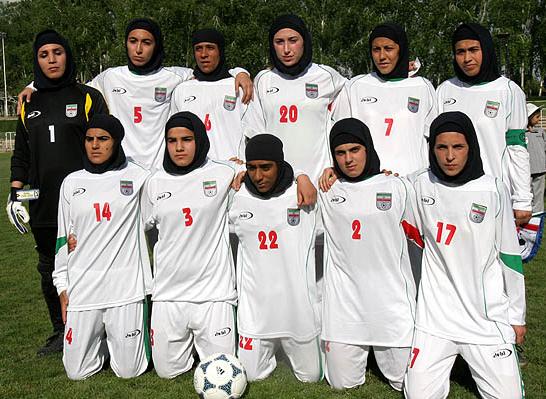
Al Jazeera Story about Iran’s women’s team & a follow up to last week’s post
“Reaction to last week’s post about football and hijab has been caught up in the veil (represented by some commentators as the first step in a “slippery slope to fundamentalism”). Some readers seem to have lost sight of the story at hand: whether FIFA’s support of the ban against headscarves specifically, and hijab more broadly, makes sense.” (From A Left Wing)
Technology In Football
“It rather seems as if every time there is a refereeing decision that costs a team a point or two, the usual suspects in the media start stating the case for all manner of whizzy gizmos to make sure that such a travesty of justice never occurs again. FIFA, however, are against the introduction of such technology and Rob Freeman has similar reservations.” (twohundredpercent)
FIFA Makes Its Islamophobia Official & Bans Iranian Women for Donning the Hijab

Iran’s National Women’s Football Team, 2007
“FIFA has declared that Iran can’t enter its women’s team into this August’s Youth Olympic Games if its athletes play in headscarves. Iran’s football association is calling for international protest – quite rightly. This decision comes from the International Football Association Board, which is made up of representatives of the four UK Football Associations (England, Scotland, Northern Ireland and Wales) and FIFA, which itself has four votes in these decisions. One can imagine what that boardroom looks like – Sith Lords of Soccer, Imperial Experts in Sexism and Islamophobia.” (From A Left Wing)
Labour’s Football Proposals: Playing To The Gallery Or Genuine Change?
“There was a time when members of parliament would only really queue up outside Westminster to discuss how to brow beat our game. They considered us animals that needed to be caged and carry ID cards at all times during the 1980s, it took a lot of work to undo the damage done to the reputation of the rest of us for the actions of what was always a very small minority. Times, however, have moved on. From Tony Blair playing keepy-ups with Kevin Keegan to Gordon Brown’s professed love of Raith Rovers, football’s use as a political football has almost now come full circle, and it has reached its logical conclusion with a story leaked to The Guardian this evening – possibly accidentally, more likely tactically – about Labour Party proposals for their forthcoming general election manifesto which, were it would happen, would go some way to changing the landscape of the game in this country.” (twohundredpercent), (Guardian – “Government’s plan to fix football: give clubs back to fans”)
Ultras in Britain are wrongly persecuted
“For many, the word “ultra” conjures up images of violence on the terraces or on the streets around the stadiums in countries such as Italy or Greece and in some parts of South America. Incessant chanting, mass crowd participation, choreographed displays and fireworks are all integral parts of the ultra culture throughout the world. But ultras and hooligans are different things and eventually the authorities here will come to realise that. The first group to endorse the phenomenon in the UK were Aberdeen fans, the Red Ultras. Formed over a decade ago, the group announced recently that they would be disbanding with immediate effect.” (WSC)
‘Galacticos’ in Hell

The Hell, Coppo di Marcovaldo
“It has become a sign of spring: as swallows crowd the sky over Madrid, Real is eliminated at the knock-out stage of the European Champions League. Yet again, the richest club in the world has spent obscene amounts of money with the sole intention of winning the most important club competition in the world, but on March 10, they were knocked out from the last 16 for the sixth year in a row (in 2003, they were eliminated from the last eight).” (The New Republic)
Grim scandal in Germany
“Barely two months ago, Michael Kempter was considered as the up-and-coming referee in German football, having progressed from Bundesliga to FIFA level at the age of only 27. Today, it is highly unlikely that he will ever be in charge of a professional match again. Manfred Amarell’s career as refeereing supervisor has fallen to pieces, too, and the most intimate details of his private life are currently the subject of public discussion.” (WSC)
France Is Back in Football Hunt

“It’s elementary sports psychology: To produce their best in the biggest moments, athletes are advised to recall peak performances from the past. But as Bordeaux prepares to face Olympiakos for a place in the UEFA Champions League quarterfinals tonight, Laurent Blanc, coach of the French club that’s been the surprise of this year’s tournament, will focus his team’s attention not on the six European matches it’s won this season, but the only one it didn’t.” (WSJ)
Mid-Week Review Show: EPL Talk Podcast
“Looking back on the mid-week action for Premier League sides in Champions League, Europa, and within the Premiership, analysts Laurence McKenna and Kartik Krishnaiyer join host Richard Farley on this version of the EPL Talk podcast.” (EPL Talk)
Match Of The Midweek: Chelsea 0-1 Internazionale
“How would you feel if you were Roman Abramovich after this evening’s Champions League match between Chelsea and Inter? When he disposed of Jose Mourinho just over three years ago, it was reportedly a show of player power the likes of which the English game had seldom seen before.” (twohundredpercent)
Different Routes Yield Same Result
“One of the joys of sports is that they confound just about any theory that attempts to explain them. When Real Madrid was eliminated from the Champions League last week, and Manchester United produced one of the biggest victories in its history, it was reasonable to conclude that stability counted for something.” (NYT)
Italian press celebrate Inter’s victory over Chelsea
“Having held a grim-faced silenzio stampa (press silence) for the past week, Jose Mourinho’s relationship with the Italian media had reached a new low on the eve of Inter’s Champions League return leg against Chelsea. A touchline ban, a pitiful display against Catania and ongoing grief with Mario Balotelli had formed a simmering backdrop to the game, with the Nerazzurri lumbered with the added burden of being Italy’s sole survivors in the competition.” (WSC)
Chelsea vs. Inter Milan
(footytube)
Saint Lloris, Savior of Les Bleus
“The lasting image from France’s anemic, controversial, but ultimately successful campaign to qualify for the 2010 World Cup will be the un-penalized handball by Thierry Henry that helped Les Bleus slip by Ireland in a two-match playoff last November.” (NYT)
And so it goes and so it goes and so it goes and so it goes
“The experiment with bye-line officials in the Europa League jars somewhat. Not that it’s a bad idea per se — having someone in a position to spot offences in the maelstrom of the penalty area, which are often on the referee’s blind side, could be a good idea. You wouldn’t know that from the number of people poised to pounce on it like spoilt indoor cats who don’t realise what a proper scrap is. But then, it was endorsed by Michel Platini, so, of course, it must be hare-brained/part of a nefarious scheme to erode Britain’s sovereignty and introduce a federal Europe by the back door.” (sport is a tv show)
Rejection of Technologies Won’t End Debate
“World soccer’s governing body moved from consideration to decisiveness Saturday, abandoning experiments with technology and firmly ruling out the use of video review or goal-line sensors. The International Football Association Board said Saturday: ‘The question posed to the members of the IFAB was simple: should we introduce technology in football or not? The answer from the majority of members was no, even if was not unanimous.’” (NYT)
Haitian soccer’s future uncertain
“The Stade Sylvio Cator, Haiti’s national soccer stadium, is a low concrete building with floodlights poking skyward on the Rue Oswald Durand, across the street from a cemetery. It comes out of nowhere, like a small college football stadium crammed into the capital’s downtown. Tall archways with tight turnstiles lead inside, where the good seats are red-and-yellow plastic in the covered section by the midfield line. The rest are old-school standing-room terraces. They’ve been baking in the sun since 1960. Seven weeks ago, after Haiti convulsed, it all turned into an improvised refugee camp.” (SI)
When The Weather Attacks
“There are few more poignant sights in football than the goalkeeper that has just conceded a goal, and most goalkeepers will experience this on average once a match, if not more. It’s a small wonder that more of them don’t go insane with the existential angst of it all. Covered in the dirt that acts as a visual metaphor for the futility of their attempt to keep the ball out of their goal, they will turn and trudge back towards the goal, maybe lifting the net to pick the ball out and kicking the ball disconsolately yet angrily back towards the halfway line and standing, hands on their hips, replaying what has just happened over in their mind.” (twohundredpercent)
Frugality Is European Goal
“Faced with their toughest opponent for a generation, Europe’s leading football clubs have been forced to adopt a new tactic: frugality. Creditors have caught up with the beautiful game in recent weeks, raising fears that spiraling wages and reckless spending could put the future of some of the world’s most iconic teams at risk.” (WSJ)
Should This Move Be Banned?
“Here’s the thing about soccer: When it comes to innovation and creativity, there’s Brazil and then there’s everybody else. To stop the Brazilians, you can try to overwhelm them (good luck with that) or try to steal their techniques. If that doesn’t work, all you can do is change the rules. This weekend in Zurich, as it makes final preparations for June’s World Cup, soccer’s main rule-making body will discuss the latest controversial bit of Brazilian magic: a devastating penalty-kick maneuver known as the paradinha.” (WSJ)
English Football Clubs Face Heavy Debts
“The full extent of the debts engulfing English football has been laid bare in a report that shows Premier League clubs are carrying more debt than the rest of Europe’s clubs put together. The findings are contained in a study from European football’s governing body into the state of football’s finances and come as the Premier League’s bottom club Portsmouth FC prepares to file for administration—a form of bankruptcy protection—on Friday as a result of debts of roughly £70 million ($105.5 million).” (WSJ)
Barça pep talk for Ibrahimović
“FC Barcelona coach Josep Guardiola was pleased to see Zlatan Ibrahimović silence his critics after the striker helped the UEFA Champions League holders to a first knockout round first-leg draw away to VfB Stuttgart.” (UEFA)
And Then There Was One

England against Scotland in 1877
“Let’s talk about Scottish football for a bit. We’ve obviously visited this ground before; back in November, Fuse did an incredibly intricate and in-depth series of posts (Part 1, Part 2, Part 3, Part 4) looking at the troubles of the Scottish League, In it, he surmised that the easiest way to fix the problem of declining revenues and quality was to consolidate several local clubs into one team; the revenues to keep lower league teams (and, truthfully, some upper league teams) are just not there to support one club per 20,269 citizens.” (Avoiding the Drop)
Fifa admits World Cup ticket prices too high
“Acknowledging that Fifa has lost money and that mistakes in the ticketing process and opportunistic pricing by travel operators had deterred many supporters, Fifa general secretary Jerome Valcke also promised an overhaul of ticketing before the 2014 World Cup in Brazil. Ticket sales for the tournament have been far lower than expected, with just 2.1 million of a total 2.9 million tickets sold. Prohibitive travel, accommodation and ticket packages sold through Fifa’s single licensed agency, Match, have deterred many fans.” (Telegraph)
Breathe and Stop… Manchester United: ‘An Italian Team from Another Era’
“… Where else to start but Manchester United’s impressive 3-2 win over AC Milan at the San Siro, which hands them a desirable advantage heading into the 2nd leg of their Champions League round of 16 knockout clash. United have become a truly masterful European outfit over the last three seasons, winning the tournament once and reaching two finals, and on the evidence of Tuesday’s game they look capable of making it all the way to Madrid for round three.” (Just Football)
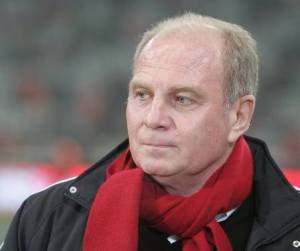
Uli Hoeness speaks his mind

“Recently in the news again for criticising FIFA’s decision to stage the forthcoming World Cup finals in South Africa, Bayern Munich president Uli Hoeness has acquired a reputation for making outspoken comments. Viewed by some as a loud-mouthed oaf, the former West Germany and Bayern midfielder is extolled by others for his championing of football’s traditional values and his distaste for some of the game’s biggest egos. Here are some of his most quotable observations…” (WSC)
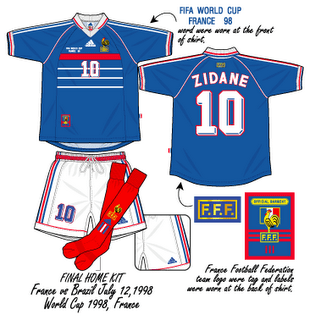
Video Of The Week: All The Goals Of The 1998 World Cup

“This week’s Video of The Week continues the World Cup theme of the last few weeks, with all the goals from the 1998 World Cup, which was, of course, held in France. The optimism that may have existed after England’s decent performance at the 1996 European Championships evaporated over the weeks of the tournament. Tabloid exclusives about the behaviour of the players, rioting in Marseille and a defeat at the hands of Romania were just the build up to a penalty shoot-out defeat at the hands of Argentina. Meanwhile, France and Brazil made the final of a tournament that was the first to feature thirty-two nations. Iran beat the United States of America in the first round but both teams went out,but Jamaica and Japan, who were both arguably beneficiaries of the expansion, brought colour to the tournament off the pitch but offered little resistance on it.” (twohundredpercent)
Transfer Rule Snares Footballers
“Football’s transfer system has always been a murky business. Unlike the National Football League or the National Basketball Association in America, where players enter the professional ranks amid the glitz and razzmatazz of the college draft, the movement of players in football is an altogether more furtive operation. Players are effectively the property of their employers, bought and sold by professional clubs without oversight or regulation from the sport’s authorities. Since every player has a price attached, recruitment is a cloak and dagger process.” (WSJ)
The return of Ronaldinho? Maybe
“In a month’s time comes the lone FIFA date for international fixtures before the end of the European season — the only time teams preparing for the World Cup have the opportunity to be at full strength, with all their players available.” (SI – Tim Vickery)
The Monday Miscellany – Africa Cup of Nations Special
“In the history of stupid decisions made by sport’s governing bodies, it is difficult to find one which compares, for sheer crassness, with that of the Confederation of African Football (CAF) to ban Togo for the next two Africa Cups of Nations. Togo, you will surely not need reminding, were attacked by terrorists in Cabinda on the eve of the tournament. Three men died and others were seriously injured. Everybody, it is safe to imagine, would have been seriously traumatized by the assault.” (Footballing World)
Egypt’s Three-peat – The Latter Stages Of The African Cup Of Nations

“The climax to Group C summed up this Cup of Nations, a curate’s egg of a tournament which ran out of good football from the second week onwards. A tournament during which the look of delight on the face of one CAF official when Algeria beat Cote D’Ivoire turned to horror when he remembered that Algeria played Egypt next. A tournament during which the players from the English Premier League, the “best” league in the world, were almost uniformally rubbish. And a tournament which ended with the unfeasibly fierce-looking Egyptian coach Hassan Shehata managing a smile at the end which made him look even more fierce. I’ll be having the nightmares for a while.” (twohundredpercent)
Africa Cup of Nations 2010: A Tournament Best Forgotten?
“The 2010 Africa Cup of Nations is over. Though I usually love the tournament, I won’t be remembering this edition fondly. For several reasons.” (World Cup Blog)
Four things I learned from the Africa Cup of Nations
“1) There is no one at the CAF fit to manage football. The choice of Angola to host the tournament in the first place was bizarre, given that it’s a quasi-Communist autocracy in the midst of a long and bloody civil war (which stipulated that, as a nation-building exercise, many of the games in this tournament would be held in the home of the hopeful secessionists). How the tournament actually panned out made the rejected bids of places like Zimbabwe and Mozambique look sweet by comparison.” (The 90th Minute)
Questions and Representations in the Year of African Soccer
“Finally, after an eventful January, I’ve got some answers to the big questions for this year of African soccer. Was Angola 2010 a success or a failure? Yes. Will the World Cup in South Africa be a success or a failure? Yes. Let me try to explain.” (Pitch Invasion)
Media Freedom at 2010 World Cup Under Question in South Africa

“FIFA are under fire for their press accreditation rules at the 2010 World Cup, with the South African National Editors’ Forum (SANEF) at loggerheads over numerous restrictions the governing body is putting in place, most of which follow on similar tight controls from previous World Cups, which have been criticised before.” (Pitch Invasion)
South Africa and FIFA Try to Ease Concerns About Power Problems
“Last month, as dozens of people out for the evening scrolled along the boardwalk, a popular area along the Indian Ocean with restaurants, specialty shops and bars here, the city was suddenly enveloped in darkness. Generators kicked in providing some power, but the shutdown brought most activity to a standstill for several hours.” (NYT)
South Africa’s cup is failing to set the world on fire
“According to the wonderful American humorist Dave Barry, who has long marvelled at Miami’s ability to attract visitors despite notorious gun and crime statistics, the city’s official tourism slogan is: Maybe You Won’t Get Shot. There is no truth in the rumour that South Africa is considering a similar sales pitch for the World Cup this summer, yet listening to Jérôme Valcke, the secretary general of Fifa, pleading for more favourable media coverage in advance of the tournament and blaming low ticket sales on unfounded security concerns, it was tempting to wonder what sort of people his organisation imagined would flock to a distant country with a reputation for violence.” (Guardian – Paul Wilson)
Super-sub Gedo lands Egypt title
“Super-sub Mohamed Gedo scored the only goal five minutes from time to help Egypt defend their African Nations Cup crown with victory over brave Ghana. The Pharaohs, who struggled to create many openings through the game, looked unlikely to score as the game drifted towards extra-time – until the Ittihad striker struck his fifth goal of the competition to break the resilience of their opponents.” (ESPN)
Ghana 0-1 Egypt
“Egypt secured a record seventh Africa Cup of Nations title, after beating Ghana 1-0 in a tense final in Angola. Substitute Mohamed Gedo scored the only goal of the game, playing a neat one-two before curling a superb shot past Richard Kingson in the 85th minute.” (BBC)
Soccer Takes a New Look at Replay

Mountainous Landscape, Lucas van Valckenborch
“European soccer’s stance on video technology is officially under review. More than two months after Thierry Henry’s infamous handball helped France eliminate the Republic of Ireland in a World Cup qualifying match, Sepp Blatter, the president of soccer’s governing body, FIFA, has reopened the debate on whether the sport should introduce video footage of the goal line to aid referees.” (WSC)
Brazil hurt by its power structure

Adriano
“We don’t yet know where the World Cups of 2018 and 2022 will be played. But some of the bidding countries have already worked out which cities they will use to stage matches if the circus does come to town. It’s unfortunate Brazil wasn’t so quick off the mark.” (SI – Tim Vickery)
Sepp Blatter’s Moronic Statement about Indian Women’s Football
“I just came across this tidbit in an interview with Sepp Blatter about FIFA’s “Win with India in India” program (initiated in 2007)…” (From A Left Wing)
Blatter backing football in India
“Joseph S. Blatter has touched down in India and will be exploring the country between now and 18 April, as he pays his first official visit since taking over as FIFA President. He previously travelled to the world’s second-most populous nation in 1978, taking in Madras (Chennai) and Bangalore as FIFA Director of Technical Development Programmes, and then returned for the Asian Games in 1982.” (FIFA)
2009-10 FA Cup, Fourth Round Proper (32 clubs)
“Notice how odd the map segment above looks without the usual suspects (ie, no Manchester United Red Devils and no Liverpool Reds). And the fact that uber-minnows Accrington Stanley are still alive in the 2009-10 FA Cup makes it even more unusual.” (billsportsmaps)