Category Archives: World Cup 2014

Al-Ahly sign Said as Aboutrika replacement

Al-Ahly
“While Egyptian football was sent into turmoil against the backdrop of the country’s revolution, Al-Ahly played as though nothing traumatic was going on at all. They racked up leagues titles — extending their run to seven in succession — and registered back-to-back triumphs in the CAF Champions League. Nothing could stop them, or so it seemed. This season, that changed. For the first time since trouble hit Egypt, its champion club had issues of their own. Al-Ahly suffered a shock exit from the CAF Champions League at the hands of namesakes Al-Ahly Benghazi. They have since made it their mission to become the first Egyptian club to win the secondary continental competition, the CAF Confederation Cup.” ESPN

Raheem Sterling and Liverpool Style Can Provide World Cup Template for England

“Raheem Sterling is a player whose sense of adventure and willingness to try the unusual brings a sense of glee. No neutral fan could watch him running with abandon at the Norwich City defence on Sunday and not feel a warm glow, while his goal against Manchester City, nonchalantly sending Joe Hart and Vincent Kompany to chase an imaginary foe, was breathtaking. There is something very special about those rare, still moments in football, when the goal suddenly emerges before a player and you know he has to score—those moments of potential fulfillment when the goal is inevitable.” Bleacher Report – Jonathan Wilson

Brazil 2014 – Messi’s crowning glory?

“When Lionel Messi received the honour of a fourth successive Ballon d’Or in January 2013 the record books had been rewritten. The Argentinian forward had surpassed Michel Platini’s haul of three successive FIFA World Player of the Year awards with Juventus and cemented his place as one of footballs all time greats at a mere 25 years of age.” backpagefootball

Lionel Messi’s Argentina better for Carlos Tevez absence

“In a last-gasp attempt to get the stocky Juventus striker on the plane to Brazil, an Argentine musician has written a tango for Carlos Tevez. Daniel Ursini is using the medium of music to send a message to national team coach Alejandro Sabella, once an elegant midfielder for Leeds and Sheffield United. Entitled ‘Sabella, you’ve forgotten Carlitos’ the song’s melancholy tones accuse the coach of having taken the wrong path. ‘You can’t be so stupid as to leave out one of Argentina’s most popular players,’ argues Ursini. A year ago, Ursini wrote a song to mark the birthday of Lionel Messi, and separate songs for the two stars may well have been a wise move because it could boil down to a choice between one or the other in the Argentina national team. And that is not a particularly difficult decision to take.” BBC – Tim Vickery

Know Your Enemy: Ghana’s Kwadwo Asamoah

Kwadwo Asamoah
“In the career of Kwadwo Asamoah is written a parable of the tactical history of African football. When he emerged, making his international debut in 2006 when he was just 17, he was hailed as the first great Ghanaian playmaker since Abedi Pele. Until a decade or so ago, West Africa specialized in technically gifted attacking midfielders or second strikers – as well as Pele, there were the likes of Ni’i Lamptey, Theophile Abega, Jay-Jay Okocha and Kanu, players who dropped deep from the front line and had the patience and skill to hold the ball up, wait for a runner and deliver the pass.” SI – Jonathan Wilson (Video)

World Cup 2014: Man Utd’s Valencia key to Ecuador in Brazil

br
“With his ability to fill in at right-back as well as his more customary position higher up the flank, Luis Antonio Valencia is an extremely useful member of the Manchester United squad. For Ecuador, though, he is much more than that. A year ago national team coach Reinaldo Rueda referred to him as ‘the main reference point for Ecuadorian football, as a result of everything he has achieved’. A British readership might be unaware how special it is for Ecuador to have one of their own playing at one of the world’s major clubs, and in action in the closing stages of the Champions League. Less than 30 years ago Ecuador was a Latin American Luxembourg in footballing terms.” BBC – Tim Vickery

Tactician’s Corner: On best options for Michael Bradley and the USA’s diamond MF

bradleymexico
“The United States’s 2-2 draw with Mexico Wednesday night included an overwhelming start that gave way to a blown lead, but add in a new formation and Julian Green’s highly anticipated debut, and it was worth staying up late to watch. For the first time in Jürgen Klinsmann’s time as head coach, the U.S. trotted out a diamond midfield, anchored by Real Salt Lake holding midfielder Kyle Beckerman, who plays the same role for his club team. Brad Davis and Graham Zusi, usually wingers, had more withdrawn starting positions, and Michael Bradley floated freely in the middle.” SI

Domestic league turbulence won’t affect Uruguay at World Cup

nacionalfanviolence_576x324
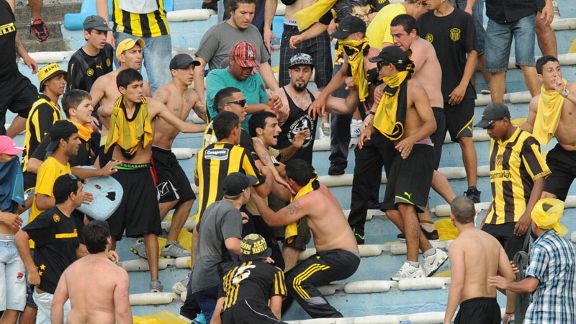
“The directors of Uruguay’s FA resigned earlier this week, and a scare story was doing the rounds suggesting that this would result in the country’s national team being kicked out of the World Cup. There was never the slightest chance of this happening. The false justification for the fear was FIFA’s hard line against government interference in football administration. But this is not what had transpired in this case. The Uruguayan government had taken measures on a subject 100 percent within its proper jurisdiction — policing policy.” ESPN – Tim Vickery (Video)

For Dempsey, Donovan, Bradley, Mexico friendly offers chance to re-establish chemistry

“Exhibitions between the U.S. and Mexico already are pretty unfriendly. They attract large, divided crowds (more than 55,000 tickets have been sold for Wednesday night’s tilt here at University of Phoenix Stadium), and there’s an abundance of history and animosity on which to draw. Conversation this week has ranged from U.S. coach Jurge Klinsmann’s annoyance at Puebla FC’s refusal to release defenders DaMarcus Beasley and Michael Orozco to Mexico manager Miguel Herrera’s claim that El Tri doesn’t owe its World Cup qualification to the Americans. In fact, he said, the U.S. owes Mexico for taking California.” SI

How does Brazil keep the World Cup party going? Send in the army

rio-de-janeiro-sec-XIX
Rio de Janeiro Sec. XIX
“Eighty days before the start of the World Cup, the Brazilian government has deployed the army to occupy one of Rio de Janeiro’s largest groups of favelas. On Monday it was announced that, following a recent escalation in violence across the city, the army will soon be present in the Complexo da Maré for an ‘indefinite’ period. Rio’s favelas are, unfortunately, well known for their violence. Yet, a strategy launched by the government in 2008 to combat the entrenched power of drug traffickers by using community police units (UPPs), designed to bring security alongside investment and social services, has yielded some impressive results. For example, one formerly violent favela has not had a murder for more than five years.” Guardian

History of Rio de Janeiro’s Military Police Part I: 19th Century Beginnings
“To fully understand the nature of the Brazilian police force today, it is necessary to know about the context in which it was originally created. In 1808, threatened by the impending invasion of Napoleon, the Portuguese royal family took the decision to move to Rio de Janeiro, taking its Court of nearly 15,000 people with it. Rio´s law enforcement until that point had consisted in unarmed watchmen (guardas) chosen by the town council working alongside neighbourhood inspectors (known as quadrilheiros) employed by local judges. However, the arrival of the monarchy clearly necessitated a more organized force.” Rio On Watch – Part I: 19th Century Beginnings, Part 2: From Dictatorship to Drug War, Part 3: Community Policing

Rio Looks Like A War Zone As Troops Raid Slums Only Months Before The World Cup
“Brazil has deployed federal troops to Rio de Janeiro in an effort to rid slums of violent crime, drug traffickers, and gangs ahead of the FIFA World Cup in June. The drug lords are fighting back against the authorities, trying to recapture their territory after years of police occupations. This violent battle has raised concerns about safety and security at the upcoming World Cup soccer tournament in Brazil, which hundreds of thousands of foreigners are expected to attend. The final game in the tournament will take place at the Maracaná stadium, a few miles from the Manguinhos slums.” Business Insider (PHOTO)

Protesters in Brazil: ‘There Will Not Be a World Cup!’
“An Agência Pública reporter searched out the activists that mounted the first protest of the year against the World Cup due to be hosted in Brazil this year; what he found was a mixed group determined to stop the sporting event throughout protest and without ‘violent acts’.” Global Voices Online

Soccer Players You Should Know Before the World Cup: Antoine Griezmann

“France makes national football teams like it makes wine: generally older, kind of snooty about it, sometimes great, but often overhyped. And sometimes, like at the 2010 World Cup, you get one that’s gone extremely bad. Except maybe not this year. This year, France could be the wildcard. Increasingly in the lead-up to this summer, the country is breaking in a group of young, exciting players, and perhaps shifting its identity. Nobody exemplifies that more than Antoine Griezmann.” Grantland

World Cup 2014: Cesare Prandelli on a quest to have Italy in peak condition with his blue-chip Azzurri

Prandelli_2865372b
“Brazil is renowned as the home of joga bonito. But here’s a question: will the conditions allow beautiful football to be played at the 2014 World Cup? Considering the heat and humidity, the games every four or five days, the thousands of kilometres and many hours of travel in addition to the pressure of expectation the answer is: maybe not. Stamina and fitness are likely to be as important if not more so than skill and technique. This has informed the selection policy of Italy coach Cesare Prandelli. He doesn’t just want footballers booked on the plane to Brazil, he wants the best athletes the game has to offer too. That impression only hardened after Italy’s 1-0 defeat to Spain in Madrid at the beginning of this month.” Telegraph – James Horncastle

Know Your Enemy: Portugal left back Fabio Coentrao

“Fabio Coentrao was 13 when he joined his local club, Rio Ave. He soon developed as a quick and direct winger, a player with technical ability but also a certain rawness. He made his first-team debut at 16, and by 18 had established himself as a regular for his hometown club, then playing in the Portuguese second division, and earned the nickname the ‘Figo of the Caxinas.’ Rio Ave narrowly missed out on promotion that season but a decent run in the Portuguese Cup brought Coentrao to national attention, particularly when he scored with a 30-yard drive in a 2-1 defeat to Sporting, one of the three traditional giants of the Portuguese game.” SI – Jonathan Wilson (Video)

The World Cup Takes New York

P3021901.wide-2
Little Italy: Still Italian come game time
“On a recent February night at the Irish Consulate in Midtown Manhattan, members of the New York Irish soccer community assembled in the chill for the inaugural Irish-American Soccer Hall of Fame awards. Diminutive pieces of smoked salmon on brown toast, mini shepherd’s pies, and bottles of beer flowed freely alongside conversations marked by thick Cork and Armagh accents. Peter Ryan, the Irish Deputy Consul General, spoke eloquently about the Irish immigrant community’s ambassadorial role in making New York a great soccer city while simultaneously introducing other communities to Irish culture.” Road and Kingdoms

Portugal’s Everlasting Striker Dilema

portugal-unveils-new-nike-home-kit-for-2014-wold-cup-00
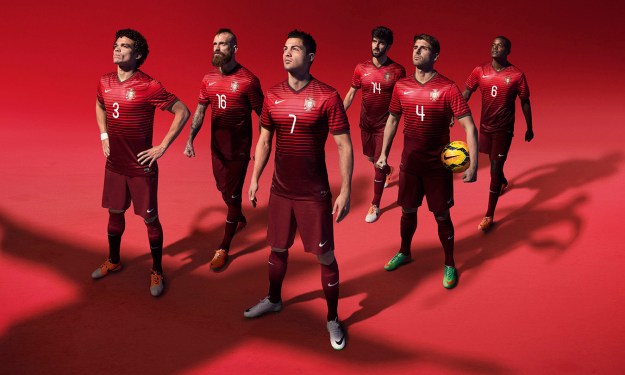
“The announcement that we are less than 100 days away from the start of the World Cup usually marks the beginning of endless heated discussions and arguments about team selection- who deserves to be on the plane and who is left in the departure lounge, doomed to wait another four years for the chance to realise their World Cup dream.” backpagefootball

Ireland: Group D pits neighbours in close quarter combat

“The Republic of Ireland face familiar foes on the road to France 2016, with Germany, Poland, Georgia and Scotland providing stern opposition for Martin O’Neill’s men. The Green Army’s first outing is a tricky away tie against Georgia on September 7th, previous opponents in two failed qualifying campaigns, Portugal 2004 and South Africa 2010. Ireland secured victory on each occasion, eking out vital away wins on a 2-1 score line.” backpagefootball

World Cup path clear for Brazil v Argentina final

“The Rio samba schools steered well clear of the 2014 World Cup when they selected their themes for Carnaval. The winner based its parade on the idea of speed, with pride of place for Ayrton Senna. Another school paid tribute to Zico, and finished fifth. But no one wanted to touch the coming World Cup. One school in the Sao Paulo parade took the plunge – one from the Itaquera district, where the new stadium is being built. They were relegated. Even the weather turned against their parade, which celebrated the fact that the World Cup kicks off in their neighbourhood. They had to strut their stuff in heavy rain and a hailstorm. There are signs of protest fatigue, but it is obvious that the 2014 World Cup has a public relations problem with the Brazilian people, upset at how much it is costing and how little it is giving back.” BBC – Tim Vickery

Transfer Target: Who Will Rescue Mateo Kovacic from Inter Milan?

“As one would imagine, memories of the 1998 World Cup run deep in Croatia. Still very much a new nation then, only a few years after having gained its independence from Yugoslavia in a bloody war, the country had little to show for and football became its best promotional tool. The national team dazzled the world with an exuberant display in its maiden appearance at the tournament, wearing psychedelic red and white checkers and at times squeezing three exceptionally gifted playmakers into the lineup. As Croatia marched to third place in France, Zvonimir Boban, Robert Prosinecki and Aljosa Asanovic became known as its ‘magic triangle’.” Bleacher Report (Video)

World Cup watch: Mario Balotelli, Cristiano Ronaldo, Ukraine crisis

kk
Police Battle Protesters in Kiev as Crisis in Ukraine Deepens
“The World Cup in Brazil is only 95 days away, with the opening match between Brazil and Croatia taking place in Sao Paulo on 12 June. BBC Sport, with the help of European football expert Andy Brassell, is taking a weekly look at happenings from across the world of football and what impact they could have on the tournament in the summer.” BBC

Unlike Simeone’s Atletico, Seedorf’s AC Milan still searching for identity

“The most fascinating aspect of Atletico Madrid is how the club resembles its coach, Diego Simeone. The Argentine was a hugely talented central midfielder, winning titles in both Spain and Italy, while becoming the first Argentine to collect over 100 caps for his national side — only Roberto Ayala and Javier Zanetti, two of his contemporaries, have beaten his tally. Simeone could pass astutely, he scored more goals than expected, he was superb in the air and he was highly mobile.” ESPN – Michael Cox (Video)

Brazil’s ‘hidden’ racism threatens to cast shadow over the World Cup

“As if Brazil needed any further irritants, beyond the World Cup preparations fiasco, it has found itself exposed over ‘hidden’ racism. For the eurocentric international media, racism in football had become an issue in which eastern and southern Europe and England, to a lesser extent, were easy to kick around. No-one in Europe ever gave a thought to the uneasy truth which lies below the tip of the iceberg perception of Brazil as a land in which blacks (Pele etc) and whites (Zagallo etc) were happy world champions together.” World Soccer

Wednesday’s friendlies: What we learned

International talking points2
“The final international break of the season produced some interesting results, and perhaps more importantly, offered a few hints about how major contenders might play in Brazil. Here are four conclusions from the week’s matches…” ESPN – Michael Cox (Video)

We Went There: A 72-Hour Whirlwind Tour of European Football

“Stuttgart’s Mercedes-Benz Arena used to be called the Gottlieb-Daimler Stadion, which used to be called Neckarstadion, which used to be called Century Stadium, which was first called the Adolf-Hitler-Kampfbahn when it was built in 1935. And it was in the shadows of this stadium that I was handed a VIP card — with ‘Einttritt frei!’ on it — for a strip club called Macabu Four Roses. I don’t know if it was because we didn’t speak German and therefore couldn’t say ‘no,’ but people kept trying to hand us stuff. Our hands were full of beers and bratwurst — we’re tourists, all right? — but that didn’t stop the women from Commerzbank from coming over, multiple times, and handing us schedules for the World Cup. And it didn’t stop the older woman in the German-flag smoking jacket from slipping us a card for the only-€84.95 Germany Jacket, which she casually suggested we buy as an ‘alternative jersey’.” Grantland

Mixed emotions after latest El Tri friendly

“I’ve been replaying Rafa Marquez’s header from the first half over and over again in my head. It’s not a conscious decision, but every time I even begin to think about the Nigeria friendly, the replay rudely interjects and occupies my mind. The memory nudges its way past Guillermo Ochoa’s remarkable saves and shoves Hector Herrera’s movement forward out of its sight. I can’t help it.” ESPN

El Tri depth chart: Not much has changed for Herrera
“With fewer than 100 days until the World Cup kicks off in Brazil on June 12 in Sao Paulo, this is now a crunch time for coaches chiseling down their squads to be as effective as possible at the summer tournament. Players know that the window of opportunity is shrinking, but that it’s still there with a run of performances. It is a time when every slight injury to a player causes ripples of panic through nations, and a couple of bad games from a star striker becomes a topic of national conversation.” ESPN

Failed Auditions: Three thoughts on the USA’s 2-0 loss to Ukraine

“In an exhibition played under unprecedented circumstances, a U.S. national team comprised of players hoping to make their World Cup case was outplayed Wednesday by a Ukrainian side motivated by a whole lot more. There were only a handful of fans in attendance at Antonis Papadopoulos Stadium in Larnaca, Cyprus, but their blue-and-yellow flags and banners calling for Ukrainian unity set the stage. The ‘hosts’ were in gear early in the first half and eased to a 2-0 triumph over the Americans behind goals from Andriy Yarmolenko and substitute Marko Devic.” SI

Futebol = life

A38A-AB58B5F252EA}Img100
“‘Life imitates art far more than art imitates life,” wrote Oscar Wilde, who might not have spent much time in Brazil. For here, it is not art that life imitates, but football. There is arguably nowhere in the world where the game is so gloriously and tragically tied to the feats and failures of the society that surrounds it, and it is hard to think of another country whose history is so symbiotically linked to the sport or that looks so pleadingly to the success of its national team for self-validation.” ESPN (Video)

2014 World Cup: Pressure starting to rise for hosts Brazil
“‘We’re working in conditions where the cement is not yet dry,’ said Fifa secretary general Jerome Valcke as preparations for the 2014 World Cup move towards the final straight. The strain is showing on Valcke. Fifa wanted all 12 stadiums ready by December, to give plenty of time for test events. Sao Paulo, scene of the opening game, may not be handed over until May. Curitiba got itself so far behind that there was a real danger of the city being cut from the schedule.” BBC – Tim Vickery

Battling the elements in Brazil
“‘President Blatter,’ asked a Fortaleza-born journalist during the World Cup draw last December, ‘in Fortaleza we never play soccer until early evening to avoid the heat. Why,’ the journalist continued, referencing the local times, ‘have you scheduled matches at 1 p.m. or 4 p.m.?’ FIFA president Sepp Blatter’s predictable answer mentioned Brazil’s time difference with the body’s biggest market, European TVs. Given that those kickoff times won’t change, some squads will have to prepare for a grueling mixture of heat and muggy weather, tiring factors to be added to the huge distances between certain venues.” ESPN

Futebol: The Brazilian Way of Life
“The Brazilian football team is one of the modern wonders of the world. At its best it exudes a skill, flamboyance and romantic pull like nothing else on earth. Football is how the world sees Brazil and how Brazilians see themselves. The game symbolises racial harmony, flamboyance, youth, innovation and skill, and yet football is also a microcosm of Latin America’s largest country and contains all of its contradictions. Travelling extensively from the Uruguayan border to the northeastern backlands, from the coastal cities of Rio de Janeiro and Sao Paulo to the Amazon jungle-Bellos shows how Brazil changed football and how football shaped Brazil. He tells the stories behind the great players, like Pele and Garrincha, between the great teams, like Corinthians and Vasco de Gama, and the great matches, as well as extraordinary stories from people and pitches all over this vast country.” amazon
Don’t Take Julian Green to the World Cup

“It’s becoming increasingly clear that Julian Green is a special soccer player. The 18-year-old winger already made his first-team debut for Pep Guardiola’s world-destroying Bayern Munich, and has scored nearly a goal a game for its reserve team this season. Born in Tampa, Green has lived in Germany since he was 2. He is, at worst, an exceptionally promising prospect. At best? Who knows; projecting the future of a teenage soccer phenom is an exercise in cloudy crystal-ball reading under the simplest circumstances, and Green’s situation is far from simple. He’s not Lionel Messi, but he’s closer to him than he is to Freddy Adu. Let’s just say he’s the type of player who, in the right situation, could dramatically improve the fortunes of the United States national team this summer in Brazil.” Grantland

The Indomitable Tino

“September 5th, 1993 is more or less regarded as major event in Colombian history, a sort of soccer version of Independence Day. That is the date that the Colombian and Argentinian national football teams met in Buenos Aires for the last of their qualifying matches for the 1994 USA World Cup. Whichever team won would go straight to the World Cup. The loser would face Australia in a playoff. A tie would have sufficed for Colombia, but instead they won the match 5-0. It remains the biggest win in Colombia’s history. A player known simply as “El Tino” scored the second of Colombia’s goals—skilfully evading two defenders and the goalkeeper, and then scoring as he fell to the ground—and the fourth, a clever chip, before assisting teammate Freddy Rincón for the fifth. The day cemented Faustino Asprilla’s place in Colombian history.” ROADS & KINGDOMS

World Cup 2014: England Squad Selector – pick your 23 then compare with our choices

“Ever wanted to be Roy Hodgson? It’s a common condition. His is a life of easy charm, muted bookishness and lovely warm coats. But there’s one unenviable task looming for the England manager ahead of the World Cup in Brazil, and that’s picking 23 men to make up a squad capable of avoiding humiliation. … You can select your 23 using our interactive graphic, share and compare it with your buddies across social media, then see how it stands up in comparison with five of our World Cup experts. Henry Winter, Michael Owen, Paul Hayward, Alan Hansen and Alan Smith picked their 23 in December ahead of the finals draw. Who knows, perhaps Theo Walcott will still make it to Brazil?” Telegraph – Henry Winter

World Cup 2014: Iran’s hopes of glory in Brazil rest on a Charlton striker Reza Ghoochannejhad – Gucci for short

“The January before a World Cup finals is a month of ambition and movement. It is the final chance players get to stake a claim for their respective national teams. Minutes matter more than glory, time more than honours. Suddenly a player that might have seemed out of reach in the summer becomes a legitimate target. Clubs and players alike roll the dice and take the risk. Even with such an underwhelming transfer window, one such move went largely unnoticed and under reported, yet its ramifications could have a say on the World Cup hopes of Bosnia, Nigeria, Argentina and, of course, Iran.” Telegraph

Will the World Cup Return to the Democratic World?

“The Brazilians are pissed off and their protests are increasingly directed against the World Cup, and rightly so. Romário explained why: I supported Brazil’s World Cup bid, but even I am against it now. Their main complaint is that a lot of public money is poured into stadiums that many will turn into expensive white elephants. It happened in South Africa, which hosted the World Cup in 2010 and it will happen in Brazil as well. I’m also pretty sure that will happen in Russia and Qatar.” Soccer Issue (Video)

Responding to Klinsmann, U.S. players say it’s opportunities they lack – not belief

“If it can be measured or tested, Jurgen Klinsmann has measured and tested it. From strength and agility to VO2 max, pattern recognition, sleep and caloric intake, U.S. national team players have been subjected to an unprecedented amount of quantitative analysis under their thorough and ambitious coach. As Klinsmann has claimed repeatedly over the past two-plus years, it’s all designed to help forge players who can compete at soccer’s highest level.” SI

Socceroos a crucial test for Ecuador

“Millwall’s stadium in South London might seem a strange spot for the 2014 FIFA World Cup to begin, but that is the way that Ecuador sees it when it takes the pitch there against Australia on 5 March (Thursday morning AEDT). Ecuador coach Reynaldo Rueda is well aware that the World Cup comes with a level of mental pressure which can stew the mind and freeze the legs. Four years ago the Colombian coach took Honduras to its first World Cup since 1982. His players, then, belonged to a generation which had never experienced anything like it. The first two games passed them by. Only in the third match, by which time it was already too late, did Honduras display its true colours. The same thing happened to Ecuador on its World Cup debut in 2002. And the fear is, after missing out on South Africa 2010, a similar problem might strike Ecuador’s latest generation.” The World Game – Tim Vickery

The Beautiful Language

“I had been in Teresópolis, Rio de Janeiro state, for two days and already I was running out of things to do. School children ambled between shops whose wares they must have known by heart. In the sleepy town square, old men gathered to play dominos and chat, whiling away the hours under a winter sun rendered impotent by altitude. There is a mountain trail that weaves through a jungle before coming up for air above the canopy, eventually scrambling up one of the mountains that flank the town. You can almost see Rio itself from the summit; almost feel its sands between your freezing toes. The youth of Teresópolis migrates to the city during the school holidays to escape their parents and the cold. Eventually, even the tasty steaks, breads and fine local beers lose their charm. With little to do, I soon found myself wishing I could play soccer with someone.” Road and Kingdoms

Carlos Tevez should be at his peak, but is destined for World Cup despair

“A vineyard near Mendoza, June 2011. The manager had just learned I was a journalist covering the Copa América and was determined to find out why I thought Argentina were underperforming – which is to say, she was determined to tell me why she thought they were underperforming. I suggested there was a superabundance of attacking talent, that maybe Carlos Tevez and Lionel Messi couldn’t usefully play together. ‘Then we must drop Messi,’ she said.” Guardian -Jonathan Wilson

World Cup 2014: Uruguay fans are realistic but their side’s never-say-die spirit could see them spring surprise

“With a population of under 3.5 million, Uruguay’s two successful campaigns mean they have overachieved like no other nation in the history of the World Cup. Continental championships demonstrate that those two World Cups are no fluke; though squeezed between two giants in Argentina and Brazil, Uruguay have been champions of South America 15 times (including at present), more than any other side. Where does this overachievement come from? The influence of history mustn’t be underestimated. Uruguayans are proud of what they managed early in the international game’s history, and that pride leads to high standards for youngsters coming through today.” Telegraph

Does Wondolowski have a realistic shot at Brazil?

“Even before the final whistle sounded, it was the question on everybody’s mind. Can striker Chris Wondolowski, who scored both goals for the U.S. national team in Saturday’s 2-0 friendly win here against South Korea, somehow grab one of the final spots on the Americans’ World Cup roster when coach Jurgen Klinsmann names his 23-man squad in May? The answer may actually lie in another question: Will Klinsmann take four forwards to this summer’s tournament in Brazil?” ESPN

Mr Big Bucks and the Mamelodi Sundowns

sundowns-flag
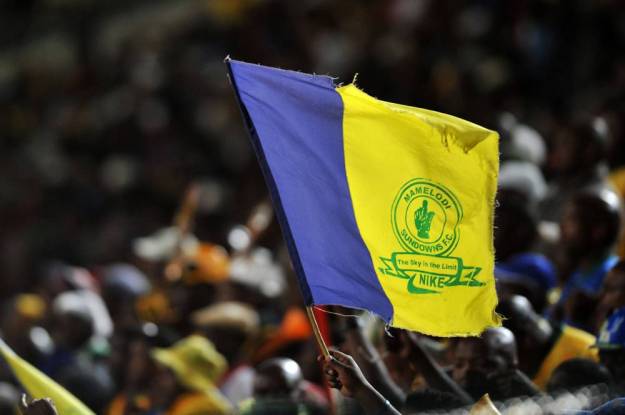
“On December 5th of last year, South Africans bade farewell to Nelson Mandela. In general the new republic’s founding father was remembered as a principled, but pragmatic political leader. Some media coverage, however, reduced him to a one-dimensional figure, at odds with the larger South African struggle. That Mandela advocated armed struggle and formed alliances with communists was conveniently downplayed by all sorts of political causes and personalities whose politics Mandela would have opposed while he was alive, but who now claimed him as one of their own. Mandela was also favorably compared to his former wife Winnie Madikizela. His time in prison, presented as character-building, was contrasted with her increasing radicalism and criminal actions in the 1980s. Most black South Africans, however, were not scandalized by Mandela’s one-time celebration of violent struggle or his communist leanings, or by Winnie’s complicated, but flawed, legacy, which was formed in a more compromising, violent outside.” Roads and Kingdoms

Brazil and its ‘relatively simple’ World Cup delays

“In a rare question-and-answer huddle with Brazilian journalists this week, President Dilma Rousseff pronounced with confidence that the beleaguered new football stadium in the southern city of Curitiba would ‘definitely’ be ready for the World Cup. Mrs Rousseff was speaking on the pitch at the Arena das Dunas in the northern coastal city of Natal, which she had just officially opened with a rather nervous kick of a ball from the centre-spot. It was a rare high-point for Brazil – and its World Cup organisers – after a disastrous week during which a high-level Fifa delegation had seen, warts and all, the state of the country’s readiness for the tournament that begins in mid-June.” BBC

Are economic hardships in Brazil set to overshadow the 2014 World Cup?

“The lead up to a World Cup is a period where fans of the sport are filled with excitement and a child-like enthusiasm for a game; a game where nations compete in arguably the biggest competition in world sport. The years leading up to this colossal event are filled with building up hopes and expectations as they soar to an unrealistic level; hopes which come with the apprehension of the nightmare scenario which could be beheld or the joyous dream option which many will pray for well in advance. All this adds to the sheer spectacle a country puts on for the fans and players, and no other country has a carnival reputation like Brazil. However, in these modern times, it seems passion and zeal for the sport is not enough as money matters are playing a more important role than ever before. Brazil 2014 is not immune to this, and is possibly the most economically analysed World Cup in history.” Think Football

New Film Series, “30 for 30: Soccer Stories”, Surrounding 2014 FIFA World Cup on ESPN

“ESPN Films, creators of the critically-acclaimed 30 for 30 film series, will premiere a new series in April surrounding the 2014 FIFA World Cup on ESPN. 30 for 30: Soccer Stories will include a mix of standalone feature-length and 30-minute-long documentary films from an award winning group of filmmakers telling compelling narratives from around the international soccer landscape. In addition, a collection of 10 vignettes about Brazil’s rich culture will be featured throughout ESPN’s FIFA World Cup programming.” ESPN

Afro-Europe in the World Cup

lukakubelgium-single-image-cut
“It isn’t fair. Though Africa has more countries and a larger population than Europe, the continent only has five berths in the World Cup compared to Europe’s thirteen. And they had to fight for that: it was only a boycott in 1966, led by Kwame Nkrumah, that changed the policy that allowed only one spot for either an African or an Asia team. There are all kinds of justifications, of course, offered for this inequality. And it will likely to a long time for change to happen, and then it will come incrementally. While we wait patiently for institutions to change, however, the world has a way of rendering a kind of justice. Post-colonial migration has created a loophole of sorts in FIFA’s global apportioning of representation. This year, there will be two additional African teams in the competition: France and Belgium. If they are going to the World Cup at all, it is thanks to goals scored by the children of African migrants: Romelu Lukaku for Belgium, and Mamadou Sakho for France. I’m not sure if these old colonial powers deserve the help, but they’ve gotten it: Africa has come to the rescue. In fact, it might be worth giving new names to these two football teams: Françafrique and AfroBelgica, perhaps?” ROADS & KINGDOMS – Laurent Dubois

No Happy New Year for Brazilian Football

fifa-world-cup-brazil-2014-zoom-hd-wallpapers-images-download-wallpapers-sports-football-photo-world-cup-brazil-wallpapers
“The war cry of Ronaldo, Sepp Blatter, the President of Brazil Dilma Rousseff and the rest of Brazil and FIFA’s great and good is about as considered a pronouncement as a turkey’s gobble. And yet in its sunny patriotism and glossing over of the cold reality of delays, mismanagement, overspending and dead construction workers it neatly captures a chunk of the troubled optimism/pessimism dichotomy that lies at the heart of Brazilian society. Everything may be a mess and there isn’t much sign of improvement on the way, but hey — God is Brazilian, carnaval is coming, we’re still pretty good at football and the weather is nice most of the time. So things could be worse. Life in Brazil can sometimes seem not so much a case of if it isn’t broken, don’t fix it; but rather it’s always been broken, so there’s not much point in trying to fix it.” ESPN

Are Brazilian managers an endangered species?
“For Latin American and Portuguese news crews running around the Costa do Sauipe resort in northeastern Brazil during the buildup for the 2014 World Cup final draw, life was hectic. Argentines, for example, needed to be sure they kept tabs on the Albiceleste manager Alejandro Sabella; at the same time they “doorstepped” fellow countrymen Jorge Sampaoli and Jose Pekerman for a reaction on Chile’s and Colombia’s expectations before and after the draw. The Portuguese had to worry about ‘Quinas’ manager Paulo Bento, but also make sure that former Real Madrid commander and Sir Alex Ferguson deputy Carlos Queiroz, now in charge of Iran, would also be covered, as well as Greece’s ‘mister’ Fernando Santos.” ESPN

The 100 best footballers in the world 2013 – interactive

“Welcome to the Guardian’s choice of the world’s top 100 footballers for 2013. We asked our international panel of experts to name their top players in action this year and rank them in order of preference. You can see who the judges are and read how we compiled the final list here. Starting with No100 in the bottom right, click on individual players in the interactive to read more about their year.” Guardian

Football violence: a view from around the world

BX2TSiCCcAE_d-B
Spartak Moscow fans displaying a Nazi flag during a game at Shinnik Yaroslavl.
“Brazil: violence around games on the rise. Brazil ends 2013 with a record in football violence deaths. It was a miracle that nobody died in the festival of thuggery that took place on 8 December at the Atlético Paranaense v Vasco de Gama match in Joinville, during the last round of the Campeonato Brasileiro, whose shocking images were beamed all around the world. That, however, did not prevent Brazilian football finishing its 2013 season with the saddest of milestones: the 30 deaths in football-related incidents this year is the highest number in the history of the game in the country. What’s more worrying is that fatal cases have been rising steadily in the past few years. …” Guardian

World Cup – and outbreak of supporter violence – link Brazil and Russia
“In six months’ time the World Cup will land in the home of joga bonito clad in a Fifa-approved wrapping of sun, sea and samba. But the dark side of the beautiful game in Brazil was in evidence earlier this month, when images of running battles between fans of Atlético Paranaense and Vasco da Gama shocked the watching world. The game was being held at a neutral ground in Joinville due to previous clashes between fans of the two clubs, but within 10 minutes Globo was broadcasting close-up footage of supporters repeatedly stamping on the heads of their rivals and chasing one another around the stadium bowl. Following a long interregnum, the fighting was eventually broken up by armed security firing rubber bullets into the crowds and an army helicopter landing on the pitch, but not before several fans were seriously injured.” Guardian

Top 50 Players in the World 2013: Part 4 – 20-11

“We’re getting to the business end of the Top 50 now with the players ranked 20th to 11th. Some of the world’s best playmakers are in this batch of players, as well as some clinical goal scorers. If you were to put together a 5-a-side team from the ten names below you wouldn’t need a goalkeeper because the opposition would never get the ball.” Backpage Football

Top 50 Players in the World 2013: Part 3 – 30-21

“The third part of the Top 50 Players in the World 2013 sees us move into the top 30. There’s plenty of green arrows in this instalment of the countdown, testament to some of the huge strides made by some players in 2013. Five different leagues are represented here – the Premier League, Bundesliga, La Liga, Serie A and Ligue 1.” Backpage Football

The real cost of hosting a World Cup

soc_g_garrincha_d1_576x324
“You don’t often see people consciously building a white elephant, but that’s what I witnessed in Brasilia last year. Smack in downtown, on the main avenue of Brazil’s tropical capital, workers were finishing off a stadium for 70,000 people. The Estadio Nacional Mane Garrincha is one of 12 stadiums for next year’s World Cup. And even before the tournament ends, it will be redundant. No club from Brasilia plays in the two divisions of the Brazilian national league. Even what passes for the local powerhouse, Brasilia Futebol Clube, plays only in the local state league, in which the average game draws fewer than 1,000 fans. Nor will the Rolling Stones regularly visit this city in the middle of nowhere to fill the Nacional. Brasilia might as well tear down the stadium after the last World Cup game and save itself maintenance costs. So could other host cities such as Manaus, Cuiaba and Natal.” ESPN – Simon Kuper (Video)

Heat is on for all but Argentina

“And so after the trip way out west to Cuiaba to take on Chile, it’s the frozen wastes of the south for Ange Postecoglou’s Socceroos. Winter can bite a little bit in the cities of Porto Alegre and Curitiba, where Australia will face Netherlands and Spain respectively. Whoever wins Group B is then in for something of a shock – up to Fortaleza in the north east for a second round match, which is due to kick off at 1pm local time. It will probably be hot enough to fry. A Brazilian first division game would never get going at such a time. A few days ago I was on a TV show with Tite, who has just stepped down from a hugely successful spell in charge of Corinthians – and who could well be the next Brazil coach, once the 2014 circus has packed up and left town.” The World Game – Tim Vickery

Infographic: The Boys in Brazil | England at the World Cup

“The stage is set for the greatest show on earth and the ball is rolling. The countdown has begun for the grand World Cup in Brazil next year, as the beautiful game goes to its spiritual home. Of course, it’s inevitable that the competition would attract interest, but a few old men in suits hogged all the World Cup attention this week. The draw for the competition was released, and the customary search for the group of death ends with Group D. Italy, Uruguay and Costa Rica find themselves pitted alongside England.” Outside of the Boot

Top 50 Players in the World 2013: Part 1 – 50-41

41_Pique-01
41 Gerard Pique (▼ 40th)
“We’ve tallied the votes and taken opinions on board so now it’s time to reveal the Top 50 Players in the World for 2013! In the first part of this year’s countdown there are six new entries; players who showed a dramatic improvement over the course of the past 12 months.” backpage football

2014 Fifa World Cup: Gary Lineker’s guide to the eight seeds

world_cup_hosts_map_624_v4
“England have been drawn in Group D for the 2014 World Cup, meaning they will face seeded team Uruguay as well as Italy and Costa Rica. Hosts Brazil are in Group A, reigning world and European champions Spain are in Group B and three-time champions Germany are in Group G. Match of the Day presenter Gary Lineker, speaking before the draw was made, takes a closer look at the eight seeded national teams…” BBC

U.S. draws incredibly difficult group, but one filled with opportunity

“The U.S. had drawn Germany, Portugal and Ghana, the hardest opening-round group the Americans have ever faced in a World Cup. Germany, a three-time world champion, could easily win the tournament. Portugal has Cristiano Ronaldo, who may be about to win the Ballon d’Or as the world player of the year. And Ghana has been the destroyer of U.S. dreams at the last two World Cups, eliminating the Americans both times. Group G has easily the most difficult average FIFA ranking of any World Cup group: 11.25. Germany is No. 2, Portugal No. 5, the U.S. No. 14 and Ghana No. 24.” SI

USA’s 2014 World Cup group overflowing with history
“You wanted a World Cup group with some sumptuous storylines? You got one. The USA was drawn into a Group of Supreme Death with Germany, Portugal and Ghana, with Jurgen Klinsmann needing to gameplan for the likes of Mesut Ozil and Cristiano Ronaldo while aiming to break the Ghana hex — just to reach the knockout stage. The amount of history that the USA has against its group opponents is staggering, too.” SI (Video)

German Nationalism Courtesy of Football

“The 20th century was a wicked roller coaster ride for Germany. Two World Wars, each spawned by high levels of nationalism, both resulted in German defeat. In the course of less than fifty years, Germany’s territory, economy, and politics were reduced to rubble, rebuilt, and then subsequently destroyed multiple times. Post World War II, the Allied Powers split Germany into two countries to separate East from West during the Cold War, with the very visible divide in the form of the Berlin Wall. Only with the fall of the Berlin Wall in 1989 did East and West Germany begin the process of reunification. So, where has that left German citizens?” Soccer Politics

World Cup draw musings: Travel plans, Dyke’s “doh” and happy Fab

“Shortly after the World Cup draw, the national team coaches and FA officials are herded into what’s known as the “mixed zone”. It’s basically a giant tent, with eight barricades, one for each group. The coaches stand behind the fence, with the media scrum on the other side, microphones and notebooks in hand. How much a manager talks depends on several factors. First and foremost is his personality and how in demand he is. Then there is something as basic as how many languages he can speak: if you’re comfortable in English and Spanish, you can go a very long time.” ESPN

The Perfect World Cup

“In Bahia on Friday, the draw for Brazil 2014 represents a crucial stage in the incubation period of World Cup fever. For the next six months, symptoms may include fractured metatarsals, a fixation with Brazilian hotel facilities and cravings for football nostalgia. Much like Second Season Syndrome, there is no known cure, but it is treatable. The 19 previous tournaments have each provided their own iconic moments, images and (possibly apocryphal) tales. Looking back over the competition’s history – and with logistical and ethical fears surrounding the 2014, 2018 and 2022 editions – just what would a perfect World Cup be like?” Football Clichés

Fifa World Cup 2014: All you need to know about the draw

hi-res-185478013-ball-is-picked-up-during-the-fifa-world-cup-2014_crop_north
“The 2014 Fifa World Cup takes place in Brazil, starting on 12 June and finishing on 13 July. It will be the 20th time the tournament has been held and the first to take place in Brazil since 1950, when the host nation lost to Uruguay in the final. This Friday will go some way to determining the prospects of the 32 participating nations when the draw for the group stage takes place.” BBC (Video)