Category Archives: Jonathan Wilson

Susic’s Bosnic squad a unifying force among old divisions

“The smell of wood smoke hangs pungent in the early morning mist. As the cafe owners set up for the day, and old men, huddled against the cold, begin another session of backgammon in the courtyard of the mosque, the call of the muezzin echoes through the cobbled streets. On a corner on the square in front of the national library, a stall-holder sets out his wares. He has green Wolfsburg shirts, but today is not a day for club soccer. He slides hangers through the necks of two blue Bosnia shirts and hooks them over the rail that holds up the canopy over his stall. The back of each shirt is to the square so you can see the name and number. The left reads “Dzeko;” the right “Misimovic”: Muslim and Serb side by side.” SI – Jonathan Wilson

Tactics: the formation that cost Inter coach his job

“A 3-1 defeat at promoted Novara brought a swift end to Gian Piero Gasperini’s three-month reign as coach of Internazionale, and the day after he was sacked the 53-year-old was in belligerent mood. ‘I know that results determine everything,’ he said. ‘Inter knew that my system was 3-4-3. It is not that I do not know another system, but I believe that with this one the team I coach play better. I explained this to Inter’s chiefs three times when I spoke with them. I believe that the controversy about the formation was used as an excuse [to sack me]. If Inter did not believe in my work, why did they sign me?’” World Soccer – Jonathan Wilson

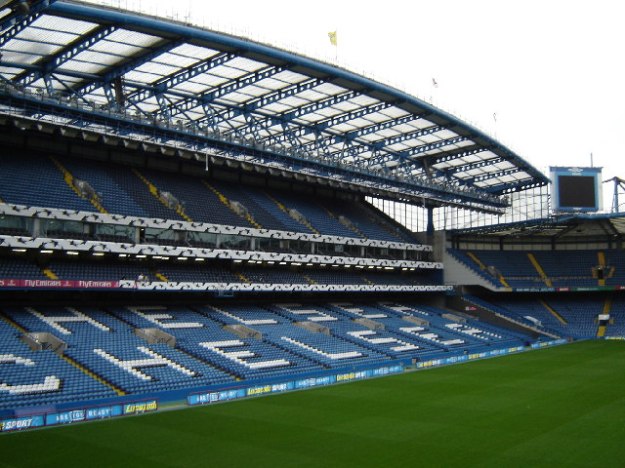
Questions being asked of Villas-Boas’ tactical approach at Chelsea

“There was one doubt about Andre Villas-Boas when he arrived at Chelsea in the summer. Astonishing as Porto was last season — it won a treble of Europa League, Portuguese Cup and Portuguese League (in which it dropped only four points) — it never really faced a test. Sporting is at a low ebb and Benfica looks much stronger this season, while in Europe it faced no side from England, Germany, Italy or France. Of teams from the top five leagues in Europe, Porto met only Sevilla and Villarreal.” SI – Jonathan Wilson

Mancini’s City exposes Man United’s season-long vulnerability

“When Manchester City beat Tottenham Hotspur 5-1 at White Hart Lane at the end of August, Manchester United did what they have been doing for half a century and eclipsed the majesty of that performance by beating Arsenal 8-2. If these had been four anonymous teams, it might perhaps have been rather easier to acknowledge what at the time was barely a puff of dust on the horizon: that it had been City’s performance that had been more impressive, that the ‘noisy neighbors’ might perhaps have arrived.” SI – Jonathan Wilson

Shakhtar and Zenit share the spoils in wide-open, high-tempo affair

“With two minutes remaining of Wednesday’s Champions League game between Shakhtar Donetsk and Zenit St Petersburg, Razvan Rat, the Shakhtar left back, sprayed a cross field ball to the right back, Dario Srna. Nothing too extraordinary about that, except that both were 20-30 yards inside the Zenit half. That’s how attacking the game was, that’s how much Shakhtar chased a late winner its performance wouldn’t have merited.” SI

Tensions rise, sparks fly as Greece, Croatia go their separate ways


“Friday should have been a night of triumph for Greece. A 2-0 win over Croatia moved it back to the top of its Euro 2012 qualifying group, and a draw away to Georgia on Tuesday will guarantee the top spot in the group, while Slaven Bilic’s Croatian side has to go through a playoff. But the events in the stand that caused the match to be stopped for seven minutes cast a long shadow. None of Greece’s 11 national sports papers led with the hooliganism, but these were serious outbreaks, not something to be brushed under the carpet of a satisfactory result.” SI – Jonathan Wilson

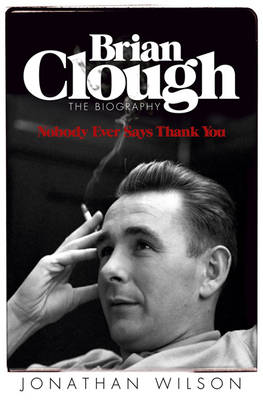
Brian Clough: Nobody Ever Says Thank You – By Jonathan Wilson


“Brian Howard Clough was never less than a complex man; the sum of a contradictory bunch of impulses, desires and drives. Jonathan Wilson, in this first full, critical biography draws an intimate and powerful portrait of one of England’s greatest football managers, and his right-hand man, Peter Taylor, and reveals how their identities were forged in the unforgiving world of post-war football, a world where, as Clough and Taylor’s mentor Harry Storer once said, ‘Nobody ever says thank you.'” In bed With Maradona

Brian Clough, Bosnia & Bruce – Our Chat With Jonathan Wilson
“The words ‘genius’ and ‘legend’ are bandied about football these days far too easily. Nyron Nosworthy accidentally does a Cryuff turn in the face of Wayne Rooney, he’s a ‘legend’… A manager staring defeat in the face brings on two strikers with ten minutes to go, they both score, the team wins, he’s a ‘genius’… please, don’t insult us.” Roker Report

Barca’s 3-4-3 formation another tactical weapon for Guardiola

“Sometimes soccer can seem a very simple sport. The great Dutch coach Rinus Michels, the father of the Total Football school of the late sixties and early seventies and the man who took that style of soccer to Barcelona, believed that his side should always play one more defender than the other team had attackers. If the opponent played three up, Michels liked four back; if two up, then three back. To an extent, that has been the theoretical orthodoxy ever since.” SI

Subpar opposing defense helps Manchester clubs excel

“In 1968, Manchester City won the league and a few days later Manchester United won the European Cup. In May, City won the FA Cup; later the same afternoon, United won the league. It was typical of the relationship between the Manchester clubs that after City had thumped one north London team 5-1 on Sunday, United went and thrashed the other one 8-2. Of more concern to the Premier League and football in general, though, is what Sunday said about the relationship between the Manchester clubs and everybody else.” SI

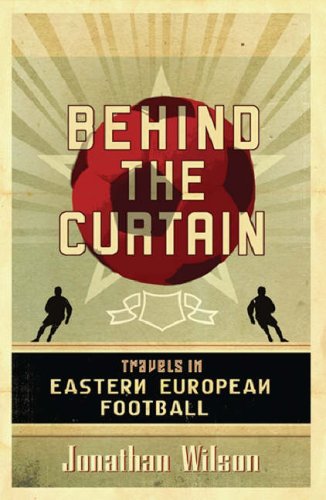
Behind the Curtain: Travels in Eastern European Football


“From the war-ravaged streets of Sarajevo, where turning up for training involved dodging snipers’ bullets, to the crumbling splendor of Budapest’s Bozsik Stadium, where the likes of Puskas and Kocsis masterminded the fall of England, the landscape of Eastern Europe has changed immeasurably since the fall of communism. Jonathan Wilson has traveled extensively behind the old Iron Curtain, viewing life beyond the fall of the Berlin Wall through the lens of soccer. Where once the state-controlled teams of the Eastern bloc passed their way with crisp efficiency—a sort of communist version of total soccer—to considerable success on the European and international stages, today the beautiful game in the East has been opened up to the free market, and throughout the region a sense of chaos pervades.” amazon

Uruguay light the way


“In the end, it was only a slightly surprising result. The 2011 Copa America might not have gone the way of holders Brazil or hosts and favourites Argentina, but Uruguay were probably the next in line to win it. Sunday afternoon’s 3-0 win over Paraguay was the result most expected after the semi-finals, and sees the Celeste lift their 15th Copa, pulling clear of Argentina, who they’d previously been level with on 14 tournament wins.” ESPN

Future bright for Copa kings Uruguay
“The record 15th Copa America triumph came with a fair dose of suffering – the only way Uruguay know how. They drew both their first two games. Then they mounted a heroic rearguard action in the quarter final against hosts Argentina, where they had a man sent off in the first half. But in the end it was conclusive. And so was the message from Buenos Aires after the 3-0 win over Paraguay in the final – last year’s run to the World Cup semi finals was no fluke. Uruguay are back.” BBC – Tim Vickery

Uruguay 3-0 Paraguay: Tabarez gets things right
“Uruguay won their record 15th Copa America with an excellent, controlled performance. Oscar Tabarez likes to spring a surprise with players and formations, but it was his expected XI for this match, in the 4-4-1-1 system that can reasonably be described as his first choice shape throughout this tournament. Gerardo Martino’s side was less predictable – he made four changes from the semi-final win over Venezuela, but kept roughly the same system – a narrow 4-4-2 / 4-5-1 with Pablo Zeballos making forward runs from a wide-left position, although Nelson Valdez sometimes switched positions with him. Uruguay were better all over the pitch – they were more secure at the back, more potent upfront, and most crucially, they won the midfield battle.” Zonal Marking

Uruguay’s Copa América triumph ushers in another golden age
“This has been a tournament that has persistently defied expectations, but not in the final. Uruguay were comfortable winners over Paraguay, collecting a 15th Copa América title and so, on Argentinian soil, moving past Argentina to become the most successful team in the tournament’s history.” Guardian – Jonathan Wilson

Suarez pays tribute to team-mates
“Luis Suarez was named Player of the Tournament after helping Uruguay to a 3-0 victory over Paraguay but paid credit to his team-mates for the success. Suarez scored the opening goal and set up Diego Forlan for the third to round off a hugely impressive tournament as Uruguay cruised to victory.” ESPN

Brazil pay the penalty


“Eight-time Copa America winners Brazil were left stunned and eliminated as they failed to convert a single penalty in their shootout against Paraguay, losing it 2-0. The Brazilians created the better chances throughout the 120 minutes, but were unable to make the breakthrough as both sides remained scoreless to send the quarter-final in La Plata to penalties.” ESPN

Paraguay 0, Brazil 0
“Paraguay advanced to the Copa America semifinals on Sunday by defeating defending champion Brazil 2-0 in a penalty shootout after the score was level at 0-0 following extra time. Paraguay goalkeeper Justo Villar stopped Thiago Silva’s shot and Elano, Andre Santos and Fred also missed for Brazil, which was eliminated from the South American competition a day after host Argentina lost to Uruguay.” ESPN

Argentina and Brazil lead the fall of the Copa América giants
“The giants woke up, but only to be felled. When Argentina and Brazil scored seven goals between them in their third group games at the Copa América, it seemed they were slowly rousing themselves for the march to a meeting in the final that the organisers had done everything in their power to make inevitable. In their quarter-finals, though, the problems of the opening games returned. Both struggled to make domination of possession count, both lost on penalties, and both will look on a barely credible semi-final line-up and wonder why on earth they are not there.” Guardian – Jonathan Wilson

Brazil coach defends ‘historical incompetence’ after Copa América exit
“The Brazilian daily paper O Globo may have branded it an act of “historical incompetence” but the Brazil squad and coaching staff have defended their exit from the Copa América. The five-time world champions were beaten on penalties by Paraguay after a shoot-out in which they failed to hit the target with all four spot kicks. But despite the failure the coach, Mano Menezes, has pleaded that the public look on the bright side.” Guardian

Fickle Copa America quarterfinals yield surprising remaining quartet
“The full moon shone bright and white over San Juan, its domination of the chill sky seeming a symbol of the lunacy that took over the Copa America this weekend. The tournament — perhaps any tournament — has never known a series of quarterfinals like it, as the three group-winners and the hosts all crashed out. The machinations of the schedulers, who had done everything in their power to ensure a third successive Brazil-Argentina final, are left looking a little silly.” SI – Jonathan Wilson

Inspirational Markarian leads Peru to semi-finals
“At the time of writing there is the chance that Venezuela might make it two, but at the moment there is the certainty that one of the Copa America semi-finalists will be a team who missed out on last year’s World Cup – and who missed out by the widest possible margin. Peru finished bottom of the table in South America’s 2010 qualifiers. They lost all nine away games, conceding 26 goals in the process.” BBC – Tim Vickery

Venezuela 2, Chile 1
“Venezuela reached the Copa America semifinals for the first time as Oswaldo Vizcarrondo and Gabriel Cichero scored either side of halftime to beat Chile 2-1 on Sunday. Humberto Suazo equalized briefly for Chile in the second half. Venezuela is unbeaten in four games at the Copa America and has been the surprise team in a surprising tournament.” ESPN

Uruguay 1, Argentina 1
“Uruguay advanced to the semifinals of the Copa America with a penalty shootout victory over hosts Argentina on Saturday, with Carlos Tevez having his spotkick saved by goalkeeper Fernando Muslera in the decider. The game ended 1-1 after regulation time and there was no addition to that scoreline in extra time. The final tally in the shootout was 5-4 to Uruguay.” ESPN

Argentina dumped out
“In the biggest upset of the 2011 Copa America thus far, Uruguay have defeated tournament hosts Argentina on penalties in their quarter-final in Santa Fe. The match itself ended 1-1 as Argentina dominated large portions of the contest, but Uruguay showed their steel to win the shootout 5-4 and eliminate the favourites. Carlos Tevez, the figure at the centre of much transfer debate, had his spot-kick saved by Fernando Muslera while Uruguay converted all of their penalties in clinical fashion.” ESPN

Peru 2, Colombia 0
“Peru reached the Copa America semifinals for the first time since 1997 by defeating Colombia 2-0 in extra time on Saturday. Carlos Augusto Lobaton fired a powerful shot from just inside the penalty area in the 101st minute and fellow midfielder Juan Manuel Vargas sealed the victory with a shot from near the penalty spot in the 111th.” ESPN

Brazil 4-2 Ecuador: Brazil finally grab a win


Francesco Guardi
“An open game was always likely to favour Brazil, and they took advantage to confirm their progression to the knockout stage. Mano Menezes changed his right side completely – Robinho and Maicon replaced Jadson and Dani Alves. Reinaldo Rueda left out Segundo Castillo in the centre of midfield, with Oswaldo Minda coming in. Brazil turned in their most impressive display in the Copa so far, though they still lacked cohesion upfront, and remain a little nervous at the back.” Zonal Marking

Brazil 4, Ecuador 2
“Alexandre Pato and Neymar scored two goals each as defending champion Brazil hit form with a 4-2 win over Ecuador on Wednesday to secure a Copa America quarterfinals spot. Brazil finished atop Group B and advanced to a knockout match against Paraguay. Ecuador was eliminated. Pato scored with a header in the 28th minute and a close-range shot in the 60th, while Neymar netted from inside the area in the 48th and 76th. Striker Felipe Caicedo scored for Ecuador in the 37th and 58th.” ESPN

Chileans in raptures after sealing quarter-final against Venezuela
“Finding grilled meat in Argentina isn’t usually a problem, but for days the parrillas of Mendoza have been rammed. With Chile only 130 miles across the Andes, fans have come in their droves, with reports of queues of more than six hours at the border. Even a day after their 1-0 win over Peru – a poor match in which neither side managed a shot on target before the decisive late own goal – they lingered, and many will make the short hop up to San Juan for Sunday’s quarter-final.” Guardian – Jonathan Wilson

Grondona: Messi could quit
“Argentine Football Association (AFA) president Julio Grondona has warned that Lionel Messi could call time on his international career if the criticism from fans and the country’s media continues. Messi came under fire for below-par performances in the first two group games at the Copa America before sealing Argentina’s progress against Costa Rica.” ESPN

Venezuela 3, Paraguay 3
“Grenddy Adrian Perozo scored a stoppage-time equalizer with the help of his goalkeeper as Venezuela rallied for a 3-3 draw with Paraguay in a thrilling Copa America Group B match Wednesday. Venezuela was trailing 3-1 but pulled one back in the 89th via Nicolas Fedor. Goalkeeper Renny Vicente Vega then rushed to the other end in the game’s last play and met a corner with an angled header to set up Perozo’s equalizer two minutes into stoppage time.”>ESPN

Tourney of greatest club teams


Gerd Muller and Paul Breitner. Germany in the 70s.
“THE IDEA: Is the present Barcelona side the best team ever? The debate feels futile: this side was great going forward; this side was great at the back; this side had so many great individuals it was impossible to stop them scoring; this side was so good defensively it could stop anybody from scoring. So let’s add a structure; let’s design a tournament in which the best sides can compete against each other, analyzing virtual games between the best teams there have ever been. It’s guesswork, of course, but at least it’s educated guess work.” SI – Jonathan Wilson, Pt. 1, SI – Jonathan Wilson, Pt. 2

Milutin Soskic leaves indelible mark on U.S. goalkeeping technique

“Being honest, there isn’t much about U.S. soccer that people in England envy, but we do wish we had a similar glut of goalkeeping talent. Over the last 10-15 years the U.S. has produced an extraordinary number of high-class goalkeepers, so many, in fact, that it’s begun to spoil Sylvester Stallone’s performance in Escape to Victory (because there, of course, half the joke was that he was an American who played football and had to play in goal so he could use his hands).” SI

FC Barcelona: Culminating With a Dream


“This season has seen FC Barcelona reach what must surely be the pinnacle of the quite remarkable cycle of success that this team has enjoyed since the appointment of Pep Guardiola in 2008. Playing a style of football that is as effective as it is beautiful, Barcelona have mastered both patient passing when with the ball and relentlessly energetic pressing without, their beguiling proficiency seeing them repeatedly outclass the rest of Europe.” The Equaliser – Video

Style and Stylelessness
“Some last-minute thoughts . . . Last year I wrote something about styles and stylelessness in soccer, and I’m thinking about that again as the Champions League final approaches. Everyone knows, because fifty articles a day say so, that Barcelona has a very distinctive style of play. You can name it and describe it, and you can see clearly when other sides try to imitate it. Xavi may be the perfect embodiment of the style, but it’s bigger than he is, and everyone knows it. Whenever Victor Valdés starts a Barça possession not with an aimless punt but with a sharp clean pass to Piqué or Busquets, the crowd at Camp Nou cheers. ‘Even our keeper plays the Barça way!'” Run of Play

Barcelona 3-1 Manchester United: Barcelona are European Champions
“Goals from each of Barcelona’s front three gave Pep Guardiola’s side victory at Wembley. Sir Alex Ferguson named his recent ‘big game’ XI – which meant Javier Hernandez upfront with Wayne Rooney behind, and Ryan Giggs and Michael Carrick in the centre of midfield. The biggest surprise was Dimitar Berbatov not even being on the bench. Guardiola was able to call on Eric Abidal at left-back, but not Carles Puyol at centre-back, so Javier Mascherano started in defence after all. The overall pattern was not completely different from the 2009 final. United enjoyed a good opening few minutes, but were then the poorer side for the rest of the contest.” Zonal Marking

Barcelona outclasses Man United with a performance for the ages
“Surely now the doubters have been won over: this Barcelona is one of the greatest teams there has ever been. In Pep Guardiola’s three seasons in charge Barca has twice won the Champions League, and it was denied a hat trick that would have placed it statistically alongside the Ajax and Bayern Munich sides of the seventies only by the combined might of Jose Mourinho and an Icelandic volcano.” SI – Jonathan Wilson

Lionel Messi the little master offers timely reminder of the beautiful game as Barcelona thrill
“This was the sort of spellbinding performance from Barcelona, and particularly their wonderful Argentine magician, that makes even cynics fall back in love with football. Pass and move, move and score. Bewitching. For a sport dogged by negative headlines, the club season climaxed with a celebration of the sport’s oft-hidden virtues. The spotlight turns to Fifa today, and the judgment of the Ethics Committee on recent shenanigans, but here was a reminder of what the game should be about. Not greed. Just glory. Just a love of the ball’s company, a passion for guiding it past opponents.” Telegraph – Henry Winter

Brilliant Barcelona are a high point in football’s evolution
“In the buildup to this final, the BBC debated who was the greatest of all club football sides and settled on the Real Madrid team who won the first five European Cups from 1956 to 1960. There was unanimity in favour of Puskas, Di Stéfano and Gento: white-jerseyed enemies to the people of Catalonia. Study the tapes of those Real Madrid XIs and you see skill, exuberance, thrust and machismo; a regal confidence across the team. You also register a wholly different version of football in which possession is easily surrendered and defending often laissez-faire. The greatest of all Real’s early triumphs – the 7-3 victory over Eintracht Frankfurt in 1960 – was a goal avalanche impossible to imagine in a Champions League final today.” Guardian – Paul Hayward

Prized Possession for Barcelona: Champions League Title
“LONDON — With the fans at one end of Wembley Stadium singing and dancing, and those at the other sulking and leaving, the public-address announcer made the most obvious of proclamations: Barcelona was the winner of the Champions League.” NYT

Barca vs. Man United player grades
“Reviewing the individual performances in the 2011 Champions League final (players graded on a scale of 1-10)…” SI

Barcelona 3 – 1 Manchester United
“For the second time in three years, brilliant Barcelona denied Manchester United Champions League glory with a sensational performance at Wembley. Although United could take some small consolation from the knowledge they were more effective than that 2009 letdown in Rome and even managed to level Pedro’s first-half strike through Wayne Rooney, once again the better team won. On the ground where the Catalans lifted their first European Cup, Lionel Messi also laid his personal ghost to rest, scoring his first goal for Barcelona on English soil, belting home what proved to be the winner nine minutes into the second half.” ESPN

FC Barcelona 3-1 Manchester United – Extended Fox Sports Video Highlights
Extended Fox Sports video

FC Barcelona Trophy Celebrations After Winning 2011 UEFA Champions League
Video highlights of the trophy celebration by FC Barcelona on May 28, 2011
Varied tactical options for Man United to deploy against Barcelona


Gerard Pique
“Barcelona’s team we know; Manchester United’s is a matter of speculation, a fact that, in itself, is indicative of two things. First, that Barcelona is the favorite, with such a defined and familiar style of play that, even in this age of rotation, it is possible, as with the greats of the past, to rattle through a first eleven.” SI – Jonathan Wilson

Porto juggernaut could lose key components before next season

“Already the vultures are hovering. Porto will be back in the Champions League next season, but the problem is that it is unlikely to be this Porto, the side that has dropped just four points in the league all season, and swept all before it in Europe.” SI – Jonathan Wilson

Barcelona 2011 vs. AC Milan 1990

“Ask anybody who’s done it, and they’ll tell you that sustaining success is much harder than achieving it in the first place. The great Hungarian coach Bela Guttmann refused ever to spend longer than three years at a club because he felt that after that he could no longer motivate players. It may be that in the modern world of soccer in which money begets money, success is easier to sustain than previously, at least on a domestic level. On a European scale what that means is a cluster of perhaps eight or so super powers constantly battling for the Champions League, which is surely the main reason no side has successfully defended the title since the AC Milan of Arrigo Sacchi in 1990.” SI

Serie A title is AC Milan’s to lose

“What makes a great season? If it’s the quality of soccer played, then this has been a dismal year for Serie A, something shown up by the performances of Italian clubs in European competition. Internazionale limps on in the Champions League, somehow in the last eight despite a back line about as well-drilled as a class of five year olds on their first school trip. However, AC Milan and Roma went out in the last 16 and Italian interest in the Europa League ended when Napoli lost to Villarreal in the last 32. Juventus and Palermo didn’t even make it out of the groups.” SI

Jonathan Wilson Interview

“In this episode, Richard Farley chats with Jonathan Wilson about the launch of The Blizzard, a new quarterly magazine that has made quite a splash on the football world. Wilson discusses the genesis of the idea, why there’s a need for it, the objectives of the publication and describes the types of stories you can find in there as well a discussion about the business model.” EPL Talk – Jonathan Wilson

Jonathan Wilson interview – The Blizzard

“You might know Jonathan Wilson as a football journalist (Guardian, World Soccer magazine, Sports Illustrated etcetera) and author of four books (including Behind the Curtain: Football in Eastern Europe, Inverting the Pyramid), a tactics genius and historian, an expert on Slavic and Eastern European football, a Guardian Football Weekly regular, and a giant brain sitting in a tub of nutrient solution hooked up to a talking computer wheeled around by some lackey in a janitor suit, writes Richard Whittall. Well, he’s certainly most of those things, but now he’s also the editor of a massive (184 pages!) new football quarterly called The Blizzard.” European Football Weekends

The origin of pragmatism in soccer


“For around three decades after the foundation of the Football League in 1888, the game remained unchanged. Teams played with two backs, three halves and five forwards, and soccer was all about getting the ball out to the winger so he could cross for the center forward. Pattern-weaving — working the ball in neat triangles between midfield and attack – was seen as the ideal and soccer was largely formulaic.” SI

Italian teams remain wedded to tactically narrow formations


“In terms of tactics, the most important factor in Tottenham Hotspur’s victory over AC Milan last week was that its wide players were able to exploit the width left by Milan’s narrowness. As a corollary to that, Spurs had the pace and energy to ensure that its numerical disadvantage in central areas didn’t mean it had to cede control over possession. Milan’s only three league defeats this season have come against sides who play with attacking width — Cesena and Juventus — and Roma, a team that usually deploys a 4-3-1-2, but deployed its trequartista, Jeremy Menes, in wide areas in that game.” SI

Eastern European football review of 2010: Shakhtar Donetsk on top

“The year ended with a reminder of what used to be in eastern Europe, as Robert Prosinecki was appointed manager of Red Star Belgrade. It is 20 years since he was a key figure in the last eastern European side to win the European Cup; this season only one, Shakhtar Donetsk, has reached the last 16 of the Champions League. Following CSKA Moscow’s progress to the knockout stage last year, that perhaps hints at the beginnings of a renewal, but two sides making it through the group stage in seven years is still a world away from the era when crack eastern European outfits were the bane of British clubs.” Guardian – Jonathan Wilson

Hodgson’s struggles raises question of possible successors

“Rightly or wrongly, Roy Hodgson’s time at Liverpool seems to be coming to an end. There are those who will argue that he should be given time, and it is of course true that various managerial greats — Herbert Chapman, Don Revie, Brian Clough, Sir Alex Ferguson — struggled in their first seasons at clubs with whom they later achieved significant success. But it is also true that Hodgson, much like Sam Allardyce in his brief stint at Newcastle United, seems to have lost the confidence of just about everybody, with even those fans who urge patience unsettled by the functionality of much of Liverpool’s football, even against mediocre opposition.” SI – Jonathan Wilson

On the third day of Christmas – The best journalist


Jonathan Wilson
“We love Twitter. It is like visiting a Roman Forum back in 50BC, stopping to chat to all and sundry about everything under the sun. Want some chat about the wrong tactics used by Inter Milan at the weekend, then touch base with Jonathan Wilson or Zonal Marking. Fancy trying to understand what on earth is going on at Upton Park then have a chat with Jacob Steinberg, Mark Segal from ITV Sport, Matt Law from the Express or Dan Silver from the Daily Mirror. And want to get a Pro’s view on life now or as it was a few years ago then have a chat with Martin Allen, Garry Nelson or Bolton Wanderers Kevin Davies.”
On the first day of Christmas – The best website, On the second day of Christmas – The best game, On the third day of Christmas – The best journalist

The Question: How did tactics develop in 2010?

“In August, I wrote a piece for the Guardian’s pre-season supplement in which I speculated that, after the World Cup and Internazionale’s success in the Champions League, we may be about to witness a return to reactive football. Since when we’ve seen probably the most attacking Premier League in living memory, which goes to show two things: first, never believe anything anybody writes when trying to predict the future of football; and second, the World Cup is no longer a bellwether.” Guardian – Jonathan Wilson

Why don’t more sides score goals like this?

“The modern offside law continues to frustrate defenders and pundits alike, but the men who should benefit from it – strikers – have not exploited it to its full potential. First, some background on the offside law is needed, specifically the recent changes to it. Jonathan Wilson’s piece gives a history of the law along with some implication for tactics, whilst the Premier League’s head of referees Keith Hackett outlines the ‘new’ law in detail. In this article, we are dealing with a very specific outcome of the changes. Now, a player who is in an offside position when one pass in a move is played can go onto participate in the rest of the move as long as he doesn’t touch the ball from the initial pass.” Zonal Marking

The Question: Why is the modern offside law a work of genius?
April 13 2010. “Nothing in football is so traduced as the offside law. Most seem to regard it as a piece of killjoy legislation, designed almost to prevent football producing too many goals and being too much fun, while for the punditocracy it has become the universal scapegoat, the thing that “nobody understands”. Just because Garth Crooks doesn’t get something, though, doesn’t make it a bad thing. The modern offside law may be the best thing that’s ever happened to football, and it is almost certainly the reason Barcelona have been so successful with a fleet of players whose obvious asset is their technique rather than their physique.” Guardian – Jonathan Wilson

Uneasy feeling surrounds Chelsea


Carlo Ancelotti
“So Carlo Ancelotti is staying at Chelsea, for now at least, and with the club sitting top of the Premier League talk of crisis at Stamford Bridge feels slightly hysterical. Even if there was no substance to the reports — strongly denied — that Ancelotti was ready to quit on Sunday evening, though, something is going on behind the scenes, a lead that stood at five points three weeks ago has disappeared and the weakness of the squad’s structure has been exposed.” (SI)

Manchester City 0-0 Manchester United: dull game with no drive from the centre of midfield


“A disappointing match that produced very few goalscoring chances. Roberto Mancini went with his usual 4-5-1 / 4-3-3 system. Mario Balotelli was suspended so James Milner came in, with David Silva switching to the left. Sir Alex Ferguson went with his one-striker formation, seeking to match City in midfield by playing Darren Fletcher, Paul Scholes and Michael Carrick. Nani was on the right with Ji-Sung Park on the left. Rafael continued at right-back.” (Zonal Marking)

Match of the Midweek: Manchester City 0-0 Manchester United
“Perhaps it was ‘The Curse Of ITV’ returning to haunt us again. Last night, they showed a documentary about football in Manchester which examined, through the eyes of Eric Cantona, the current and historical state of the rivalry between Manchester City and Manchester United. The two clubs have had their fair share of drama from the matches between them in recent years, so perhaps it was understandable that ITV should choose to schedule this match at this time. Other corners of the press had, after all, also been been building the match up in a wearyingly predictable manner.” (twohundredpercent)

Highly-anticipated match offers little for most to cheer about
“Few Manchester derbies have ever been so hyped; few have ever been so disappointing. It was a game that yielded just one chance of note: the free-kick that Carlos Tevez curved toward the top corner after 35 minutes. The effort lacked pace, though, and Edwin van der Sar was able to make a simple enough diving save. And while most were probably bored rigid, Sir Alex Ferguson could congratulate himself on a job well done.” (SI)

Premier League title far from a formality for early leader Chelsea


“Under normal circumstances in the Premier League, you’d look at a side that was five points clear with a quarter of the season played and assume it was strolling toward the title. These, though, are not normal circumstances. Chelsea has been the best team, scoring four more goals than anybody else and conceding five fewer. Beyond statistics, it feels as though Chelsea has been playing the best football.” (SI – Jonathan Wilson)

The Question: Are Barcelona reinventing the W-W formation?


“Football is a holistic game. Advance a player here and you must retreat a player there. Give one player more attacking responsibility and you must give another increased defensive duties. As three at the back has become outmoded as a balanced or attacking formation – though not as a defensive formation – by the boom in lone-striker systems, coaches have had to address the problem of how to incorporate attacking full-backs without the loss of defensive cover.” (Guardian – Jonathan Wilson)

Barca face African adventure in the Cup
“For those who have been reading La Liga Loca for a year or two now it’s probably best to rejoin today’s ramblings a couple of paragraphs further down. It’s Copa del Rey rant time again. The Copa del Rey is the worst attempt at a competition since Maniche and James Beattie were the only two entrants in the ‘Best Salad Eater 2009’ jamboree. The whole fiasco is designed to clear out all the nasty, oinky, lower league riffraff as soon as possible to give as much chance to Spain’s Primera clubs to win it.” (Four Four Two)

For an Anniversary


Wayne Rooney
“It was five years ago today. Five years, a long time. A lot of water under the bridge since then. A lot of Johnnie under the old soft palate. Why, I’ll tell you, Ryan Giggs was a wee lad of 47, back then. Nani wasn’t even a gleam in Anderson’s eye. We’d all heard the rumours, of course. An 18-year-old boy with the instep of Kylie Minogue and the brow of a young Jack Nicholson. So much natural spark it was as if Mr Tommy Taylor had been crossed with Guy Fawkes. Apparently he’d played rather well for Everton over the past two seasons and had starred for England in Euro 2004. Now, like all true United fans, we were excited to see him for the first time.” (Run of Play)

Declining Rooney’s relationship with United in critical condition
“It’s not hard to pinpoint where it all started to go wrong. On March 30, Wayne Rooney put Manchester United ahead in the second minute of a Champions League quarterfinal match at Bayern Munich, a controlled, eminently accomplished finish from a Nani cross. It was exactly what everybody had come to expect from a player who had already scored 33 goals for his club that season and nine more for England.” (SI)

Montenegro look a well-balanced team with explosive attacking potential

“Ask Montenegro’s players what has changed since the 2010 World Cup qualifiers and all reply with a combination of the same three factors: luck, experience and balance. For a new country, drawn from the pot of minnows, they performed creditably in World Cup qualifying, but there is a sense that they did not quite get the results they deserved: 2-2 draws against Bulgaria and Cyprus probably should have been wins; the 4-1 defeat in Bulgaria looked far worse than it really was. Soft penalties were given against them, there were unfortunate ricochets, and perhaps a lack of conviction at the back. A team packed with talented forwards either defended en masse, or poured forwards in numbers, and so were alternately involved in either tedious 0-0s or high-scoring thrillers, with little in between.” (Guardian – Jonathan Wilson)

The Question: Is a messiah complex the cause of England’s failings?


Fabio Capello
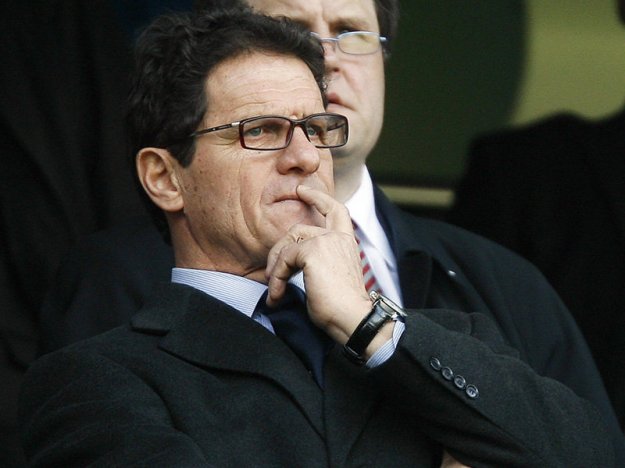
“One of the oddities of reading Charles Reep, the pioneer of match-analysis in Britain, is that in among the Pooterish self-righteousness, and what at times seems an almost systematic misinterpretation of statistics, you come upon the odd nugget of wisdom. ‘The maximum number of matches played in the World Cup final stages, by any one team, has been six, up to the present date,’ he wrote in his unpublished book of 1973, League Championship Winning Soccer and the Random Effect. (Even now, with the tournament expanded to thirty-two teams, it is only seven).” (Guardian)

Interview: Michael Cox, Zonal Marking

“The graphs, diagrams and match reports on Zonal Marking are pored over by thousands of football fans the world over and have helped push tactical analysis towards the centre of mainstream football debate in the United Kingdom. Set up in January this year, the phenomenally successful website received an average of 210,000 visitors per week during the World Cup and counts tactical mastermind Jonathan Wilson among its many admirers.” (Football Further)

Expect reactivity not proactivity to be the shape of things to come

“This has been a decade of broadly attacking football, at least at the highest level, but at the start of 2010-11 the game stands at a crossroads. Internazionale’s triumph in the Champions League, the predominance of reactive football at the World Cup and the growing realisation that nobody can match Spain/Barcelona at their brand of possession football, though, might mean a turn into defensiveness.” (Guardian – Jonathan Wilson)

Zenit St Petersburg reach pivotal stage in relentless title march

“A victory for Zenit St Petersburg at home to Rubin Kazan on Saturday would not guarantee them the league title but it would give them a lead of at least nine points with half of the Russian season played. They have been relentless of late, unbeaten since Luciano Spalletti took charge in December – their last defeat, in fact, came against FK Moskva on 31 October – and Saturday’s 3-1 win at Rostov was their eighth in a row in the league.” (Guardian – Jonathan Wilson)