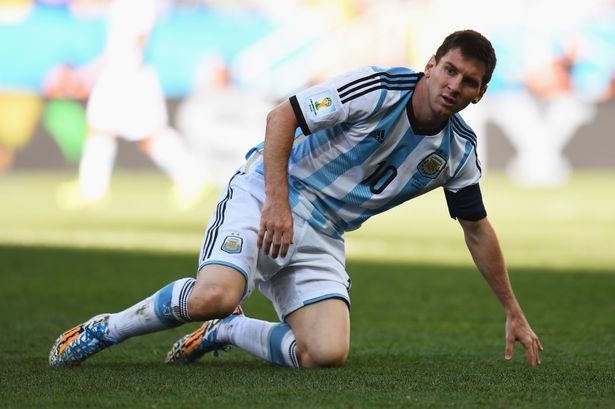
Category Archives: Argentina

River Plate & Boca Juniors: Superclasico Trilogy marred by violence

bocafans
“Great trilogies are few and far between but when bitter rivals River Plate and Boca Juniors were pitted against each other in the Copa Libertadores round of 16, just days after their scheduled league clash, hopes were predictably raised for a Superclasico triple header of cinematic proportions. As is often the case, it proved to be a disappointment and was ultimately overshadowed by violence. While the brutality on show may have not been out of place in The Godfather, that’s where any comparisons with Francis Ford Coppola’s masterpieces end.” Outside of the Boot (Video)

Continued South American soccer violence falls on authorities, clubs
“The aphorism ‘let the punishment fit the crime’ is unlikely to be heard much in South American soccer’s corridors of power. Whether it is the week-in, week-out thuggery of Brazil’s torcidas organizadas and Argentina’s barras bravas or the far too frequent tragedies served up in the Copa Libertadores–which in recent years have included the death of 14-year-old Bolivian fan Kevin Espada, struck by a flare fired by Corinthians fans in Oruro in 2013, and last week’s now notorious PepperGate incident at La Bombonera in Buenos Aires–perhaps the only thing more striking than the violence that scars the game across the continent is the inability of the authorities to do anything about the problem.” SI (Video)

The world’s worst stadium disaster – Estadio Nacional, Lima 1964

“Peru launched a cross into the Argentine box, looking for an equaliser that would push them closer towards qualification for the 1964 Olympic Games football tournament in Tokyo. The headed flick on arrived at the back post where Victor Kilo Lobaton stole in undetected. His boot – raised barely to knee height – was met almost simultaneously in mid-air by that of the opposing defender whose swing of the leg connected with the ball milliseconds before that of the on-rushing Peruvian. The attempted clearance rebounded off Lobaton and into the net; Argentina’s goalkeeper Agustin Cejas seemingly more intent on remonstrating with the referee than diving full length to protect his clean sheet.” Football Pink

Talent Radar Player Rankings: Top 10 Young Forwards in 2014/15

“In the past two weeks, we’ve updated our Talent Radar player rankings in the Goalkeepers, Defenders and Midfielders section. We’re now left with this season’s final issue of the Forward Rankings. It’s common tendency that players playing up front attract the most attention, from both fans and clubs. Many of the names on this list will be the subject of transfer speculation in the coming months. We’re going to leave any kind of speculation surrounding these players out of this and give you an unbiased judgement of how the players have done this past season to let you know the reason for the hype around them.” Outside of the Boot

The beautiful game gets ugly when fans turn against their own

“A footballer, says the great Argentine coach Cesar Luis Menotti, is ‘a privileged interpreter of the dreams of many people.’ It is a wise and beautiful line. Not so beautiful, though, are those situations when many of the crowd would rather not have their dreams interpreted by a particular player. One of the most ugly things in football is when fans turn against a member of their own team. In Brazil this is a depressingly common occurrence, and one that can follow bizarre criteria. Many, I’m sure, will remember the Belo Horizonte crowd turning against Fred – indeed forcing his substitution – during that crushing World Cup semi final defeat to Germany last year. One might have thought that, with the team losing 7-1, the defenders might be a more obvious target than the centre forward. I, for one, was delighted when Fred responded by finishing last year’s Brazilian Championship as top scorer.” The World Game  – Tim Vickery (Video)

Argentine referee uses replay to correct call, faces punishment

“Being a referee in a technology-soaked era is a no-win proposition, like being accused of witchcraft in the 1700s. Float when you’re throw into water? Guilty! Drown? Innocent! Right is wrong, wrong is right, and you’re screwed either way. Like leading Argentinian referee German Delfino, who is being investigated and faces a potential suspension for reversing an incorrect decision through the use of replay. Because, of course, the officials are the only people in any stadium not allowed to look at footage of matches. It’s like installing a GPS device in a car but placing the screen on the back seat, where the driver can’t see it.” Fusion

Italy at Argentina ’78 – Bearzot leads the renaissance

“When the Romantics of Brazil imploded in Barcelona’s Sarria Stadium against an unfancied Italy in the second group phase of the 1982 World Cup, the purists’ dreams died, and Italy’s eventual triumph in Madrid just days later was greeted with largely grudging acknowledgment. Italy’s victory in Spain is often advanced as some kind of immoral victory of Roundheads over Cavaliers. In truth, it was no such thing.” backpagefootball

Can Gerardo Martino end Argentina’s cup drought with Copa América glory?

“When Santiago hosts the final of the Copa América on 4 July this year, it will be 22 years to the day since Gabriel Batistuta received a quick throw-in from Diego Simeone, turned away from Mexico’s Raúl Gutiérrez and curled a brisk left-foot finish into the bottom corner of Jorge Campos’s net. It was a goal that meant Argentina defended their continental crown; it was also the last time that any Argentinian scored a winner in a major international final.” Guardian – Jonathan Wilson

The Barrabrava – Crusaders Turning Exploiters

bbbbbbb
“As I read Christopher Gaffney’s Temples of the Earthbound Gods, one issue that particularly struck me was the excessive nature of the barrabrava, the fierce fan group that exists in most of the Argentine and South American football clubs. In the book, Gaffney suggests the unclear, shady relationships between the clubs and their barrabravas, or barras in short, and some of the borderline illegal actions that the barras take that is veiled under the name of passion and footballing identity. For instance, the level of physical violence that the barras have reached a point where the barras of each club have their signature means of violence – rubber mallets in San Lorenzo or umbrellas in Independiente, for example – and yet their clubs have remained reluctant, even sympathetic towards such acts.” Soccer Politics (Video)

Never forget your roots – Palmeiras’ illustrious history

“One of the most successful clubs in Brazil, Sociedade Esportiva Palmeiras have won eight league titles, as well as two Copa do Brasil trophies. The champions of South America in 1999, having beaten Colombian side Deportivo Cali to claim the Copa Libertadores, with their success culminating in the awarding of ‘Best Team of the 20th Century of Brazil’ by the Sao Paulo State Football Federation, they are a club of immense power and wealth. Palmeiras’ team is predominantly Brazilian, with ex Bayern Munich and Inter Milan defender Lúcio among their ranks. Apart from a smattering of Chilean, Argentinian and Uruguayan players, their squad is entirely made up of footballers from the ‘Futebol Nation’.” backpagefootball

Everything you need to know about the 2015 Copa Libertadores

Chavez-Copa-Libertadores
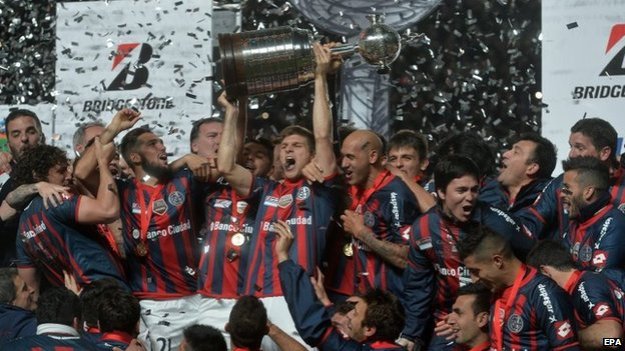
“With the last of the group spots now finalised, the 56th edition of the Copa Libertadores – South America’s equivalent of the Champions League – properly gets underway this week and, as ever, it promises to be full of drama, excitement and shocks. The vast distances, not to mention the range of altitudes and climates, make it a highly challenging, unpredictable and captivating contest, while also offering the opportunity to catch a first glance at some of the continent’s emerging prospects. Argentinian side San Lorenzo won their first ever title last year, breaking the run of Brazilian triumphs and capping a remarkable turnaround for a club on the brink of relegation just two years before. With the last three victors being first time winners, could we see another maiden champion? Or will one of the established giants reclaim the continent’s top club prize? The following comprehensive group by group guide will take you through all the contenders.” Outside of the Boot (Part 1), Everything you need to know about the 2015 Copa Libertadores (Part 2)

Messi, Neymar, Sanchez: In search of South America’s next star

JPEG Image, 738 × 415 pixels)
Angel Correa is leaving Argentina to play in Spain.
“For the crunch World Cup match against England last year, Uruguay were without their captain and centre-back Diego Lugano. In to replace him came Jose Maria Gimenez, a 19-year-old who had played in a grand total of one league match the previous season and one Copa del Rey fixture for Atletico Madrid. It is hard to imagine England, or another major European nation, throwing a youngster into the deep end in this way. But Uruguay had no qualms. Gimenez had been immaculate the previous year in the World Under-20 Cup, and that was good enough. This story helps to explain the importance of under-20 football in South America. There are plenty of others like it.” BBC – Tim Vickery

Ode to Riquelme

“There are two kinds of greatness in sport. There are the freaks of nature, and there are players like Riquelme—tall, lanky, shoulders hunched, no blinding speed or intimidating power to speak of. Riquelme’s greatness isn’t defined by the highlight reel. The Argentine found beauty in the more subtle moments of the game. He carved up opposition defenses without them being aware of what was happening, dragged around the pitch like a puppet being made to dance by its puppeteer. You couldn’t recreate the things Riquelme did—and you wouldn’t even think to try them in the first place.” 8 by 8

Riquelme’s reminder: There’ll always be a place for art in soccer

“Call me old fashioned, but Juan Román Riquelme is my favorite kind of player. Riquelme was never the fastest, strongest, or even remotely close to the most athletic player on the field. But somehow, the Argentine midfielder made a career out of the remaining scraps, relying exclusively on technique, awareness, and an ability to read the game with such precision that at times he came off as a master puppeteer. The other 21 players on the field frequently looked like extensions of Riquelme, only there to be manipulated by his thoughts and movements. Riquelme created exquisite art. Last night, Riquelme announced his career as an artist was over. Eight weeks after his final appearances, the Argentine virtuoso announced his retirement. His work is done.” Soccer Gods

Panning for gold – the Sudamericano Sub-20

“As a beaming Lionel Messi wheeled away from an ugly goalmouth scramble after putting Barcelona’s victory over Atletico Madrid beyond doubt, he was set upon by the evening’s two other scorers. Neymar, Luis Suarez and Messi made their way back to the back to their positions arm-in-arm having together lifted a slightly deflated mood around the club beset by managerial pressure and rumours of their favourite son’s discontent. The victory left Barca just a point behind Real Madrid in the Liga BBVA and three ahead of Atletico and it was these three South American stars, each arriving at the club via hugely different paths, that were its architects. There’s nothing quite as marketable as a South American football star. By now the image has become something of a cliché: the young pibe winding through cobbled, uneven streets from dawn to dusk, with nothing but a rudimentary ball and a dream; carrying that childlike exuberance into the professional game and becoming a star.” backpagefootball

Simeone and Atlético are a perfect fit, but Cholo’s next step is on the horizon

“Long before he was introduced to hair gel, Diego Pablo Simeone was conducting an orchestra in Argentina. He was only 10 years old at the time, still in school and tasked with organizing children much older than him. But Bruno Amasino, the school’s music teacher and a ‘genius at playing the piano’ (Simeone’s words), disregarded his age. His leadership was far more important. Amasino clearly had a good eye. Thirty-four years later, the Atlético Madrid head coach is still leading, his restless patrol of Atleti’s technical area reminiscent of a highly-tuned jungle cat. Covered in black from head to toe and with that trademark gel swooping his hair back, he now appears to be auditioning for a part in a South American version of Goodfellas. On the contrary, Simeone’s too busy cementing his place as one of the elite coaches in world soccer.” Soccer Gods

Three 2014 World Cup moments etched in my memory

“With South American football currently slumbering through its high summer siesta, I hope I might be forgiven for glancing backwards at what has just become last year’s World Cup. The tournament was well worth remembering – for the protests it engendered beforehand, for the spectacle it provided us with during and for the memories that linger afterwards. These are some of mine.” The World Game – Tim Vickery

100 Best Young Players to Watch in 2015 | Forwards 10 – 1

gg
“It’s hard to accurately predict future Ballon D’Or nominees based on a players current exploits in the early part of his career. But given the propensity of usual Ballon D’Or nominees bearing rather conspicuous goal-scoring traits, you wouldn’t go too wrong in betting Memphis Depay as a potential future nominee.” Outside of the Boot

Club World Cup: Real Madrid ahead for San Lorenzo

a04e-feeccbd3a36c
“Squeezed around domestic commitments, European champions Real Madrid arrived in Morocco this week for the Fifa Club World Cup – but their South American counterparts, San Lorenzo of Argentina, have been there in spirit for months. Ever since an emotional night in August when they won the Copa Libertadores, South America’s equivalent of the Champions League, San Lorenzo have found it impossible to forget about the Club World Cup.” BBC – Tim Vickery

2014 World Best XI: Best players by position in a year to remember

hi-res-f2ea310c6f4bd1d5bc9761f133f0233f_crop_north
CB: Diego Godin
“2014 is nearly in the books, and with FIFPro, the world players’ union, in the midst of releasing its shortlists for the World’s Best XI, it’s time to consider which players stood out above their peers in a year to remember. An epic World Cup in Brazil saw Germany get crowned for a fourth time, while Real Madrid completed its quest for La Decima and captured a 10th European title.  Bayern Munich captured another Bundesliga title, doing so in record time; Atletico Madrid was a surprise champion in Spain; Manchester City won its second title in three seasons in England; Juventus won a third straight crown in Italy and PSG went back-to-back in Ligue 1 to headline Europe’s major leagues.” SI – Jonathan Wilson

Tactical Analysis | Arsenal 1-2 Manchester United: Wasteful Arsenal fail against United once again

“The rivalry between the 2 sides is not the same as it was in the mid-noughties when flying food and tunnel skirmishes dominated the back pages long after the battle took place on the pitch. The rivalry may have toned down since but coming on the back of the international break, both sides were looking for a much needed win to move up the table. Injuries have had a big part to play in both sides’ campaigns and defensive frailties for the teams meant fans and neutrals alike were expecting a game high on entertainment if not quality.” Outside of the Boot

Lionel Messi showing some promising signs in a new Argentina role

“Whenever the subject of the greatest player in the history of football is debated, the 47th minute of this year’s World Cup final might figure highly in the argument. It was that minute when Lionel Messi dragged a left-footed shot wide of the far post, his best opportunity to win a tense, tight final, and put himself alongside Pele and Diego Maradona as World Cup winners. Messi can, of course, still be considered the all-time greatest without a World Cup to his name, especially because in the modern age, the European Cup is played at a higher standard than the World Cup. To some, however, his lack of international honours remains crucial — it’s not an insurmountable barrier, but a significant caveat.” ESPN – Michael Cox

Argentina’s Feeder System Drains Talent From Nation’s Top Division

“Casual fans might think Argentine soccer is enjoying a golden age. The country’s national team finished second at the World Cup last summer, led by Lionel Messi, a player many consider one of the best to play the game, and Argentine players and coaches are key figures at many of the world’s top clubs. But those successes mask the poverty of domestic soccer, where financial scandals, crowd trouble and the lure of riches abroad have fueled a talent exodus that has left Argentine fans fewer and fewer chances to cheer their favorite players. Most depart for Europe as teenagers after only cameos in the Primera División for powerhouse teams like River Plate and Boca Juniors; others, like Messi, never play in the league at all.” NY Times

Vela, Tevez, crucial qualifiers headline 2014’s last international window

“The final international fixture window of 2014 features the long-awaited international return of some household names, crucial qualifiers on multiple continents and handfuls of intriguing friendlies. Here are 10 things to watch over the next week…” SI – Jonathan Wilson

Sergio Agüero: the kid who grew to greatness from slum to Manchester City

“As Manchester City celebrated winning the league title in 2012, a number of their players festooned themselves in flags. Edin Dzeko wore the blue and yellow of Bosnia, Mario Balotelli the red, white and green of Italy and Aleksandar Kolarov the red, white and blue of Serbia. Sergio Agüero, the player whose goal deep into injury time had sealed the title, also draped a flag across his shoulders, but it wasn’t the blue and white of Argentina: his cape was red, the colours of his first club, Independiente.” Guardian – Jonathan Wilson

Chivas-Club América joins other “Super Clasicos” that don’t live up to the hype

MG_7440
“This past weekend, a relegation-threatened Chivas de Guadalajara played league-leading Club América, a game that has become commonly referred to as the ‘Súper Clásico.’ The term has become a complete misnomer. Rather than being a ‘classic,’ the two teams played 90 lifeless minutes to the tune of a 0-0 draw. Still, what does the need to mislabel games say about Liga MX, let alone other leagues around the world? A lot. And none of it’s good.” Soccer Gods

Brazilian football: FFP rules could ‘prompt revolution’

mmftbwcrojoargwinner20-8
Marcos Rojo
“With 85% of teams inactive for more than six months of the year, leaving 16,000 players unemployed, Brazil’s professional football clubs are effectively in intensive care. So far they have been sustained by the drip-drip-drip of money from investors keen to buy a stake in players potentially destined for big-money European moves. But with world governing body Fifa’s recent announcement that it is banning third-party ownership, that lifeline is about to be withdrawn. That poses a major problem for Brazilian clubs, but it could be a decisive moment and one which prompts a much-needed revolution in the country’s domestic game.” BBC – Tim Vickery

Where next for Alejandro Sabella?

Alejandro Sabella
“What do you do if you’ve just managed a team that reached the World Cup final? The truth is that you probably don’t go and manage in the English second tier, and particularly not for a chairman as prone to sacking coaches as Massimo Cellino. The reports linking Alejandro Sabella, who left his post as Argentina manager after the defeat to Germany in the Maracanã, to the vacant position at Leeds United all cited the 59-year-old saying he had ‘unfinished business’ at the club after his disappointing season there as a player in 1980-81, and it is the case that the only other club team he has managed, Estudiantes, was a side he had played for.” Guardian – Jonathan Wilson

The long haul in South America is yet to begin

Brazil v Ecuador
“While the 2016 UEFA European Championship qualifiers commenced this week, the cream of South American football was running around in mickey mouse games that will have little bearing on what will occurs next year when the likes of Brazil and Argentina play for something far more important than bragging rights and some cash to stock up the coffers.” The World Game – Tim Vickery

Argentina takes World Cup final rematch with 4-2 win over Germany Print More

“Angel di Maria set up three goals and scored the fourth himself as Argentina trounced Germany 4-2 in their friendly game Wednesday to get a small measure of payback after losing to the host in the World Cup final. Argentina was up 4-0 after just 50 minutes to dampen the home side’s World Cup title celebrations in its first game since winning the final 1-0 in extra time in Brazil in July. With Lionel Messi absent due to a right leg injury, Di Maria assumed the instigator’s role, setting up Sergio Aguero in the 21st minute, Erik Lamela’s outstanding volley in the 40th, and Federico Fernandez’ headed goal two minutes after the interval.” SI

Talent Radar: Top 10 Best Young Argentinian U21 Prospects

“The economic reality for most clubs means that almost as soon as a star is born they are whisked off abroad, resulting in a domestic scene in which youngsters are regularly given an early taste of first team football. Such is the turnaround from unknown to wonderkid that many players who would have appeared on the list below last year have already been snapped up by European clubs. Prospects such as Angel Correa, Rodrigo de Paul, Geronimo Rulli, Luciano Vietto, Bruno Zuculini, Jonathan Silva and Hector Villalba are all already on the move this summer and as such don’t feature, while those starlets already in Europe like Lucas Ocampos, Juan Iturbe, Mauro Icardi, Fede Cartabia and Leandro Paredes also miss out.” Outside of the Boot

Hack to the future for Brazil

“It remains to be seen whether Brazil’s new coach Dunga, a vocal critic of the possession game in the past, has learned anything from Spain and Germany’s eight-year domination of international football. During an appearance on The World Cup Show, as events in Brazil unfolded before our eyes, Les Murray, Craig Foster and I tried to dissect what had gone wrong with the football played by the host. We did not limit ourselves to the 7-1 thrashing by Germany in the semi final. We commented that even while the Brazil team was winning games it was losing friends. I told the story of the Copa America final, seven years earlier in Venezuela. Brazil caused a surprise by beating Argentina 3-0.” The World Game – Tim Vickery (Video)

World Cup 2014 best XI

a48e27a87ef_boateng
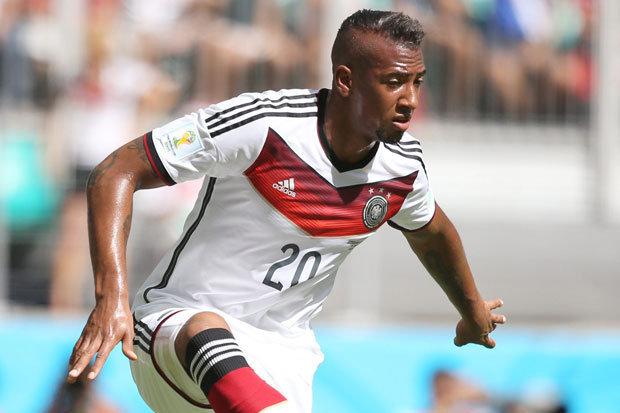
“… Jerome Boateng, Germany.  Perhaps a controversial choice – Philipp Lahm is widely regarded as the best right-back of his generation, and captained Germany to victory. But Lahm spent the first couple of games in the centre of midfield, and didn’t play particularly well, making careless mistakes against both Portugal and Ghana. Had he played the entire tournament at right-back – a move which made Germany a better side – he’d be a shoo-in. Boateng, however, played well throughout the group stage at right-back – in the game against USA, for example, he was the man who led the attacking with some dangerous bursts and good crosses.” Zonal Marking

The unforgettable sea of blue and white

FBL-WC-2014-MATCH11-ARG-BIH-FANS
“After a major tournament, the global media fly off home with brutal speed. There is little chance of catching up with old friends and mulling over what has happened – Brazil 2014, then, was like a good meal when you are unable to prolong the experience with a leisurely chat over coffee.” SBS – Tim Vickery

Brazil’s World Cup Was Never Simple, Always Irresistible

“They had a soccer tournament, and the best team won. If only the 2014 World Cup in Brazil were as simple as that. Let’s look backward—before Germany’s extra-time victory over Argentina in the final, before the host country’s agonizing, indelible 7-1 loss in the semifinals, before the individual greatness of Lionel Messi, Miroslav Klose, James Rodríguez, Neymar Jr. and Tim Howard. Before 20,000 fans jammed Grant Park in Chicago to watch the U.S. team. Before Luis Suárez launched his infamous incisors. Let’s go back to the beginning, to the original idea: a World Cup in Brazil.” WSJ

Argentina Wins! (for Best Fans)

Argentina Soccer Fans in Copacabana
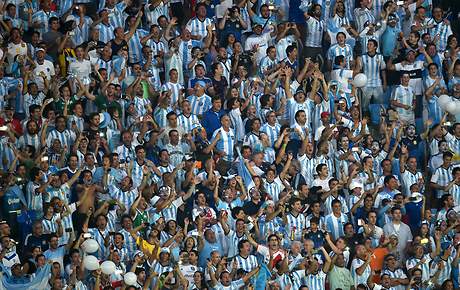
“They flooded the cities of their rival—an estimated 100,000 Argentines were in Rio for the World Cup Final on Sunday. They came in caravans and campers and old taxis and whatever could bring them from their homes in Rosário, La Pampa, Santa Fé, Santa Rosa, Buenos Aires, Cordoba and Mendoza. They slept and ate and screwed and drank and maybe even tangoed at their temporary home at the Samba-drome, a concrete dance pavilion where they had been sequestered for the city’s safety and their own. In Buenos Aires after the loss, Argentina rioted a little, but in Rio, the loyal fans took their loss in peace. Photographer Eduardo Leal spent the last weeks following the Argentines’ journey through the tournament, from the early tight games to the final wundervolley that sank them. There were other fervent fans that made a showing, from Iranians to Chileans, but for sheer determination, emotion, and size of pilgrimage, the supporters of La Albiceleste would clearly deserve this tournament’s Golden Winnebago, if such a thing existed.” Roads and Kigdoms

World Cup retrospective

wc-tim
“Well that was fun, wasn’t it? Previous World Cups have kind of come and gone from my consciousness: I was 8 for Italia ’90 and have very little recollection of it at all; I remember snatches from USA ’94, largely a grudging admiration for Taffarel; France ’98, a blur of blue and enormous jealousy that my sister was in Paris on a French exchange for the final; Japan and South Korea ’02, drunkenly going to first year university exams having watched games that started at 7, and manically cheering Senegal as my sweepstake team, especially after that win; and Germany ’10, revelling in that Spanish team. But, having started to write about football and, more importantly in many ways, become part of a community who talk and think about football, this is the first World Cup where I’ve really inhaled it, really been carried by the highs and lows of such a glorious celebration of football. So I thought I’d do a quick look-back. A good place to start would be the piece I did in The Football Pink: Issue 4 – The World Cup Edition, which was a group-by-group preview. And boy did I get some things wrong.” Put Niels In Goal

amazon: The Football Pink: Issue 4 – The World Cup Edition [Kindle Edition] $1.50, amazon: £0.97

World Cup 2014: BBC pundits pick their best moments in Brazil

“After 32 days, 64 games and 171 goals, there was only one winner. Germany are the new world champions after grabbing the glory at the 2014 World Cup in Brazil. The tournament will be remembered for its exciting games and spectacular goals but also some of the biggest shocks of recent times, with the hosts Brazil and defending champions Spain both suffering humiliating defeats. England, meanwhile, only lasted eight days and two games before being eliminated. BBC Sport’s TV and radio football presenters and pundits look back on the action and choose their best goal, best player and most memorable moment of the tournament, before considering how far away England are from being contenders.” BBC

2014 FIFA World Cup Awards: Best Player, Best Young Player, Best XI and many more

“With the World Cup drawn to a close, many are left disappointed while others celebrate their achievements. Germany won the World Cup, but many other individuals & teams left admirers in their wake. While FIFA gave out it’s individual honours with Messi the choice for Golden Ball particularly bewildering football enthusiasts. We at Outside of the Boot thought long & hard before deciding our choices which might just be a bit more fair & rational than FIFA’s choices! There are some surprises, and also occasions where the hipsters may not be pleased. Nevertheless, here are the best performers at the World Cup divided into Primary Awards, Talent Radar Awards and Secondary Awards.” Outside of the Boot

Die Größte Show Der Welt

“It’s staring at me, that wallchart. It’s a little bit frayed and crumpled now since the move back from Greece and after finding its way around Jesse’s sticky fingers and teething gums. Since Sunday, I haven’t been able to summon the requisite will to complete the final vacant space. The one that states that Germany beat Argentina, one-nil, AET. It’s the finality that daunts me; the knowledge that once complete it becomes a historical artefact, no more a tantalising map of an unknown future. All those games, all those goals, all those hours. Gone forever.” Dispatches From A Football Sofa

Writing the World Cup

“There’s nothing like a World Cup to nail down some narratives, and flip the finished product through the other door at a substantial mark-up (marketed, of course, as self-evident truths). Man vs. machine, Messi vs. Maradona, pragmatism vs. idealism. Let’s kill ‘em all.” blogistuta

Was Lionel Messi Tired?

Argentina-v-Switzerland-Round-of-16-2014-FIFA-World-Cup-Brazil
“In Argentina’s final match of the World Cup, Lionel Messi — on whom Argentine hopes have rested for over a decade — only touched the ball at a rate of once every two minutes. One of those touches was a great opportunity to win the game near the end of regulation, which he failed to even put on goal. Despite this, and despite a decrease in goals and assists as the tournament progressed (four goals in his first three games, an assist in his fourth, and nary a goal or assist since), he won the World Cup’s Golden Ball award (essentially the tournament MVP). That prompted Diego Maradona, Messi’s Argentine forefather and foil, to say, “It’s not right when someone wins something that he shouldn’t have won just because of some marketing plan.” The sharply worded op-eds, so plentiful on Sunday and Monday, are dying down — for now — but even Messi’s fans may start to wonder what was going on, and whether Messi was playing like his usual self.” Five Thirty Eight

The End

“The World Cup doesn’t end so much as it slips back into itself. As soon as the whistle is blown one last time, the recaps, the nostalgia, and the smart surmises begin. But then, a day later, after the last team has returned to its home country and the cheers of hundreds of thousands of euphoric fans, the specifics start to stretch beyond the immediate recall they enjoyed during these June and July days. The locations and stadia whose names were on the tip of your tongue begin to hang back as you go forth with your life. You’ve suddenly forgotten the name of that player you didn’t know on that team you weren’t familiar with—the player you’d enjoyed so much that you’d learned to pronounce his name perfectly. Or, if you’re American and have grown through this tournament to love the game, the world may suddenly seem farther away again. The excuses to strike up a conversation with a stranger dwindle. The news of the rest of the world starts with the Middle East again. And left to fend for themselves, the details of your World Cup experience begin to connect their own dots.” The Paris Review

A World Cup of Broken Ideas

“When it was all over, Messi stood there dejected and alone, holding the Golden Ball as the World Cup’s best player. It was a hollow consolation, one he didn’t want and probably didn’t think he deserved. As he walked up the stairs to receive his prize, some fans reached out to touch him. But most Argentinians sat—as subdued as they had been in weeks—clapping quietly, watching Messi fail to become the emblematic hero an entire nation had hoped he would. The World Cup has a way of amplifying things. Goals become national statements. A poor performance becomes an affront to the flag. Every action is bigger and holds more importance—and, inherently, holds some symbolic meaning.” 8 by 8

Full Time: Fading Images of the World Cup

“Watching sports is, among other things, a special way of experiencing time. Sport is like music or fiction or film in that, for a predetermined duration, it asks you to give it control over your emotions, to feel what it makes you feel. Unlike (most) forms of art, though, a game has no foreordained plan or plot or intention. The rules of a game impose a certain kind of order, but it’s different from the order of an artwork. A movie knows where it wants to take you; no one can say in advance where a game will go. All of its beauty, ugliness, boredom, and excitement, all of its rage and sadness emerge spontaneously out of the players’ competing desires to win. For however long the clock runs, your feelings are at the mercy of chance. This happens and then this happens and then this happens. You’re experiencing, in a contained and intensified way, something like the everyday movement of life.” Grantland – Brian Phillips

Schadenfreude

“How apt that the Brazilians are living off Schadenfreude: after the debacle against Germany and a little extra humiliation from Holland, all Brazil’s fans seemed to want was for Germany to prevent Argentina from victory dancing on the beach at Copacabana. Believe me, I get it. As a lifelong supporter of Tottenham Hotspur F.C. in the English Premier League, much of my soccer pleasure in the last half-century, sadly, has derived only from misfortunes experienced by Arsenal F.C., Tottenham’s arch rivals. In the years 1960–1962, Tottenham was clearly the superior team—since then, not so much. Like Brazil and Argentina, the two clubs are neighbors, and Arsenal, like Brazil, has the larger fan base and more money.” The Paris Review – Jonathan Wilson

World Cup Expectations Rankings: Brazil’s over- and underachievers

Image, 738 × 415 pix
Cesare Prandelli
“Teams come to the World Cup with their own expectations. For some, just being there is enough, reaching the last 16 an almost impossible dream. For others, so exalted were their ambitions that even a quarterfinal feels like a disappointment. This is an attempt to grade teams according to how they did against their own expectations, looking both at results and at how well they played…” SI – Jonathan Wilson

World Cup Tactical Analysis | Germany 1–0 Argentina: Götze ends Germany’s quest for glory

“Lionel Messi’s face appeared on Maracanã’s displays as he stood over a free kick that was, by anybody’s guesstimates, far-flung and too wide of goal to think about shooting. But then this was one of the finest footballers in the world, a goal down in the World Cup final with two minutes remaining and history flitting through his fingers. He skied it and so went the opportunity of probably his lifetime. Replacing a retiring legend came 22 year old, Mario Götze in the 88th minute of the match, with bustling energy – and a fatiguing opposition. When the goal came, it was typical of this Germany side – probe for a flaw, make the opponents slog and punish callously. Götze’s left-footed volley past Sergio Romero at the end of Schürrle’s delivery was enough to affix a 4th star on Die Mannschaft’s crest and become the first European side to claim the trophy on Latin American soil.” Outside of the Boot

The World Cup Is Over. Now What?

“The best team won the 2014 World Cup. Sometimes Germany won its games early—it scored the winning goal in its semifinal against Brazil in the 11th minute; it scored it in the 13th minute of its quarterfinal against France. Sometimes it won its games late—in the Round of 16 against Algeria, Germany didn’t score until the 92nd minute; in yesterday’s final against Argentina, its only goal came in the 113th minute. Sometimes Germany won with offense—Die Mannschaft, or ‘The Team,’ as the German team is nicknamed, scored seven goals against Brazil and four in its opener against Portugal. Sometimes it won with defense—Argentina had zero shots on goal against Germany in the final, and German goalkeeper Manuel Neuer recorded four shutouts in seven matches.” Vanity Fair

Germany 1-0 Argentina

VD-WorldCup-408x264
Germany 1-0 Argentina (AET): Gotze’s extra-time goal wins the World Cup
“Germany won their fourth World Cup after victory over Argentina in a tense but enjoyable final. Joachim Low’s team selection was compromised by the late withdrawal of Sami Khedira through injury. Christoph Kramer took his place – although he only lasted 30 minutes himself. Alejandro Sabella’s side was unchanged from the semi-final against the Netherlands. Both sides had promising moments in an even match – Argentina had the better chances before Mario Gotze’s late winner.” Zonal Marking

Germans End Long Wait: 24 Years and a Bit Extra
“For years, Brazilians had a phrase they would inevitably utter when things went wrong. ‘Imagina na Copa,’ they said after an endless traffic jam or a construction accident or an ugly rash of violence dominated the news — imagine if this happened during the World Cup. It became a foreboding warning, a pre-emptive sigh at the presumed disasters that lay ahead. Over five weeks, though, Brazil avoided any of the major catastrophes it feared. Thrilling games and entertaining soccer — as well as the national team’s own stunning collapse — generally overshadowed any logistical issues, and the tournament was seen as a global success. So it was fitting, then, that in the tournament’s final game, the Brazilians managed to dodge the ultimate on-field nightmare, too.” NY Times

Germany 1 Argentina 0 (BBC)
“Germany were crowned world champions for the fourth time as Mario Gotze’s extra-time winner beat Argentina in the 2014 World Cup final. Gotze demonstrated perfect technique and commendable calm to chest down Andre Schurrle’s pass and sweep in a left-foot finish with the prospect of a penalty shootout only seven minutes away. Argentina, with skipper Lionel Messi looking subdued despite flashes of his talent, could not respond and Germany claimed their first World Cup since they beat the same opponents in Rome 24 years ago.” BBC

Germany’s World Cup title a result of revamped development, identity
“At the final whistle, after Germany claimed a fourth World Cup by beating Argentina 1-0 in extra time, BastianSchweinsteiger collapsed to the turf, utterly spent. He had given everything, running to the point of exhaustion, the only holding midfielder in the Germany squad still standing by the end, and that only just, a stray arm from Sergio Aguero having caught him across the face leaving him with a gash on his cheek.” SI – Jonathan Wilson

The Party’s Over: A Critic’s Take on Brazil’s Dismal World Cup Legacy
“About a five minute walk from Rio de Janeiro’s historic Maracanã stadium, the site of today’s Argentina vs. Germany final (Update: Germany won, obvsly), there used to be a small community of about 700 families called Favela do Metro. The reason the city demolished the tightly-packed neighborhood is hotly disputed: Residents said it was to build a parking lot, while the city claimed it had more ambitions urbanization plans, such as a park. But at least for now, there is little left except a jumbled mess of concrete and brick.” Fusion

Germans See World Cup Win as a Symbol of Global Might
germanyvictory-videoSixteenByNine1050-v2
“Even normally quiet streets were electrified early Monday by Germany’s dramatic 1-0 win of the World Cup in extra time, a victory that symbolized, at least to fans, not just the country’s dominance of Europe, but its global prominence. Car horns and vuvuzelas honked, and fireworks and firecrackers exploded. On the Kurfuerstendamm, the gleaming street of stores and restaurants that was the symbol of West Berlin during the Cold War, cars quickly jammed traffic and fans draped themselves in the black, red and gold of the German flag.” NY Times

World Cup Pass & Move: Germany Wins It All
The World Cup came to a close on Sunday, with Germany defeating Argentina in extra time, 1-0, in Rio’s Maracanã Stadium. Here, five Grantland writers look at five important characters from the match. Be sure to check out all of our coverage of the final, and the entire month of wonderful soccer action, at our World Cup landing page. Grantland (Video)

A Final Prediction: Germany Wins a Thriller
“Like the Sex Pistols in their prime, World Cup finals rarely fail to disappoint. After all the buildup and hype, the games often turn out to be low-scoring, bad-tempered affairs. In 2010, Holland, the nation that, during the nineteen-seventies, invented “total football,” a free-flowing, attacking style of soccer that enchanted the world, disgraced itself by trying to kick the Spanish “tiki-taka” men off the park in Johannesburg, and almost succeeded. Four years earlier, during the latter stages of a tense 1-1 tie between Italy and France, Zinedine Zidane, the French midfield maestro, was sent off for headbutting an Italian player, Marco Materazzi, who had allegedly called his sister a whore. (Italy went on to win on penalties.)” New Yorker

Germany Grinds Its Way To World Cup Triumph
“Well, I got the result right. But my prediction that it would be a thrilling World Cup final turned out to be wishful thinking. Instead of thrills, we got another tense, low-scoring game, in which both teams accumulated more bookings for bad fouls (two each) than clear-cut chances. By the middle of the second half, it was evident that one goal would settle it, and, in the second period of extra time, Germany nabbed one, thanks to a great piece of finishing by the young striker Mario Götze, who had come on as a substitute.” New Yorker

Success for Brazil, Just Not on the Field
“When Mario Götze settled a crossing pass with his chest and volleyed a goal that won the World Cup, German fans roared in ecstatic release. Those from Brazil were nearly as delirious, even if it was out of relief as much as celebration. It might have seemed an odd sight, Brazilian fans celebrating another team inside their own cathedral of soccer, the Maracanã stadium. But after two demoralizing losses brought national embarrassment, solace finally came Sunday as Germany defeated Argentina, 1-0, to become the first European team to win a World Cup played in North or South America.” NY Times

In a Latino Enclave, the World Cup Puts Everything on Pause
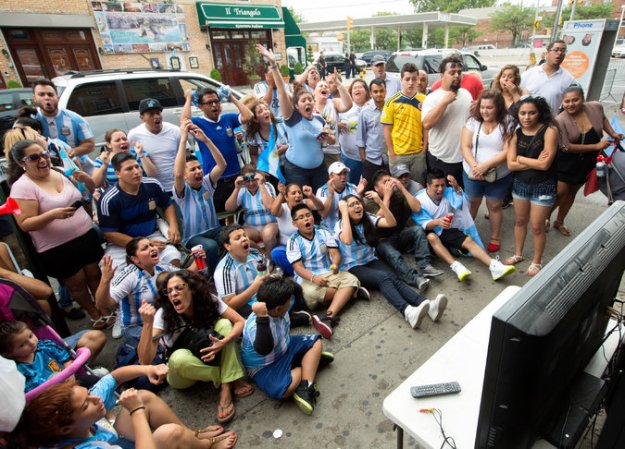
14ROOSEVELT1web-master675
“Something unusual happened on Sunday afternoon on the streets of Jackson Heights, Queens: Quiet. As crowds gathered to watch the World Cup final around the Latin American enclave — in bars and barbershops, in electronics stores and by food trucks — the usually frenetic area beneath the elevated No. 7 train grew uncharacteristically still. Business, which spills onto the streets in the form of carts and trucks and tables, came to a halt. There was no merengue. Or cumbia. Or bachata.” NY Times

Don’t Cry for Messi, Argentina. This Germany Team Is One of the Best in Years.
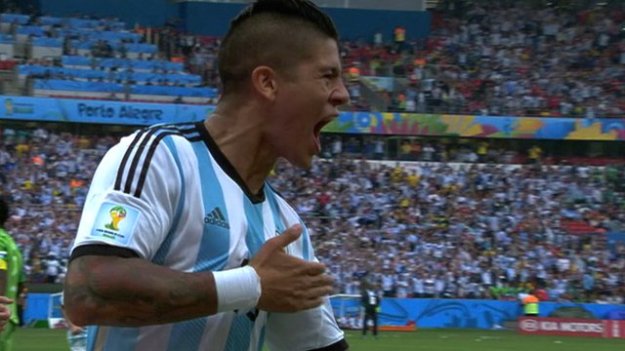
“Lionel Messi seemed to recognize that he had lost the World Cup several minutes before the final whistle had blown. Moments after substitute striker Mario Götze scored a wundervolley in the game’s 113th minute to put Germany up by the decisive margin of 1–0, the Argentine legend had his last somewhat realistic chance at goal. Defender Marcos Rojo sent a high arcing cross deep into the German area and Messi came flying in for a free header from about 15 yards out. Had his shot gone in, it would have been a glorious goal. Instead, the ball fluttered harmlessly over the bar, and Messi walked away with his head down, staring desperately at the turf.” Slate (Video)

Brazilians Go Back to Real Life
Brazil suffered mightily with its national team’s 7-1 rout at the hands of Germany in the World Cup semifinals last week, but the authorities here breathed sighs of relief as the tournament came to a close on Sunday with Germany’s victory over Argentina, amid muted street protests and a display of Brazil’s ability to successfully organize sporting megaevents.” NY Times

Germany May Be the Best National Soccer Team Ever
“Germany didn’t begin the World Cup as the favorite. That honor belonged to (ahem) Brazil. But that’s a slightly deceptive measure. This was a top-heavy World Cup; not only Brazil but also Germany, Argentina and Spain would have been the front-runners in many past editions of the tournament. By the end of the World Cup, Germany left little doubt it is the best team in the world. In fact, it may be the best national soccer team ever assembled. One simple way to compare World Cup winners is by their goal differential throughout the tournament. Germany, with 18 goals scored and four allowed, comes out at a plus-14.” Five Thirty Eight
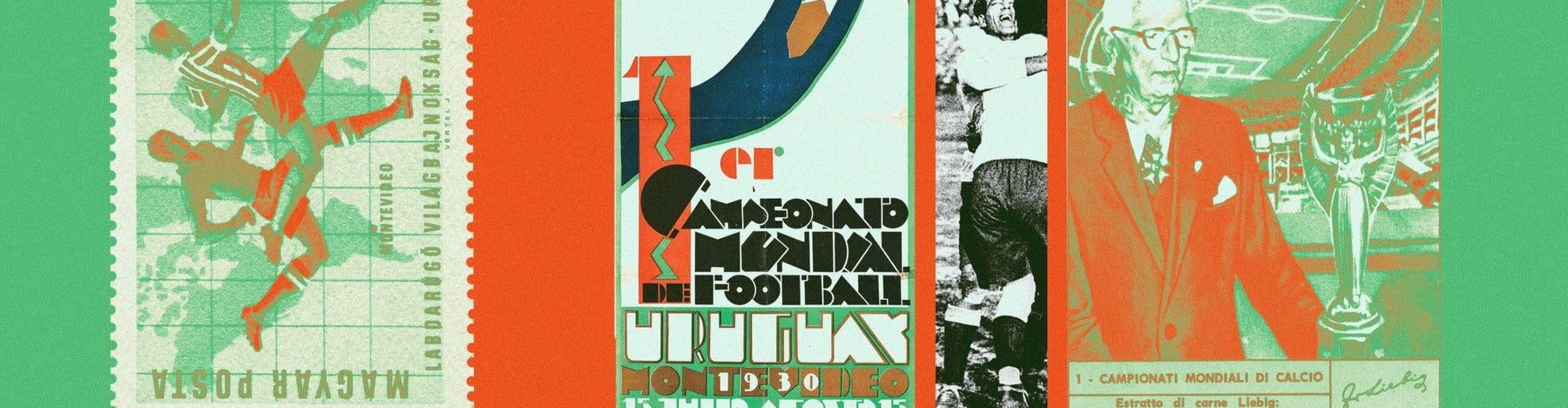
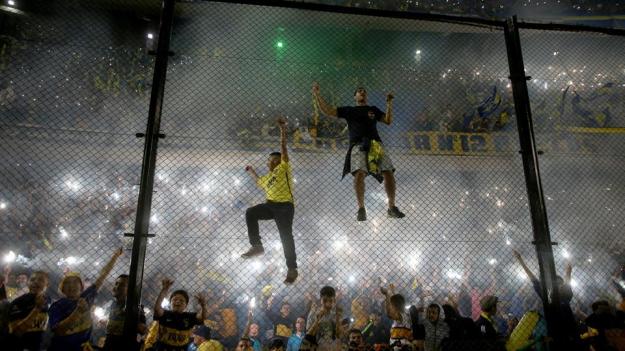
Tactical Guide to World Cup finalists, Germany & Argentina

Germany-vs-Argentina-FI
“After an enthralling month of football, the World Cup has finally reached it’s end. It was expected to disappoint like the previous edition, but what transpired in Brazil left many claiming it as possibly among the best yet. It had everything, and a little more; from Spain’s early elimination to Costa Rica’s unbelievable run, Brazil’s humiliation to Algeria’s display, James Rodriguez’ goal to Ochoa’s save, and so much more in between. The spectacle culminates into one final clash between two sides who as the fixture list suggests, deserve to be there. It’s been incredible, and Outside of the Boot have been there every step of the way with regular content for our readers. On this historical day we take a look at this memorable journey of the two finalists through our tactical lens.” Outside of the Boot

World Cup Final 101: All you need to know about Germany – Argentina

“Germany and Argentina square off for the World Cup trophy in Brazilian soccer’s Mecca, Estádio​ do Maracanã, in Rio de Janeiro on Sunday. The game is littered with storylines, legacy implications and star power and promises to provide a thrilling ending to what has been a riveting World Cup. Our live chat for the spectacle will kick off at 2 p.m. ET, leading up to the 3 p.m. first kick (ABC/Univision). In the build-up until then, our Brian Straus, Jonathan Wilson, Liviu Bird, Adam Duerson and Tim Newcomb have compiled everything you need to know about the clash with a World Cup Final 101 crash course…” SI

Germany’s Haunting Emptiness in Goal

“Manuel Neuer is the latest in a line of German goalkeepers regarded by many as the best in the world. German soccer fans often reminisce about the greatness of Sepp Maier and Harald Schumacher and Oliver Kahn, and if Neuer helps Germany win the World Cup final on Sunday, his place in history — even in the middle of his career — will be secure. Yet there is also a darker side to the lineage of German goalkeepers, an incident that lingers over German fans and also started Neuer along his current path.” NY Times

World Cup Adept? Yes. Adored? Not Yet.

“Argentine fans unfurled a banner at a World Cup semifinal match in São Paulo depicting Diego Maradona on one side, Lionel Messi on the other and Pope Francis in the middle. The fans chanted, ‘Olé, olé, olé, Messi, Messi,’ but the relationship with their star remains complicated. A full embrace will not come unless Messi can win soccer’s ultimate prize against Germany on Sunday, just as Maradona did in 1986.” NY Times

Germany vs. Argentina, Part III

“Will it be the goal fest of 1986 or the negativity of 1990? History will repeat itself with an Argentina-Germany rematch in the World Cup final. But will we get the thrills of 1986 or the grotesqueness of 1990? Unfortunately, signs point to the prospect of a conservative, low-scoring affair on Sunday at the Maracanã. Nearly everyone realizes the best tactics against Germany are to pack it in and counterattack. (Everyone except Brazil, that is). And that has been Argentina’s approach, anyway, so there is little chance the Albiceleste will change.” Fusion

Photos: Displaced Brazilians Protest as Argentina Prevails in Sao Paulo

“I landed early in Sao Paulo after a sleepless night in Belo Horizonte. I was too consumed with the thrashing of Brazil to get any real sleep. I had always thought an early exit from the tournament would be a crucial moment in the Brazilian psyche, but the way it played out was much more complicated. The crippling of Neymar by the knee of Zuniga along with the Thiago Silva ban were daggers in the heart of the host nation. The absolute dismantling of the rest of team by Germany was the fatal twist of the blade. It was shocking and, in the end, humiliating. Newspapers around Brazil trumpeted the great shame brought upon the country. There was a new blight in the history of the beautiful game: the Mineirãzo. It was a time for soul searching, not impetuous rioting as everyone feared. Only fate could have come up with such a tragic ending.” New Republic

World Cup 2014: Goals, drama & that bite – is Brazil the best?

best-world-cup-comp_v1_624
“Record goals, Suarez gnaws, that James Rodriguez strike, passion, drama, colourful fashion – what a World Cup this has been. It was a tournament that started with a bang as the hosts came from behind to beat Croatia, and has since delivered fantastic entertainment almost game after game. Here, BBC Sport’s chief football writer Phil McNulty and the BBC’s much-loved and most experienced commentator John Motson consider whether this has been the best ever World Cup.” BBC

Man vs. Machine

This can’t be happening. At around the moment when Toni Kroos fired Philipp Lahm’s cross past the diving Júlio César for Germany’s third goal against Brazil, that thought started blinking in my brain like the red light at the top of a radio tower. This can’t be real. Only a minute earlier, Miroslav Klose had made it 2-0, breaking Ronaldo’s all-time World Cup goal-scoring record in the process; two minutes later, Kroos swiped the ball from Fernandinho, played a 1-2 pass with Sami Khedira to slip past Dante in the area, and scored again. 4-0 in the 26th minute. This isn’t possible. Three minutes after that, Khedira got the ball from Mesut Özil and knocked it home from inside the edge of the area. 5-0. I’m imagining this. The Germans had scored four goals in six minutes against the most celebrated nation in soccer history, a team that hadn’t lost a competitive match on home soil since 1975. I’m asleep. After almost four weeks of obliterating expectations, the World Cup finally produced a match that obliterated belief.” Grantland – Brian Phillips

Germany wary of Lionel Messi counter threat in World Cup final

“Nobody, Toni Kroos insisted on Tuesday night, wins the World Cup after a semi-final. Jogi Löw pursued the theme: there had been no exultation in the dressing room, he insisted; there was still one game to go. The response was sensible, admirable even, and it probably is true that there is no team so likely to be capable of moving on from a historic victory as Germany but, still, wins of that nature have their dangers.” Guardian – Jonathan Wilson

I Love Messi, But I’m Rooting for Germany. Here’s Why You Should, Too.

“I will be rooting for Germany in Sunday’s World Cup final. Now, there’s a sentence I thought I would never write. I grew up with an intense dislike of German prowess on the football field. One of my first memories is of Harald Schumacher flying through the air, almost killing the hapless Patrick Battiston. (To this day, the Frenchman still carries a cracked vertebra and damaged teeth; Schumacher probably still carries his hateful smirk.) Four years later I saw Germany end Mexico’s World Cup dreams in Monterrey through a relentless display of intimidation. They then proceeded to eliminate my beloved French again. Oh, how I hated them, with their canine names: Rummenigge, Littbarski, Briegel, Augenthaler. Yes: almost 30 years ago, when I celebrated Argentina’s triumph in the Azteca as if it were my own, it would have been unfathomable that I, one day, would root for Germany.” New Republic

World Cup Tactical Analysis | Netherlands 0-0 Argentina ( 2-4 pens ) : Netherlands’ discipline and Argentina’s narrow midfield

“After the ridiculously one-sided affair in the first semi-final, the second was always going to be a tight game. After seeing hosts Brazil blown away by Germany, both sides were set-up to primarily not concede. Something that they were successful in not only for the course of the 90′ but through extra time as well. Argentina was labelled as a lot of people’s favourites but are yet to convincingly stamp their authority on the tournament as front-runners. It is a strange accusation to level at the finalists of the tournament and yet there it is. They’ve relied on individual ability on multiple occasions in this tournament and will do so once again this Sunday. While the Dutch too have been beholden to Arjen Robben’s exploits to a certain degree, their progression has been characterized by multiple rabbits being pulled out of the hat by Van Gaal and his staff.” Outside of the Boot