Author Archives: 1960s: Days of Rage

Unknown's avatar

About 1960s: Days of Rage

Bill Davis - 1960s: Days of Rage

Out of Joint

“When I switched on last night’s World Cup opening ceremony, it first appeared that some São Paulo carnivalesque version of Macbeth was in production and Birnam wood was on its way to Dunsinane. A number of figures masquerading as trees were making their way around the field shaking their branches and twigs. But soon the trees had exotic birds for companions and then some children in white bounced on a trampoline while mechanical leaves unfolded and, of course, we were not in Scotland but a virtual rainforest, where the uncontacted tribe appeared to consist only of JLo, Pitbull, and Claudia Leitte. Luckily for them, the Amazonian jungle on display was the Disneyfied version, significantly denatured: there were no carnivorous plants in evidence or shamelessly sexual banana fronds.” The Paris Review – Jonathan Wilson

Eyesore and Landmark in On

“Rotting, crumbling, covered in graffiti, overrun by weeds, the hulking wreck of a building known as the Aldeia Maracanã would make an unsightly addition to any neighborhood. But it happens to stand next to Rio’s Maracanã Stadium, the soccer cathedral that will host some of the World Cup’s most important matches, including the final. To get to the stadium, tens of thousands of fans will have to pass the Aldeia Maracanã’s ruined walls, now unattractively shielded by a 10-foot mesh fence. If the Maracanã is the celebrated face of Brazilian soccer, the Aldeia Maracanã is the scab on its nose.” NY Times

Mexico’s relief after cagey opening win

“I still don’t have cable, but I do have two feet. Yesterday morning, I realized that my best option for watching the Mexico versus Cameroon game was the local bar. On went my Mexico jersey and El Tri scarf as I debated whether I could honestly justify a pint of beer at 9 a.m. By the way, that was the least excited I had ever been while wearing a Mexico jersey. Maybe it was the cold. Maybe it was because I was half-awake. Mainly, though, it was because deep in my futbol-loving heart I knew the true answer was fear. Fear that Mexico would lose. Fear that after years of riding an emotional soccer roller-coaster, the national team would be the first squad knocked out of the World Cup.” ESPN

Football, Love, and Feminism: My Holy Trinity

“My dad and I are watching the World Cup together in Cairo, Egypt. It’s the first World Cup in forever that is on while we live in the same city. My family has left and returned to Cairo many times, together and separately. My first ever World Cup was Argentina 1978. Ten year old me watched with my dad and my younger brother in London where my family had moved from Cairo three years earlier. Those early matches with my dad and brother have instilled in me a thrill that kicks in—pun fully intended—as soon as the studio pundits shut up and the camera switches to the pitch.” New Republic

Brazil 3-1 Croatia

n-700x393
World Cup 2014: group stage, day 1
“The World Cup opener was an exciting game, with Croatia taking an early lead and playing well throughout – Brazil were flattered by the two goal-victory. Crossing. The key feature of the match, and a rather surprising one, was the frequency of crossing. That wasn’t something we expected – Brazil usually field inverted wingers cutting inside to shoot, whereas Croatia hold the ball for long positions in central midfield. But in the first half, both sides crossed the ball regularly. One obvious cause was the format of Brazil’s attackers. Oscar is usually central, with Neymar left and Hulk right. But Scolari changed this completely, with Oscar wide-right, Hulk wide-left and Neymar playing as a support striker, effectively an inside-left. This was probably because Scolari knew Croatia lack a recognised holding midfielder, using two silky passers in that zone instead – so he knew Neymar would get plenty of space between the lines.” Zonal Marking

World Cup Tactical Analysis: Brazil 3-1 Croatia
“The curtain raiser to the grandest tournament of the year took place on the 12th of June at Sao Paulo, with the hosts and hot favourites Brazil taking on Croatia. With all the feverish build up to this game, many were expecting a Brazil romp, but things didn’t really go as planned, as Croatia coach Niko Kovac set his team up to make things very difficult for the Brazilians. Thankfully, the game didn’t suffer as a spectacle, with both teams fighting hard and playing with a great intensity to ensure a positive start to the tournament.” Outside of the Boot

Croatia seething after bitter defeat
“Hysteria — there’s no better word to describe how the morning after the night before looks in Croatia. The Vatreni lost 3-1 to Brazil in the World Cup opener despite putting on a decent performance and, for the vast majority of those who cared to express their opinion, there is no doubt whatsoever who was to blame for the defeat. Referee Yuichi Nishimura is the name’s on everyone’s lips — barely anyone opted for a rational analysis of how Croatia played, instead focusing on the Japanese’s officiating of the match. The Croatia press was incandescent with rage as each media outlet dissected the evening.” ESPN

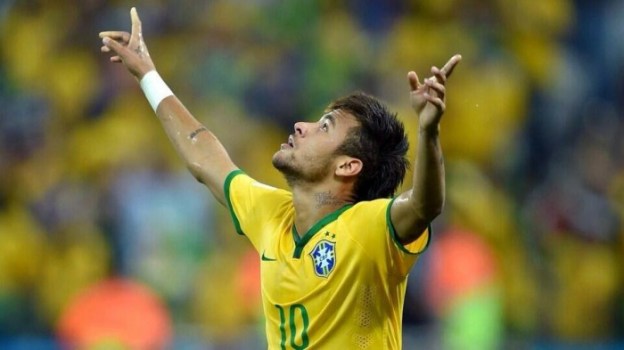
Neymar makes his mark but like Brazil fails to convince against Croatia
“He was the first Brazilian to score (at the right end) at the World Cup, the first Brazilian to be booked in the World Cup and he also scored a decisive penalty. He trotted round in a corona of attention, always demanding the ball, taking every corner and free-kick, the demands of his country that he should win them the World Cup apparently loud in his ears. Yet this wasn’t a convincing performance, either from Neymar or Brazil.” Guardian – Jonathan Wilson

Relief for Brazil after flawed victory
“Brazil’s World Cup is one of the most ineptly organized major sporting events in history. It might yet prove to be the worst. Its inconveniences have been overshadowed only by its tragedies. Construction workers have died. Stadiums and infrastructure are incomplete. The field in Manaus, a first-order criminal folly, looks like something a beer league wouldn’t play on. The airports and streets are overwhelmed. (If you have a friend in Brazil and you want to know what he’s up to right now, he’s waiting in some kind of line.) Officials have warned visitors not to be out after midnight, that roving bands of muggers have been invading restaurants, that street violence is as inevitable as the sunshine. Long before the start of Thursday’s kickoff between Brazil and Croatia, the concessions at Arena de Sao Paulo had run out of food, the wireless had gone down and the too-few elevators weren’t working properly. Eighteen minutes after the first whistle, a large bank of lights went out.” ESPN

Soccer Morning – June 13th 1:31:13 (Video)
Kickoff

“Jonathan Wilson, from London: ‘All the new thinking is about loss. In this it resembles all the old thinking.’ That’s Robert Hass, in the opening of his great poem ‘Meditation at Lagunitas.’ The lines resonate: earlier this week, before departing for the World Cup in Brazil, the U.S. national team coach Jurgen Klinsmann, who is German, asserted, ‘We cannot win the World Cup,’ and it didn’t go down well. At least one pundit suggested that he should ‘get out of America.’” The Paris Review – Jonathan Wilson

McDonald’s World Cup Launch Party Features Live Art by UK-based Ben Mosley and more

“In celebration of the upcoming FIFA World Cup in Brazil, McDonald’s has reinvented its French fry packaging. Twelve artists from around the world — many who are active on the streets — were chosen to create the special new designs to celebrate the game. Among those selected from the 500 artists who submitted designs was UK-based Ben Mosley, who descibes his piece, Fans of the World (close-up pictured above), as a homage to the World Cup.  ”I believe the World Cup brings people together in celebration from all walks of life and backgrounds,” he explains, “so calling my piece Fans Of The World makes sense to me because it represents everything that I believe to be good about the game.” Street Art NYC

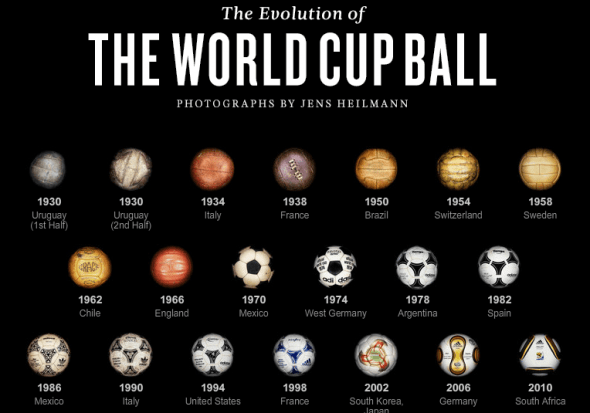
The World’s Ball

theWorldCupBall-590x413
“An Imperfect Ball. Early soccer balls were hand-sewn and made of leather. They were never perfectly round, and inflating them required some skill. The laces had to be undone before an interior air bladder was filled and tied with a thread; then the laces were retied. Team captains chose a ball before each match, and every team had a preferred design, according to Peter Pesti, a collector and expert on World Cup balls. In the first World Cup, in 1930, Uruguay and Argentina could not agree on which ball to use. The first half of the match was played with a model favored by Argentina. The second half was played with Uruguay’s preferred design, the T-Model. Argentina led, 2-1, after the first half, but Uruguay recovered in the second and won, 4-2.” NY Times

God Uses the World Cup to Teach People Geography

“It is astonishing how many of my friends, agnostics as they are, suddenly start praying the moment a World Cup match is before them. One of them texted me just before the opening game between Brazil and Croatia. ‘OMG. You know Im never in church. But today Im a believer.’ He then phoned me. He said the focus of his prayer was not any of the teams on the field. He was really rooting for the Japanese referee.” New Republic

France World Cup play-off win helped cause Ukraine crisis, says Domenech

“The former France coach Raymond Domenech has said the current Les Bleus side is ‘partially responsible’ for the bloodshed in Ukraine. France beat Ukraine 3-0 in the second leg of the World Cup play-off in November last year to pull off a thrilling 3-2 aggregate victory and qualify for the World Cup in Brazil. According to Domenech, the turnaround was such a shock to the Ukrainian people that it paved the way for the crisis situation currently engulfing the country.” Guardian

The Many Goal Posts of Brazil

lead_large
“The 2014 World Cup is finally underway. Soccer-loving host nation Brazil plays Croatia inside São Paulo’s Arena Corinthians Thursday afternoon. Like so many tournament story lines formed around excessive government spending on the event ($11.3 billion total), the $525 million stadium has been a source of embarrassment for Brazilian politicians and World Cup organizers. Three workers were killed building the facility. Completed six months past deadline and $150 million over budget, today’s game will be the first it hosts at full capacity.” City Lab

What Would Socrates Do?

“Brazil’s heroic midfielder from the 1980s had a political conscience that’s needed today. You have to wonder what Socrates, the legendary socially-conscious Brazilian midfielder, would have made of what is happening in Brazil. Soccer and socioeconomic issues defined his personality and his career. Were he still alive, he would no doubt be helping us contextualize the craziness of this World Cup. They don’t make Brazilian players, or athletes in general, like Socrates these days. This Seleçao team follows the lead of coach Luiz Felipe Scolari, who, when the team bus was surrounded by striking school teachers last month, dismissed the issue and said the problems of his country are not his concern. Not yet, anyway.” Fusionn

Francis: a pitch-perfect Pope

“For a nine-year-old boy in lower-middle-class Buenos Aires in 1946, there were three towering influences: the Catholic church, Argentina’s new president, Juan Domingo Perón, and football. Jorge Mario Bergoglio absorbed them all. He used to go with his father, an immigrant Italian railway worker, to watch the San Lorenzo team. In that magical year of ’46, San Lorenzo became Argentine champions. Bergoglio – now Pope Francis – likes to say that a crucial San Lorenzo goal that season ‘just about deserved a Nobel Prize’.” FT – Simon Kuper

World Cup Let the Drama Begin: World Cup 2014 Group Preview, From A to H

worldcupcapsules-1-master675
“The top players are here (mostly), the stadiums are ready (sort of) and preparation time is up: The 2014 World Cup begins Thursday. After Brazil takes center stage in São Paulo (yes, Croatia will be there, too, but all eyes will be on the host), the two biggest heavyweight fights of the first round arrive in short order: Spain versus the Netherlands on Friday and England versus Italy on Saturday. So settle in for the next month and enjoy.” NY Times

Welcome to São Paulo, Ground Zero of Protest, Foment, and Labor Strife

“The metro strike has ended in São Paulo, Brazil’s largest city, for now. Jerome Valcke, FIFA’s Secretary General in town for the FIFA Congress, says there is no Plan B to get 61,000 fans to the nearly finished Itaquerão stadium. Of course, there might be a general strike across the country on Thursday, but it’s maybe, probably just a rumor. Panic has ensued. Calm Down! Hurry up! Slow down! How do I get to the stadium?” Fusion

Brazil: organised, structured, and the favourites

“There has never been more pressure on a side to win a World Cup: the hosts are always expected to exceed expectations, but the expectation in Brazil is always to win. Following two disappointing quarter-final exits in 2006 and 2010 – and let’s not forget, Brazil started both those tournaments as favourites – another failure won’t be tolerated. In re-appointing Luiz Felipe Scolari, the World Cup-winning coach from 2002, Brazil find themselves with a fine manager capable of working, and thriving, under such great pressure. While judgement of his performance will be entirely dependent upon what happens in the next month, he’s performed an extremely good job so far.” Zonal Marking

A ‘bloodbath’ on the pitch, a riot in the streets

“The Estádio do Maracanã in Rio de Janeiro has a special, rueful place in the Brazilian psyche. It is beloved by all who have seen it, even at its rundown worst. When it came to be renovated for the first time, it was feared it was an impossible task. So much human urine had been expelled over its concrete foundations that it had made the stadium structurally unsound. It was also the venue of an event that Brazilians had never forgotten, from the last time the country hosted the tournament: the 1950 World Cup final. Those who weren’t born then have never been allowed to forget it either.” CNN – James Montague

Your Ultimate World Cup Twitter Guide

“Why Watch & Tweet? If you can’t watch a World Cup match, then you should be on Twitter following micro-rants that break news and breath life into a digital stream. (Actually, you should be reading our live blog, which will be delivering so many gifs that you’ll feel you’re watching the actual game.) Even if you can watch, you might still want to have Twitter open on a second screen. Why? Because it’s like watching with a bunch of your friends–really smart and connected ones, funny ones, and a lot of idiots–except you don’t have to smell, share a bathroom with, kick out, or clean up after any of them. How to Follow Specific Teams & Matches. To find and share content specific to a country, simply follow and use the applicable hashtag. Each of the 32 countries has a three-letter abbreviation. They are…” Fusion

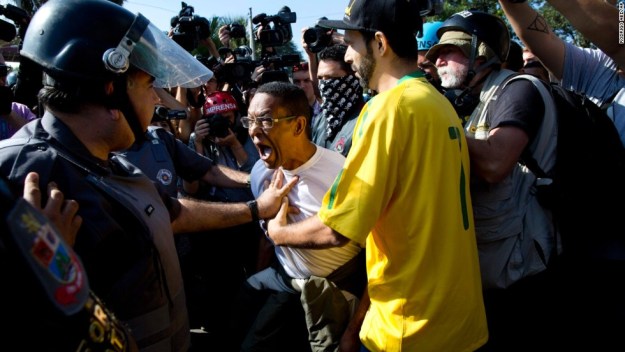
Protests at the World Cup

sao-paulo-protests-0612-horizontal-large-gallery
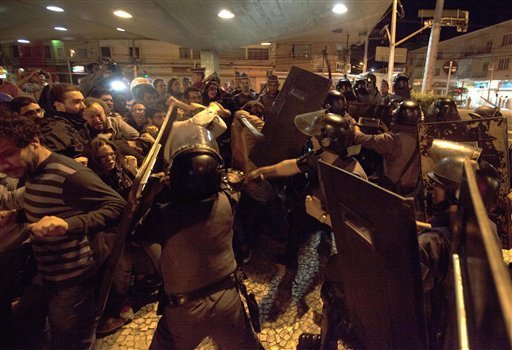
A protester argues with police during the Sao Paulo demonstration on June 12. Two CNN journalists sustained minor injuries at the scene.
“A Brazilian policeman stands behind shields during clashes with protesters in Sao Paulo, Brazil, on Thursday, June 12. The buildup to the World Cup has been plagued by mass demonstrations over the estimated $11 billion cost of staging the soccer tournament. Many protesters, angered by the state of Brazil’s public services, believe the money would be better spent elsewhere.” CNN

Four years of tactical evolution

“The World Cup is always a fantastic barometer of the prevailing style of football in any era. Games from Chile in 1962 were amazingly physical and aggressive, by the 1970s things had become more cultured and technical, and in 1990 defensive organisation and structure was the overriding feel. What of 2014 in Brazil? What will distinguish it from World Cup 2010 — and, indeed, from World Cup 2018? Here are three key features of the 32 sides competing over the next five weeks.” ESPN (Video)

Spain: can they keep their incredible run going?

“Spain’s current run of success is unprecedented – two European Championships, with a World Cup between. When you consider their distinctive playing style, and the way they’ve taken possession football to the extreme, they’re unquestionably one of the greatest international sides in history. They are, however, more vulnerable than in previous years. That’s because key players have declined since Euro 2012. While others have been in and out of the side, Xavi Hernandez and Andres Iniesta have been the two midfield stars consistent throughout Euro 2008, World Cup 2010 and Euro 2012. They’re the personification of Spain’s Barcelona-based tiki-taka game, and together they had their least impressive season for years. At his best, Xavi controlled matches better than any midfielder in the world, maybe better than any midfielder ever has, but now there are questions about his mobility and capacity to lead this side. Iniesta’s season at club level was disappointing, but he always delivers at international tournaments, and for the first time it is Iniesta, not Xavi, who must become Spain’s technical leader.” Zonal Marking

A Prayer for the Goalies and Referees of the World Cup

“Here is one thing I can predict with total certainty about this World Cup: an as-yet-to-be determined number of goalies and referees are going to suffer terrible fates. They will be vilified. They will ruin their lives as we watch. They will shoulder the rage and sorrows of entire nations. As we saunter into this month-long spectacle, let us take a moment to thank them. For their suffering is what makes this theatre possible.” New Republic – Laurent Dubois

While the World Watched

Image, 738 × 415 pixels)
1978 World Cup and the simultaneous political strife …
“INSIDE A BUENOS AIRES restaurant named El Cuartito, sky-blue paint covers the walls, along with photographs and banners from important athletes and teams. In the center of the largest wall is a shrine to Diego Maradona, the star of the 1986 World Cup. That title is so important that Maradona, a recovering drug addict, still basks comfortably in a nation’s warming love and goodwill. People celebrate the ’86 title with vivid street art murals, and with photos and signed jerseys and posters in nearly every place of business, including El Cuartito. The restaurant celebrates civic heroes, which is why one particular omission is jarring. Argentina has won two World Cups, the famous one in 1986 and the other just eight years before, in 1978, when Argentina played host. That team is barely honored at all inside El Cuartito. In the back corner of the main room, as far away from the door as you can get, hang two team photos. That’s it.” ESPN

2014 World Cup Roundtable: Planet Futbol’s prediction panel

“The 2014 World Cup kicks off Thursday, when Brazil and Croatia open the highly anticipated competition in Sao Paulo. Every World Cup is met with excitement and intrigue, but there’s something extra special about the 2014 edition. Perhaps it’s the host and its tradition of excellence. Perhaps it’s the loaded tournament field. Or perhaps it’s that transcendent stars like Lionel Messi and Cristiano Ronaldo are in their primes at the most ideal time. Regardless, there is quite the chapter of international soccer that is on the cusp of being written. Our reporters on the ground in Brazil — Grant Wahl, Brian Straus, Jonathan Wilson and James Young — and our contributors throughout the tournament — Liviu Bird and Ben Lyttleton — offer their picks as the world’s spotlight gets firmly planted on Brazil for the next month.” SI

Last Week Tonight with John Oliver (HBO): FIFA and the World Cup

“John Oliver’s excitement for the World Cup is tempered by knowing information about FIFA, the organization that produces it. John details the problems with the upcoming tournament and the staggering allegations of corruption against FIFA.” YouTube: Last Week Tonight with John Oliver (HBO): FIFA and the World Cup (Video)

Germany: need the right combination upfront

“Germany have reached at least the semi-finals of the last four major international tournaments without winning any. Frankly, it’s about time that changed. It’s worth remembering Germany went into the 2010 World Cup with many key players relatively unknown outside of Germany. The likes of Mesut Ozil, Thomas Muller, Jerome Boateng, Manuel Neuer and Sami Khedira were very raw, yet were rightly thrown in at the deep end and proved extremely capable. By Euro 2012, Jogi Low could add Mario Gotze, Marco Reus and Andre Schurrle. Now, he can add Julian Draxler.” Zonal Marking

The Pressure Builds on Brazil

scolari
“Just days before Brazil kicks off the World Cup against Croatia, warm-up matches and training sessions around the country reveal the two sides of Felipe Scolari and regional feelings about the team. June 3, 2014; Brazil v Panama; Goiânia, Brazil. Luiz Felipe Scolari is answering a question about Neymar. Scolari answers a lot of questions about Neymar. And about David Luiz, and Hulk, and all the other members of the Seleção. He also answers a lot of questions about pressure, and preparation, and a thousand other subjects connected with the most important, and least answerable, question: Will Brazil win its sixth World Cup this summer.” Fusion

Brazil on Edge as World Cup Exposes Rifts

“Brazil’s list of feats since ending authoritarian rule in the 1980s is as long as it is varied, including antipoverty programs pulling millions into the middle class, the democratic election of presidents who suffered indignities under the dictatorship and the surging growth of tropical agriculture to help feed the world. But instead of coming together to extol such triumphs on the global stage as the host of the World Cup, the soccer tournament starting on Thursday with teams from 32 countries, Brazil is marked by rifts, with some people genuinely excited about the event while others are simmering with resentment over its ballooning costs and a sluggish post-boom economy.” NY Times

World Cup Opinions in 19 Countries: Likes, Dislikes, Predictions

“Argentina, the United States and Iran appear to be the most disliked World Cup teams. Brazilian fans enter the World Cup as the most confident, though Argentines and Spaniards aren’t far behind in their home-country optimism. And fans across many countries agree that the Brazilians play the most attractive form of soccer. These are among the results from a study of people in 19 countries conducted by YouGov, the online survey firm, in collaboration with The Upshot. The study offers insight into the psyche of fans around the world as they prepare for the most watched tournament in sports. Highlights include…” NY Times

Portugal: the same as usual

“Even if you haven’t seen Portugal play since Euro 2012, you’ll still know the team pretty well. Portugal always have roughly the same style, roughly the same strengths and weaknesses, and roughly the same chance of winning the competition. It’s no different this time around. Portugal’s starting XI for World Cup 2014 is extremely similar to their starting XI for Euro 2012, and it’s a familiar story – solid defence, talented central midfield, dangerous wide players, no prolific striker.” Zonal Marking

How the UK taught Brazil’s dictators interrogation techniques

brazilarchiveprotestap
“As the world focuses on the World Cup, which opens in Brazil in less than a fortnight, many Brazilians are wrestling with painful discoveries about the military dictatorship that ruled the country from 1964 to 1985. The BBC has found evidence that the UK actively collaborated with the generals – and trained them in sophisticated interrogation techniques.” BBC (Video)

National Defense

“On June 12th, the United States men’s national soccer team faces England, in Rustenburg, South Africa, in a match that is expected to draw one of the largest audiences in the history of televised sports. The last time the U.S. met England in a World Cup was sixty years ago, in June, 1950, in Belo Horizonte, Brazil. The American team, cobbled together so hastily that many players had just met one another, included a dishwasher, a mail carrier, a meat packer, and a hearse driver. A reporter from Belfast called them a ‘band of no-hopers” and “surely the strangest team ever to be seen at a World Cup.’ No one gave the Americans the slightest chance. Their coach, Bill Jeffrey, described his squad before the game as ‘sheep ready to be slaughtered.'” New Yorker

Algeria: young and mobile

“Anyone who remembers Algeria’s performance at the last World Cup won’t be excited to see them this time around. Algeria were extremely disappointing in terms of both quality and entertainment, and arguably contributed less to the World Cup than any other side. Four years later, however, they’re a more exciting prospect. Coach Vahid Halilhodzic has the side well organised, but also committed to playing good attacking football, with plenty of movement amongst the front three, and a mobile, young and technically proficient midfield trio too. Algeria are receiving less attention than the other four African sides in this competition, probably because of the lack of star names – but they’re actually the highest-ranked African side in the latest FIFA rankings.” Zonal Marking

Sao Paulo metro strike suspended for two days

skXgJ.SlMa.55
“Metro workers in Brazil’s largest city, Sao Paulo, have suspended a strike over pay to allow for negotiations. The five-day stoppage had caused traffic chaos in one of the world’s most congested cities just days ahead of the football World Cup. The union warned that the strike would resume on Thursday – when Sao Paulo hosts the opening match – if its demands are not matched. A strike would make it hard for fans to reach the stadium on Thursday.” BBC

World Cup 2014: age begins to tarnish Ivory Coast’s golden generation

“Fate has not been helpful to Ivory Coast at World Cups. In 2006, as the so-called golden generation first emerged, they were drawn in an impossible group with Argentina, Holland and Serbia-Montenegro, lost their first two games and were out almost before they had begun. Four years later, they lost to Brazil, drew with Portugal and, although they beat North Korea, went out as Brazil and Portugal played out a goalless draw. The tournament has been rather kinder on this occasion but the truth is that time has probably been called in the last-chance saloon, and the Ivorians are outside on the pavement wondering if there is anywhere else still open.” Guardian – Jonathan Wilson

USA: a diamond midfield

“While 4-2-3-1 remains the dominant formation, there’s a decent amount of tactical variety on show at this World Cup. The United States are expected to add to this variety by using a diamond midfield, which might be unique among the 32 teams. Jurgen Klinsmann has spent recent weeks telling the press that the formation doesn’t matter, but the switch to the diamond in April’s 2-2 friendly draw against Mexico was a significant move, and was designed to bring the best out of the USA’s outstanding player, Michael Bradley.” Zonal Marking

Diamonds in the Rough

“The human body is 18 percent carbon, which means that if you subject it to high enough pressures at high enough temperatures and hold it there for a long enough time, it will form diamonds. You can try this yourself, in a laboratory. All it takes is, say, a pound of human ash, more than 4,000 degrees Fahrenheit, and 60,000 times the standard atmospheric pressure of Earth at sea level. Extract carbon, bake, compress. Check back in a few weeks. Not a DIYer? No problem. Just FedEx your burial urn to one of the many Internet-facing memorial-diamond companies that have sprung up in the last few years. For between $2,500 and $25,000, outfits like Chicago’s LifeGem and Switzerland’s Algordanza will take the cremated remains of your loved ones and return them, presto chango, in the form of wearable jewelry.” Grantland – Brian Phillips

Switzerland: true dark horses

“Switzerland have appeared at the previous two World Cups, and from their seven matches across those two tournaments, have conceded just one goal. They’ve always boasted good organisation, but have lacked quality in attacking positions to record victories. That might have changed. Switzerland have a superb generation of young talent, summed up by the fact their four forwards are aged 21, 22, 23 and 24, and their first-choice attacking midfielders 21 and 25. If Switzerland can keep their traditional defensive structure while successfully introducing attacking invention, they have all the qualities required to succeed.” Zonal Marking

The Night Croatia’s Soccer Players Booked Hotel Rooms for Their Fans

“The morning after Croatia defeated Germany, the defending European Champion, 3–0 in the quarterfinals of the 1998 World Cup, I drove a rented Renault up to Vittel, where the victors would be based for the days leading up to the semifinal against France. Vittel is a genteel spa town, best known for the mineral water that is bottled under its name. Grand old hotels lined the perfectly maintained streets. The few people appeared oblivious to the presence of the team that had just pulled off the biggest upset of the tournament.” Fusion

Terry Gilliam, Guy Ritchie & Alejandro González Iñárritu Direct Soccer Ads for Nike

“Even if you don’t hail from one of the world’s many soccer-loving countries (you know, the ones that don’t call it ‘soccer’) surely you can get on board for the World Cup. Here in the United States, I often hear ‘I just watch it for the ads’ said about the Super Bowl. And if that game’s breaks showcase some pretty cool spots, then its non-American football equivalent offers an even higher level of promotional spectacle. Last year, we featured Brazil and 12 Monkeys auteur Terry Gilliam’s two ventures into the form of the World Cup commercial, ‘The Secret Tournament’ and ‘The Rematch,’ the first of which you can watch at the top of the post.” Open Culture (Video)

The World Cup Is About to Begin, and FIFA’s Reputation Has Never Been Worse

sepp
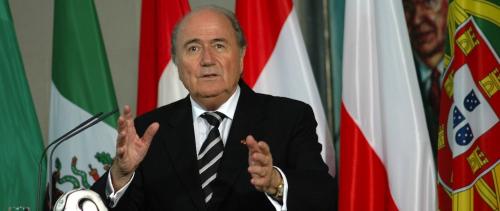
“With the World Cup kicking off this Thursday, the month of June should be FIFA’s moment in the sun. Instead, the skies continue to darken over soccer’s international governing body. It all started on June 1, when The Sunday Times exposed that Mohamed bin Hammam, a former member of FIFA’s executive committee, had secretly bribed soccer officials worldwide nearly $5 million in an attempt to win votes for Qatar’s successful bid to host the 2022 World Cup. This wasn’t the first corruption charge leveled at bin Hammam: he was banned from FIFA in 2012 on charges of bribery, though the decision was later overturned.” New Republic (Video)

Iran: frustrating to watch, frustrating to play against

“In a World Cup featuring lots of very familiar sides, Iran are something of an exception. They were absent from the 2010 edition, lack standout individual names, and a combination of politics and finances means their preparation for the tournament, in terms of warm-up matches, has been minimal, although they’ve now managed to squeeze in four pre-tournament friendlies. Opposition players won’t naturally know much about Iran, and opposition scouts will find it difficult to build a picture of their strengths and weaknesses.” Zonal Marking

UFWC World Cup preview: Uruguay’s chances in Brazil

“The UFWC title is going to the World Cup, in the hands of Unofficial Football World Champions Uruguay. The WC tournament begins in Brazil this Thursday, 12 June, and the UFWC action begins on Saturday, 14 June, when Uruguay play Costa Rica in Group D. Also in Group D are England and Italy, both likely to be involved in UFWC title matches over the next couple of weeks. Depending on results, the unofficial title may then be contested in the knock-out stages, which would mean UFWC title matches all the way to the WC Final.” Unofficial Football World Championships

Statistically speaking, pressure is on USA to get points in World Cup opener

“How important is the USA’s first game of the World Cup? Let’s just say that if the U.S. wants to advance from a difficult group (Germany, Portugal, Ghana), history shows that it needs to get at least a point from Monday’s U.S. opener against Ghana (while three points from a win would be fantastic). On Tuesday, I asked U.S. midfielder Michael Bradley if he viewed the Ghana game as a must-win or a must-get-a-result game.” SI

Watching the World’s Game, in the World’s City

CUP-master675
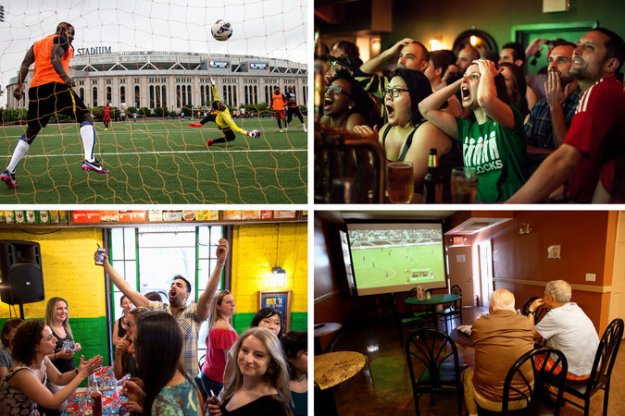
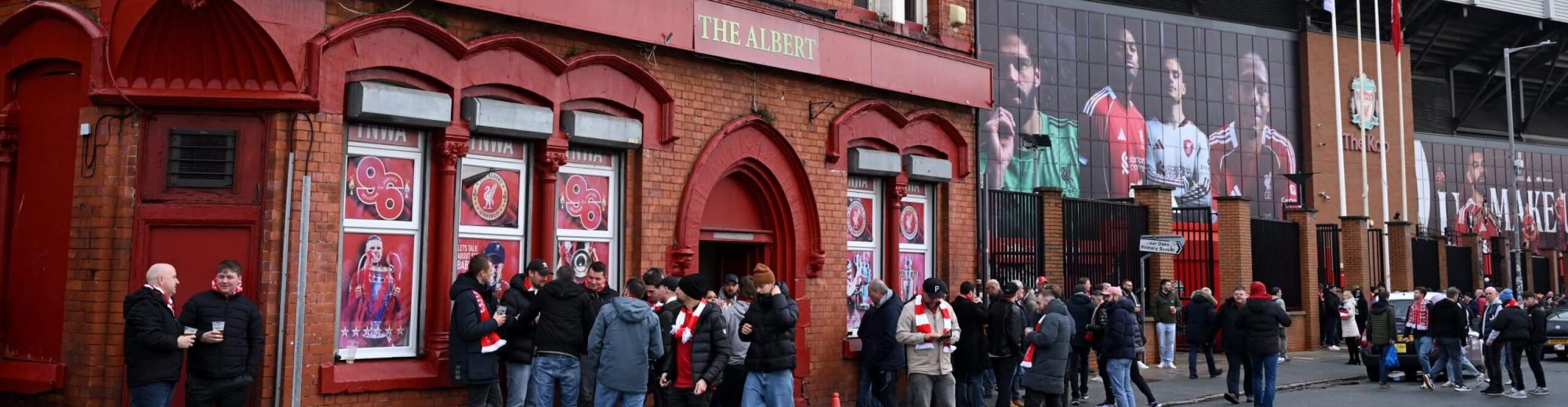
“On a gloriously sunny afternoon recently, Lunasa, an East Village pub, was packed seven deep at the bar, as three TVs showed the day’s big games. Soccer games, that is, in Germany, Portugal and England. Just wait until the World Cup starts on June 12. Outside Brazil, there is no better place to experience the world’s sport than the world’s city. Passion for soccer runs deep in New York, among Ghana fans in the Bronx, who expect yet another victory over the United States team; among the Japanese faithful in a discreet Kips Bay lounge; and bursting from 900 Bosnians around Astoria preparing for their nation’s first ‘Svjetski Kup.’ There are 32 teams, in eight groups; we have chosen one nation from each group and provided a local prism to view the games through.” NY Times

Where to Watch the World Cup in New York

Cameroon: need to get the midfield balance right

“With Cameroon, off-field issues are of greater concern than tactical factors. They always have some kind of problem in terms of organisation, and it was no great great surprise when a row about bonuses threatened to take over again. There have also been problems between Samuel Eto’o and Alex Song, Cameroon’s star players, in the past. Following an extremely unconvincing qualification campaign, where Cameroon suffered from infighting, had three different coaches and only escaped elimination because Togo were found guilty of fielding an ineligible player, it was difficult to see any hope for them at this World Cup. A recent 2-2 draw with Germany suggests all is not lost, however.” Zonal Marking

World Cup 2014 Tactics: Analysing Chile’s tactical approach, formation, and set up

“Tasked with a difficult group but favoured by a familiar climate, Chile head to Brazil with a target of qualifying for the second round which will equal their best effort since the tournament expanded to 32 teams, having reached the last 16 in both 1998 and 2010. In South Africa, led by the innovative Marcelo Bielsa, they progressed from Spain’s group after running the eventual winners close in Pretoria and they once again face the World and European champions in Brazil. Group B also houses the Netherlands, losing-finalists last time out and coached by Manchester United’s Louis Van Gaal, and a rather transitional Australia who boast the least experienced squad of all in this World Cup.” Outside of the Boot

Sao Paulo police tear gas protesters

“Brazilian riot police have used tear gas against protesters in Sao Paulo, three days before the World Cup opening game in the city’s main stadium. The BBC’s Katy Watson at the scene said about 300 demonstrators were there and helicopters circled overhead. The protest was called by Sao Paulo metro workers who are striking in support of a 12.2% salary increase. Brazilian President Dilma Rousseff has said she would not allow violent demonstrations to mar the World Cup. Sao Paulo metro workers have been on strike since Thursday, creating traffic chaos in one of the world’s most congested cities.” BBC (Video)

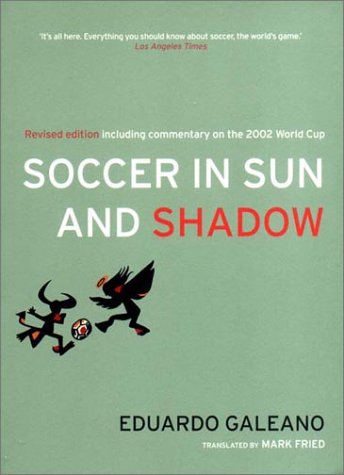
Tomgram: Eduardo Galeano, The World Cup and the Corporatization of Soccer

sclzzzzzzz_
“There is a tiny universe of editors of Eduardo Galeano. I was once one of them. Carl Bromley of Nation Books is so today. For an editor, working with such an author is an experience glorious beyond describing. Think of it as to ordinary editing what ‘the beautiful game’ (soccer), World Cup variety, is to sports. With the latest round of that contest imminent, I thought the perfect teaser for TomDispatch readers would be a selection from Galeano’s classic book, Soccer in Sun and Shadow, and Galeano’s splendid literary agent Susan Bergholz agreed immediately. So, one editor to another, I asked Carl, as a literary gent and a Brit with a yen for soccer (who will be cheering for Italy), to do the TomDispatch introduction. Let me give all of you the TomDispatch Guarantee: buy Galeano’s book before the World Cup begins and you may not be able to look up long enough to catch the games! Remember, he’s just been called ‘the Pele of soccer writers’ in the Guardian.” TomDispatch

amazon: Soccer in Sun and Shadow by Eduardo Galeano

The Burden of Being Messi

“In much of Argentina, where Lionel Messi lived until he was 13, native speakers replace the ‘y’ sound with a ‘sh’ sound. Yo, the personal pronoun for ‘I,’ becomes ‘sho,’ and calle, which other Spanish speakers would pronounce ‘ka-yay,’ becomes ‘ka-shey.’ The sound gives Argentine Spanish a slurry softness that resembles aspects of the Portuguese spoken in Brazil. More important to this story, that ‘sh,’ and the fact that Messi has retained it all his life, has at times been the sole lifeline between the greatest soccer player in the world and the country he plays for.” NY Times

Racism on soccer field in Brazil still hidden not so deep beneath surface

“RIO DE JANEIRO — Close to the geographical heart of Brazil, in the little-known state of Tocantins, soccer players remonstrated with a referee over a decision. Tensions ran high at the state championship match in the small town of Peixe, and in the midst of the ruckus, an official observer called an Afro-Brazilian player a ‘monkey.’  The incident barely made a ripple outside the town of 9,000, and police ignored the victim, a middle school teacher. But as Brazil pulled behind its defender Daniel Alves after a banana was thrown in his direction while he was playing for Barcelona, the episode in Tocantins revealed the country’s complicated relationship with racial identity.” Al Jazeera

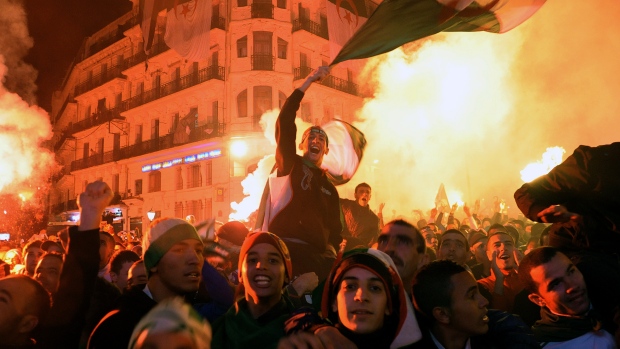
‘The other French team’: Soccer and independence in Algeria

imagealg
Fans of Algeria’s soccer team celebrate World Cup qualification in Algiers on Nov. 19, 2013. Twelve people died in the celebrations.
“Today we continue our series on politics, political science and the World Cup (here are posts 12, and 3) with a look at identity, politics, and football in Algeria and France. First up is Tony Ross, who examines how soccer got tied up in Algeria’s struggle for independence but now exemplifies the country’s continued ties to France.” Washington Post

World Cup 2014 Tactics: Analysing France’s tactical approach, formation, and set up

“If there’s a man who has a more illustrious career than the entire French cirque that has descended upon Brazil this summer, it is the man at the helm of Les Blues, Didier Deschamps. European honors with Juventus and Marseille, along with a European Championship and World Cup medal are credentials enough to convince any Les Blues fan worth his salt that the former Nantes man is good enough to lead France towards a memorable tournament this year. Rewind back to the night in Ukraine, in a scenario where France have failed to over turned the two goal deficit and this could have been an entirely different story altogether. Failure to qualify for the finals would have ensured that Deschamps would never be remembered in the history of French football alongside greats like Platini, Zidane, Henry, (and the usual suspects).” Outside of the Boot

‘Miracle of Eibar’ – Can tiny Spanish club avoid cruel twist of fate?

“There is only one fairytale story in Spanish soccer this season, but will it have a happy ending? Forget Atletico Madrid’s first league title for 18 years, disregard its city neighbor Real concluding an exhaustive wait for ‘La Decima’ — a 10th European Champions League crown. Because this season is all about the ‘Miracle of Eibar.’ The Basque town has a population of just 27,000 and the club a budget dwarfed by almost all its rivals, yet back-to-back promotions have banked Eibar a place in the big time.” CNN

World Cup 2014 Tactics: Analysing Germany’s tactical approach, formation and set up

germany-1
“The Paradox of Choice. Analysis Paralysis. Kid in a candy store. All of these phrases seek to explain having too many options to effectively choose one solution. These are very apt phrases to explain the plight of Germany Manager Joachim Löw when attempting to select the attackers in Die Nationalmannschaft. Despite the defense and holding portions of his midfield being largely decided before the tournament begins, the attacking portions of his team are so full of options and combinations that it will be difficult for the sweater-clad manager to find the right blend of creativity and directness in his front four.” Outside of the Boot

World Cup 2014: Rio horror show or a samba sensation?

“Last time the World Cup was held in Brazil, in 1950, it was designed as the propaganda centre-piece of Getúlio Vargas’s Estado Novo, the concrete sweep of the Maracanã, a modernist wonder that would be reflected in Oscar Niemeyer’s designs for the new capital, Brasília. Football, though, can be delightfully unpredictable and rather than consecrating the new Brazilian state, the World Cup offered a national disaster – ‘our Hiroshima’, as the playwright Nelson Rodrigues tastelessly put it – as Brazil, needing only a draw in the final game to seal the title, were beaten by Uruguay.” Guardian – Jonathan Wilson

Brazil will not be perfect but there should be much to savour over the coming weeks

“Inspired by the idea of covering the 2014 World Cup, Danish journalist Mikkel Jensen studied Portuguese and based himself in Brazil to observe the build up to the big kick off on June 12. But in the middle of April he went back home, proclaiming that ‘the dream has become a nightmare.’ He had come to the conclusion that the tournament was doing nothing to help the ordinary Brazilian – indeed, he felt that in some cases it was even making things worse, and he no longer wanted to be part of it.” World Soccer – Tim Vickery

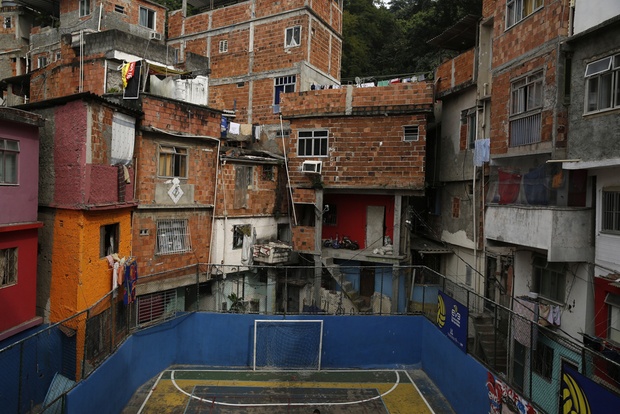
The World Cup Soundtrack

favela5-jumbo
“The volume rattles the bones. The gyrations evoke scenes of lustful abandon. In some of funk’s most explicit forms, tracks sprinkled with the prerecorded sounds of machine-gun fire exalt the drug gangs still in control of some of Rio de Janeiro’s favelas. On certain nights, the bass from the amps resonates from the hillside slums into the bastions of the privileged classes, as if to remind them: Rio doesn’t belong just to you.” NY Times

Brazil’s politicians banking on World Cup victory to help soothe unrest

“Since 1994, World Cups and presidential elections have taken place in the same years, creating an unintended but poetic synchronicity between football and politics. In 1994 the Tetra [the fourth time Brazil won the World Cup] was followed by the election of the centrist Fernando Henrique Cardoso, a cosmopolitan former sociology professor, who served for eight years. In 2002 the Penta was followed by the election of the left-wing Luiz Inácio Lula da Silva, a former shoeshine boy and lathe operator, who also served two terms.” Guardian