“Style & formation: Switzerland’s perfectly-timed rise to become one of the seeded nations for the World Cup is founded on a resilient defence, with two central midfielders shielding the back four. Nonetheless, coach Ottmar Hitzfeld has responded to previous criticism of his defensive tactics and rigid 4-4-2 formation by integrating creative young players into a 4-2-3-1 line-up well suited to a counter-attacking approach.” BBC – Switzerland, Ecuador, French, Hondurans
Author Archives: 1960s: Days of Rage
How Soccer Used to Explain Brazil
“Beginning in 1938, when Brazil sent its first integrated team to the World Cup, the players chosen to represent the Seleçao have also represented the country in terms of its ethnic, social, and religious makeup. The current crop of stars still mirror changes to Brazilian society, but in certain ways they have also come to represent the country’s upper class—the very target of Brazilian protestors.” Fusion
WC2014 Expert Interview: Why are expectations low despite Nigeria being African champions?
“A lot of Nigerian’s ply their trade in Europe. Do you think that doing so brings them an unfair share of attention, and hence greater chances of selection? Or is their experience in Europe deserving of a spot in the World Cup squad? The truth is that playing in Europe will more often than not give you a better chance of catching the attention of the national selectors. This has been more the rule than the exception over the years. However, coach Stephen Keshi has been bold enough in his three years in charge to give players from the domestic league a more decent run in his team so much so that the home-based players are no longer just mere ‘training materials’.” Outside of the Boot
The Dream Kickoff
“Before Brazil and Croatia play the first game of the 2014 World Cup on June 12, a paralyzed person will stand and walk on the pitch, then kick a ball. This is the story of the Brazilian neuroscientists who developed the mind-controlled exoskeleton that will make it possible.” Grantland
Soccer in Solitude

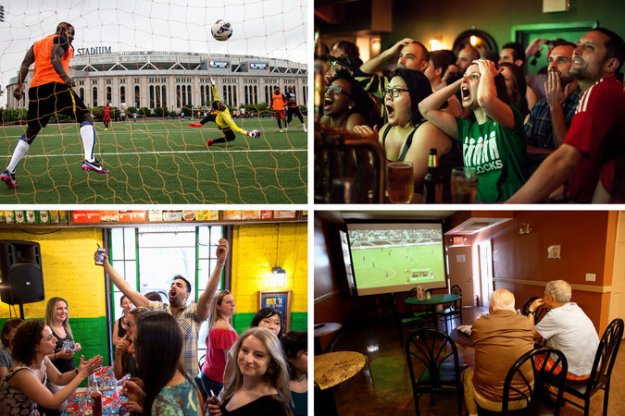
“I’ve drunk too much coffee. I do this every time. It’s forty-five minutes to kickoff and I’ve got nothing to do with my hands, and so I drink another cup. I’ve got nowhere to put my body. I am not at a bar. I am certainly not at the stadium. I’m not even with my friends. I am sitting, and now standing, and now pacing, and now sitting again, in my apartment. It is a half-hour to kickoff. I am chewing the inside of my cheek. Fifteen minutes. I wish someone would bring me a beer. They’re playing the national anthems. Time to shut the window, set the phone to silent. Someone, somehow, please grant me some other passion. This one is wearing me out. Quiet, please. I am a soccer fan.” Roads and Kingdoms
Portrait Serial Winner Luis Suarez Soccer Most Beautiful Player
“BEFORE GETTING TO the alleged mob hit or the mystery of the missing referee, there should be an explanation about how this quest began. An assigned profile of Luis Suarez led to a stack of things to read about his past. Whether it was a tabloid calling him Cannibal! or The New York Times calling him Luis Alberto Suarez Diaz, the portrait is of a cheat and a lunatic. If someone breathes on him near the goal, he falls down like he’s been knifed. He has bitten an opponent. Twice. And, back in his childhood in Uruguay, there’s an oft-reported incident that serves as explanation, or maybe proof, that he is, in fact, batshit crazy. When Suarez was 15, overcome with anger, he headbutted a referee and received a red card in a youth match, making the man’s nose bleed ‘like a cow,’ as a witness said.” ESPN (Video)
The War on WAGs
“The biggest threat to the World Cup is not Brazilian protestors, FIFA greed, or shoddy infrastructure—it’s women, at least according to the English press The wives and girlfriends of the world’s elite soccer players are about to descend on Brazil, eyes asparkle with the unmistakable glint of women plotting to destroy something we menfolk hold dear. The tabloids of Great Britain will cover these ladies as though they’re the ones down on the field, losing for England. And the tabloids are on the right track, because the WAGs constitute a threat, not just to on-field performance but to the very survival of the game we love. Think about it: before the rise of WAG culture, was soccer beset by melodrama, vanity, copious materialism, TV money, egotism, financial bankruptcy, and exploitative labor practices? No.” Soccer Fusion
Tactician’s Corner: Atlético runs out of steam in heartbreaking CL loss to Real Madrid

“Finals don’t often come down to pretty football, especially those that go into extra time. That doesn’t mean the tactical battles are any less compelling, as Real Madrid’s 4-1 win in the Champions League final over Atlético showed. Both managers made strange decisions in their starting lineups. Diego Costa, supposedly fit after his horse-placenta hamstring treatment, didn’t even last 10 minutes for Atlético, while Sami Khedira played a rather ineffective hour in just his third appearance for Real since recovering from a serious knee injury.” SI
Atlético reaches its breaking point as Real Madrid claims La Decima
“It turns out there was a breaking point for Diego Simeone’s magnificent Atlético Madrid side, and it came with 10 minutes of extra-time remaining. The club had won La Liga and was within two minutes of winning a first ever Champions League. Even after conceding to Sergio Ramos, there was still a chance it could cling on through extra-time for penalties, but once Gareth Bale had headed Real Madrid into the lead, it collapsed — physically and emotionally shattered. Marcelo’s late drive and Cristiano Ronaldo’s even later penalty added an unrepresentative one-sidedness to the scoreline, but there was no shame in defeat.” SI – Jonathan Wilson
Real Madrid 4-1 Atletico Madrid (aet): Tactical Analysis | Game changing substitutions from Carlo Ancelotti
“The Champions League is always a very exciting competition, but this season provided a few more edge of the seat encounters than most others. After a season of incredible football from many teams across Europe, we got to the final in Lisbon last night, which like almost every other game in this season, was exciting from start to finish. Atletico as always, worked had, fought till the end, and made things very difficult for the opposition, but at the end of the day, the sheer determination and energy from Real made the difference, as the Galacticos 2.0 made history by reaching La Decima.” Outside of the Boot
Sizing up the Real vs. Atletico tactical battle
“Big clubs have a nasty habit of ruining their little city rivals’ celebrations. When Everton finished above Liverpool for the first time in years back in 2005, beating them to the final Champions League spot, the Reds went out and won the European Cup. When Manchester City’s 35-year wait for a major trophy ended with their 2011 FA Cup final win, Manchester United clinched the Premier League title on the same day.” ESPN – Michael Cox
Know Your Enemy: Ghana winger Andre Ayew
“For Andre Ayew to exhibit weariness when talking about his career is understandable, considering the status of his father — brilliant Marseille and Ghana attacking midfielder Abedi Pele. ‘What my father achieved in Ghana is huge,’ Ayew said. ‘He brought a lot to the country. I’m very proud of what he has done, but this doesn’t have any bearing on my game. Sometimes people may make useless comparisons. I suppose it’s normal, but I had to learn to live with that. Some people thought that maybe I would take the ball and dribble past ten players then score. There was a huge expectation.'” SI – Jonathan Wilson
Before Pelé there was Andrade
“Colette, the ‘Grand Dame of French literature’, lived with fame and scandal throughout her life. The novelist and performer caused a riot at the Moulin Rouge in 1907 when she simulated sex with another woman on stage. She seduced her stepson when he was 16, telling him: ‘It’s time you became a man.’ She had three husbands, two messy divorces and a string of lovers, both male and female. In 1924, when Paris hosted the Olympic Games, Colette met, and was captivated by, one of its participants: José Leandro Andrade. Their upbringings could not have been more different: Andrade was a Uruguayan footballer who had slept on a dirt floor in his childhood and spent little time at school. But Colette was not the only famous Frenchwoman smitten by Andrade.” Guardian
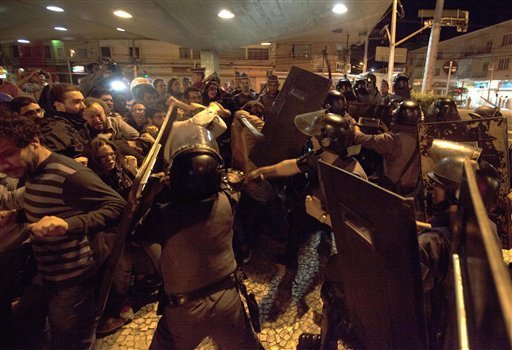
Brazil’s World Cup training starts amid protests
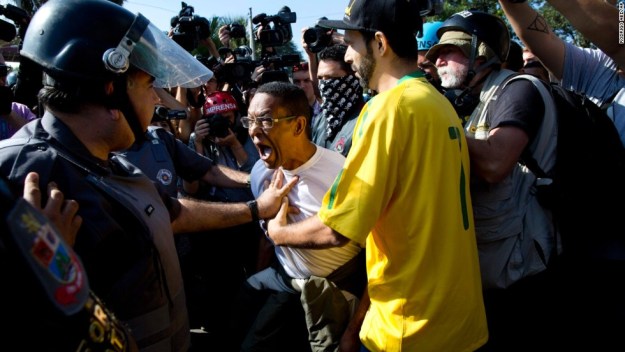
“Brazil’s national team has started its World Cup preparations amid protests in Rio de Janeiro. A bus bus carrying the players to its hilltop training camp was surrounded by striking teachers chanting slogans against the tournament. Later, upon arriving at Granja Comary, players were greeted by fans – and more protesters. Thousands of people have protested against the cost of staging the tournament beginning next month.” BBC
Key Battles: How to Defend

“How can defenders like Spain’s Sergio Ramos even hope to shut out the world-class strikers they’ll see in Brazil? It all starts at training camp with a clear strategy and a willing body double. Heading into the World Cup, most of the focus has been on the tournament’s large group of elite goal scorers: Ronaldo, Messi, Neymar, Suarez. All told, 14 goal mongers expected at this year’s Cup scored at least eight times in qualifying — and that doesn’t include the best from Brazil, which qualified automatically as host. But history shows it’s the team with the stingiest defense that hoists the trophy. Of the past five champions, all but one had the best goals-against average among the quarterfinalists. (Brazil was second to runner-up Germany in 2002.)” ESPN
‘The Greatest Victory’
“Elmo Cordeiro is 80 now, but he still stands ramrod-straight, with a ready smile and eyes that shine under a set of bushy gray eyebrows. It isn’t hard to turn back the clock and imagine him 64 years ago, his white hair a darker shade, his skin wrinkle-free, his compact frame darting around the edge of a soccer field chasing down errant balls. In 1950, Cordeiro was a ballboy at the Estádio Independência here in Belo Horizonte, Brazil—stationed yards away from the historic goal itself—for perhaps the most famous upset in the 84-year history of the World Cup.” SI (Video)
The Landon Donovan Decision
“So Landon Donovan is not going to the World Cup. We’ve had a night to reflect. Does it make sense yet? No. Yes. No, because he’s Landon Donovan. Yes, because he’s Jurgen Klinsmann. Klinsmann had always seemed to regard Donovan’s much-publicized sabbatical from the game with barely tolerant bemusement. The player himself may have believed he was back in the fold, after a typically Donovanesque Gold Cup, and his return to the team during late-stage World Cup qualifiers, but Klinsmann always maintained an equivocal cool. It was as if he were mulling over when, and how, to use the entire Donovan episode as a teachable moment. He chose the eve of the World Cup.” Grantland
Bank Robber, Assassin, War Criminal, Football Club Owner
“Sixteen years ago, FK Obilić Belgrade became national champions of Serbia. Quite a remarkable feat when you consider it was their first ever season in the top flight, and the only time that the title has been held by a club other than Red Star or Partizan since the break-up of Yugoslavia. They remained amongst the country’s elite until their relegation in 2006, which was the start of the kind of tail-spin the poorly run clubs in Britain have got nothing on. After suffering another five more relegations over the six seasons that followed, a team that drew 1-1 with eventual finalists Bayern Munich in the 1998/99 Champions League qualifiers, now reside in Serbia’s seventh tier.” In Bed With Maradona
Atlético Madrid – welcome interrupters
“‘If you believe and if you work, you can do it.’ Diego Simeone’s words were clear on Sunday evening. They were simple, they were true. Speaking at an enormous celebratory parade in the wake of Atlético Madrid’s attritional league-winning draw, away at Barcelona, Simeone extolled humble virtues often lost in the din of modern professional football That Atlético are now triumphant is genuinely significant. Setting aside Rangers’ spectacularly grubby fall from Scotland’s top tier, the last decade had seen Spain develop its own high-end version of an Old Firm hegemony.” backpagefootball
Fascism & Football: The political history of Spanish football

“Spain had been a notable absentee from the 1938 World Cup. The country was being torn apart by Leftist Republicans and a coalition of Nationalist Forces led by General Francisco Franco. The Spanish Civil War was instrumental in bringing three most powerful Fascist leaders together. In 1937, Mussolini sent a considerable number of men to support his Fascist ally. German involvement in the War began immediately as Adolf Hitler immediately sent powerful air and armoured units to assist Franco and his Nationalist forces along with considerable economic loans. By 1939, Franco was successful in curbing the last outbursts of his Republican resistance, including and importantly, the capital of Catalonia, Barcelona. In one week alone in the last year of struggle, 10,000 members of the anti-Franco brigade were executed in Barcelona. A further 25,000 were shot after the ceasefire in the city.” Outside of the Boot
Fascism and Football: How Italy won the 1934 and 1938 World Cup
Outside of the Boot
Fascism & Football: When Germany were the inferior team
Outside of the Boot
Mussolini’s Football
Soccer Politics
Duel: Is the World Cup a poisoned chalice?
“To describe the World Cup as a ‘poisoned chalice’ for the host nations is to ignore the fact that its value goes beyond the economic—it brings people and nations together. It’s also a fantastic platform from which to spread the message that racism and homophobia in sport are wrong. I’m not denying that it costs a huge amount of money to host the World Cup but Brazil currently has the seventh largest economy in the world, is rich in natural resources and has a population of over 198m people. It is a nation that loves football and has a strong tradition of excellence in the game; this event has forced them to upgrade their stadiums and ensure they maintain a world-class standard. It has also made it essential for the Brazilian government to improve the nation’s infrastructure. Brazil is supposed to be this new country coming out and showing the world how powerful they are. I believe that hosting the World Cup will, in the long term, be a huge benefit to Brazil’s economy and global status.” Prospect: Sol Campbell and Simon Kuper
2014 World Cup in Brazil
“This summer, 32 countries will compete in the 2014 World Cup in Brazil. Although each country has distinct histories, customs, and cultures, soccer ties these countries together and bridges their differences. Thus, soccer acts as a mode of universal language or, perhaps, even transcends language, due to its simplicity and global appeal. As a ubiquitous sport, soccer appeals not only to players, but also to millions of fans—some of who play soccer and others of who have never played. For four years, these fans wait anxiously for the quadrennial World Cup, which attracts more fans than any other sporting event in existence. This blog page is a background and travel guide for all of those fans who plan to travel to Brazil to witness the spectacle firsthand. It is also a useful resource for those fans that will witness the event on television and might want additional insight into the Brazilian culture and history that make this summer’s World Cup so meaningful. We hope you enjoy our guide and find it useful in answering any questions you may have. Enjoy Brazil, savor the exhilarating soccer matches that are sure to take place and, for those of you making the journey, safe travels!” Soccer Politics
The Fight For 23: Crowded U.S. midfield makes for heated World Cup roster competition
“In the fight to make the 23-man U.S. World Cup squad, any discussion about the midfielders has to begin with Michael Bradley. The rock of the central midfield is at the height of his powers at age 26, and he knows exactly how the U.S. should look on the field in Brazil when the Americans are playing at their best. How can you tell when that’s the case? When, as Bradley puts it, ‘tactically we’re organized, and defensively every guy is committed to closing down and being aggressive and pressing and making the game hard on the other team. It means that when we win balls we’re mobile and dynamic and showing how athletic we are and how quickly we can go forward.’” SI
The (Midfield) Engine That Could

“There are eleven positions on a soccer team, each with its own character. None is more glamorous than the striker, whose job is to score the goals in a game that has so few of them. None is more romantic than the goalkeeper, who stands alone as the team’s last line of defense, the only player who can use his hands in a sport that depends on the use of the feet, the head, and every part of the body but the hands. None is more celebrated than the Number 10, known sometimes as the fantasista, the team’s playmaking superstar who’s asked to supply the creativity that can undo the most rehearsed and structured defense. Yet despite the spotlight that shines on those players, the midfield position situated just in front of the team’s defensive backline is perhaps the most critical of all. ” The Paris Review
A National Team Without a Country
“The 18 Eritrean refugees arrived in this picturesque, blue-collar Dutch city 20 miles east of Rotterdam earlier this month looking for safety, security and, finally, after 18 months of fear and uncertainty in two refugee camps on two continents, a home. Refugees are not an uncommon sight in the Netherlands. More than 500 are granted legal status every year in the country’s municipalities, towns and cities, often in groups of two or three, though a huge number of economic migrants arrive, many illegally.” NY Times
Soccer Players You Need to Know Before the World Cup: Thomas Muller
“Thomas Muller gets more tangible results from intangible skills than any player in any sport on the face of the planet. Usually, when we talk about intangibles we talk about players who do the little things: glue guys, clubhouse guys, guys who are willing to put in the dirty work other players won’t. But that’s not Muller. Thomas Muller scores goals. He scores them all the time; he’s regularly a top goal-scoring contributor on perhaps the best club team in the world, Bayern Munich, and one of the best national teams in the world, Germany. But exactly how he gets them? That’s the intangible.” Grantland
2014 Fifa World Cup draw: Guide to Group D

“Gary Lineker’s verdict… Style & formation: As qualifying went on, coach Oscar Tabarez settled on a pragmatic 4-4-2. The industrious Edinson Cavani leads the line, with Luis Suarez given licence to roam. Tabarez, however, is not afraid to switch formations, doing so in away matches and during the Confederations Cup to counteract the opposition, including playing 3-5-2 and 4-3-3. Expect him to vary it up in Brazil.” BBC: Uruguay – England – Costa Rica – Italy
La Liga power balance shifts: Has Barcelona lost its soul?
“In Madrid and Barcelona, they will be talking about this for many years to come. Of all the ways to break Barca’s monopoly on Spanish league titles, going to the home of the champions and robbing them of their crown in their own backyard takes some beating. In the Catalan heartland Saturday, unfashionable Atletico Madrid produced a storybook ending to one of the most enthralling seasons Spanish football — or indeed any European league — has ever produced. But as Atleti celebrated, the soul searching began in Barcelona.” CNN
Bayern’s double allows Pep Guardiola to exhale after suffocating first season
“Don’t read on if you still want to view the box set, but season one of Breaking Pep, a fish-out-of-water tale about a clever man trying to come up with the winning formula in an alien world of unreliable underlings and a grilled meats-empire boss who hides a dark secret, finished with a big cliffhanger on Saturday night: THE. MOLE. IS. STILL. OUT. THERE. Guardiola had first embarked on a hunt for the informer inside his own ranks in November, when Bild had revealed Bayern Munich‘s long-ball tactics for the away game at Dortmund before kick-off.” Guardian
Serie A season signs off with ding-dong battle for Europa League berth
“The Serie A season ended as these things usually do: with contrasting images of joy and despair. In one stadium, champagne bottles were uncorked and grown men were tossed up in the air. In another, an Italy forward wept inconsolably. His failure to convert a last-minute penalty had cost his team everything. Instead of sealing a triumphant sixth-place finish, Alessio Cerci had condemned Torino to disastrous seventh.” Guardian
On A Six Pence – football art and readers’ offer!

The Arsenal.
“Here at PNIG, we love football and we love art. As you’ve seen with my piece on Pirlo, my hook-up with the great people at The Illustrated Game, and my recent piece on World Cup photographer Ryu Voelkel, the beatuiful game really can be the beautiful game in the hands of some people.” Put Niels In Goal
League Focus: Ligue 1 2013/14 Review
“As Paris Saint-Germain closed their season in typical style with a 4-0 win over Montpellier, it seemed like an eternity since the reverse fixture on the opening day of the season, when La Paillade had held Laurent Blanc’s side to a draw at the Stade de la Mosson. It was also an extraordinary feeling to consider that Montpellier were the last team to deprive PSG of the Ligue 1 title, in 2012. There will be no repeat in the near future, with the prospect of even getting into the table’s upper reaches severely compromised by the imminent exit of Rémy Cabella, the left midfielder in WhoScored’s Best Xi of the season.” whoscored
UFWC World Cup Classics: Argentina vs Netherlands, 1978
“The Netherlands had beaten Italy 2-1 to reach their second consecutive World Cup final, and to deprive the Italians of the UFWC title. Dutch defender Ernie Brandts had scored for both sides in that game, with Arie Haan getting the winner. The Oranje were looking impressive despite the fact that they were without star man Johan Cruyff, who had stayed at home to consider his priorities following an alleged kidnap attempt on his family. The hugely experienced Dutch team still featured the likes of Jonny Rep, Johan Neeskens, big keeper Jan Jongbloed, and troublesome twins Willy and Rene Van der Kerkhof.” UFWC
Body Politic: Contemporary Art and Culture In Rio

Gondola lift, Complexo do Alemão, Rio de Janeiro, July 7, 2011.
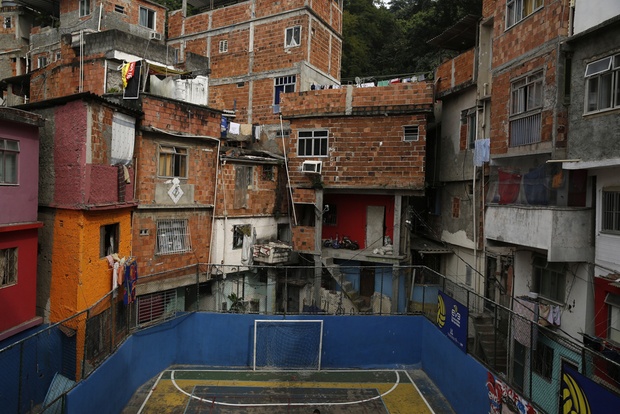
“FOR THIS ISSUE’S Dispatch, Artforum goes south, to Rio de Janeiro—a city as defined by myths of sensualist extravagance as it is by horror stories of yesterday’s military dictatorship and today’s slum violence. Yet one does not have to subscribe to cliché to recognize that Rio is somehow singular; that, in the past half century alone, it has been a place of extraordinary innovation and devastation alike, from the decadent inventions of bossa nova and Tropicália to the human-rights abuses of the postwar period and the unsettling rise of the modern favela in the 1970s. Such paradoxical histories are still with us: This year, as Rio prepares to host the World Cup in June and gears up for the Summer Olympics in 2016, spending astronomical amounts on infrastructural changes and in many instances attempting to eradicate portions of the favelas, it also observes (without celebrating) the fiftieth anniversary of the 1964 coup that brought the military to power.”
ARTFORUM, GUILHERME WISNIK, IRENE V. SMALL, DANIEL STEEGMANN MANGRANÉ
England’s performance at Italia 90 World Cup is venerated too much
“Perhaps, given England’s perceived lack of success, it’s only natural that we should hark always back to 1990, that we should be forever trying to recapture what made that tournament so compelling. Yet it is a little odd. It doesn’t take much of an examination of England’s World Cup record to see how fine the margins sometimes are. In the last eight World Cups, England have reached the last eight (in 1982, the second phase comprised four three-team groups; so for the purposes of this stat I’ve counted the teams who finished second in those groups as losing quarter-finalists) on five occasions. Put like that, England’s World Cup record doesn’t sound too bad – in fact, only Brazil and (West) Germany can beat it.” Guardian – Jonathan Wilson
The Rebirth of Colombia
“Teams in the World Cup are generally split among three tiers. The top one consists of those that year in and year out field the best squads in the world—including most of the previous World Cup winners and finalists, such as Brazil, Germany, and Argentina. The bottom tier consists of those from whom no one expects much, other than that they show up on time for matches. Among that group this year are Iran, Australia, and Algeria. But most teams fall somewhere in that second tier, where fans begin the tournament holding out hope that—through a perfect storm of lucky bounces, mistaken calls, beneficial match draws, and brilliant overachievement—their team will cobble together a World Cup championship. Colombia, who have qualified for the World Cup for the first time in sixteen years, is one of these teams.” The Paris Review
2014 Fifa World Cup draw: Guide to Group C

“Gary Lineker’s verdict. … Style & formation: Coach Jose Pekerman is a tactical chameleon who favours attack-minded variations on 4-4-2, 4-2-2-2 and 4-2-3-1 formations. Napoli pair Pablo Armero and Juan Zuniga provide width as adventurous full-backs, with Fiorentina’s Juan Cuadrado and Monaco’s James Rodriguez the key creative influences. Rodriguez plays his club football alongside striker Falcao, and the duo have a deadly understanding.” BBC Colombia, Ivory Coast, Greece, Japan
Fear the Underdog?
“Atlético Madrid is the third-most successful club in the history of Spanish soccer, which is a little like being the third-most famous khan in the history of the Mongol horde. Good job by you, but you’re never going to stop hearing about Genghis and Kublai. Atleti has won nine titles in La Liga, Spain’s top division, which is great, except that Real Madrid and FC Barcelona have combined for 54. And when you start running the math on that, and realize there have only ever been 82 champions crowned in La Liga, and add in that Madrid and Barcelona have collectively finished second an additional 45 times (versus eight for Atlético), and further consider that Atleti isn’t even the biggest team in its own hometown (that would be Real) — well, you get a clear picture of a tough little club that’s been overshadowed by its planet-conquering, culture-altering rivals.” Grantland – Brian Phillips
Brazilian anti-World Cup protests hit Sao Paulo and Rio
“Riot police in Brazil have fired tear gas to disperse thousands of protesters in Sao Paulo and Rio de Janeiro who marched against the cost of hosting the football World Cup. Some demonstrators hurled stones while other burned tyres and blocked roads. They say they are angry that billions of dollars are being spent on next month’s football tournament, rather than social projects and housing. Protests also took place in many other cities, including the capital Brasilia.” BBC
2014 Fifa World Cup draw: Guide to Group B

Sergio Ramos
“Gary Lineker’s verdict. … Style & formation: Spain’s possession game, coupled with their determination to quickly win the ball when they don’t have it, has been wearing down the opposition for over seven years. Spain typically play 4-3-3, with full-backs Jordi Alba and Alvaro Arbeloa attacking like wingers and centre backs Sergio Ramos and Gerard Pique often joining in play beyond the halfway line. Strikers only tend to enter the box at the last minute for the element of surprise.” BBC – Spain, Netherlands, Chile, Australia
Brazuca: Secrets of the new World Cup ball
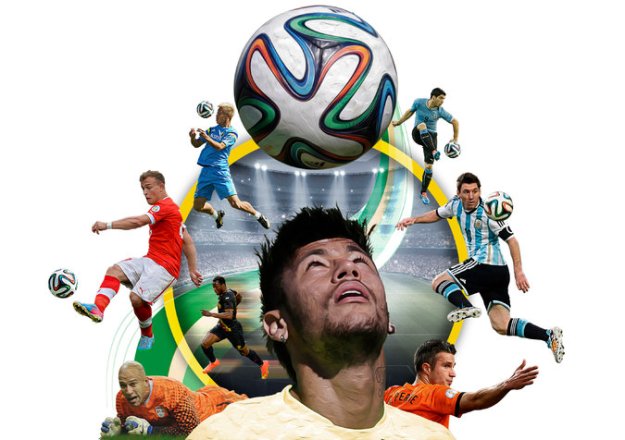
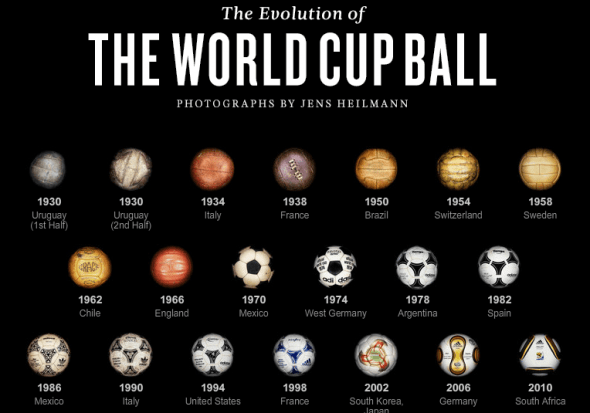
“It’s one of the stars of the World Cup – the paintbrush with which the world’s greatest footballing maestros must create their art. But is it up to the task? The Brazuca, the official ball of Brazil 2014, is the 12th ball created by Adidas for the World Cup. The company came under fire four years ago for the Jabulani, the official ball at the 2010 competition in South Africa, which was heavily criticised.’It’s trajectory is unpredictable,’ claimed Italian goalkeeper Gianluigi Buffon, while Brazilian striker Luis Fabiano branded it ‘supernatural’. Adidas claims the Brazuca has improved touch and accuracy.” BBC
Tactical trends of 2013-14 Premier League season
“The Premier League isn’t generally considered a division that places a great emphasis upon tactics, but this season was different. With a variety of new managers in place, there were some genuinely fascinating developments, particularly in terms of formations. Here’s a tactical review of the 2013-14 campaign.” ESPN – Michael Cox (Video)
World Cup 2014: police will wear ‘Robocop’ style suits of armour to protect themselves

“World Cup police in Rio de Janeiro will be kitted out in a ‘RoboCop’ style suit of armour to protect officers in the event of violent protests during the tournament. Members of a special unit set up for the World Cup and 2016 Olympics in Rio received 200 sets of the special 22lbs (10kg) protective equipment, which is flame resistant to up to 427C.” Telegraph
Liverpool & Roma’s job is only half-done. Consistency & sustainability now key
“7th place with 61 points. 6th place with 62 points. That is what Liverpool & Roma’s 2012/13 league position spelled. The unpleasant factor in that is that it wasn’t even a surprise. Both these traditionally competitive clubs had fallen well off their high horse and into uncharted territory, with the risk of near perpetual mid-table obscurity. Both have now found their feet, and certainly the club’s ideology, as they rescued themselves from a faltering status and emerged as shock contenders, league leaders and eventual runners-up in their respective leagues. But while fans and management can certainly chuckle at their success, their happiness should be no more than that. To have achieved their remarkable league positions is quite incredible, but the job is only half done. The rest test begins now to ensure this season’s efforts weren’t in vain.” Outside of the Boot
Europa League final an historically charged affair
“The Europa League final makes its way to Italian shores for the first time in its current guise this Wednesday, although the showpiece is tinged with disappointment for the host city. The Mayor of Turin has been trumpeting the slogan ‘scegli lo sport, sorridi!’ (choose sport, smile!) in the build-up to the game, but Torinese grins are through gritted teeth. Hometown heroes Juventus — the dominant force in Italian football for the past three years — fell at the penultimate hurdle, a semifinal defeat to Benfica denying the Bianconeri a chance to extend their record haul of three titles in the competition.” ESPN
2014 Fifa World Cup draw: Guide to Group A

“Gary Lineker’s verdict. … Style & formation: The flicks and tricks remain second nature, but this Brazil side is also resilient and well organised, moulded by the pragmatism of 2002-World Cup winning coach Luiz Felipe Scolari. They press the opposition high up the pitch, while midfielder Luiz Gustavo acts as an auxiliary third centre back – allowing the full-backs and the likes of centre-back David Luiz to venture forward. Brazil usually adopt a 4-2-3-1 formation and are not afraid to be direct, often seeking out the flamboyant Neymar on the left with long balls from the back. …” BBC – Group A: Brazil, Croatia, Mexico, Cameroon
Game of two halves: the ugly side of Brazilian football
“In 1958 a Brazilian team starring the black teenager Pelé and several other dark-skinned players won the country’s first World Cup. After the victory, wrote the playwright Nelson Rodrigues, ‘I saw a small black woman. She was the typical slum dweller. But the Brazilian triumph transformed her. She walked down the sidewalk with the charm of Joan of Arc. The same was true for black men, who – attractive, brilliant, luxurious – seemed like fabulous Ethiopian princes.’ Brazil, said Rodrigues, ‘was no longer a mongrel among nations’. Football has helped Brazil construct its national identity. The game also functions as a lens on to this poorly understood country. Football helps us see Brazil’s beauty, its ugliness and the usually ignored lives of the Brazilian poor. Admittedly, most accounts of Brazilian football omit women but so, for much of history, did Brazil’s public sphere. So what does football reveal about Brazil?” FT – Simon Kuper.
Liverpool’s season is shiny but hollow
“The dream is over. The romance is dead. The glory will have to wait. Liverpool’s season is not mathematically at an end, of course, but the nature of their spectacular collapse will have drained the impetus from their title challenge with as much speed as it has animated Manchester City, once thought adrift from the summit of the Premier League table. Given the 25 years of heartache linked to the Hillsborough disaster, the souring of a dream which captured considerable public sympathy is especially hard to take. There is been more than a hint of misty-eyed destiny in the accomplished way that Steven Gerrard has carried his teammates to the pinnacle but, in purely sporting terms, their fall is not completely surprising. If Liverpool’s intense, fast-paced attacking style provided us all with some kind of illicit high in recent months, then their disregard for the game’s core principles surely represents the wicked comedown.” backpagefootball
In a season decided by small moments, City emerges with the crown

“It was all over before it was over — In the end, Championship Sunday followed a predictable course. Manchester City, needing just one point, barely broke a sweat as it beat visiting West Ham 2-0. Liverpool struggled but beat Newcastle, which finished with nine men, 2-1 to stay two points back. Chelsea fought back to win 2-1 at relegated Cardiff to end four points behind City. City was a deserved champion. It defended far better than Liverpool. It attacked far better than Chelsea. It had as many really good days as either of its rivals and fewer really bad ones. It’s a better, deeper all-round squad. You’d expect that with the money it has spent.” SI
Bundesliga 2013/14 End of Season Awards
“The readers of Outside of the Boot have cast their votes across Europe’s top 4 leagues across 10 different award categories with 4 nominees under each to pick the players who they believe deserved recognition the most. The Bundesliga 2013/14 End of Season Awards were the most closely competed one, with most categories lacking a clear winner. Note that no club has more than one representative in a particular product category.” Outside of the Boot
Points per game record versus top half and bottom half shows why Chelsea lost the title, and why Sunderland survived
“If there’s one result that sums up the crazy, unpredictable end to this Premier League season, it’s Chelsea’s 2-1 defeat at home to Sunderland. That was Jose Mourinho’s first home league defeat as Chelsea manager, after 78 games, and proved crucial at both top and bottom. Chelsea’s chances of winning the league title took a huge blow, while Sunderland continued their great escape. However, to a certain extent that result was typical of their campaigns, because Chelsea and Sunderland are the two sides in the division that have collected more points against top half sides, than against bottom half sides.” Zonal Marking
World Cup 2014: Super Eagles can be the best of Africa

“If there has been a consistent theme in these World Cup columns – and there has been at least one, honest – it is that the Ivory Coast are not as good as people think. Given they have vied with Egypt as the best African team of this century but have a much higher global recognition factor because so many of their players play in the major western European leagues, that’s perhaps understandable – but support for them goes against the evidence of the last Africa Cup of Nations. In South Africa, the Ivorians looked what they are: an ageing squad. Yaya Toure, of course, remains an exceptional player and his influence can still turn games, but with Didier Drogba now 36, he is increasingly having to do it alone.” Betting – Jonathan Wilson
PSG’s dramatic rise to European giants
“Paris Saint-Germain’s success in winning the French football league for the second year in a row represents a dramatic transformation over the last three years in the club’s fortunes. This season they have also won the French League Cup and, as in 2013, once again reached the quarter-finals of the Champions’ League. For the first time Parisians are beginning to feel they may have a team to shout about. In the beginning there was a little club from Paris called Paris FC and another little club from the suburbs called Stade Saint-Germain. In 1970 they got together and became Paris Saint-Germain (PSG).” BBC
Manuel Pellegrini should get credit he deserves if Manchester City win title
“Assuming Manchester City earn the point they need against West Ham United on Sunday, this will be Manuel Pellegrini‘s first league title since collecting the Clausura with River Plate in Argentina in 2003. There will be those who suggest he has won it almost by default, merely by not falling over as Chelsea and Liverpool suffered unexpected setbacks, but winning titles is often as much about that as it is about the glamorous wins in the landmark games.” Guardian – Jonathan Wilson
Scolari given easy ride over Brazil World Cup squad
“The press conference at which Luiz Felipe Scolari announced his World Cup squad was arguably the easiest 45 minutes the veteran Brazilian coach has ever faced. The 23-man list named was largely devoid of controversy as the assembled media patted friendly questions in his direction. Scolari himself recalled that by contrast in 2002 he had to change hotel at the last minute to free himself from media intent on pursuing the issue of the non-selection of Romário, one the heroes of the 1994 World Cup win.” WSC
Serie A 2013/14 End of Season Awards

Rudi Garcia
“The readers of Outside of the Boot have cast their votes across Europe’s top 4 leagues across 10 different award categories with 4 nominees under each to pick the players who they believe deserved recognition the most. The Serie A 2013/14 End of Season Awards were the most closely competed one, with most categories lacking a clear winner. Note that no club has more than one representative in a particular product category.” Outside of the Boot
Confessions of a Liverpool Addict
“My name is Mikey, and I’m a Liverpool supporter. It has been three days since I last watched a game. I get up at four or five in the morning to watch matches because I now live in Australia. There have been times I have woken up the entire family with my screaming at the TV. I force my son to wear Liverpool pyjamas and sleep beneath a Liverpool bedspread every time Liverpool play. I blamed my wife for a defeat once because she put the duvet on his bed the wrong way around. I have a kid’s football shirt in a frame on the wall because I believe it made Liverpool unbeatable whenever my baby son wore it. I even got my wife to wake him up and put it on when we were 2-0 down to Portsmouth. He got back to sleep eventually. We won.” Tomkins Times
Football Montages: The Good, The Bad, The Ugly… and The Rest
“Where there’s a major tournament, you can bet there’ll also be a flashy (or on occasion, not-so-flashy) montage put together by the broadcaster showing its face at some point. David takes us through a few choice picks.” Branch of Science (Video)
Football and the Internet
“Hovering just above, using satellite view, on Google maps there appears to be little remarkable about the modest football ground on the Southern edge of Caen: a small clubhouse, a white rail around the perimeter and two dugouts. It is no different from hundreds of thousands of others across France, across Europe. For a few short years however, it was this ground which was the scene of an experiment (dubbed l’adventure’ by those involved) which had the potential to transform not only the way in which football cubs are governed, but more importantly to create radically new relationship between fans and club.” In Bed With Maradona
Liverpool tears flow as Reds pay price for defensive frailties

“A tearful Luis Suarez was led away from the scene of the accident with his face hidden inside his white Liverpool shirt, first by captain Steven Gerrard waving away an intrusive television camera, then by unused substitute Kolo Toure. Gerrard had been on his haunches, as had several of Liverpool’s players, while others sat in utter misery on the Selhurst Park turf before manager Brendan Rodgers emerged into the media suite and spoke of his squad being ‘devastated’. Never has going top of the Premier League with one game to play been greeted by such an outpouring of grief, despair and disappointment – but this was a thunderous night in south London that turned all logic on its head.” BBC (Video)
Istanbul in reverse signals death of Brendan Rodgers’ Liverpool dream
“It was the expression of shock on those in the visiting contingent, from Brendan Rodgers in the technical area to Luis Suárez out on the pitch, which told the story. At least the Uruguayan had mustered a smile of disbelief while the game was still in progress before disintegrating into floods of tears, hiding his face in his shirt. Steven Gerrard was just as inconsolable before recovering some level of composure to hoist his team-mate from his haunches and push away the intrusion of a television camera.” Guardian
Liverpool Lost the Premier League Title Just Like They Almost Won It
“They finished last season in seventh place and came into this year with something like 33-1 odds of winning the Premier League. After back-to-back losses to Manchester City and Chelsea to end 2013, they found themselves in fifth place. But since the beginning of 2014 they’ve won 14 games, tied three, and lost one. They’ve clinched a spot in the Champions League group stages, and they’re atop the table with one game left in their season. Or: Humans exist as cast members in the blackest comedy, directed by some cruel, faceless, string-pulling auteur we will never see. Everything is a disappointment. And any success is just seemingly self-prescribed medication against the bleak, hopeless, ultimately hollow reality that nothing will ever work out the way we want it to.” Grantland
World Cup 2014: England Squad Selector – pick your 23 then compare with our choices
“Ever wanted to be Roy Hodgson? It’s a common condition. His is a life of easy charm, muted bookishness and lovely warm coats. But there’s one unenviable task looming for the England manager ahead of Fifa World Cup 2014 in Brazil, and that’s picking 23 men to make up a squad capable of avoiding humiliation. With Hodgson set to announce his provisional list of players on Monday May 12, we’ve cast the net wide for potential England squad members, from the players who are on the plane barring a late metatarsal injury (Wayne Rooney, Steven Gerrard, Joe Hart), the youngsters who may or may not have done enough to impress (Luke Shaw, Ross Barkley) and the longshots (Rio Ferdinand, John Terry, ideally both at once).” Telegraph – Henry Winter
Borderball with Club Tijuana
“About a decade ago, a T-shirt became popular in American malls. In retro graphics featuring a 1970s-style monorail swooshing by, the shirt read: ‘Tijuana: City of Tomorrow.’ Its message was sarcastic and disparaging. A border city in a distant corner of the continent, Tijuana had a seedy reputation as an “adult playground” and as a haven for all sorts of criminality. For many Americans, the short hop across the border to Tijuana still carries connotations of murky vice and sleaze. Times have changed. Every week, Americans make the journey to Tijuana for an irreproachable reason: they cross into Mexico to watch their beloved soccer team, Club Tijuana. It may be located in another country, but the Mexican league side has become the de facto hometown team for San Diego.” Road and Kingdoms
Despite its inescapable past, Bosnia-Herzegovina writes new chapter

Oct. 15, 2013
“In the shadows next to the airfield, eight men huddled behind piles of snow: a soldier and seven soccer players. Or at least they had once been soccer players. This was February 1993, and league football hadn’t been played in Sarajevo for well over a year. The siege of Sarajevo, which would last four years, had begun in April ’92, one month after Bosnia and Herzegovina declared independence from Yugoslavia. The battle to control the new capital was the centerpiece of a civil war among ethnic Serbs, Croats and Bosniaks (Bosnian Muslims) that would take nearly 100,000 lives. In these times there was no prospect of even a casual outdoor kick-around.” SI – Jonathan Wilson