“With Cameroon, off-field issues are of greater concern than tactical factors. They always have some kind of problem in terms of organisation, and it was no great great surprise when a row about bonuses threatened to take over again. There have also been problems between Samuel Eto’o and Alex Song, Cameroon’s star players, in the past. Following an extremely unconvincing qualification campaign, where Cameroon suffered from infighting, had three different coaches and only escaped elimination because Togo were found guilty of fielding an ineligible player, it was difficult to see any hope for them at this World Cup. A recent 2-2 draw with Germany suggests all is not lost, however.” Zonal Marking
Author Archives: 1960s: Days of Rage
World Cup 2014 Tactics: Analysing Chile’s tactical approach, formation, and set up
“Tasked with a difficult group but favoured by a familiar climate, Chile head to Brazil with a target of qualifying for the second round which will equal their best effort since the tournament expanded to 32 teams, having reached the last 16 in both 1998 and 2010. In South Africa, led by the innovative Marcelo Bielsa, they progressed from Spain’s group after running the eventual winners close in Pretoria and they once again face the World and European champions in Brazil. Group B also houses the Netherlands, losing-finalists last time out and coached by Manchester United’s Louis Van Gaal, and a rather transitional Australia who boast the least experienced squad of all in this World Cup.” Outside of the Boot
Sao Paulo police tear gas protesters
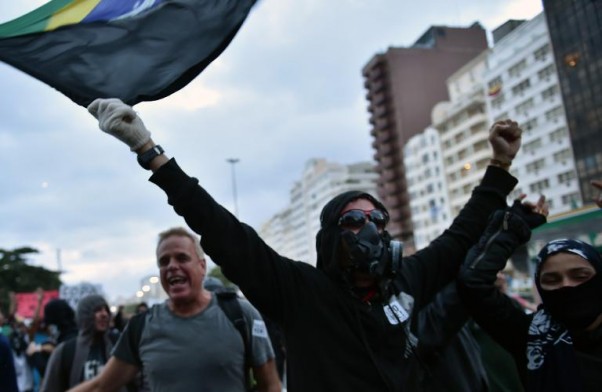
“Brazilian riot police have used tear gas against protesters in Sao Paulo, three days before the World Cup opening game in the city’s main stadium. The BBC’s Katy Watson at the scene said about 300 demonstrators were there and helicopters circled overhead. The protest was called by Sao Paulo metro workers who are striking in support of a 12.2% salary increase. Brazilian President Dilma Rousseff has said she would not allow violent demonstrations to mar the World Cup. Sao Paulo metro workers have been on strike since Thursday, creating traffic chaos in one of the world’s most congested cities.” BBC (Video)
Tomgram: Eduardo Galeano, The World Cup and the Corporatization of Soccer

“There is a tiny universe of editors of Eduardo Galeano. I was once one of them. Carl Bromley of Nation Books is so today. For an editor, working with such an author is an experience glorious beyond describing. Think of it as to ordinary editing what ‘the beautiful game’ (soccer), World Cup variety, is to sports. With the latest round of that contest imminent, I thought the perfect teaser for TomDispatch readers would be a selection from Galeano’s classic book, Soccer in Sun and Shadow, and Galeano’s splendid literary agent Susan Bergholz agreed immediately. So, one editor to another, I asked Carl, as a literary gent and a Brit with a yen for soccer (who will be cheering for Italy), to do the TomDispatch introduction. Let me give all of you the TomDispatch Guarantee: buy Galeano’s book before the World Cup begins and you may not be able to look up long enough to catch the games! Remember, he’s just been called ‘the Pele of soccer writers’ in the Guardian.” TomDispatch
The Burden of Being Messi
“In much of Argentina, where Lionel Messi lived until he was 13, native speakers replace the ‘y’ sound with a ‘sh’ sound. Yo, the personal pronoun for ‘I,’ becomes ‘sho,’ and calle, which other Spanish speakers would pronounce ‘ka-yay,’ becomes ‘ka-shey.’ The sound gives Argentine Spanish a slurry softness that resembles aspects of the Portuguese spoken in Brazil. More important to this story, that ‘sh,’ and the fact that Messi has retained it all his life, has at times been the sole lifeline between the greatest soccer player in the world and the country he plays for.” NY Times
Racism on soccer field in Brazil still hidden not so deep beneath surface
“RIO DE JANEIRO — Close to the geographical heart of Brazil, in the little-known state of Tocantins, soccer players remonstrated with a referee over a decision. Tensions ran high at the state championship match in the small town of Peixe, and in the midst of the ruckus, an official observer called an Afro-Brazilian player a ‘monkey.’ The incident barely made a ripple outside the town of 9,000, and police ignored the victim, a middle school teacher. But as Brazil pulled behind its defender Daniel Alves after a banana was thrown in his direction while he was playing for Barcelona, the episode in Tocantins revealed the country’s complicated relationship with racial identity.” Al Jazeera
‘The other French team’: Soccer and independence in Algeria

Fans of Algeria’s soccer team celebrate World Cup qualification in Algiers on Nov. 19, 2013. Twelve people died in the celebrations.
“Today we continue our series on politics, political science and the World Cup (here are posts 1, 2, and 3) with a look at identity, politics, and football in Algeria and France. First up is Tony Ross, who examines how soccer got tied up in Algeria’s struggle for independence but now exemplifies the country’s continued ties to France.” Washington Post
World Cup 2014 Tactics: Analysing France’s tactical approach, formation, and set up
“If there’s a man who has a more illustrious career than the entire French cirque that has descended upon Brazil this summer, it is the man at the helm of Les Blues, Didier Deschamps. European honors with Juventus and Marseille, along with a European Championship and World Cup medal are credentials enough to convince any Les Blues fan worth his salt that the former Nantes man is good enough to lead France towards a memorable tournament this year. Rewind back to the night in Ukraine, in a scenario where France have failed to over turned the two goal deficit and this could have been an entirely different story altogether. Failure to qualify for the finals would have ensured that Deschamps would never be remembered in the history of French football alongside greats like Platini, Zidane, Henry, (and the usual suspects).” Outside of the Boot
‘Miracle of Eibar’ – Can tiny Spanish club avoid cruel twist of fate?
“There is only one fairytale story in Spanish soccer this season, but will it have a happy ending? Forget Atletico Madrid’s first league title for 18 years, disregard its city neighbor Real concluding an exhaustive wait for ‘La Decima’ — a 10th European Champions League crown. Because this season is all about the ‘Miracle of Eibar.’ The Basque town has a population of just 27,000 and the club a budget dwarfed by almost all its rivals, yet back-to-back promotions have banked Eibar a place in the big time.” CNN
World Cup 2014 Tactics: Analysing Germany’s tactical approach, formation and set up

“The Paradox of Choice. Analysis Paralysis. Kid in a candy store. All of these phrases seek to explain having too many options to effectively choose one solution. These are very apt phrases to explain the plight of Germany Manager Joachim Löw when attempting to select the attackers in Die Nationalmannschaft. Despite the defense and holding portions of his midfield being largely decided before the tournament begins, the attacking portions of his team are so full of options and combinations that it will be difficult for the sweater-clad manager to find the right blend of creativity and directness in his front four.” Outside of the Boot
World Cup 2014: Rio horror show or a samba sensation?
“Last time the World Cup was held in Brazil, in 1950, it was designed as the propaganda centre-piece of Getúlio Vargas’s Estado Novo, the concrete sweep of the Maracanã, a modernist wonder that would be reflected in Oscar Niemeyer’s designs for the new capital, Brasília. Football, though, can be delightfully unpredictable and rather than consecrating the new Brazilian state, the World Cup offered a national disaster – ‘our Hiroshima’, as the playwright Nelson Rodrigues tastelessly put it – as Brazil, needing only a draw in the final game to seal the title, were beaten by Uruguay.” Guardian – Jonathan Wilson
Brazil will not be perfect but there should be much to savour over the coming weeks
“Inspired by the idea of covering the 2014 World Cup, Danish journalist Mikkel Jensen studied Portuguese and based himself in Brazil to observe the build up to the big kick off on June 12. But in the middle of April he went back home, proclaiming that ‘the dream has become a nightmare.’ He had come to the conclusion that the tournament was doing nothing to help the ordinary Brazilian – indeed, he felt that in some cases it was even making things worse, and he no longer wanted to be part of it.” World Soccer – Tim Vickery
The World Cup Soundtrack

“The volume rattles the bones. The gyrations evoke scenes of lustful abandon. In some of funk’s most explicit forms, tracks sprinkled with the prerecorded sounds of machine-gun fire exalt the drug gangs still in control of some of Rio de Janeiro’s favelas. On certain nights, the bass from the amps resonates from the hillside slums into the bastions of the privileged classes, as if to remind them: Rio doesn’t belong just to you.” NY Times
Brazil’s politicians banking on World Cup victory to help soothe unrest
“Since 1994, World Cups and presidential elections have taken place in the same years, creating an unintended but poetic synchronicity between football and politics. In 1994 the Tetra [the fourth time Brazil won the World Cup] was followed by the election of the centrist Fernando Henrique Cardoso, a cosmopolitan former sociology professor, who served for eight years. In 2002 the Penta was followed by the election of the left-wing Luiz Inácio Lula da Silva, a former shoeshine boy and lathe operator, who also served two terms.” Guardian
Fabio Cannavaro: The street urchin who became a World Cup ‘legend’
“‘When you win the World Cup, you start to become a legend — for the people around the world, you are different.’ For Fabio Cannavaro, this legendary status was hard earned. At just 5 foot 9 inches tall, he wasn’t built to be the world’s greatest center back. And he certainly never expected to be named the world’s best player.” CNN
20 World Cup goals that changed history

“World Cups are never just about what transpires on the field. When the 2014 soccer World Cup kicks off in Brazil on June 12, tens of thousands of Brazilians will likely protest, angered by the wasteful government spending that has led up to the tournament. What better platform to make a statement than one watched by billions around the planet? Soccer’s unchallenged place in the global imagination also means that what happens on the field carries special resonance. The goals scored aren’t just markers of sporting success: they are moments of national glory and humiliation, acts of cultural expression and political defiance. World Cup goals can change history. Here are 20 that did.” Washington Post (Video)
How to Watch the World Cup Like a True Soccer Nerd
“There is a point of view among some soccer fans that the sport is unassailably other. I assume that since I used the word ‘soccer’ in the first sentence, those fans are gone now, and I can talk to the rest of you. Because here’s the thing: The idea that the ineffable foreignness of soccer is best left to continents like Europe and South America — because all us Yanks will do is take away its beauty, what with our ‘stats’ and ‘analysis’ — is no more than a steaming pile of merde. All those things that go on around the game don’t make it fundamentally different from other sports. It’s an athletic competition, and as such, it has certain things in common with every other type of athletic competition.” Grantland (Video)
World Cup 2014: Top 5 real dark horses of the tournament
“If you’ve followed the International football scene for the past few months leading up to the World Cup, you would have learnt how certain experts & pundits have touted Belgium as the real dark horses of the tournament; many have stated how this current crop of players is the golden generation of Belgian football, and we agree. As the months went on, many caught on to the Belgium dark-horses bandwagon, so much so that nearly every football enthusiast now thinks Belgium are the dark-horses for the tournament. Let’s go back a little.” Outside of the Boot
Cameroon – the team with ‘hemle’ (and Samuel Eto’o) on its side
“In Cameroon’s biggest city, Douala, we name streets and squares for the alcohol and sex trade (rue de la Joie), for corruption (Carrefour des Trois Voleurs, or Junction of the Three Robbers, for three officials who used public funds to build houses in the area), for violent deaths and footballers. All these names are unofficial. The only official names are those of the colonisers. Carrefour Eto’o Fils, the junction named for our striker and captain Samuel Eto’o, is in New Bell, the populous quartier where he was born. It is a few blocks from Place Roger Milla and Carrefour Thomas Nkono, named for past footballers. New Bell is Cameroon’s Soweto – revolutions begin here.” FT
Belgium’s blueprint that gave birth to a golden generation

“Not everything that Michel Sablon writes down goes to plan. At Italia 90, Sablon was part of Belgium’s coaching staff, and a couple of minutes before the end of extra time in their last-16 match against England, he compiled a list of the penalty-takers. He had just finished scribbling the names when David Platt, in one of those iconic World Cup moments, spectacularly hooked the ball past Michel Preud’homme.” Guardian
Do U.S. Soccer Fans Steal Europe’s Customs? Damn Right We Do!
“It’s disappointing, though not terribly surprising, that this is how Jonathan Clegg begins his jeremiad against American soccer fans, published in the Wall Street Journal Thursday night: ‘Growing up as a soccer fan in England…’ Here we go. To lend credibility to the screed that follows, Clegg reminds us that his English upbringing allows him to understand the sport in a way that Americans never will: ‘I’ve witnessed my fair share of horrors. I’ve seen shocking acts of violence, overheard hundreds of abusive chants and watched Pelé retire to sell erectile dysfunction pills.’ He’s seen things. Clegg’s nod to his nationality also gives away his real reason for writing, the familiar hipster lament: he liked soccer (football) before it was cool, and now these neophytes are ruining everything.” New Republic
World Cup referees: everything you wanted to know…
“Love them or hate them, you certainly cannot ignore referees, the individuals who arguably, have the greatest influence on the outcome of a football match. It’s with that in mind that Sports Interaction has provided what they call the ultimate analysis of the men in black for this tournament. The exhaustive piece of research analyses the performances in international matches of all the World Cup referees and identifies those to avoid if, like Raheem Sterling, you might be prone to the occasional rush of blood to the head.” World Soccer
Throw FIFA Out of the Game
“MOST people associate FIFA, the organization that oversees international soccer, with the quadrennial joy of the World Cup. But as the 2014 tournament begins next week in Brazil, FIFA is plagued by levels of corruption, graft and excess that would shame Silvio Berlusconi. Despite the palatial estates, private planes and pompous airs of FIFA’s current leaders, the organization actually has quite humble origins. FIFA was founded in 1904 in Paris as a simple rule-making committee that aimed to regulate the guidelines for a new, rapidly expanding sport when played between nations.” NYT – Opinion
A central defensive decline?

Thiago Silva
“Major international tournaments are generally underwhelming in terms of attacking football, with managers preferring to play cautiously, keep it tight at the back and then spring quick counter-attacks. This approach, which we can expect at the 2014 World Cup, has delivered more cautious, subtle defending — to the point where some may question where all the highlight-reel worthy tackles among centre-backs have gone.” ESPN – Michael Cox
How a New York bar brought boots and pints to North America.
“Jack Keane is recalling the days when he’d be threatened with physical violence for televising football in New York City. How dare you show that shit? shouted an instigator, some drunk East Village punk who was offended at the sight of the game. Don’t you know where you fucking are? ‘He grabbed me by the collar over the bar,’ Keane remembers. ‘He didn’t like me much, I’ll tell you that.’ This was the mid-’90s, when Manhattan’s East Village still had an extra layer of Giuliani-era grit to it and Nevada Smiths, the bar on Third Avenue that Keane ran, was the only place in town showing European football. ‘It was a completely different neighborhood,’ he says. ‘Filled with fucking crazy people. Cars being broken into, drug deals on the streets. It was a different era.’” 8 of 8
From bullet holes to Brazil: Edin Dzeko writes a new chapter for Bosnia
“It’s the question Edin Dzeko is constantly asked. ‘You ask me again about war…’ sighs the 28-year-old, rolling his eyes and smiling as he enjoys a rare moment of peace outside Bosnia-Herzegovina’s team hotel in the picturesque suburb of Ilidza. Perhaps the line of questioning is understandable given that just a short drive away is Dzeko’s home city of Sarajevo, where the national hero lived throughout the Bosnian War which raged between 1992 and 1995.” CNN
World Cup Heores | Oliver Kahn: leader of men, goalkeeper extraordinaire and World Cup Legend
“What is a legend? Does winning define a legend? Building on the above questions, what would an individual’s first thoughts be when he thinks about a World Cup Legend? The first images that flash by the mind are those depicting the player raising the illustrious WC Trophy in his hands. Obvious logic takes over when categorizing a player as a World Cup legend, he has to have won a World Cup trophy. History however has shown the world exemplary examples of individuals standing up and being greater than life.” Outside of the Boot
Croatia, a Work in Progress

Darijo Srna, Croatia
“Next Thursday, Croatia has the privilege of playing the World Cup’s opening match against Brazil, the host nation. The Eastern European country gets to take on a team that has won the World Cup a record five times—and is this year’s favorite—before nearly 70,000 people in São Paulo’s brand new Itaquerao stadium. The game is the first World Cup match to take place in Brazil since 1950, when the country last hosted the event. Brazil was the favorite that year, too, but it lost in the final in a shocking upset to Uruguay—and the country has never forgotten it.” The Paris Review
Fandom – it’s bigger than football
“Ten years ago the England football team played a friendly in Portugal. Afterwards I shared a taxi with some England fans. We chatted about the game. Then one of them asked: ‘What was the score, then?’ This man must have spent hundreds of pounds coming to Portugal to see the match. It begged the question: why are people football fans? Why will the coming World Cup be the biggest media event in history, measured by the numbers of TV viewers and clicks on websites? Football seems to give people something they can’t get elsewhere.” FT – Simon Kuper
Will the Dragons roar at their first World Cup?
“There’s always something of a novelty about a new nation qualifying for the World Cup. This time, the sole debutants are Bosnia-Herzegovina, who reached the Promised Land by topping Group G in UEFA Qualifying, ahead of Greece on goal difference. Bosnia, who have only been a member of FIFA since 1996, topped their group and thus avoided the dreaded play-offs, where they were narrowly defeated by Portugal prior to the last tournament in South Africa. For a small country with a population of under four million, it is a colossal achievement, especially considering that, twenty years ago, the nation was embroiled in a long, bloody civil war, with its roots deeply entrenched in complex ethnic divides.” backpagefootball
Ireland’s best and worst World Cup moments
“The World Cup starts in less than a week and, great and all as it is, some of the shine is taken off the tournament when your own nation isn’t involved. Ireland have only been to three World Cups but managed to create enough memories to last a life time. Here’s a look at the five best and worst moments from 1990, 1994 and 2002.” backpagefootball (Video)
Eduardo Galeano: ‘My great fear is that we are all suffering from amnesia’

“Most mornings it’s the same. At the breakfast table Uruguayan-born author, Eduardo Galeano, 72, and his wife, Helena Villagra, discuss their dreams from the night before. ‘Mine are always stupid,’ says Galeano. ‘Usually I don’t remember them and when I do, they are about silly things like missing planes and bureaucratic troubles. But my wife has these beautiful dreams.’ One night she dreamt they were at an airport where all the passengers were carrying the pillows they had slept on the night before. Before they could board officials would run their pillows into a machine that would extract the dreams from the night before and make sure there was nothing subversive in them. When she told him he was embarrassed about the banality of his own. ‘It’s shaming, really.’ There is not much magical about Galeano’s realism. But there is nothing shaming in it either. This septuagenarian journalist turned author has become the poet laureate of the anti-globalisation movement by adding a laconic, poetic voice to non-fiction.” Guardian
A Fairer World Cup Draw
“The United States has drawn one tough World Cup group, which includes Germany (currently the second-ranked team in the world), Portugal (ranked third) and Ghana (38th). (In the October rankings used for the Dec. 6 draw, Portugal was ranked 14th and Ghana 23rd.) That much is known. But here is something many fans don’t know: The difficulty of the United States’ group is not merely a byproduct of bad luck. It’s a perfectly normal outcome from the selection rules created by FIFA, soccer’s governing body.” NY Times
Jürgen Klinsmann’s Soccer Mandate
“If you talk with Germans about Jürgen Klinsmann’s ill-fated stint as the coach of F.C. Bayern Munich, it’s only a matter of time until they bring up the matter of the Buddha statues. After arriving in July of 2008 at Bayern—the free-spending New York Yankees-style hegemon of the German soccer league—Klinsmann’s first intervention was to personally oversee an overhaul of the team’s training center. The local press openly wondered whether the movie theatre, the so-called ‘quiet room,’ and the high-end d.j. console that he installed had much, if anything, to do with soccer, but they seemed willing to give Klinsmann the benefit of the doubt.” New Yorker
World Cup Commercial Featuring Chilean Miners Will Give You Goose Bumps

“Chile is once again rallying around the miners who were rescued after being trapped underground for 69 days. However, this time, the 32 men who survived the mining accident are not asking for food or prayers, but rather for support for the country’s soccer team as it heads into this year’s World Cup. And ’32 men’ is not a typo. Thirty-three workers were rescued; however, one of them was from Bolivia and is not featured in a new commercial from Banco de Chile. The bank is an official sponsor of the Chilean team and published its new commercial on YouTube on May 27.” Yahoo (Video)
The World Cup of World Cup 2014 songs – as it happened
“You join us for the inaugral Guardian World Cup of World Cup songs. The idea is simple, we’ll put each country’s World Cup song up against each other and you, the reader, can vote on which should go through to the next round. We’ll hopefully end up with a final that will lead us to this year’s best/least worst World Cup song.” Guardian (Video)
Jonathan Wilson’s All-time Eleven
“The editor of The Blizzard football magazine and author of multiple books about football including, Behind the Curtain, Inverting the Pyramid and Anatomy of England.” Club Med – Jonathan Wilson
2014 Fifa World Cup: Guide to Belgium’s Group H

Marc Wilmots
“Style & formation: Belgium gave a series of controlled and powerful displays throughout qualifying. Disciplined defensively, they are prepared to be patient but look to break with pace. A feature of their usual 4-2-3-1 system is the frequent positional interchanging between the three attacking midfielders.” BBC – Belgium, Algeria, Russia, South Korea
World Cup 2014: Brazil – is tactical fouling crucial to their chances?
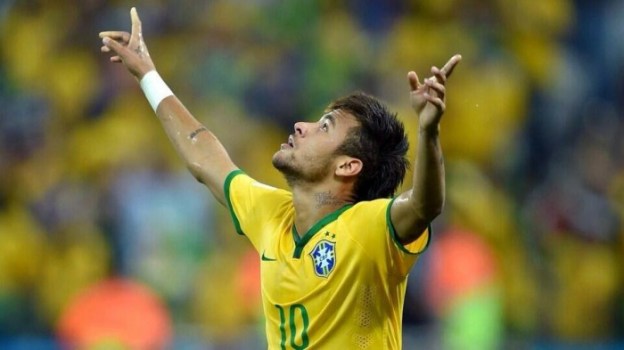
“A fascinating piece of data emerged from the Confederations Cup – the player who committed the most fouls in the tournament was Brazil striker Neymar. The 22-year-old – also the most fouled player – committed 17 infringements during the 2013 competition, closely followed by team-mate Oscar (14). That Neymar was the most fouled player will come as no surprise, for two reasons. Neymar, who joined Barcelona from Santos last summer for £48.6m, is a wonderfully talented dribbler, superbly balanced and capable of changing direction at pace. On form, he is a defender’s nightmare.” BBC – Tim Vickery
From euphoria to reality: Bosnia face questions before World Cup bow
“Saturday’s friendly against Ivory Coast brought a 2-1 win for Bosnia-Herzegovina, two more goals for Edin Dzeko, a glimpse of how they could play without two strikers and perhaps a resolution to the ongoing question at the back of midfield, but the overwhelming conclusion from St Louis, Missouri, was that Ivory Coast are a shambles and need a major improvement over the next 10 days if they are not to go out of the World Cup in the group stage for the third tournament in a row.” Guardian – Jonathan Wilson
Zlatan’s Revenge!
“The year is 2010. The La Liga offseason. Zlatan Ibrahimovic is grappling with his late-season outburst at Barça manager Pep Guardiola — and plotting his way out of one of the most storied clubs in European Football. What follows is an exclusive excerpt from I Am Zlatan, on sale this week from Random House.” Grantland
European Team of the Season, 2013/14
“The final post of a very enjoyable 2013/14 domestic campaign – the usual XI (and back-ups) of the season. Usual team-by-team previews of this summer’s World Cup contest will commence shortly…” Zonal Marking (Video)
A few words with ESPN World Cup broadcaster Ian Darke
“The poet laureate of soccer in the United States is not an American. ESPN’s Ian Darke was born on the south coast of England in the naval port town of Portsmouth and since he landed on American shores fulltime for the 2010 World Cup, his soccer calls have thrilled the American public with the most famous being his description of Landon Donovan’s injury-time game-winner against Algeria during that tournament.” SI
Riccardo Montilivo’s injury ended Rossi & Destro’s World Cup hopes
“Italy coach Cesare Prandelli has finally released his 23 man squad for the upcoming World Cup in Brazil. However, his decision to omit Fiorentina star, Giuseppe Rossi, has come into heavy scrutiny. After being forced to drop Riccardo Montolivo due to injury in their friendly game against Ireland, Prandelli finalised the team, and the exclusion of strikers Giuseppe Rossi and Mattia Destro was a surprise to the footballing world. However, the exclusion is easy to judge as incorrect, in particular in Rossi’s sake, but when you look at the facts, Rossi and Destro’s sacrifices may have been necessary for the balance of the team.” Outside of the Boot
World Cup 2014: Guide to Germany’s Group G

“Style & formation: Blessed with far more flair than many Germany sides of the past, their fluid 4-2-3-1 is underpinned by Bastian Schweinsteiger and the currently injured Sami Khedira anchoring the side from the base of midfield. Ahead of them lies creative fulcrum Mesut Ozil, who is usually flanked by the dangerous Marco Reus and Thomas Muller.” BBC – Germany, Portugal, Ghana, USA
The 10 Most Significant Goals In U.S. Soccer History
“1. THE ‘SHOT’ THAT STARTED IT ALL. In November 1989, the week-long training camp before the most important U.S. soccer game in 40 years was the usual no-frills affair. In the days before cell phones and the Internet, the U.S. players slept two to a dorm room in Cocoa Beach, Fla., and shared a single pay phone among all of them to call home. But they did have basic televisions in each small unit, and one night defender Paul Caligiuri was sitting on the floor when his roommate, goalkeeper Tony Meola, commandeered the couch and started flipping through channels looking for a show to watch. Their talk turned to the game they would play two days later in Port of Spain, Trinidad and Tobago, a World Cup qualifier that bore the highest of stakes. To clinch the U.S.’s first World Cup berth since 1950, the Americans had to win on the road against a team that had not lost at home during the qualifying campaign. If the U.S. tied or lost, tiny T&T would end up grabbing the first World Cup spot in the nation’s history.” SI
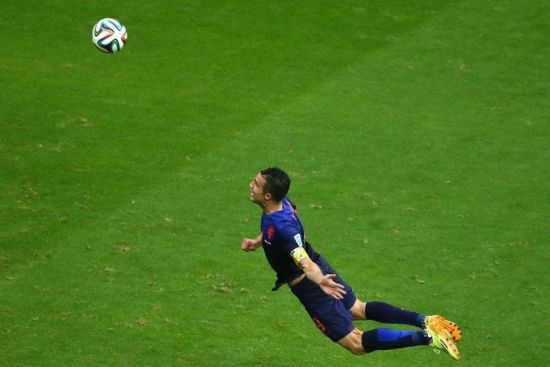
Backward headers the new bicycle kick at World Cup
“Each World Cup brings its own trends: no defending in 1954, bendy long-range goals in 1978, thinking a crowd wave was both fun and original at Mexico 86. This summer we’re in the country with the image rights to the overhead kick. It’s the kind of acrobatics beloved of commentators and pundits, easily commodifiable as the ‘toughest skill in the game’. But try a backwards header. Atlético Madrid’s last goal of 2013-14, in the Champions League final, was scored like this by Diego Godín. Arguably the best ever headed goal was a reverse effort at the 2002 finals.” WSC (Video)
Inside the Fixing: How a Gang Battered Soccer’s Frail Integrity

“A man arrived at the police station here in 2011 with an unusual tip. He told the police that a Singaporean man was fixing matches with the local professional soccer team. The police were incredulous. This city on the Arctic Circle is known as the hometown of Santa Claus. It boasts a theme park with reindeer, elves and jolly St. Nicks. It is also a popular destination for Asian couples looking to make love under the Northern Lights. Rovaniemi is known for many things, but not for organized crime.” NY Times – Part 1, NY Times – Part 2
Memphis Depay By Adidas Foolball X Capa 90
“PSV’s Memphis Depay was confirmed in Louis van Gaal’s Netherlands squad for the World Cup earlier today, and is part of this year’s The 100. In this two-parter by adidas Football in partnership with Copa90, Depay and the people around him tell the story of a remarkable young player from his childhood in Moordrecht to the 2014 FIFA World Cup.” In Bed With Maradona (Video)
Colombia and Uruguay give way to youth
“It looks as if centre-back Dante will get a game when Brazil take on Panama in Tuesday’s warm-up match. Captain Thiago Silva is carrying a knock, and is likely to be rested. Otherwise, the team picks itself. All week, coach Luiz Felipe Scolari has been training with the same lineup that won the Confederations Cup. In subsequent friendlies, Scolari has looked at variations here and there, and tested out reserve players. But that same starting eleven has been in his mind for a year now.” ESPN – Tim Vickery
2014 Fifa World Cup: Guide to Argentina’s Group F

“Style & formation: Argentina often fielded a bold 4-3-3 formation in qualifying, although a more conservative 5-3-2 was deployed for tricky away fixtures. The former system allows Lionel Messi to play as a classic number 10 behind two strikers – typically Manchester City’s Sergio Aguero and Napoli’s Gonzalo Higuain – who stretch play. But with Angel Di Maria deployed as part of a midfield three, the formation offers little defensive protection.” BBC – Argentina, Bosnia-Hercegovina, Iran, Nigeria
World Cup 2014 Tactics: How will Argentina set-up at the 2014 FIFA World Cup?
“The two-time winners topped the South American qualification for the 2014 FIFA World Cup and, as ever, will go into the tournament as one of the favourites. An Albiceleste victory on Brazilian soil would be the perfect way to rub salt into the wounds of the hosts and Alejandro Sabella’s men will be desperate to repeat the feats of ’78 and ’86.” Outside of the Boot
Five Refs Who Will Ruin Your World Cup
“No World Cup would be complete without a heavy helping of missed hand balls, blown offsides calls, unpunished loogie-hocking, and sharp, flying elbows. This year will be no different: FIFA recently released the list of referees who will be officiating the tournament and, because all referees make mistakes and they’re usually shown on television, we were able to find several highlight reel-worthy howlers. Here, in no particular order, are some of their greatest hits.” Fosion (Video)
Coaching, Portuguese Style
“The coaches of the World Cup are more invested in the outcome of the match than almost anyone else on the planet. Players return to their league club between national-team matches—coaches don’t. They simply grit their teeth and bear the weight that comes with carrying an entire country’s sporting expectations on their shoulders. ‘Your biggest question before you take the job is not, do you put them 4-4-2 or 4-2-3-1,’ Slaven Bilic, the former coach of the Croatian national soccer team, said, referencing different soccer formations. ‘The biggest question is, can you cope with the pressure?’ One of the great World Cup coaches of all time was César Luis Menotti, the manager of the 1978 Argentina championship team. El Flaco, or “the thin one,” as he was known, had a long flop of side-parted dark hair and thick sideburns, and he routinely used nicotine to help him cope with the pressure—he was rarely seen without a cigarette.” The Paris Review
Nothing Can Stay Buried

“VEDAD IBISEVIC ACCELERATES his black Mercedes-Benz into Stuttgart traffic, almost outrunning the memory of his family crammed into an overcrowded bus, fleeing another home. His memories are always there, exerting both lift and drag. Today he is a star striker in the German Bundesliga. Twenty-two years ago, in a four-month period, the following things happened to him and his Bosnian family: Serb neighbors invaded his mother’s village, Pijuke, and called out familiar names on a bullhorn, promising that no one would be hurt. They murdered everyone who emerged. The ethnic-cleansing militia tortured and killed as many Muslims as they could find, burning down every house. They split his grandfather’s head open and carved a cross into the chest of a local shop owner, a man who kept chocolate in his store for children like Vedad. Eleven of the estimated 100,000 killed in the Bosnian civil war died on May 8, 1992, in a little town surrounded by rolling green hills and grazing white sheep.” ESPN (Video)
What makes the perfect World Cup shootout penalty?
“1. 204 and counting. ‘All you need to do is walk 50 yards, take a penalty and score,’ wrote former England defender Stuart Pearce in his autobiography, but it is not always so easy. Of the 204 shootout penalties at World Cups, 60 have been saved or missed and Italy’s talisman Roberto Baggio said his penalty failure in the 1994 final affected him for years. Often cruel, always captivating and for some the precursor to huge celebrations, the first shootout took place on 8 July 1982 when West Germany defeated France 5-4 in a semi-final in Spain. Since then penalty shootouts have decided two finals and become a source of huge debate, with Baggio himself arguing that he will never accept a defeat on penalties. …” BBC
Ten players who proved the World Cup is not a good ‘shop window’
“The ubiquity of televised football over the past two decades has resulted in foreign teams losing the sense of exoticism they carried in the 1970s and 1980s. It would be impossible now for players such as Teofilo Cubillas and Roger Milla to sneak under the radar and take the World Cup by storm. The increased knowledge of football outside of British shores has resulted in an unstoppable influx of foreign players into the Premier League. Most of these signings are undoubtedly based on months of careful scouting, however, when the World Cup comes round, it can be tempting for managers to take a punt on the talent on show, even if it is only exhibited over three games against often mediocre opposition. These ten players are examples of why it is perhaps a little foolish to judge on the basis of tournament performance alone.” backpagefootball
The war against the World Cup and the Olympics

“It must be strange for people who are used to see Brazilians as a smiley and youthful nation, proud of its country’s sporting exploits, to learn that most of them are hating to host the Olympics and the World Cup. While the costs are astronomical and no one knows for sure who actually benefits from these soulless mega-events centred on big business, very few countries get the privilege of hosting them and doing so usually is a matter of big national pride. Brazil seems to be an exception, and the question that comes to mind is why. Ask the average Brazilian and he will give you the standard answer: The anger is because the government decided to throw money on these useless events instead of investing in hospitals, schools and infrastructure.” Lost Sambista
Beyond samba, sex and soccer: The World Cup riots in Brazil
“Only 22 years old, the footballer known simply as ‘Neymar’ is far more than the ‘face of Brazilian soccer’. Since donning the iconic, canary yellow and blue kit for the first time, Neymar has sidestepped defenders as if dancing the samba, and raced up and down the pitch with the cavalier and carnival spirit definitive of Brazilian football. As Neymar sprints into his prime, Brazil is primed to host its first World Cup in 64 years. This year’s tournament, furnishes the Brazilian government with a rare opportunity to showcase its greatest export on its home soil. Brazil and football are synonymous: A conflation the state has engineered to carry forward its policies inside and outside of the country. Its iconic lineage of soccer stars, starting with Pele and ending with Neymar, provide the state with single-named ambassadors known and loved all over the world.” Aljazeera
Brazil’s evicted ‘won’t celebrate World Cup’
“Every four years, Brazilians decorate their streets in green and yellow, celebrating the arrival of the most anticipated sports tournament in the country. With the kick-off for the FIFA World Cup in Brazil less than one month away, the country’s passion for football should be pulsating more than ever. But there are some signs to the contrary. ‘World Cup for whom?’ read the words painted on a wall on a street in Sao Paulo. Many in Brazil’s middle class are unhappy with the effects the World Cup has already had on their lives. The cost of living has risen in the cities hosting the games, traffic jams have worsened, and a construction boom aimed at improving urban mobility has only compounded problems, they say.” Aljazeera
Eric Cantona: Fifa’s corruption divides Brazilian football from its roots
“It will surprise precisely no one who has taken even a passing interest in his life and career, but Eric Cantona is no great fan of football’s governing bodies. Having recently returned from Rio de Janeiro, where he has been making a documentary about Brazilian football and politics that will receive its UK premiere at Amnesty International’s Sidelines film festival next month, he has a jaundiced view of Fifa’s modus operandi.” Guardian (Video)
Police Repression of Indigenous Protest Against Brasil’s World Cup
“Hundreds of indigenous people and thousands of supporters peacefully marched towards the National Mane Garrincha Stadium in protest of the upcoming World Cup in an effort to block the roads. They were met by riot police and Military Cavalry Police of the Federal District on the afternoon of Tuesday the 27th. The demonstration, which had the support of hundreds of Indians left the Pilot Road, but was surrounded by police personnel about 100 meters from the arena to receive seven games of the World Cup 2014. Police blocked the march and soon were using tear gas, sound grenades and rubber bullets on people to violently disperse the protest march.” Revolution News!
Brazil Is Tired of Being Scolded
“By now, Brazil should probably have been grounded for life, without video games or dessert. Last month, a vice president of the International Olympic Committee, John Coates, said that Rio de Janeiro’s preparations for the 2016 Summer Olympics were the worst he had ever seen. Before that, Sepp Blatter, the president of FIFA — the International Federation of Association Football — claimed that Brazil was further behind in its preparations for this summer’s World Cup than any previous host nation, even though it had had seven full years to prepare. Then, in March, FIFA’s secretary general, Jérôme Valcke, declared we could risk being ‘the worst organizers’ of the ‘worst event.’ He had previously said that Brazil needed “a kick up the backside.” Well, that was harsh.” NYT: The Opinion Pages
Can Goldman’s economists predict who will win the World Cup?

“The economists at Goldman Sachs apparently can’t wait for the beginning of the World Cup next month. They issued a 60-page report — billed as ‘an unnatural mix of football and economics’ — with detailed analyses of each team and a forecast for outcome of the tournament. Now we know what they’ll be doing once the matches begin in Brazil. Brazil, the host country, is strongly favored to win the championship, according to Goldman’s predictions. These predictions are derived from a formula that estimates the number of goals a team is likely to score in a game based on its past performance as well as on a few other factors, such as whether the team is playing at home. Brazil’s home-field advantage is a major reason why Goldman expects it to do so well.” Washington Post
Bosnia: Divided by war, united by football
“Žilina, Slovakia, September 2013. Slovakia’s third largest city is close to the Low Tatras Mountains, the natural border with Poland. The cold wind and rain hint at snow and winter’s early arrival. On the pitch, the Bosnia national football team is training in silence ahead of their next World Cup qualifier against Slovakia in 24 hours’ time. Their coach, Safet Sušić, buried deep in a thermal jacket and hood, is being soaked by a nagging drizzle. The 50 or so Bosnian journalists watching in the stands shuffle their feet and chain-smoke to keep warm. But they, too, watch in silence. No one – not the players, the coach or the journalists – looks as if they want to be here. Which is strange. Bosnia are currently top of Group G in World Cup qualification.” CNN – James Montague
Brazil 2014: Got, Got, Need — how stickers took the World Cup by storm
“Obsession often brings joy and sorrow in equal measure. Inside that thin, shiny packet giving off a mystical glow sits five stickers — five faces of five men whose very presence can turn lives upside down. Welcome to the world of World Cup sticker collecting. … While most relationships survive the sticker phase, Blazer is not alone in his infatuation with the shiny adhesives which smile back at those dreaming of the holy grail — the full sticker album. Some are relentless in their pursuit of that holy grail, setting up spreadsheets and even calling in their spouse to increase the odds of successful swapping.” CNN