Tag Archives: Jonathan Wilson

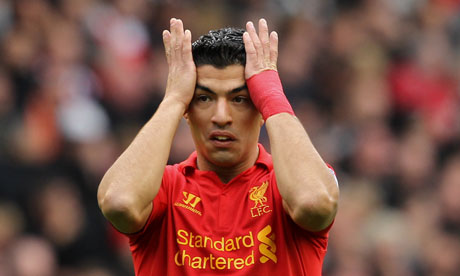
Once hopeful, Queens Park Rangers now seem set for relegation

“And with that, the light went out. At the start of the Christmas program it seemed improbable that Queens Park Rangers would survive; three games into it, it seems all but impossible. The gap from QPR to safety is eight points, which is only two more than QPR has managed in 20 games so far, while the brief gleam of hope that emerged after Harry Redknapp had replaced Mark Hughes as manager has now been all but extinguished. So bad are things now that the January transfer window may be less about trying to put together a last-gasp bid for survival than putting contingencies in place for a relegation that seems all but inevitable.” SI

Tactics: little wonder that size doesn’t matter

“A decade or so ago, football was facing a crisis of style. Physicality and pace, it seemed, were taking over. Manchester United manager Alex Ferguson admitted looking at Arsenal’s midfield and realising there was an overwhelming need to add muscle to his ball players. The result was a series of viscerally thrilling encounters that featured bust-ups in the tunnel, pizza being thrown, the hounding of Jose Antonio Reyes and not a whole lot of football.” World Soccer

Best of 2012: Zambia’s championship

“In 1993, a plane carrying the Zambian team to a World Cup qualifier in Senegal stopped for refueling in Libreville. Shortly after takeoff, it exploded and crashed into the sea off the Gabonese coast, killing everybody on board. Kalusha Bwalya, the great star of that side, was not on the plane because he played in the Netherlands and was making his own way to Dakar. He helped put together a new side and went on to become president of the Zambian Football Federation.” FOX Soccer – Jonathan Wilson

Rafa Benitez can succeed with Chelsea if the fans give him a shot

” Something very strange happened last week, something so unusual it’s tempting to think it unique: a football manager made a joke. It was proper joke. Not an anecdote, or something contrived and worked on days in advance, but a genuine, spontaneous quip that was genuinely amusing. There is often laughter in press conferences but usually it’s polite or sycophantic depending on your point of view; often, hearing a manager trying to be funny, you’re put in mind of Dr. Johnson’s line about the dog walking on its hind legs: it’s not so much that it’s done well but that it’s done at all. But this was a proper gag. Odder yet, it was cracked by Rafa Benitez.” SI

The 100 best footballers in the world – interactive

messi ap poll
“Welcome to the Guardian’s choice of the world’s top 100 footballers. We asked our 11-strong international panel of experts to name their top 30 players in action today and rank them in order of preference. Once the lists were submitted, the players were scored on their ranking by each panellist: a No1 choice allocated 30pts, No2 29pts and so on down to selection No30, given one point. In a four-part series online and in print we will reveal the results. Starting with No100 at the very end, click on the individual player in the interactive below for our writers’ argument for their placing in the 100. And you can read here how we came to ranking the hundred and a blog on the top 10 here.” Guardian – Jonathan Wilson

Zenit St Petersburg take first confused steps away from prejudice

“Let’s imagine that fans of Sunderland (and I use the example purely because that is who I support), tiring of the constant churn of the transfer market, decide that enough is enough and they want their team to do things differently. They get together and hammer out a manifesto which they then post as an open letter to the club hierarchy. Among a number of points about the need for absolute commitment and an abhorrence of cheating, they suggest they would rather the club focused on local players.” Guardian – Jonathan Wilson

Barcelona 4-1 Atletico: Falcao’s opener wakes up Barca

FC Barcelona v Club Atletico de Madrid - La Liga
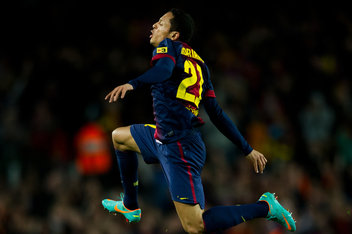
“Atletico started the match excellently, but still lost 4-1… Tito Vilanova chose Alexis Sanchez rather than David Villa on the left of his attack, and Adriano started rather than Daniel Alves at right-back. Despite the failure of the 4-4-2 at the Bernabeu, Diego Simeone again selected that system after Atletico’s 6-0 win over Deportivo last week. Miranda replaced Daniel Diaz at the back. Atletico started the game very nicely, staying compact, pushing up and restricting the number of chances Barcelona created – but eventually crumbled.” Zonal Marking

The football tactical trends of 2012
“In 1872, the 11 Queen’s Park players who made up the Scotland national side looked at the England team they were about to face in the first international fixture and decided they had to try something out of the ordinary. England were over a stone a man heavier and given the head-down charging that characterised the early game, that was a significant advantage. What Scotland had to do, it was decided, was to keep the ball away from England, to deny them possession and thus control the game.” Guardian – Jonathan Wilson

La Liga Review: Is the La Liga title race over already?
“After a thrilling weekend of La Liga action the title race may be over, but the chase for the top four, and the relegation battle are amazingly close. The big match of the weekend saw the top 2 face off, as Barcelona hosted Atletico Madrid at the Nou Camp, and despite the away side taking the lead they eventually succumb to a 4-1 defeat. Colombian striker Falcao gave Atletico the lead in the 31st minute, before a terrific strike by Adriano, and a Sergio Busquets goal gave Barcelona a halftime lead.In the second half the inevitable happened, and Lionel Messi netted a double to kill off any chance of a comeback, giving Barcelona a flattering 4-1 win.” Think Football (Video)

New year brings new goals, perhaps new club for Drogba

” Timing a retirement is hard enough for anybody; for sportspeople, used to the rush of victory and the adulation of the crowd, to the routine of training and a preposterous income, and facing perhaps 60 years of post-playing life, it must seem almost impossibly daunting. In terms purely of narrative, Didier Drogba probably should have gone in May after the Champions League final. It seemed the perfect ending. He had been at the club eight years, and had been striving all that time for European glory. He’d been sent off in the 2008 Champions League final and banned for the ferocity of his protests after Chelsea had lost to Barcelona in the 2009 semifinal. Munich was his redemption. He headed the 88th-minute equaliszr and then rolled in the final penalty.” SI

The forgotten story of … Heleno de Freitas

he
“For most in Brazil, what happened in the Rasunda Stadium in 1958 was a gleeful affirmation of what they had always known. They were the world’s great football nation and beating the hosts, Sweden, in the final was vindication after the trauma of the defeat to Uruguay in the Maracanã eight years earlier. In an asylum in Barbacena in the state of Minas Gerais, patients clustered anxiously round a radio as the game entered the final minute. A cross came over, Pelé rose and made it 5-2: the world title was confirmed. Patients and staff celebrated together – all except one. In his room, alone, Heleno de Freitas filled his mouth with cigarettes, lit them all and tried to smoke himself to death.” Guardian – Jonathan Wilson

Heleno de Freitas
“Heleno de Freitas, nicknamed Prince Cursed, (born 12 February 1920 in São João Nepomuceno, Brazil; died 8 November 1959 in Barbacena) was a Brazilian footballer. The striker spent most of his career with Botafogo, scoring 209 goals for the club, most with his head. In 1948 he transferred to Boca Juniors in Argentina, but returned to Brazil the following year, winning the 1949 Campeonato Carioca with Vasco. He ended his career with América in Rio, he played only one match for the club and it was the first and last game in the Maracanã. He died in 1959 in a sanatorium in Barbacena.” Wikipedia

Spartak Moscow’s season of self-destruction could suit Celtic

“The Russian newspaper Sovetsky Sport on Monday ran a column that spoke of Chelsea, the St Petersburg ice-hockey team SKA and Spartak Moscow as ‘three broken toys’. All of them, it pointed out, are owned by oligarchs, all have had recent success and all have been undermined by meddling from the top that, to those on the outside, seemed baffling. It compared Roman Abramovich to a boy who loved something so much he hugged it until it suffocated.” Guardian – Jonathan Wilson

The Question: is Cristiano Ronaldo a strength or a weakness to a team?

“Real Madrid stand 11 points behind Barcelona in the league only 13 games into the season. They looked distinctly second best in taking just one point from two games in the Champions League against Borussia Dortmund. Pressure is mounting, it seems, on José Mourinho: six previous Real Madrid managers have found themselves more than six points off the lead at this stage of the season; none have made it until May. Yet it may be that the criticism is being directed at the wrong Portuguese.” Guardian – Jonathan Wilson

Cameroon’s Théophile Abega was so intelligent they called him the doctor

“Some time towards the end of January, Théophile Abega stopped replying to my calls. I was in Equatorial Guinea, heading on to Cameroon, and was keen to meet him, partly to talk about the rivalry between Thomas N’kono and Joseph-Antoine Bell for my book on goalkeeping but mainly because, well, because he was Théophile Abega, one of the most skilful African midfielders of all time, the man who led Cameroon in 1984 to their first Cup of Nations triumph, scoring a brilliant goal in the final.” Guardian – Jonathan Wilson

Di Matteo another victim of Chelsea’s strange politics

“The first intimation that something was amiss came in Roberto Di Matteo’s late arrival for the press conference after Chelsea’s 3-0 defeat to Juventus. Usually he arrives half an hour or so after the final whistle; this time it took him 75 minutes. He didn’t seem particularly upset or resigned but it later emerged he’d told the players not to come in on Wednesday for their usual post-game warm-downs as he had ‘meetings’ to attend. By 3am as he trudged through the south terminal of Gatwick airport, he was struggling to raise a smile for the small gaggle of fans seeking photographs.” SI

Harry Redknapp the preferred candidate to be Ukraine manager

“Five months after leaving Tottenham Hotspur, Harry Redknapp could be making an extraordinary return to football as manager of Ukraine. The Ukrainian Football Federation has been seeking a new manager since Oleh Blokhin resigned last month to take charge of Dynamo Kyiv, and announced on Tuesday that it will open negotiations with Redknapp’s representatives. Redknapp is known to be keen to return to management and has been strongly linked with QPR, whose manager Mark Hughes is under pressure after taking only four points from the opening 12 games of the season.” Guardian – Jonathan Wilson

The Question: why are more goals being scored?


Athletic Bilbao coach Marcelo Bielsa
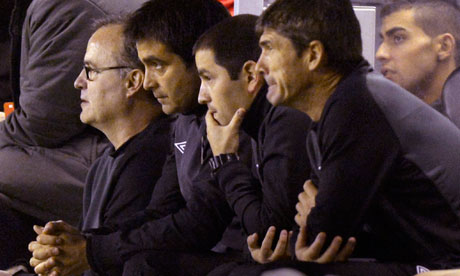
“A spectre is haunting Europe – the spectre of goals. They’re everywhere – in every competition, in every country, in every stadium (apart from games involving Sunderland). Four-goal leads are regularly obliterated (Angola v Mali, Newcastle v Arsenal, Germany v Sweden, Arsenal v Reading). Lionel Messi, Cristiano Ronaldo and Radamel Falcao break goalscoring records every week. Everybody attacks, all the time. In the top flights of England, France and Spain, there has been a clear upward trend in the numbers of goals scored per game over the past decade. Last season, for the first time ever, the knockout stage of the Champions League yielded more than three goals per game and that has continued into this season’s group stage, with 3.03 goals per game. And even in Italy and Germany, where goals per game have remained relatively constant for 10 years, this season is showing above average numbers of goals.” Guardian – Jonathan Wilson

How English game of pace and power benefits from European precision
“More passes, less ‘hoofs’ from back to front, and a slicker goalscoring rate: the Premier League has become a more technical “continental” competition that is a fusion of English pace and power and European subtlety. These are the implications of statistics from Opta that chart a shift over the past five years from a direct approach to a more patient game that now features greater precision in passing and finishing. The national team continue to see little benefit from this evolution, with experts citing the prime factors as the influx of foreign players and coaches, better club pitches and training facilities, a clampdown on tackling and the influence of a Champions League dominated by Barcelona’s carousel-passing style.” Guardian

In Argentina, Martino follows line of Bielsa disciples to success


Gerardo Martino
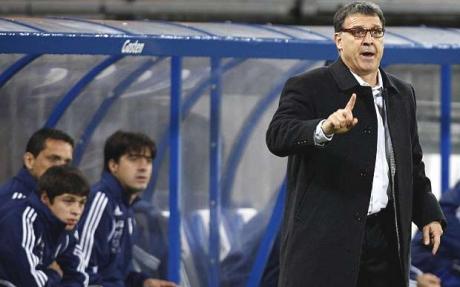
“He has a fluffy demi-mullet. He wears big, slightly academic glasses (although without a cord). He paces the technical area nervously during games (although without ensuring each perambulation takes 13 steps). Even without watching his side play, it’s not hard to work out who Gerardo Martino’s main influence as a coach is. Given he also preaches hard-pressing, ball-retention and verticality, it’s obvious that Martino is another follower of Marcelo Bielsa.” SI – Jonathan Wilson

Shakhtar Donetsk have learned lessons and again stand in Chelsea’s way

“And so it goes on. Shakhtar Donetsk beat Metalurh Zaporizhzhya 2-0 on Saturday – Douglas Costa converted a penalty before a late goal from Luiz Adriano sealed it – to take their winning streak in the Ukrainian league to 23 games, 14 of them this season. They lead the table by 12 points and, already, with the season one game from its halfway point, it seems inconceivable that they will not lift a seventh title in nine years. The focus, understandably, is all on the Champions League and Wednesday’s game against Chelsea.” Guardian – Jonathan Wilson

Chelsea 3-2 Shakhtar Donetsk
“Victor Moses came off the bench to score an incredible last-gasp winner tonight as Chelsea somehow survived a Shakhtar Donetsk onslaught to keep their Champions League fate in their own hands. The Blues were in danger of being the first holders to crash out of the competition before Christmas as former target Willian twice cancelled out almighty howlers from goalkeeper Andriy Pyatov which gifted goals to Fernando Torres and Oscar, the latter’s fourth in as many Champions League games.” ESPN

Blogging as an Historian

“In an increasingly open sourced world where libraries and archives are accessible from everywhere and in which working and writing in a cloud has become state of the art, where do we place history and historians? This is an attempt to describe the work as an aspiring historian of sport and as a blogger and how to combine these two.” Do not mention the war – Jonathan Wilson

Shakhtar Donetsk have learned lessons and again stand in Chelsea’s way

“And so it goes on. Shakhtar Donetsk beat Metalurh Zaporizhzhya 2-0 on Saturday – Douglas Costa converted a penalty before a late goal from Luiz Adriano sealed it – to take their winning streak in the Ukrainian league to 23 games, 14 of them this season. They lead the table by 12 points and, already, with the season one game from its halfway point, it seems inconceivable that they will not lift a seventh title in nine years. The focus, understandably, is all on the Champions League and Wednesday’s game against Chelsea.” Guardian – Jonathan Wilson

The end of the holding midfielder?


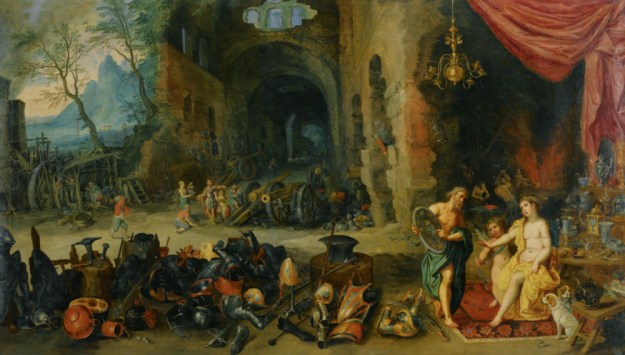
Jan Brueghel, the younger – Venus in the forge of Vulcan
“When Manchester City beat Manchester United in what was effectively a title decider at the end of April last season, the area in which they were dominant was clear. United fielded a midfield three of Paul Scholes, Michael Carrick and Park Ji-sung. Against City’s 4-2-3-1 that should have given them an additional man in the centre. Even though City had the trident of David Silva, Carlos Tevez and Samir Nasri dropping back, United had Ryan Giggs and Nani doing much the same – but as it turned out United were physically overwhelmed.” World Soccer – Jonathan Wilson

Superclásico passion reignited as Boca Juniors and River Plate meet again


“The 2004, Observer Sports Monthly published its list of the “50 sporting things you must do before you die”. At number one was attending a ‘superclásico’, the passionate encounter between Argentina’s bitter rivals Boca Juniors and River Plate. The standard of the Argentinian league was declining even then – it has got a lot worse since – but the superclásico remains special. Sunday’s was ninth against fifth between two teams who, in all honesty, aren’t very good and yet el Monumental was packed, seething with noise and colour and passion.” Guardian – Jonathan Wilson

River Plate v Boca Juniors – where has the magic gone?
“The biggest occasion in South American domestic club football was back on Sunday when River Plate met Boca Juniors in a league match for the first time in almost 18 months. The big Buenos Aires derby is followed all over the continent for a number of reasons. One is the historic role played by Argentina in the consolidation of South American football. The British introduced the game to the South Cone. More than anyone else, the Argentines helped the spread of the game northwards. In terms of playing styles and fan culture, much of the continent takes its cue from Argentina.” BBC – Tim Vickery

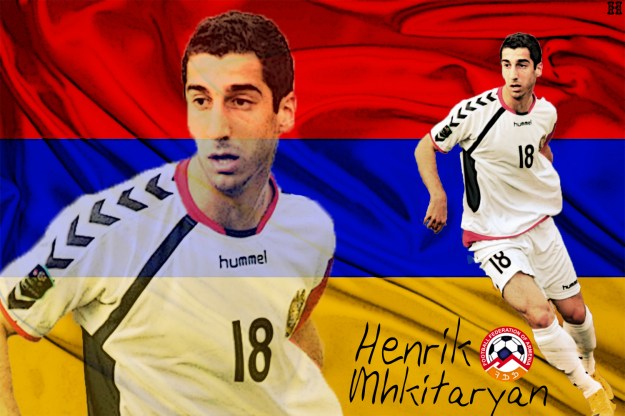
Henrik Mkhitaryan orchestrates Shakhtar Donetsk’s great leap forward


“Henrik Mkhitaryan is only 23 but this year he will almost certainly win his third Armenian player of the year award. So consistent has his excellence been that the surprising thing now is not that he was won so much so young, but that he did not win the award in 2010. The Metalurh Donetsk midfielder Karlen Mkrtchyan had better have made the most of that success, because there’s little chance of Mkhitaryan relinquishing the award any time soon.” Guardian – Jonathan Wilson

Dzeko, child of Sarajevo, grows into humble star for rising Bosnia

“The lights in tower blocks that stand at one end of the Bilino Polje Stadium glimmer through a thick haze. It feels foggy, as it always does on match nights in Zenica, the industrial town where Bosnia-Herzegovina plays its home matches, but this isn’t mist; rather it’s the oily smoke from the dozens of cevapi stalls that line the streets around the ground. And if you peer hard enough through the murk, you see the same face staring back from every T-shirt stall: Edin Dzeko.” SI – Jonathan Wilson

Bosnia-Herzegovina move beyond hope towards expectation
“For Bosnia-Herzegovina, the hope is becoming unbearable. Tuesday night’s 3-0 victory over Lithuania, coming after a 0-0 draw in Greece the Friday before, has put them at the top of their group with four games played. There is optimism that they will qualify for the World Cup for the first time, but it is tempered by the memories of the recent past.” Guardian – Jonathan Wilson

San Marino’s Davide Gualtieri recalls the pain his goal caused England

“The equation was simple. If England beat San Marino by seven and Holland failed to win in Poland they qualified for the 1994 World Cup, second in their group behind Norway. At kick-off on 17 November 1993, it seemed difficult but not impossible; 8.33 seconds later, the dream was over as San Marino took the lead. It was not mathematically impossible for England to qualify from there but psychologically, morally, it became so.” Guardian – Jonathan Wilson

Big-spending Zenit face Milan under strain of divisions and defeats

“It’s not difficult to pinpoint where it started to go wrong for Zenit. Last season they won the league by 13 points, lifting the title for the second time in succession. Although they were beaten in the Super Cup by Rubin, they began this season with four straight wins, despite a fixture list that looked testing: there was a 3-1 triumph at CSKA and then a 5-0 demolition of Spartak. At that stage, it looked as though Zenit might cruise to a hat-trick of Russian titles.” Guardian – Jonathan Wilson

Inconsistent Arsenal still lacks ‘moral courage’ despite changes

“Some things never change. All season the question has been whether Arsenal had, at last, found the defensive resolve to make it a genuine threat for honors. A 2-1 loss to Chelsea on Saturday provided the answer; the same old flaws, the same old weaknesses persist. It can seem, at the highest level, as though soccer is primarily about control of midfield: dominate there, and the chances will come. But that is assuming all else is equal, and for Arsenal it rarely is.” SI – Jonathan Wilson

The question: How troubling is Liverpool’s start?


“Not since 1903 have Liverpool had a worse start to the season but for the most part their supporters seem relatively sanguine. The fixture list has not been kind, offering up home games against three of the sides likely to fill the top four positions in the Premier League at the end of the season and testing away games at West Bromwich Albion and Sunderland. And Liverpool have played pretty well – even in the home defeat by Arsenal, when they ended up comfortably beaten 2-0, there was an hour or so in which they controlled the ball.” Guardian – Jonathan Wilson

Liverpool’s Failure To Strengthen Their Squad Could Be A Blessing In Disguise
“It may not have been that elusive first three Premier League points, but Brendan Rodgers secured his first domestic win as Liverpool boss as his young side put in an excellent performance to beat a strong West Brom team 2-1 away in the League Cup and qualify for the next round, where they’ll face Rodgers’ old side, Swansea, at Anfield. It was a record breaking night for the Reds, with Jerome Sinclair coming off the bench to become Liverpool’s youngest ever player at 16 years and 6 days of age – he wasn’t even alive for Euro 96, how old do some of you feel, eh?” Sabotage Times

Messi saves Barça; reigning champ Chelsea off to stuttering start


“Another astonishing night of Champions League action rounded off Matchday One in dramatic style. Lionel Messi lit up the night as only the world’s best player can, while elsewhere there were jitters for holders Chelsea, penalty drama at Old Trafford, shocks in France and Portugal and more new stars bursting onto the scene.” SI

Football Weekly Extra: Close but no cigars for Chelsea and City in the Champions League
“In today’s Football Weekly Extraaaaaah, AC Jimbo has Rob Smyth, Paul MacInnes and Jonathan Wilson in the pod to marvel at some truly liquid football. Ronaldo’s last-gasp winner against City – woof! Oscar’s screamer against Juventus – double woof! PSG’s Zlatan Ibrahimovic becoming the first player to score for six teams in the competition – legend woof!” Guardian – Jonathan Wilson – James Richardson

Oscar shines, but Chelsea’s defense breaks in draw with Juventus

“Sooner or later people are going to start believing in Oscar’s genius. Last year, in extra time in the final of the Under-20 World Cup in Bogota, he floated a chip from wide on the right over Portugal goalkeeper Mika to complete his hat trick and give Brazil a 3-2 victory. It was, everybody agreed, a sensational goal — if he meant it. He insisted he did, but there was doubt: could anybody really, in the heat of the game, have had the vision, the audacity and the control to execute such a shot?” SI – Jonathan Wilson

Russian money is starting to change Europe’s football map

“The map of the football world is changing. A side issue of sad-gate has been the realisation that the wages of the world’s best footballers are now so huge that there are a handful of clubs who can afford them. Were Cristiano Ronaldo to leave Real Madrid who, realistically, even with the enormous marketing potential he offers, could afford his wages?” Guardian – Jonathan Wilson

Ukraine’s young guns face England and life without Andriy Shevchenko

“A star has gone out and a new age must begin. For a long time the question with Ukraine was whether Andriy Shevchenko was still worth his place in the side; now that he has retired, there is a realisation of what an almighty gap there is to fill. For 17 years, Shevchenko was an all but permanent feature of Ukraine’s national team, winning 111 caps, scoring a national record 48 goals and becoming a totemic presence.” Guardian – Jonathan Wilson

Sabella meshes Argentina’s abundance of attacking talent

“It is possible to have too much of a good thing. Lionel Messi, Sergio Aguero, Gonzalo Higuain, Carlos Tevez, Angel Di Maria, Javier Pastore, Ezequiel Lavezzi … no other nation comes even remotely close to Argentina in terms of attacking and creative talent. The problem has been trying to fit as many of them as possible into the same squad. It did for Diego Maradona and it did for Sergio Batista.” SI

Uruguay have cause for World Cup concern


“World Cup qualification resumes in South America this Friday, with a question mark hanging over the team which have been the continent’s form side over the past two years. Might the London Olympics mark an unwelcome turning point for Uruguay? On the face of it there should be no cause for alarm. World Cup semi-finalists in 2010, Copa America champions last year, Uruguay’s senior side have gone 18 games without defeat. They have made a solid start to the 2014 qualifiers. Leaders Chile sit out Friday’s round, where a win for Uruguay would take them to the top of the table.” BBC – Tim Vickery

Sabella meshes Argentina’s abundance of attacking talent
“It is possible to have too much of a good thing. Lionel Messi, Sergio Aguero, Gonzalo Higuain, Carlos Tevez, Angel Di Maria, Javier Pastore, Ezequiel Lavezzi … no other nation comes even remotely close to Argentina in terms of attacking and creative talent. The problem has been trying to fit as many of them as possible into the same squad. It did for Diego Maradona and it did for Sergio Batista.” SI – Jonathan Wilson

Trouble atop the table, hope at the bottom
“With Euro 2012 followed by the season’s big kickoff and the excitement of the transfer window, only now is Europe turning its attention to the need to qualify for the next World Cup. South America, meanwhile, is in a very different situation. Sights are already firmly trained on winning a place in Brazil 2014. The continent’s marathon qualification tournament is a third of the way through. This Friday, action will get under way in the second year of a three-year campaign. So far the soccer has lived up to its billing as the most competitive World Cup qualifiers on the planet.” ESPN

Africa Cup of Nations qualifying is a rushed mess – but fascinating


“The qualifiers for the Africa Cup of Nations reach their climax this weekend. For 16 teams, the qualifiers also start this weekend. There surely can never have been a hastier, more flawed qualifying process for any tournament that presents itself as major. The result is that Ivory Coast and Senegal will pay each other on Saturday and then again on 12 October and, whoever wins over the two legs goes through. Whoever loses is out. Neither side has played any qualifiers before now. Both qualified for the Cup of Nations in Equatorial Guinea and Gabon earlier this year, beginning the tournament as first and third favourites. They’ve done nothing wrong; just been unlucky with the draw.” Guardian – Jonathan Wilson

Football has gone back to the back three, but why can be a mystery


James Milner
“Everything tactical in football is relative. There are few absolutes; everything has meaning and relevance only in relation to everything else. The question ‘What’s the best formation?’ is nonsensical because it depends on so many subsidiary questions: who are my players? How fit are they? How confident are they? How motivated are they? What are they used to doing? What result do we need from this game? Are we home or away? What is the weather like? What is the pitch like? Who are the opposition? How do they play? What shape do they play? How are their form and fitness? Even if a manager can accurately assess all of that, it may still be that after 10 minutes it becomes apparent that he needs to tweak something because of a player, whether on his side or the opponent’s, suddenly having a great game or an appalling game.” Guardian – Jonathan Wilson

Injuries hurting, but Man Utd failed to address its most pressing needs

“Rafa Benitez’s 2004 departure from Valencia — after a dispute with sporting director Jesus Garcia Pitarch — brought one of the great expressions of managerial frustration. On Monday, in its 1-0 Premier League season-opening defeat at Everton, Manchester United was left wandering around looking for somewhere to sit down and seeing only covers for light bulbs. Robin van Persie and Shinji Kagawa are excellent players. That is not in dispute. The question is whether they are the players United needed.” SI – Jonathan Wilson

No excuses as rich Paris St-Germain continue poor start to season


“With billionaire owners and big-spending clubs, ridicule is never far away. Even those who don’t hate them for their wealth and the way they’ve skewed the competition can hardly help but smirk when things go against them and the little man fights back. Paris St-Germain have never been a popular club but they are in danger of becoming a ridiculous club, at least in the short term. Having needed a last-minute Zlatan Ibrahimovic equaliser to take a point from Lorient on the opening weekend of the season, they were held to a goalless draw by Ajaccio on Sunday.” Guardian – Jonathan Wilson

Andriy Shevchenko’s political ambition may break spell of Ukraine icon

“It was just as Kenneth Branagh was finishing his Isambard Kingdom Brunel as Caliban piece and the chimneys were replacing the bucolic ideal in the Olympic opening ceremony that the news began to come through: Andriy Shevchenko was retiring from football to take up a career in politics. In a sense, of course, it’s no great surprise.” Guardian – Jonathan Wilson

Italy 3-2 Brazil, 1982: the day naivety, not football itself, died

“It’s 30 years ago this month that, according to Zico, football died. On 5 July 1982, in the Estadi de Sarrià in Barcelona, Tele Santana’s majestic Brazil lost to Italy and were eliminated from the World Cup. With them went the nostalgic form of Brazilian football, the fluid attacking style that had won them three World Cups between 1958 and 1970.” Guardian – Jonathan Wilson

The rise of The Blizzard and what it means for football journalism

“Jonathan Wilson’s sat in a Moroccan restaurant. Not only is he late, worse still, his phone hasn’t made a sound since he got there. Earlier that evening the digital edition of The Blizzard had been launched and the silence is definitely a bad sign. The publication aims to provide a digital and print platform for long-form football journalism. What makes it unique is that it’s distributed on a pay what you can, profit-sharing basis, and the model had made the project a big gamble for everyone involved. Not only was no way to gauge whether readers would pay enough to cover the costs of a 200-page magazine, but circulation had to be built with little to no marketing.” Media Spank – Jonathan Wilson

Jonathan Wilson On World Football And Writing: Brazil, EURO 2012 And The Blizzard

“Following on from part 1, where Jonathan discussed liberos, zonal marking, back threes and more, we then discussed world football issues such as the Brazilian league and Poland and Ukraine’s co-hosting of EURO 2012, as well as his work on The Blizzard and his various football books.”
Jonathan Wilson On Tactics: Zonal Marking, Liberos And English Shortcomings, Jonathan Wilson On World Football And Writing: Brazil, EURO 2012 And The Blizzard

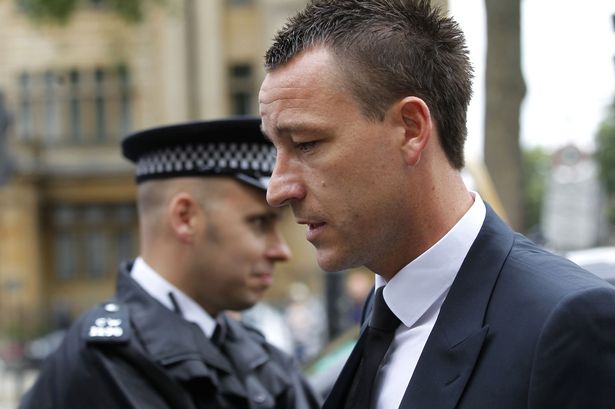
FA decision on Terry will bring sorry chapter to needed close


“Sometime this week England’s Football Association is expected to decide whether to charge John Terry over allegations he racially abused Anton Ferdinand in a league game last year. That may well be a necessary procedural step, even after Terry was found not guilty of the same offense by a magistrate’s court last week, but this has become an incident in which almost no one, on any side, has come out with any credit — with the exception, oddly, of the British legal system, which has shown itself robust, fair and transparent in explaining its workings.” SI – Jonathan Wilson

The troubling contradiction at the heart of the John Terry trial
“Jonathan Wilson has a very thoughtful post up which helps untangle some of the maniacal media threads that have emerged as a result of the John Terry trial, in which he was found not guilty of racially abusing QPR defender Anton Ferdinand. Wilson painstakingly explains the basis of the rule of law, that the burden of proof is on the accuser to prove the defender guilty of crimes charged ‘beyond a reasonable doubt.’ To this day, many believe ‘not guilty’ verdicts somehow assert inviolable empirical fact, and the reaction to the verdict in some quarters reflects this belief. As with the workings of parliamentary democracy, it’s alarming how little citizens seem to understand the judicial and governmental system of which they are an involuntary participants.” The Score

Wilson: Carroll Liverpool journey should end

“Liverpool’s decision to sign Andy Carroll, in January 2011, was logical in the context of the transfers that followed that summer. The £35million fee may have been high, but as Liverpool pointed out at the time, they essentially got him and £15million for Fernando Torres and that was consistent with a switch from an approach based on counter-attacking to one based on crossing. Whether or not Charlie Adam, Jordan Henderson and Stewart Downing really were bought through some quasi-moneyball logic because they had created the most chances of any players realistically available, the acquisitions seemed to make sense: they could deliver balls for Carroll to use the aerial ability he demonstrated in scoring a classical header for England against Sweden in the Euros. That goal, stemming from a perfectly timed leap and a powerful flex of the neck muscles showed just what Carroll is good at.” ESPN – Jonathan Wilson

How Football Tactics Were Born

“In the beginning there was chaos, and football was without form. Then came the Victorians, who codified it, and after them the theorists, who analysed it. It wasn’t until the late 1920s that tactics in anything resembling a modern sense came to be recognised or discussed, but as early as the 1870s there was an acknowledgement that the arrangement of players on the pitch made a significant difference to the way the game was played. In its earliest form, though, football knew nothing of such sophistication, and so it continued for around half a century.” Sabotage Times – How Football Tactics Were Born, Jonathan Wilson, Jonathan Wilson On Tactics: Zonal Marking, Liberos And English Shortcomings

Corinthians finally break their duck as Emerson sees off Boca Juniors


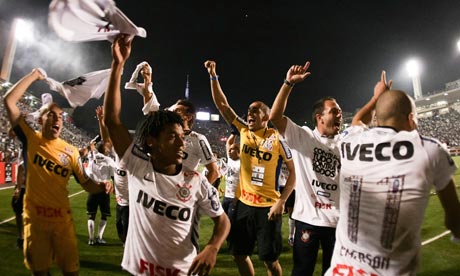
“By the end, Boca Juniors had been so comprehensively beaten that, as the South American football expert Rupert Fryer joked, they could not even raise themselves for the traditional post-Copa Libertadores final punch-up. Corinthians won 2-0 after a 1-1 draw in the first leg but the gulf between the sides was so vast, the chances of a comeback so slight, that it may as well have been quadruple that. And so, in their centenary year, seven months after the death of Sócrates, the most iconic player in their history, Corinthians won the Copa Libertadores for the first time. No more will there be cracks about ‘the 100-year-old virgin’.” Guardian – Jonathan Wilson

Corinthian values
“The 2012 Copa Libertadores final ended up being fought out between two of South America’s biggest clubs. Boca Juniors, one of the competition’s most successful sides, who have six titles and are only one behind all-time record holders Independiente, and Corinthians, a club that despite their grand stature were hoping to win their first ever Copa. After a hard-fought couple of legs, it was Corinthians who came out on top, to become the 23rd different club to win the trophy.” ESPN

The Reducer: Euro 2012 Final Retro Diary


“When it was over, when Fernando Torres was wearing a look on his face that said, ‘Holy shit! I won the Golden Boot!?’ I didn’t want them to leave. I didn’t want it to be over. It had been a month, but it felt like it was just beginning. Some countries wait generations to win a major football tournament. Spain, for instance, waited 44 years. Then the right generation came along. On Sunday, Spain defeated a valiant, gassed Italy, 4-0, in Kiev, to win Euro 2012. They have now won two consecutive European championships and are the World Cup holders. They are the first team to ever successfully defend their European Championship. Spain’s victory on Sunday marked the third time they won the Euros. The only other country to pull off that feat is West Germany. In terms of accomplishments, this Spanish side can only be compared to the Brazil team, led by a young Pele, that won the World Cup in 1958 and 1962, or the early ’70s West Germany team that won the Euros in 1972, the World Cup in ’74, and placed as runners-up to Czechoslovakia in Euro ’76.” Grantland (Video)

Spain sheds ‘boring’ charges in Euro 2012 final, with Italy’s help
“Everything in football is relative. How one team plays is necessarily conditioned by how the opponent plays. When Spain was accused of being boring, the response was always that it was very hard for it not to be when opponents packed men behind the ball. Italy didn’t, and Spain showed just how unboring it could be, its 4-0 win the largest margin of victory in a European Championship or World Cup final. Spain’s game plan, essentially, was a game of chicken — and it never blinked first. When opponents sat deep against it — and in the past two tournaments only Chile and Italy have not — Spain held the ball.” SI – Jonathan Wilson

Euro 2012: Perfect Spain justify Vicente del Bosque’s beliefs
“Playing without a defined striker remains a relatively novel concept but Vicente del Bosque was actually returning to Plan A. After unsuccessful attempts to incorporate a proper No9 into his side Del Bosque reverted to his initial system of six midfielders and Spain became the first side to win the European Championship by using the same XI in their opening game and the final.” Guardian – Michael Cox

Friedrich Nietschze Reflects Upon the European Championships
“We are honored at Futfanatico to welcome Friedrich Nietschze as a visiting scholar, classical philologist, philosopher, and soccer analyst. The German intellectual heavyweight took a break from his grueling publish or perish schedule to answer pressing questions on the European Championships, the gay science, post-nihilist studies, and the final between Italy and Spain. His answers will probably confuse (but may amuse) you.” futfanatico

Spain earns the big prize, but here are my Euro 2012 tourney awards
“Spain ended two debates once and for all with its master-class performance in a sensational 4-0 Euro 2012 final victory against Italy: No, it is not boring to play with six midfielders and no clear center-forward; and yes, it deserves to be called one of the greatest teams of all time after becoming the first side to win three major international tournaments in succession.” SI

The end of forward thinking


Maracanazo, a defeat that Brazilians would never forget.
“Five years ago, at the coaching conference he hosts in Rio de Janeiro, Carlos Alberto Parreira made a prediction that left the room stunned. Discussing how tactics might evolve, the coach who had led Brazil to victory in the 1994 World Cup, suggested that the formation of the future might be 4-6-0. True, wingers had once seemed sacrosanct, only to be refined out of existence and then reinvented. Yes, playmakers were undergoing a similar process of redevelopment. But centre-forwards? Could football really function with no centre-forward – without a recognised forward line at all? The answer came in this season’s Champions League final: yes, it could. Manchester United won the world’s premier football tournament with a team that featured no out-and-out striker.” Guardian – Jonathan Wilson

Italy-Spain Euro final promises to be clash of polar opposites


“The final was supposed to be a battle between the two schools of proactive soccer. On the one side Spain, the increasingly cautious protectors of the ball, a side that has used its mastery of possession to prevent the opposition from playing; on the other, Germany, having moved away from the reactivity of the last World Cup, playing in a more carefree way. It’s a battle, in a sense, between the bloodless purists and the more visceral entertainers.” SI – Jonathan Wilson

Euro 2012: Now Spain have entered the pantheon of greatness
“It has been repeated over and over that no side has ever won three major tournaments in a row – which is true so long as you exclude the Olympic Games. That may be reasonable in recent times when it has been an Under-23 tournament with added overage players, or even in the years after the second world war when differing definitions of amateurism gave the Eastern Bloc sides a huge advantage. But in the years up to the second world war, the Olympic Games was at least as serious a tournament as the World Cup. If Spain win the Euro 2012 final on Sunday, they will set a new record for the modern era but their feat will only equal that of Uruguay, who won the Olympics in 1924 and 1928 and the World Cup in 1930, and of Italy, who won the World Cup in 1934 and 1938 and the Olympics in 1936.” Guardian – Jonathan Wilson

The Question: why have there been so many headed goals at Euro 2012?

“There is little remarkable about the fact that this tournament has yielded 69 goals in its opening 28 games. If the two semi-finals and final produce eight goals between them there will, for the third tournament running, have been 77 goals in a finals. What is remarkable, though, is that of those 69, already 20 have been from headers – already three more than the record of 17 set in 2004. While Andy Roxburgh, the head of Uefa’s technical committee, has been characteristically cautious, insisting that the sample size is too small to draw any definitive conclusions, Michel Platini has been keen to claim credit, insisting that the introduction of extra officials behind the goals has reduced the amount of grappling at corners and free-kicks.” Guardian – Jonathan Wilson

Italy 0-0 England: Pirlo dictates the game


“Italy somehow failed to score despite dominating for 120 minutes, but won the resulting penalty shoot-out. Cesare Prandelli brought in Riccardo Montolivo to play at the top of the diamond, because of concerns over Thiago Motta’s fitness. Roy Hodgson made no changes from the XI that narrowly defeated Ukraine in the group stage. Italy were the better side all over the pitch here – only finishing let them down.” Zonal Marking

Euro 2012: England versus Italy, an abbreviated but charged rivalry
“England against Italy feels as though it should be one of football’s classic fixtures, a meeting between the motherland of the game and a country that has won the World Cup four times. Yet the sides have met only twice before in major tournaments, never on neutral soil, and only four times in qualifying games for major tournaments. England have won just one of those six competitive fixtures and Italy are one of only four teams (Brazil, Uruguay and Romania being the other three) to have the advantage over England in a head-to-head comparison. It was, though, a game against Italy in 1948 that brought perhaps England’s greatest ever victory.” Guardian – Jonathan Wilson

Euro 2012: The Quarter-Finals – England 0-0 Italy (Italy Win 4-2 On Penalty Kicks
“So, then, to Kiev and to the quarter-finals of the European Championships. It’s the final match of the round this evening, featuring an Italian side that is something of a curates egg, excellent against Spain in matching them every inch of the way before being slightly underwhelming against Croatia and The Republic of Ireland, whilst England remain somewhat enigmatic, decent enough in fits and starts but also a little lucky in places and, for fifteen minutes against Sweden nine days ago, almost apocalyptically disorganised. The history books say Italy, who have a considerably better record against England than many realise due to the infrequency with which the two sides have played each other over the years, but England have showed considerable character over the last few weeks and this match felt, prior to kick-off, difficult to call.” twohundredpercent

England v Italy: match report
“This was a chronicle of a death foretold, of a failure to prepare properly. This deserved defeat on penalties, England’s sixth reverse in seven shoot-outs, highlighted technical deficiencies also painfully apparent during the two hours of football. Italy, and Andrea Pirlo in particular, were vastly superior. Italy deserved to progress to a Euro 2012 semi-final with Germany in Warsaw on Thursday. Some of Pirlo’s passing was sumptuous; he guided the ball around England’s half as if using satnav. He cherished the ball’s company whereas England, following a deceptively promising start, continued to surrender it cheaply.” Telegraph – Henry Winter

Euro 2012 paper review: ‘The world has been turned on its head’
“The devilishly handsome model in the Zegna menswear advert may be too smouldering and intense to express much in the way of emotion, but elsewhere in La Repubblica joy is unconfined. Underneath their masthead, the Italy goalkeeper Gigi Buffon can be seen celebrating Italy’s Euro 2012 quarter-final penalty shootout win over England with team-mates Antonio Cassano and Daniele Di Rossi, among others.” Guardian

Three thoughts: Italy nips England for well-deserved berth in semis
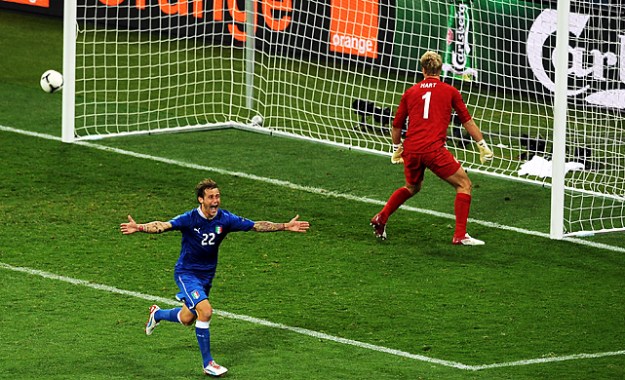
“Here are three thoughts on Italy’s 0-0 win over England in penalty kicks: 1. Justice was done in the end. From the second minute of the match, when Daniele de Rossi struck a swerving shot from 30 yards out that cannoned off the inside of Joe Hart’s post, Italy might have felt it was not going to be its night. Mario Balotelli had a hat-trick of chances in the first half, the last of which a close-range toe-poke that was deflected over the crossbar, led him to kicking the goalpost in frustration. It was not so different in the second period, most of which Italy dominated.” SI

Redemption for England and Italy
“The exact role of coaches is a hotly debated topic in soccer. Is the sport like jazz in which the players use their creativity to improvise genius, with the coach merely there to provide the cut-away reaction shots the television cameras need to enhance the drama? Or is it akin to a symphony in which the coach is the conductor, a Bill Parcell-ian puppet master orchestrating every move?” ESPN (Video)

Memorization killed chess—is football the next victim?

“Jonathan Wilson wrote a short but intriguing article just over a week ago for the New Statesman (of all publications). On initial reading, it appears to cover familiar ground for an unfamiliar audience. With the infamous 6-3 victory by Hungary over England in 1953 as its fulcrum, Wilson argues that international football was once a festival of contrasting styles, approaches and national visions of the ‘Beautiful Game’.” The Score (Video)

Euro 2012: England versus Italy, an abbreviated but charged rivalry

“England against Italy feels as though it should be one of football’s classic fixtures, a meeting between the motherland of the game and a country that has won the World Cup four times. Yet the sides have met only twice before in major tournaments, never on neutral soil, and only four times in qualifying games for major tournaments. England have won just one of those six competitive fixtures and Italy are one of only four teams (Brazil, Uruguay and Romania being the other three) to have the advantage over England in a head-to-head comparison. It was, though, a game against Italy in 1948 that brought perhaps England’s greatest ever victory.” Guardian – Jonathan Wilson

Portugal 2-1 Holland: van Marwijk makes changes, but Holland crash out with zero points


“Portugal suffered an early setback, but played better football and fully deserved their win. Paulo Bento kept the same starting XI for the third game in a row. Bert van Marwijk made three changes. In defence, Ron Vlaar replaced Johnny Heitinga in a straight swap. It was further forward where he made significant alterations – Rafael van der Vaart came in for Mark van Bommel in order to add some creativity to the midfield, while Klaas-Jan Huntelaar started upfront, meaning Robin van Persie played just behind a and Wesley Sneijder went to the left, the system Holland used at the end of the Germany match. There was a huge contrast in styles here – Holland were a bunch of individuals without any cohesive structure, while Portugal were disciplined, organised and clear with their attacking intentions.” Zonal Marking

Ronaldo answers critics in victory
“The mark of a great player is responding in the face of criticism. An irritated and annoyed Cristiano Ronaldo couldn’t hit a barn door against Denmark on Wednesday, but the Ronaldo who vies with Lionel Messi for the tag of best player in the world showed up Sunday in Portugal’s pivotal Group of Death clash with the Netherlands.” ESPN (Video)
Three thoughts: Ronaldo finds form in Portugal’s win over Netherlands
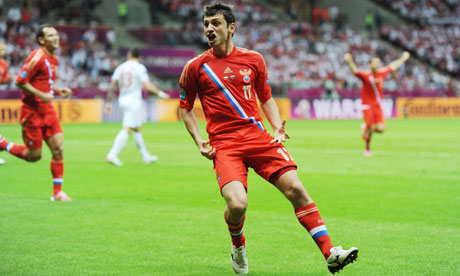
“Here are my three thoughts on Portugal’s 2-1 win over the Netherlands in Group B… 1. The Dutch midfield: Finally Bert van Marwijk gave the Dutch public what it wanted, dropped Mark van Bommel and played a holding pair of Nigel De Jong and Rafael van der Vaart. And finally we saw just why Van Marwijk has been so reluctant to go into games without his two dogs of war. It all started extremely well for the Dutch, Van der Vaart showing the positive side of his game as he ran on to an Arjen Robben pass and whipped a finish around Rui Patricio. That showed the advantage of playing him: not only would Van Bommel probably not have been able to produce such an instant, accurate finish, but he wouldn’t even have been that high up the pitch. The two halves of the broken team from the first two matches were suddenly linked. That gave the Dutch a flow and a rhythm but it also left it with a desperately soft center.” SI – Jonathan Wilson

Euro 2012: Holland are sent home by Portugal and Cristiano Ronaldo
“After all the speculation about the tortured arithmetic that might decide this group, the sums were simple. Germany and Portugal advance. Hope had arrived for Holland in the shape of Rafael van der Vaart’s opening goal, but Cristiano Ronaldo first equalised and then struck the winner in the second half to send his side into a quarter-final meeting with the Czech Republic.” Guardian

Three thoughts: England switch to 4-4-2 keys comeback over Sweden

“Three thoughts from England’s dramatic 3-2 victory over Sweden in Kiev, Ukraine. 1. England is winning with 4-4-2. There is a scene in Steve Barron’s 2001 film Mike Bassett: England Manager, an affectionate satire on the England national team, in which Ricky Tomlinson, playing the title character, reaches the end of his tether. He reacts furiously to the suggestion that he might experiment tactically. “Four-four-fookin’-two,” he shouts as the audience laughs at a poor, befuddled man out of his depth. Eleven years later, England is again playing 4-4-2. And somehow, it seems to be working.” SI – Jonathan Wilson

Euro 2012: Alan Dzagoev is finally meeting Russia’s expectations


Alan Dzagoev
“Russia has been waiting since 11 October 2008. It was then that Alan Dzagoev made his international debut, coming off the bench at half-time in a World Cup qualifier away to Germany and hitting the bar. He was aged 18 years and 116 days and so became the youngest outfielder ever to play for Russia. Comparisons with the Russian forward Eduard Streltsov, who, at 17 years and 340 days, became the youngest outfielder ever to play for the USSR, were inevitable if not entirely fair. Streltsov, after all, is one of the great icons of the Russian game, a forward who scored a hat-trick against Sweden on his international debut, was jailed for a rape he may or may not have committed and returned from five years in the gulag to inspire Torpedo to a league title.” Guardian – Jonathan Wilson

France 1-1 England: France dominate possession but creativity stifled by England sitting deep


“A match with little invention, played at a very slow pace. Laurent Blanc chose his expected side in a 4-3-3, with Florent Malouda shuttling forward from the midfield. Roy Hodgson’s side contained one surprise name – Alex Oxlade-Chamberlain, who started on the left. James Milner started on the other flank, and Danny Welbeck got the nod over Andy Carroll upfront. As expected, France dominated possession (65%) and had 21 shots compared to England’s 5, but many were from long-range, as Blanc’s side struggled to create clear-cut chances.” Zonal Marking

Three thoughts: England’s set play success forces draw with France
“1. England thrives with English goals. In the Balkans and perhaps elsewhere, a goal scored with a powerful header is known as an English goal. If that header comes from a set play, that makes it even more English (British, really, but in the Balkans comprehension of the distinction is blurry). So far in this tournament, that stereotype has proven to be true. Only two goals have been scored with one touch from a set play, and, appropriately, both were scored by players on English clubs: Sean St Ledger of Leicester City for Ireland and Joleon Lescott of Manchester City for England.” SI – Jonathan Wilson

France 1 England 1: match report
“Good point, average creativity. England were under sustained pressure towards the end of their opening Group D game but they held on and will take deserved satisfaction from this result, if not necessarily the display. It’s a good start though. The French were more technical, more assertive through the likes of Franck Ribery and their terrific right-back, Mathieu Debuchy, comfortably the man of the match. Uefa awarded the honour to Samir Nasri, who had brilliantly equalised Joleon Lescott’s header, but Debuchy really impressed most.” Telegraph – Henry Winter

Euro 2012: Samir Nasri’s goal for France echoes England’s old failings
“New coach, but familiar pattern. England have scored before conceding at every international tournament they have competed at since 1990. Yet so often they lose that lead with a goal struck from a similar position. For years England’s weak zone has been the space between defence and midfield and it has constantly been their downfall in opening games. In 2000 the game-changer was Portugal’s Rui Costa, who got all three assists as England squandered a two-goal lead to lose 3-2. In 2004 Zinedine Zidane scored a superb free-kick after a clumsy Emile Heskey foul in that position. Two years ago Clint Dempsey turned past Frank Lampard’s poor challenge before his weak shot squirmed between Robert Green’s legs.” Guardian – Michael Cox

Not a bad start for England, France
“Not a win for England, but not a bad start. A team devoid of four regulars, including Wayne Rooney, showed grit, organization and calm to earn a 1-1 draw with tournament dark horse France, which extended its unbeaten streak to 22 games. Les Bleus won’t be disappointed, either. Neither team wanted to lose.” ESPN (Video)

England, France draw in Group D
“England held on for a 1-1 draw with France on Monday at the European Championship, giving the Group D favorites one point each. Joleon Lescott put England in the lead with a header in the 30th minute, and Samir Nasri leveled for France shortly before halftime with a strike into the bottom corner of the net. France still has not won a match at a major tournament since the 2006 World Cup. The national team, however, is unbeaten in its last 22 matches.” SI

Lionel Messi hat-trick leads Argentina to 4-3 win over Brazil

“The summer friendly has become a familiar genre for American fans, but this felt different. For one thing, Brazil and Argentina are perhaps the only teams in the world able to draw more than 80,000 people in the same time slot as Germany-Portugal — a European Championship game that actually matters. For another, it provided another chance to compare Neymar and Lionel Messi, excellent players in their own right and proxies in the cold war between Pele and Diego Maradona.” Guardian

4-4-2 G4M3 TH3ORY 4-3-2-1 4-2-2-2 3-4-1-2
“Brazil finds itself in an awkward position. After a desperately disappointing quarterfinal exit in the 2011 Copa América, the Seleçao has three years to put it right with only the Olympic Games this year and the Confederations Cup next in the way of ‘proper’ matches. (Even then, the Olympic Games allow only three players over the age of 23, and the quality of opposition in the Confederations Cup is questionable, as the major nations seem unsure of the tournament’s importance.) Other teams may complain about qualifiers, but they do at least offer an opportunity for competitive games.” Howler – Jonathan Wilson

Spain 1-1 Italy: Spain start with no striker, Italy use a 3-5-2


“A fascinating tactical battle between two systems rarely seen at international level. Vicente del Bosque supposedly had a three-way choice between Alvaro Negredo, Fernando Llorente and Fernando Torres upfront – but instead chose to play with a false nine, with David Silva and Cesc Fabregas both becoming the highest player up the pitch at different points. Cesare Prandelli went with the 3-5-2 system he’s been using in training over the past two weeks, which meant Daniele De Rossi dropping into the defence, and Emanuele Giaccherini making his international debut as a left wing-back.” Zonal Marking

Three thoughts: Spain’s striker-less attack cost them vs. Italy in draw
“1. Spain’s striker-less attack: Spain’s system, a 4-3-3-0, was the most radical seen in a major international football tournament for decades. Usually the international game, because of the lack of time the players have to work together, lags way behind the club game, but this placed Vicente Del Bosque firmly in the avant-garde. Unusual systems that have been termed “strikerless” at least have a forward — a Francesco Totti, Cristiano Ronaldo or Lionel Messi — to drop back and create space for runners from deep while still getting forward to score goals themselves. But Spain’s shape, with Andres Inietsa, Cesc Fabregas and David Silva across the nominal forward line had three players who have spent most of the season operating as orthodox attacking midfielders.” SI – Jonathan Wilson

Tactics key in Italy-Spain draw
“A mouthwatering matchup between the past two World Cup winners became all the more engrossing as both managers made brave tactical decisions ahead of the game. After a 1-1 tie, one man, Italy’s Cesare Prandelli was left seeming bold. The other, Spain’s Vicente del Bosque, appeared more desperate. The decisions were different responses to a similar problem — the lack of the team’s best-fit striker. Spain’s David Villa was unable to recover from the broken leg sustained at the Club World Cup last December. Italy’s Giuseppe Rossi has been a long-term absence after suffering a double ACL tear.” ESPN (Video)

Euro 2012: Spain v Italy – as it happened
“In the end, a draw is probably the right result and both teams will perhaps be as disappointed as they are satisfied with a point. Italy had the better chances and played in an engaging fashion for much of the game, while Spain’s strikerless formation left much to be desired. But Spain’s response once behind was excellent and a fine goal from Cesc Fabregas got them out of jail; from there, they could and would have won it if Fernando Torres hadn’t been Fernando Torres. Overall another entertaining match in what is becoming a very entertaining tournament, but Spain can produce so much more than they managed in the first half, as indeed they showed in the second half. In the end, I just about forgive them for that ridiculous starting line-up.” Guardian

Rapid Reaction — Spain vs. Italy
“There was elation for Antonio Di Natale, vindication for Cesc Fabregas, and more misery for Fernando Torres. Add it all up, and it made for an action-packed 1-1 tie between Spain and Italy in the Euro 2012 opener for both sides. Italy had broken on top in the 61st minute, when Di Natale ran onto a gorgeous through ball from Andrea Pirlo and coolly finished past Spain goalkeeper Iker Casillas. But three minutes later, Fabregas hammered his shot past Gianluigi Buffon after taking a deft pass from David Silva.” ESPN (Video)

Spain, Italy draw in Group C
“For Spain, a tie counted as a bit of a stumble. For Italy, a bit of a reprieve. Opening their bid for a third straight major title, the Spanish rallied to earn a 1-1 tie Sunday against Italy, which entered this year’s European Championship amid another match-fixing scandal. Antonio Di Natale put Italy in front after an excellent setup from Andrea Pirlo in the 61st minute, but Cesc Fabregas tied it for the defending champions three minutes later by finishing off a dazzling display of Spain’s trademark passing game.” SI

Croatia 3-1 Ireland: Ireland invite pressure, but deal with it poorly

“Croatia recorded a comfortable victory over Ireland and go top of Group C. Slaven Bilic used Vedran Corluka in the centre of defence and played Darijo Srna in his traditional position of right-back in order to play Ivan Rakitic on the right of midfield, and used Ognjen Vukojevic as his holding midfielder. Giovanni Trapattoni announced his XI days ago, and they started as expected (with 1-11 on their backs). Set-pieces played a large part here, but Croatia were the better side – more inventive with their passing, cleverer with their movement, more ruthless in the penalty box.” Zonal Marking

Three thoughts: Hard-hitting Jelavic helps Croatia upend Ireland
“1. Croatia doesn’t miss Ivica Olic: When Ivica Olic returned from injury to play in the playoff games against Turkey last November, he came as a revelation. He is not as technically gifted a player as some of those Slaven Bilic has to choose from, but he has an energy and a muscularity that drives back opposing defences giving the more skilful midfielders space in which to play. Turkey couldn’t cope with him and Croatia, finding the sort of rhythm they hadn’t shown in over three years, swept to a 3-0 victory in Istanbul, taking an early lead and picking Turkey off on the break.” SI – Jonathan Wilson

No luck for the Irish
“Despite being considered a significant second fiddle to Spain and Italy’s cagey, engaging midday draw, we should have seen this coming. Group C was already pressurized given the four teams pitted against one another, yet that pressure increased thanks to the 1-1 result in Gdansk between the presumptive favorites to advance. (That, plus the tension accompanying overnight reports of fighting between fans that resulted in 14 arrested.)” ESPN (Video)