“Dunga’s Brazil side isn’t popular back home. The use of two holding midfielders, the tendency to play on the counter-attack and the overlooking of the likes of Ronaldo, Ronaldinho and Pato have all seen him accused of playing in an un-Brazilian way, by ditching the classic Brazilian principles of yesteryear for a more patient, less spectacular way of playing.” (Zonal Marking), (Must Read Soccer)
Tag Archives: Football Manager
German football’s image problem
“German football fans have enjoyed a largely positive press for the past 20 years thanks to a number of well co-ordinated campaigns. Among other things, these have helped to retain standing areas, affordable tickets and a reasonable number of Saturday afternoon kick-offs. And it’s thanks to the concerted efforts of fan groups that the atmosphere in stadiums makes for a loud and boisterous match day. Although some people might find the idea of a “conductor” with a megaphone at the front of the terrace leading the chants as a little less than spontaneous, it’s certainly preferable to a mute support restricted to either cheering goals or moaning.” (WSC)
English football’s huge debts vindicate Michel Platini’s plans
“The timing could hardly have been more acute for the release by UEFA of a report into the financial excesses of Europe’s top clubs, just as Portsmouth were placed, insolvent, into the knacker’s yard of administration. UEFA’s report, ‘The European Club Footballing Landscape,’ a mammoth comparison of 654 clubs in the top divisions across Europe, showed that more money is coming in than ever before, but almost half of clubs overall, 47 per cent, still made losses in 2008. European football, the richest club sport in the world, lost €578million (£513m) in total.” (World Soccer)
Chelsea Leans on Turnbull as Mourinho Returns
“It would be the cruelest of defeats for Chelsea fans if the Blues, a team built at great expense to win the Champions League, were to be eliminated by the man previously tasked with capturing European glory for the club. Jose Mourinho, the former Chelsea manager, will return to Stamford Bridge on Tuesday with that same goal as the boss of Inter Milan, which holds a 2-1 lead in the two-game elimination series. The current Chelsea manager, Carlo Ancelotti, will try to do what Mourinho, Avram Grant, Luiz Felipe Scolari and Guus Hiddink could not do.” (NYT)
Old Infirm? The Further Travails Of Rangers & Celic
“Some ill-advised comments made by the Celtic chairman John Reid at last year’s club AGM may now be coming back to haunt him, as rivals Rangers seem to be coasting to a Scottish Premier League championship. Mark Murphy takes a look at how the two clubs have progressed this season and finds that Reid’s bullishness couldn’t have come with much worse timing.” (twohundredpercent)
Uncertainty stalks Gianfranco Zola as relegation clouds gather over West Ham
“Italian coaches will be everywhere at the Bridge. The Impossible Job has become the Italian Job. Marcello Lippi has won the World Cup while Giovanni Trapattoni wins friends with the Republic of Ireland. Zola, though, is under pressure. Widely considered one of the nicest men in an often heartless profession, the Sardinian who made the ball smile as an elegant maestro with Napoli, Parma and Chelsea, among others, now battles to keep West Ham United in the Premier League.” (Telegraph – Henry Winter)
Reorganising Scottish Football: The Annual Debate Begins Again

“It’s springtime, so discussion has started again about how to make the game in Scotland more exciting but, as Gavin Saxton reports, none of those that are being put forward are likely to do much about the two or three elephants that live in the room that is Scottish football.” (twohundredpercent)
And so it goes and so it goes and so it goes and so it goes
“The experiment with bye-line officials in the Europa League jars somewhat. Not that it’s a bad idea per se — having someone in a position to spot offences in the maelstrom of the penalty area, which are often on the referee’s blind side, could be a good idea. You wouldn’t know that from the number of people poised to pounce on it like spoilt indoor cats who don’t realise what a proper scrap is. But then, it was endorsed by Michel Platini, so, of course, it must be hare-brained/part of a nefarious scheme to erode Britain’s sovereignty and introduce a federal Europe by the back door.” (sport is a tv show)
Fan Ownership: The Fallen of the Trust Movement

“The current impression so far is that Trusts or fan ownership largely works. If that were the case, perhaps Exeter wouldn’t be an isolated example. As Brian Burgess of Brentford has said, a lot depends on luck and the people you get involved with the Trust. Without decent people on board, the best-meaning business is liable to fail.” (Pitch Invasion)
Beckham Grabs the Scarf, but Not the Reins, of Protest
“It was a highly significant game in the Champions League knockout match between Manchester United and AC Milan last night and Wayne Rooney continued his devastating form with two more goals in what is a 30-goal season so far. Nani made one of the assists of the tournament to set up his second, curling the ball into Rooney’s path with the outside of his foot. The 4-0 defeat exposed AC Milan as an aging, blunt shadow of their former selves, increasingly reliant on Ronaldinho’s capricious flashes of brilliance. But guess who stole the show?” (NYT)
Tactics: Michael Owen – they think it’s all over, it already was
“The news that Michael Owen will miss the rest of the season with a damaged hamstring prompted strange paroxysms of grief from those pundits who felt the injury had crushed the 30-year-old’s dreams of playing at a fourth World Cup with England this summer. In reality, his hopes have been dashed for some time.” (Football Further)
James Lawton: Barcelona’s model democracy is a paradise still beyond United’s reach

Aerial view of the park along the Besòs river
“Sooner or later some of the less temperate critics of the Red Knights – who propose, among other things, to move Manchester United from under a mountain of debt – may have to get a bit more specific. At this formative stage of a game plan that is inevitably, to some considerable degree, speculative, an emotional reaction, one way or the other, is surely more valid than the barrage of knee-jerk cynicism that the Nobel Prize-winning novelist John Steinbeck once categorised as ‘slothful self-regard’.” (Independent)
Putting the Trust into Football: An Examination of Supporter Ownership
“Slowly, a behind-the-scenes footballing revolution is growing. Whether it’s Portsmouth’s ongoing demise, the Glazers burdening Manchester United with hundreds of millions of pounds with of debt, Hicks and Gillett at Liverpool, Ashley at Newcastle or, lower down, the Vaughan family taking Chester City to the wall, the spotlight has well and truly turned on the owners. And with fans becoming more alarmed at the mismanagement of their clubs at boardroom level, supporters are asking whether it’s time that the fans took control of their clubs.” (Pitch Invasion)
African Soccerscapes: History, Ideas, and the 2010 World Cup

“Making an academic career out of studying soccer might sound (kind of like) fun, but it turns out to be hard work—mostly because you tend to get dissed from all sides. Here’s how Peter Alegi and Chris Bolsmann explain it in their introduction to South Africa and the Global Game, a forthcoming edited collection of scholarly essays addressing issues around the coming World Cup.” (Pitch Invasion)
Crash landing for seven players as Fabio Capello finalises World Cup plans
“The England manager will call a team meeting of all 30 players in his provisional World Cup squad after the May 30 friendly with Japan to announce which seven players will miss out on the trip to South Africa. Rather than tell each of the seven dropped players on an individual basis, Capello will read out his 23-man squad list to the group either at the team hotel after the game or possibly even on the flight back to London that evening.” (Telegraph)
Nigeria Might As Well Hire Me Next: Systemic Problems In African Hiring
“Nigeria has appointed Swede Lars Lagerback as their new national team coach on a five-month contract. I’m still trying to figure out why. I wrote an earlier piece about African nations’ perpetual need to hire foreigners to lead African teams. With the firing of Nigerian Shaibu Amodu, there’s only one remaining African coach poised to lead a side at Africa’s first World Cup, Algeria’s Rabah Saadane.” (Nutmeg Radio)
Player wages continue to rise in France despite the recession
“French football may not be regarded as one of the financial powerhouses of the European game, but you really shouldn’t feel too sorry for the players plying their trade in Ligue 1 at the moment. Take Moussa Sow, for example. The Rennes striker (three league goals in 20 matches so far this season and with just the barest handful of international selections for Senegal to his name) has opted to join Lille when he becomes a free agent in June.” (World Soccer)
Punishing ineptitude rather than cynicism
“Nemanja Vidic should have been sent off for his foul on Gabriel Agbonlahor in Sunday’s Carling Cup final. Aston Villa’s manager, Martin O’Neill, said it. Villa’s players thought so too and their fans were convinced. Even Sir Alex Ferguson admitted that Manchester United got a lucky break after the Serb conceded the penalty from which James Milner gave Villa the lead.” (WSC)
New-look Brazil go back to basics
“Think of the greats of Brazilian football and you will probably come up with Pele, Garrincha, Rivelino, Socrates – players full of flair, skill and vision. In short, geniuses. The name of Dunga, however, wouldn’t necessarily be on the tip of your tongue. A nuggety defensive midfielder who cut his teeth in Italian football and prizes tactics above flamboyance does not quite fit the Brazilian stereotype.” (BBC)
Frugality Is European Goal
“Faced with their toughest opponent for a generation, Europe’s leading football clubs have been forced to adopt a new tactic: frugality. Creditors have caught up with the beautiful game in recent weeks, raising fears that spiraling wages and reckless spending could put the future of some of the world’s most iconic teams at risk.” (WSJ)
Stereotyping the African: 99 Days to a Change of Imagination?

Abou Diaby
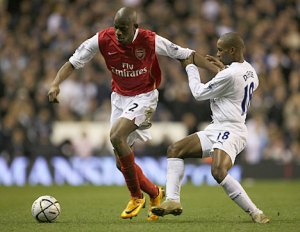
“An article by Jonathan Wilson in the Guardian today asks an interesting question for those of us who grew up in an era in which West African football was the realm of skilled artists such as Abedi Pele, George Weah, Roger Milla, and exciting teams like the ‘original’ Nigerian Super Eagles who played swashbuckling, imaginative football. In a piece that starts out by discussing Egypt’s tactical formation (very interesting as well), he goes on to ask…” (Soccer Politics)
Talking of tactics

“Tactical talk is all the rage nowadays thanks to books like Jonathan Wilson’s Inverting the Pyramid, an enlightening read on the history of tactics and the philosophy of formations that taught me many things I never knew. World Soccer magazine sometimes runs a double-page spread outlining one coach’s tactical history with every club he’s managed. It’s all fascinating stuff. However, I confess that I recently let my decade-long subscription lapse. Such features made my heart feel heavy with a sense of duty rather than of joy when I picked the magazine out of my postbox – I could frankly not care less how Frank Rijkaard’s 2001-02 Sparta Rotterdam team lined up.” (WSC: Talking of tactics, WSC: Inverting the Pyramid)
Beyond The Debt – Are You Going To Be A Part Of The Solution?
“It was standing room only in the social club at Gigg Lane, Bury on Saturday lunchtime for the “Beyond The Debt” rally as a crowd of hundreds watched an impressive array of those in the know explain that the time for debate on the ownership of football clubs is coming to an end. We seem now to be entering a different time. A time when action is required. A time in which shrugging your shoulders and muttering that, “well, my club is alright” is no longer enough. When opening speaker and rally chair Andy Walsh from FC United of Manchester spoke, he talked of the rivalries between supporters of football clubs being an artificial construct which masked the true enemies of football supporters – the people that run the game itself.” (twohundredpercent)
A Mental Game: Sports Psychology is the Future (and Always Will Be?)
“Why, after several failed attempts at European glory, has Landon Donovan with Everton finally performed at a level appropriate to one of the top leagues in the world (barring the occasional ‘horror miss’)? Is he a different player physically from his depressing stints with Bayer Leverkusen in 2000 and 2005? Maybe a little bit—but probably not much. If anything he was likely a bit more spry back in 2000 and 2005. The most dramatic difference is his confidence, composure, and attitude. Donovan is not a very different physical player, but he seems very different psychologically.” (Pitch Invasion)
The luxuries of being a Young British Manager
“When Mark Hughes left Manchester City back in December the English football media went into head-shaking overdrive. Don’t these foreign owners know that managers need time? And Hughes’ record certainly wasn’t bad, was it? OK, he went seven League games without a win, but he did match Wigan’s achievement of beating Chelsea, you know.” (WSC)
Football clubs in administration: Maps and Stats
“Attempting to make sense of the financial state of English football. It’s almost eight years since the ITV digital collapse brought chaos and financial meltdown to the lower leagues. By pulling out of their deal to pay £315million over three years for the right to screen fixtures such as Chesterfield vs Barnet they provided us with some great anecdotes (heard the one about the Tuesday night match where it would have been cheaper to drive every viewer to the ground in a limo, put them up in a hotel and give them £500 rather than pay the costs of televising the game?) and the perfect bogeyman to blame for all the problems at England’s provincial football clubs.” (This is Pop)
English Football Clubs Face Heavy Debts
“The full extent of the debts engulfing English football has been laid bare in a report that shows Premier League clubs are carrying more debt than the rest of Europe’s clubs put together. The findings are contained in a study from European football’s governing body into the state of football’s finances and come as the Premier League’s bottom club Portsmouth FC prepares to file for administration—a form of bankruptcy protection—on Friday as a result of debts of roughly £70 million ($105.5 million).” (WSJ)
Barry Hearn On Administration
“Michel Platini, with all of the elegance that one might expect from a man with such a playing career, describes it as ‘financial doping’. It is, in short, the accumulation of debt to purchase success on the pitch. Some clubs do it as a result of the egos of their chairmen, some do it from the fear of what might happen if they don’t, and some do it in the genuine but misguided belief that somehow everything will be okay if they manage to get the team winning on the pitch. The result, however, is usually the same. The players and the manager leave when things turn sour, there is a desperate rush for new investors and, when these can’t be found, it ends in either administration or a close shave with administration.” (twohundredpercent)
Too Many Danish Flap Hats in Chester
![]()
“Just when Chester City fans thought their club might finally be put out of its misery in its present state — its ownership having wrecked the club’s finances to the extent that they could not field a team, thus now facing a vote on expulsion from the Blue Square Premier — things have taken a turn for the even more bizarre. Last week, Chester’s supporters’ trust said they hoped they would be given the chance to start the club over, but now it seems a Danish consortium claiming to be saviours might make things even worse.” (Pitch Invasion)
Chester City Reportedly Sold To The Danes
“Chester City, according to widespread reports today, are to be sold to the Danish consortium that expressed their interest in buying the club a couple of weeks ago. This sale comes less than three days after a meeting of Chester Fans United at which it was made perfectly clear that CFU had a business plan in place to start up a new club when the new one expires. They have, as we suspected they might, run utterly roughshod over the desires of Chester’s supporters in doing this and deserve nothing more than our contempt for their own contempt of the club’s supporters.” (twohundredpercent)
The banality of football broadcasting
” A few years ago you never got to hear what football supporters thought. Players, presenters and pundits told us black was white and right was wrong. All we could do was scream at the TV so loud we frightened the kids or whack the off button on the radio so hard it wouldn’t go on again. Now it’s phone-ins, discussion programmes, reality TV and invitations to text your views, email your comments or reply to some blog or other.” (WSC)
How Supporters’ Groups Have Won the Ear of the English Media
“For a long time, the only place you’d hear about supporters’ trusts in the national English media would be in the pages of When Saturday Comes. Yet now, it seems we hear more from spokespersons of supporters’ trusts — democratic non-profit fans’ organisations aiming to influence how their clubs are run — than we do from clubs themselves, at all levels of the game.” (Pitch Invasion)
The Sweeper: Scotland Loses Champions League Spot, Rangers and Celtic Face Financial Crises
“Rangers and Celtic’s financial futures look a little bleaker today. Scotland will only have one entrant in the UEFA Champions League for the 2011-12 season, after falling below Belgium in the rankings used to determine each country’s qualifiers. Moreover, their champions will not advance automatically to the group stage, and will instead have to navigate through three qualifying rounds.” (Pitch Invasion)
The Sweeper: How Not to Question the US Soccer Federation About Diversity

Sunil Gulati
“Our post yesterday on the future of SoccerAmerica sparked an interesting discussion in the comments about the purpose of the magazine in print and online. The magazine still has outstanding access to decision-makers. This week, Paul Gardner has a two-part interview on the SoccerAmerica website with the recently re-elected President of the US Soccer Federation, Sunil Gulati.” (Pitch Invasion)
‘Feet of the Chameleon’ and Stories of African Football

Panini stickers of the ill-fated 1974 Zaire squad (from the blog ‘Zaire 1974’)
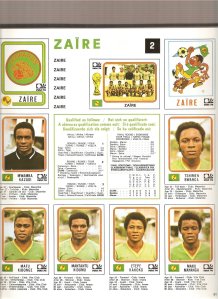
“‘Feet of the Chameleon’, the title phrase of Ian Hawkey’s excellent recent book on African football, comes from a coinage of South African commentator Zama Masondo—who was trying to familiarize and localize slow motion television replays for Zulu-speaking rural audiences. For members of that audience who were new to television of any sort, the replays were confusing. They thought ‘something had gone wrong with their TV sets at first.’ So, Masondo explained to Hawkey, rather than just saying ‘Now for the replay’ the commentator used the phrase ‘Ngonyawo lo nwabu’ which means ‘Now let’s see it again with the feet of the chameleon.’” (Pitch Invasion)
Mouscron have paid a heavy price for financial mismanagement
“Hardly a season goes by in Belgium without one club or another encountering a severe financial crisis and plunging down the divisions as a harsh consequence. Will they never learn? This time it was the turn of little Excelsior Mouscron – a club that had punched above its weight for years – to follow the likes of Aalst, Lommel and La Louviere in suffering the punishment of failing to pay the tax authorities.” (World Soccer)
Manchester United fans ready to make club ownership key issue of General Election
“They are also intensifying discussions with the Red Knights, businessmen considering forming a consortium to buy out the Glazers. United fans are even joining forces with their ancient rivals, Liverpool, to make club ownership a topic of debate on the campaign trail along with more usual Newsnight subjects like the economy, the environment and the war in Afghanistan. Football’s hitting the hustings. Lobbying is already under way.” (Telegraph – Henry Winter)
Beckham comes face to face with his spiritual descendents

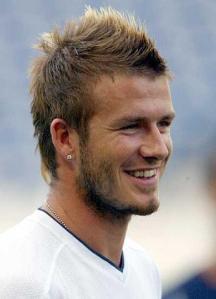
“The last time José Mourinho went to watch Chelsea, he noticed something curious. Though he had been sacked as coach in 2007, hardly anything had changed in his absence. ‘Even the warm-up is the warm-up they did in our time,’ he remarked. He still knew almost all the players. This was still his Chelsea. The Champions League this month will provide us with two reunions: Mourinho and his new club Inter Milan will meet Chelsea, while David Beckham and AC Milan play Beckham’s old team Manchester United.” (FI – Simon Kuper)
Richard Scudamore contemplates business end of a thrilling Premier League season
“Yet the backdrop to the Premier League’s breathless, wildly popular game of snakes and ladders is one of seething supporters, controversial owners and angry tax men as well as bewitched viewers. The Premier League is a story of two halves, of rich entertainment and unbridled debt, of clubs reaching for the stars and risking overreaching themselves. So is the sport heading towards Shangri La or Armageddon?” (Telegraph – Henry Winter)
Footballers’ political ambition
“11 February ~ Arsenal target Marouane Chamakh, currently at Bordeaux, will be standing for the centrist MoDem party in French regional elections. In WSC 63 (May 1992) Mitchell Sandler traced the history of footballers’ involvement in politics” (WSC)
Good habits stand Barca in good stead
“”Successful football is about good habits,” quoth Brian Clough, more or less in those words. Maybe so. What he meant was that you inculcate good habits into a player on the training ground to the extent that the player then reproduces them automatically on match-days, usually without the manager’s further intervention. Clough, for one, was famous for not turning up for training sessions, preferring to take his dog for a walk, which was his implicit way of acknowledging that the habits had been taken on. Vicente Del Bosque is another one from this school of management, preferring not to change the well-oiled Luis Aragonés machine, and only applying fine-tuning when necessary.” (ESPN)
Transfer Rule Snares Footballers
“Football’s transfer system has always been a murky business. Unlike the National Football League or the National Basketball Association in America, where players enter the professional ranks amid the glitz and razzmatazz of the college draft, the movement of players in football is an altogether more furtive operation. Players are effectively the property of their employers, bought and sold by professional clubs without oversight or regulation from the sport’s authorities. Since every player has a price attached, recruitment is a cloak and dagger process.” (WSJ)
Lies, Damned Lies & The Words Of The “Official Club Spokesman”
“As football sinks further and further into the financial mire, the official statements made by clubs themselves are becoming more and more odd, and more and more telling. Mark Murphy has been looking at some of these statements, and is less than convinced by them.” (twohundredpercent)
A Star Abroad Burns Out at Home

“Lionel Messi is probably the top sportsman in the world right now: unless you ask fans in Argentina where the soccer star was born and grew up in a town called Rosario, roughly 180 miles (290 kilometers) north-west of Buenos Aires. After helping his club, Spain’s FC Barcelona, win most of the top awards in 2009, Mr. Messi was named World Player of the Year by FIFA, world football’s governing body. He received the 2009 Ballon d’Or, given to Europe’s top player— winning the honor by the widest margin since it was first awarded in 1956. He even won the Latino Athlete of the Year 2009.” (WSJ)
A sad but dignified goodbye for Stuart McCall
“A manager on the brink of quitting would typically walk head-down along the touchline after the defeat which seals their fate, ignoring abuse from fans nearby. But as Bradford’s 1-0 loss to Bury on Saturday spelt the end for Stuart McCall – his resignation was confirmed on Monday – he embarked on a lap around the pitch at the final whistle to applaud supporters. Putting aside two and a half years of frustrating League Two failure, almost everyone inside the stadium applauded him back.” (WSC)
Brian Clough: who he really was, and what he really achieved

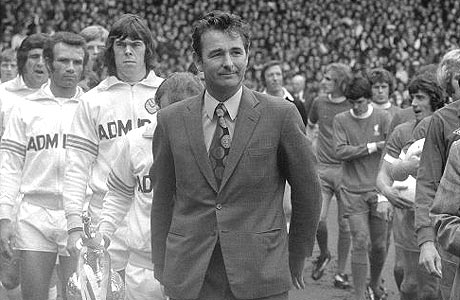
“We’ve done it, at last, haven’t we: taken the silent and unanimous decision that Brian Clough matters… Brian Clough has made the step up: he’s cultural now, gone from the close, sweaty barracks of football because he stands for England like Elgar and Dickens. The news about Clough isn’t in the tabloids anymore. It’s strictly broadsheet, review and monthly: it’s been to the London Film Festival and must by now be under Granta’s walls, in strength. All that whilst never being out of place: all that, whilst never abandoning Derby, all that without losing the common touch. Clough, more than Ramsey, or Revie, more even than Shankly, his only possible rival, is a cornerstone and comment upon the zeitgeist, and post War Britain is impossible without him.” (More Than Mind Games)
Why football clubs no longer flock to the January sales

“Ajax Amsterdam’s general director recently tallied his club’s transfers, and came up with this estimate: only 8.3 per cent of the footballers Ajax had bought in the past decade had succeeded. Ajax’s Dutch rivals, he said, had done even worse. This January European clubs spent barely anything during the “transfer window”. English clubs forked out about £30m ($48m, €34m) on new players, their lowest for any January since 2003. German, Spanish and French clubs spent even less. The credit crunch has bitten soccer in the leg.” (Simon Kuper)
Top 5 Harry Redknapp Signings
“Harry Redknapp is known as a bit of a wheeler dealer, scouring the football bargain bins for days. He is so good at finding bargains he takes half of January off to play the Wii with son Jamie. It is also reported Redknapp once sold ice to Eskimos, but this hasn’t been confirmed but Mr. Redknapp’s representatives. But after a plethora of successful transfer coups, who are the top 5 Harry Redknapp transfer dealings?” (EPL Talk)
Big Drop in Transfer Market

“If soccer agents had powerful lobbyists working for them in the halls of government, you can be fairly confident they would be asking for a generous stimulus package right around now. Just as fears of an enduring economic slump can lead to a self-fulfilling prophecy in the real world, as consumers “feel poor” and hunker down to save, slowing or even negating growth, so too can the perception of imminent doom affect soccer clubs’ spending. And, when teams stop spending, the first to be affected are the agents and middlemen who grease the wheels of the transfer market.”
(WSJ)
Behind José’s madness, a method

“Here’s a little game you can play at home. Type the words “Mourinho” and “referee” in your search engine. When I do it, I get more than 3 million hits. Here are some random headlines…” (SI)
The dilemma of a football moralist
” In what sense is watching football a moral activity? It may seem an absurd question, but when we remove the partisan blinkers obligatory to following our own club, we all have reasons for backing one team or another when we watch a game as a neutral.” (WSC)
Maley And McGrory – Two Managers Alike
“A postscript to this mini-series on great players you never saw by going on a tangent and looking at two great managers probably unknown to the rest of you. Today’s subject is about two men who managed Celtic and between them won everything. These two gentlemen are a large part of the club’s history and are now legends…” (Football and Music)
The Sweeper: The Fan, the Customer and Money in Football
“Yesterday, we noted that the avalanche of negative media stories about the Glazers’ regime at Old Trafford seemed finally to be pushing the moderate fans into the rebellious camp. Pointing to the same piece we noted in the Daily Mirror by Oliver Holt yesterday, Ian at Two Hundred Percent suggests there is a “sea change” in the analysis of football and money by the English media…” (Pitch Invasion)
Volatile mix of soccer and politics
“When Angola tied Algeria 0-0 on Monday in Luanda to finish first in Group A of the African Cup of Nations, it was cause for celebrations throughout most of Angola. Wherever you go in Luanda, the capital, you’ll see locals wearing the national-team colors of red, black and yellow. Angola shirts, scarves and flags are everywhere there; TV and radio broadcasts talk soccer around the clock. Billboards proclaim that Angola, which ended a 27-year civil war in 2002, can unite through soccer.” (SI)
Has All the Magic Gone? Juju, Africa, and Superstitions in the Game

“Amidst all the tragedy, politics, business, and even bits of sport that have made news from the 2010 Africa Cup of Nations, I’ve been intrigued by something conspicuous primarily in its absence: there have been virtually no stories of the juju / muti / witchcraft commonly used to exoticize the African game. Confederation of African Football (CAF) administrators must be pleased. In the midst of several embarrassing incidents during the last decade, most notably the arrest of Cameroonian coaches (one of whom was German) during the 2002 Cup of Nations in Mali for ‘trying to place a magic charm on the pitch,’ CAF has worked hard to ‘modernize’ the image of African soccer. As a CAF spokesperson noted after the Mali episode: ‘we are no more willing to see witch doctors on the pitch than cannibals at the concession stands. Image is everything.’ ” (Pitch Invasion)