Tag Archives: Football Manager

AZ – Aktobe 1-1, the second half struggle explained

“We’ve seen a lot of European Football action this week. No less than six Dutch teams may reach the group stages of either the Champions League or the Europa League this year. Thing however, don’t look too good for Utrecht, having lost 2-0 away at Celtic and also PSV have some repair work to do after a clumsy 1-0 defeat at far far Siberia.” (11 tegen 11)

From Russia without gloves


“You wouldn’t think UEFA and the Oxford University Press has the kind of relationship where the former helps the latter do its job. However, after introducing a Europa League into football’s bloated calendar, never again will the makers of English language dictionaries struggle for the relevant example to elucidate ‘ambiguous’! PSV Eindhoven sit atop the Eredivisie table after 2 rounds, but start life in the 2010/11 edition of UEFAs second-class competition after a disappointing campaign last season.” (Tactics, analysis, opinion, & scouting)

Werder Bremen 3-1 Sampdoria: Late Pazzini goal keeps the tie alive

“Bremen were the better side and looked to be sailing through to the group stage, but their loss of concentration might come back to haunt them. The game was an interesting match-up in terms of formations – Bremen played a 4-3-1-2 / 4-4-2 diamond system, with Aaron Hunt shuttling across the pitch into wide areas, hoping to impress after the departure of Mesut Oezil.” (Zonal Marking)

Young Boys 3-2 Tottenham: Spurs fortunate to avoid a thrashing


Francesco Guardi
“A wonderful match – Tottenham looked like being given the thrashing of their life after half an hour, but recovered to take home a decent result, considering the two away goals. They made three changes from the side that were unfortunate not to beat Manchester City at the weekend – in came Sebastien Bassong, Giovani dos Santos and Roman Pavlyuchenko. The 4-4-2 remained. Young Boys lined up with a very interesting 4-2-3-1 shape, that became a 4-1-4-1 and a lopsided 3-3-3-1 at various points in the game.” (Zonal Marking)

Young Boys 3-2 Tottenham Hotspur – Video Highlights, Recap, and Match Stats – Champions League
“The UEFA Champions League play-off qualifying round began with several matches on Tuesday, August 17, 2010 including Tottenham Hotspur traveling to face BSC Young Boys.” (The 90th Minute)

Zenit 1-0 Auxerre: Early Kerzhakov goal settles first leg

“Zenit deserve their slender advantage to take to France – but they’ll be disappointed they didn’t score more than one goal. The Russian leaders are unquestionably one of the most fascinating sides in Europe at the moment – Luciano Spalletti has them playing a distinctive, fluid brand of football which has brought them tremendous success in their own league – into the second half of the season, and still unbeaten.” (Zonal Minute)

Manchester United 3-0 Newcastle: Sublime Scholes dictates the game

“A comfortable victory for Manchester United – the winning margin could have been greater, but Newcastle were not without their opportunities. United fielded Wayne Rooney and Dimitar Berbatov upfront together, in a fairly traditional 4-4-2 shape with two natural wingers. Newcastle played their expected 4-4-1-1 shape, with Kevin Nolan deployed in behind Andy Carroll, the lone striker.” (Zonal Marking)

Liverpool 1-1 Arsenal: Arsenal dominate, but only just grab a point

“A crazy game that neither side truly deserved to win. Arsenal’s side was largely as expected – injuries in the centre of midfield meant Jack Wilshere was deployed alongside Abou Diaby, who played a more conservative role than he likes. Laurent Koscielny made his debut alongside Thomas Vermaelen, whilst Marouane Chamakh also started. Liverpool played a 4-2-3-1 with Steven Gerrard deep alongside Javier Mascherano and Joe Cole as the link player. Milan Jovanovic played an industrious, Kuyt-esque role on the left, ahead of Daniel Agger in an “unfamiliar” left-back role.” (Zonal Marking)

10 Thoughts on Liverpool 1-1 Arsenal
“After the first heavyweight game of the 2010/2011 season (or was it, given it pitted 7th vs 3rd from last year?), here are ten observations and conclusions I came to after an interesting match…” (Just Football)

Tottenham 0-0 Man City: Spurs dominate but Hart keeps it level


Roberto Mancini
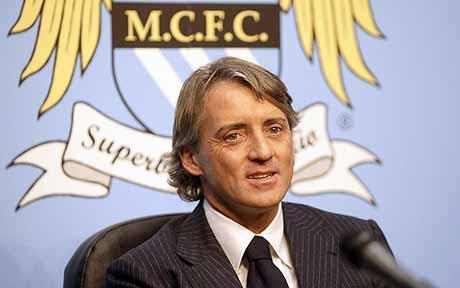
“An excellent game to get the new Premier League season up and running. No goals, but tremendous entertainment and some interesting tactical elements too. Tottenham lined up with ten of the eleven who were involved in the penultimate game of last season against City – Vedran Corluka in for Younes Kaboul was the only changed. Roberto Mancini chose to field new signings Aleksandar Kolarov, David Silva and Yaya Toure, in a defensive-minded 4-3-3 / 4-5-1 that essentially featured three holding midfielders.” (Zonal Marking)

Citizen’s Arrest(ed) Development?
“Manchester City are without doubt English football’s most rapidly rising force, but Roberto Mancini’s team of supremely gifted guns for hire are struggling to find a collective identity. In many ways this situation is not surprising, most of the players have only known one another for a matter of days, but it was a problem that also seemed to afflict the Eastlands outfit last season and has come, unfortunately, to be a defining feature of the Mancini era.” (The Equaliser)

Will a defensive-minded World Cup mean a defensive-minded Premier League season?

“ZM was planning to publish an extended article about how the defensiveness of the World Cup could result in a more defensive Premiership season. However, Jonathan Wilson got there first and covered everything. The last time we had this was 2004, the year of the underdog – Jose Mourinho’s Porto won the Champions League and Otto Rehhagel’s Greece won the European Championships by playing defensive-minded football. The start of the next Premier League season was the most negative in the short history of the division, with Mourinho summing it up with his legendary ‘park the bus’ comment following a goalless draw against Tottenham.” (Zonal Marking)

Football’s Greatest Managers: #15 Giovanni Trapattoni

“Giovanni Trapattoni, now 71, is one of the grand old men of European football and a manager who has won numerous titles across the continent; in Italy, Germany, Portugal and Austria. In fact, he is one of only two coaches to have won a league title in four different countries, the other being the great Austrian manager Ernst Happel. He may have opted to take on several lower-profile jobs in recent years, but Trapattoni more than deserves to be recognised as one of the most astute and relentlessly successful coaches of his generation.” (The Equaliser)

Decent performance from England as Capello experiments with new systems


“A nervous performance, but overall a deserved win and a decent night for England in their first game since their embarrassing exit from the World Cup against Germany. The result and performance will largely be ignored in the mainstream media, thanks to the news that David Beckham’s England career is supposedly over. The determination to not give Capello or England any praise whatsoever means that the ‘announcement’ was superbly timed – no need to focus on what actually happened on the pitch.” (Zonal Marking)

Menezes’ Brazil start with impressive victory

“One suspects that getting the Brazilian public onside with good attacking football was Mano Menezes’ first priority as Brazil manager, with a result in his opening game second on the list. With a 2-0 win over the US, he managed to achieve both. Dunga’s reign as manager will not be remembered fondly by the majority of the Brazilian public – even before the World Cup exit he was disliked for the perceived negativity in his side’s football, and for constantly selecting his ‘favourites’ ahead of established stars like Ronaldinho, and younger, emerging talents such as Neymar and Ganso.” (Zonal Marking)

An example of why three-man defences struggle against three-man attacks


“ZM rarely covers anything other than top-flight football, but with 2010/11’s Premier League action not starting until next weekend, here’s an opportunity to focus on a lower league game. The match? Exeter City v Colchester United, and it provided with a brilliant example of how three-man defences struggle when up against the 4-3-3 system. This has been covered at length before on ZM, but a case study on the subject is overdue.” (Zonal Minute)

The Case for the US 4-3-3


Jozy Altidore
“As I promised at the end of that roster discussion, I am writing now to discuss US tactical strategy going forward into the 2014 World Cup cycle. In the last 4 years, outside of one disastrous night at the Saprissa, we’ve seen two lineup formations employed by Bob Bradley’s men – the traditional 4-4-2 and the traditional 4-5-1. In fact, what may shock some USMNT supporters who are less familiar with Bob’s lineup choices until recently, we didn’t settle into the 4-4-2 formation until the 2009 Confed. Cup where two things happened: 1.) Charlie Davies emerged as a viable option at striker. 2.) We used the 4-4-2 to beat Spain.” (Yanks are coming)

Why are two holding midfielders so crucial in the modern game?


“The efficiency that holding midfielders provide teams makes them very important in the modern football. International competitions are always fascinating tactically if anything for the inflexibility they confront managers with. Arrigo Sacchi, in charge of the Italy side who reached the final of World Cup ’94, stated it was “impossible” for a national manager to drill the same understanding that club level coaches are afforded due to the lack of day-to-day availability of personnel. The sporadic amount of time they have with players means it can be difficult for coaches to develop plans so they usually are forced to stick with philosophies they think are correct – and that in turn highlights the common trends in the thinking of modern coaches. And certainly, what has become oblivious from the recent World Cup in South Africa and indeed club football for the past few years is that the use of two holding midfielders in front of the back four is become crucial in the modern game.” (Arsenal Column)

The Question: Is 4-2-1-3 the future?

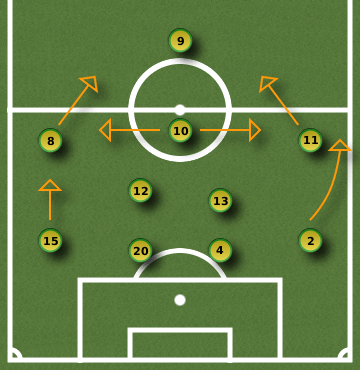
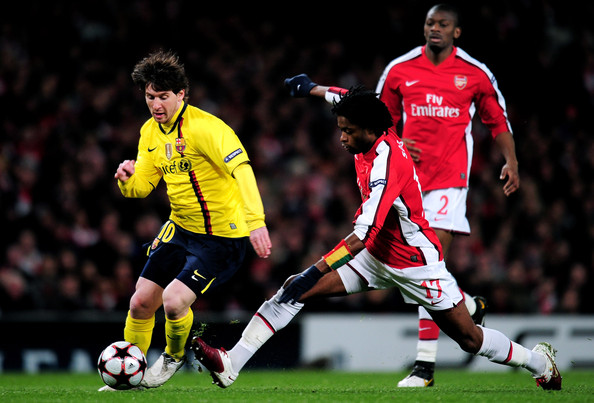
“Evolution never stops. As the World Cup showed, 4‑2‑3‑1 has come to replace 4‑4‑2 as the universal default (18 of the 32 teams played some form of 4‑2‑3‑1 at some stage, with another three fielding a 4‑4‑2 that perhaps should have become 4‑2‑3‑1) so the system at the very highest level has already begun to mutate. Spain, by the end of the World Cup, had followed what Barcelona did at times last season, what Arsenal seemed to be reaching towards, and set up in a 4‑2‑1‑3.” (Guardian)

Whatever happened to Senegal?

“Cast your mind back, if you will, eight years to the 2002 World Cup. It’s a sultry night in Seoul and France, defending champions and one of the hot favourites for the title, are facing Senegal, a country playing its first ever game in a World Cup finals. A momentary lapse in concentration sees Youri Djorkaeef loses possession on the half-way line and the Senegalese break with Omar Daf putting El-Hadji Diouf – a relatively unknown forward plying his trade for Lens – away down the left side. Diouf, balanced and composed, comes slightly in-field and reaches the by-line before cutting the ball back into the box.” (The Equaliser)

What does a central midfielder do in 2010?


“It’s this year’s must-have for any side looking to finish near the top of the Premier League: a player who prompts the question, ‘What does he do?’ This man is a central midfielder. He’s not a tackler, nor is he a creator. He doesn’t score many goals – in fact, he rarely looks to get into the box. So what does he do? It’s a question asked by Arsenal fans about Denilson. It’s a question by Manchester United fans, about Michael Carrick. And it’s not just the fans who ask. Britain’s most famous football pundit, Alan Hansen, has the same question about Jon Obi Mikel, who started the majority of games at the heart of Chelsea’s midfield as they won the Premier League lastseason. ‘What does John Obi Mikel do?’, asks Hansen. So there we have it. The best three teams in one of the world’s best leagues all field a player in the centre of their team who apparently has no specific purpose.” (Zonal Marking)

Is the sweeper set for a return to prominence?


Matthias Sammer
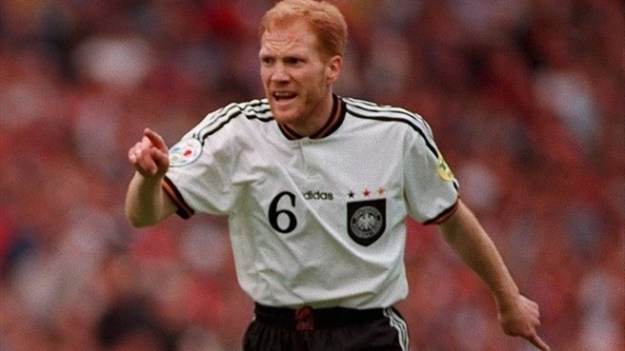
“Jonathan Wilson recently wrote in his excellent ‘The Question’ series about the possibility of the return of the sweeper to football. The sweeper prospered as the ’spare man’ in a three-man central defence up against a two-man attack, so now we have two-man central defences up against one-man attacks, should one centre-back not become a sweeper?” (Zonal Marking)

Could the sweeper be on his way back?
“The history of tactics is the history of the manipulation of space. Space is created – or emerges – for one player, and he begins to have a disproportionate influence on the game. Then a way is found to block him, and in turn space will appear somewhere else on the pitch.” (Guardian – 22 September 2009)

Time to Introduce Technology to Football?

“The debate about the implementation of the various technologies in football such as the Hawkeye system used in tennis to determine whether the tennis ball falls into or outside of the court has been raging for quite some-time. It has died down in recent times due to the persistent unwillingness of FIFA, the world’s football governing body to implement such technologies in football.” (Beopedia)

Spartak Moscow 0-1 Rubin Kazan: Rubin’s early strike and brilliant defence gets them the win

“You thought football had stopped for a month, didn’t you? Well, not in the Russian Premier League, which has restarted after a brief break over the World Cup. This match between Spartak and Rubin is something of a glamour tie – 2nd v 1st from last season, and these two clubs have therefore both qualified for the group stages of the 2010/11 Champions League.” (Zonal Marking)

The Horlicks That Is The Current Offside Law


Offside (association football)
“It’s a couple of months old now, but my attention was recently directed to this article by The Guardian’s Jonathan Wilson, eulogising the current offside law, or more to the point the current interpretation of it. Before I get down to the serious business of slagging it off let me acknowledge: it’s an interesting article, and most of Wilson’s historical analysis is probably fair. In particular, I agree with him on the benefit of the changes in the mid-90s when the interpretation of “interfering with play” was relaxed. These changes addressed that part of the issue to most peoples’ satisfaction, as well as stressing that benefit of the doubt should go to attackers, but still failed to relieve all the frustration that all football fans have with offside decisions much of the time. Wilson is right in noting that something further was required, but goes badly wrong in his analysis of what the actual problem was and thus ends up applauding a cackhanded solution.” (twohundredpercent)

The Question: Why is the modern offside law a work of genius?
“Nothing in football is so traduced as the offside law. Most seem to regard it as a piece of killjoy legislation, designed almost to prevent football producing too many goals and being too much fun, while for the punditocracy it has become the universal scapegoat, the thing that ‘nobody understands’. Just because Garth Crooks doesn’t get something, though, doesn’t make it a bad thing. The modern offside law may be the best thing that’s ever happened to football, and it is almost certainly the reason Barcelona have been so successful with a fleet of players whose obvious asset is their technique rather than their physique.” (Guardian – 13 April 2010 )

World Cup Technical Ecstasy

“Now that you know what Martin Samuel and Alan Shearer think, you might not be interested in any more expert views on the recently-finished World Cup. But amid the small print on the ‘past World Cups’ page of FIFA’s website is a link to a series of documents which provide a more fascinating insight into past tournaments than the title ‘Technical Study Group Report’ suggests. These reports were first commissioned after the 1966 finals in England, when national team coaches from the 16 finalists were interviewed to gauge their views on competition preparation and tactics.” (twohundredpercent)

The W-W formation: the future?!

“It is hard to envisage how formations will evolve in response to the current formational hegemony 4-2-3-1. It is an adaptable format which matches up well against other approaches. Two defensive midfielders provide a shield for the back four, which allows the full-backs to advance. The attacking midfielder has the freedom in behind the centre-forward to influence forward play without being mired in the opposition’s central defence – and they also prevent the team from being outnumbered in midfield.” (World Cup College)

The final analysis, part four: second half changes on the flanks

“As the game wore on, Arjen Robben took up even more advanced and central positions when Holland had the ball. Indeed, the shot below sees Robben (green) about to race through for his one-on-one with Iker Casillas, and the Spain defence temporarily looks like a back three up against two strikers, with two man-markers and Gerard Pique (yellow) as the sweeper.” (Zonal Marking)

World Cup scouting: The 32 – Conclusions


Antonio Di Natale
“Starting with Nicolás Lodeiro back in December last year, Football Further selected 32 players to watch out for at the 2010 World Cup and then tracked their progress through the tournament via weekly scouting reports. Below is a full compilation of those reports, along with conclusions (and marks out of 10) on how each player performed.” (Football Further)

The final analysis, part three: brilliant Busquets

“As is customary after a Spain or Barcelona success, the performance of Sergio Busquets (two La Ligas, a Champions League and a World Cup after two seasons of professional football) has largely been ignored. In the World Cup final he was one of the key players for Spain – keeping Wesley Sneijder quiet, providing his usual solid, reliable passing from a deep midfield position, and dropping between his centre-backs to turn Spain’s 4-2-3-1 into something more like a 3-3-3-1 or 3-4-3 when in possession.” (Zonal Marking)

The final analysis, part two: different ways of dealing with wingers

“Giovanni van Bronckhorst’s lack of pace was cited as a potential weakness before every Holland game, and the Dutch captain seemed to acknowledge his weakness in that respect. Therefore, he made sure to stick tight to whichever winger he came up against. Here, Pedro comes very deep to get the ball, and van Bronckhorst tracks him all the way.” (Zonal Marking)

World Cup 2010: A tactical review


Marcello Bielsa
“At the dawn of the tournament Football Further posed ten tactical questions that the World Cup would answer. Three days after Spain’s tense extra-time victory over the Netherlands in the final, the answers to those questions reflect a tournament in which defensive rigour was overwhelmingly de riguer and tactical innovation conspicious by its rarity.” (Football Further)

The final analysis, part one: the basic shapes, and pressing

“Here is Holland’s basic shape when they have the ball with their goalkeeper, Maarten Stekelenburg. This shows their defence (red), their holding midfielders (yellow), the attacking band of three (green) and the striker (blue). Note how wide their side is, starting from the centre-backs. Another interesting feature is how much more advanced Mark van Bommel (the right of the holding midfielders) is compared to Nigel de Jong.” (Zonal Minute)

The Question: What next for 4-4-2?


“This was a bad World Cup for a lot of old favourites – anybody who appeared on the Nike ad, Marcello Lippi, preconceptions about Africa – but none of them had quite such a miserable tournament as 4-4-2. When even its old friend Michael Owen starts doubting it, the future for the formation that has ruled British football for 40 years looks bleak. Johan Cruyff got stuck in as well last week – not particularly surprisingly given his lifelong ideological insistence on 4-3-3 – pointing out that ‘the numbers don’t match up’ and explaining that a system of three straight bands doesn’t lend itself to the creation of passing triangles.” (Guardian)

Spain 1-0 Holland: Iniesta settles a tight game


“Spain are the World Champions. They were the better side and played a more positive, cohesive brand of football throughout. There were no surprises when the team line-ups were announced just over an hour before kick-off, they were as predicted in the preview. Vicente del Bosque kept with the side that beat Germany in the semi-final, meaning Pedro Rodriguez started ahead of Fernando Torres. Holland, meanwhile, welcomed back Gregory van der Wiel and Nigel de Jong from suspension, meaning they returned to their first choice XI – as evidenced by them lining up with the numbers 1-11.” (Zonal Marking)

The 2010 World Cup Final: Netherlands 0-1

“It’s a curious sight. The BBC’s panel is sitting, for the first time in this tournament suited and booted, in its base studio outside the Green Point Stadium in Cape Town, almost eight hundred miles from Johannesberg, where the match itself is being played. It looks deserted, behind them. It probably is – everybody will be at home, watching the build-up to the 2010 World Cup final. Still, at least they won’t have anybody banging on the glass behind them and laughing at Alan Shearer’s male pattern baldness. The preamble to this match carries a somewhat curiously dislocated air to it. The Netherlands have never played Spain in either the European Championship or World Cup finals, so there is no historical precedent between the two teams that can particularly drawn upon, no matter how irrelevant it may be.” (twohundredpercent)

Holland v Spain: tactical preview

“So here we are, the biggest game in football. A clash of the two most successful sides in World Cup history to have never won the trophy itself, it is tactically fascinating in a historical sense. Taking into account both the qualifiers and the six World Cup games itself, Holland are P14 W14, Spain are P16 W15 L1.” (Zonal Marking)

Ballet of Frost


“Someone wrote on Twitter yesterday that “Is Spain boring?” is the new “Will soccer ever make it in America?” And yes, it is, in the same way that it’s the new “Can Lampard and Gerrard play in the same midfield?” and possibly the new “Can Asians think?” It wants a word, nevertheless, if only because Spain-Germany was so divisive; and because this is the World Cup final, and a bubble of resentment against the pre-tournament favorites and anointed Best Team on Earth is one of the conditions in which history’s about to happen.” (Run of Play)

Uruguay 2 – 3 Germany

“In pouring rain on a ragged field, Germany and Uruguay staged a match entertaining enough to be for the World Cup title. Too bad it was only for third place. Sami Khedira scored in the 82nd minute to give Germany a 3-2 victory and third place for the second straight World Cup. But the Germans had to survive a final-second free kick by Uruguay star striker Diego Forlan from just outside the penalty area. It ricocheted off the crossbar, and the whistle sounded.” (ESPN)

World Cup 2010: Germany 3-2 Uruguay
“‘Let’s make this a celebration,’ intones ITV commentator Peter Drury, before kick-off, and millions of people, all at once, think, ‘yeah, lose your voice.’ Uruguay’s national anthem is what Billy Connolly had in mind all those years ago when he suggested replacing ‘God Save the Queen’ with the theme tune to ‘The Archers.’ It’s one of the things from this World Cup that I’ll remember, and I’ll miss it now it’s gone, for four years at least. La Celeste are wearing blue shorts for no obvious reason – Germany are in their change kit equally inexplicably, have Wednesday’s shirts not come back from the laundry? – and they look more like Coventry City with each misplaced pass.” (twohundredpercent)

Uruguay 2-3 Germany – Video Highlights, Recap, Match Stats – World Cup – 10 July 2010
“Germany once again would play in the World Cup third place match as they faced South American side Uruguay. It was a disappointing result for Germany to lose in the semifinals while Uruguay have exceeded expectations and had a great World Cup.” (The 90th Minute)

The Name of the Game

“Do Americans hate football? Not regular football, of course. Not football as in first and ten, going long, late hits, special teams, pneumatic cheerleaders in abbreviated costumes, serial brain concussions—the game that every American loves, apart from a few, uh, soreheads. Not that one. The other one. The one whose basic principle of play is the kicking of a ball by a foot. The one that the rest of the world calls ‘football,’ except when it’s called (for example) futbal, futball, fútbol, futebol, fotball, fótbolti, fußball, or (as in Finland) jalkapallo, which translates literally as ‘football.’ That one.” (New Yorker)

The Question: What have been the tactical lessons of World Cup 2010?

“This has been the tournament of 4-2-3-1. The move has been apparent in club football for some time; in fact, it may be that 4-2-3-1 is beginning to be supplanted by variants of 4-3-3 at club level, but international football these days lags behind the club game, and this tournament has confirmed the trend that began to emerge at Euro 2008. Even Michael Owen seems to have noticed, which is surely the tipping point.” (Guardian)

German counterattack negated by Spain’s dominant possession

“So in the end, Germany came up against a team that could defend, and the great counterattackers were exposed in a 1-0 loss to Spain in the World Cup semifinals on Wednesday. Without an early goal to protect, without opponents that poured forward and left spaces behind them, the Germans were left bereft, and as they chased a goal in the final stages, it became clear just how limited they are as a creative force.” (SI)

Spain 1-0 Germany: Pressing, passing and Puyol


Carles Puyol “A narrow but deserved victory for Spain, who simply carried out their gameplan more effectively than their opponents. There were two issues to be decided with the starting line-ups. Joachim Loew chose Piotr Trochowski ahead of Toni Kroos to replace Thomas Mueller, whilst Vicente del Bosque finally dropped Fernando Torres, opting for Barcelona’s wide forward Pedro instead.” (Zonal Minute)

Sporting Justice? Applying rules from elsewhere to Suarez’s handball

“Lampard’s shot, Tevez’s offside goal, Luis Suarez’s ‘Hand of Sod’. For those who believe football’s rules are in need of an overhaul then this World Cup has provided plenty of ammunition to take to FIFA’s headquarters in Zürich. A game that promotes incompetence from officials (Lampard, Tevez) or encourages the use of cheating (Suarez) would seem ripe for overhaul and rugby would appear to offer the most immediate solutions.” (Pitch Invasion)

Puyol’s header enough to advance Spain to first World Cup final


“Spain outplayed Germany yet again. And now the Spanish have the biggest prize of all within their sights. Spain will play for the World Cup title for the very first time, thanks to Carles Puyol’s goal on a powerful header in the second half Wednesday night. The 1-0 victory over Germany was a repeat of the teams’ meeting in the European Championship final two years ago, which gave Spain its first major title in 44 years.” (ESPN)

World Cup 2010: Germany 0-1 Spain
“Two years is not a long time in football, especially when you consider that national sides evolve, certainly more than club sides. In that respect, you would have expected quite a few rematches from European Championship finals happening in subsequent World Cups. However, of the twenty-six finalists in the first thirteen European Championships, six of them have failed to qualify (including Czecholslovakia Denmark and Greece, who were European Championships), and three others have failed to get out of the group stages.” (twohundredpercent)

Germany 0-1 Spain – Video Highlights, Recap, and Match Stats – World Cup – 7 July 2010
“Germany faced Spain with a spot in the 2010 FIFA World Cup finals on the line. The winner would face the Netherlands in the final on Sunday while the loser would play Uruguay in the third place match on Saturday.” (The 90th Minute)

Against the Underdog

“During the quarterfinal between Uruguay and Ghana, maybe a little bit before it started, I had a somewhat startling realization. I didn’t care if Ghana won. I was aware that I should want Ghana to win, and that was fine, but it didn’t really resonate with me emotionally. In the next day’s match between Spain and Paraguay, I could sense a very real antipathy towards the Albirroja. As if they were somehow disturbing the natural order of things by holding Spain goalless for the balance of the match. This has led me to believe that, horror of horrors, I don’t really like an underdog.” (Run of Play)

Germany v Spain: tactical preview

“The pre-tournament favourites versus the most impressive team in the competition so far. A repeat of the 2008 European Championships final it may be, but this is completely different contest. For a start, David Villa and Mesut Ozil – the two star men – were not involved two years ago. Of the Germans, only Miroslav Klose, Per Mertesacker and Lukas Podolski remain in the same positions from that final, whilst Spain will start with a different formation to in 2008, even the side contains a number of the same players.” (Zonal Marking)

Holland 3-2 Uruguay: fortune favours the brave

“Holland progress – they shaded the contest, and took the initiative to try and win the game by throwing on an extra attacking player at half-time. Both teams named the expected starting XIs, and both set out broadly as predicted in the preview. Uruguay’s midfield was a cross between a standard four-man system and a diamond, with Walter Gargano playing much further up the pitch than we are used to seeing him. Alvaro Pereira stayed wide, whilst Diego Perez played a reserved role on the right.” (Zonal Marking)

Uruguay 2 – 3 Netherlands


Cape Town
“Arjen Robben emerged from the bottom of an Oranje mosh pit, mud on his brow and a smile on his face. For good measure, he threw kisses at his teammates and fans. His goal gave the Netherlands a 3-2 victory over Uruguay and a spot in the World Cup final. Now that’s a Dutch treat!” (ESPN)

Uruguay 2-3 Netherlands – Video Highlights, Recap, Match Stats – World Cup – 6 July 2010
“The first semifinal of the 2010 FIFA World Cup took place on Tuesday, July 6, 2010 with the Netherlands taking on Uruguay. The Dutch would be favored in the match but Uruguay have had one of the best players in the World Cup, Diego Forlan.” (The 90th Minute)

World Cup 2010: Uruguay 2-3 Netherlands
“At times they looked like making heavy weather of it, particularly in the last couple of minutes of stoppage time. Indeed, for the first twenty minutes of the second half it looked as if both teams playing in this World Cup semi-final were going to sleepwalk their way into extra-time, but eventually the Netherlands out-muscled Uruguay to book themselves a place in the World Cup final for the first time since disco was in vogue. The question now is whether they will be set up for a Central European derby match against their biggest rivals, Germany, or a match against the World Cup semi-final debutants, Spain.” (twohundredpercent)

Holland v Uruguay: tactical preview

“Holland have so far used the same 4-2-3-1 shape in every game, whilst Uruguay have used at least three different formations. Oscar Tabarez is the man with more dilemmas ahead of this contest. So how will he approach this one? Firstly, we must note that he is without two players who would have started. Luis Suarez will be absent after his handball against Ghana, whilst Jorge Fucile, the left-back who has had an excellent tournament, is also suspended. Tabarez has again named his side a day before kick-off – but with slight injury doubts over a couple of key players, there could be late changes.” (Zonal Marking)

Tackling The Absurd Ascent Of The Manager

“With The Manager: The Absurd Ascent of the Most Important Man in Football, Barney Ronay has put together what should be a very interesting book on the evolution of the role of the manager in football. Well, English football anyway: Johnny Foreigner doesn’t really get a look-in unless he’s followed Arsene Wenger and washed up on England’s shores. However, because there is so much interesting material here, the monocultural perspective is disappointing, but ultimately forgivable.” (Pitch Invasion)

The Currents of History: What does it take to win the World Cup?


Giovanni Battista Di Jacopo, Pieta
“‘What does it take to win the World Cup?’ asked Henry D Fetter of The Atlantic a couple of days ago, in a post called ‘What It Takes To Win The World Cup’.” (Pitch Invasion)

Özil the German
“No player has fascinated me more at the World Cup than Mesut Özil. He has the languid self-assurance on the ball that comes only to the greatest footballers. Where others are hurried, he has time. He conjures space with a shrug. His left foot can, with equal ease, caress a pass or unleash a shot.” (NYT)

Tap-in and Taboo
“If this happens, what will people say about Bryan Thomas (on Twitter, in newspapers, on comment threads)? Will anyone say that he has violated the ethics of the game, that he deserves further punishment? Will anyone argue that the rules of the game need to be changed so that teams cannot benefit from committing a penalty? I suspect, rather, that Thomas will be generally credited with a very smart play. How is what Luis Suárez did at the end of yesterday’s match against Ghana any different?” (Run of Play)

when i get older
“Brian at the Run of Play did a very good job crushing the idea floated in The Atlantic that countries with an authoritarian history play more winning football. The idea memed, nonetheless. (Shocked that highbrow soccer dorks — my favourite phrase this World Cup, used by TNR Goalpost to describe their ideal reader base) appear not to check RoP before coffee.) Laughable, snobbish solipsism — it’s not just for FIFA anymore, kids.” (Treasons, Statagems & Spoils)

Time Can Do So Much
“What I want to know is whether we’ll remember any of this in ten years, or if we’ll look back on it as the mass blackout during which we all wrote mystic texts. I can’t remember two more deranged or thrilling days of soccer, or four more shocking games, in any recent tournament, and Euro 2008 made me compare Aphrodite to a Toyota Prius. It was all the more stunning because it came out of nowhere—that’s not to say this World Cup had been boring, but it had rolled along at a pretty regular tempo and, apart from a few moments of madness and bliss, within a fairly livable emotional band.” (Run of Play)
Spain 1-0 Paraguay: Spain squeeze out a result again

“A familiar story for Spain. Good ball retention, a struggle until Torres departs, and Villa saves the day, scoring in a 1-0 win. That could quite easily be a description of their previous game, against Portugal. Spain lined up with their usual lopsided 4-2-3-1 formation and the expected XI, whilst Paraguay made six – yes, six – changes to the side that scraped through against Japan in the previous round.” (Zonal Marking)