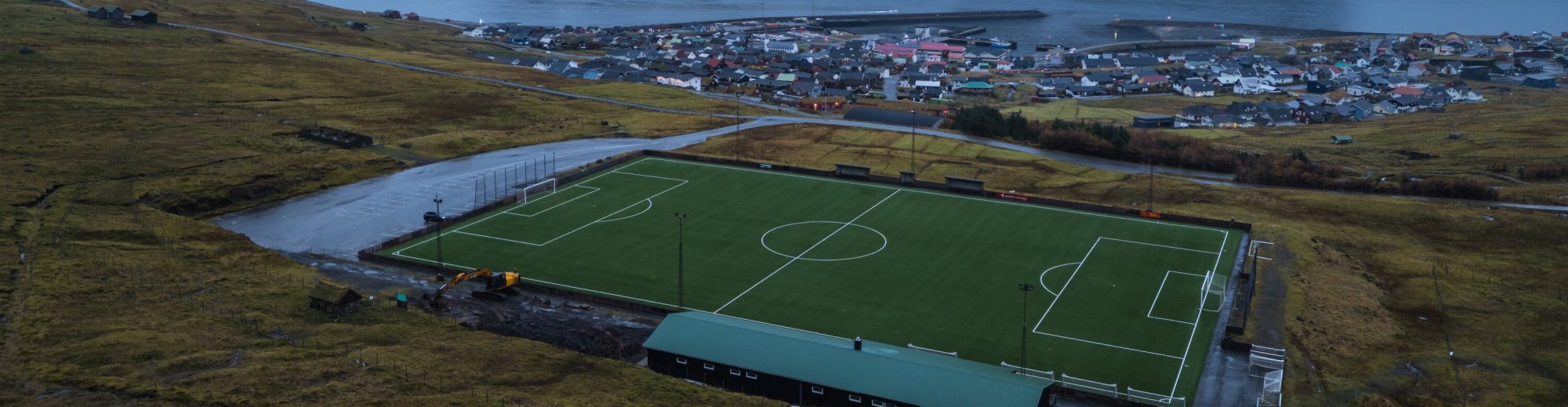
“At around 20.45 local time on 12th October 2002 a power failure at the Mikheil Meskhi stadium in Tbilisi plunged Georgia’s Euro 2004 qualifying match against Russia into darkness. It wasn’t to be the last time that an energy shortage in the Caucasus would cause a blackout in the relationship between these two bitter rivals. Captaining Georgia that night was AC Milan defender Kakha Kaladze, the young republic’s most famous footballing export, but even the defensive barricade that would go on to collect a Champions League winners medal barely three years later was powerless to intercede as he and his teammates waited with uncertainty in the Tbilisi darkness.” World Soccer
Tag Archives: Europe
Football violence: a view from around the world

Spartak Moscow fans displaying a Nazi flag during a game at Shinnik Yaroslavl.
“Brazil: violence around games on the rise. Brazil ends 2013 with a record in football violence deaths. It was a miracle that nobody died in the festival of thuggery that took place on 8 December at the Atlético Paranaense v Vasco de Gama match in Joinville, during the last round of the Campeonato Brasileiro, whose shocking images were beamed all around the world. That, however, did not prevent Brazilian football finishing its 2013 season with the saddest of milestones: the 30 deaths in football-related incidents this year is the highest number in the history of the game in the country. What’s more worrying is that fatal cases have been rising steadily in the past few years. …” Guardian
World Cup – and outbreak of supporter violence – link Brazil and Russia
“In six months’ time the World Cup will land in the home of joga bonito clad in a Fifa-approved wrapping of sun, sea and samba. But the dark side of the beautiful game in Brazil was in evidence earlier this month, when images of running battles between fans of Atlético Paranaense and Vasco da Gama shocked the watching world. The game was being held at a neutral ground in Joinville due to previous clashes between fans of the two clubs, but within 10 minutes Globo was broadcasting close-up footage of supporters repeatedly stamping on the heads of their rivals and chasing one another around the stadium bowl. Following a long interregnum, the fighting was eventually broken up by armed security firing rubber bullets into the crowds and an army helicopter landing on the pitch, but not before several fans were seriously injured.” Guardian
Football in Belarus and a tale of false promise
“It’s easy to forget that the all-conquering magicians of Europe Bayern Munich began their romp to the continental crown last season as the victims of a remarkable conjuring act. A startling result, which saw the grand masters beaten 3-1 in the former Soviet province of Borisov by a team who had never before tasted victory at Europe’s top table, might for all the world have been an illusion mechanised by Belarusian champions BATE for the benefit and bemusement of the world’s press. Not so much a rabbit out of a hat as a tractor, the likes of which are produced at the Borisov Auto Electric plant from where the club draws its name, bursting from the toe of a delicately stitched Bavarian stocking.” World Soccer
Sheriff Tiraspol, the club at the heart of Europe’s forgotten conflict
“Had Tottenham Hotspur arrived in Moldova’s eastern city of Tiraspol for their recent Europa League fixture by road rather than by air they would have been greeted by an almost unique phenomenon in international diplomacy. Travelling from the Moldovan capital Chisinau to the city that homes league champions Sheriff requires visitors to cross perhaps the only international check-point in the world that brings you out in the same country that you thought you were leaving, at least in any legal sense. The Moldovan dispute with breakaway autonomous region Transnistria, sitting between the Dnistria river and the south-western tip of Ukraine, could well be described as Europe’s forgotten conflict – dormant since 1992 when a brief war over sovereignty that defined the immediate post-Soviet period fizzled out into a polite ceasefire.” World Soccer
Inside Meulensteen’s Time at Brøndby
“Meulensteen was appointed Anzhi coach yesterday to much surprise and fanfare. His last head coaching position was a fairly unsuccessful stint at Danish club Brøndby IF. We get to know a little more about Meulensteen as a head coach through his former player at Brøndby, Per Nielsen, from Nielsen’s recent autobiography. Per Nielsen played his first match for Brøndby IF in June 1993 and between his debut and 2008 he played 548, only eight less than Bjarne Jensen, who holds the club record for most matches played with 556. Nielsen played as a center defender. Per Nielsen has never played for any clubs other than Brøndby, where he won the Danish championship in 1996, 1997, 1998, 2002 and 2005 and the Danish cup in 1993, 1998, 2003, 2005 and 2008. He also played 10 matches for the Danish national team, earning his first cap in 2004.” Russian Football
England 3-6 Hungary: 60 years on from the game that stunned a nation

“Hungary’s 6-3 victory at Wembley 60 years ago resonates like no other in the history of English football. It wasn’t just that this was a first home defeat to non-British or Irish opposition, the magnitude of the scoreline or the brilliance of the Hungarian display: it was the sense of shock. Over the course of one game – one hour even, given Hungary pretty much eased off in the final third – the complacency and the insularity of the English game were exposed. After 25 November 1953, none of the old certainties were certain any more.” Guardian – Jonathan Wilson
England v Hungary 60 years on: What lessons have been learned?
“You can normally count on a Scotsman to cut to the chase when it comes to English football’s failings. After all, they have been pointing them out ever since 11 Englishmen went north on 30 November, 1872, for the first ever international match. That game ended 0-0, but the Scots would win nine of the first 13 matches between the teams, and 27 of the first 50. England would trail in the head-to-head series until 1983. Losing to more skilful opponents from a country called Scotland was not that shocking for most of English football’s history.” BBC
Yura Movsisyan: “Spartak fans are at a different level, just like the club”
“It’s been quite the year for Spartak forward, Yura Movsisyan. After making the move to Moscow last winter from another Russian club, FC Krasnodar, Movsisyan has bagged a pair of hat-tricks, scored 22 goals in 32 appearances, and emerged as one of the young guns on a rising Armenia side. Spartak, meanwhile, are 3rd in the league, just three points behind Zenit and Lokomotiv. Though he’ll miss the final two matches of 2013 due to knee surgery, the 26 year old was on fire all autumn, racking up eight goals in his final seven appearances, including strikes against Bulgaria and Italy in World Cup qualifying. After 17 league matches, he’s tied with Artem Dzyuba for top scorer on 12 goals. And assuming he’s fit when play resumes in March, Yura will be raring to help Spartak battle for the league crown after a 13-year drought.” Russian Football
Romania’s surprise chance to reach World Cup
” Reaching the play-offs – in which they will play Greece tonight – was always the best Romania could have expected from the 2014 World Cup qualification campaign. There was never any belief that the team could beat Holland to the top of the group, and with Turkey there too, most people were looking at third place as a reasonable ambition. However, Turkey’s terrible start meant that the group opened up, and Romania ended up just pipping Hungary and Turkey for second (an awfully long way behind Holland).” When Saturday Comes
Hungary’s continental woes

“This season was one to forget for the Hungarian clubs in European competitions. In 10 matches the 4 clubs of Honved, Videoton, Debrecen, and Gyor mustered only 3 wins and 1 draw. What’s makes this statistic even more disappointing is that the 3 wins came in the first round of the Europa League to teams that finished 3rd and 6th in the Montenegrin League. Stepping into the 2nd round saw both Debrecen and Honved lose at home in second leg matches to Stromgodset of Norway and Vojvodina of Serbia, respectively, by a combined score of 1-6. To bring the reality full circle, the Hungarian teams earned a coefficient score of 0.875 for their efforts in Europe this year. This is combined with previous years to determine the number of European spots available. …” SF Union
The Day The Giants Fell

“It began while much of Europe was still asleep, and indeed many Russians would have only been stirring in their beds when the first goal went in. Vasily Karmazinenko’s 28th minute goals for SKA-Energia Khabarovsk against Volga arrived just before 4.30am in the UK, and by the time the final whistle blew, British clocks were yet to strike six. Nevertheless, Volga were out of the Russian Cup. Karmazinenko grabbed a double was enough to see off the Nizhny Novgorod side 2-0, and before long they were joined on the cup scrapheap by ‘local’ rivals and an altogether much bigger side in Rubin. Tasked with the equally daunting prospect of a trip to the Far East to take of Luch-Energia Vladivostok, Kurban Berdyev’s men responded by falling a goal behind inside the first three minutes. Ruslan Mukhametshin responded after another ten minutes, but a devastating spell of ten minutes either side of the break saw the hosts breeze through into the next round with a 4-2 win. Things had only just begun.” Russian Football
Hope for Hungary? Domestic revival targeted by Prime Minister
“Football east of the Danube is becoming by reputation a cradle for something unsavoury in the European diplomatic stakes. The season, still in its infancy but maturing quickly in its propensity to shock, has brought a cloud over this part of the continent with ethnic tensions across four countries spilling onto the terraces and further contaminating some already poisonous relations. Lech Poznan were hit with a 5000 fine for racially aggravated chanting during their Europa League match with Zalgiris Vilnius in August whilst Budapest Honved were reprimanded for similar offences in Vojvodina. But whilst both episodes chimed with jingoistic thuggery – the UEFA disciplinary panel don’t get out of bed for anything less than the most brazen lashes of a chauvinistic tongue– there is a more insidious line that threads them together.” World Soccer
Ankara
“Recently, fresh from five days in Europe’s biggest metropolis, Istanbul, myself and my traveling companion decided to stop off in the Turkish capital Ankara for a couple of nights in advance of a plunge into deepest Anatolia. With floodlights punctuating the central skyline and flags and pennants emblazoned across shop and market stall windows, it was clear that this was yet another football-worshipping hotbed. Closer inspection, however, revealed the banners, as well as the numerous replica shirts on display to be the black & white, redcurrant & amber and blue & yellow of the Constantinople clubs. It was as I had expected of course – Ankara is a modern creation to place alongside the likes of Washington DC and Ottawa and if it lacks, at four million, the anodyne blandness of Brasilia or Canberra, it’s a town the charms of which take a while to reveal themselves.” In Bed With Maradona
From obscurity to the Champions League and back again: the FC Petržalka 1898 story
“FC Petržalka 1898; not a name synonymous with the footballing greats, but for a brief two year spell the club incredibly took its place alongside some of Europe’s finest. Since their formation in the late 19th century, FC Petržalka 1898 have changed their club name no fewer than 15 times, perhaps more akin to a struggling franchise club in the MLS rather than a football club steeped in a proud 115 year history of Czech and Slovak football.” World Soccer
The Question: do football formations tell the whole story?

“It is rare that a month goes by without somebody emailing me or tweeting me to point out that John Giles has said on television that it’s not the formation that matters but the players. Many seem to offer the line aggressively, as though the assertion somehow invalidates the notion of tactics in football. To draw that conclusion, though, is to misunderstand what tactics and formations are, to fall into the trap of thinking that players can somehow be separated from the tactical framework. Nobody ever played a game of football without both players and tactics. It’s simply not possible: as soon as there is more than one player, there is necessarily a relationship between them and, however little thought goes into that, that is tactical. But that doesn’t mean, as some appear to think, that the formation outweighs the players whose distribution it describes.” Guardian – Jonathan Wilson
UEFA charges CSKA Moscow over Yaya Toure’s racism claims

“UEFA has opened disciplinary proceedings against CSKA Moscow after Manchester City’s Yaya Toure claimed he was abused by monkey chants from the stands in Wednesday’s European Champions League encounter with the Russian club. The Ivorian made his concerns known to the referee and said he was ‘furious’ after the Group D game at the Arena Khimki, which City won 2-1. But CSKA released a statement on its website denying there was any racist chanting and told CNN that UEFA’s match delegate wasn’t aware of any either. European football’s governing body UEFA told CNN it had no official comment to make on CSKA’s claim.” CNN (Video)
Ronaldo-Ibrahimovic, Croatia-Iceland headline UEFA World Cup qualifying playoffs
“Cristiano Ronaldo and Zlatan Ibrahimović will command the spotlight they crave in next month’s European World Cup qualifying playoffs as Portugal and Sweden face off in the most intriguing of the four two-leg matchups. UEFA conducted the draw for the final phase of qualifying early Monday in Zurich. The big winner was Croatia, which will be heavily favored to defeat surprising Iceland. Portugal, the highest-ranked (14th) of the eight participating teams (all runners-up from the group phase), can breathe a sigh of relief that it avoided France. But Sweden is no slouch and gave powerhouse Germany all it could handle during group play. Monday’s draw ensures that at least one quality team, and one big-name player, will miss out on Brazil.” SI
16 Stars Who Took Russia to the World Cup
“1) Igor Akinfeev, Goalkeeper. Overlooked by Dick Advocaat at Euro 2012′ in favor of Vyacheslav Malafeev, the CSKA captain started every single qualifying game under Fabio Capello. He only conceded five goals during the campaign and broke the record for the longest clean sheet kept by a Russian goalkeeper in competitive matches. 2) Aleksandr Kerzhakov, Forward. Zenit’s Kerzhakov is always the main man up front for Don Capello. Whenever he is in form and scoring, Russia will always benefit with victories. His vital goal against Portugal at Luzhniki was the highlight, and the forward took part in all ten games for the team, scoring five goals along the way. …” RUSSIAN FOOTBALL NEWS
World Cup qualifiers: Romelu Lukaku sends Belgium to Brazil

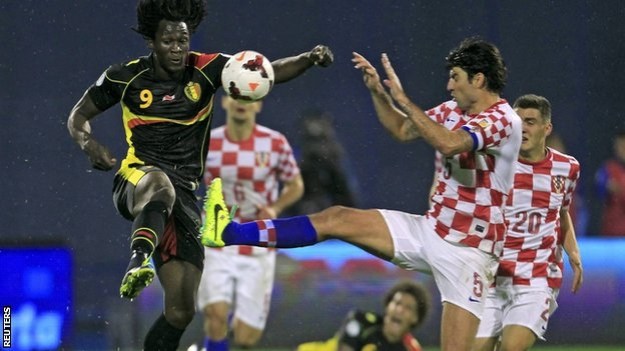
“Romelu Lukaku scored twice as Belgium beat Croatia 2-1 to secure their place at the 2014 World Cup in Brazil. Striker Lukaku, on loan at Everton from Premier League rivals Chelsea, scored twice in the first half, with Niko Kranjcar grabbing a late consolation. Belgium were joined by Germany and Switzerland in qualifying for next year’s tournament. Germany defeated the Republic of Ireland 3-0, while Switzerland won 2-1 in Albania.” BBC
Manchester United must be wary of Shakhtar Donetsk’s boys from Brazil
“Shakhtar Donetsk should win the championship this season, but it says something for the changes in the Ukrainian league that the verb is ‘should’ rather than ‘will’. The shakiness of Manchester United’s start to the campaign may be more obvious – while United lie 12th in the Premier League table, Shakhtar are third in the Premier Liha – but this has been a sobering couple of months for Mircea Lucescu’s side.” Guardian – Jonathan Wilson
Yellow Dog: Croatia’s First Superstar

“These are the words of Bernard ‘Bajdo’ Vukas – which can be seen engraved upon his tombstone – whose name is equally revered by those who never saw him play just as much as by those that did. Born on May 1st 1927 in the Trešnjevci district of Zagreb, in what was then the Kingdom of Yugoslavia, Vukas’ early life saw him eventually grow up to be a Dinamo Zagreb supporter. This was in no small part down to the intervention of his father, Vinko, who it is said, took his belt to his 10-year-old ‘fakin’ or ‘urchin’ son for daring to follow Partizan Belgrade instead.” In Bed With Maradona (Video)
Bulgarian football receives a windfall but not everyone will benefit
“‘Someone rears their head and twenty others go to press the lid’ goes the Bulgarian jibe, echoed earlier this month by Levski Sofia director Nasko Sirakov. Perhaps it’s a cloud from the Soviet age that still hangs in the air, inspiring disapproval and distrust amongst the common stock whenever anyone breaks from the pack and seeks to bargain on their own terms.” World Soccer
Bosnia’s ethnic tensions give birth to new rivalry
“Contemporary recollections of Mostar almost always surround the Stari Most, the 16th century Ottoman Bridge located in present day Bosnia and Herzegovina. Standing towering for over 427 years until it was destroyed in 1993 by the Bosnian Croats the scenic bridge was reopened again in 2004. It stands today as a reminder of the Balkan conflict yet remains one of the former Yugoslavia’s foremost tourist attractions.” World Soccer
Bernard ‘Bajdo’ Vukas, a legend in Croatia
“These are the words of Bernard ‘Bajdo’ Vukas – which can be seen engraved upon his tombstone – whose name is equally revered by those who never saw him play just as much as by those that did. Born on May 1st 1927 in the Trešnjevci district of Zagreb, in what was then the Kingdom of Yugoslavia, Vukas’ early life saw him eventually grow up to be a Dinamo Zagreb supporter. This was in no small part down to the intervention of his father, Vinko, who it is said, took his belt to his 10-year-old ‘fakin’ or ‘urchin’ son for daring to follow Partizan Belgrade instead.” World Soccer
HSK Zrinjski and the Eviction Of Velez

“Contemporary recollections of Mostar almost always surround the Stari Most, the 16th century Ottoman Bridge located in present day Bosnia and Herzegovina. Standing towering for over 427 years until it was destroyed in 1993 by the Bosnian Croats the scenic bridge was reopened again in 2004. It stands today as a reminder of the Balkan conflict yet remains one of the former Yugoslavia’s foremost tourist attractions. Across in the north western reaches of Mostar there stands another building less famous but equally symbolic of the tragic Balkan conflict. Built in 1971 the Bijeli Brijeg Stadium was until 1992 the home territory of Velež Mostar. Alongside the Maksimir in Zagreb and the Marakana home of Red Star it was recognised as one of the ‘hottest’ grounds in the former Yugoslav First League. Venue for some special nights in Yugoslav domestic football, the stadium also witnessed UEFA Cup competition including wins for Velez against the likes of Derby County, APOEL, Belenenses and Spartak Moscow.” In Bed With Maradona
Real Sociedad 0-2 Shakhtar Donetsk: Sociedad start excellently but Shakhtar more ruthless
“Alex Teixeira was barely noticeable for long periods – but struck twice to give Shakhtar three crucial points in a tough group. Jagoba Arrasate named Haris Seferovic upfront having used Carlos Vela there at the weekend. The Mexican returned to the right flank, while Imanol Agirretxe – first-choice centre-forward last season – wasn’t yet fit enough to start, but was on the bench. Ruben Pardo and Marek Bergara returned having been rested at the weekend. Shakhtar are wobbling in the league – three games without a win, having won their opening six. Mircea Lucescu rested his full-backs at the weekend, but named his expected XI here – Tomas Hubschman returned to the side having suffered from сonjunctivitis in recent weeks. Real Sociedad dominated early on thanks to their energetic pressing, but failed to take advantage of their dominance.” Zonal Marking
Leonid Slutsky – CSKA’s solution?
“Connor O’Neil and Xavier Leonovitch discuss CSKA’s chances in the Champions League this year and Leonid Slutsky’s role as CSKA manager: As we know, CSKA face reigning champions Bayern Munich, as well as Manchester City and Viktoria Plzen in their Champions League group. There are many questions about Leonid Slutsky’s ability as CSKA coach – can he lead his team to the round of 16? It’s a rather paradoxical question to ask when we examine Leonid Slutsky’s résumé since he took over CSKA Moscow in 2009…” Russian Football News
Mykhaylo Fomenko’s forward thinking gives Ukraine hope for the future

“For a long time football in Ukraine has been backward looking but that is beginning to change at last. For the first decade after Soviet fragmentation everything revolved round Valeriy Lobanovskyi and for the decade after his death everything revolved round Andriy Shevchenko, whom Lobanovskyi had hailed as being closest to his ideal of the ‘universal player’ and who revered the Colonel and his ideas. Lobanovskyi’s genius had been to keep evolving. He stayed at the top of the game for 35 years because of his ability to adapt but his legacy was stasis. Everything came back to his way of doing things; his philosophy became a religion that had to be obeyed.”
Guardian – Jonathan Wilson
Mykhaylo Fomenko reignites Ukraine’s World Cup qualifying campaign
“Out of chaos has come hope. When Oleh Blokhin quit as national coach of Ukraine after the 1-1 draw against England at Wembley to take charge of Dynamo Kyiv, there were three schools of thought. One thought it an outrage that anybody should abandon what was perceived as a patriotic duty; one accepted that, having spent 17 years as a player at Dynamo, the emotional pull was too strong to resist; the other breathed a sigh of relief at the deposition of a cranky and authoritarian manager whose teams had played crabby, bad-tempered football. As Dynamo’s slow decline continues – they lie sixth in the table after eight games and, as Metalist Kharkiv and Dnipro Dnipropetrovsk grow, are arguably not even Ukraine’s second side (after Shakhtar Donetsk) any longer – it is the third school that seems most reasonable.” Guardian – Jonathan Wilson
Roy Hodgson and England keen to make a point in Ukraine
“Ever since he unwisely admitted to thoroughly enjoying the dull scoreless draw between Manchester United and Chelsea last month, Roy Hodgson has been castigated for his innate conservatism. The England manager sets his sides up not to be beaten, it has been said, values a draw almost as much as a win and rarely attacks with sufficient aggression to deliver a knockout.” Guardian
Rubin Are On the Rise
“Seven games into the Russian Football League season and Rubin Kazan are unbeaten. Sounds good right? But the reality is that it’s not as bright as it seems early on. While it’s nice to see a goose egg in the loss column, Rubin only have two wins from those seven games meaning they’re already playing catch up to league leaders CSKA Moscow. Perhaps the saving grace for Rubin is that the league is so tight this year. Rubin sit seventh in the standings, but they only trail CSKA by six points. There’s certainly time for Rubin to make their way up the standings and secure European football again next year, but they better get moving soon.” Russian Football News
Make or break for World Cup hopefuls
“Scheduling pressure on international football from disgruntled clubs has one big positive for fans; the increasing presence of exciting and meaningful double-headers in the space of five days. This week’s raft of World Cup qualification doubles will go some way to deciding the line-up for Brazil next summer, with some new names on the brink of a first participation and some established ones facing the hour where it’s put up or shut up. Here are some of the major plot lines to look out for over the coming days.” ESPN (Video)
Which two crucial World Cup qualifiers do we need to keep an eye out for?
“AFC Fifth Round – Jordan v Uzbekistan. They don’t get much bigger than this. Whoever comes out on top over the two legs will lock horns with the fifth-placed team from CONMEBOL’s World Cup qualifying tournament (who as it stands is Uruguay on goal difference) in the intercontinental play-offs. Both Jordan and Uzbekistan finished third in their respective groups in the fourth round thus play each other now. … CAF Second Round – Cameroon v Libya. All World Cup qualifying is grueling but no more so than in Africa. At the beginning of proceedings, over 50 teams battle it out for just five World Cup spots. The second round sees 10 groups. To proceed to the next and final round you must top your respective group which is no mean feat. Ivory Coast, Egypt and Algeria have already secured their place in the third round.” Think Football
Riddled with injuries, England faces two decisive World Cup qualifiers
“Sunday was a grim day for Roy Hodgson. It started badly as the England manager was denied a seat in the directors box at Anfield, seemingly because there were too many sponsors who had to be accommodated. Hodgson initially had to take his place in a section of seats usually reserved for scouts. The day got worse as confirmation came that Wayne Rooney will miss the upcoming World Cup qualifiers with a head injury, and it deteriorated further as Phil Jones and Glen Johnson were forced out of Liverpool’s win over Manchester United with injuries, Daniel Sturridge suffered a groin strain and Jack Wilshere, battling stomach cramps, had to come off before halftime in Arsenal’s victory over Tottenham Hotspur.” SI – Jonathan Wilson
Savo Milosevic: a hero and a Villain
“There aren’t many bandanas around Birmingham these days but in the summer of 1995 they were all the rage. Aston Villa, their supporters dizzied by the rollercoaster journey already shaping their existence in the new Premier League, had broken their transfer record to bring in one of their most exotic, most mysterious signings yet.” World Soccer
Coping with Caspian winds of change: How are Anzhi Makhachkala evolving this season?
“When Suleyman Kerimov took over Anzhi in January 2011, there was little immediate interest from the wider footballing world. When Brazilian legend Roberto Carlos made his way to the Makhachkala club just a month later, the deal made the sports pages in a number of nations, but largely for the same reasons – Carlos was long past his best, looking for one last pay-day, and abuse received at Corinthians was the perfect excuse for him to move to Russia for comfortable semi-retirement.” Think Football
Dynamo Moscow Season Preview

Dan Petrescu
“From occupying the bottom of the table to nearly finishing 3rd, Dynamo Moscow had one of last season’s biggest comebacks. The introduction of Dan Petrescu as manager led to a series of impressive results, including a whopping 5-1 win over Spartak in the oldest Russian derby and a 14-match unbeaten run. The former ended in the sacking of Unai Emery as Spartak manager. The latter ended in a humiliating 1-0 loss for the Muscovites to the later-relegated Alania. The team disappointed at the end of the season, their scoreless draw against Volga leaving them short of a Europa League spot.” Russian Football News
Anzhi chaos could send Samuel Eto’o falling into José Mourinho’s arms
“There were two big stories in Belarus in the last week of July. On the plus side, their premier, Alexander Lukashenko caught a catfish bigger than the pike Vladimir Putin had landed in Siberia a few days earlier. More difficult to comprehend, though, was the news that Uralkali, a Russian firm run by Suleiman Kerimov, had broken off a business agreement with a Belarusian company that effectively fixed global potash prices. It’s hard to say precisely what the consequences will be, but pressure has already been placed on the Belarusian rouble, while a surge in the supply of potash should lead to a decrease in the cost of fertiliser (and thus perhaps food). It could also lead to the sale of Samuel Eto’o to Chelsea.” Guardian – Jonathan Wilson
Boris Arkadyev – The Soviet Genius Behind Total Football and Tiki-Taka

Around 100,000 turned up to see Chelsea vs Dynamo at Stamford Bridge
“Boris Arkadyev was born on September 21, 1899, in St. Petersburg. He had a playing career, appearing as a midfielder for Russkabel Moscow, Sakharniki Moscow, RkimA and Metallurg Moscow, between 1920 – 1936. Yet Arkadyev was to influence football to this day with his footballing ideas, from his time as a manager. Before the Russian revolution, football in Russia was widespread, with nearly 200 teams competing in czarist Russia in 1914. After the 1917 revolution, interest in football continued to rise, thanks to the RSFSR Championships. However, the Championships were of a poor quality and standard. In 1936, Russia finally installed a national football league, called the Soviet Top League. While the league was organised better than the RSFSR Championships, it was soon exposed that the change had come too late.” Russian Football News
Anzhi shy away from the overpriced spotlight
“When Suleiman Kerimov purchased Anzhi Makhachkala and thrust the club onto the back pages of newspapers across Europe, thanks to their extravagant transfer budget, the world was led to believe that this was the birth of a team that could propel itself to domestic and European success. The signings of Samuel Eto’o, Roberto Carlos and Yuri Zhirkov proved to be a minor flurry, before the likes of Willian, Igor Denisov and Aleksandr Kokorin followed suit for equally impressive sums. But like any fairytale, there are always a few bumps along the way and over the past 24 hours the club has been thrown into turmoil.” Slavic Football Union
Anzhi Makhachkala: Why are big-spending Russians cutting back?
“When news broke that Anzhi Makhachkala, the billionaire-backed Russian Premier League club, were cutting their budget and selling their top players, many journalists – myself included – thought it was a late April fool. But this was no joke. In the hours that followed a series of announcements, each more puzzling than the other, confirmed “The Anzhi Project”, at least as we previously knew it, was coming to an end. Suleyman Kerimov, Anzhi’s billionaire backer since January 2011, was no longer happy to finance a gravy train. The club’s budget, officially quoted at an extravagant £116m per season (second only to Zenit St Petersburg in Russia), was to be reduced to between £32m and £45m.” BBC
Transfer window comes second best to controversy in eastern Europe
“The interminable transfer sagas of Gareth Bale, Wayne Rooney, Luis Suárez and Robert Lewandowski are dominating the headlines around western Europe but there is also plenty going on in the east of the continent.” Guardian – Jonathan Wilson
Radnički radical no more?
“The south of Serbia, with its rich and complicated past, is something of a historical and political melting pot. Niš, the region’s most populous city, is no different. Over the years, the city bore witness to the coming and going of a multitude of would-be conquerors, each of whom recognised the city’s importance as a gateway between East and West, a metaphorical confluence of cultures, ideologies, and nations. Consequently, Niš has long been possessed of a certain flexibility of nature, an ability to seamlessly adjust to the incursion of a previously unfamiliar authority. This year, the city’s illustrious football club, Radnički, has been obliged to exhibit a similarly acquiescent character.” World Soccer
Top 10 Young Football Managers
“Football, over the last couple of seasons, has been witnessing a ‘change of guard’. Players who we adored in their prime have retired, managers that headed some of the greatest sides in history have resigned. All this has given rise to the next generation of football personnel ranging from talented young footballers to talented young tacticians. In this piece we will be focusing on the Top 10 Young Football Managers, that could be at the helm of some of the biggest clubs in World Football, in the not-so-distant future.” Outside of the Boot – Part 1, Outside of the Boot – Part 2
Radnicki and Ideology
“The south of Serbia, with its rich and complicated past, is something of a historical and political melting pot. Niš, the region’s most populous city, is no different. Over the years, the city bore witness to the coming and going of a multitude of would-be conquerors, each of whom recognised the city’s importance as a gateway between East and West, a metaphorical confluence of cultures, ideologies, and nations. Consequently, Niš has long been possessed of a certain flexibility of nature, an ability to seamlessly adjust to the incursion of a previously unfamiliar authority. This year, the city’s illustrious football club, Radnički, has been obliged to exhibit a similarly acquiescent character.” In Bed With Maradina
Emre Colak: Scout Report
“Turkey’s youth development system is a bit acarpous. Coaches first look for physical characteristics and have no tolerance for incapable players. They do not want to give these players time for improvement. Most coaches don’t know how to teach basic fundamentals. For example, if Thomas Müller was from Turkey, there is no way that he would make it anywhere near the national team. The other problem of youth development of Turkey is uneducated football coaches, who after retiring from football have an opportunity to get licence from Turkish FA with just a little bit of tuition, not enough to educate young players.” Outside of the Boot
Debts, Cracks and Violence: 2013 – A Very Polish Hangover
“Just over a year ago Poland was riding the crest of a UEFA-fuelled wave. With pre-tournament doubts over hooliganism and racism dispelled, Euro 2012 passed largely without a hitch, and a new era in the Polish game was heralded by many. But with the passing of the pan-European party – held across four of the country’s biggest cities – Poland has awoken to a domestic game with a hangover of massive proportions.” In Bed With Maradona
Dukla Prague: More Than An Away Kit
“Many Communist institutions have fallen into disrepair since the collapse of the Berlin Wall. In sporting sphere, the downward descents that many former state-sponsored clubs have had to go through may have been less severe, but they have had to adapt nonetheless. In the Czech Republic, one historic name is making a return in style. Dukla Prague sunk after the dissolution of Czechoslovkia and the name all but vanished from the annuals. For years it looked like they would be fondly remembered by fans of Half Man Half Biscuit, those old enough to have seen the likes of the great Josef Masopust and the statisticians amongst us. Football and modernity had sadly passed the giant of old behind.” In Bed With Maradona
Postiga sends Portugal top
“Helder Postiga’s goal was enough to propel Portugal to the top of their World Cup qualification group with a 1-0 win as Russia dropped the first points of their campaign. Russia had arrived in Portugal top of Group F with a 100% record after four games although the build-up to the game had been overshadowed by speculation over manager Fabio Capello’s future. For Portugal, the game was crucial as they lay third behind Russia and Israel with just three wins from six matches.” ESPN (Video)
Fabio Capello’s Russia show Portugal the benefits of a strict regime
“Managers react to leaving the England job in a number of ways. Glenn Hoddle resumed a club career. Kevin Keegan seemed to give up on football management altogether. Sven-Goran Eriksson became a preposterous playboy, linked with such increasingly outré schemes that it always comes as something of a start to remember he once made IFK Gothenburg one of the leading forces in Europe. Steve McClaren took himself off inter-railing round medium-sized clubs in the Netherlands and Germany. And Fabio Capello set his not inconsiderable jaw at the world, put a not inconsiderate pay cheque in his pocket and set about making Russia at last live up to its potential.” Guardian – Jonathan Wilson (Video)
Albania cast their net wide and reap the dividends
“Albania has, for all of its footballing history, been a minnow, never qualifying for the finals of a major tournament once, or really ever coming close for that matter. Their largest margin of victory was a 5-0 result against Asian also-rans Vietnam in a friendly in 2003. Most of today’s best ethnic Albanian footballers are representing other national teams. During their last qualifying campaign for Euro 2012, Albania could only muster wins against bottom side Luxembourg and Belarus, flaming out of qualifying once again.” World Soccer
The Beautiful Game behind the Iron Curtain
“If I were to walk into a bar in England, Spain or any of the ‘big’ football nations of the world, and tried to start a conversation about Russian football, the dialogue would most likely sway towards one of three topics: 1) Racist fans 2) ‘The team that Eto’o plays for’ (Anzhi Makhachkala 3) Roman Abramovich. Perhaps past images of communism, dictatorship and war prelude the fine standard of football Russians are treated to week in, week out. Or perhaps maybe people just don’t care much for football that isn’t shown on prime time television. Whatever the reason, millions are missing out on the superb action taking place in the former USSR.” Outside of the Boot
Hristo all mighty!
“In the middle of the 4th century B.C., the all-conquering army of Philip II of Macedon swept southwards through the Balkans, thus setting into motion an enduring legacy that would be continued and expanded upon by Philip’s more renowned son; the famous, infamous, and glorious Colin Farrell.” World Soccer
Hajduk Split Torcida: trailblazers across Europe
“Astronauts looking down on earth in February 2011 would’ve been greeted with an unusual sight. Alongside the Great Wall of China and Felix Baumgartner on practice missions, thousands of flares lit up the night sky as the Torcida celebrated the 100th year of their beloved club Hajduk Split. Their slogan, ‘Hajduk lives forever’, appears apt.” World Soccer
Galatasaray 3-2 Real Madrid: Terim’s half-time switch gives Galatasaray hope
“Cristiano Ronaldo’s early strike left Galatasaray needing five – and they created enough chances to give Real a fright. Without Burak Yilmaz, Fatih Terim brought in Umut Bulut and stuck to his diamond system, rather than switching to a 4-4-1-1, as rumoured. Jose Mourinho was without Xabi Alonso and Sergio Ramos – he named the expected outfield side with Gonzalo Higuain upfront. Diego Lopez continued in goal. Real’s early goal suggested the tie was over – but Galatasaray stormed back.” Zonal Marking
Drama drips in Dortmund as favorites advance in Champions League

“What a night of Champions League action. A night that provided us with the semifinalists our heads told us to expect — Real Madrid and Borussia Dortmund — as well as the kind of thrilling narrative that our hearts hoped might be possible.” SI
Özil shines for Madrid, while Dortmund does everything but score
“Jose Mourinho managed to neutralize his former players Didier Drogba and Wesley Sneijder as Real Madrid ran out comfortable 3-0 winners over Galatasaray in its Champions League quarterfinal first leg. Meanwhile Borussia Dortmund remains the only unbeaten team left in the competition after drawing 0-0 with Malaga, even though it created more chances. Here is the rundown of tonight’s action…” SI
Deconstructing the Plovdiv Pistolero
“In the middle of the 4th century B.C., the all-conquering army of Philip II of Macedon swept southwards through the Balkans, thus setting into motion an enduring legacy that would be continued and expanded upon by Philip’s more renowned son; the famous, infamous, and glorious Colin Farrell. In the course of that marauding charge – in 342 B.C., to be precise – Philip passed through the now-Bulgarian city of Plovdiv, renaming it after himself as he did so (Philippopolis). The arrival of Philip preceded centuries – millennia, even – of invading forces pitching their tents at the walls of Plovdiv, attempting to make the city their own. 72 B.C. saw the Romans give it a shot, under the leadership of Marcus Lucullus. More than a hundred years later, in 46 A.D., Plovdiv finally ceded to the Romans and their Emperor Claudius.” In Bed With Maradona
Croatia 2-0 Serbia: brave decision to use Kovacic in midfield helps Croatia dominate the game
“Croatia’s two strikers – Ivica Olic and Mario Mandzukic – scored a goal apiece before half-time, to win an incredibly hotly-anticipated derby. Igor Stimac’s major decision was the surprise selection of 18-year-old Mateo Kovacic for his international debut in the centre of midfield. Sinisa Mihajlovic used Ivan Radovanovic as a holder, and Alen Stevanovic rather than Dusan Tadic on the left. Marko Scepovic played upfront, although he lasted less than ten minutes. Why Croatia v Serbia? Well, for both political and football reasons, this was an absolutely huge fixture – especially the meeting between fierce rivals Stimac and Mihajlovic. For the incredible background to the story, read this excellent summary – with that in mind, the main feature of the match was its surprisingly sporting nature.” Zonal Marking
Sinisa Mihajlovic embodies the bonds broken by Balkan wars

“The wind howls down a bleak street in Croatia’s Borovo Naselje, lashing the rain against the garage door that Sinisa Mihajlovic’s father had to replace every few weeks because of the force with which his son practised his free-kicks against it. It is not just the garage door that has been replaced. The whole house was destroyed during the Yugoslav war. Mihajlovic, wonderful and controversial footballer and now manager of Serbia, is defined by the war, adding another layer of complexity to the already incendiary meeting between Croatia and Serbia in World Cup qualifying on Friday night.” Guardian – Jonathan Wilson (Video)
Croatia v Serbia: the sporting rivalry – in pictures
“Ahead of Friday night’s World Cup qualifier between neighbours and long-standing enemies, Croatia and Serbia, Alex Fenton-Thomas reviews some of their most hostile sporting encounters of the past two decades”
Guardian
Croatia beat Serbia in bitter World Cup qualifier between Balkan foes
“Croatia beat Serbia 2-0 in a highly charged 2014 World Cup qualifier on Friday, the first match as independent states between the bitter Balkan foes since their war in the 1990s. Serbian players were greeted with nationalist chants – including ‘Kill, Kill the Serbs’ – from the packed Maksimir stadium, where thousands of riot policemen were deployed to prevent trouble from the home fans.” Guardian
Assassin. War Criminal. Football Club Owner.
“In 2006, FK Obilić Belgrade, the only team to have ever been crowned champions of Serbia that wasn’t Red Star or Partizan, were relegated from the Serbian top flight. Five more relegations over six seasons followed, meaning a team, who at the start of the 1998/99 season drew 1-1 with eventual finalists Bayern Munich in the Champions League qualifiers, kicked off this season playing seventh tier football. All this in a country whose top two divisions are the only two that aren’t regional.” Slavic Football Union
Reunions, stars clashing lead Champions League quarterfinal draw
“The Champions League quarterfinal draw took place Friday morning in Nyon, Switzerland, with the competition harder than ever to call. If Bayern Munich was the dominant side after its round of 16 first-leg win at Arsenal, the performances of Barcelona and Real Madrid in their second legs reminded everyone of the talent of the La Liga sides. Here is the rundown of the draw for the last eight …” SI
Manuel Pellegrini and Fatih Terim back where they belong

Fatih Terim
“By common consent, five of the eight remaining sides in the Champions League have a good chance of lifting the European Cup at Wembley in May. Barcelona, Real Madrid, Borussia Dortmund, Bayern Munich and Juventus — current league champions, imminent league champions or, in Juve’s case, both. The dark horse? Paris St Germain have performed well in Europe under Champions League specialist Carlo Ancelotti, and following their recruitment of Zlatan Ibrahimovic, Thiago Silva and Ezequiel Lavezzi, their presence is no great surprise.” ESPN – Michael Cox
What are the potential consequences of Arsenal finishing outside of the top four?

“‘Every remaining game is a Cup Final’ is a phrase most commonly used by teams in the bottom five of the table around this time of the season. But, the phrase is arguably applicable to Arsenal as well. Arsene Wenger has his work cut out just as much as the likes of Harry Redknapp, Paul Lambert and Roberto Martinez, as he too faces an uphill struggle to remain within a particular elite. Falling short of entering the European elite is something very difficult to recover from. Just ask Liverpool Football Club who have an illustrious history in the competition, yet finished 7th in the League in 2010, only to be followed by three seasons without Champions League football.” Think Football
Dortmund 3-0 Shakhtar: Dortmund exploit Shakhtar’s poor positional play
“After a 2-2 first leg draw, Dortmund performed excellently to qualify for the quarter-finals with surprising ease. Jurgen Klopp was still without Mats Hummels, so Felipe Santana and Neven Subotic continued at the back. Otherwise, the side was as expected, and played in the traditional 4-2-3-1, rather than the 4-3-3 we saw against Bayern last week. Mircea Lucescu named Taison on the left wing. Douglas Costa was only on the bench. In a game between two similar sides, Dortmund were better in almost every department, dragging Shakhtar out of shape and exploiting the spaces in behind.” Zonal Marking
Win or bust as Shakhtar Donetsk and Borussia Dortmund meet again
“It was business as usual for Shakhtar Donetsk in the Ukrainian Premier League on Friday, and that in a sense is part of the problem. They hammered Volyn Lutsk 4-1 and lead the table by 13 points with 11 games remaining. They are in the quarter-final of the cup and, with Dynamo Kyiv and Metalist Kharkiv out, Dnipro Dnipropetrovsk stand as the only other probable winners. This has been a crushingly easy season for Shakhtar.” Guardian – Jonathan Wilson (Video)
Borussia Dortmund Make the Big Leap Forward
“Borussia Dortmund have reached the quarterfinal round of the UEFA Champions League for the first time since the 1997/1998 season following an emphatic 3-0 win Tuesday night over Shakhtar Donetsk at Signal Iduna Park. Despite their recent domestic success, Dortmund made a big leap forward in advancing to the quarterfinals following two previous seasons of not advancing from European group stages. While the Ukrainian side held off Dortmund for the first 30 minutes of the match, the uneasy feeling for Dortmund supporters of a result going awry was dispensed with Felipe Santana’s powerful header in the 31st minute, as the Germans went on to create what Coach Jurgen Klopp deemed ‘an extraordinary moment’.” Bundesliga Fanatic