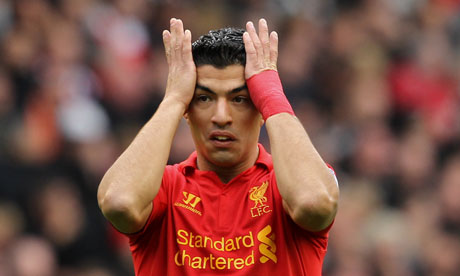
“Seven minutes into the second half of Liverpool’s Premier League match against Chelsea on Sunday, Luis Suarez sent a cross into the path of Daniel Sturridge, who cushioned a volley into the bottom corner of the net to equalize. It was a fine finish but a truly stunning pass — conceived in a fraction of a second and played with an astonishingly precise level of accuracy, in terms of weight, angle and height. It was a moment of extraordinary skill, and yet it will barely be mentioned this week because of what happened 14 minutes later.” SI – Jonathan Wilson (Video)
Category Archives: Jonathan Wilson
Political football: how Brazil’s military hijacked the beautiful game

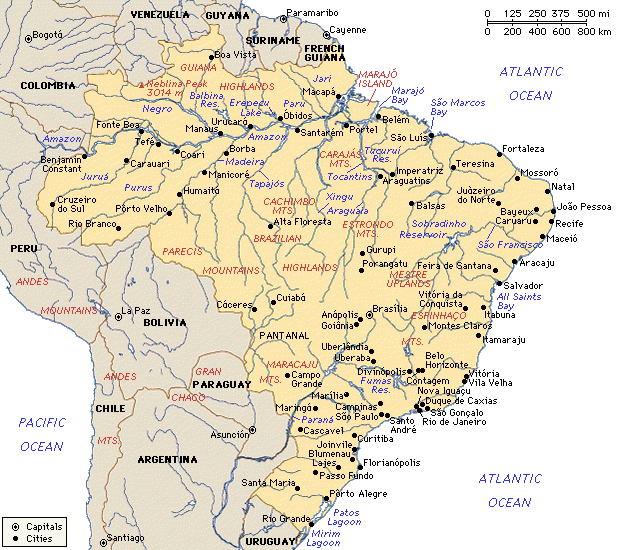
“As five-time World Cup champion, the Brazilian national team has become known the world over not just for winning, but for winning with a joyous panache that has become synonymous with the beautiful game. However, behind every one of Ronaldinho’s toothy grins and camouflaged by the color-shocked mohawk clinging to Neymar’s head lies an intensely complicated relationship between nation and sport.” World Soccer
“Brazil is a country commonly associated with the highest level of soccer. The world has grown used to Brazil winning, but the Brazilians themselves seem to have an insatiable appetite for world football dominance. Their nation has produced soccer players that have come to represent spontaneity, creativity and skill on the playing field. The bandy-legged Garincha, a walking paradox, the goal scoring machines Friedenreich and Ronaldo, the modern hope Kaká, and, of course, the eternally great Pelé – all these players have left their indelible marks on football’s canon.” Soccer Politics
Zero Dark Thirteen – Brazilian football wallows in the mire of corruption
“If the 2014 World Cup is to signal the arrival of Brazilian football’s brave new world, a desperately needed fresh start for the game in a country where on-field majesty is usually matched by administrative skulduggery, it can’t come soon enough. The year is not yet four months old but it feels, to misquote autocratic former president Getúlio Vargas, as though Brazilian football is standing in a sea of mud. Worse, it often appears as though chaos has become the norm.” Independent
Socrates and the Corinthians’ Democracy
“As the global sporting world faces one corruption scandal after another, former Manchester United star Eric Cantona presents the stories of five football heroes whose social conscience led them to challenge unjust regimes, join opposition movements and lead the fight for democracy and human rights. Football Rebels looks at a side of football that does not always make the headlines.” Aljazeera (Video)
All the President’s Torturers
“Chosen to host both the 2014 football World Cup and the 2016 Olympic Games and with abundant natural resources and one of the fastest growing economies in the world, one way or another Brazil is set to become a major player in the affairs of the 21st century. With an ambitious, progressive government, a population of around 193 million, now well established federal democratic structures and apparent political stability, many even see it as a global superpower in the making, perhaps even deserving of a permanent seat on the UN Security Council in the not too distant future. But its solid international reputation has not always been so glossy.” Aljazeera (Video)
The Copa Libertadores and differing stories for Ronaldinho and Riquelme
“The Copa Libertadores this season has been the story of two brilliant players in the twilights of their careers: one having immense fun as though he can’t quite believe he’s still getting away with it, the other grumpily raging against his waning powers. For Ronaldinho and Atlético Mineiro, this has been, so far, a tournament of glee, of great goals and big wins; for Juan Román Riquelme and Boca Juniors, it has been all about suffering. Both will be in the last 16, but their journeys could hardly have been more different. It’s also been the story of the continuing development of Ecuadorean football.” Guardian – Jonathan Wilson
Neymar! Reducing Brazil’s Football ‘Trade Surplus’
“It’s time for another sporting feature since we haven’t had one for quite some time now. Fortunately, there’s interesting stuff courtesy of TIME Magazine about the changing complexion of ‘the beautiful game.’ Even if the Brazilian economy has cooled off markedly in recent times, it has had a strong run-up and most folks remain optimistic about its economy’s future. Contrast its fate with that of the European football powerhouses that traditionally import South American players in droves–especially Portugal, Spain,and the United Kingdom–and you begin to understand the reduced “trade surplus” of Brazil sending away its best footballers time and again…” International Political Economy Zone

FA Cup violence unlikely to revive hooliganism
“There will be those who insist the violence that broke out toward the end of Saturday’s FA Cup semifinal between Millwall and Wigan Athletic was an isolated incident; it’s the usual way of downplaying such things. But it wasn’t. I saw three separate scuffles in the Millwall end before the brawl that was shown on T. I saw around 30 men going toe-to-toe, swinging punches at each other and then turning on police when, belatedly, an effort was made to stop them. Other journalists spoke of at least two other incidents, and there had been an unpleasant edge to the atmosphere all day.” SI – Jonathan Wilson
Manchester United 1-2 Manchester City: City’s attackers combine well throughout
“Manchester City produced a fine performance to record a rare victory at Old Trafford. Sir Alex Ferguson played two attack-minded wide players, with Ryan Giggs in the centre and Tom Cleverley only on the bench. Phil Jones continued alongside Rio Ferdinand in the centre of defence. Roberto Mancini left out Sergio Aguero, favouring Carlos Tevez as a lone striker with David Silva just behind. City were significantly better here – they dominated the first half, took the lead in the second, and Mancini used his bench better too.” Zonal Marking
Man City has formula for countering powerful Manchester United
“Even if Manchester City wins its seven remaining games this season, Manchester United needs only to take 10 points from its last seven games to clinch a 20th league title. As Roberto Mancini said, “It’s finished.” And yet for all that, there is a strange feeling of City ending the season on a high after winning the Manchester derby 2-1, while United has questions to answer. In a sense, the league this season has almost been so easy for United that it’s hard for it to derive any great satisfaction from its (almost certain) success.” SI – Jonathan Wilson
Tottenham 2-2 Everton: Spurs go ahead very early, then equalise very late
“An interesting battle between two sides both without their key attacking player. Gareth Bale was injured – as were Jermain Defoe and Aaron Lennon. Andre Villas-Boas was forced to select a ‘mezzala’ on either side – Clint Dempsey and Gylfi Sigurdsson – in the absence of natural wide players. Jan Vertonghen was at left-back. David Moyes was without Steven Pienaar and Marouane Fellaini. He handed a rare start to Ross Barkley, and used Leon Osman behind Victor Anichebe, rather than selecting two strikers. This was an interesting but disjointed game, where both sides had spells of dominance. There were lots of small tactical features, rather than a clear overall pattern.” Zonal Marking
Tactics: playing the game the “right way”

“Certain ways of playing have become imbued with moral values, with certain styles becoming accepted as being the ‘right’ way to play, of representing ‘good’ football. For instance, when Oldham Athletic put Liverpool out of the FA Cup in January by playing a direct game based around the raw physicality of their centre-forward Matt Smith, there was much chortling about their robustness and how Liverpool’s delicate, academy-groomed youngsters ‘didn’t like it up ’em’.” World Soccer – Jonathan Wilson
Sinisa Mihajlovic embodies the bonds broken by Balkan wars

“The wind howls down a bleak street in Croatia’s Borovo Naselje, lashing the rain against the garage door that Sinisa Mihajlovic’s father had to replace every few weeks because of the force with which his son practised his free-kicks against it. It is not just the garage door that has been replaced. The whole house was destroyed during the Yugoslav war. Mihajlovic, wonderful and controversial footballer and now manager of Serbia, is defined by the war, adding another layer of complexity to the already incendiary meeting between Croatia and Serbia in World Cup qualifying on Friday night.” Guardian – Jonathan Wilson (Video)
Croatia v Serbia: the sporting rivalry – in pictures
“Ahead of Friday night’s World Cup qualifier between neighbours and long-standing enemies, Croatia and Serbia, Alex Fenton-Thomas reviews some of their most hostile sporting encounters of the past two decades”
Guardian
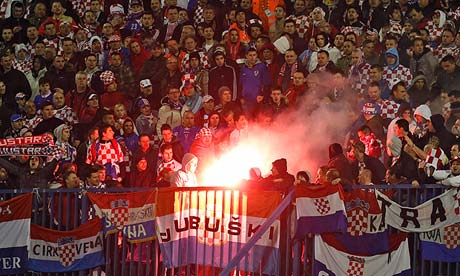
Croatia beat Serbia in bitter World Cup qualifier between Balkan foes
“Croatia beat Serbia 2-0 in a highly charged 2014 World Cup qualifier on Friday, the first match as independent states between the bitter Balkan foes since their war in the 1990s. Serbian players were greeted with nationalist chants – including ‘Kill, Kill the Serbs’ – from the packed Maksimir stadium, where thousands of riot policemen were deployed to prevent trouble from the home fans.” Guardian
Assassin. War Criminal. Football Club Owner.
“In 2006, FK Obilić Belgrade, the only team to have ever been crowned champions of Serbia that wasn’t Red Star or Partizan, were relegated from the Serbian top flight. Five more relegations over six seasons followed, meaning a team, who at the start of the 1998/99 season drew 1-1 with eventual finalists Bayern Munich in the Champions League qualifiers, kicked off this season playing seventh tier football. All this in a country whose top two divisions are the only two that aren’t regional.” Slavic Football Union
Didier Drogba omission signals end of Ivory Coast golden generation
“Nothing in football is ever entirely definitive but, if there was any doubt that Ivory Coast’s golden generation came to an end in Rustenburg in February during the Africa Cup of Nations, it was removed by the omission of Didier Drogba from the squad to face Gambia on Saturday. Ninety-six games and 60 goals after he made his debut against South Africa in 2002 Drogba will not even be part of the squad, although whether he has been dropped or asked to be left out remains unclear.” Guardian – Jonathan Wilson
Arsenal’s loss the latest setback in EPL’s steady decline
“It was, in the end, heroic failure for Arsenal, undone only on the away goals rule — but failure it was. Bayern Munich was surprisingly sloppy — perhaps precisely because the first leg was so simple for the club — but Arsenal regained a significant amount of self esteem with its performance in a valiant 2-0 win that wasn’t quite enough. And so, for the first time since 1996, there is no Premier League team in the quarterfinals of the Champions League.” SI – Jonathan Wilson
quo vadis journalism?
“Is it a bad time to be a journalist? Not to mention becoming one? What are the chances in journalism today? Are there any? It might seem somewhat preposterous a question to ask from a young researcher but having researched almost 50 years of sports journalism in the last 5 years, there is some justification to ask such a question.” Do not mention the war
The Question: is the away-goals rule counterproductive?

“Imagine that on Tuesday night, rather than playing that late free-kick short so Milan lost possession and conceded a fourth goal, Robinho had hurled it into the box. Imagine Philippe Mexès had jumped for it, the ball had taken the merest brush off his pony-tail and that had been enough to take it past Victor Valdés. That would have made it 3-1 on the night, 3-3 on aggregate and Milan would have beaten Barcelona on the away goals rule.” Guardian – Jonathan Wilson
Manchester United 1-2 Real Madrid: red card allows Real to take control

“Manchester United’s starting strategy nullified Real Madrid’s main threats, but Jose Mourinho reacted quickly after United went down to ten. Sir Alex Ferguson left out Wayne Rooney and Shinji Kagawa, favouring Nani and Ryan Giggs on the flanks. Tom Cleverley started in place of Phil Jones, while Jonny Evans dropped to the bench as Ferguson favoured the old-school Ferdinand-Vidic partnership. Jose Mourinho named his expected side. Gonzalo Higuain was upfront rather than Karim Benzema, Raphael Varane continued at centre-back. Sadly, we were denied a chance to see how the 11 v 11 game would play out – Real had looked impotent until Nani’s red card, and it would have been fascinating to see how they tried to break down United in the final half hour.” Zonal Marking
Controversial red card changed complexion of Madrid-United tilt
“There was no doubt about the moment that changed the game. Manchester United had been leading 1-0 on Tuesday night, 2-1 on aggregate, and was winning the tactical battle when, 11 minutes into the second half, Nani leapt to try to take down a dropping clearance from Rafael. His raised foot caught Alvaro Arbeloa in the stomach, and Turkish referee Cunet Cakir decided, to widespread surprise, that he was guilty of serious foul play and showed a red card.” SI – Jonathan Wilson (Video)
Manchester United red with rage after referee wrecks Champions League dream with Nani red card against Real
“When Manchester United’s devastated players finally emerged from the dressing room, they would not, probably could not talk. The club had advised them to stay silent over Cuneyt Cakir’s unspeakable decision to send off Nani. Their inner fury, the anger in the eyes said it all.” Telegraph – Henry Winter
Wins over Man. United and Barcelona give Mourinho an exit strategy
“There is a phrase, borrowed from bullfighting, which the Spanish use a lot: por la puerta grande. Out through the main door, triumphantly. Maybe even on the shoulders of supporters while a crowd gathers at your feet, holding the trophy in the air — a bloodied bull’s ear, in this case, the cup with the big ears if we’re talking football. There are different ways to depart after the fight, many ways to leave, and departing victorious is always best.” SI (Video)
Newsstand: British Tabloids Aflare After Man United’s Controversial Loss To Real Madrid
“Real Madrid eliminated Manchester United from the Champions League today with a 2-1 win at Old Trafford. The English champions led 1-0 after an own goal by Sergio Ramos, but the turning point came when Turkish referee Cuynet Cakir sent off Nani for a studs-high challenge.” SI (Video)
Dortmund 3-0 Shakhtar: Dortmund exploit Shakhtar’s poor positional play
“After a 2-2 first leg draw, Dortmund performed excellently to qualify for the quarter-finals with surprising ease. Jurgen Klopp was still without Mats Hummels, so Felipe Santana and Neven Subotic continued at the back. Otherwise, the side was as expected, and played in the traditional 4-2-3-1, rather than the 4-3-3 we saw against Bayern last week. Mircea Lucescu named Taison on the left wing. Douglas Costa was only on the bench. In a game between two similar sides, Dortmund were better in almost every department, dragging Shakhtar out of shape and exploiting the spaces in behind.” Zonal Marking
Win or bust as Shakhtar Donetsk and Borussia Dortmund meet again
“It was business as usual for Shakhtar Donetsk in the Ukrainian Premier League on Friday, and that in a sense is part of the problem. They hammered Volyn Lutsk 4-1 and lead the table by 13 points with 11 games remaining. They are in the quarter-final of the cup and, with Dynamo Kyiv and Metalist Kharkiv out, Dnipro Dnipropetrovsk stand as the only other probable winners. This has been a crushingly easy season for Shakhtar.” Guardian – Jonathan Wilson (Video)
Borussia Dortmund Make the Big Leap Forward
“Borussia Dortmund have reached the quarterfinal round of the UEFA Champions League for the first time since the 1997/1998 season following an emphatic 3-0 win Tuesday night over Shakhtar Donetsk at Signal Iduna Park. Despite their recent domestic success, Dortmund made a big leap forward in advancing to the quarterfinals following two previous seasons of not advancing from European group stages. While the Ukrainian side held off Dortmund for the first 30 minutes of the match, the uneasy feeling for Dortmund supporters of a result going awry was dispensed with Felipe Santana’s powerful header in the 31st minute, as the Germans went on to create what Coach Jurgen Klopp deemed ‘an extraordinary moment’.” Bundesliga Fanatic
Chelsea’s turmoil takes another turn with Benitez’s rant

“The assumption, when Rafa Benitez started laying into fans and criticizing the board in a post-match radio interview Wednesday, was that he had lost it, that this was his Kevin Keegan ‘I would love it!’ moment. And then he came in to address the written media and said exactly the same thing, almost word for word. The answer to the first question was 394 words long. Make no mistake: this wasn’t a beleaguered manager suddenly snapping, although the cheeriness of that first press conference 13 weeks ago has slowly become weariness. What Benitez said after his team had beaten Middlesbrough 2-0 was calculated and pre-planned. That raises all sorts of questions about motive, but let’s start with the words themselves.” SI – Jonathan Wilson (Video)
Gareth Bale the sensation who owes it all to Tottenham’s compact style
“Gareth Bale is playing brilliantly. He is quick and powerful, technically gifted and can strike the ball ferociously with his left foot. He self-consciously models himself on Cristiano Ronaldo and in terms of his drive for self-improvement and even his style of play, cutting in from the left flank, there is validity to comparisons between them.” Guardian – Jonathan Wilson
Where has Africa’s creativity gone?

“The former Cameroon captain Theophile Abega died in November, aged just 58. He was one of the great midfielders of what now seems a golden age of west African football; a period that lasted for about two decades, from the start of the 1980s, when it appeared that African teams might seriously challenge for the World Cup.” World Soccer – Jonathan Wilson
Bayern Munich Have One Foot in Quarterfinals After First Ever Win in London Against Arsenal

“Bayern Munich took took a big step in sealing qualification to the quarterfinals with an impressive away win against Arsenal. It was Bayern’s first ever win in London and thoroughly deserved on the run of play. Germany’s record champions dominated the majority of the match and again showed why they are one of the favorites to lift the trophy come May. Goals from Toni Kroos, Thomas Müller and Mario Mandzukic capped off a performance that further underlines just how focused and determined Bayern are to succeed this season, putting them firmly in the the driver’s seat in this tie. It took a fortuitous corner to get Arsenal back in the game in the second half with former Bayern player Lukas Podolski taking advantage of a rare lapse in concentration but the Bavarians gradually resumed control and didn’t let go until the final whistle.” Bundesliga Fanatic
Arsenal 1-3 Bayern: Arsenal outpassed and outpressed
“Bayern took a commanding lead following a dominant first leg performance. Arsene Wenger chose to leave out Olivier Giroud, using Theo Walcott as the primary striker with Santi Cazorla right and Aaron Ramsey in midfield. Left-back problems forced Thomas Vermaelen into that position. Jupp Heynckes was without Jerome Boateng and long-term injury victim Holger Badstuber, so Daniel van Buyten was forced to play at centre-back. Arsenal made another poor start at the Emirates, and despite a promising spell for Wenger’s side after the break, Bayern always looked the better side.” Zonal Marking
Comedy of errors leaves Arsenal with more questions to answer
“Realistically, Arsenal was never likely to beat a Bayern Munich side that is cruising to the Bundesliga title, but what Tuesday’s 3-1 Champions League loss might have offered was comfort. Yes, there was always the chance of an upset, but, realistically, a promising performance would have done, something that said, yes, this team isn’t perfect, but it is on the right track.” SI – Jonathan Wilson
Arsenal 1-3 Bayern Munich: Tactical Analysis of a Bavarian Battering
“Arsenal succumbed to a damaging 3-1 home loss to Bayern Munich on Tuesday night, leaving their hopes of advancing to the UEFA Champions League quarterfinals hanging by a thread. The Gunners enjoyed a 20-minute renaissance in the second half but only managed to carve out one real chance which fell to Olivier Giroud, and their consolatory goal was a product of a corner that shouldn’t have been awarded. Let’s take a look at how this game was won.” Bleacher Report
England should look to Germany for inspiration, coaches
“It would be unreasonable to use Bayern’s dismantling of Arsenal as sole evidence of the Bundesliga’s dominance over the Premier League, but among various other factors, it has become increasingly clear that Germany will imminently become European football’s true power base.” ESPN – Michael Cox
Arsenal put to the sword by Bayern Munich’s game intelligence
“At the stroke of half-time, Bayern Munich had the chance to go an unassailable three goals up instead of the 3-1 scoreline it eventually finished. The Germans had possession of the ball at the back before they quickly switched it forward to the on-rushing Philip Lahm. As the full-back picked up the ball, Jack Wilshere stretched his arms out as if to say ‘how did that happen.’ Bayern Munich might have felt the same sense of bewilderment when Mario Mandzukic flashed a header wide from Lahm’s cross.” Arsenal Column
Wesley Sneijder’s step into the past leaves questions for Galatasaray
“After all the excitement and all the hype, Galatasaray’s big night in the Champions League fell rather flat. A Schalke side that has been in dire recent form went to Istanbul as patsies in the great narrative of Didier Drogba and Wesley Sneijder. But from the point of view of the home fans, they showed themselves rather better than had been anticipated, exposing the flaws that exist in this Galatasaray side despite their recent injection of glamour.” Guardian – Jonathan Wilson
Schalke raise questions over Drogba
“Schalke have announced they have lodged an appeal with UEFA after Didier Drogba was selected for Galatasaray in Wednesday’s 1-1 draw in the Champions League. The club tweeted: ‘There are doubts about the validity of the permission to play for Drogba in the Champions League. Schalke 04 reserves its rights and is looking into this.’ Drogba, 34, joined the Turkish side in January after claiming his contract with Shanghai Shenhua had been terminated as a result of a failure to pay his wages for three months. The Chinese club issued a statement on their website describing themselves as ‘deeply shocked’ by the move.” ESPN
Five Great “Last 16” European Moments
“With the Champions League round of 16 underway, today on the blog Jonathan Wilson shares with us 5 great European moments of seasons gone by.” bettingexpert – Jonathan Wilson
How is wrestling at corners interpreted in different European leagues?
“… If you are English and ask anybody in Russia about wrestling at corners, the discussion inevitably turns to a World Cup qualifier in Ljubljana in 2001. With the score at 1-1, Slovenia won a last-minute corner. The referee, Graham Poll, twice prevented it being taken to warn Russian defenders about shirt holding. When the corner finally came in, Viacheslav Daev tussled with Zeljko Milinovic and Poll, his patience gone, gave a penalty. While shirt-pulling and wrestling certainly goes on in the Russian league, the hangover from that decision means that it is seen as very much a British obsession. Jonathan Wilson” Guardian – Jonathan Wilson
Nigeria 1-0 Burkina Faso: Nigeria triumph

“Nigeria won the Africa Cup of Nations following a typically tight, tense final. Stephen Keshi was able to select Victor Moses (who had been a doubt) but Emmanuel Emenike was injured, and replaced by Ikechukwu Uche. Paul Put, who has tinkered with his formations and line-ups throughout the tournament, was able to name an unchanged side after Jonathan Pitroipa’s suspension was overturned. This was a disappointing game, both in tactical and entertainment terms. Nigeria played better football, but there were very few shots on target from either side.” Zonal Marking
Africa Cup of Nations 2013: Sunday Mba gives Nigeria victory at last
“It says much for the baffling politics of Nigerian football that a week before the Cup of Nations began there were moves afoot in the sports ministry to have Stephen Keshi replaced as coach. And it says much for the 52-year-old’s strength of character, his combination of thick skin, single-mindedness and good humour that he was able to ignore all the distractions so that he stood on the touchline in Johannesburg on Sunday night beaming as only the second man – after the Egyptian Mahmoud El Gohary – to win the Cup of Nations as both player and coach.” Guardian – Jonathan Wilson (Video)
Stephen Keshi has worked miracles for Nigeria, but will they keep him?
“Back in 2006, when Stephen Keshi was still manager of Togo, he gave an interview to a handful of journalists in a hotel lobby in northern Cairo. The first time I’d spoken to him, four years earlier in Bamako, he had been lying on a sun lounger by a swimming pool and, metaphorically at least, he still was. Keshi always gives the impression of being laid back. But for a moment, the hardness beneath showed through. ‘Some day,’ he said, ‘I will be coach of Nigeria and then they will know they have a coach.'” Guardian – Jonathan Wilson
Keshi avoids politics as usual by winning Africa Cup of Nations
“The Cup of Nations, in the end, was won and lost in the thunderstorm in Rustenburg. Nigeria had gone into its quarterfinal with hope but little concrete evidence of its abilities. Then it defeated the perennial favorites, Ivory Coast, 2-1 and discovered a profound sense that it would win the tournament. It went on to hammer Mali 4-1 in the semifinal before beating Burkina Faso 1-0 in Sunday’s final.” SI
Africa Cup of Nations semi-finals: giants set sights on a return to power
“As the dust settles after the quarter-finals, the landscape looks strangely unfamiliar. The favourites, Ivory Coast, have gone; the hosts, South Africa, have gone; and Egypt, who dominated the tournament in the last half of the first decade of this century, didn’t even qualify. So the Africa Cup of Nations will go either to one of the traditional powers of African football, Ghana or Nigeria, both of whom nurse the pain of years without a title, or to a first time-winner, Mali or Burkina Faso.” Guardian – Jonathan Wilson
‘Match-fixing is reality’ says Burkina Faso coach banned in Belgium
“For Paul Put, the Belgian coach of Burkina Faso, the statement from Europol that it had found evidence that as many as 380 matches in Europe had been fixed came as no great surprise. He is one of the very few coaches to have been banned for fixing games, serving a three-year ban in Belgium that expired in 2011 after being found guilty of fixing two matches while manager of Lierse.” Guardian – Jonathan Wilson
Adebayor to play on with Togo
“Emmanuel Adebayor has said he has no plans to retire from international football despite Togo’s recent African Nations Cup exit. Togo were eliminated at the quarter-final stage after losing 1-0 to Burkina Faso on Sunday. But Adebayor, who has had a troubled relationship with the Hawks because of his differences with the nation’s football authorities, said he still had plenty to achieve with the country of his birth.” ESPN
Didier Drogba and Ivory Coast’s golden generation fail again
“Unbolt the doors, roll up the window blinds: the lock-in in last chance saloon is over. Didier Drogba was as statesmanlike as he always is in an orange shirt, walking round his team-mates picking them from the floor and raising spirits but he must fear that this is the end. He said afterwards that if he is wanted he will stay and spoke of shifting the focus to World Cup qualification but the Ivory Coast captain is 34 now; will he really be around in Morocco in 2015 for yet another last shot at the Africa Cup of Nations?” Guardian – Jonathan Wilson
African Cup of Nations: Quarter final preview
“After twelve days of soccer in South Africa, eight nations are set to battle it out as the journey towards the final of the 29th Africa Cup of Nations continues. South Africa, Cape Verde, Ghana, Mali, Burkina Faso,Nigeria, Ivory Coast and Togo have all booked their places in the last eight of the Africa Cup of Nations tourney. The Black Stars of Ghana will lock horns with the Blue Sharks of Cape Verde in the first of a series of four quarter final games starting on Saturday, January 29. Coming into the game as the clear under dogs, Cape Verde will undoubtedly hope their fairy tale story in South Africa continues especially after defying the odds to qualify for the next round ahead of the more fancied Morocco and Angola in Group A. Though they had eliminated Cameroon during the qualifiers for the tourney, little was expected from the debutants, who have so far defied expectations. The Blue Sharks boisterous march in the tourney, led by coach Lucio Antunes, has caught the attention of many soccer pundits.” Think Football
Emmanuel Adebayor puts Cabinda behind him as Togo go through
“Togo secured the draw they needed against Tunisia and so made it through to the quarter-final of the Africa Cup of Nations for the first time in their history. Those are the bald facts, but they don’t begin to tell anything like the full story of an extraordinary night at the Mbombela. It may not have been great football, but it was magnificent drama. The Sparrowhawks, exploiting Tunisia’s shambolic offside line, broke through again and again in the early stages and eventually took the lead after 13 minutes, Emmanuel Adebayor laying in Serge Gakpo, whose firm low shot from just inside the penalty area beat Moez Ben Cherifia.” Guardian – Jonathan Wilson
No North African side in the last eight

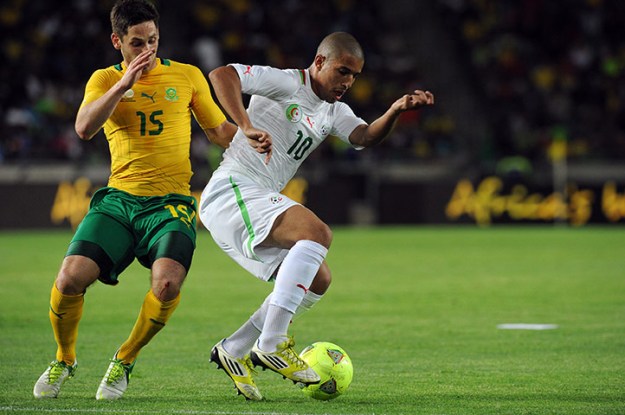
Sofiane Feghouli, Algeria
“Didier Drogba scored his first goal of the African Nations’ Cup to ensure Ivory Coast go into the quarterfinals on an unbeaten run in the competition. Their opponents in that match, Nigeria, and their place in the group was already decided but they surged back anyways from 2-0 down to draw level with Algeria. The group’s bottom-feeders left with their respect intact. Although Algeria failed to record a single win in the competition, similar to their 2010 World Cup, the much-talked about Sofiane Feghouli made his impact on the competition with a goal through a penalty and assist for Hilal Soudini. But Algeria’s disappointment was compounded with Tunisia’s exit which means that no North African team will play the quarter-finals of the 2013 ANC.” ESPN
Mali’s Seydou Keita hails ‘priceless hope’ brought to crisis-torn land
“For Mali, this is becoming a habit: win the first group game narrowly, lose to Ghana, do just enough in the third match to get through and set up a quarter-final against the hosts. What they did in Libreville a year ago, when they beat Gabon on penalties, they will have to do again on Saturday as they face a newly enthused South Africa in Durban.” Guardian – Jonathan Wilson (Video)
Tiny Cape Verde is Africa Cup of Nations’ Cinderella story
“When Cape Verde coach Lucio Antunes entered the press conference room in Port Elizabeth on Sunday, he found his team had gotten there before him. They were lined up on the dais behind the desk, bouncing up and down in glee as a African Football Confederation official sat sheepishly in the foreground, aware he had formalities to complete but unwilling to interrupt the jubilation. Defender Gege, wearing his shirt back to front, leapt on a chair and carried on dancing. Antunes, at 46 and a little too old for that sort of thing, initially looked a little uncomfortable but then, after some awkward shuffling, draped himself in the flag and began directing the celebrations. Usually, he directs planes.” SI – Jonathan Wilson
Salomon Kalou, Ivory Coast eye missing Africa Cup of Nations title
“he Africa Cup of Nations has always been one of my favorite international tournaments, and for the first time it’s possible for fans in the U.S. to watch every game live easily and legally, thanks to ESPN3 picking up the rights. One of the biggest storylines is whether a remarkable generation of Ivory Coast players — Didier Drogba, Yaya and Kolo Touré, Salomon Kalou, Gervinho and others — can finally get over the hump and win the tournament after falling short in each of the past four occasions.” SI
The 2013 African Cup Of Nations: Seconds Outs, Round Two

“The 2013 AFCON is neither the first nor last international football tournament to have an, ahem, ‘disappointing’ opening round of group matches. But that has usually been down to teams’ fear of losing their first game, something which the laws of football say you must not do. In South Africa, even when the attitude wasn’t fearful, the football was mostly dreadful. The second round had to be better. Didn’t it?” twohundredpercent
Tiny Cape Verde is Africa Cup of Nations’ Cinderella story
“When Cape Verde coach Lucio Antunes entered the press conference room in Port Elizabeth on Sunday, he found his team had gotten there before him. They were lined up on the dais behind the desk, bouncing up and down in glee as a African Football Confederation official sat sheepishly in the foreground, aware he had formalities to complete but unwilling to interrupt the jubilation.” SI – Jonathan Wilson
Jonathan Wilson
Salomon Kalou, Ivory Coast eye missing Africa Cup of Nations title
“The Africa Cup of Nations has always been one of my favorite international tournaments, and for the first time it’s possible for fans in the U.S. to watch every game live easily and legally, thanks to ESPN3 picking up the rights. One of the biggest storylines is whether a remarkable generation of Ivory Coast players — Didier Drogba, Yaya and Kolo Touré, Salomon Kalou, Gervinho and others — can finally get over the hump and win the tournament after falling short in each of the past four occasions.” SI
The 2013 African Cup Of Nations: The Group Matches, Round One

“Blimey. They could have warned us Mark Bright was a British Eurosport analyst for the ‘AFCON 2013’. With the first group games being largely turgid, Bright had a lot of gaps in the action to fill. He chose to do so with ‘y’know,’ – an ironic nervous tic when discussing tournament nerves. He rattled them off at ten-to-the-dozen at first, eventually settling down to produce 178 during the 90 minutes plus stoppage time, although this was only 12 higher than Danny Mills, who also began with sentences which mostly were y’knows, before settling down to about two-per-minute. And if you think the football must have been bad for me to be able to count them, you’re right.” twohundredpercent
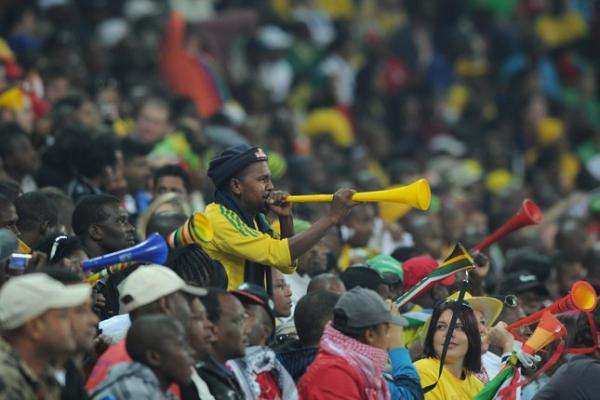
South Africa’s decline apparent as African Cup of Nations begins
“On June 24, 1995, South Africa won the rugby World Cup, a triumph detailed by the film Invictus. That was a remarkable triumph, and there is no decrying the symbolism of Nelson Mandela, wearing a Springboks shirt, delivering the Webb Ellis Cup to Francois Pienaar, black president and white captain united in achievement. This was the glorious moment at which the dream of the rainbow nation seemed achievable.” SI – Jonathan Wilson
The Question: Has 4-2-3-1 lost its gloss?
“Football, as Sir Alex Ferguson noted last week, moves in cycles. He was talking about clubs and nations, about how certain places suddenly produce a great generation of players, but it is true as well of formations and styles of play. After the rise of 4–2–3–1 to replace 4–4–2 as the world’s default, the backlash is well and truly under way. As so often, the key lies on the flanks. The history of football tactics is, to a large extent, the search for space and when the centre is crowded it is on the less crowded wings that the key battles are fought.” Guardian – Jonathan Wilson
Arsenal’s problems go beyond referee’s borderline decision
“There was something refreshing about Arsene Wenger’s take on the red card shown to Laurent Koscielny nine minutes into Arsenal’s 2-0 loss to Manchester City on Sunday. For once — and this is a criticism directed at virtually all managers, not Wenger in particular — he didn’t take the easy way out and blame the referee. It would have been simple — justified up to a point, even — to say that the game had effectively been decided by Mike Dean’s decision to send Koscielny off. That the defender committed a foul by hauling Edin Dzeko down is beyond doubt, but there is a question as to whether Koscielny denied him a clear goal-scoring opportunity; Dzeko, after all, did not have control of the ball and would have had to bring it down before Wojciech Szczesny came to clear.” SI – Jonathan Wilson
Football Book Review: Behind the Curtain by Jonathan Wilson

“In this book, Wilson tackles the perennial question of why Eastern European football isn’t very competitive with Western European, both at the club and national levels. Some things have changed since its publication in 2006, but, in general, the nations discussed—Ukraine, Poland, Hungary, the Balkans, Bulgaria, Romania, Georgia, Armenia, Azerbaijan, and Russia—are still in the situation he describes. At 300 pages, it is not an in-depth history of football in any of these countries, not by any means, but it gives the reader an overview of football during the communist era and in the first fifteen years following the collapse of the Soviet Union. As the title suggests, it’s a travelogue. He discusses matches he’s seen and people he’s interviewed as a football journalist and puts them into the greater historical context.” Bundesliga Fanatic
“When Jonathan Wilson entered Partizan stadium in Belgrade, he was frisked so efficiently that the police even took his Lemsip. That didn’t diminish his passion for the former Yugoslavia, an obsession that he blames on cold war spy movies and childhood holidays in Montenegro. Since then, he has huddled in brutalist football grounds from Slovenia to Azerbaijan, Sofia to St Petersburg, watching innumerable matches while working as a correspondent for a now-defunct website and the Financial Times. Behind the Curtain recounts his travels and gives a little footballing history of each country, focusing on prominent clubs or memorable incidents. Wilson obviously retains a particular affinity with the Serbs: he writes an unusually sensitive character sketch of Sinisa Mihajlovic, one of the most reviled men in European football, and even admits a sneaking warmth for the Delije, the hooligans closely associated with Arkan.” Guardian
“It was Christmas Eve and all through the house, nothing was stirring – because everyone had eaten too much barszcz, carp and cake during Wigilia dinner. When the time came to look under the Christmas tree for presents, little Decoy’s eyes lit up, as he saw what Santa Claus had brought. Mikołaj knew that Decoy liked reading books and also liked football, so it was a pleasant surprise to see books about football wrapped up neatly. One of the books received was ‘Behind the Curtain: Travels in Eastern European Football’ by Jonathan Wilson. Wilson is a football journalist who writes for Sports Illustrated and the UK-based newspapers The Independent and The Guardian. He specialises in writing about football tactics and also football based in ‘Eastern’ Europe – i.e. those countries lying behind the Iron Curtain before 1989/90. His articles analysing tactical nuances on the Guardian website prove particularly popular with readers there.” Polandian
8/26/2012 – Behind the Curtain: Travels in Eastern European Football – amazon
Nigeria and Ghana battle the egos in Africa Cup of Nations buildup

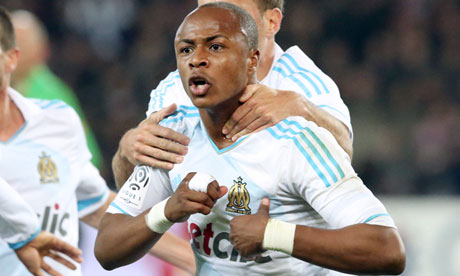
André Ayew
“There is a new mood of militancy about west African football. The buildup to previous Cups of Nations has often been dominated by will-he-won’t-he sagas as big-name players decide whether they really want to take a month out of the league season to go to play for their countries. This year, the coaches have hit back. The Ghana coach, Kwesi Appiah, on Monday omitted Marseille’s André Ayew from his squad after the Marseille winger reportedly turned up late for a squad get-together; he follows Nigeria’s Steve Keshi, who had already refused to select Peter Odemwingie and Shola Ameobi on the grounds they didn’t seem bothered enough about representing their country.” Guardian – Jonathan Wilson
FC Barcelona, Lionel Messi, and La Masia featured on “60 Minutes”

“FC Barcelona were featured in a story in tonight’s episode of the the news magazine television show 60 Minutes. The piece talked about Barcelona’s La Masia (youth training/academy system) and how the club has developed the majority of its first team. It’s a bit unusual for large clubs as most have to rely on buying players from other teams in addition to developing them through an academy. The feature also focused on Lionel Messi with several highlights of goals scored and stating he’s currently the best player in the world. Two of the other players featured in the piece are Cesc Fabregas and Gerard Pique.” The 90th Minute Soccer Blog (Video)
Congrats to Messi, but Ballon d’Or isn’t sound for soccer
“On Monday, at what convention dictates we describe as a glitzy ceremony in Zurich, Lionel Messi won the Ballon d’Or for the fourth year in a row. Which was the right decision. Or the wrong decision. Or just a decision, based on the votes of international coaches, international captains and journalists from around the world, that really doesn’t matter at all, that sums up football’s silly obsession with celebrity. Actually, scrap that last line: that makes it sound as though the award has no significance. It does: it’s a deeply insidious phenomenon that is antithetical both to good football and to the sound running of the game.” <a href=”http://sportsillustrated.cnn.com/soccer/news/20130107/lionel-messi-ballon-dor/#ixzz2HJzaBkyx
Match-fixing scandal in South Africa overshadows Africa Cup of Nations

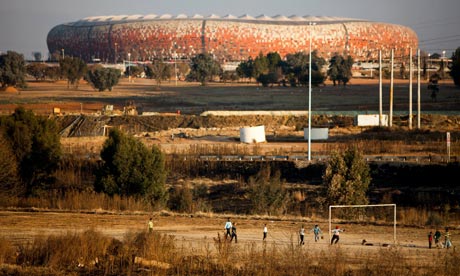
“So much for the World Cup legacy. As South Africa prepares to host the Africa Cup of Nations, it should have been celebrating the fact that it had the infrastructure to step in as host when civil war forced the tournament to be moved from Libya, showing off once again the infrastructure built for 2010. As it is, the South African Football Association is left dealing with a match-fixing scandal whose tentacles stretch across the world and that has forced its president and four other officials to stand down.” Guardian – Jonathan Wilson
Once hopeful, Queens Park Rangers now seem set for relegation
“And with that, the light went out. At the start of the Christmas program it seemed improbable that Queens Park Rangers would survive; three games into it, it seems all but impossible. The gap from QPR to safety is eight points, which is only two more than QPR has managed in 20 games so far, while the brief gleam of hope that emerged after Harry Redknapp had replaced Mark Hughes as manager has now been all but extinguished. So bad are things now that the January transfer window may be less about trying to put together a last-gasp bid for survival than putting contingencies in place for a relegation that seems all but inevitable.” SI
Tactics: little wonder that size doesn’t matter
“A decade or so ago, football was facing a crisis of style. Physicality and pace, it seemed, were taking over. Manchester United manager Alex Ferguson admitted looking at Arsenal’s midfield and realising there was an overwhelming need to add muscle to his ball players. The result was a series of viscerally thrilling encounters that featured bust-ups in the tunnel, pizza being thrown, the hounding of Jose Antonio Reyes and not a whole lot of football.” World Soccer
Best of 2012: Zambia’s championship
“In 1993, a plane carrying the Zambian team to a World Cup qualifier in Senegal stopped for refueling in Libreville. Shortly after takeoff, it exploded and crashed into the sea off the Gabonese coast, killing everybody on board. Kalusha Bwalya, the great star of that side, was not on the plane because he played in the Netherlands and was making his own way to Dakar. He helped put together a new side and went on to become president of the Zambian Football Federation.” FOX Soccer – Jonathan Wilson
Rafa Benitez can succeed with Chelsea if the fans give him a shot
” Something very strange happened last week, something so unusual it’s tempting to think it unique: a football manager made a joke. It was proper joke. Not an anecdote, or something contrived and worked on days in advance, but a genuine, spontaneous quip that was genuinely amusing. There is often laughter in press conferences but usually it’s polite or sycophantic depending on your point of view; often, hearing a manager trying to be funny, you’re put in mind of Dr. Johnson’s line about the dog walking on its hind legs: it’s not so much that it’s done well but that it’s done at all. But this was a proper gag. Odder yet, it was cracked by Rafa Benitez.” SI
The 100 best footballers in the world – interactive

“Welcome to the Guardian’s choice of the world’s top 100 footballers. We asked our 11-strong international panel of experts to name their top 30 players in action today and rank them in order of preference. Once the lists were submitted, the players were scored on their ranking by each panellist: a No1 choice allocated 30pts, No2 29pts and so on down to selection No30, given one point. In a four-part series online and in print we will reveal the results. Starting with No100 at the very end, click on the individual player in the interactive below for our writers’ argument for their placing in the 100. And you can read here how we came to ranking the hundred and a blog on the top 10 here.” Guardian – Jonathan Wilson
Zenit St Petersburg take first confused steps away from prejudice
“Let’s imagine that fans of Sunderland (and I use the example purely because that is who I support), tiring of the constant churn of the transfer market, decide that enough is enough and they want their team to do things differently. They get together and hammer out a manifesto which they then post as an open letter to the club hierarchy. Among a number of points about the need for absolute commitment and an abhorrence of cheating, they suggest they would rather the club focused on local players.” Guardian – Jonathan Wilson
Barcelona 4-1 Atletico: Falcao’s opener wakes up Barca

“Atletico started the match excellently, but still lost 4-1… Tito Vilanova chose Alexis Sanchez rather than David Villa on the left of his attack, and Adriano started rather than Daniel Alves at right-back. Despite the failure of the 4-4-2 at the Bernabeu, Diego Simeone again selected that system after Atletico’s 6-0 win over Deportivo last week. Miranda replaced Daniel Diaz at the back. Atletico started the game very nicely, staying compact, pushing up and restricting the number of chances Barcelona created – but eventually crumbled.” Zonal Marking
The football tactical trends of 2012
“In 1872, the 11 Queen’s Park players who made up the Scotland national side looked at the England team they were about to face in the first international fixture and decided they had to try something out of the ordinary. England were over a stone a man heavier and given the head-down charging that characterised the early game, that was a significant advantage. What Scotland had to do, it was decided, was to keep the ball away from England, to deny them possession and thus control the game.” Guardian – Jonathan Wilson
La Liga Review: Is the La Liga title race over already?
“After a thrilling weekend of La Liga action the title race may be over, but the chase for the top four, and the relegation battle are amazingly close. The big match of the weekend saw the top 2 face off, as Barcelona hosted Atletico Madrid at the Nou Camp, and despite the away side taking the lead they eventually succumb to a 4-1 defeat. Colombian striker Falcao gave Atletico the lead in the 31st minute, before a terrific strike by Adriano, and a Sergio Busquets goal gave Barcelona a halftime lead.In the second half the inevitable happened, and Lionel Messi netted a double to kill off any chance of a comeback, giving Barcelona a flattering 4-1 win.” Think Football (Video)
New year brings new goals, perhaps new club for Drogba
” Timing a retirement is hard enough for anybody; for sportspeople, used to the rush of victory and the adulation of the crowd, to the routine of training and a preposterous income, and facing perhaps 60 years of post-playing life, it must seem almost impossibly daunting. In terms purely of narrative, Didier Drogba probably should have gone in May after the Champions League final. It seemed the perfect ending. He had been at the club eight years, and had been striving all that time for European glory. He’d been sent off in the 2008 Champions League final and banned for the ferocity of his protests after Chelsea had lost to Barcelona in the 2009 semifinal. Munich was his redemption. He headed the 88th-minute equaliszr and then rolled in the final penalty.” SI
The forgotten story of … Heleno de Freitas

“For most in Brazil, what happened in the Rasunda Stadium in 1958 was a gleeful affirmation of what they had always known. They were the world’s great football nation and beating the hosts, Sweden, in the final was vindication after the trauma of the defeat to Uruguay in the Maracanã eight years earlier. In an asylum in Barbacena in the state of Minas Gerais, patients clustered anxiously round a radio as the game entered the final minute. A cross came over, Pelé rose and made it 5-2: the world title was confirmed. Patients and staff celebrated together – all except one. In his room, alone, Heleno de Freitas filled his mouth with cigarettes, lit them all and tried to smoke himself to death.” Guardian – Jonathan Wilson
Heleno de Freitas
“Heleno de Freitas, nicknamed Prince Cursed, (born 12 February 1920 in São João Nepomuceno, Brazil; died 8 November 1959 in Barbacena) was a Brazilian footballer. The striker spent most of his career with Botafogo, scoring 209 goals for the club, most with his head. In 1948 he transferred to Boca Juniors in Argentina, but returned to Brazil the following year, winning the 1949 Campeonato Carioca with Vasco. He ended his career with América in Rio, he played only one match for the club and it was the first and last game in the Maracanã. He died in 1959 in a sanatorium in Barbacena.” Wikipedia
Spartak Moscow’s season of self-destruction could suit Celtic
“The Russian newspaper Sovetsky Sport on Monday ran a column that spoke of Chelsea, the St Petersburg ice-hockey team SKA and Spartak Moscow as ‘three broken toys’. All of them, it pointed out, are owned by oligarchs, all have had recent success and all have been undermined by meddling from the top that, to those on the outside, seemed baffling. It compared Roman Abramovich to a boy who loved something so much he hugged it until it suffocated.” Guardian – Jonathan Wilson
The Question: is Cristiano Ronaldo a strength or a weakness to a team?
“Real Madrid stand 11 points behind Barcelona in the league only 13 games into the season. They looked distinctly second best in taking just one point from two games in the Champions League against Borussia Dortmund. Pressure is mounting, it seems, on José Mourinho: six previous Real Madrid managers have found themselves more than six points off the lead at this stage of the season; none have made it until May. Yet it may be that the criticism is being directed at the wrong Portuguese.” Guardian – Jonathan Wilson
Cameroon’s Théophile Abega was so intelligent they called him the doctor
“Some time towards the end of January, Théophile Abega stopped replying to my calls. I was in Equatorial Guinea, heading on to Cameroon, and was keen to meet him, partly to talk about the rivalry between Thomas N’kono and Joseph-Antoine Bell for my book on goalkeeping but mainly because, well, because he was Théophile Abega, one of the most skilful African midfielders of all time, the man who led Cameroon in 1984 to their first Cup of Nations triumph, scoring a brilliant goal in the final.” Guardian – Jonathan Wilson
Di Matteo another victim of Chelsea’s strange politics
“The first intimation that something was amiss came in Roberto Di Matteo’s late arrival for the press conference after Chelsea’s 3-0 defeat to Juventus. Usually he arrives half an hour or so after the final whistle; this time it took him 75 minutes. He didn’t seem particularly upset or resigned but it later emerged he’d told the players not to come in on Wednesday for their usual post-game warm-downs as he had ‘meetings’ to attend. By 3am as he trudged through the south terminal of Gatwick airport, he was struggling to raise a smile for the small gaggle of fans seeking photographs.” SI
Harry Redknapp the preferred candidate to be Ukraine manager
“Five months after leaving Tottenham Hotspur, Harry Redknapp could be making an extraordinary return to football as manager of Ukraine. The Ukrainian Football Federation has been seeking a new manager since Oleh Blokhin resigned last month to take charge of Dynamo Kyiv, and announced on Tuesday that it will open negotiations with Redknapp’s representatives. Redknapp is known to be keen to return to management and has been strongly linked with QPR, whose manager Mark Hughes is under pressure after taking only four points from the opening 12 games of the season.” Guardian – Jonathan Wilson
The Question: why are more goals being scored?

Athletic Bilbao coach Marcelo Bielsa
“A spectre is haunting Europe – the spectre of goals. They’re everywhere – in every competition, in every country, in every stadium (apart from games involving Sunderland). Four-goal leads are regularly obliterated (Angola v Mali, Newcastle v Arsenal, Germany v Sweden, Arsenal v Reading). Lionel Messi, Cristiano Ronaldo and Radamel Falcao break goalscoring records every week. Everybody attacks, all the time. In the top flights of England, France and Spain, there has been a clear upward trend in the numbers of goals scored per game over the past decade. Last season, for the first time ever, the knockout stage of the Champions League yielded more than three goals per game and that has continued into this season’s group stage, with 3.03 goals per game. And even in Italy and Germany, where goals per game have remained relatively constant for 10 years, this season is showing above average numbers of goals.” Guardian – Jonathan Wilson
How English game of pace and power benefits from European precision
“More passes, less ‘hoofs’ from back to front, and a slicker goalscoring rate: the Premier League has become a more technical “continental” competition that is a fusion of English pace and power and European subtlety. These are the implications of statistics from Opta that chart a shift over the past five years from a direct approach to a more patient game that now features greater precision in passing and finishing. The national team continue to see little benefit from this evolution, with experts citing the prime factors as the influx of foreign players and coaches, better club pitches and training facilities, a clampdown on tackling and the influence of a Champions League dominated by Barcelona’s carousel-passing style.” Guardian
In Argentina, Martino follows line of Bielsa disciples to success

Gerardo Martino
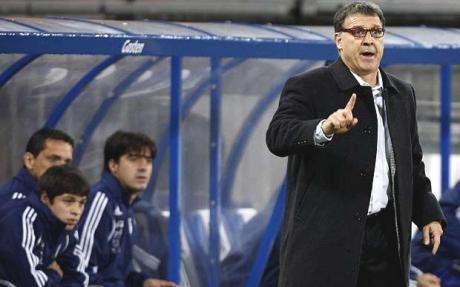
“He has a fluffy demi-mullet. He wears big, slightly academic glasses (although without a cord). He paces the technical area nervously during games (although without ensuring each perambulation takes 13 steps). Even without watching his side play, it’s not hard to work out who Gerardo Martino’s main influence as a coach is. Given he also preaches hard-pressing, ball-retention and verticality, it’s obvious that Martino is another follower of Marcelo Bielsa.” SI – Jonathan Wilson
Shakhtar Donetsk have learned lessons and again stand in Chelsea’s way
“And so it goes on. Shakhtar Donetsk beat Metalurh Zaporizhzhya 2-0 on Saturday – Douglas Costa converted a penalty before a late goal from Luiz Adriano sealed it – to take their winning streak in the Ukrainian league to 23 games, 14 of them this season. They lead the table by 12 points and, already, with the season one game from its halfway point, it seems inconceivable that they will not lift a seventh title in nine years. The focus, understandably, is all on the Champions League and Wednesday’s game against Chelsea.” Guardian – Jonathan Wilson
Chelsea 3-2 Shakhtar Donetsk
“Victor Moses came off the bench to score an incredible last-gasp winner tonight as Chelsea somehow survived a Shakhtar Donetsk onslaught to keep their Champions League fate in their own hands. The Blues were in danger of being the first holders to crash out of the competition before Christmas as former target Willian twice cancelled out almighty howlers from goalkeeper Andriy Pyatov which gifted goals to Fernando Torres and Oscar, the latter’s fourth in as many Champions League games.” ESPN
Blogging as an Historian
“In an increasingly open sourced world where libraries and archives are accessible from everywhere and in which working and writing in a cloud has become state of the art, where do we place history and historians? This is an attempt to describe the work as an aspiring historian of sport and as a blogger and how to combine these two.” Do not mention the war – Jonathan Wilson
Shakhtar Donetsk have learned lessons and again stand in Chelsea’s way
“And so it goes on. Shakhtar Donetsk beat Metalurh Zaporizhzhya 2-0 on Saturday – Douglas Costa converted a penalty before a late goal from Luiz Adriano sealed it – to take their winning streak in the Ukrainian league to 23 games, 14 of them this season. They lead the table by 12 points and, already, with the season one game from its halfway point, it seems inconceivable that they will not lift a seventh title in nine years. The focus, understandably, is all on the Champions League and Wednesday’s game against Chelsea.” Guardian – Jonathan Wilson
The end of the holding midfielder?

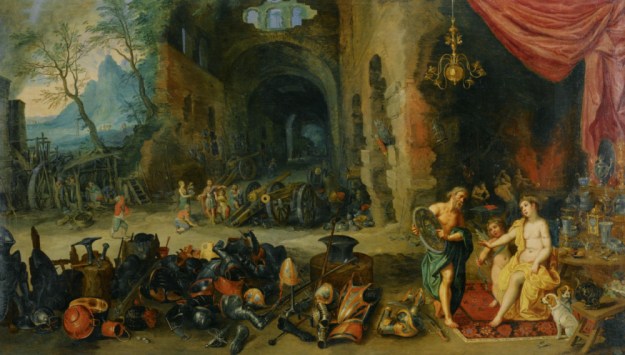
Jan Brueghel, the younger – Venus in the forge of Vulcan
“When Manchester City beat Manchester United in what was effectively a title decider at the end of April last season, the area in which they were dominant was clear. United fielded a midfield three of Paul Scholes, Michael Carrick and Park Ji-sung. Against City’s 4-2-3-1 that should have given them an additional man in the centre. Even though City had the trident of David Silva, Carlos Tevez and Samir Nasri dropping back, United had Ryan Giggs and Nani doing much the same – but as it turned out United were physically overwhelmed.” World Soccer – Jonathan Wilson
Superclásico passion reignited as Boca Juniors and River Plate meet again

“The 2004, Observer Sports Monthly published its list of the “50 sporting things you must do before you die”. At number one was attending a ‘superclásico’, the passionate encounter between Argentina’s bitter rivals Boca Juniors and River Plate. The standard of the Argentinian league was declining even then – it has got a lot worse since – but the superclásico remains special. Sunday’s was ninth against fifth between two teams who, in all honesty, aren’t very good and yet el Monumental was packed, seething with noise and colour and passion.” Guardian – Jonathan Wilson
River Plate v Boca Juniors – where has the magic gone?
“The biggest occasion in South American domestic club football was back on Sunday when River Plate met Boca Juniors in a league match for the first time in almost 18 months. The big Buenos Aires derby is followed all over the continent for a number of reasons. One is the historic role played by Argentina in the consolidation of South American football. The British introduced the game to the South Cone. More than anyone else, the Argentines helped the spread of the game northwards. In terms of playing styles and fan culture, much of the continent takes its cue from Argentina.” BBC – Tim Vickery
Henrik Mkhitaryan orchestrates Shakhtar Donetsk’s great leap forward

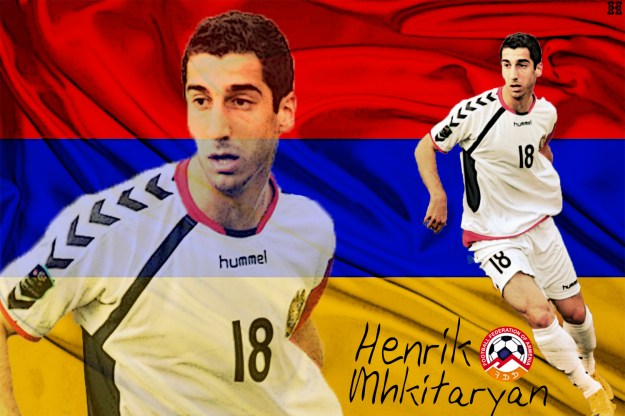
“Henrik Mkhitaryan is only 23 but this year he will almost certainly win his third Armenian player of the year award. So consistent has his excellence been that the surprising thing now is not that he was won so much so young, but that he did not win the award in 2010. The Metalurh Donetsk midfielder Karlen Mkrtchyan had better have made the most of that success, because there’s little chance of Mkhitaryan relinquishing the award any time soon.” Guardian – Jonathan Wilson
Dzeko, child of Sarajevo, grows into humble star for rising Bosnia
“The lights in tower blocks that stand at one end of the Bilino Polje Stadium glimmer through a thick haze. It feels foggy, as it always does on match nights in Zenica, the industrial town where Bosnia-Herzegovina plays its home matches, but this isn’t mist; rather it’s the oily smoke from the dozens of cevapi stalls that line the streets around the ground. And if you peer hard enough through the murk, you see the same face staring back from every T-shirt stall: Edin Dzeko.” SI – Jonathan Wilson
Bosnia-Herzegovina move beyond hope towards expectation
“For Bosnia-Herzegovina, the hope is becoming unbearable. Tuesday night’s 3-0 victory over Lithuania, coming after a 0-0 draw in Greece the Friday before, has put them at the top of their group with four games played. There is optimism that they will qualify for the World Cup for the first time, but it is tempered by the memories of the recent past.” Guardian – Jonathan Wilson
San Marino’s Davide Gualtieri recalls the pain his goal caused England
“The equation was simple. If England beat San Marino by seven and Holland failed to win in Poland they qualified for the 1994 World Cup, second in their group behind Norway. At kick-off on 17 November 1993, it seemed difficult but not impossible; 8.33 seconds later, the dream was over as San Marino took the lead. It was not mathematically impossible for England to qualify from there but psychologically, morally, it became so.” Guardian – Jonathan Wilson
Big-spending Zenit face Milan under strain of divisions and defeats
“It’s not difficult to pinpoint where it started to go wrong for Zenit. Last season they won the league by 13 points, lifting the title for the second time in succession. Although they were beaten in the Super Cup by Rubin, they began this season with four straight wins, despite a fixture list that looked testing: there was a 3-1 triumph at CSKA and then a 5-0 demolition of Spartak. At that stage, it looked as though Zenit might cruise to a hat-trick of Russian titles.” Guardian – Jonathan Wilson
Inconsistent Arsenal still lacks ‘moral courage’ despite changes
“Some things never change. All season the question has been whether Arsenal had, at last, found the defensive resolve to make it a genuine threat for honors. A 2-1 loss to Chelsea on Saturday provided the answer; the same old flaws, the same old weaknesses persist. It can seem, at the highest level, as though soccer is primarily about control of midfield: dominate there, and the chances will come. But that is assuming all else is equal, and for Arsenal it rarely is.” SI – Jonathan Wilson
The question: How troubling is Liverpool’s start?

“Not since 1903 have Liverpool had a worse start to the season but for the most part their supporters seem relatively sanguine. The fixture list has not been kind, offering up home games against three of the sides likely to fill the top four positions in the Premier League at the end of the season and testing away games at West Bromwich Albion and Sunderland. And Liverpool have played pretty well – even in the home defeat by Arsenal, when they ended up comfortably beaten 2-0, there was an hour or so in which they controlled the ball.” Guardian – Jonathan Wilson
Liverpool’s Failure To Strengthen Their Squad Could Be A Blessing In Disguise
“It may not have been that elusive first three Premier League points, but Brendan Rodgers secured his first domestic win as Liverpool boss as his young side put in an excellent performance to beat a strong West Brom team 2-1 away in the League Cup and qualify for the next round, where they’ll face Rodgers’ old side, Swansea, at Anfield. It was a record breaking night for the Reds, with Jerome Sinclair coming off the bench to become Liverpool’s youngest ever player at 16 years and 6 days of age – he wasn’t even alive for Euro 96, how old do some of you feel, eh?” Sabotage Times