Author Archives: 1960s: Days of Rage

Unknown's avatar

About 1960s: Days of Rage

Bill Davis - 1960s: Days of Rage

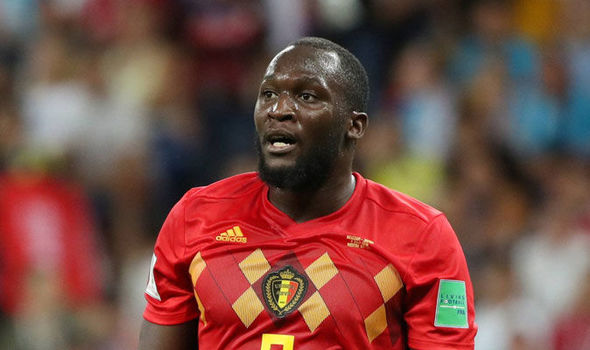
Romelu Lukaku gives Belgium clue to solving mystery of beating Brazil


“After all that there was no need for Belgium to be so coy. Roberto Martínez and his team had talked their way into this quarter-final like underdogs, twirling in deference to the extent that it seemed fair to wonder whether they might at least simulate a little swagger. But who needs to strut around when they can play some of the most dynamic, coruscating counterattacking international football in years? And who needs to parade on to the pitch when they have prepared to effect the kind of victory that might define a generation’s work? They lined up with a plan and it has taken them to within two games of a title that would make good every prediction, every breathless think-piece, every confident statement about Europe’s emerging force of the decade. Now Belgium, for all their false dawns, have at last found their level. On the eve of the game Romelu Lukaku had puffed out his cheeks and made a show of having to think very hard indeed about any possible weaknesses Brazil held.” Guardian

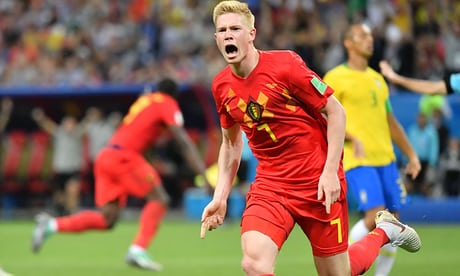
Brazil knocked out of World Cup by Kevin De Bruyne and brilliant Belgium
“In years to come, when this stadium is a crumbling white elephant, they will sit in almost empty stands, hear the wind whisper across the marsh that surrounds it and believe what they hear is the ghosts of giants. In three games, Kazan has claimed the winners of 11 World Cups. First Germany went, insipid against South Korea. Then, in a full-blooded epic, Argentina were blown away by France. And then fell the biggest of them all, Brazil, outwitted and outbattled by Belgium, who will face France in Tuesday’s semi-final. Brazil had chances. A few ricochets in the box did not fall their way.” Guardian

Brazil sent packing: Kevin De Bruyne’s magic fires up Belgium to knock Selecao out of World Cup
“Great World Cup games can be the epic comeback tale and others, like this one, are about how one team stands firm in the gale of a relentless attacking force, although quite how Belgium hung on to reach the semi-finals and send Brazil home they may never know. It was another Russia 2018 classic, featuring a Belgium side who plundered two goals against their famous opposition twice in the first 32 minutes after which the men in the yellow shirts would spend the next hour in thrilling perpetual chase. Led by their little general Philippe Coutinho, and perhaps with a little longer at their disposal, it would have been Brazil in the semi-final against France in St Petersburg on Tuesday. But instead the last South American side are out, beaten by the shrewdness of Kevin De Bruyne on the counter-attack and Marouane Fellaini and his fellow midfield sentry Axel Witsel, the two unmistakeable guardogs of this Belgium team. This was the golden generation of Belgium against a country where every generation is golden, and the great attacking talent of De Bruyne, Eden Hazard and Romelu Lukaku prevailed.” Telegraph

Thibaut Courtois’ Elastic Limbs Carry Belgium Into the World Cup Semifinals
“Belgium leaped out to a two-goal lead thanks to a Brazilian own goal and a surgical first-half counter from its front three of Eden Hazard, Romelu Lukaku, and Kevin De Bruyne. It held on to upset Brazil 2–1 thanks to its star goalkeeper, the elastic ectomorph Thibaut Courtois. Courtois stands 6-foot-5, with most of that length apparently in his neck and shins. When he stands in goal, his wingspan looks nearly infinite. Never has a real human looked more capable of stretching his limbs in the Mr. Fantastic/Elastigirl manner.” Slate
Uruguay 0 – 2 France

“France are into the semi-finals of the World Cup for the first time since 2006 after seeing off Uruguay with the help of a terrible error by goalkeeper Fernando Muslera. In terms of excitement, this quarter-final tie did not come close to Les Bleus’ win over Argentina in the last 16 but will still be remembered for the contrasting fates of the two goalkeepers, with Hugo Lloris producing a contender for save of the tournament while his opposite number made a mistake that was even more memorable.” BBC (Video)

Deschamps holds golden ticket but faces tough double for France glory
“Advantage France. On a cool summer’s day in Nizhny Novgorod, jewel of the upper Volga, Russia 2018 turned a slight but significant shade of blue. There are different ways of announcing yourself as the most likely winners of a World Cup. With nine days to go before the house lights come up the ideal outcome for Didier Deschamps’ France would have been a loosening of the throttle, a moment for those delicious attacking talents to click together and illuminate the late stages. There is of course a basic problem here. For that situation to arise it would be necessary for Didier Deschamps’ France to be somebody else’s France.” Guardian

The Death of the American Soccer Troll

“My favorite media story of the World Cup is happening in Brian Phillips’s Twitter feed. Every few days, a certain kind of fan tells Phillips, one of the best soccer writers on the planet, that he shouldn’t use the word ‘soccer.’ He should use ‘football.’ There’s a name for this sort of pest: the soccer snob. But whenever I see another snob taking a dive, I wonder what happened to their counterpart: the American soccer troll. You know, the person who showed up during every World Cup to declare that soccer (they’d never call it ‘football’) sucked; that the sport was deeply and fatally un-American; that the U.S. soccer boom was a mass illusion schemed up by a few guys in Brooklyn. In 2018, the American soccer troll has more or less vanished. They’re sitting out the World Cup as surely as the U.S. men’s national team.” The Ringer

Neymar and the Art of the Dive


“Alarm bells rang inside Jim Calder’s brain earlier this week as he watched Neymar, the Brazilian soccer superstar, squirm on the grass and cry out in apparent distress. ‘Neymar does what all beginning actors do,’ he said. ‘They oversell the event.’ Calder would know. For three decades he has taught acting at New York University’s Tisch School of the Arts. His voice has been consistently hoarse this summer, a consequence of yelling at students all day at a theater workshop he runs every year in Florence, Italy. Yet when the classes have ended, when he turns on the television to watch the World Cup at night, he continues to have his thespian tastes affronted.” NY Times (Video)

If Belgium are to beat Brazil in their quarter-final, how can they do it?

“There was a spell, for the first 20 minutes or so, when it seemed Mexico might be able to trouble Brazil. Carlos Vela was getting the better of Fagner on the Brazil right and it felt that Mexico, as they had throughout the group stage, were struggling to convert decent positions into clear opportunities. But the longer the game went on, the more it became apparent that Brazil were comfortably holding Mexico at arm’s length. That first 20 minutes, though, perhaps offers Belgium the best hope there is.” Guardian – Jonathan Wilson

Not Socrates’ Brazil

“Still celebrated in those lands without an equivalent object of pride of their own, in Brazil, the Seleção may no longer bring the same gleam to national eyes. The country’s organic crisis has served to dull the glow of that iconic yellow jersey. A national symbol, the shirt has become an object of dispute in an intensely polarized Brazil. Would success at the World Cup go a way toward redeeming it? It is heartening to see images of celebration on Lebanese or Jamaican or Haitian streets following another victory for the Seleção in Russia, another step towards the Hexa. It may be the benefit of geographical distance, but that footballing gusto seems so much more uncomplicated than it does here in São Paulo.” Africa is a Country

2018 World Cup Predictions


“The World Cup is back, and so is another edition of FiveThirtyEight’s World Cup predictions. For those of you familiar with our club soccer predictions or our 2014 World Cup forecast, much of our 2018 forecast will look familiar. We show the chance that each team will win, lose or tie every one of their matches, as well as a table that details how likely each team is to finish first or second in their group and advance to the knockout stage. This year, we’ve added a few features to our interactive graphics. We have a bracket that illustrates how likely each team is to make each knockout-round match that it can advance to, as well as its most likely opponents in those matches. …”
FiveThirtyEight
Metafilter: it’s coming to someone’s home. (Video)

Possession lost on the World Cup stage as defences learn to adapt

“No side, perhaps, is ever so much itself as when it is going out of the World Cup. When teams – or at least those with aspirations to the title – fail, they tend to fail in their own way, and become too much of themselves: self-parody is a perennial danger. And so Spain and Germany went out of the World Cup after anaemic performances in which they seemed to fetishise possession rather than it being a means to an end. That doesn’t mean juego de posicion football is over, as some of the more excitable voices on social media have claimed; it just means that two teams who played football infected by Pep Guardiola had bad tournaments. Sides who play post-Cruyffian football won the league in Spain, England and Germany, while Napoli came second in Serie A.” Guardian – Jonathan Wilson

World Cup Summer in Postcolonial France

“Summertime in France tends to be hot – and not just in terms of degrees of Celsius. Of course, the occasional temperature heatwave (canicule) – famously in 2003 – does raise the question of national preparation and social protection, of the progressive neoliberal abandonment of the urban poor and elderly to the precarity of meteorological circumstance and unequal access to air conditioning. But the French summer also heats up in more metaphoric, if equally consequential, ways. State-mandated breaks from schoolyear demands and workday routines provide the occasion for pondering broader existential questions about individual futures and collective destinies. And more often than not, such public reflections tend to question the shifting meaning of Frenchness and the future of the Republic.” Pluto Books, Postcolonial France: Race, Islam, and the Future of the Republic – Paul A. Silverstein

Manager Oscar Tabarez Wields His Influence to Mold, Adapt, Embody Uruguay


“Oscar Washington Tabarez is fascinated by history. Barely a press conference goes by in which he doesn’t, in one of his typically thoughtful answers, illustrate a point with an example from a previous World Cup. You wonder how that plays in the dressing room, in the modern world of celebrity footballers who, by reputation at least, care for nothing but their next fancy car or watch. But then you see Luis Suarez sitting next to him, gazing at his manager with rapt attention. If there were any doubt before that Tabarez is the greatest figure in post-War Uruguayan football history, it has surely gone now.” SI – Jonathan Wilson

Uruguay is playing for you
“The knock came at four in morning on Sunday, April 15, 1984.  Dr. Vladimir Roslik of San Javier was informed by an officer of Uruguay’s 9th Cavalry Regiment that he was being arrested for questioning.  The next day Roslik’s wife was advised to collect her husband’s body from the Fray Bentos Hospital. Roslik, who attained his medical degree from Patrice Lumumba University in Moscow in 1969 was to be the last victim of Uruguay’s military dictatorship.” Africa is a Country

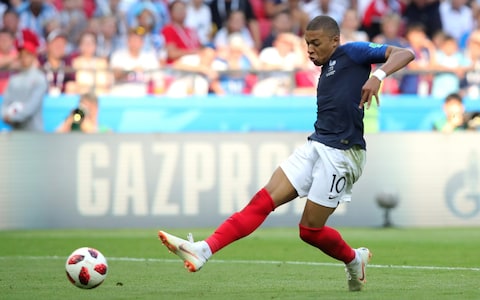
Kylian Mbappe in prime position for the Golden Ball despite just one truly good performance

“SOME feared the second round of the World Cup would prove underwhelming after an eventful group stage, but those fears now appear misplaced after a hugely entertaining four days in Russia. The second round featured nail-biting penalty shoot-outs, a major upset with Spain departing, and an all-time classic with France and Argentina’s seven-goal thriller. That game, with France prevailing, also proved crucial in the race for the Golden Ball. This round unquestionably belonged to one man: Kylian Mbappe. Fielded on the right of France’s 4-2-3-1 system against Argentina, he produced one of the most rampant, dominant performances you’ll ever witness at a World Cup.” Unibet – Michael Cox

World Cup 2018: A Russian Advance

“There was a citywide party on Sunday night in Moscow that local reports are calling historic—and if you’ve ever been in the capital of a footballing nation on the day that its team wins a knockout World Cup match, you know there’s a good chance the reports were not exaggerating. It’s especially poignant that the people who were getting their collective freak on were the Russians, for no stroll through the country’s recent history will reveal an event that could as thoroughly and unexpectedly unite its citizens across political and social lines as the national squad’s upset defeat of Spain in the World Cup’s round of sixteen at the city’s Luzhniki Stadium. There was no precedent for the celebration just as there was no precedent for the result.” NYBooks

England vs Colombia, World Cup 2018: Drop in performance raises question about Gareth Southgate’s tactical nous


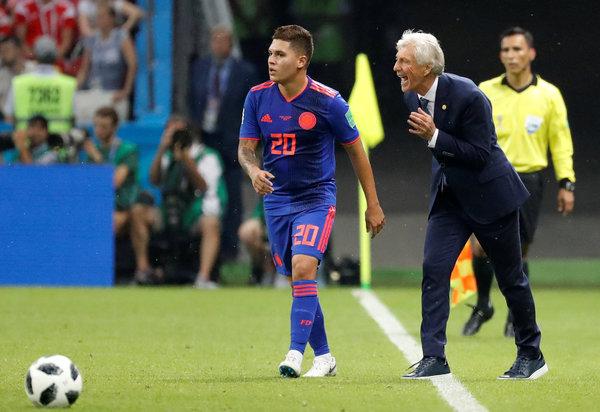
“England finally ended their abysmal run in penalty shoot-outs with their second-round victory over Colombia, but a dramatic drop in performance towards the end of normal time raises a question about Gareth Southgate’s ability to influence matches tactically. Jose Pekerman spring a surprise with his team selection. Having previously used a 4-2-3-1 and experimented with a 4-3-3 in training, this was actually more of a midfield diamond. With James Rodriguez out, Juan Quintero played as the number 10, with Radamel Falcao upfront to the left, and Juan Cuadrado playing in a right-sided forward role. Quintero pushed forward to press England’s centre-backs three-against-three, but Pekerman’s approach was basically about keeping things tight in deeper positions, and guarding against England’s midfield runners.” Independent – Michael Cox

England’s unique 3-3-2-2 formation could cause Colombia headaches
“For all the optimism about Gareth Southgate’s side and their chances of winning the World Cup, it’s so often this stage — the first knockout round of a major tournament — in which England collapse. This is usually because England have appeared unprepared for the opposition’s approach, or at least too inflexible to guard against it. Germany’s counter-attacking speed wasn’t nullified in 2010. Andrea Pirlo’s deep-lying playmaking skills weren’t shut down in 2012. Iceland’s long throw proved fatal in 2016. Tactical naivety has constantly been England’s main problem.” ESPN – Michael Cox

How to improve the World Cup? Scrap penalties and move the goalposts

Penalty shootouts are an offence against the greatest of team games, association football. They are a lottery, doctored to add tension, personal agony, group ecstasy and nationalist hysteria, for the benefit of television. They are to sport what Love Island is to Romeo and Juliet. Before shootouts were introduced in the World Cup in 1978 (although the first time one was needed was in 1982), coins were tossed if nothing could be decided on the field. No triumphalism was attached to the winner. But since coin-tossing was boring, it was replaced by what amounted to the public execution of individual players who missed. Team effort was replaced by unarmed combat.” Guardian (Video)

Brazil is Haiti’s national football team

“On a balmy evening in Port au Prince in 2013, I was on my way to meet folks from Radio Metropole, Haiti’s historic radio station, to begin the groundwork on a compilation of Haitian music largely recorded under Papa Doc Duvalier’s reign. It was a weekday, just before rush hour which meant bottlenecked traffic jockeying for road space with UN armored vehicles, yet the streets were dead silent. Normally bursting with sounds of school children and faint fragrances of scotch bonnet peppers and griot pork, the silence could be mistaken for an arbitrary curfew.” Africa is a Country

Anatomy of a Goal


“… Those words are true of every goal—the ugly ones and the pretty—but were perhaps never more honest than after witnessing Nacer Chadli’s last-minute stunner to complete Belgium’s 3-2 comeback win over Japan on Monday. Despite dominating the majority of the match, the Red Devils found themselves facing a two-goal deficit, and time was acting against them. The Japanese goals were each stunning in their own rights. Genki Haraguchi caught the end of a through ball and threaded it past a diving Thibaut Courtois in the 48th minute. Four minutes later, Takashi Inui found a window in a sea of Belgian defenders and unleashed a shot that touched the back of the net before a diving Courtois hit the ground.” The Ringer (Video)

Stuck in Soccer Limbo, in the Shadow of the World Cup

“An odd thing happened in December when soccer fans in Crimea, the disputed Black Sea peninsula annexed by Russia from Ukraine in 2014, began trying to buy tickets to the World Cup. Some ticket seekers trying to make purchases through FIFA, soccer’s world governing body, encountered error messages on their computers. The problem, the president of Crimea’s soccer federation told reporters, was that FIFA still recognized Crimea as part of Ukraine. Fans on the peninsula feared that World Cup tickets had joined cellphones and credit cards on a list of imported items banned by international sanctions.” NY Times

If Ronaldo Can’t Beat Uruguay, the Least He Can Do Is Pay Taxes

“Before his team lost on Saturday, Portugal’s superstar forward Ronaldo was having a thrilling World Cup. There was his stunning performance against Spain, where he scored three of the game’s six goals. There was his outstanding early header against Morocco, which prompted his coach to declare that Ronaldo was aging ‘like a port wine.’ Exhilarating displays of virtuosity! Brilliance and showmanship! What’s not to like?” NY Times

Belgium 3 – 2 Japan


“Belgium completed a remarkable revival as they came from the World Cup abyss and beat Japan to reach the quarter-finals. Roberto Martinez’s side were trailing 2-0 when he brought on Marouane Fellaini and Nacer Chadli in the 65th minute, and Fellaini scored the equaliser before Chadli netted a 94th-minute winner.” BBC (Video)

Belgium come from two down to knock out Japan in the World Cup’s last 16
“It will go down as a World Cup classic, a wild and chaotic game that will be talked about in years to come, in particular that dramatic moment, with almost the last kick of the evening. Belgium went from one end of the pitch to the other in the blink of an eye and scored the goal that had Thibaut Courtois charging out of his area to embrace the coach, Roberto Martínez.” Guardian

Fellaini and Chadli as game-changers? This World Cup is absolute chaos
“Hearts sank like lost shoes in a muddy field in Manchester when the news emerged last week. Derision, resignation, bafflement: United had a perfect opportunity to rid themselves of Marouane Fellaini but instead they gave him a new contract. If one listened to some of the wailing, it felt as if Fellaini was an irritating house guest, the sort who puts his shoes on the couch and takes bites out of the cheese. The time had come for him to move on but United not only invited him back in for a brew, they made him up a proper bed in the spare room.” Guardian

Neymar and Firmino take Brazil past Mexico and into World Cup last eight

“Beneath the fancy hair, the absurd solipsism and the antics of a latter-day Sun King, it is good to be reminded sometimes that Neymar is an exceptionally gifted footballer. It was his goal that broke the deadlock and if his influence on this game was far more positive than in any in the group stage, it was almost entirely because he played without that same furious determination to be the protagonist. But, of course, he is the same Neymar, the same diva who must always be the centre of attention. Just when everything seemed to be going well, just when it seemed there might be an argument he was growing into his role, he reacted ludicrously as Miguel Layún picked the ball from between his feet as he lay by the side of the pitch. Perhaps the Mexican midfielder did brush his ankle but the fourth official was roughly six inches away and saw nothing untoward, and neither did VAR.” Guardian – Jonathan Wilson

World Cup 2018: How Blaise Matuidi laid the platform for Kylian Mbappe to put in the performance of the tournament

“Didier Deschamps appeared entirely unsure of his best system ahead of the opening game of this tournament, but recent World Cup winners have tended to suddenly find their optimum formation midway through the tournament. In 2002 Brazil clicked into gear once introducing a second holding midfielder, in 2006 Italy’s switch from 4-3-1-2 to 4-2-3-1 worked wonders, in 2010 Spain thrived once they added more directness and width to their attack, and Germany’s 2014 side changed considerably from their opening game to the final.” Independent – Michael Cox

Why Argentina’s road to World Cup failure is long, complicated and paved with greed and corruption
“… Sebastian Fest’s line in La Nación on the day of Argentina‘s World Cup 2018 elimination this weekend was so starkly poignant because it gets straight to the crux of the matter, cutting through every excuse offered and pointing straight to the institutional rot that is fundamentally to blame for Argentina’s ills. That bumpy road that ended in Kazan, Russia, in the baking summer of 2018 is our current waypoint but this path truly began all the way back in the mid-winter of Buenos Aires, Argentina, in 1978 on the day that the Albiceleste won their first-ever World Cup.” Independent

Is Neymar Black? Brazil and the Painful Relativity of Race

“Years before he became the most expensive player in the world; before his Olympic gold medal; before the Eiffel Tower lit up with his name to greet his professional move from Barcelona to Paris, Neymar da Silva Santos Júnior, the Brazilian forward known to the world simply as Neymar, faced his first public relations controversy. The year was 2010, and Neymar, then 18, had shot to fame in Brazil after a sensational breakout season. During an interview for the newspaper O Estado de S. Paulo, in between a conversation about Disneyland and sports cars, he was asked if he had ever experienced racism. ‘Never. Not in the field, nor outside of it,’ he replied.” NY Times

Russia stun Spain with penalty shootout win to reach quarter finals, Iago Aspas and Koke miss from the spot


“It started as one of Spain’s typical grand passing rondos, it grew over 90 minutes and then 120 into one of the biggest mountains of possession amassed since World Cup records began, and by the end it felt like this great generation of players had run out of fresh ideas. This was the remnants of the great world champions of 2010 passing the ball 1,114 times in a match but unable to score more goals than a Russia team who refused to be passed to death in the way that so many opponents have in the past. By the end Andres Iniesta looked close to tears, Gerard Pique and Sergio Ramos had been beaten again and the masterplan that had seen Spain dominate the first decade of the century looked more than a little tired.” Telegraph

Tiki-taxi for Spain as style becomes vice against Russia’s rearguard
“Tiki-taxi for Spain. On a slow-burn, increasingly wild afternoon at the Luzhniki Stadium the outstanding team of the age produced a quietly extraordinary performance, exiting the World Cup with surely the most statistically dominant losing game ever mustered up. At the end Spain’s players sat drained in the centre circle, ranged like red pegs in the same static formation that had seen them pass and move and pass and pass their way through the previous 120 minutes.” Guardian

Croatia 1 – 1 Denmark (Croatia win 3-2 on penalties)

“Danijel Subasic saved three penalties as Croatia knocked out dogged Denmark in a nerve-shredding shootout to set up a World Cup quarter-final tie against hosts Russia. It came at the end of a largely disappointing tie – and one that had seen Luka Modric spurn a golden chance to snatch a late winner when his penalty shortly before the end of extra-time was superbly saved by Kasper Schmeichel. The Leicester City goalkeeper also saved two penalties in the shootout at the Nizhny Novgorod Stadium but he could not prevent Ivan Rakitic slotting home the decisive 10th kick.” BBC (Video)

World Cup 2018: Waiting for ‘Golazo!’

“I was supposed to have gone to Gonzalo and Pia’s house, in Chimalistac, a southern neighborhood of Mexico City, to watch the Mexico-Belgium 1998 World Cup match. I must have gotten got caught up in something else; I didn’t care much about ‘soccer.’ In high school, in Massachusetts, I’d played football, and was a Red Sox fan. When I left my apartment in the Condesa at the start of the second half, Mexico, El Tri—as the national team is called, for the tricolor flag—was losing, 2-0. It was a sunny Sunday, the sidewalks and streets empty because everybody was inside watching the match. I caught a taxi, one of those green VW Beetles with the front passenger seat taken out. On the lowered door of the glove compartment sat a battery-operated black-and-white TV. The driver asked me to hold the antennae out the window.” NYBooks

Kylian Mbappe destroys Argentina to send Lionel Messi and co home in World Cup thriller


“It is one of the gifts of being the most talented teenager footballer in the world that Kylian Mbappe makes fast defenders look slow and slow defenders look ridiculous, although in the end this was about bigger things than just a first half demolition of poor old Marcos Rojo. The 19-year-old’s savage turn of speed that won France the penalty for their first goal saw him flash before our eyes in real time while simultaneously the careers of half a dozen Argentinian defenders and midfielders were flashing before theirs. One of those moments that every old pro recognises when the legs are getting slower, the youngsters are getting quicker and the best they can hope for is to kick him before he reaches the area.” Telegraph

Welcome to Kylian Mbappé’s Coming Out Party
“It’s Kylian Mbappé’s world. We’re all just living in it—even Lionel Messi. Mbappé became the first teenager to score more than one goal in a World Cup knockout match since Pelé in 1958, as he tallied twice and drew a penalty. When the final whistle sounded, the scoreboard read 4-3 in favor of Les Bleus, and no player was more responsible for the victory than the youngest player on the field.” The Ringer (Video)

France 4 – 3 Argentina
“Kylian Mbappe announced himself on football’s biggest stage with two fine goals that gave France victory in a classic World Cup encounter with Argentina, and a place in the quarter-finals. Though much of the focus before the game was on Argentina superstar Lionel Messi, it was Mbappe who produced a brilliant performance that will linger long in the memory.” BBC (Video)

Luis Suarez triumphs in battle with Cristiano Ronaldo as Uruguay knock Portugal out of World Cup

“Two sumptuous goals from Edinson Cavani set up a tantalising quarter-final meeting with France on Friday on a day when hope of a Messi-Ronaldo showdown in Nizhny Novgorod was vanquished. Yet this was not quite the fairytale for Cavani that France’s thrilling 4-3 victory over Argentina had proved for his club team-mate, Mbappe, earlier in the day. There was only 10 minutes between Cavani scoring Uruguay’s decisive second after the Portugal defender Pepe had cancelled out his opening goal and the striker limping off with a crestfallen look on his face.” Telegraph

Edinson Cavani sends Uruguay to World Cup last eight as Portugal bow out
“Cristiano Ronaldo walked Edinson Cavani out of this game, helping the Uruguayan to the touchline, but not before the Uruguayan had put Portugal out of the World Cup. Cavani departed with 20 minutes remaining, slowly making his way around the edge of the pitch, a lost look on his face. His two goals, both of them superb, took Uruguay through to the quarter-finals but it appears unlikely he will be with them when they face France in Nizhny Novgorod on Friday. Twenty minutes later, it was Ronaldo wearing that look: his World Cup is over, too.” Guardian

Afro‑Europe in the World Cup

“It isn’t fair. Though Africa has more countries and a larger population than Europe, the continent only has five berths in the World Cup compared to Europe’s thirteen. And they had to fight for that: it was only a boycott in 1966, led by Kwame Nkrumah, that changed the policy that allowed only one spot for either an African or an Asia team. There are all kinds of justifications, of course, offered for this inequality. And it will likely take a long time for change to happen, and then it will come incrementally. While we wait patiently for institutions to change, however, the world has a way of rendering a kind of justice. Post-colonial migration has created a loophole in FIFA’s global apportioning of representation. This year, there will be two additional African teams in the competition: France and Belgium.” Roads and Kingdoms

Fernando Hierro – Spain’s emergency manager with a pastoral touch


“The message arrived very late on the night Spain played their opening match against Portugal, so Miguel Linares did not see it until the following morning. When he looked at his phone, he says he could hardly believe it: it was from the national team manager, Fernando Hierro. The day before Linares had announced that, out of contract at 35, he was leaving second division Real Oviedo, where he had played for four seasons. During one of them – and not an especially successful one in 2016-17 – his manager had been Hierro, who now wrote from Russia to wish him well and offer thanks for everything he had done.” Guardian

World Cup 2018: Peru’s Permission to Dream

“On May 30, 2018, the Peruvian soccer squad boarded a plane to Zurich. The chartered flight was loaded with twenty-three players, their technical team, and—we heard over and over—the dreams of a nation. It was the first stop en route to the World Cup in Russia. ‘Peru is ready to face any team in the world,’ said Ricardo Gareca, the Argentinian coach credited with getting Peru this far. But Paolo Guerrero—El Capitán, Peru’s all-time leading goalscorer—did not fly with them. His absence made headlines: Peru was going to play a World Cup for the first time in thirty-six years, with the national star banned from the field. It had been a fraught road to Russia.” NYBooks

Bosnia Divided

“There is a natural desire, on the part of everyone from pundits to fans to football bureaucrats, to exult in the power of the World Cup to unify. This is especially true in Bosnia-Herzegovina, which is making its World Cup debut next month. Writing for Sports Illustrated, Jonathan Wilson noted that ‘tens of thousands of fans of all ethnicities took to the streets of Sarajevo to celebrate Bosnia’s qualification for World Cup 2014 […] There, general delight suggested that something unexpected and beautiful had occurred, and it hinted at a possible future unity.’ Inevitably, the focus of much of the attention will be on how this divided country’s qualification for a World Cup has united the entire nation after nearly twenty years of post-civil war rehabilitation. ‘A few years ago you could not imagine Bosnians, Serbs and Croats supporting the team, but that could change now,’ Bosnia-Herzegovina coach Safet Sušić was recently quoted as saying in an article pointedly titled ‘Bosnia goes from the battlefield to the World Cup.'” Roads and Kingdoms

World Cup Knockout Stage Statistical Primer


“The World Cup enters its knockout stage this weekend, which means we’ll see heartbreak and joy in every game. From multigoal thrillers to dour defensive battles that lead to anxiety-inducing penalty shootouts, the emotional roller coaster is about to ramp up a notch. Here are some statistical primers derived from the World Cup data collected by StatsBomb during the group stages.” The Ringer

50 Years Of World Cup Doppelgangers

“*FiveThirtyEight’s Modeled Event Soccer Similarity Index (MESSI) is a system that evaluates and compares player performances across 16 metrics. Each metric is measured on a per-match basis, and for each metric we calculate a z-score — the number of standard deviations above or below average for that World Cup. The similarity between players’ performances is based solely on the average between each of their 16 z-scores — in other words, comparisons match players who are good at similar parts of the game, but the model ignores details like a player’s age or position. Players must have played at least 30 minutes in a given World Cup to be included. Play styles are generated through k-means clustering. Only successful crosses, tackles, passes, take-ons and headers are counted, and tackles, interceptions and blocks are adjusted for the time of possession that the player’s team had during each match. Progressive passes and dribbles advance the ball at least 10 yards toward the opponent’s goal or into their box. Expected goals is the number of goals that our model thinks an average player would score based on the quality and quantity of shots taken, and non-shot expected goals is an estimate of the number of goals an average player’s non-shooting actions — passes, take-ons, interceptions, tackles and headers — would generate for his team.” FiveThirtyEight

World Cup 2018: Sacrés Bleus!

“It will escape hardly a single fan of Les Bleus that July 12, 2018, will mark the twentieth anniversary of France’s 3-0 triumph over Brazil to win the World Cup at home at the Stade de France outside Paris, after which a million revelers—black, blanc, beur (black, white, Arab) alike, as the story goes—stormed the Champs-Élysées, commencing Bastille Day celebrations a couple of days early and heralding, in the eyes of the hopeful, a new multicultural dawn for the Fifth Republic. Even those who were not yet born then—a group that includes Kylian Mbappé, perhaps the most electrifying player on the current France team, who was born later that year in the Parisian suburb of Bondy—will find it hard not to think about that 1998 victory. There are vivid narrative links between that iteration of Les Bleus and this year’s squad in Russia”  NYBooks

The 2018 World Cup Letdown All-Stars

“The World Cup is a deceptively tricky tournament to predict. Even as it showcases the game’s greatest players on an international stage (with apologies to poor Christian Pulisic), the window to make a lasting impression is aggravatingly short: At most, a team will play seven games in the tournament. The majority of club leagues, meanwhile, play upward of 30 matches in a season—and that’s before considering concurrent cup competitions. The brief nature of the World Cup, in other words, is basically an international version of March Madness and all the swirling chaos that entails.” The Ringer

World Cup 2018: Analysing the tactical flaws England will look to exploit against Colombia in the Round of 16


“If it remains difficult to judge England’s level of ability, after two victories against below-par opposition and a defeat with a second-string XI, something similar can be said of Colombia for very different reasons. Jose Pekerman’s side have blown hot and cold, with a fine 3-0 win over Poland sandwiched by a 2-1 defeat to Japan and a nervy 1-0 win over Senegal yesterday. The Japan loss was influenced heavily by the fact Colombia were down to ten men for almost the entire contest, and the Senegal performance was compromised by star man James Rodriguez clearly being unfit, lasting just half an hour. It seems unlikely he’ll be fit to start against England, and certainly won’t be 100% fit.” Independent – Michael Cox

Colombia Emerges From the World Cup Chaos, Booting Senegal

“After all that, after all the qualification and buildup, after six hard-fought matches and injuries and hand-wringing, it all came down to yellow cards. Just like Japan, Senegal won once, tied once, and lost once — falling by 1-0 to Colombia on Thursday after giving up a goal to Yerry Mina — but it will be the Japanese advancing to the knockout phase by virtue of having only three yellow cards, while Senegal had five.” NY Times

World Cup 2018: Russian city Samara, football and the space race

“Where the Sputnik stadium used to stand there is a housing block, Orbita’s pitch is now wasteland and the old Voskhod ground, named after a space rocket, is crumbling into ruin. These are just some of the old football arenas in Samara, the Russian World Cup host city that is most famous for helping drive the Soviet Union’s space race with the United States. About 1,000km south east of Moscow on the Volga river, Samara has so far hosted three World Cup matches, including Uruguay’s win over Russia on Monday.” BBC

Made in Argentina, and Now Coaching Everywhere at the World Cup


“For a while, even after he had embarked on his coaching career, José Pékerman refused to give up his taxi. He had driven the little Renault 12, given to him by his brother, for four years, after an injury had forced him to retire as a player but before he started work in the youth system at the Buenos Aires club Estudiantes. In those early days, Pékerman often arrived for training sessions in the car he had painted yellow and black himself. Coaching was his ambition, and he quickly showed he had a gift for it, but he was reluctant to part with the taxi. It was his guarantee that he could support his family, his safety net. In Argentine soccer, he knew he could never be certain when he might need it.” NY Times

World Cup Group Stage Ends With All Eyes on Fair Play, Unusual Battle for First

“Day 15 of World Cup 2018 saw the end of the group stage and another dramatic set of simultaneous group finales. Colombia and Japan advanced and Senegal was out in Group H after fair-play points was used a tiebreaker favoring the Japanese. And in Group G, Belgium beat England 1-0 to win the group and advance to the tougher side of the knockout bracket, while Tunisia exited on a high note, coming from behind to beat Panama 2-1.” SI

The Football Griot – Laurent Dubois

“In the early 1950s, a Senegalese radio announcer known as Allou developed a style of match reporting on the radio that delved deep into West African storytelling traditions. He drew on the styles of the griot—hereditary musicians who for generations have spoken the history of families and communities—to recount the exploits of these new heroes in real time. In one memorably tragic match, he recounted live as the player Iba Mar Diop scored a penalty kick at the last minute, winning the game for his team—only to collapse from a heart attack and die moments afterward. Radio journalists such as Allou gave audiences a way to experience and understand such dramatic moments by connecting them to broader cultural narratives about heroism and sacrifice.” Africa is a Country

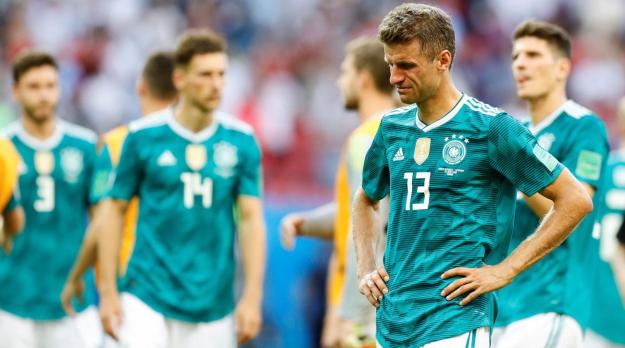
Arrogant Germany Accepts Its Shocking, Deserved World Cup Elimination


“KAZAN, Russia – Against Sweden, when Toni Kroos whipped in his late winner, the general feeling was that this was what Germany does. This was what it has been so good at over the years. Always, somehow, finding the vital goal at the final moment. Always somehow, finding a way through. This is the essence of being a Turniermannschaft–a tournament team–that no matter how badly actually plays, it always prevails.” SI – Jonathan Wilson

World Cup 2018: Germany boss Joachim Low admits side deserved to go out
“Germany manager Joachim Low says his side deserved to go out of the World Cup after they crashed out in the group stage in ‘historic’ fashion. The defending champions finished bottom of Group F after losing 2-0 to South Korea, the first time Germany have gone out in the first round of a World Cup since 1938. ‘This is something for us to reckon with,’ Low said. ‘This is historic. I am sure this will create some public uproar in Germany.’ Sweden won the group with a 3-0 win over Mexico at the same time, which meant Germany needed to win their game in Kazan.” BBC (Video)

Germany Flamed Out In Spectacular, Historic Fashion
“Say goodbye to another defending World Cup champion: Germany, the team that won it all four years ago, is officially out of the 2018 tournament. Despite ultimately only needing a win over South Korea — the fourth-worst team in the field, according to our pre-tournament soccer power index ratings — to advance to the knockout round, the Germans were upended 2-0 on Wednesday in what was easily the biggest upset of the World Cup thus far. (Going into the match, our model only gave South Korea a 5 percent probability of winning.)” FiveThirtyEight

Germany’s approach was football suicide – I’ve never seen such an experienced side so exposed
“England fans will have allowed themselves a satisfied smile as Germany made a shock World Cup exit. Some of those celebrations will not be so quiet. Opportunities to laugh at German football’s expense are rare. Such triumphalism should be accompanied with a warning. Remember what happened the  last time a German team were eliminated in the group stages of  a major tournament? It was Euro 2000. A restructure by the German football federation brought the World Cup 14 years later, as well as a few final and semi-final appearances in between. What has been clear over the course of three poor performances is that another rebuild of the German team is needed.” Telegraph – Jamie Carragher

Germany Is Out of the World Cup. Let’s All Laugh at Die Mannschaft.
“For the first time since 1954, Germany will not be exiting the World Cup’s group stage. South Korea stunned the defending champions 2–0 on Wednesday, sending Die Mannschaft to the bottom of Group F and out of the tournament for good. As a once unstoppable juggernaut heads home, the rest of the soccer world struggles to find a word to describe the joy it is feeling at Germany’s expense. While other nations ebb and flow between ‘golden generations’ and talent draughts, Germany chugs along with infuriating consistency.” Slate

‘Over and out’: media reacts to Germany’s World Cup exit
“In Germany. Niedergeschlagenheit (noun, feminine): Despondency. German football fans, who had never seen their country fall at the first hurdle of a World Cup finals before, will recognise it as they pick up their papers on Thursday morning. Their team, the holders and one of the pre-tournament favourites, finished bottom of Group F after a 2-0 defeat to South Korea on Wednesday. Bild. Germany’s most popular newspaper is ‘speechless’ as it contrasts its front page from June 2014 – after the national team inflicted a 7-1 semi-final defeat on Brazil on its way to winning the World Cup – with its Thursday edition. The headline is the same. The story is not.” Guardian

Germany Out, Brazil Through, Mexico Gets a Hand in Decisive World Cup Group Finales

“Day 14 of World Cup 2018 is done, and it will be remembered for defending champion Germany going out in the group stage—the fourth time in the past five World Cups that has happened—in a 2-0 loss to South Korea; for Mexico hanging on to survive with Korean help despite losing 3-0 to Sweden; and for Brazil and Switzerland maintaining their spots atop Group E to advance to the knockout rounds.” SI

Melilla, Morocco vs. Spain and the World Cup’s Unique Football Rivalry

“On Monday night in Russia’s Kaliningrad Stadium, Morocco played Spain in another thrilling FIFA World Cup match. It was the first time the two countries—which have had a love-hate relationship for over a millennium—met since a two-legged 1962 World Cup playoffs tie. Nowhere on earth—with the exception of Ceuta—had the match such political resonances than in Melilla, which is, along with Ceuta, a Spanish enclave on Moroccan soil. Melilla, with its wide boulevards, modernist buildings and tapas bars, has a distinctly Spanish feel. Palm trees abound.” Bleacher Report

Ghetto defendants


“So far, so so: France’s journey to the World Cup was not without worry, and pre-World Cup friendlies were all but reassuring. France’s opening game against Australia was an assault on the nerves but ended in video-assisted victory. [The next game, a 1-0 victory over Peru, was equally unconvincing–Editor]. The best thing to come out of this may well be the fact that Paul Pogba’s diary has replaced in the media Antoine Griezmann’s unbelievably tone-deaf docudrama La Decisión, in which he wasted half an hour of life to announce that he would stay at Atlético Madrid. Team France lives under the sign of video: a sign of the times—constant contact has become a staple of modern sports culture and communication. Or lack thereof.” Africa is a Country

Nigeria vs Argentina: Ever Banega’s return frees Lionel Messi from creative duties to inspire victory

“Argentina required a late goal from a hugely unlikely source – the right boot of Marcos Rojo – but their approach throughout their 2-1 victory over Nigeria was at least an improvement upon past displays. How much credit manager Jorge Sampaoli can take remains questionable, however, after various reports Lionel Messi and Javier Mascherano are effectively now running the dressing room.” Independent – Michael Cox

What’s wrong with Argentina? We now value ‘balls’ more than talent
“So many things are wrong with Argentina we do not know what is wrong; so much is happening no one knows what is happening. You could start an article on the news pages with that same line but they fit on the sports pages too because these are turbulent times for our football. It was not always like this. For many years, football made up for our long political, social and economic decline.” Guardian

How to really watch the World Cup

“Every soccer game is a story that opens up onto an infinite number of other stories. The World Cup is the ultimate concatenation of these stories, the greatest work of literature the sport has to offer. World Cup teams are perhaps the most visible embodiment of nations — collectives whose actions on the pitch can seem, in the moment, to determine the fate of a country. The biographies of particular players intermingle with that of the team, channeling and condensing our most vexed histories, those of nations and their unending quest to define themselves. Yet while many of us root for a particular nation in the World Cup, our fandom during the tournament is often an expression of a complex web of allegiances.” Vox – Laurent Dubois

For a 90-Minute Game, a Train Ride of 27 Hours


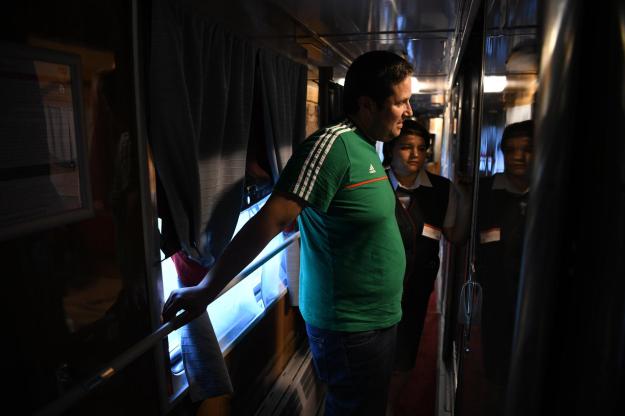
“YEKATERINBURG, Russia — After nearly 27 hours and 900 miles on a train from Moscow, Hans Josefsson’s pedicure remained immaculate. Before leaving Sweden 10 days earlier for the World Cup, he had his toenails painted blue and gold, the colors of the national soccer team. ‘A professional did it; I knew I would do a lot of walking in these sandals,’ Mr. Josefsson said before arriving here Tuesday afternoon in the easternmost Russian city in which matches are being played. A fellow passenger on the daylong trip, Luis Aragones, 24, an architect, had watched in Mexico City as Mexico stunned Germany, the defending champion, in its opening game. He had joined a delirious celebration whose mass jumping may have caused the equivalent of a minor earthquake.” NY Times

Politics on the pitch: Operation double eagle

“Try as they might, FIFA can’t keep politics out of the beautiful game. For football fans, players, and even officials, the events of the past few days have been a stark reminder of just how prominent politics are in this summer’s World Cup held in Russia. Last Friday, Egypt’s Mo Salah was photographed at a ceremonial banquet where he was granted ‘honourary citizenship’ by Chechen leader Ramzan Kadyrov. This comes just weeks after the publication of a photo featuring Salah and Kadyrov that resulted in criticism against the footballer, as Kadyrov faces accusations of outrageous human rights violations. It’s been rumored that Salah’s frustration with being the centre of political controversy has driven him to think about leaving the Egyptian national team.” Al Jazeera (Audio)

Algerian history as graphic novel: “The past flows into the future”

“The football World Cup of 1958 is mainly remembered for two men. The first is Pelé, and the second is Just Fontaine. On the way to the semi final, which they lost to Brazil, Fontaine scored thirteen goals for France, still a world cup record. France beat Germany in the play-off to finish the tournament in third. Absent from Les Bleues throughout the tournament was Rachid Mekhloufi, a twenty-one year old forward who played for Saint Étienne.” Africa is a Country

From Elimination to Elation: Argentina Somehow Staves Off Early World Cup Exit


“It’s probably best not even to try to make sense of it. You have Lionel Messi in your side. You bring on Sergio Aguero to play alongside Gonzalo Higuain in front of him. You have taken off Angel Di Maria. You have just brought on Cristian Pavon. None of them look like scoring. Passes are misplaced. The shape has gone. Every attempt to advance, it seems, runs into a Nigerian wall. It’s the same story as against Iceland, as against Croatia. All of the ball, no penetration. And then the goal comes. You make all your plans, you squeeze in as many gifted forwards as you can, and somehow the vital 86th-minute winner is scored by Marcos Rojo turning up with no justification whatsoever to volley in a rare accurate cross from Gabriel Mercado. With his wrong foot.” SI – Jonathan Wilson

Argentina Takes Its Bad Self to the Knockout Round
“With time running out and his team on the brink of group-stage elimination, everyone in the world knew there was only one man Argentina could count on to find the winner against Nigeria. Yes, Marcos Rojo, the versatile defender who made nine Premier League appearances for Manchester United this season. Scorer of four goals in the last four years for club and country. Perhaps the last person you might expect to save his country by scoring a late goal, other than Argentina forward and chronic international choker Gonzalo Higuain. Rojo’s claim, made in an interview after the game, that he told his teammates he was going to score is either a sign of a healthy, functioning ego or grounds for a psychiatric evaluation, even considering that one of those four goals in the last four years was the winner against Nigeria in the 2014 World Cup.” Slate

Argentina Survived the Group Stage. But How Far Can Messi Carry Them?
“On a team with Lionel Messi, Sergio Agüero, Gonzalo Higuaín, and Ángel Di María, few would have predicted that Marcos Rojo — yes, that Marcos Rojo; the one who scored just one goal in four seasons with Manchester United — would be the hero who put Argentina ahead of Nigeria and into the knockout stages.” The Ringer

Argentina Gets a Clean World Cup Slate After Marcos Rojo’s Heroic Volley

“Day 13 of World Cup 2018 is done, and the second night of simultaneous group finales brought another evening of memorable drama. Argentina got the victory and help it needed to survive and advance in a thrilling 2-1 win against Nigeria, while Iceland lost to Croatia 2-1. And in Group C, France and Denmark played a dreadful 0-0 tie that allowed Denmark advance to the knockout rounds as a second-place finisher, while Australia squandered its chance to make things interesting in a 2-0 loss to Peru.” SI

World Cup 2018: Morocco’s Glimpse of the Possible

“For Morocco, this World Cup began with defeat. We were favored to win our first match, against Iran, but in a turn of fate, with the game tied nil-all and minutes before the end, one of the Moroccan players scored an own-goal. That 1-0 loss crushed our slim hopes to shine and to advance from a challenging group. Sure enough, in our second game, against Cristiano Ronaldo’s Portugal, we proceeded to lose—despite dominating the match. On Monday, against Spain, we had little left to play for—except, perhaps, some honor. But in an amazing game that twice saw Morocco go ahead against one of the world’s top teams, we earned a 2-2 draw that left Moroccans proud of the national team despite its not making it to the next round.” NYBooks

Soccer and Doping? Don’t Ask, Don’t Tell

“The World Cup continues to thrill, with exhilarating wins by England, Germany, Belgium and Colombia, and an equally exciting draw between Japan and Senegal. Away from the field, though, an old controversy has once again rumbled into view: doping. The Mail on Sunday, a British newspaper, reported over the weekend that a Russian player, Ruslan Kambolov, who was excluded from his country’s World Cup squad because of injury, had tested positive for performance-enhancing drugs 18 months ago. And according to the paper, it gets worse: Both the Russian authorities and FIFA kept this information quiet.” NY Times

World Cup 2018: Fear Kills Flair for Egypt

“… Egyptian, Muslim, and football fans: all came together on June 15 when Egypt played Uruguay in its first World Cup match in twenty-eight years. It was also the first day of Eid, the Muslim holiday that marks the end of the fasting month of Ramadan. And it was also the birthday of a man called Mohamed Salah, whose incandescent talent propelled us to the tournament in Russia.” NYBooks

Brazil, Spain, Germany, France failing to find attacking balance


Brazil – Neymar
“Football tactics are generally considered a mere necessary evil in football, discussed purely in terms of hampering individual freedom and disrupting opposition play. But tactical planning is also about attacking, about creating the right balance between different concepts to create a cohesive, harmonious but varied threat in the final third. Finding the balance in attack, combining different concepts and formulating how they come together smoothly is the most fascinating element of football strategy. An all-round attacking force offers various qualities: runs in behind, width to stretch play, movement to create gaps in the opposition, late runs from midfield, a target in the middle, a player between the lines to link play, and some degree of long-range, goal-scoring threat to ensure you don’t actually need to penetrate the defence. Limited to only three or four attacking individuals, however, coaches have a tricky balancing act. So far, none of the four favourites for World Cup 2018 — Brazil, Spain, Germany and France — have found the right balance.” ESPN – Michael Cox

Spain, Portugal Survive Simultaneous Madness; Uruguay Roughs Up Russia at World Cup

“Day 12 of World Cup 2018 is done, and the drama reached a peak level. In Group B, favorites Spain and Portugal couldn’t manage three points against their game foes (Spain 2, Morocco 2 and Portugal 1, Iran 1) but still advanced to the knockout rounds, even though Iran made it heartbreakingly close late against the Portuguese. Earlier in the day in Group A, things were considerably less dramatic, as Uruguay beat Russia 3-0 to win the group and leave the Russians in a we’ll-take-it second-place spot.” SI

World Cup 2018: Why England’s thumping win over Panama was tactically similar to their Tunisia late show

“It might sound strange to suggest that England’s 6-1 thrashing of Panama was somewhat similar to their last-gasp 2-1 victory over Tunisia, yet look beyond the scoreline and there were very similar themes. England’s combination football in open play largely involved getting midfield runners in behind, while they depended upon set-pieces for their goals. Gareth Southgate made only once enforced change from England’s opener, Ruben Loftus-Cheek replacing the injured Dele Alli. Loftus-Cheek played to the right of England’s midfield trio, with Lingard switching to an inside-left role. The basic approach, however, remained the same.” Independent – Michael Cox (Video)