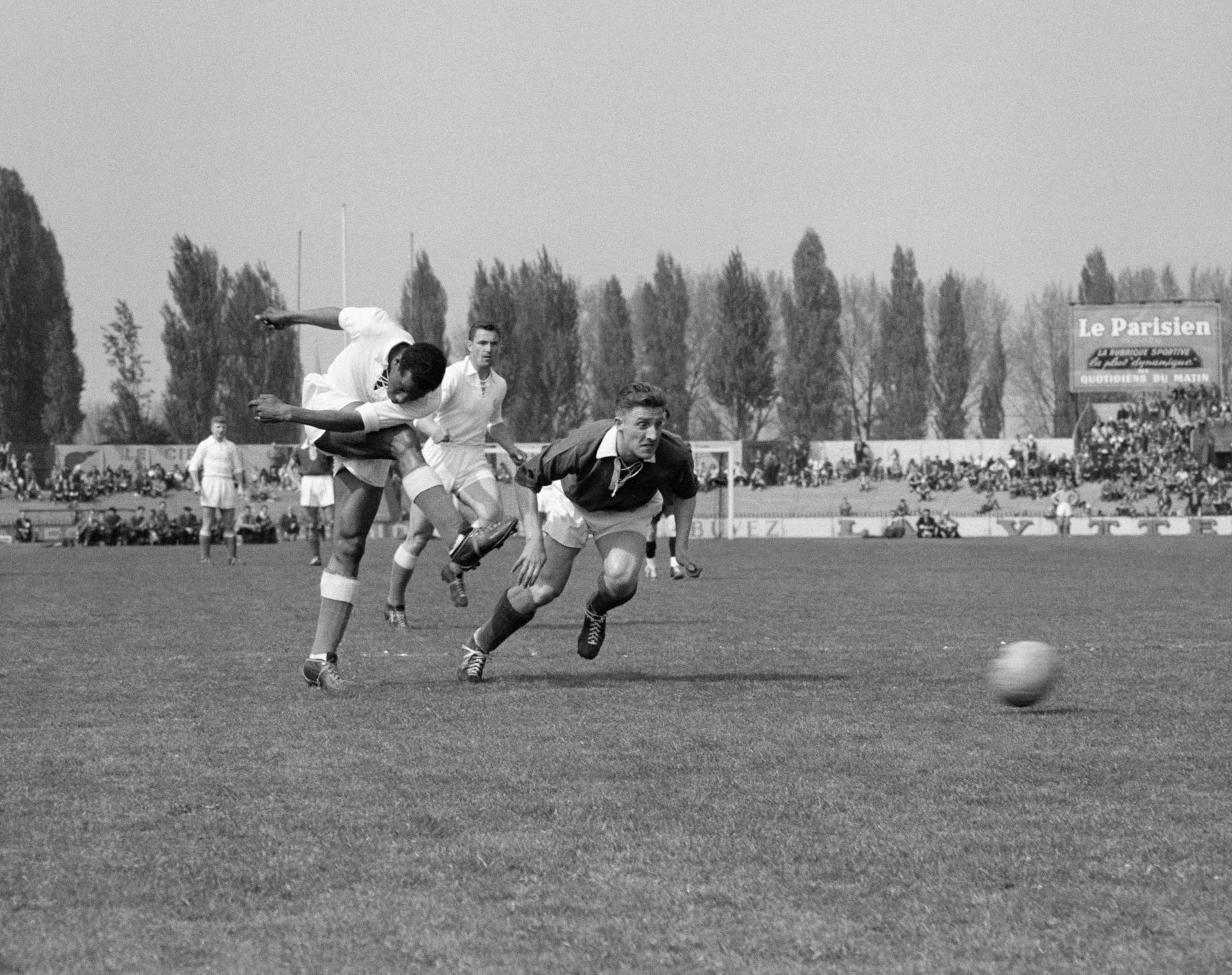
 Larbi Ben Barek of Marseille and Eloy of Sedan during a French Cup quarterfinals match in 1954.
“The French soccer team knocked Morocco out of the World Cup last week, leading to many broken hearts across North Africa, the Middle East and, because of its history of colonial migration, France. France established a protectorate in Morocco that lasted from 1912 to 1956, effectively colonizing the country. So the match seemed the opportunity for a postcolonial reckoning, particularly after Morocco’s victory over two of its other ex-colonial powers, Spain and Portugal. But soccer between France and Morocco has always been a microcosm of imperial control. In Morocco, the French hoped to govern more peacefully and with a greater emphasis on soft power than they did in their occupation of neighboring Algeria. …”
New Lines Magazine
A postcolonial World Cup showdown for the ages
How soccer’s colonial past still plagues the game today
[PDF] Football and colonialism: body and popular culture in urban Mozambique
amazon: Football in the Middle East Edited by Abdullah Al-Arian, Football and Colonialism: Body and Popular Culture in Urban Mozambique
How Morocco’s World Cup Run Reignited a Debate on Soccer Colonialism
Leave a reply
 “The draw for the revamped Champions League league phase is — after what seemed like
  “In the future, looking back on current tactical innovations and unique styles of play will not provide a dopamine hit. By then, they will be normalised. What seemed novel 20 years ago is the minimum requirement to excel in football nowadays — just ask Jose Mourinho and Rafa Benitez. Their meticulous planning before
  “How badly did German football need last season? New champions for the first time in 11 years and a story, in
  “What I remember the most about my visit to the ruins of the Pontiac Silverdome in 2016 is how the place sounded. The way the wind played with the tattered roof panels and whipped past the support cables of the dome, playing them like guitar strings. As I walked across the playing field, I’d occasionally hear bits and pieces of metal hardware falling from above and hitting the ground around me. It was a little unnerving. The stadium in the northern suburbs of Detroit, Michigan, had been disused for years by the time I arrived with my camera. A snowstorm in 2013 had torn the roof to shreds. A year later, much of the equipment was auctioned off, leaving the place an empty shell. At that point, the once-sterile, polished stadium had begun to fall back to nature: I remember gazing downwards at my feet and seeing tiny shoots of natural grass pushing their way up through the artificial turf. …”
 “What do Pep Guardiola and Enzo Maresca have in common? Coaches wedded to a certain style of football?
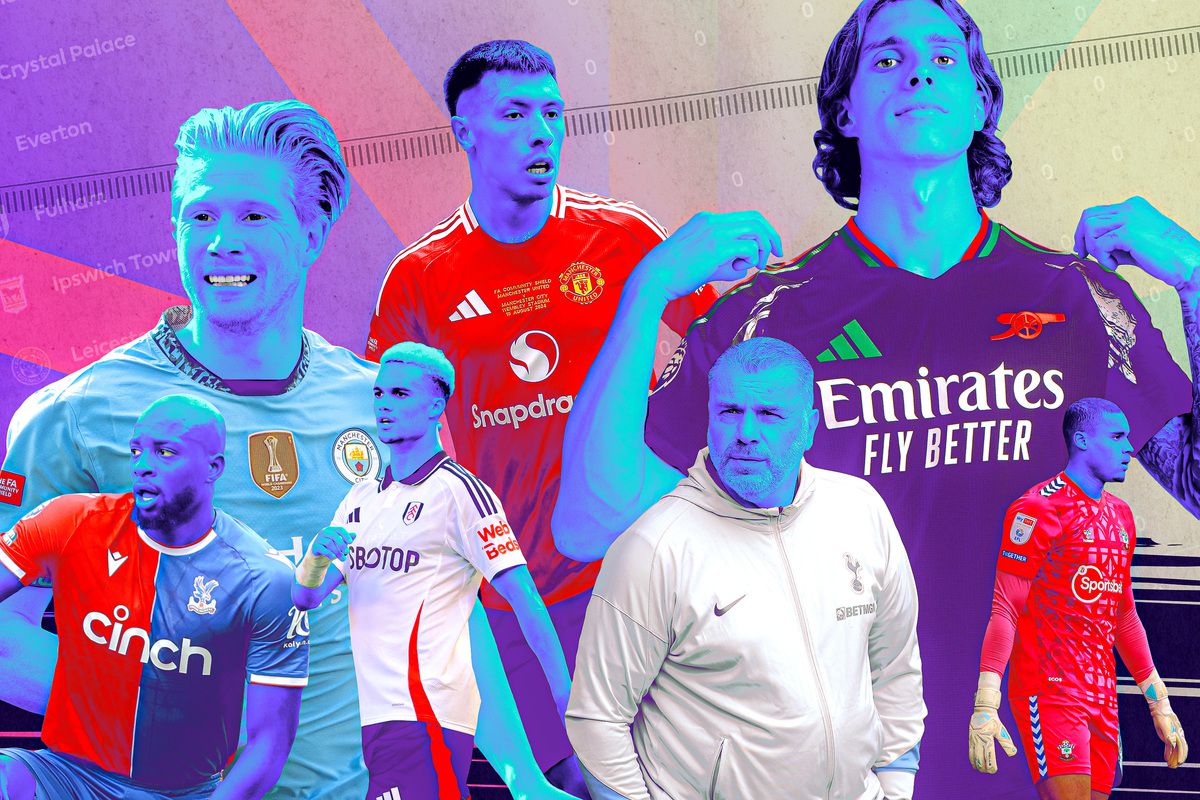 “The most popular soccer league in the world returns on Friday at the Theatre of Dreams as Fulham visits Manchester United. If it feels like the soccer season is never-ending after the
  “Maybe we should have known right from the start that this was going to take a while. Panathinaikos’ Argentinian midfielder Daniel Mancini stepped up to take the first penalty of their shootout against Ajax, the Greek side having scored a late equaliser to force the
  “The
“The  “Before an unforgettable footballing adventure had even begun, a nation had one man to thank. Such was the magnitude of
  “It was in the House of Commons eight years ago that Justin Madders, the Labour MP for Ellesmere Port and Bromborough, spoke of his concerns for football’s long-term health. A private members’ bill put forward outlined the case for reform long before the notion of an independent regulator for the English game began to crystalise in 2021. There was a proposal to add a levy to all transfer fees to aid the grassroots game and another to offer matchgoing supporters greater protection against rescheduled TV fixtures. Madders also warned of what he called a ‘demographic timebomb’. The
 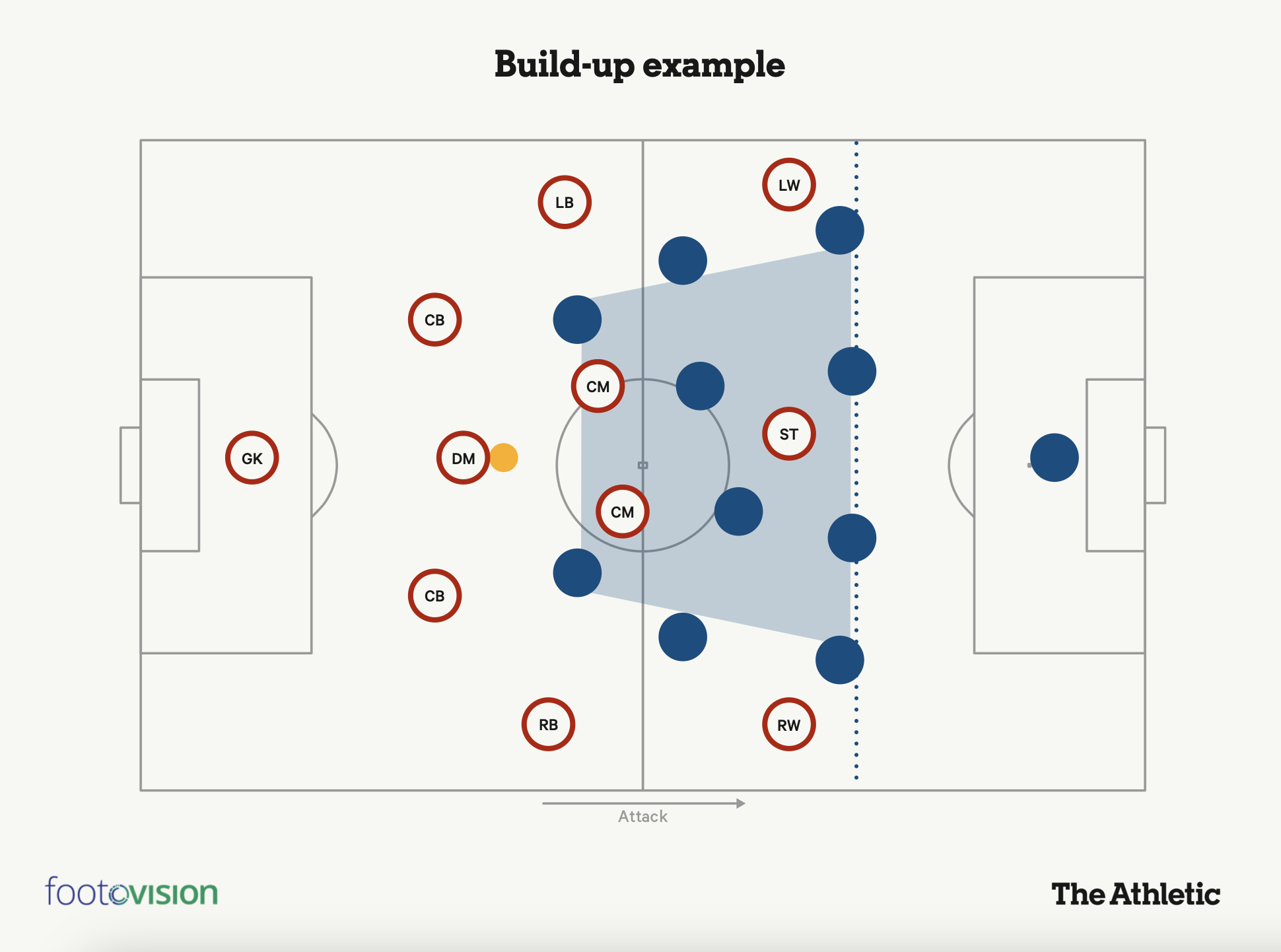 “We are just days away from the
  “The map is a basic location-map, with an inset map of Greater London. Also shown are small labels which point out both the three promoted clubs (Leicester City, Ipswich Town, Southampton), and the three relegated clubs (Luton Town, Burnley, Sheffield United). And there are three charts… The Attendance chart, at top-centre of the map page, shows 4 things for each of the 20 current Premier League clubs…A) 2023-24 finish (with promotions noted). B) 2023-24 average attendance [from home league matches]. C) Stadium capacity [2023-24]. D) Percent-capacity [2023-24]. At the right-hand side of the map page are two more charts. The chart at the top-right shows Seasons-in-1st-Division for the 20 current Premier League clubs. …”
 “Welcome to the latest edition of the Transfer DealSheet, your weekly guide to what is happening in the summer window. Our team of dedicated writers, including Adam Leventhal and David Ornstein, will take you inside the market to explain the deals being worked on, the players who could arrive and the ones who are on their way out across the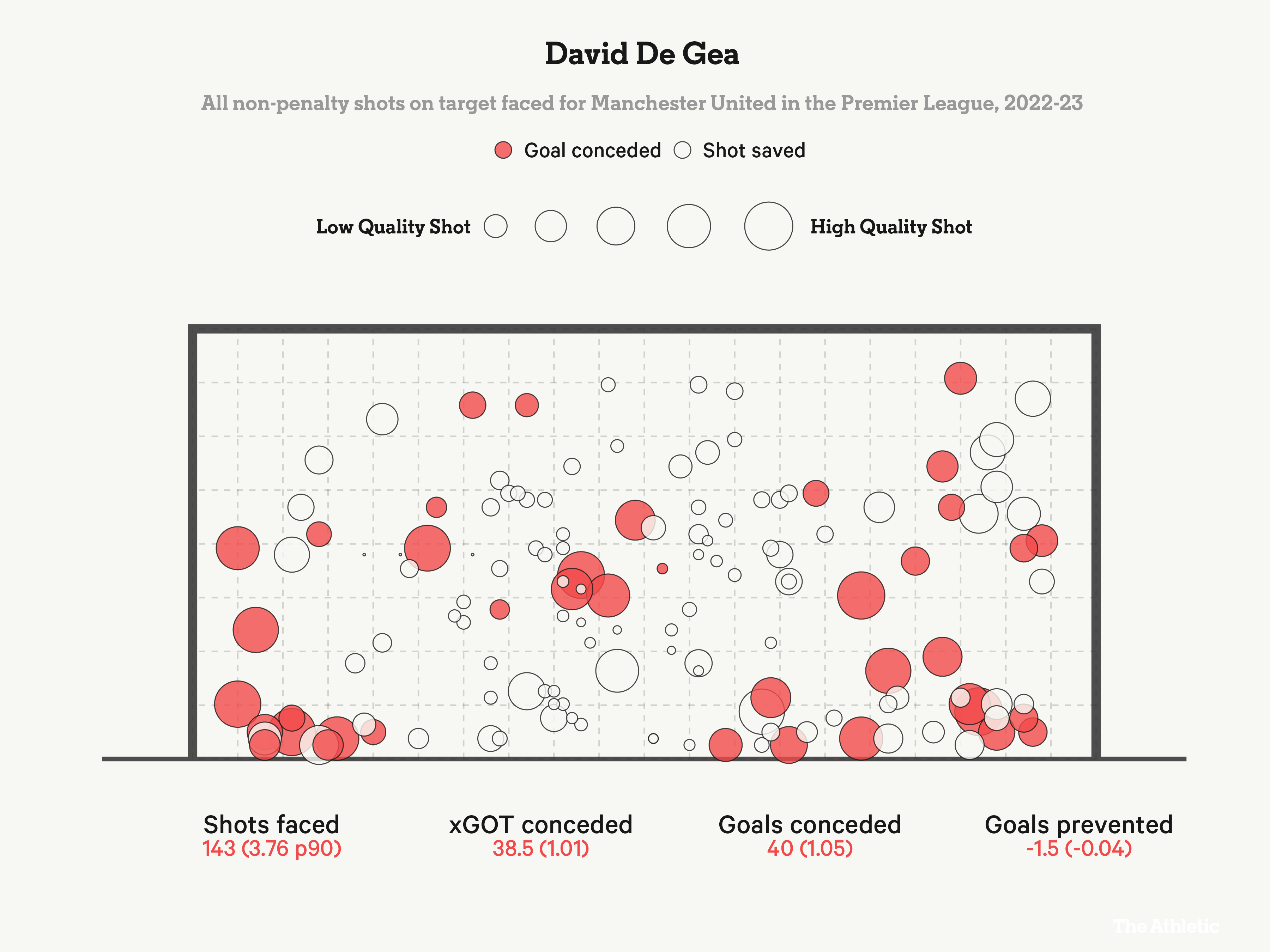

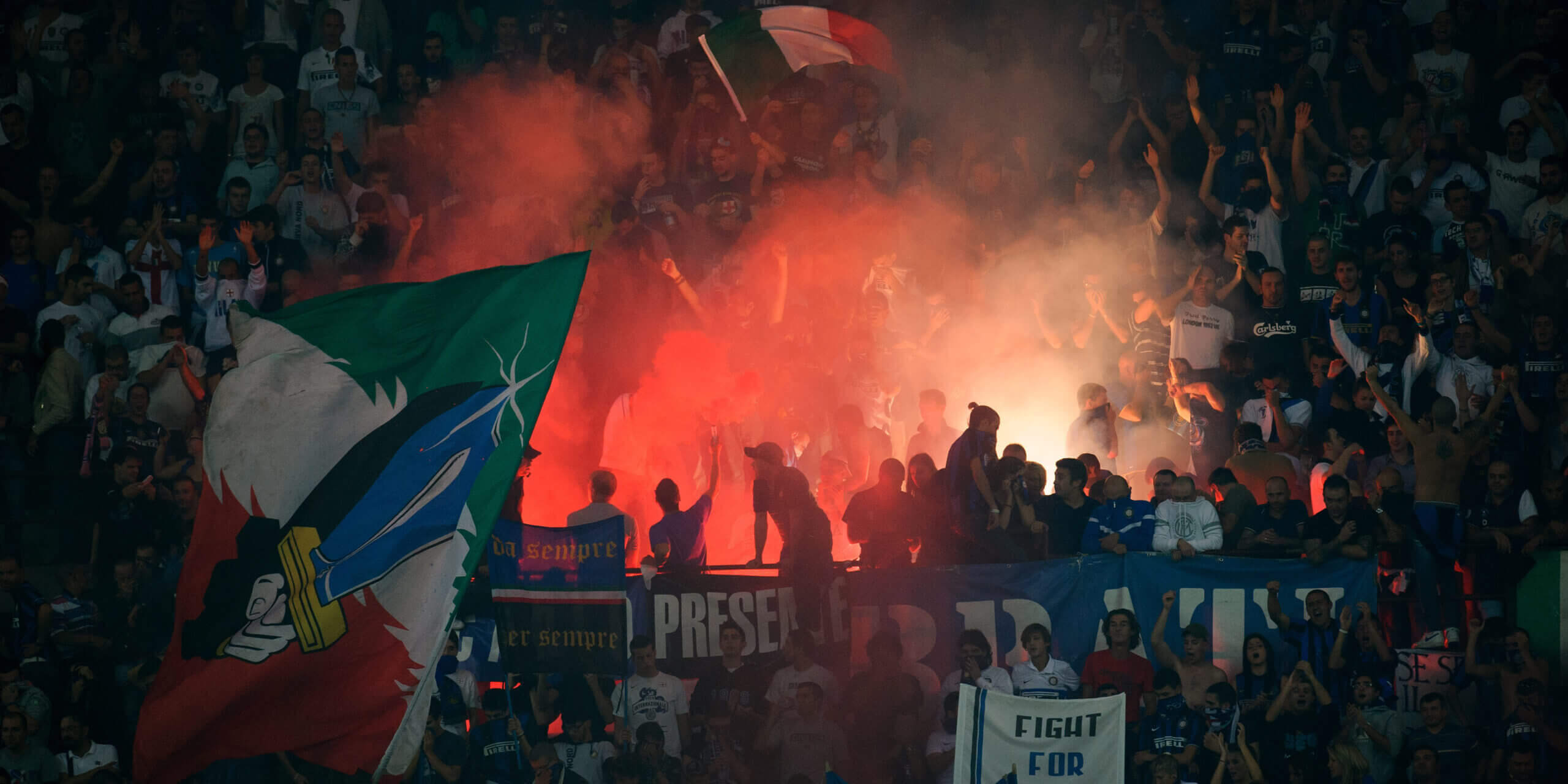


 “There is no escaping the cult of the manager in English football. From Busby to Ferguson, from Chapman to Wenger, from Shankly to Klopp, from Revie to Clough, from Mourinho to Guardiola, it sometimes feels like one of the last bastions of the 19th-century ‘great man theory’ — as if, to bastardise the words of Thomas Carlyle, the history of English football is but the biography of great men. Some of the greatest are commemorated with statues outside their clubs’ stadiums: Herbert Chapman and Arsene Wenger at

 Members of barras bravas are scattered between the flags that they deploy. In the picture,
  The Barras brava section of the stadium is recognizable for their flags, a characteristic unrivaled by other areas of the stadium has more quantity or density of such. In the picture, La Banda de Fierrois an organized supporter group of
  Scissors Kick