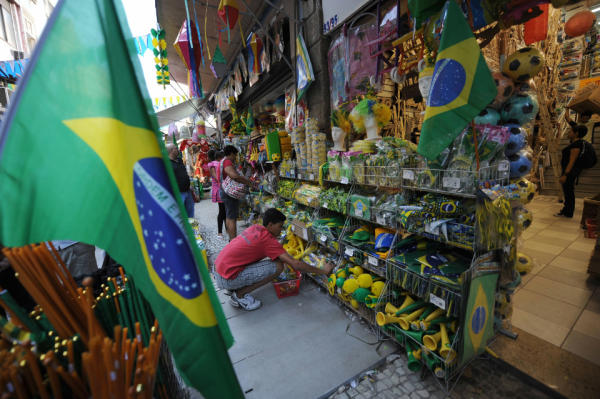
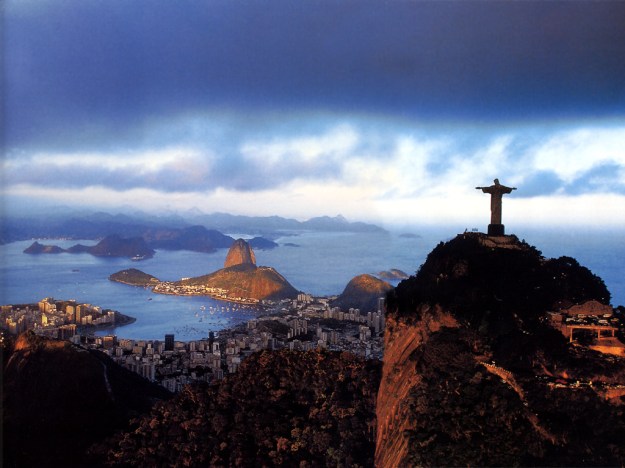
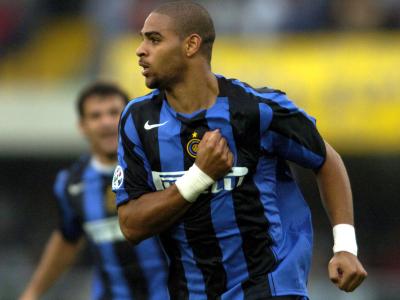
“Symbol of exotic Brazil, Carmen Miranda was in fact born in Portugal. When she was young, her family decided to try their luck down South American way. These days, the flow is in the opposite direction. Bananas, said Carmen, were her business. The business of Braga, meanwhile, is importing Brazilians. The provincial club, who visit Arsenal on Wednesday, are attempting to disturb the peace of Portugal’s traditional big three – Benfica, Porto and Sporting – with a squad that includes 17 representatives of the country’s former colony.” (BBC – Tim Vickery)
Tag Archives: Tim Vickery
Testing times for Argentina caretaker coach Batista
“For South America’s national teams, there are no competitive matches until the Copa America next June – and that tournament is primarily a warm-up for the next set of World Cup qualifiers, which get under way soon afterwards. This, then, is a transitional time – a moment for fresh players to be tested and new coaches to be appointed.” (BBC – Tim Vickery)
Bills rise as clock ticks down for Brazil

“Along with the other candidates to host the World Cup in 2018, England had to select its host cities and stadiums well in advance. And so earlier this month, the Fifa inspection committee could ride the tube, visit the venues, talk to officials and end up with a firm idea of what they will be getting if England gets the nod. It is unfortunate that the 2014 hosts did not have to go through a similar process.” (BBC – Tim Vickery)
Neymar hailed for Premier League snub
“Neymar saying no to Chelsea’s millions and staying with Santos is being seen as a huge victory for Brazilian football. This might be going just a little too far but more than anything else, it is a victory for common sense. The 18-year-old is a magnificent prospect. He is sleek and skilful, able to beat the defender on either side, capable of combining well, and full of tricks he can put to productive use in and around the penalty area. He is a goalscorer and goal maker but he is still raw.” (BBC – Tim Vickery)
Internacional’s trophy remains nothing short of remarkable
“The prospect of the first Mexican winners of the Copa Libertadores flickered briefly on Wednesday night. In last week’s first leg of the final, Chivas Guadalajara had been outplayed and beaten 2-1 at home by Internacional of Brazil. Few people gave them much of a chance in the return game. In front of their own fans in Porto Alegre, Internacional had a 100 percent home record.” (SI – Tim Vickery)
Robinho in urgent need of fresh start
“Robinho is in footballing limbo. He sat out Manchester City’s opening game of the Premier League campaign and although he might be in action in midweek in the Europa League, or possibly playing his football somewhere else before the end of the month, he needs to sort things out fast because this is a huge season for him. I well recall his debut in the Brazilian Championship for an astonishingly young Santos side that went on to lift the title. That was eight years ago. Eight years from now, Robinho will be 34 going on 35, so his time at the top has probably already passed the halfway mark and yet a huge question mark still hangs over him.” (BBC – Tim Vickery)
Chivas make Libertadores final against the odds
“Mexico’s Chivas Guadalajara have endured a journey over time and space to reach the final of the Copa Libertadores. First, because they are outsiders in South America’s equivalent of the Champions League. Mexico is in North America. The distance between Mexico City and Buenos Aires, for example, is further than that between London and Mumbai. Guadalajara and Porto Alegre, home city of final opponents Internacional of Brazil, are even further apart.” (BBC – Tim Vickery)
A tale of two city teams
“When the fixtures for the forthcoming season were made public, many fans would have immediately checked to see when their team were due to meet their big local rival. Derbies are part of the essence of football, perhaps even more so in South America than in Europe. The logic is clear. Distances are vast in South America, forcing the game to develop locally. Brazil has only had a genuinely national championship since 1971, while the Peruvian league was restricted to Lima until 1967.” (BBC – Tim Vickery)
Brazil looking to rediscover itself by embracing tactics from abroad
“Less than a month after the disappointment that accompanies any World Cup not won, Brazil has already put South Africa behind it with the hiring of coach Mano Menezes and the naming of a renewed squad for next month’s meeting with the U.S. Half of Menezes’ group of 24 play their club soccer in Brazil, but this will be a difficult line to maintain; within weeks Robinho is due to return to Manchester City, midfielder Sandro will join Tottenham and striker Andre will move to Dynamo Kiev.” (SI)
Maradona outmanoeuvred in Argentine battle of wills
“He was never likely to go quietly. ‘I have been lied to and betrayed,’ said Diego Maradona in response to losing his job as Argentina coach. He should have seen it coming. In October 2008, on the eve of his appointment, I made the following comment on this website…” (BBC – Tim Vickery)
Brazil job will test Menezes’ inner calm

Mano Menezes
“When Brazil shine, the players get the credit for their flair and brilliance. When they fall short of expectations, the coach gets the blame. Being in charge of Brazilian team is like sitting in a coconut shy – plenty of things are thrown in your direction. And the bombardment could be especially fierce in the case of new boss Mano Menezes, who is taking over with everyone knowing that he was not the first choice for the job.” (BBC – Tim Vickery)
Brazilian league lacks bite
“Spain or Barcelona? No contest. Week in, week out, Barcelona combine the midfield interplay of Xavi and Iniesta with the cutting edge of Lionel Messi, Daniel Alves and co. The comparison serves to confirm the impression that these days club football is of a much higher standard than international – as long as we restrict the debate to the major European leagues. The big clubs in Spain, England, Italy and Germany are in front of the national teams because of the time their players spend together and because they count on the best talent from all over the planet. When the World Cup stops and domestic football returns, the level of play goes up.” (BBC – Tim Vickery)
Spain’s success could inspire Brazil’s return to attacking style
“The status of the Brazilian national team — and its value to its international sponsors — does not rest solely on the fact that it is the only country to have won the World Cup five times. It is a style thing. There is a way of playing associated with Brazil, joyful and expressive, which has made the Selecao a favorite of people all over the planet. Inventors of the joga bonito, Brazil is sold as the spiritual guardian of the game.” (SI)
It’s not the Cup, it’s the qualifying
“A European team has finally won the World Cup outside its home continent. More than that, for the first time since 1954, Europe is now ahead of South America in the number of World Cup wins – with a strong advantage. Europe has staged the tournament 10 times and South America just four – but in 2014 the World Cup will return to the continent of its birth for the first time in 36 years.” (BBC – Tim Vickery)
Germany 4-0 Argentina: Germany are getting better and better and better

“Germany put in one of the most impressive performances in recent World Cup history to absolutely thrash Diego Maradona’s Argentina side. No surprises in terms of line-ups – they were as predicted in the preview, and Argentina remained with their loose 4-4-2 diamond shape.” (Zonal Marking)
Emotion no substitute for clear thinking
“Diego Maradona compared Argentina’s 4-0 World Cup defeat by Germany to being on the wrong end of a punch thrown by Muhammad Ali. Perhaps he needed Ali’s legendary trainer Angelo Dundee alongside him on the bench. In one of the great sports books. David Remnick’s ‘King of the World,’ Dundee recalled his involvement in the first fight with Sonny Liston, when Cassius Clay (as Ali was still called at the time) had been blinded by a substance allegedly put on Liston’s gloves. He was threatening to abandon the fight, but Dundee managed to calm him down.” (BBC – Tim Vickery)
Argentina: Still Bipolar
“The ups and downs of the past 24 hours here have been brutal, saddening, and well, very Argentine. The knives will likely come out now for Diego Maradona as quickly as the flurry of mea culpas came in during the days leading up to today’s match with Germany. Not full mea culpas mind you, but the extent to which you will come across one at all among Argentina’s leaders, in politics, business, and most definitely the media—more like rationalizing.” (TNR)
Maradona gambles on the ‘owner’ to deliver Cup glory
“In the German squad’s five-star hotel outside Pretoria, their match analysts have spent days thinking about Lionel Messi. Germany enter Saturday’s World Cup quarter-final against Argentina in Cape Town with a “Messi strategy”. It may well work. There is a way to stop the world’s best footballer, and Messi’s own coach, Diego Maradona, may inadvertently have stumbled upon it.” (FT – Simon Kuper)
Argentina vs. Germany – Painless ’til the End
“I’ve tried for four years to explain to new American soccer fans what it means to lose to Germany. All metaphors escape me expect for horror films. On the one hand, the German experience is a profound blow psychologically. Even when the scoreline reads 4-1 or 4-0, the Germans always give the other team enough of the ball to make them feel the result was within in reach. If only Lampard’s goal was ruled a goal, if only Dimaria had kept his shot low, if only Romero had commanded his box.” (futfanatico)
Germany, playing for more than a win
“On the eve of the World Cup, players reminded the press that this tournament was different. This year, they were playing in the wake of traumatic loss, and would do their best to honor the memory of Robert Enke, the German National Team goalkeeper who committed suicide in November 2009. In his story for The Guardian, Dominic Fifield explains…” (From A Left Wing)
South American stars shine in South Africa
“The time for definitive conclusions on the World Cup is 12 July. Until then, as we have already seen, Monday’s marvel can easily be transformed into Friday’s flop. On what has been served up so far, though, it is safe enough to argue that Brazil look best equipped to win the competition. The 2010 model might not be the easiest Brazil side to love but it is one of the hardest to beat. Well balanced, physically and mentally strong, sure of what it is doing and blessed with deadlock-breaking moments of individual magic, Dunga’s team will take some stopping.” (BBC – Tim Vickery)
World Cup winners pace their tournaments
“A World Cup is like time speeded up, a kaleidoscope of emotions crammed into a month. But the tournament is rarely won by the team that gets out of the blocks fastest. For those sides that start well, dealing with euphoria can often present problems – as the Germans might find after their superb 4-0 win over Australia. Pacing tournaments is normally a traditional German strength, but the 2010 team are young and it will be interesting to see how they cope with the expectations they have now aroused.” (BBC – Tim Vickery)
Lights, Camera, Action
“Back in December, when England and the United States were drawn in the same World Cup group, an instant thought went round my head: This might just revive my flagging career as a Hollywood movie star. Six decades before Saturday’s clash in Rustenburg, the two nations met in Brazil in what turned out to be the biggest World Cup upset of them all. The shock 1-0 victory for the US was immortalised in film a few years back, with yours truly playing the part of the BBC radio commentator in order to help tell the story. The movie, released in 2005, was initially called The Game Of Their Lives, although it was later retitled The Miracle Match for DVD.” (BBC – Tim Vickery)
Uruguay have case for local support at World Cup

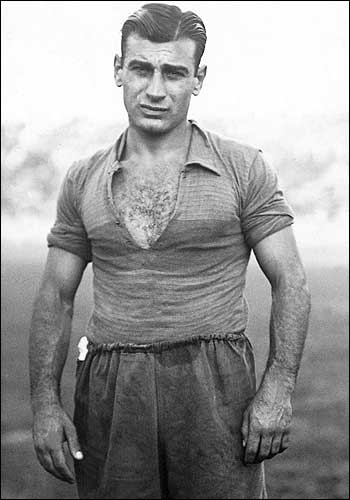
Francisco “Pancho” Varallo
“Once the World Cup hosts have got the action under way in South Africa on Friday afternoon the drone of the vuvuzelas might die down and the sound of drums should come through as the second game kicks off in Cape Town. They might sound straight out of Africa but the drums will be pounding for Uruguay, telling a tale that stretches across oceans, religions and races.” (BBC – Tim Vickery)
World Cup Q&A

Alexis Sanchez
“This week some of our regular bloggers will be answering your World Cup questions. South American expert Tim Vickery is first to put his neck on the block.” (BBC – Tim Vickery)
Lucio matures into the outstanding Brazil defender of his generation
“One down, one to go for Lucimar Da Silva Ferreira, or as he far prefers to be known, Lucio. On May 22 the combative and classy center back helped Internazionale to the big club prize, Europe’s Champions League. And now he’s in South Africa, preparing and hoping to scale the summit of the international game and bring home the World Cup.” (SI – Tim Vickery)
Legacy of South Africa’s World Cup will take many years to measure
“‘Our society,’ said British writer Johann Hari, ‘is very good at some things, generating wealth, say … But we are very bad at meeting a basic human need for shared collective experiences. Our atomized lonely culture can only meet this need at freak flashpoints.’ Or World Cups.” (SI – Tim Vickery)
Brazil’s Dunga unfazed by critics

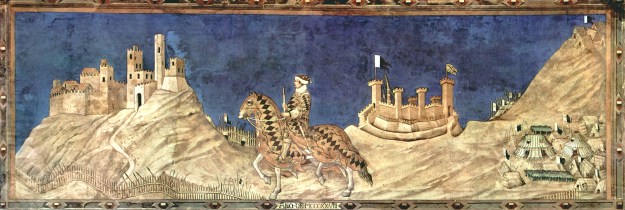
Simone Martini
“Abroad, the focus on Brazil’s World Cup squad fell on the absences of Ronaldinho and Alexandre Pato. In Brazil, this raised barely a murmur. No one expected Pato to be in and few held out hope for Ronaldinho. The Brazilian media had campaigned for his inclusion earlier in the year, but as his form dipped they largely gave up on him — and instead switched generations.” (SI – Tim Vickery)
South American trio count down to World Cup
“Four years ago, in the build-up to the World Cup in Germany in 2006, there was a real buzz about South America’s big two. Brazil could boast a dazzling collection of individual talent. Coach Carlos Alberto Parreira had such riches at his disposal that, as he later confessed, he felt obliged to go against his own principles and select a team that was almost a throwback to 4-2-4.” (BBC – Tim Vickery)
Brazil stay focused – Argentina look muddled
“Dunga’s announcement of his Brazil squad for South Africa was a crushing defeat for the nation’s media in one of its favourite sports – trying to force the inclusion of big names players on to the plane for this summer’s World Cup. But it was the perceived excesses of Brazil’s stars that undermined their campaign in Germany in 2006 and paved the way for Dunga’s appointment. He took over with a message that individuals might win matches but groups win titles. Over three and half years later, coherence has been maintained.” (BBC – Tim Vickery)
Unlike Europe, Brazilian league preserves its competitive balance
“In England, Chelsea and Manchester United are fighting for the domestic title. In Spain, it’s Real Madrid and Barcelona. Inter Milan is out front in Italy, as are Bayern Munich in Germany. It’s the same old same old.” (SI – Tim Vickery)
Gilberto Silva has become a symbol of Dunga’s regime
“Nearing 34 and surely on the downward slope, Gilberto Silva prepares for his third World Cup – but the first in which he is guaranteed a place in the starting line-up. In 2002 he was a squad player with a handful of caps, only recently converted from centre-back to defensive midfielder, when on the eve of the tournament Emerson injured himself in a training-ground kickabout and Gilberto had to step in.” (World Soccer – Tim Vickery)
Brazilian Serie A season previewed

“Last season Flamengo came from nowhere to win their sixth title – and first since 1992 – with perennial stand-in Andrade establishing himself as first-team coach in the process. However, quite apart from the distraction of the Libertadores Cup, a repeat performance will be difficult. The contracts of glamorous strike pair Vagner Love and Adriano run out in mid-campaign – and even if the latter stays his tendency to miss training is always liable to set off mini crises in the club’s ever-turbulent environment.” (World Soccer – Tim Vickery), (World Soccer – Tim Vickery)
Carlos Carmona could be a player to watch in South Africa
“Praise has flooded in for coach Marcelo Bielsa for leading Chile to the World Cup finals in such convincing and attractive style – and rightly so. The Argentinian has clearly done an exceptional job, inheriting a squad in some disarray following the 2007 Copa America and moulding them into a side considered by some to be dark horses in South Africa.” (World Soccer – Tim Vickery)
Nicolas Otamendi is one of Argentina’s unsung heroes
“First, because Maradona has made a point of playing friendlies with a squad solely made up of home-based players. Otamendi featured in the first of them, against Panama in May of last year, and was soon plunged straight into the tumultuous World Cup qualification campaign.” (World Soccer – Tim Vickery)
Brazil must reform its domestic league if it is to thrive
“The 2010 version of the Brazilian championship kicks off with the presence of all four national team strikers from the last World Cup: Ronaldo, Adriano, Robinho and Fred. Meanwhile, Roberto Carlos is back from Europe, as are Vagner Love, Ewerthon and Lincoln.” (World Soccer – Tim Vickery)
Neymar and Ganso the crown jewels of Santos’ new generation
“On the same day the Titanic struck that fatal iceberg in 1912, a club was founded that would raise the profile of Brazilian soccer. All around the world Santos are almost certainly the team from Brazil that most people have heard of. This is a remarkable achievement for a club representing a relatively small city. Santos is a port with a population under 500,000, an hour’s drive away from sprawling Sao Paulo, South America’s biggest city. But the seaside club have often punched well above its weight, getting the best of metropolitan rivals Corinthians, Palmeiras and Sao Paulo, and often anyone else who stood in its path as well.” (SI – Tim Vickery)
Could personal technology stop a winning World Cup squad spirit?
“I have been back in England for a quick visit and I was struck by an outburst that Hull boss Iain Dowie aimed at his squad. ‘Sometimes the players have to forget about the iPods,’ he said. ‘They need to think about what really matters.’ He went on to admit: ‘I’m not a big fan of these big earphones on the way to games,’ and that ‘my thing with the iPod generation is that when they leave the ground and go away to their closeted little lives they shouldn’t forget what’s got them where they are and what impact they can have.’ It is, of course, the complaint of a member of one generation about the desocialising effect of technology on the next.” (BBC – Tim Vickery)
Immigrant pride and working-class thrift

Italy
“A century ago when the Velez Sarsfield club was founded in Argentina their shirts were plain white – the cheapest they could find. Then they went with stripes of red, green and white – a tribute to the Italian origins of the club’s founders. Finally they settled on the current strip – which, with a blue V on a white background looks like something out of rugby league. This is no coincidence. The story goes that they were offered a good deal on the shirts, which a rugby club had ordered and not bothered to collect.” (BBC – Tim Vickery)
FC Barcelona 4-1 Arsenal – Recap and Video Highlights

“Barcelona hosted the 2nd leg of the UEFA Champions League quarterfinals against Arsenal with the score 2-2. The winner would advance to the semifinals to face Inter Milan. Arsenal came into the match without several key players (Gallas, Arshavin, and Fabregas) while Barcelona were without two defenders (Puyol and Pique). Arsenal would not be the favorites and have a tough task to get a win at the Camp Nou.” (The 90th Minute)
Barcelona 4 Arsenal 1; agg 6-3: match report
“They don’t need to hold an election to find the right man for No 10 here. Lionel Messi, who wears the Barcelona No 10 shirt with such distinction, scored four goals in a performance of such majesty that comparisons with the great Diego Maradona grow in substance with each stylish showing.” (Telegraph – Henry Winter)
Match Of The Midweek: Barcelona 4-1 Arsenal
“How, then, do Arsenal solve a problem like Lionel Messi? If he isn’t unquestionably the best player in the world at the moment then he is in the top two or three, and if this evening’s Champions League quarter-final proves anything, it proves that one player, in irresistable form, can win a match. Lionel Messi has been in sensational form all season but this evening, with an individual performance so sublime that it feels at times as if he is the only player on the pitch, there is simply no stopping him. Arsenal supporters may wonder aloud what difference the injured Cesc Fabregas, William Gallas and Robin Van Persie might have made to their team, but it is difficult to imagine that anything barring a full, career-threatening assort upon Messi would have made any difference to what happens this evening.” (twohundredpercent)
Messi – the devastating decoy
“Reading Phil McNulty’s blog after the Arsenal-Barcelona game, I was struck by the number of people who went out of their way to criticise the performance of Lionel Messi. It is indicative of the enormous pressure the young Argentine will be under in the World Cup – the same pressure that broke his friend and former Barca team-mate Ronaldinho four years ago. People are expecting circus tricks and something special in every game. It is the dilemma of the big name star in today’s football.” (BBC – Tim Vickery)
Messi Lifts Barcelona With 4 Goals
“Lionel Messi pretty much put Barcelona in the European Champions League semifinals by himself. The reigning world player of the year scored four goals, getting a hat trick in a 22-minute span of the first half, to lift the defending champions over Arsenal 4-1 Tuesday night and advance Barcelona to the semifinals for the third straight year. ‘A player like this only comes along every 25-30 years,’ Barcelona midfielder Xavi Hernandez said.” (NYT)
Barcelona 4-1 Arsenal: Messi produces a stunning performance, but Arsenal gave him the room to do so
“If there was any remaining doubt that Lionel Messi is the greatest football player of his generation, they were erased tonight, as Barcelona got the better of Arsenal in the much-hyped battle of the teams playing football ‘the right way’. Arsenal didn’t lose this match tactically, but they didn’t help themselves.” (Zonal Marking)
Barcelona – Arsenal: A Champion League Live Blog
“We all wish no one had to win. Of course we do. In a just world, these two teams would combine to form a pure white dove made of energy, which would fly across the land, fields greening in its wake. But they can’t (probably, depending on Xavi’s passing). Someone has to win this, and it won’t be Cesc Fabregas’s femur. Savagery is afoot, and if you’re using the word “dilly-dallying,” you’re dilly-dallying already.” (Run of Play)
Barcelona’s celestial No 10 has Nou Camp in raptures
“It is getting increasingly difficult not to resort to hyperbole when describing the feats of Lionel Andrés Messi. Judgement should be withheld until the World Cup, when the 22-year-old will carry the hopes of an Argentina team handicapped by having Diego Maradona as coach. If Messi can still perform then as he does for Barcelona he truly will rank alongside Pele, Alfredo Di Stefano, Johan Cruyff and Maradona himself.” (Independent)
Masterclass from Lionel Messi ends Arsenal’s European dream
“Arsenal were outclassed by a Barcelona side simply to good for them and a masterclass from Lionel Messi in which he scored a breathtaking hat-trick in twenty-one minutes. You could have tried blindfolding him. Handcuffing him even. To a railing. Quick-dried slabs of cement around his feet. Rolled a giant boulder off a cliff like a Wile E. Coyote contraption. In fact, no matter what you tried, nothing was going to stop him. Lionel Messi was that good and comparisons with the best ever are wholly justified.” (Arsenal Column)
‘Mythical, universal, the Lord’s anointed one’ – Spain hails Leo Messi
“Leo Messi did something impossible last night. He got even better. He had scored in the Champions League final, the Copa del Rey final and the World Club Cup final, emulated that goal from Diego Maradona, hit three in the clasico against Real Madrid at the Camp Nou, two at the Santiago Bernabéu, and scored two hat-tricks in a row. But he’d never scored four before. Until last night. Last night, even Marca and AS, the myopic leaders of the Madrid media dropped to their knees; last night, so did the English. They could ignore him no more. Last night, as El PaÌs, put it, “Messi ate Arsenal’.” (Guardian)
Media glare continues to suffocate Brazil’s stars
“In the 1974 World Cup Brazil took such a beating from Holland that four years later it was obsessed with imitating the ‘total football’ of the Dutch, with their constant positional changes and intense pressure on the ball. It didn’t work. As one Brazilian journalist commented, ‘in a team game like soccer you need to have the right cultural base to introduce modifications’.” (SI – Tim Vickery)
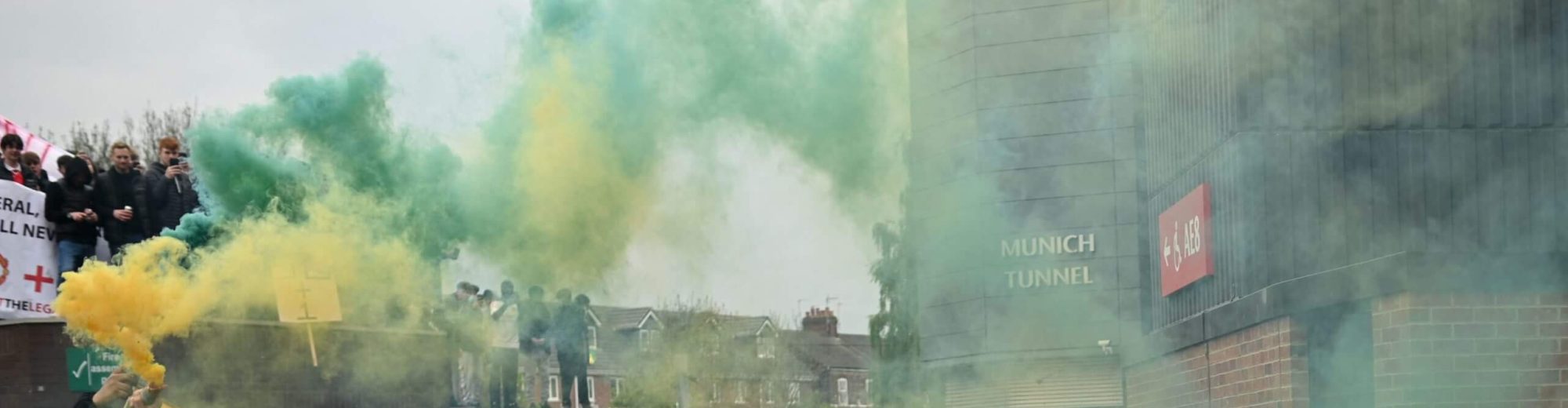
Media glare continues to suffocate Brazil’s stars
“In the 1974 World Cup Brazil took such a beating from Holland that four years later it was obsessed with imitating the “total football” of the Dutch, with their constant positional changes and intense pressure on the ball. It didn’t work. As one Brazilian journalist commented,’in a team game like soccer you need to have the right cultural base to introduce modifications’.” (SI – Tim Vickery)
Caniza experience crucial for Paraguay
“Can Lionel Messi reproduce his Barcelona form for Argentina? Will Wayne Rooney be able to sustain his current level of performance into June and July? Might Cristiano Ronaldo, or even Kaka, be fresher at the end of the club season because Real Madrid are out of the Champions League? The World Cup is where reputations are confirmed and football fans across the planet are hoping the stars to be firing on all cylinders in South Africa.” (BBC – Tim Vickery)
Uruguayan football on the rise

“In ‘Back Home,’ his excellent account of the 1970 World Cup, Jeff Dawson does a disservice to the first kings of the global game – after 90 minutes of their quarter-final with the Soviet Union, he writes “the score is that old Uruguayan party piece, 0-0″. Just 16 years earlier, Uruguay produced a very different party piece in the 1954 World Cup in Switzerland. They beat Scotland 7-1, ended England’s campaign in with a 4-2 win in the quarter-finals, but then fell 4-2, after extra time, to the great Hungarians in the semi-final. It was the first time Uruguay had lost a World Cup match and six years later, when World Soccer magazine was launched, its inaugural edition carried a feature arguing that this was the greatest match ever played.” (BBC – Tim Vickery)
Brazil coach Dunga still has issues to resolve before South Africa
“With just under 100 days to go until Brazil’s 2010 World Cup gets under way against North Korea, coach Dunga stomped away from Emirates Stadium in London aware that, for at least half of it, that time will be dominated by appeals for the recall of Ronaldinho.” (World Soccer – Tim Vickery)
Colombia’s time to host World Cup?
“Brazilian midfielder Mauro Silva checked in his luggage to travel to to Colombia for the 2001 Copa America, and then had second thoughts. Scared by the country’s reputation, he decided not to go. I remember feeling a similar trepidation at exactly the same time when I boarded the plane in Rio to fly up and cover the tournament. What on earth was I letting myself in for?” (SI – Tim Vickery)
Fitness the key for Brazillian success
“Following the international friendlies, I wrote last time that the week’s big winner was Argentina coach Diego Maradona. Seven days later, perhaps his Brazilian counterpart can crack the biggest smile. As Andre Kfouri wrote in the sports daily Lance!: ‘Dunga must have loved the elimination of Real Madrid and Milan from the Champions League. The Spanish giant, because Kaka will have a lighter fixture list in the build up to the World Cup. And the Italian giant because the pressure to recall Ronaldinho will diminish. And the national team coach will be cheering for Chelsea to knock out Internazionale – a rest for Julio Cesar, Lucio and Maicon, more work for Drogba’.” (BBC – Tim Vickery)
Argentina boost World Cup credentials
“The warm-up work could hardly have gone better for the South American World Cup sides in action last week. Paraguay had trouble finding opposition and had to settle for a visit to Athletic Bilbao, who fielded an under strength side. No problem. Coach Gerardo Martino had plenty to smile about after his side’s 3-1 win.” (BBC – Tim Vickery)
Peru’s national-team failure stands in stark contrast to club success
“These are strange, bittersweet times for soccer fans in Peru. Other national teams and their players will seize this week, the last FIFA date for international friendlies until the end of the season, to prep for the World Cup. Not Peru. (SI – Tim Vickery)
Earthquake tragedy hits Chilean Cup preparations
“This week is the last for international friendies before the end of the season. It’s the final chance for fringe players to push their claims for a World Cup place. Chile thought they had found the perfect way to give all their players the opportunity to show their stuff with a double-header on Wednesday against Costa Rica and North Korea, one after the other. But then the country was struck by Saturday’s massive earthquake and amid the chaos and confusion the matches could clearly not go ahead.” (BBC – Tim Vickery)
The Sweeper: Chile’s Earthquake and the World Cup
“Following the devastating earthquake there this weekend, Chile unsurprisingly cancelled two international friendlies scheduled for this Wednesday as part of their World Cup preparations. Few in Chile right now will be thinking about football with more than 700 dead.” (Pitch Invasion)
Julio Cesar bears a huge responsibility for Brazil
“It is hard to think of a position in sport that carries the same pressure as keeping goal for Brazil in a World Cup. While there is often little to do, there is even less margin for error. Do it badly and the hopes of an entire nation crash from a height unmatched anywhere else.” (World Soccer – Tim Vickery)
Is the Copa Libertadores better than the Champions League

“There are people who argue that South America’s Copa Libertadores is better than the Uefa Champions League. It’s a perverse view, often motivated by bitterness – a bit like those who like to claim that The Beatles were over-rated. The Champions League congregates the best players from all over the world – it’s where they want to be, and where they need to shine these days in order to be considered truly great. But if Europe’s leading club competition is Lennon and McCartney, it doesn’t necessarily follow that the Libertadores is Herman’s Hermits, as last week made abundantly and gloriously clear.” (BBC – Tim Vickery)
TIm Vickery Interview: EPL Talk Podcast
“On this episode of the EPL Talk Podcast we welcome Tim Vickery, who picks up on some of the theses regarding player developed that we addressed with Andy Brassell two weeks ago. Then, Tim talks to us about some notable players in Brazil, talking about how their styles would fit into the Premier League. Then, we talk about Tim’s support of Spurs, the nature of being a club supporter, and how he found his way to Brazil.” (EPL Talk)
Podcast: Tim Vickery interview, Arsenal howlers & Cole v Milner for the World Cup
“BBC’s South American football expert Tim Vickery chats to Adrian Clarke & Iain Spragg on the latest episode of the world famous Soccerlens podcast, giving us a fascinating insight into the Copa Libertadores and the best prospects involved in the competition.” (Soccer Lens)
A Brazil legend’s lasting legacy
“Brazilian football lost one of its all-time greats last week when Orlando Peçanha died at the age of 74. If he had to go, then maybe the forces of destiny and the gods of soccer thought it appropriate to take him on the eve of Carnaval. Perhaps they were trying to make a point, juxtaposing his loss with the start of the country’s great party. Because as revelers fill the streets from Rio to Recife, there are many who like to see Brazilian soccer as one giant Carnaval, everyone more concerned with having fun than with the result, in a fabulous land full of skilled strikers and inept defenders.” (SI – Tim Vickery)
Mexico mounts multiple Copa challenge
“One of the less orthodox after effects of swine flu is the headache it gives the administrators of South America’s premier club competition. In last year’s version of the Copa Libertadores, two Mexican sides, Chivas Guadalajara and San Luis, made it out of the group phase. But how could they stage the home leg of their second round ties? It was at the height of the swine flu epidemic, with Mexico at its epicentre. The South American Federation unsuccessfully tried to find an alternate venue, gave up and announced that the fate of the Mexican clubs would be decided on a single match, the away leg.” (BBC – Tim Vickery)
The return of Ronaldinho? Maybe
“In a month’s time comes the lone FIFA date for international fixtures before the end of the European season — the only time teams preparing for the World Cup have the opportunity to be at full strength, with all their players available.” (SI – Tim Vickery)
The legacy of Rene Higuita
“Rene has walked away. And like the empty sidewalks in the old Four Tops hit, football is not the same. The game will miss Rene Higuita. The eccentric Colombian keeper bid farewell with an exhibition match last week. Of course, he had to produce the famous ‘scorpion’ save one last time. But for all its novelty value, the ‘scorpion’ is not the reason for Higuita’s importance. Nor, in the final analysis, are the goals he scored. His free-kicks and penalties were no circus act, and they inspired a line of goalscoring South American goalkeepers.” (BBC – Tim Vickery)
Brazil hurt by its power structure

Adriano
“We don’t yet know where the World Cups of 2018 and 2022 will be played. But some of the bidding countries have already worked out which cities they will use to stage matches if the circus does come to town. It’s unfortunate Brazil wasn’t so quick off the mark.” (SI – Tim Vickery)
Adriano was greeted like a returning emperor and he delivered
“In his first game after rejoining Flamengo, Adriano’s mere presence put an extra 50,000 on the gate. “The emperor has returned,” they chanted – and the 27-year-old striker was looking imperious from day one. His 19 goals – which made him the competition’s joint-top scorer – and his all-round attacking play were vital to the Rio de Janeiro club ending a 17-year wait to win the Brazilian Championship.” (Worlk Soccer – Tim Vickery)
South American sides gather African intelligence
“Tournaments are like time speeded up – teams can suddenly come together, or fall apart. Each tournament has its own dynamics, so it would be unwise to draw definitive conclusions for the World Cup from a competition taking place six months earlier. But if the Africa Cup of Nations is a good opportunity for five World Cup-bound teams to get some competitive match practice, it is also a great chance for their future opponents to do some reconnaissance. From a South American point of view, there’s the possibility of Uruguay meeting Nigeria in the second round, just as Paraguay might face Cameroon, and Chile could come up against Ivory Coast.” (BBC – Tim Vickery)