Tag Archives: South Africa

How Many Africans Bound for South Africa Remains to Be Seen

“As the 32 national team managers evaluate players consider injuries and plot strategy ahead of the 2010 World Cup, millions of soccer fans around the world are completing their own plans for the qaudrennial tournament. Most will watch on TV (some in 3-D). Still, organizers expect as many as 450,000 fans to travel to South Africa and join almost a million vuvuzelas-blowing local fans attending the tournament.” (NYT)

The battle for South African football’s future

“To say that the chairman of South Africa’s World Cup Organising Committee (OC), Irvin Khoza, and his CEO, Danny Jordaan, do not get along is a bit like saying John Terry and Wayne Bridge aren’t the best of friends. And last week, one of the World Cup’s most enthralling sub-plots – a tale of power, greed, ambition, political connections and long-established rivalry – lit up like an exploding arms depot. The intrigue could give John Le Carre a run for his money.” (BBC)

The South African Connection: Kaizer Motaung, Jomo Sono, and the North American Soccer League

“In the mid-1990s, when I spent a rather inglorious season as the only non-African playing in the Malawian Super League, one of the few constants across games, teams, and locales was to be found on players’ feet: Puma Jomo Sono Kings. They were simple, decent boots—cheapish black leather with a one piece foot plate of white plastic studs. And as far as I could tell, they were worn by every single player on every single top-level team in Malawi. I didn’t think much about the exotic sounding name at the time: the shoes seemed to be a mass-market version of the kangaroo leather Puma Kings I wore in college and I had other things to worry about.” (Pitch Invasion)

Life in ‘Tin Can Town’ for the South Africans evicted ahead of World Cup

“Children squint as wind whips the grey sand into their faces. A teenager braves the flies and stench of a leaking outdoor toilet to draw water from a standpipe. He stares vacantly along regimented rows of corrugated iron shacks encircled by a tall, concrete fence. No grass or trees grow here.” (Guardian)

Caniza experience crucial for Paraguay

“Can Lionel Messi reproduce his Barcelona form for Argentina? Will Wayne Rooney be able to sustain his current level of performance into June and July? Might Cristiano Ronaldo, or even Kaka, be fresher at the end of the club season because Real Madrid are out of the Champions League? The World Cup is where reputations are confirmed and football fans across the planet are hoping the stars to be firing on all cylinders in South Africa.” (BBC – Tim Vickery)

Soccer’s Obama Moment: South Africa’s World Cup In Context

“Millions around the world are counting down to June 11, 2010. That’s the date the first soccer World Cup ever to be played in Africa will kick off in Johannesburg, South Africa. If you haven’t taken notice beyond Charlize Theron’s antics at the drawing or just don’t care, it’s time to become a fan or at least pay attention. Pay attention because South Africa hosting the World Cup will be a historic moment of first black president proportions.” (nutmeg radio)

Stop this illicit trade in bullshit stories

“David Beckham might not be going to the World Cup in South Africa this year, but 40,000 hookers will be. That is literally what a headline on the NBC sports website claims: ‘40,000 hookers making their way to South Africa for World Cup.’ Other media outlets have been a bit more PC: ‘40,000 prostitutes to enter South Africa’, says the UK Daily Telegraph; ‘40,000 prostitutes bound for South Africa’, says the New York Daily News. Apparently many of these hookers will be trafficked into South Africa against their will, forced into a life of grimy prostitution for the satisfaction of drunken football fans.” (Spiked), (Must Read Soccer)

African Teams Certain on World Cup, but Not on Coaches

“A World Cup campaign is usually a four-year process that starts when a national team engages in torturous self-examination immediately after its ouster from the last championship. Coaches are fired (or their contracts are not renewed) and aging players retire from the international scene. Even the winner is often in need of a new manager to enliven the roster and refresh tactics for the interspersed continental championship and next phase of World Cup qualifying.” (NYT)

The World Cup Of National Anthems (Part Three)

“For many people, major sports tournaments are the only occasion that national anthems are heard. These peculiar tunes have become a genre of their own, transcending the mere hymns that many of them were in first place, and they range from the gloriously uplifting to mournful dirges. The selection of words has, in many countries, brought about national debate that has been all-encompassing. In the case of Spain, it was decided that it would probably be for the best just to not bother having any for the sake of national unity.” (twohundredpercent)

World Cup 2010 National Anthems: South Africa, France, Mexico, Uruguay
“Seems like the most popular part of our World Cup 2010 preview podcast was the national anthems segment. I would agree, in that any segment where we’re not talking is instantly preferable to the segments where we are. But since those podcasts contain only 10-15 second lyric-less samples, I thought it was worth expanding the idea into a full series of posts about national anthems.” (World Cup Blog)

Spain are the team to beat in South Africa

“Spain’s last game before they name their final squad in June could be summed up in a single word. The same word that could also be used to sum up their qualifying campaign for the 2010 World Cup. The same word could be used again for their Euro 2008 campaign.” (World Soccer)

The Women’s Game in Africa: ‘Zanzibar Soccer Queens’ and Other Tales


Zanzibar queens game photo
“An oft repeated trope of Africa is barefoot children playing joyously with a handmade soccer ball on colorful patches of dirt. There is, however, a reason the children in that image are almost always boys: in many parts of Africa girls don’t play much football. Why not?” (Pitch Invasion)

Cost of Stadium Reveals Tensions in South Africa

“Come June, soccer’s World Cup will be hosted by South Africa. Though only 4 of the 64 games are to be played here in Nelspruit, a $137 million stadium was built for the occasion. The arena’s 18 supporting pylons reach skyward in the shape of orange giraffes. At nightfall, their eyeballs blink with flashes of bewitching light.” (NYT)

Saint Lloris, Savior of Les Bleus

“The lasting image from France’s anemic, controversial, but ultimately successful campaign to qualify for the 2010 World Cup will be the un-penalized handball by Thierry Henry that helped Les Bleus slip by Ireland in a two-match playoff last November.” (NYT)

The World Cup Of National Anthems (Part One)

“For many people, major sports tournaments are the only occasion that national anthems are heard. These peculiar tunes have become a genre of their own, transcending the mere hymns that many of them were in first place, and they range from the gloriously uplifting to mournful dirges. The selection of words has, in many countries, brought about national debate that has been all-encompassing. In the case of Spain, it was decided that it would probably be for the best just to not bother having any for the sake of national unity.” (twohundredpercent)

African Soccerscapes: History, Ideas, and the 2010 World Cup


“Making an academic career out of studying soccer might sound (kind of like) fun, but it turns out to be hard work—mostly because you tend to get dissed from all sides. Here’s how Peter Alegi and Chris Bolsmann explain it in their introduction to South Africa and the Global Game, a forthcoming edited collection of scholarly essays addressing issues around the coming World Cup.” (Pitch Invasion)

Eto’o, Mensah and Eboue Represents for African Football

“The German shoe and sportswear company, Puma, sponsors at least 12 African national football teams–five of which qualified for the 2010 World Cup. To commemorate the World Cup year (and because it is good PR and to sell shirts), Puma commissioned artist Kehinde Wiley to create four new works of arts inspired by the footbal stars Samuel Eto’o of Cameroon, John Mensah of Ghana and Emmanuel Eboué of Ivory Coast.” (Football is Coming Home)

African Teams, But Not Coaches

“As the big countdown ticks away, less than 100 days before the World Cup, perhaps Africa’s strongest team, Ivory Coast, is still without a coach. An article in the Zimbabwean brings up the state of African football and its reliance on foreign coaches. In Cote D’Ivoire, the disgruntled Vahid Halilhodžić was unceremoniously dispensed with following an unsuccessful run at the African Cup of Nations (despite having lost only one match during his two-year tenure).” (Soccer Politics)

Raymond Domenech continues to cling on

“Nobody can call Raymond Domenech’s tenure as France manager boring. Following yet more calls from the Stade de France faithful for him to resign during the 2-0 home defeat to Spain midweek, even French politicians are now trying to get him the sack. The discontent surrounding all parts of the national team has never really lifted since his surprise appointment in 2004. This is despite Domenech taking France to a World Cup final in 2006, which arguably they would have won had the talismanic Zinedine Zidane not got himself sent off.” (WSC)

Slovakia’s popular coach

“On March 3 Slovakia play Norway in a friendly. There should be a sell-out crowd in Zilina in full patriotic voice since the match will be Slovakia’s last at home before their first appearance as an independent nation at the final stages of a major tournament. That they are going to the 2010 World Cup is in no small measure down to the hard work and occasional genius of their coach, Vladimir Weiss Senior.” (WSC)

Stereotyping the African: 99 Days to a Change of Imagination?


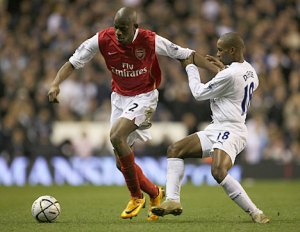
Abou Diaby
“An article by Jonathan Wilson in the Guardian today asks an interesting question for those of us who grew up in an era in which West African football was the realm of skilled artists such as Abedi Pele, George Weah, Roger Milla, and exciting teams like the ‘original’ Nigerian Super Eagles who played swashbuckling, imaginative football. In a piece that starts out by discussing Egypt’s tactical formation (very interesting as well), he goes on to ask…” (Soccer Politics)

Juan Sebastian Veron looks to finish his career on a high

“Everything Barcelona’s Lionel Messi touched at club level in 2009 may have turned to gold but Juan Sebastian Veron wasn’t too far behind his countryman, leading Estudiantes to the Libertadores Cup and retaining his personal crown as South America’s footballer of the year.” (World Soccer)

Fifa admits World Cup ticket prices too high

“Acknowledging that Fifa has lost money and that mistakes in the ticketing process and opportunistic pricing by travel operators had deterred many supporters, Fifa general secretary Jerome Valcke also promised an overhaul of ticketing before the 2014 World Cup in Brazil. Ticket sales for the tournament have been far lower than expected, with just 2.1 million of a total 2.9 million tickets sold. Prohibitive travel, accommodation and ticket packages sold through Fifa’s single licensed agency, Match, have deterred many fans.” (Telegraph)

‘Feet of the Chameleon’ and Stories of African Football


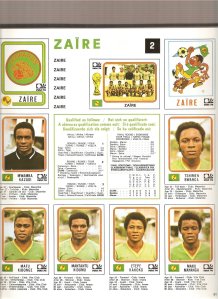
Panini stickers of the ill-fated 1974 Zaire squad (from the blog ‘Zaire 1974’)
“‘Feet of the Chameleon’, the title phrase of Ian Hawkey’s excellent recent book on African football, comes from a coinage of South African commentator Zama Masondo—who was trying to familiarize and localize slow motion television replays for Zulu-speaking rural audiences. For members of that audience who were new to television of any sort, the replays were confusing. They thought ‘something had gone wrong with their TV sets at first.’ So, Masondo explained to Hawkey, rather than just saying ‘Now for the replay’ the commentator used the phrase ‘Ngonyawo lo nwabu’ which means ‘Now let’s see it again with the feet of the chameleon.’” (Pitch Invasion)

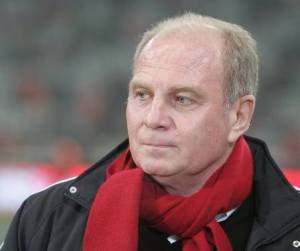
Uli Hoeness speaks his mind


“Recently in the news again for criticising FIFA’s decision to stage the forthcoming World Cup finals in South Africa, Bayern Munich president Uli Hoeness has acquired a reputation for making outspoken comments. Viewed by some as a loud-mouthed oaf, the former West Germany and Bayern midfielder is extolled by others for his championing of football’s traditional values and his distaste for some of the game’s biggest egos. Here are some of his most quotable observations…” (WSC)

Safari: Are too many tourists killing Africa’s wildlife?

“I have barely been in Zarafa, Botswana’s newest exclusive safari camp, five minutes when I have my first encounter with a wild animal. I am halfway along the pathway that leads to my tented room when a bull elephant emerges out of the bush and stands, stock still, just 20 yards up the path, directly in front of me. I hold my ground, as the guides instruct you to do, but I can hear my heart beating, partly out of excitement and partly out of fear. For a moment there is complete stillness as two tons of bull elephant stares down on 190 pounds of puny homo sapiens.” (Telegraph)

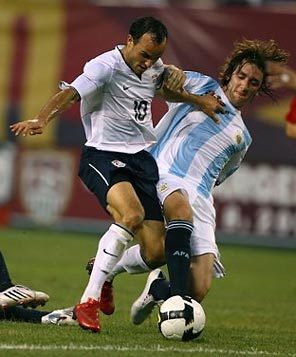
A Star Abroad Burns Out at Home


“Lionel Messi is probably the top sportsman in the world right now: unless you ask fans in Argentina where the soccer star was born and grew up in a town called Rosario, roughly 180 miles (290 kilometers) north-west of Buenos Aires. After helping his club, Spain’s FC Barcelona, win most of the top awards in 2009, Mr. Messi was named World Player of the Year by FIFA, world football’s governing body. He received the 2009 Ballon d’Or, given to Europe’s top player— winning the honor by the widest margin since it was first awarded in 1956. He even won the Latino Athlete of the Year 2009.” (WSJ)

Egypt’s Three-peat – The Latter Stages Of The African Cup Of Nations


“The climax to Group C summed up this Cup of Nations, a curate’s egg of a tournament which ran out of good football from the second week onwards. A tournament during which the look of delight on the face of one CAF official when Algeria beat Cote D’Ivoire turned to horror when he remembered that Algeria played Egypt next. A tournament during which the players from the English Premier League, the “best” league in the world, were almost uniformally rubbish. And a tournament which ended with the unfeasibly fierce-looking Egyptian coach Hassan Shehata managing a smile at the end which made him look even more fierce. I’ll be having the nightmares for a while.” (twohundredpercent)

Africa Cup of Nations 2010: A Tournament Best Forgotten?
“The 2010 Africa Cup of Nations is over. Though I usually love the tournament, I won’t be remembering this edition fondly. For several reasons.” (World Cup Blog)

Four things I learned from the Africa Cup of Nations
“1) There is no one at the CAF fit to manage football. The choice of Angola to host the tournament in the first place was bizarre, given that it’s a quasi-Communist autocracy in the midst of a long and bloody civil war (which stipulated that, as a nation-building exercise, many of the games in this tournament would be held in the home of the hopeful secessionists). How the tournament actually panned out made the rejected bids of places like Zimbabwe and Mozambique look sweet by comparison.” (The 90th Minute)

Questions and Representations in the Year of African Soccer
“Finally, after an eventful January, I’ve got some answers to the big questions for this year of African soccer. Was Angola 2010 a success or a failure? Yes. Will the World Cup in South Africa be a success or a failure? Yes. Let me try to explain.” (Pitch Invasion)
Media Freedom at 2010 World Cup Under Question in South Africa


“FIFA are under fire for their press accreditation rules at the 2010 World Cup, with the South African National Editors’ Forum (SANEF) at loggerheads over numerous restrictions the governing body is putting in place, most of which follow on similar tight controls from previous World Cups, which have been criticised before.” (Pitch Invasion)

South Africa and FIFA Try to Ease Concerns About Power Problems

“Last month, as dozens of people out for the evening scrolled along the boardwalk, a popular area along the Indian Ocean with restaurants, specialty shops and bars here, the city was suddenly enveloped in darkness. Generators kicked in providing some power, but the shutdown brought most activity to a standstill for several hours.” (NYT)

South Africa’s cup is failing to set the world on fire

“According to the wonderful American humorist Dave Barry, who has long marvelled at Miami’s ability to attract visitors despite notorious gun and crime statistics, the city’s official tourism slogan is: Maybe You Won’t Get Shot. There is no truth in the rumour that South Africa is considering a similar sales pitch for the World Cup this summer, yet listening to Jérôme Valcke, the secretary general of Fifa, pleading for more favourable media coverage in advance of the tournament and blaming low ticket sales on unfounded security concerns, it was tempting to wonder what sort of people his organisation imagined would flock to a distant country with a reputation for violence.” (Guardian – Paul Wilson)

South Africa still has questions to answer

“The stadia may be there or thereabouts and the police are confident about security. However, it is transport and accommodation that remain the great unknowns ahead of this summer’s World Cup in South Africa. Fans who are able to travel and find places to stay between June 11 and July 11 will enjoy some of the venues: the steel and concrete giraffes which hold up the stadium in Nelspruit, the enveloping calabash at Soccer City and, above all, the magnificent Moses Mabhida Stadium in Durban.” (World Soccer)

South Africa still has some questions to answer

“The stadia may be there or thereabouts and the police are confident about security. However, it is transport and accommodation that remain the great unknowns ahead of this summer’s World Cup in South Africa. Fans who are able to travel and find places to stay between June 11 and July 11 will enjoy some of the venues: the steel and concrete giraffes which hold up the stadium in Nelspruit, the enveloping calabash at Soccer City and, above all, the magnificent Moses Mabhida Stadium in Durban.” (World Soccer)