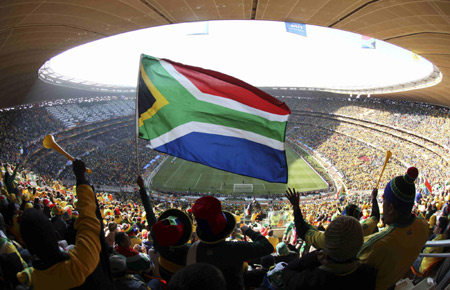
“There is not much for me to say about today’s match: it has already been said, not even an hour after the match’s conclusion. We even broke Twitter, twice the whole network seized up – too many of us telling each other all about it. It was a game of two halves, and two nervous teams. Throughout the first act South Africa was afraid to attack, and the whole side seemed to play stopper.” (From A Left Wing)
Tag Archives: South Africa
2010 World Cup: Fighting AIDS

“An American soccer star joins the TRIAD Trust using the game to educate children and young adults about how to protect themselves from contracting H.I.V.” (NYT)
Condoms for the World Cup and other ways to keep HIV at bay
“In three months hundreds of thousands of soccer fans are expected to descend on nine South African cities for the 2010 World Cup. But for so many visitors going to a country where more than 10 percent of the population is estimated to have HIV/AIDS, many public health experts are worried that the event will kick off a spike in transmission. South Africa, in turn, has responded by requesting one billion condoms for the year (many of which will be supplied by the U.K.)—more than twice as many as usual, the BBC noted.” (Scientific American)
South Africa 1-1 Mexico: a fair result but neither side will be happy
“An entertaining game that finished with a fair result, a point apiece. Both sides will be relatively disappointed to come away from the opening game with just a draw, and the match demonstrated the faults of both sides more than it did their qualities.” (Zonal Minute)
Uruguay 0-0 France: no cohesion in attacking zones from either side
“Group A is wide open after the first round of matches, after a draw in both games. The earlier game was open and exciting throughout – this one started well but faded badly as the game went on. Uruguay’s expected 3-5-2 became a 3-4-1-2 with Ignazio Gonzalez pushing forward to play just behind Diego Forlan and Luis Suarez. Mauricio Victorino came in on the right side of defence, and Egidio Arevalo took the midfield role requiring the most positional discipline.” (Zonal Minute)
World Cup scouting: The 32

Matías Fernández (Chile)
“The following 32 names represent Football Further‘s players to watch at the 2010 World Cup. We’ll be following their performances closely over the course of the tournament, with weekly scouting reports rounding up their progress. Names preceded by squad numbers. Players in bold have been scouted by Football Further in the build-up to the World Cup. Players in brackets were scouted but not called up by their national sides.” (Football Further)
South Africa 1-1 Mexico – Video Highlights and Recap – World Cup – 11 June 2010

“The opening match of the FIFA 2010 World Cup was the host nation South Africa taking on CONCACAF side Mexico. A host nation has never lost an opening match but Mexico could provide a tough test for South Africa. Would South Africa get a win or would Mexico start off with a win over the host country? A full recap of the match along with video highlights are below.” (The 90th Minute)
World Cup 2010: South Africa 1-1 Mexico
“The gloves are now off. For the first game of any World Cup, you always need to pick your strongest side. Anything else would be foolhardy, so we can be fairly sure we are seeing people’s strongest hand. How, then, did ITV do? This year it was their turn to take the opening game for the first time in eight years, and they looked keen to show they meant business. Their key new acquisition was Adrian Chiles, who continued to exude his unaffected charm with such familiarity that you could almost believe he’d been kidnapped from the BBC in his sleep and no-one has yet told him.” (twohundredpercent)
World Cup 2010: The Opening Ceremony… Live!
“Though it has slipped under many people’s radar, there is some sort of World Cup due to be held. Soccer City, Johannesburg is the venue for the start of this summer (winter)’s festivities. South Africa and Mexico wait in the wings to entertain us with some actual – wait for it – football. But first, of course, comes the dubious pleasure of the opening ceremony.” (twohundredpercent)
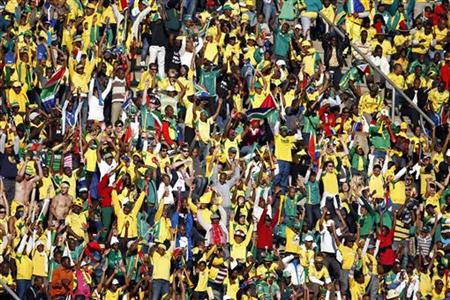
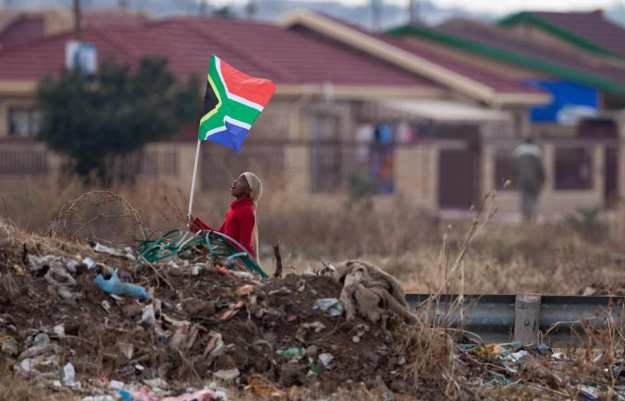
Excitement and expectation mount in South Africa
“In 2006 it was inconceivable that Germany would be the first host nation to depart the World Cup at the group stage. Yet by their own high standards the squad was one of the country’s weakest and pundits had the knives out. We should have known better – they were edged out only in the semi-finals and the tournament was a huge success in uniting and popularising the country.” (WSC)
The Style and Skill to Reach the Final
“And the winner is. … As the World Cup opens Friday amid a celebration of exceptional vibrancy with host South Africa playing Mexico, two countries float above the field of 32 teams: Spain and Brazil. Yes, Africa is the host. Yes, Asia is developing. And, yes, there are dark horses — the gifted but erratic Argentines, the talented Dutch and the ever self-confident English among them.” (NYT)
World Cup Predictions, Knockout Stage: World Cup Buzz Podcast
“You have invested the last month with us, though the expert interviews to the two weeks of group breakdowns, and now – the day before the 2010 World Cup starts – Laurence McKenna, Kartik Krishnaiyer and myself make out final predictions: the Round of 16 to the July 11 final. Join us in this final preparatory step for South Africa 2010 as we tell you who we think will be the next world champions.” (EPL Talk)
In the shadow of Green Point Stadium
“When the first soccer game kicks off at the Green Point Stadium in Cape Town, 4.5 billion Rand (4.3 million Euros) will already have been spent on its construction. Environmental concerns, noise pollution worries and transportation arguments have enmeshed the stadium in controversy since before the first brick was laid. For many, the argument is not the money spent but what the money could instead buy. They argue that the cost is not in Rands but in lives. Many of Cape Town’s townships are without sewage systems, hospitals are horribly under funded and the poor are homeless. 4.5 billion Rand can, roughly, build 60,000 homes, which could house up to 300,000 previously homeless people.” (Twenty Ten)
World Cup 2010 a feast of technology and tribalism
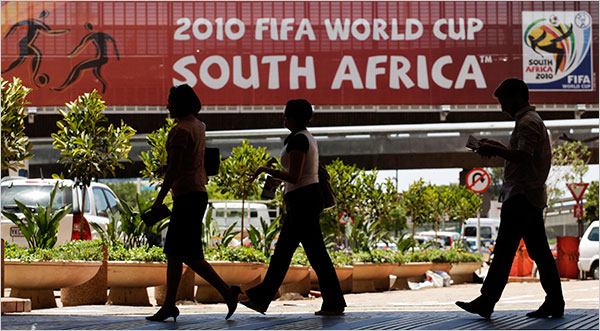
“Don’t be surprised if there are fewer meetings booked over the 31 days starting June 11. Chances are there will be fewer people at their desks, too, more people responding to e-mails on their BlackBerry and, oh yeah, the network might be a little sluggish as well. That’s because the FIFA World Cup 2010 finals kick off at 10 a.m. Friday, June 11 as Mexico takes on hosts South Africa.” (The Globe and Mail)
Thirty-One World Cup Shirts
“It’s that time again. Back by popular demand (to be precise, two people), it’s time for our quadrennial report of all the team shirts that will be on display at the upcoming World Cup. As ever, the menu is overwhelmed by items produced and designed by the twin behemoths of the sportswear universe, Adidas and Nike. Whether they have been using their market domination to the benefit of the sartorial elegance of international football, however, is something of an open question.” (twohundredpercent)
World Cup Predictions, Betting Tips, SEO SEO

Tiziano Vecellio, Venus and Adonis
“Just when you think that David Bowie has retired from the site, that the Goblin King will no longer grace our presence, that Jorge Luis Borges really is dead and not just waiting for a USMNT run to the finals, bam. It hits you. Despite the odd jokes, obscure historical references, and kinda weird pictures, we at Futfanatico give you the best betting tips for the World Cup while mocking the SEO keyterm Google carousel in an ironic act of betrayal, subversion, and delightful perversion. Thus, here are your WORLD CUP BETTING TIPS.” (futfanatico)
World Cup Group D Preview: World Cup Buzz Podcast
“The deepest group in the tournament was made all the more interesting when injuries to Michael Ballack and Michael Essien took the two biggest names out of Group D. On this episode of the World Cup Buzz podcast, myself, Laurence McKenna and Kartik Krishnaiyer consider what the absences of Ballack and Heiko Westermann do to Germany’s chances to get out of a group that also features Ghana, Serbia, and Australia. Along the way, we hear thoughts from Andy Brassell, Raphael Honigstein, Jonathan Wilson and Simon Hill.” (EPL Talk), (World Cup Group A Preview), (World Cup Group B Preview), (World Cup Group E), (World Cup Group H), (World Cup Group F)
Uruguay have case for local support at World Cup

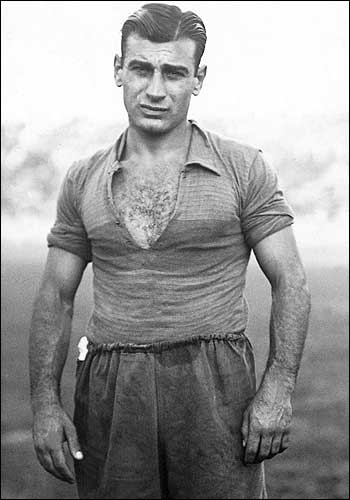
Francisco “Pancho” Varallo
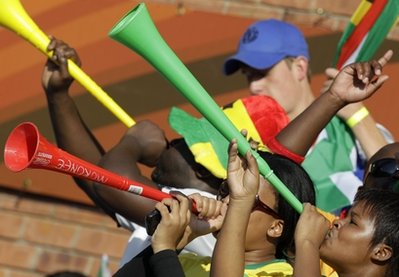
“Once the World Cup hosts have got the action under way in South Africa on Friday afternoon the drone of the vuvuzelas might die down and the sound of drums should come through as the second game kicks off in Cape Town. They might sound straight out of Africa but the drums will be pounding for Uruguay, telling a tale that stretches across oceans, religions and races.” (BBC – Tim Vickery)
South Africa Stadium Stampede is No Reason for World Cup Pessimism
“I like to think that World Cup Blog has been very positive about South Africa hosting World Cup 2010. For example, when the whole thing was a little questionable in early 2009 we shared our 10 reasons to be optimistic about South Africa hosting the World Cup. There will possibly be a few problems along the way, but the whole thing will hopefully be worth the tradeoff.” (World Cup Blog)
World Cup marks a milestone in S Africa’s evolution
“It’s 1985, and I’m sitting on the veranda of my grandparents’ house in white Johannesburg. It’s a blazing December day, and I’ve just swum in their pool. Next to me my grandfather is listening to the cricket on the radio. Nesta, the black maid who has been working for my grandparents for decades, is cutting the chocolate cake. At the bottom of the garden, her grandchildren are playing in our old underpants from Europe. In 1985, apartheid is still going to last forever.” (FI – Simon Kuper)
World Cup Power Rankings

“You knew they had to be coming: World Cup power rankings are here. Let’s dive in…” (SI)
Experience at the World Cup
“It’s an oft-used cliché that experience is necessary in order to win the greatest football competition in the world. In fact, only the other day I saw Steve Hodge being interviewed on Sky Sports News talking about this very subject. I think he was trying to tout his Maradona ’86 World Cup shirt again but was nonetheless happy enough to offer his wisdom to Sky Sports’ rolling news feed. He made the point that the sides who won the World Cup normally had an average age of around 28/29. He’s got a point, the average age of the World Cup winning Italian squad of four years ago was 28 years and 8 months.” (twinty tin)
Don’t Bet on Home Continent in African World Cup

“The World Cup opens Friday, and this host city is draped in the flags of the 32 participating nations. With the world’s biggest sporting event coming to Africa for the first time, hope wafts across the continent that one of the six African teams might win. ‘The talent is there, certainly,’ Bob Bradley, the United States coach, said. Yet history says that disarray in preparations, desperate coaching changes, poverty, official corruption and vagaries of the draw will conspire against Africa’s chances.” (NYT)
The Rise Of African Soccer

“The boy was handed an AK-47 assault rifle and taught how to clean, load, aim and fire it. There was target practice for a while, which was fun. Almost like a video game, only louder with more recoil. Then one day, the boy was blindfolded. ‘I was told not to open fire until instructed,’ recalls the boy, now a man. ‘So I waited. Finally, I was given the order. I opened fire, then I was told to stop. When they removed the blindfold, I saw that I’d killed a man. They said, ‘Now you know you can shoot to kill.’ They said, ‘Do this or you will become dust.’ I was 12, maybe 13 years old. I had no shirt and no shoes. But I had an AK-47. A lot of boys like me fought in that war.'” (ESPN)
World Cup 2010: Matthew Booth the perfect advertisement for integrated South Africa
“So when some members of the Spanish press thought they heard him being booed by black fans at the Confederations Cup last summer they thought they had a great story about racial disharmony in the new South Africa and filed their copy to Madrid. They got it excruciatingly, embarrassingly wrong. The fans were celebrating their cult hero, launching into a resonant chant of “Booth!” every time the 6″6 centre-half met the ball with one of his thumping defensive headers.” (Telegraph)
World Cup Host Needs To Live Up To Its Promise Of Better Housing For The Poor
“Since the fall of apartheid, the South African government has initiated a massive effort to improve the housing situation of millions of its marginalized citizens. South Africa’s commitment to housing was presumably such a priority that the Bill of Rights in the South African Constitution (1996) embodies this commitment…” (Nutmeg Radio)
Mediating South Africa 2010: Parting Thoughts and Sources
“Note: The second half of this post is a set of suggested links and sources for context and culture around the coming World Cup; anyone interested in that more than my own thoughts on context—or anyone with suggestions of your own—should feel free to skip ahead. (Pitch Invasion)
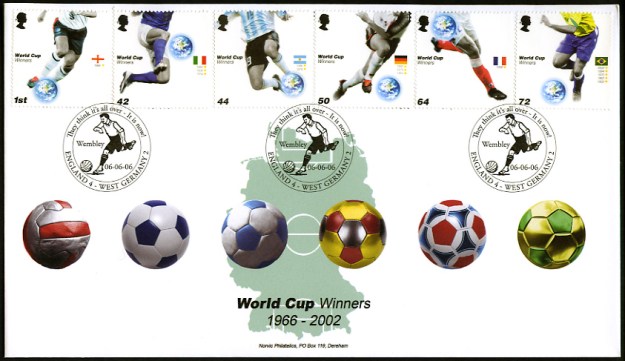
World Cup winners

“It now seems normal for nations to obsess about the football World Cup. Yet when the English did so in 1990, Jonathan Wilson notes in his scholarly Anatomy of England, it ‘was unprecedented and unexpected’. Only quite recently have World Cups turned into occasions for countries to debate who they are. Those 11 young men in their team shirts have become the nation made flesh, and the tournament the foremost contest for prestige among countries. Twenty years ago, very few serious studies of football existed. Today there are enough to fill a mid-sized library. The four books under review here build on this body of knowledge, add to the library’s tiny African room, and distil patterns from that knowledge.” (FI – Simon Kuper)
World Cup Coaches, By Nationality and Numbers

“Below you’ll find a complete list of the 32 coaches at World Cup 2010. You’ll also find their nationality, and their age going into the tournament. Beneath that you’ll find some amateur hour number crunching I did with pen, paper and the calculator on my cell phone to work out a few statistics.” (World Cup Blog)
Legacy of South Africa’s World Cup will take many years to measure
“‘Our society,’ said British writer Johann Hari, ‘is very good at some things, generating wealth, say … But we are very bad at meeting a basic human need for shared collective experiences. Our atomized lonely culture can only meet this need at freak flashpoints.’ Or World Cups.” (SI – Tim Vickery)
Puma does the World Cup ad better, with African footballers and fans, Gnarls Barkley and Kehinde Wiley
“Contrast the above (and its soundtrack) with Nike’s bloated ad, which is seasoned with the most tired forms of machismo and sexism. Here there are even a few girls and women, presented not as sex objects or football failures, but as fans and players (asking the boys to give her the ball!). This ad, furthermore, is actually about African soccer.” (From A Left Wing)
How to sound smart at the watercooler
“Everyone isn’t a soccer expert. Yet many of you will be caught in a conversation that veers toward the World Cup at some point in the coming summer. For those of you not inclined to scour Slovenia’s World Cup roster for hidden clues that could help the U.S. gain possession in the middle third, here are a few lines that will help you sound like you know what you’re talking about…” (ESPN)
Post-Invictus: South Africa’s Greatest Soccer Moment
“In early 1996, as the above quote emphasizes, it was South Africa’s Bafana Bafana soccer team—not its rugby ‘Springboks’—that captured South Africa’s imagination. Yet, in the run-up to the 2010 World Cup, the American media has constructed a history implying that the most important sports moment in South African history was their victory in the 1995 Rugby World Cup. This construction is thanks largely to Clint Eastwood’s rendition of those events in Invictus (which was released in DVD last week, ensuring further pre-World Cup attention), though ESPN has also chimed in with a documentary entitled The 16th Man. I prefer the ESPN documentary because it includes some genuine South African voices, but I also find it fascinating that in the hype around that Rugby World Cup the media seems to be missing a somewhat analogous soccer moment that came about seven months ‘post-Invictus:’ South Africa’s victory in the 1996 African Cup of Nations.” (Pitch Invasion)
South Africa Pushes to Make the Cup Its Own
“The official mascot of Africa’s first World Cup — a stuffed leopard with spiked green hair — was made in China. The official World Cup anthem, “Waka Waka (This Time for Africa),” was written by the Colombian pop star Shakira. The official restaurant? McDonald’s. And with less than three weeks before the world’s most watched sporting event, only 36,000 of the almost three million tickets have been sold in Africa outside of South Africa itself, the host. On a continent whose people mostly live on the wrong side of the digital divide, tickets were mainly marketed online.” (NYT)
Official FIFA 2010 World Cup Song – Wavin’ Flag by K’Naan
“The official song of the FIFA 2010 World Cup, Wavin’ Flag by K’Naan.” (The 90th Minute)
The Map of the Road of the Future
“The day of the Champions League final is, as they say, finally upon us, which means it’s time for a couple of announcements in the way-of-the-future vein. Like, what are we going to do about it, and what to expect for this little festival of truces they’ve got set up in South Africa this summer.” (Run of Play)
Book Review: Soccer, Passion, Politics and the First World Cup in Africa
“Ahead of the World Cup in South Africa, a spate of books on African football was to be expected. Africa, after all, has traditionally been underserved as far as football writing goes. Until last year, the genre could more or less be summed up in three books: Peter auf der Heyde’s Has Anybody Got a Whistle?, Filippo Ricci’s Elephants, Lions and Eagles, and a brilliant chapter by David Goldblatt in his magisterial The Ball is Round.” (Pitch Invasion)
32 Teams: One Dream
Indy to join with Carolina RailHawks in celebrating soccer with new and classic films
“We’re just three weeks away from the start of a little soccer competition in South Africa. The 2010 FIFA World Cup begins June 11, and to mark the month-long occasion, the Independent Weekly and the Carolina RailHawks will partner to sponsor a series of soccer-themed films.” (IndyWeek)
Iconic Grosso bows out with fistful of heaven

Fabio Grosso
“The naming and subsequent pruning of provisional World Cup squads in recent days has yielded a number of high-profile casualties, among them Ronaldinho, Francesco Totti, Antonio Cassano, Esteban Cambiasso, Javier Zanetti and Karim Benzema, and the tournament will undoubtedly be poorer for their absences. Young stars including Italy’s Mario Balotelli and the extravagantly gifted Brazilian pair of Neymar and Paulo Henrique Ganso have also missed out on the call-ups that many purists had hoped they might receive.” (Football Further)
The World Cup, in 32 Murals
“You may soon begin to notice—as you wander the streets of New York, read your favorite magazine, or surf the web—a series of brightly colored murals depicting men on horseback, eagleback, and elephantback; men dressed as supermen or samurai; men sprouting wings or plated with armor. Do not be alarmed. These are not new comic book characters, created to kick Batman, the Fantastic Four, and Transformers to the curb. No, they are much bigger than that. These are the heroes of the 2010 World Cup, each of them en route to South Africa as they prepare to vanquish their foes and bring glory to their homelands.” (Vanity Fair)
A World Cup Miscellany: Group A

“Back in October of 2009 when Egypt was hosting the U-20 World Cup I wrote a somewhat esoteric preview of the countries in the competition oriented by one of my favorite soccer quotes (from Eric Hobsbawn): ‘The imagined community of millions seems more real as a team of eleven named people.’ It was the start of the ‘Year of African Soccer,’ to be followed closely by the U-17 World Cup in Nigeria, the African Cup of Nations in Angola, and soon the mega event of them all: the 2010 World Cup in South Africa. Drawing inspiration from my all-time favorite World Cup preview, Matt Weiland and Sean Wilsey’s excellent edited collection of essays and miscellany related to the participants in the 2006 World Cup, the shared goal was ‘to use soccer as a lens and an excuse to learn something about the wider world’.” (Pitch Invasion)
There is a world of difference in how football is played
“On Wednesday nights I play bad football with some other old blokes in Paris. I spend the game shouting instructions at my team-mates in bad French. They don’t listen. What is going on here is a clash of football cultures. I grew up in the Netherlands, where football is a sort of debating society. In France, as far as I can gather, talking during football is rude.” (FI – Simon Kuper)
Rewarding Dedication With A World Cup: Randomness, Awesomeness and Identity In Africa
“Rewarding love is a worthwhile endeavor. A reward signifies acknowledgment that the recipient is seen and appreciated. The South African World Cup is an exciting time for South Africans who have been loving soccer for decades. But if you look closely at how Africa has reacted since 2004 when South Africa was awarded the World Cup, you will notice that much of Africa has been acting as if they are co-hosts, as if this is the first communally-hosted World Cup.” (Nutmeg Radio)
In the shadow of the World Cup: ESPN covers the rape of South African soccer players
“ESPN has done a story on the frequency with which South African women soccer players are raped, targeted as lesbians. (Female athletes often targets for rape) It is a good thing that a media outlet with ESPN’s resources decided to cover this story. But there are a couple of dots ESPN avoided connecting. This comes two years after the murder of former national team player, Eudy Simelane. (See On the murder of Eudy Simelane and Girlie ‘S’Gelane’ Nkosi, Eudy Simelane’s teammate and lesbian activist, murdered). The timing of this story implicitly links to the opening of the World Cup next month.” (From A Left Wing)
Has South Africa Overcome Apartheid?

“This article is dedicated to my dear friend Vince Binder. Vince tragically passed away last month. In the last conversation I had with him, over sushi and sake in Oakland, we discussed, among other things, the World Cup. While we both agreed this was an enormous step in the wake of Apartheid rule, Vince reminded me that the most heinous of the last vestiges of Apartheid economic policy would be within a stone’s throw of some of the new World Cup venues. As usual, my friend was right. To continue the fight against racism, their story not only must be told, it demands us to re-tell it. On Tuesday in Brooklyn, Vince was laid to rest. I’ll miss Vince forever. Hope this makes him proud.” (Yanks Are Coming)
South Africa Comes Far but Has Far to Go
“Lucas Radebe grew up in South Africa playing soccer with a tennis ball, or a sphere made from old cloth and shopping bags. Lacking jerseys in the Diepkloof township, a part of Soweto, he and his friends gathered sacks of mealie meal, a grain staple. They cut out holes for their arms and heads and scrawled numbers on the bags or colored them with dye.” (NYT)
Home turf may not be enough
“Regarding the chances of the African teams in this year’s World Cup, you may have already heard some optimistic prognostication. Something along the lines of this: Ivory Coast will be the first African team to make the semifinals, and perhaps even win the Cup on ‘home’ soil. Ghana is ready to improve on its second-round performance last time out. Algeria is a dangerous dark horse. Host South Africa is sure to do better than expected.” (ESPN)
Soccer legend who supports all African teams – and Brazil

Luis Fabiano
“The African footballer of the century clutches an icepack against his cheek. He is hurting. ‘I like to chew bones, turkey bones,’ mumbles George Weah, in a Liberian accent that further complicates comprehension. Watching television one day he got distracted and bit too hard. Visiting the Netherlands last weekend, Weah spent a lot of time with Dutch dentists. In between he talked about Africa and the coming World Cup in South Africa – and about whether it will be an ‘African’ World Cup.” (FI – Simon Kuper)
Spain: The Year of Success for La Roja?

“The 2010 FIFA World Cup in South Africa is almost upon us and millions around the world will be tuned in with all eyes on this year’s favourites, Spain. They have been regularly touted as potential champions for many years now, and rightly so with the talent they have at their disposal. But somehow it always seems to end in disappointment.” (Just Football)
One Style Does Not Fit All: Deconstructing A Universal Football Style
“Africa has some of the best footballers in the world dominating some of the world’s best leagues. Yet African nations tend to struggle when their players come together for internationals. What gives? The easy answer to this conundrum almost always begins and ends with what has become a familiar refrain; African football lacks discipline. But if that’s the case, someone needs to explain why African teams have dominated for years at the youth level. Consistently beating the best footballing nations must require a certain level of organization and discipline even at the youth level, no? Surely the answer to this age old problem is more complex than discipline.” (Nutmeg Radio)
Security and the World Cup
“I’ve just had an interesting meeting with a man who runs a big private security company in South Africa. He’s looking after one foreign football team, and many VIPs, during the World Cup. For a variety of reasons he didn’t want his name to be mentioned, but here are some of the main observations he made about the upcoming tournament, and South Africa in general.” (BBC)
‘Philosophy Football’

Antonio Gramsci
“The countdown to the 2010 World Cup South Africa can now be measured in days. And when it comes to the world’s most popular sport, there are often philosophical questions to ponder, but in the eyes of the world’s great thinkers — from Greek stoics to Jamaican Rastafarians — the game of soccer has always occupied a hallowed spot on a higher plain, up there somewhere between a bicycle kick and a diving header, depression and existentialism.” (NYT)
U.S. team must maintain its on-field discipline in South Africa
“Jozy Altidore wandered into a dangerous place last weekend. His red card while playing for EPL struggler Hull City might ordinarily have prompted some head shaking, some mumbling about impetuous youth. U.S. supporters, gazing from afar, could simply have hoped the 20-year-old striker grows out of it. But this is hardly an ordinary time. It’s squeaky-bum time in soccer’s ultimate cycle, the crest of the World Cup loop.” (SI)
‘World Class’ World Cup a Difficult Proposition for African Fans
“With only 43 days to go before the start of the World Cup, the head of the South African organizing committee said Wednesday that the host country’s infrastructure is superior to any previous tournament host; the stadiums are pristine; and the country is ready to welcome more than 370,000 visitors for the biggest party in the world.” (NYT)
World Cup Songs: #3 Waka Waka (This Time For Africa) by Shakira
“This is the tune FIFA, in their infinite wisdom, have chosen to be the official song of the 2010 World Cup. Shakira gets the chance to belt out some pretty pedestrian inspirational lyrics. Well, you wouldn’t expect anything less from an official World Cup song, would you?” (Off the Post)
Reasons To Love (and Hate) All the teams in South Africa
“So with the World Cup coming up, many of you will be looking for a team to follow either as a second team when your team inevitably gets knocked out in the Quarter Finals on Penalties (perhaps that one is just me) or because your team didn’t make it to South Africa. Either way, at some point you are going to need someone to follow. Often this is irrational and you just like a team. Sometimes you need a reason, sometimes you just inexplicably hate someone, or maybe they have a player you like from the club you follow.” (World Cup Blog)
Sense and sensitivity
“I was on my way out of a lecture by Menzi Simelane, South Africa’s director of public prosecutions, after having tried in vain to draw him on the subject of Julius Malema. ‘Excuse me,’ came a voice from the shadows. ‘Did I hear you say you’re a British journalist? I want to ask you a question. What do the British press think of South Africa?’ It’s a question I get asked more and more often as the football World Cup draws closer. Any negative UK headline or story quickly snowballs on the web and leaves South Africans feeling vexed. In short, they want to know of me, why do you hate us?” (Guardian)
Colossal World Cup Foul

“I have been to many a playing field in my day, and never have I seen a sports arena as breathtaking as Moses Mabhida Stadium in Durban, South Africa. After taking a private tour of the $457 million marvel, I left utterly stunned, for both better and worse.” (The Progressive)(Must Read Soccer)
World Cup and Poverty: Make a Difference
“This summer 32 nations will fight in South Africa to be named the world’s best footballing nation. This summer 63 international matches will take place in 10 top-of-the-line stadiums. This summer the entire country of South Africa will open its arms and embrace the world. This summer 6 billion people will come together and be united as one.” (Soccer Politics)
England’s chances of World Cup glory

Cesc Fàbregas, football icon
“When we began researching what would become our book Why England Lose & Other Curious Football Phenomena Explained, we decided not to believe a word that anyone said about the game. Instead we would test its shibboleths against data. It was about time, too. For decades, football had escaped the Enlightenment. Clubs are mostly run by people who ignore data and do what they do because they have always done it that way. These people used to ‘know’ that black players ‘lacked bottle’, and they would therefore overpay for mediocre white players. Today, they discriminate against black managers, buy the wrong players and then let those players take penalties the wrong way.” (FI – Simon Kuper and Stefan Szymanski)
Meet the luckiest fan in the world
“While scuffles broke out at South Africa’s ticketing centres and football fans (including myself) grew irritated at yesterday’s computer ticketing collapse, leaving many empty-handed, one man sat exceedingly pretty. He hadn’t needed to sleep overnight on the streets of Cape Town nor Johannesburg – where one devoted couple hired a hotel room near a Fifa centre so they could tag-team for a 20-hour marathon that eventually yielded two much-coveted tickets for the final.” (BBC)
England’s World Cup hosts in a race to be ready in time
“Just seven weeks remain until the England team move into their South Africa base for the World Cup finals, and yet their headquarters still look like a building site. You cannot miss the Bafokeng Sports Campus, on a right-hand turning off the road between Rustenburg and Sun City, because there is a small platoon of workers building the entry gates. Down the drive, the construction work is more extensive. One building, containing the medical centre, the thermal rehab room and the gymnasium, remains incomplete. Even farther behind in the race for completion is the shell of another building that will be the media centre.” (TimesOnline)
Undercurrents of Violence at the World Cup

Emmanuel Adebayor
“How easy it is to forget that athletes at their peak are, by the very nature of their tasks, young but expected to be wise in their event, world-traveled but isolated and vulnerable. This week, Emmanuel Adebayor, the goal scorer for Manchester City, gave up the captaincy and, he said, the calling to ever play again for his country, Togo. He is 26 and a millionaire, and he said he just cannot get out of his head the day in January when Angolan separatists fired on the Togo team bus, killing three people in it.” (NYT)