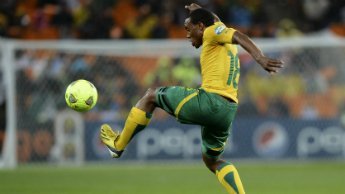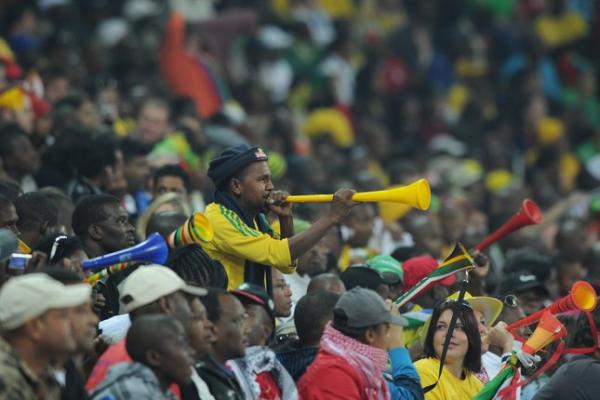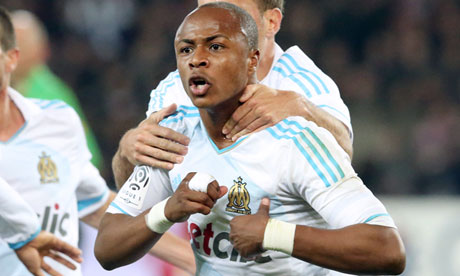
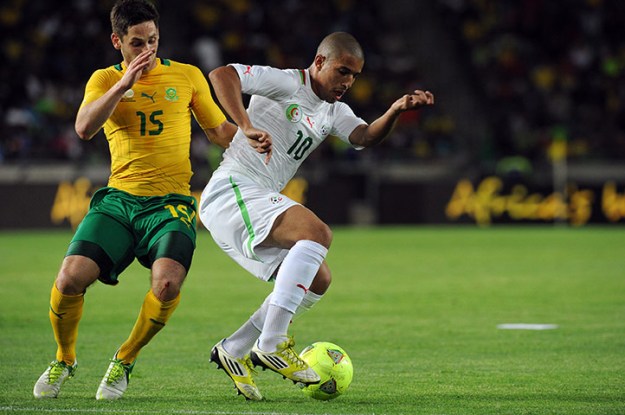
“It’s been another momentous year for African footballers, with players from the continent involved in title-winning sides in Spain, Italy, France and Germany. Others have won a domestic cup, although the biggest trophy on offer ended up in the hands of Mali’s Seydou Keita after his Barcelona side destroyed Manchester United at Wembley on Saturday.” BBC
Tag Archives: South Africa
The Ball Day 29 – Soccer + Breakdancing in Morocco
“The Ball continues to spread it’s message of participation, no boundaries, and unity and today they visit a Casablanca children’s dance group to play soccer and find out how breakdancing and soccer go hand in hand. This EP has music again from the great Jali Bakary with ‘Combination’ a nice tune from his new album.” The Ball
The Ball Day 23 – Crossing into Africa
“Today is Andrew, Christian and The Ball’s final day in Europe on the 2010 trip to South Africa, see the historic crossing into Morocco in today’s EP where the music is by Kenyan band ‘Just a Band,’ find out more and buy the song Sunrise.” The Ball 2010
AFRICA10: feature documentary finishing funds
“AFRICA10 is a character-based feature documentary about the incredible spirit of soccer in Africa. We feature five inspiring stories from across the continent, intercut with commentary from famous Africans including Kofi Annan, Desmond Tutu and players such as Michael Essien, Emmanuel Adebayor and Roger Miller. AFRICA10 illustrates, in a dramatic and visual way, how soccer is helping Africans lift themselves up.” KickStarter
USA-South Africa Final Thoughts and Player Ratings
“As usual, though a bit late, here are three quick thoughts and player ratings from Wednesday’s 1-0 United States Men’s National Team victory over South Africa in the Nelson Mandela Cup. I promise to litter a bit of optimism in my piece without discounting Dr. Crowley’s egg-nog sized glass of pessimism. I found a few things in the Yanks Cape Town performance particularly worthy of optimism, and since we’re nearing the holidays and that’s the season of perpetual hope, I’ll begin there.” (Yanks are coming)
United States 1, South Africa 0: Some Negative In A Good Result
“Just before kickoff Neil sent an email to the TYAC staff that said ‘BORNSTEIN is your captain gentlemen. Try not to kill yourselves.’ I wrote back ‘I hate to tell you I told you so…..’ because Neil and I had a talk about this last weekend and I was convinced that this was going to happen. Levy countered with a couple jokes about his tribe. I thought the TYAC e-mail string would end there, but it was not to be. Apparently, today was the day where collectively as a unit, all major players at TYAC decided, at least for a little while, that we were going to e-mail bomb one another for the day in celebration of the last USMNT game of the year.” (Yanks are coming)
South Africa 0-1 USA – Video Highlights, Recap, and Match Stats – Friendly
(The 90th Minute)
Streetball – Trailer
“Meet the soccer players of South Africa’s 2008 Homeless World Cup team and their leaders in the Cape Town community.” (Streetball)
FIFA SOCCER 11: “We Are 11″ Series, Episode 1 – “Vuvuzela Saddam”
“Let us present to you ‘We Are 11.’ It’s being produced by VBS in conjunction with the release of EA Sports’ FIFA Soccer 11. The first installment of the series profiles the Flavor Flav of the soccer world, a man that transcends employment. Meet the man they call Vuvuzela Saddam.” (The Original Winger)
The Ball Day 51 – Visiting the Dogon Country pt. 2
“Here is part 2 in Phil and Andrew’s trip visiting the Dogon Country in Mali. Catch them stumbling across a village funeral procession before heading out to the hills for some sunset soccer action. Music in this EP from a The Ball favorite Iba Diabaté with ‘Wala Yalala’ which you could download from here. Then we round out the EP with a track from Konteh Kunda and the great track ‘Jaraby’ that you can download from here or from iTunes. Both artists from the ever expanding Akwaaba Music stable, real African music direct from the source.” (Blip)
Football’s not the place for choreographed chanting
“One of the main complaints about the vuvuzela was that its ongoing monotone bleat failed to reflect the changes in the patterns of play. Perfect through pass – parp! Contortionist reflex save – parp! Studs-up attack on an opponent’s shin in the centre-circle – parp! The same could be said for choreographed chanting, which in many modern stadiums has become the preferred method of creating a decent atmosphere. But while it’s impressively co-ordinated and far more pleasing to the ear than the plastic horn of hell, this Germanic phenomenon lacks an ingredient crucial to football – spontaneity.” (WSC)
The Ball Day 50 – Visiting the Dogon Country pt. 1
“Here is part 1 of a 2 part piece following The Ball as it journeys in the back country of Mali to the Dogon area searching for some off the beaten track football action. Music in this EP is from Akwaaba Music artists Baba Salah from Mali with ‘Borey,’ Alou Sangare with ‘Dugu Djeto,’ find the song here and check out the music video here. Then we have another spin for Mic’Mo Lion with ‘Niengo’ and finally a track from the awesomely named Peace Singers of Adabraka Official Town with ‘Take Four’.” (The Ball 2010)
The Ball Day 49 – Mali, The world’s largest Mud Mosque
“Yes you read it right, The Ball visits a beautiful mud mosque in Djenne, Mali, one of the largest of its kind in the world. You can find out more about this amazing building right here. Music in this EP is from Ghanaian Quabena Philip with ‘Wadaada Me,’ find the track from Akwaaba Music right here on Fairtizler. Also in this EP the second track you hear is from a favorite artist of us here, Iba Diabate with ‘N’nah.’ Find his latest album and the track featured right here at Bandcamp.” (The Ball 2010)
World Cup 2010: Tests ahead as focus turns to Brazil
“Since the start of the tournament, delegations from the South American country’s federal and local governments, plus several other different institutions, have been in South Africa trying to learn lessons about staging the world’s biggest sporting event. That’s because, in four years, it will be Brazil’s turn to play host.” (BBC)
The dark arts of sticker collecting
“Never mind Mesut Ozil. Forget Thomas Mueller. And as for Keisuke Honda … pah! The discovery of the World Cup was Danny Shittu. Maybe not in South Africa, but certainly in Spain. He might not have made much of an impact on the football field but, boy, has he made an impact off it. Even if he doesn’t realize it himself. Nothing can match the joy of laying your eyes on the Nigeria defender. Danny Shittu / Lagos, 2-9-1980 / 1,88m / 81 kg / Bolton Wanderers (ENG) … No. 133 in the Panini sticker album for the 2010 World Cup. It’s confession time: I am over 30 and I am collecting soccer stickers.” (SI)
The Ball

“Alive & Kicking balls are hand stitched out of local leather. They are tougher than imported synthetic balls, last far longer on rough ground and therefore give children in Africa lasting fun. Every ball carries a message about HIV/AIDS and malaria which can be used by teachers and sports coaches to broach discussions with children on deadly disease.” (Alive and Kicking)
The Ball Day 48 – Farewell Bamako
“The Ball says final goodbyes to friends made in Bamako as it heads off the beaten track ou route to Burkina Faso. This EP we have a great song from Mamou Sidibé and her new release on Akwaaba Music with “Mary” find the album on iTunes. ; Check it.” (Blip)
The Ball Day 45 – Mali backtracking, hair braiding & football
“Bus rides, hair braiding, and the spirit of football go hand in hand. The Ball continues its journey through Mali this time heading out on some backtracking through more remotes parts of Mali away from Bamako.Today’s EP features music from Akwaaba Music artist Iba Diabate with ‘Dakan Tessa’ listen and download the track at Bandcamp. The second track is from Mamou Sidibe with ‘Tounge’ and you can find it on iTunes right here.” (The Ball 2010)
Brazilian league lacks bite
“Spain or Barcelona? No contest. Week in, week out, Barcelona combine the midfield interplay of Xavi and Iniesta with the cutting edge of Lionel Messi, Daniel Alves and co. The comparison serves to confirm the impression that these days club football is of a much higher standard than international – as long as we restrict the debate to the major European leagues. The big clubs in Spain, England, Italy and Germany are in front of the national teams because of the time their players spend together and because they count on the best talent from all over the planet. When the World Cup stops and domestic football returns, the level of play goes up.” (BBC – Tim Vickery)
Feel It: Reflections on South Africa 2010 and the Contradictions of Fandom
“Though a round-about series of unplanned events, a few weeks ago I ended up watching South Africa play France in an immense and busy fan park in a dusty working class outskirt of Pretoria/Tshwane. In the fan park, while stumbling around looking for an angle on one of the big-screens, a couple South African fans glommed onto my American friend and me with curiosity: other than some staff running the show, we seemed to be two of the few white people in the place and we obviously didn’t quite know what we were doing. So, as always seemed to happen during World Cup 2010, the locals took it upon themselves to look out for us.” (Pitch Invasion)
This time for South Africa?

“As the sound of the Vuvzelas dies away – at least until the start of South Africa’s domestic league season – many South Africans begin to get on with their normal lives. But did the tournament, which was hailed as an unprecedented success, really make things better for South Africans like the papers are saying it has? I decided to ask them.” (Not on the Wires)
Not For Glory Alone
“Two billion souls: One must begin with that. That’s how many people, or nearly so, sat or stood in view of television screens to watch twenty-two men kick a white ball around a green field on a warm July night in Berlin four years ago. The twenty-two men comprised the men’s national soccer teams of Italy and France. The occasion was the final game of the 2006 World Cup. The cagey match, as the world now knows, turned on an extraordinary event near its end when France’s captain and star, Zinedine Zidane, strode toward the Italian defender Marco Materazzi and, for reasons unknown, drove his bald pate into the taller man’s chest. The motion mimicked one he’d used a few minutes earlier to head a flighted ball inches over the Italians’ goal, coming ago nizingly close to winning the day for France. Now Zidane was expelled, his team was rattled, and a player in blue whose name few outside Umbria and Trieste recall darted inside a player in white and curled the ball inside the French goal with his left foot, cueing images, on countless flickering screens around the planet, of his countrymen celebrating Italy’s triumph in the floodlit waters of the Trevi fountain in Rome.” (Laphams Quarterly)
World Cup scouting: The 32 – Conclusions

Antonio Di Natale
“Starting with Nicolás Lodeiro back in December last year, Football Further selected 32 players to watch out for at the 2010 World Cup and then tracked their progress through the tournament via weekly scouting reports. Below is a full compilation of those reports, along with conclusions (and marks out of 10) on how each player performed.” (Football Further)
‘Octodamus’ and other surprises – Eduardo Galeano

Mensaje de Eduardo Galeano para América Latina Cartagena de Indias, Julio de 1997
“Pacho Marturana, a man with vast experience in these battles, says that football is a magical realm where anything can happen. And this World Cup has confirmed his words: it was an unusual World Cup. The 10 stadiums where the Cup was played were unusual, beautiful, immense, and cost a fortune. Who knows how South Africa will be able to keep these cement behemoths operating amid pulverising poverty? The Adidas Jabulani ball was unusual, slippery and half mad, fled hands and disobeyed feet. It was introduced despite players not liking it at all. But from their castle in Zurich, the tsars of football impose, they don’t propose. …” (Dispatch)
Paving The Way For South Africa 2010: Ydnekatchew Tessema, Forgotten Hero Of African Soccer
“National team player, national team coach for his country’s only major international triumph, co-founder of his continent’s FIFA confederation, president of that confederation for 15 years, and in many ways the man who set in motion the whole chain of events that led to South Africa becoming the first African nation to host the World Cup: the late Ethiopian visionary Ydnekatchew Tessema deserves greater prominence in the annals of soccer history than he has received. Tessema’s remarkable story intertwined with deconolisation, the fight against apartheid in South Africa and the battle for respect and opportunities for African soccer in the face of a Eurocentric FIFA.” (Pitch Invasion)
The Ball Day 43 – Bamako Mali: The Ball is about…
“The Ball continues its travels in Mali experiencing the randomness that is The Ball’s daily life. Music in this EP from Figura “Ze Bula” (Chancha via Circuito Remix) find the track right here. Next track is from Senegalese artist Rahmane Diallo with “Ndeye Fama” find some of their music here. The last track is from Mamou Sidibe with “Filalou” find the song here and more about this artist from Mali here at Akwaaba Music.” (Blip)
World Cup 2010: A tactical review

Marcello Bielsa
“At the dawn of the tournament Football Further posed ten tactical questions that the World Cup would answer. Three days after Spain’s tense extra-time victory over the Netherlands in the final, the answers to those questions reflect a tournament in which defensive rigour was overwhelmingly de riguer and tactical innovation conspicious by its rarity.” (Football Further)
Finale
“Two days after the World Cup final, the whole event seems slightly surreal. I’m returning from South Africa today, having survived on my last day here a gauntlet of baboons and a march up a gorgeous mountain, after arriving on the 26th of June just in time to see Ghana beat the U.S. I’ve had the privilege of watching seven games, including the Cape Town semi-final and the final in Johannesburg. I’ve come to know and love the vuvuzela — and, yes, I’m bringing one home to blow at Duke soccer matches this fall. It was rapture on many levels, and now it’s passed.” (Soccer Politics)
Africa, FIFA and Government Interference: Dealing With Corruption In Soccer
“The most important development in African soccer taking place this year might not be the World Cup in South Africa — despite its successful staging (oh, yeah, it seems to have turned out that Cabinda is not in South Africa) — argues Paul Doyle in an excellent Guardian piece on domestic African leagues, specifically, the possibility that Kenya might be leading the way with new leadership in the Kenyan Premier League…” (Pitch Invasion)
To Those With Nothing, Soccer Is Everything
“Jessica Hilltout, a nomadic, Belgian-born photographer, loaded sacks of deflated soccer balls onto the roof of a battered yellow Volkswagen Beetle last year and began a seven-month road trip across Africa to document the continent’s love of the game. She found it in villages where children played with joyous abandon on dusty patches of ground, sandy beaches and lush fields, far from the stadiums where Africa’s first World Cup would be held.” (NYT), (Jessica Hilltout)
In Celebration of Soccer Artistry, a Mix of Styles

Guguletu Strike, Ed Gray
“For most South Africans, soccer looks like the images in Clint Strydom’s high-contrast black and white photographs. Barefoot pre-teen boys sporting broad smiles kicking a ragged ball through sand and dirt in KwaZulu Natal. ” (NYT)
Racial harmony? Not yet, but SAfrica makes strides
“World Cup fever, and the racial harmony it has inspired in her country, is something Caroline Motholo has experienced only from afar. On the periphery of her more-than-full life – she runs a day-care center catering mostly to orphans whose parents have died of AIDS – she has seen the images: white and black South Africans side by side in the stadiums and fan parks, cheering together for their national team before its ouster, sharing pride that their once-shunned homeland is host for such a grand event.” (SI)
Nigeria and Match-Fixing at the World Cup: The Vulnerability Remains
“Just to end the week on a depressing note, we hear about a BBC Newsnight report that says FIFA was warned Nigeria might be ‘vulnerable to match-fixing’.” (Pitch Invasion)
World Cup 2010 – a truly international tournament
“After travelling through South Africa for three weeks I have struggled to find anyone who is not interested in the World Cup. The owner of the guesthouse I stayed at in Johannesburg, a former rugby professional, has watched every televised game. I spoke to an old anti-Apartheid campaigner at the fan-park in Cape Town.” (WSC)
Europe is still football’s dominant force
“Wasn’t it just a few glasses of Chardonnay ago that European soccer was melting faster than a wedge of warm Brie? France, Italy and England — three of the continent’s soccer superpowers — had gone home in various levels of disgrace. To make matters worse, all five of South America’s entrants had moved on to the knockout round, with all but Chile winning its group.” (ESPN)
Following England in South Africa
“The 2010 World Cup was my first time following England abroad and a hugely enjoyable experience it was, despite the results. Wandering around Johannesburg airport on Monday night (my flight had been delayed because of the plane taking the England team home, to add insult to injury), I came across a snack bar called Capellos, which promised ‘Food. Passion. People’. I couldn’t help but snort.” (WSC)
Hearing (African) Voices: The Twenty Ten Project
“Much of what we read about this World Cup comes from a sanitized McWorld that represents one side of globalization: the stadiums, hotels, shopping malls, media hospitality suites, and articles of South Africa are often only slightly different from the same anywhere in the world at any other modern mega-event. In places such as Johannesburg and Cape Town it is easy to stay in familiar worlds, and sometimes hard to experience anything else: writers at this World Cup for outlets such as Sports Illustrated have to, apparently, sneak away from their ‘security task force’ in order to leave the ‘compound’ for something as simple as a haircut. The consequent perspectives offer little that an imaginative writer could not produce with a fast internet connection from any airport Hilton.” (Pitch Invasion)
Shakira’s Remake of “Waka Waka” Hurts My Soul

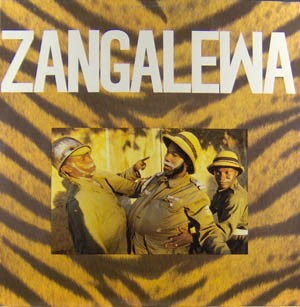
“I’m sure by now many of you have heard Shakira’s ‘Waka Waka’, a white-washed remake of an old Cameroonian song by Zangalewa masquerading as a World Cup anthem. As I’ve heard Shakira’s version throughout the tournament, I’ve been quite confident that puppies somewhere have been dying. And then something odd happened. I started humming “Waka Waka” everywhere and I’ve been hating myself ever since.” (Nutmeg Radio)
World Cup Quarters – “& Then There Were 8″
“The typical suspects have overcome group stage difficulties to rise to the top. However, no smoking gun has appeared to point out the single culprit most likely to win the tournament. Using a really big magnifying glass, a trench coat, a smart talking sidekick, and intuition, we embarked on an investigation of the remaining teams in this World Cup quarterfinals, searching for clues in a sea of uncertainty. Our conclusion as to who will win the World Cup?” (futfanatico)
An idea unto itself

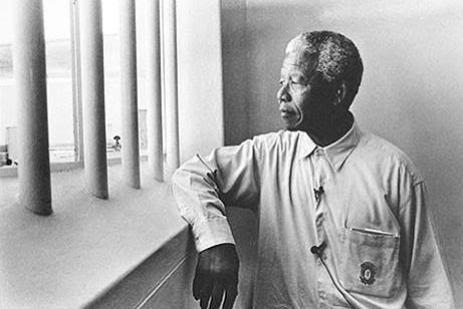
“Robben Island rises just out of the ocean in the distance. From the shore, it looks like a thin, lifeless wedge, a gray spot on the horizon. The rabbits have taken it over. But tourists dutifully pile into boats, and they make the pilgrimage along with the whales across the water. During the World Cup, the boats have been sold out, piled high with Algerians and Englishmen, Italians and Portuguese. Robben Island, this terrible place once reserved for lepers, lunatics and prisoners, has become a must-see. Its most famous former resident, Nelson Mandela, spent 18 of his 27 years in prison there; his life since has transformed his cell into a kind of shrine, an impossibly cold place turned impossibly warm.” (ESPN), (ESPN – OTL: Robben Island)
From the World Expo to the World Cup: Field Notes From the New Economy
“I started the week at the World Expo in Shanghai and ended it at the World Cup in Cape Town. Both events offer a spectrum of perspectives on what is really happening in the world economy today.” (Huffington Post)
Maradona Makes Me Happy

“I’m here in South Africa, and last night went to the see the Argentina-Mexico game at Soccer City. I’ll warn you that a portion of this post will sound a bit like FIFA propaganda, so if you can’t stand that please stop reading now. But the feeling here in electric and ebullient, and I really can’t imagine any other event that could produce the same thing. I felt happily overwhelmed at the scene last night.” (Soccer Politics)
World Cup scouting: The 32 – Week Two

Rene Krhin (Slovenia)
“The following 32 names represent Football Further‘s players to watch at the 2010 World Cup. We’ll be following their performances closely over the course of the tournament, with weekly scouting reports rounding up their progress.” (Football Further), (Football Further – Week One)
Notes from South Africa 2010: Xenophobia and Humanity

“Everywhere you turn in South Africa, FIFA has papered walls and billboards with the slogan ‘Ke Nako. Celebrate Africa’s Humanity.’ At first glance it seems banal and harmless. But the more I see it, the more it bothers me. First, there is something discomforting in seeing the large trademark symbol inserted next to every use of the slogan. Can you really trademark ‘Africa’s Humanity?’ Isn’t that exactly the kind of neo-imperialism an African World Cup is supposed to counter?” (Pitch Invasion)
Listening to the World Cup: Waka Waka, Zangaléwa and Vuvuzelas
“From the first 2010 World Cup broadcasts on ESPN, my fellow tweeters cracked jokes about The Lion King. We imagined Rafiki calling the matches, or James Earl Jones (who provided the voice for Mufasa), and half expected the referees to raise the Jabulani aloft to announce the arrival of the New Ball. Most folks simply observed, ‘I feel like I am watching The Lion King.'” (From A Left Wing)
France and Raymond Domenech exit World Cup by betraying their heritage
“La fin. Let the discredits roll. Let Les Bleus depart the total shambles that they are. Their World Cup 2010 experience has been so unfathomably awful, it is hard to know where to begin with the inquest. A poll conducted by Canal Plus split the blame pretty evenly between the players, the manager and the French Football Federation. All of them have blundered their way through South Africa in their own special way.” (Guardian)
Uruguay 1-0 Mexico: the best two sides from Group A progress

“A strange match, considering both teams’ prisoner’s dilemma in this final group game. Both sides were going for the win, of course, but the match is difficult to analyse because the mentality of the sides changed at various points in the game. Mexico started playing with their normal mentality, then switched to an urgent attacking strategy just after half-time, when they became aware of the South Africa v France scoreline. Finally, when they heard France had got a goal back, they reverted to a more cautious approach – still trying to score, but acknowledging that conceding a couple of goals on the counter-attack was not a risk worth taking.” (Zonal Marking)
World Cup 2010: Mexico 0-1 Uruguay
“My first memories of Uruguay as football team – and quite possibly of their existence as a country at all – came from the World Cup in 1986. They were in Scotland’s group then, and were portrayed as thugs, a bunch of big cheating, spoiling, fouling, cynical bruisers who would – if the ref let them – hack Scotland’s magnificent collection of creative wizards out of the tournament. In the event, of course, Scotland did get some help from the ref; Uruguay played the last 89 minutes with ten men, but a Scotland side who had in any case already lost to Denmark and Germany weren’t good enough to break them down.” (twohundredpercent)
2010 FIFA World Cup Group A Final Standings: Uruguay & Mexico advance
“Group A has finished play in the 2010 FIFA World Cup with Uruguay winning the group and Mexico advancing by placing second. South Africa made a run to challenge for the second spot but lost on goal difference. France failed to win a match and was a disappointing last with only one point.” (The 90th Minute)
Mexico 0-1 Uruguay – Video Highlights, Recap, and Match Stats – World Cup – 22 June 2010
“The two teams leading Group heading into the final set of matches met as Mexico faced Uruguay. A draw or a close loss would likely see both teams go to the next round as they had the advantage of goal difference on South Africa and France.” (The 90th Minute)
France 1-2 South Africa – Video Highlights, Recap, and Match Stats – World Cup – 22 June 2010
“South Africa faced France as both teams looked to sneak into the knockout stage. Each side needed a win, the other match to not end in a draw, and to make up a significant margin in goal difference. While France would normally be the favorite in the match their off the pitch problems would give South Africa a decent chance.” (The 90th Minute)
France vs. South Africa, Then and Now
“In 1998, as the French team prepared to play their first World Cup match, they heard singing from the opposing team’s locker room. The Bafana Bafana — in their first World Cup appearance after the end of apartheid, fielding an integrated team — were gearing up to play with song, and as the two team’s marched down the tunnel out onto the pitch, they continued singing, sending echoes through the halls. For Lilian Thuram, born in Guadeloupe, and Marcel Desailly, born in Ghana, it was a deeply moving moment.” (Soccer Politics)
French Racism and Les Bleus
“Yesterday I participated in two discussions about French football. The first, on the English-language TV station France 24, had a perfect line-up: one person defending the classic “football is alienation” thesis, a sports journalist seeing politics as mainly being projected onto sport, and me, the cultural historian imagining everything as politics.” (Soccer Politics)
Whatever: A French Perspective on French National Team’s Implosion
“I’ve translated an article by Simone Capelli-Welter, a regular contributor to So Foot. It’s a fantastic piece, and in it you can hear an all too familiar frustration with the drama, the hysteria, and the contradictory flows of media discourse on such implosions. This an unauthorized translation – but I am so sick of ESPN/CNN’s stupid reporting on this story that I couldn’t help myself…” (From A Left Wing)
World Cup 2010: Fans, robbers and a marketing stunt face justice, Fifa style
“The Johannesburg magistrates’ court is the sort of unloved municipal building whose corridors smell of damp and bureaucracy, and whose chilly courtrooms recall Bismarck’s observation that those who love sausages and believe in justice should never see either being made.” (Guardian)
Developing Soccer in South Africa: Where’s the Game?

The vandalized locker rooms on the pitch
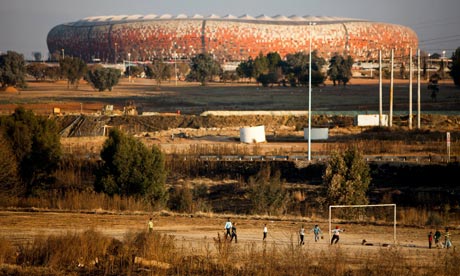
“I’ve seen a lot of soccer in a little over a week in South Africa, but I realized something strange the other day: almost all of it has been in stadiums. The trope of African soccer is the barefoot child playing on a dirt field with a rag ball—and in my previous experiences in Africa that scenario has been harder to avoid than to find. But in the greater Johannesburg megalopolis circa 2010 the grass roots game seems conspicuously absent from anywhere other than FIFA propaganda.” (Pitch Invasion)
Winning for “El Mariscal”
“There are several reason why I enjoyed Paraguay’s victory over Slovakia. First, there’s the obvious. As almost every Paraguayan team in history, this group understands football first as a physical game. It is no coincidence that Paraguay is one of the few teams in the world—and certainly in this continent—so clearly identified with the ancestral values of its indigenous people, the Guaranies. This is not ‘el equipo paraguayo’; this is el ‘equipo guarani”. The indomitable culture of the Guarani is as much a part of Paraguayan football culture as Maori tradition for New Zealand. This Paraguayan team lives up to its billing. The Italians had a terrible time with Paraguay’s midfield.” (TNR)
Soccer Music Politics

“By now, we have all heard Shakira’s edifying ‘Waka Waka,’ the official theme song of the 2010 World Cup. I promised myself that I would keep this post short, so please allow me just to note that I believe the majority of the conscious world has found this song to be, at various times, putridly abominable, horrifically terrible, terribly horrific, condenscending to Africans, ignorant, frivolous, foolish, a representative of the Gap commercial-ification of everything that used to be holy and complex and interesting, Exhibit A in the thesis that the Apocalypse is near, the death blow to optimism. Thank you, Shakira, you have done it again. And curses, you’ve already made me write a hundred words about you!” (Soccer Politics)
Images from Africa
“Below you will find photo series displaying different aspects of African football. The photos are kindly shared by Twenty Ten: African Media on the Road to 2010 (and beyond).” (Play the Game)
Handmade Soccer
“Children from the pastoral tribes of Southern Ethiopia and Northern Kenya are often responsible for household and community chores. Many of them do not have the opportunity to attend school.”> (Twenty Ten)
Notes from South Africa 2010: On the Invention of Tradition
“The clichéd tourist fare in South Africa outside the World Cup seems to mostly involve two components: big animals and ‘traditional’ dances. To the dismay of almost every South African I meet, I’m not much of a big animal person. The famous game parks, no matter how spectacular, are not on my itinerary. The ‘traditional’ dances, however, are harder to avoid. They are also, in my experience, harder to make sense of in this World Cup of vuvuzelas and the invention of tradition.” (Pitch Invasion)
A Tired Ball Speaks
“A small selection of images from the new coffee table book by photographer Jessica Hilltout that captures the soul of African football in a 208-page photographic essay.” (Vimeo), (Jessica Hilltout)
The memories come flooding in
“The crowds had gathered near the Hector Pieterson Memorial, and a group of schoolboys stood together on the street, in their iron-crisp uniforms, singing at the top of their lungs. Through our open van windows, it sounded like a song of celebration, a joyous song. But our driver, a 45-year-old former soldier named Jan, felt the hair on his arms go up. He had not been back to Soweto since his military service ended in 1994, when the apartheid regime fell and the soldiers were told to go home. Now that song brought him back to the freedom riots here, the burning tires and the bricks. The memories came flooding in.” (ESPN)
XI. World Cup Factoids and a Few Observations
“Today we complete the first set of 2010 World Cup group play games. I’ve watched more than 90% of all the minutes – and yet managed to miss five goals live (Holland, Argentina, Slovakia, Brazil’s second and North Korea’s). It’s been an educational experience. I’ve learned many interesting factoids (many acquired by virtue of this being the first Twitter World Cup) and made a few observations as well.” (Pitch Invasion)
Excavating American soccer fields, uncovering buried layers of sport
“This essay by Martha Saavedra affirms that all sporting terrain has a history, both personal and corporate. Organizers of the 2010 World Cup discovered this when developing the site of Green Point Stadium in Cape Town. Football grounds offer testimonies buried in sediment and memory.” (The Global Game)
Should FIFA ban the Vuvuzelas at the World Cup?

“If you’ve been at or watched a World Cup match on tv in the past few days, all you hear from the crowd noise are the sounds of the vuvuzelas. They are the loud horn that have been present at all the World Cup matches and extremely loud. They have drowned out virtually all other crowd noise including chants from particular countries.” (The 90th Minute)
A Short History of World Cup Goalkeeping Blunders
“Robert Green’s ‘hand of clod’ goal against the United States, painful as it was to watch (here it is again!) … … was not the first howler committed by the England keeper.” (NYT)
Should This Horn Be Banned?
“Waaaaaaaaaaaaaaaaaahhhhhh! We’re writing this column under proper World Cup conditions—with vuvuzelas blasting in both of our ears. Is everyone already exasperated with the Infamous Plastic Horn of Distraction? WE SAID, IS EVERYONE ALREADY EXASPERATED WITH THE INFAMOUS PLASTIC HORN OF DISTRACTION?” (WSJ)