Tag Archives: Brazil

What’s plaguing Brazil? Delve into the Selecão’s woes by the numbers

“Brazil’s dispiriting quarterfinal defeat against Paraguay means that the world’s most successful men’s soccer nation will once again be on the outside looking in when Argentina takes on Chile in Saturday’s Copa America final. Compared with many national teams, Brazil remains a competitive and sturdy outfit, but by the country’s own exacting standards the sides it has fielded in recent years have represented a vertiginous drop in quality. Here’s a look by the numbers and statistics at some of the key reasons for Brazil’s current woes…” SI

Beauty leaves the Brazilian game as glitter gives way to grit

“It was not 7-1. It was not an epic humiliation. It was not a result that will reverberate through the generations. But in a sense, Brazil’s Copa América exit to Paraguay is all the more crushing for that. It was not some devastation to be written off as a freak; it was quotidian. Brazil went out of the Copa América by losing a mundane game 4-3 on penalties after a 1-1 draw because these days they are a mundane team; they no longer generate the emotional extremes they once did.” Guardian – Jonathan Wilson

Derlis Gonzalez, David Ospina and more – 4 Players who defined the Copa America 2015 quarters

“Brazil’s ousting in the quarter-final stage was the talking point, but Peru’s run along-with Chile’s impressive showing has kept enthusiasts intrigued. Though Argentina remain as favourites with online sports betting at Sportsbook.ag, it may not be as simple to call these games. Paraguay too who eliminated Brazil for the second successive Copa America, have shown they aren’t to be overlooked. Finley Crebolder picks his four players that defined the quarter-final stage, a stage that has left us with two enticing fixtures.” Outside of the Boot

A Guide to Copa America, in Queens

el-gauchito-nyc
El Gauchito, 94-60 Corona Ave in Queens.
“Copa América, the South American soccer championship, is in its third week in Chile, and has given the world everything it could handle from a tournament: dramatic comebacks, shocking suspensions, all-out scoring feasts, and acts of idiocy and manslaughter off the pitch. Now, after the end of the group stages, eight of the original 12 teams remain, and they will begin the direct elimination rounds today. There is still plenty of action to catch—with some potential classic matchups coming up—and as we wrote during the World Cup, there is no finer place to watch international soccer than New York City. So if you aren’t able to make your way over to Chile, your next best shot at living the fever of South American soccer is right here, in the almost impossibly diverse borough of Queens. From Astoria to Sunnyside, bars, bakeries and butcher shops are turning their establishments into prime viewing spots. Here are the upcoming matches and the best places to catch them with diehard fans from each country.” ROADS & KINGDOMS

Uruguay have the history to hit Copa América heights against Chile
“Chile have scored more than twice as many goals as anybody else in this Copa América. They will be playing at home in front of 40,000 red-shirted fans. They have played with a verve and a fluidity nobody else in this tournament has matched and, if anything, Arturo Vidal’s drink-driving charge, which could have been a destabilising influence, seems to have given them an enhanced sense of purpose. Uruguay scraped through their group in third place, having scored only two goals. Other sides in their position might have approached Wednesday night’s quarter-final like lambs to the slaughter but not Óscar Washington Tabárez’s team. This is the sort of situation Uruguay have traditionally relished.” Guardian – Jonathan Wilson

Copa America: Group C’s key tactical system, game-changing performance, and best young player
“Group C has easily been the Copa America’s most engaging, as shock wins by Venezuela and Colombia saw all four teams level on points entering the final match day. With a resurgent Thiago Silva leading Brazil to victory over Venezuela to top the group, the final placing may not seem like much of a surprise. However, with Brazil needing a last-minute winner to beat Peru, Neymar’s suspension, and a host of strong defensive performances, many from unsung, domestically based players, these six games provided us with multitudes of knife-edge tension. As the three survivors lick their wounds ahead of the quarterfinals, here is a brief look back at some of the keys to the way things played out.” Outside of the Boot

Copa America quarterfinals: Argentina and Brazil face tense challenges
Chile vs. Uruguay. All the momentum is with Chile, but all the history is with Uruguay. The hosts have looked to be far and away the best team in this tournament so far, scoring twice as many goals as everybody else, but Uruguay have by far the best record in spoiling such house parties. On the past three occasions that the latter have met the home team — Argentina 2011, Venezuela 2007 and Paraguay 1999 — they have eliminated them. That’s all the more relevant here because it reflects just how good the Uruguayans are at digging in and disrupting more exciting and excitable sides. Oscar Tabarez’s current side are experts at that, and abnormally difficult to beat. … ” ESPN

The Copa America heats up now for Chile


“These days, the Copa America tournament serves as a warm-up for the qualifiers. Of course, once the Copa kicks off, everyone wants to win. There is always pressure on Brazil and Argentina to go home with the trophy, and that is especially true this year, with La Albiceleste waiting for a senior title since 1993 and Brazil anxious to cover up that huge stain on the carpet left by its performance in the World Cup. The focus of most coaches, though, is firmly on preparing a team for the World Cup qualifiers. More than anything else, the Copa America is about the host, which really wants to put on a show in front of its own public. And that, too, is especially true this year, with Chile gunning for a maiden continental title. As expected, there has never been a dull moment during Chile’s group phase. Indeed, there was more incident than anyone had bargained for.” The World Game – Tim Vickery

Tactical Analysis: Brazil 0-1 Colombia | Colombia’s counter-press proves effective as Dunga’s men finally lose

“Brazil entered this heavyweight clash in Santiago brimming with confidence and seeking their 13th straight win since manager Dunga was reinstated. After narrowly edging past minnows Peru thanks to Neymar’s brilliance, Brazil topped the group going into this game. However, a much better performance was required if they were to overcome the threat of Colombia, desperately needing victory to avoid elimination from the tournament. With world-class attacking talents such as Neymar, James Rodriguez and Falcao on display and Colombia’s survival in the competition on the line, this had all the makings of a memorable game and was one that would have been worthy to grace the final. Alas, excluding the post-match brawl, this was anything but a memorable game mainly due to Brazil’s awful decision making in the attacking phase and an over-reliance on Neymar as well as a frighteningly high tempo throughout the 90 minutes which denied both sides the opportunity to find any real rhythm in the game. In the 3rd meeting between these teams since their World Cup quarter-final clash in Brazil, Colombia’s superb counter-pressing system and Jeison Murillo’s scrappy finish from Juan Cuadrado’s free kick in the 36th minute ensured a nervy 1-0 victory for los Cafateros.” Outside of the Boot

Radamel Falcao is the reason Colombia isn’t playing as well as it did at the World Cup

ap787677653632
“When news broke in January 2014 that Colombian star Radamel Falcao had picked up a serious knee injury playing for club team, AS Monaco, an entire nation held its breath… with one notable exception. While Colombia and the wider soccer world was left to lament a World Cup without arguably the game’s best out-and-out center-forward, coach José Pékerman could have been forgiven for feeling a certain sense of relief. On the surface, it was a huge blow. Los Cafeteros had just secured its first trip to a World Cup in 16 years during a qualification campaign that saw it hammer defending South American champion Uruguay 4-0, pick off Chile 3-1 in Santiago, and become just one of two sides to prevail at the dizzy heights of La Paz. Expectations were at their highest since Carlos Valderrama led his 1994 side to the United States with realistic aspirations of becoming world champions.” Fusion

Neymar’s petulance leaves Brazil in trouble after Copa America suspension

“There were some warning signs flashing in Brazil’s Copa America opener against Peru, Neymar’s first competitive match as Brazil captain. He produced a wonderful individual performance in that 2-1 win, crowned with a pass of breathtaking vision that set up Brazil’s stoppage-time winner. … Three days later, the collision could not be averted — with consequences that will, unless Brazil’s appeal is successful, rule Neymar out of the rest of the Copa America. He was suspended for four games after being sent off in the 1-0 loss to Colombia.” ESPN – Tim Vickery

Brazil’s inadequacies echoed by Neymar’s lack of patience against Colombia

aa460x276
“Disappointment would have been bad enough for Brazil, but after the final whistle it became disgrace. Defeat to Colombia, followed by Neymar’s red card, may not resonate like the 7-1 defeat to Germany in the World Cup semi-final last year did, but the shame is just as real. After all the talk of trying to find some sort of redemption in the Copa América, all the same old flaws were there, just without quite the same hysteria. This was a petulant, complacent, unimaginative Brazil and they now, almost unbelievably, must beat Venezuela in their final group game on Sunday to be sure of making it to the quarter-finals – and they will have to do it without the player on whom they have become so reliant.” Guardian – Jonathan Wilson

Breaking down last night’s Colombia-Brazil nonsense with the power of GIF
“Last night, Brazil and Colombia met in a Copa América group stage game, almost one year after Brazil eliminated the Colombians in Forteleza in the 2014 World Cup quarterfinals. But this time was different. Colombia, having already succumbed to Venezuela in its opening game, managed to pull itself together and frustrate Brazil for 90 minutes, eeking out a 1-0 victory. Typically, that would be the story. Colombia exacts revenge on the Samba Boys. Or something basic like that. But that would be a disservice to the real story: These two teams wanted to murder each other, and they came damn close after the final whistle.” Fusion

Neymar’s brilliance and immaturity have been on display at Copa America
“There was a time not long ago when Brazil boasted countless world-class attackers. It was a time when, for example, Marcio Amoroso could finish as top goal scorer in Brazil, Italy and Germany, but count himself fortunate simply to be named in the Brazil squad. Mario Jardel scored 130 goals in 125 league games for Porto and collected only 10 caps, usually as a substitute. Giovane Elber, meanwhile, spent a decade banging in the Bundesliga goals and managed just 15 caps.” ESPN – Michael Cox

Team Focus: Neymar Reliant Brazil Still Showing Problems of Old

NeymarBraHeader
“Brazil’s Copa America group match against Peru may ultimately have produced the result that had been widely anticipated, but it’s fair to say nobody was expecting the game to play out quite like it did. Dunga’s Brazil was supposed to be dogged and cautious, to have shorn the wildness that ultimately undid Luiz Felipe Scolari’s side at the World Cup, but the game in Temuco, in the first half in particular, was raggedly end-to-end. Brazil had won 10 friendlies in a row since Dunga took over at the end of the World Cup – one more than they had under Scolari in the build-up to that tournament. That seemed room for cautious optimism, but after two minutes, very familiar old failings had surfaced.” Who Scored? – Jonathan Wilson

Chile time at the Copa America

copa-america-2015-chile-schedule-e1430678408245
“In the 99-year history of the world’s oldest continental competition, 37 of the 43 titles have been snapped up by Uruguay, Argentina and Brazil. Other than the traditional big three, Bolivia has won it, Colombia has won it while Paraguay and Peru have both won it twice. Chile does not appear on the list of Copa America champions – even though it took part as far back as the inaugural tournament in 1916. The current side, by popular consensus, is the best in Chile’s history. As 2015 host, then, the pressure is on it to bring the long, dry run to an end. And coach Jorge Sampaoli is worried about the pressure. He has first hand experience of what it can do.” The World Game – Tim Vickery

Brazil hope their new Fred does better than the old one in Copa America
“Two weeks ago, Fred, the diminutive Shakhtar Donetsk forward, made his home debut for Brazil in a friendly against Mexico in São Paulo. When his name was read out before kickoff, he was roundly booed: the crowd did not realise he was the 22-year-old Frederico Rodrigues Santos, and assumed he was the other Fred, the 31-year-old Frederico Chaves Guedes, the Fluminense striker who was one of the chief scapegoats for the disaster of the World Cup.” Guardian – Jonathan Wilson

Copa América Tickets, Finally, Are Hard to Come By
“Eduardo Santa Cruz has been attending Copa América games in Chile since 1955, when he was 5 years old and his parents took him to games in Santiago. A professor of journalism and the author of two books on soccer and mass culture, Santa Cruz has a better recollection of the 1991 tournament, for which he said tickets in Santiago were readily available. This year, though, as the popularity of the Copa continues to grow, he expects tickets will be hard to find. Santa Cruz and his family will be watching from home.” NY Times

Copa America: Group-by-group guide

Copa America: Five potential breakthrough stars (Video)

Brazil have grown stronger thanks to World Cup humiliation

“In July 2014, Belo Horizonte, Portuguese for Beautiful Horizon, witnessed one of the darkest days in Brazilian football history. Following on from the Seleção’s incredibly humbling defeat to soon-to-be world champions Germany, the nation seemed lost. Shirts were burnt, buses were set alight and tears were shed that night, but it could prove to be one of the most important moments in the Brazilian national team’s illustrious 101 year existence.” backpagefootball

Eight things we learned from the Internet about Copa América 2015

ap590870256452
“For the next three weeks, the pulse of South American futbol beats from Chile, where the continent’s 10 national teams plus invitees Mexico and Jamaica will battle it out for a piece of international silverware that’s been contested for 99 years. This is the Copa América, a tournament renowned for its storied rivalries, vibrant fan support, politically-charged history, and incredible star power on the pitch; a competition which, for the past near-century, has ignited a continent. With just days left until the tournament kicks off, we turned to the world’s greatest source for information on the tournament — Wikipedia — and came back up with a few gems. The Copa América, it turns out, is a weird, weird tournament.” Fusion

Copa America preview roundtable: Games, players, stories to watch
“For a second straight summer, a massive international prize is on the line in South America, and even though it may not carry the weight of the World Cup, the 2015 Copa America features plenty of star power and a winner’s medal that includes a ticket to the 2017 FIFA Confederations Cup. Days after winning the Champions League together, two-thirds of Barcelona’s record-setting front line–Lionel Messi and Neymar–will be on display as adversaries (the third member, Uruguay’s Luis Suárez, is still banned internationally for his World Cup bite of Giorgio Chiellini); Brazil puts its undefeated mark under Dunga (this time around, anyway) on the line in its first meaningful games since last summer’s disappointment on home soil; host Chile and Colombia aim to build on the success they enjoyed last summer; and a series of upstarts look to spring surprises in what promises to be an intense 12-team competition. Jonathan Wilson and James Young are on the ground in Chile, and here are some of their games, story lines and other items to watch over the next three-plus weeks…” SI – Jonathan Wilson

A Troubled History – José Maria Marin

“‘Sport is very authoritarian,’ said the Brazilian marine engineer Ivo Herzog. ‘And it mobilises millions of people. Apparently, sport attracts a certain kind of human being: men who used to work inside totalitarian forms of government, who are products of non-free environments, who can’t handle a democratic reality. They appear to feel comfortable inside sports administrations, in a way they don’t out in the real world.’ For a couple of years, Herzog has been running a campaign to remove José Maria Marin from his positions as president of the Brazilian football federation (CBF) and head of the local organising committee for the World Cup.” The Blizzard

Robinho is still a shining light for Dunga’s Brazil

“Back home, though, this was not seen as controversial at all. Robinho was a leading light in the Santos team that just won the Sao Paulo State Championship, the most prestigious of Brazil’s regional competitions. He has been consistently named in Brazil squads since the 2014 FIFA World Cup, even if all of his appearances have been as a substitute. The only time he was left out was for last November’s visit to Turkey and Austria, when no domestically-based players were called up. It would have been incoherent to leave him out at this stage.” The World – Tim Vickery

Brazil must learn past lessons to take control of its future

epaselect BRAZIL SOCCER FIFA WORLD CUP 2014
“Maybe – and I speak from a position of curious ignorance – the Australian game is going through one such moment with the successful launch of the A-League, qualification for FIFA World Cups, the move to Asia and hosting of this year’s AFC Asian Cup. Perhaps historians will look back on this time as the vital moment in the development and mass popularisation of an Australian football culture, the time when all the pioneering work of the likes of Les Murray and Johnny Warren really started to bear fruit. In the development of the Brazilian game, it is clear that the 1930s have a magic place. At the start of the decade, Brazil lagged miles behind Uruguay and Argentina as South America’s third force. By the end it was a different story. Third place in the 1938 World Cup in France had opened the planet’s eyes to the rise of the men in (for just over another decade) white shirts.” World Game – Tim Vickery

What if they met? Brazil, Netherlands national teams in the early 1970s

“What if? It’s a question so often posed in the realm of sports. What if a certain player wasn’t suspended, traded or hurt? What if a controversial call went another way? What if a coach had called a different play? What if a certain matchup had occurred at a different time. That last question, above the others, has piqued our interest. In light of Floyd Mayweather finally facing Manny Pacquiao this Saturday in Las Vegas, years after both boxing greats were widely considered to be at their absolute best, it got us wondering: What if two soccer titans of their era who never got the chance to meet at their peaks actually did? All week in the build-up to Mayweather-Pacquiao, Planet Fútbol will take a historical deep dive into some of the greatest teams in soccer history, why they ultimately never got the chance to meet their equals and what might have happened if they had.” SI – Jonathan Wilson (Video)

The beautiful game gets ugly when fans turn against their own

“A footballer, says the great Argentine coach Cesar Luis Menotti, is ‘a privileged interpreter of the dreams of many people.’ It is a wise and beautiful line. Not so beautiful, though, are those situations when many of the crowd would rather not have their dreams interpreted by a particular player. One of the most ugly things in football is when fans turn against a member of their own team. In Brazil this is a depressingly common occurrence, and one that can follow bizarre criteria. Many, I’m sure, will remember the Belo Horizonte crowd turning against Fred – indeed forcing his substitution – during that crushing World Cup semi final defeat to Germany last year. One might have thought that, with the team losing 7-1, the defenders might be a more obvious target than the centre forward. I, for one, was delighted when Fred responded by finishing last year’s Brazilian Championship as top scorer.” The World Game  – Tim Vickery (Video)

Eight wins out of eight – are Brazil a team reborn post-World Cup?

“When they sadly packed away their yellow shirts last July, most Brazil fans must have thought that it would be some time before they would be reaching back into the wardrobe for that particular item. The astonishing 7-1 World Cup semi-final defeat to Germany was then followed by the reappointment of the snarling Dunga as national team coach. Morale was low. Fast forward eight months, though, and the mood is more upbeat. Sunday’s 1-0 victory over Chile at the Emirates Stadium in London means that Brazil have now won eight consecutive matches.” BBC – Tim Vickery

Tactical Analysis: France 1-3 Brazil | Brazil reverts to a familiar formation, France’s midfield dip and more

France-1-3-Brazil
“While it is foolish to read too much into friendly results, especially with both sides missing key players, Brazil’s visit to the Stade de France last night provided for some compelling viewing and should give both managers much to think about. With the hosts missing Paul Pogba, Yohan Cabaye and Hugo Lloris, as well as Mathieu Debuchy, and Brazil without the Paris Saint-Germain trio of David Luiz, Marquinhos and Lucas Moura, injuries limited both teams’ overall effectiveness, even as both Dunga and Didier Deschamps sought to achieve continuity by using their preferred formations. France, as hosts of Euro 2016, won’t play a competitive match until next year, and while Brazil do have the Copa America in a few months, the bottom line from this encounter seemed to be to encourage familiarity, trying out different players in a fixed system, as no changes were made until deep into the second half, Brazil already 3-1 up.” Outside of the Boot

France 1 Brazil 3

“Brazil recorded their seventh successive victory since their 2014 World Cup humiliation as they came from behind to beat France in Paris. Raphael Varane powerfully headed in Mathieu Valbuena’s left-wing corner to put the French ahead. But Oscar equalised when he linked up with Roberto Firmino and poked the ball past France goalkeeper Steve Mandanda. Neymar made it 2-1 as he collected Willian’s pass and shot past Mandanda before Luiz Gustavo headed in a third.” BBC

A reminder that Brazil needs to get with the times

“An architecturally innovative park – conceived in Brazil’s modernity boom of the late 50s – in iconic Rio de Janeiro, will host some of the city’s 450th birthday celebrations, providing a visual reminder of a time when Brazil’s football was at the cutting edge of the global game.” The World Game – Tim Vickery

Never forget your roots – Palmeiras’ illustrious history

“One of the most successful clubs in Brazil, Sociedade Esportiva Palmeiras have won eight league titles, as well as two Copa do Brasil trophies. The champions of South America in 1999, having beaten Colombian side Deportivo Cali to claim the Copa Libertadores, with their success culminating in the awarding of ‘Best Team of the 20th Century of Brazil’ by the Sao Paulo State Football Federation, they are a club of immense power and wealth. Palmeiras’ team is predominantly Brazilian, with ex Bayern Munich and Inter Milan defender Lúcio among their ranks. Apart from a smattering of Chilean, Argentinian and Uruguayan players, their squad is entirely made up of footballers from the ‘Futebol Nation’.” backpagefootball

Everything you need to know about the 2015 Copa Libertadores

Chavez-Copa-Libertadores
“With the last of the group spots now finalised, the 56th edition of the Copa Libertadores – South America’s equivalent of the Champions League – properly gets underway this week and, as ever, it promises to be full of drama, excitement and shocks. The vast distances, not to mention the range of altitudes and climates, make it a highly challenging, unpredictable and captivating contest, while also offering the opportunity to catch a first glance at some of the continent’s emerging prospects. Argentinian side San Lorenzo won their first ever title last year, breaking the run of Brazilian triumphs and capping a remarkable turnaround for a club on the brink of relegation just two years before. With the last three victors being first time winners, could we see another maiden champion? Or will one of the established giants reclaim the continent’s top club prize? The following comprehensive group by group guide will take you through all the contenders.” Outside of the Boot (Part 1), Everything you need to know about the 2015 Copa Libertadores (Part 2)

Messi, Neymar, Sanchez: In search of South America’s next star

JPEG Image, 738 × 415 pixels)
Angel Correa is leaving Argentina to play in Spain.
“For the crunch World Cup match against England last year, Uruguay were without their captain and centre-back Diego Lugano. In to replace him came Jose Maria Gimenez, a 19-year-old who had played in a grand total of one league match the previous season and one Copa del Rey fixture for Atletico Madrid. It is hard to imagine England, or another major European nation, throwing a youngster into the deep end in this way. But Uruguay had no qualms. Gimenez had been immaculate the previous year in the World Under-20 Cup, and that was good enough. This story helps to explain the importance of under-20 football in South America. There are plenty of others like it.” BBC – Tim Vickery

In Search Of Eusebio

JPEG Imag
“As one year ends and another begins, the football world looks back on the marvels of Atletico Madrid’s La Liga triumph and Germany’s 7-1 rout of Brazil. Here in southern Africa, the landmark event of 2014 was the death of our region’s greatest-ever player. I did not think about Eusebio when I used to go to Mozambique. In the mid-nineties the country, wearily emerging from years of civil war, seemed far removed from the world of football stars. Skull-and-crossbones signs, tacked to trees, marked the margins of the Beira Corridor, the Tête Corridor, and the spectacularly cratered road from Ressano Garcia to the capital. The signs declared, not a country devoted to Orlando Pirates, but one riddled with landmines. It is a short distance from South Africa to Maputo. Still, having reached the Indian Ocean, it could take a week to clear a load from the Frigo customs yard in the city. While one waited, there were chances for exploring. Much remained from the old LM, the place Eusebio knew in his childhood.” In Bed With Maradona

Three 2014 World Cup moments etched in my memory

“With South American football currently slumbering through its high summer siesta, I hope I might be forgiven for glancing backwards at what has just become last year’s World Cup. The tournament was well worth remembering – for the protests it engendered beforehand, for the spectacle it provided us with during and for the memories that linger afterwards. These are some of mine.” The World Game – Tim Vickery

100 Best Young Players to Watch in 2015 | Forwards 10 – 1

gg
“It’s hard to accurately predict future Ballon D’Or nominees based on a players current exploits in the early part of his career. But given the propensity of usual Ballon D’Or nominees bearing rather conspicuous goal-scoring traits, you wouldn’t go too wrong in betting Memphis Depay as a potential future nominee.” Outside of the Boot

Late paychecks and job insecurity are now facts of life in Brazilian soccer

“It wasn’t long ago that we were watching the great and good of world soccer parade their talents here in Brazil. Fittingly, and in defiance of the naysaying that surrounded the country’s often shambolic World Cup preparations, Brazil provided an idyllic stage for talents like Neymar, Lionel Messi, and Toni Kroos to perform their magic – perfect playing surfaces, gleaming, modern stadiums, and packed stands filled with shiny-toothed fans. Brazil’s domestic season was never going to live up its Mundial, but at times, when the stadiums have been full and the country’s better sides have been on display, the splendor of the World Cup seems like more than a brief visitor from another soccer galaxy. A recent survey showed the country’s top flight players are the seventh best paid in the world, and the new World Cup arenas have given clubs an excuse to jack up prices to dizzying levels.” Soccer Gods

The price of super stardom

“On July 7th 1957, with little more than 30 senior games under his belt and still a few months short of his 17th birthday, Pele made his debut for Brazil, scoring his side’s goal in the 2-1 defeat to Argentina in Rio’s Maracana stadium. The previous day, at the church fete in Woolton, Liverpool, the 16 year old John Lennon met Paul McCartney, two years his junior, for the first time. The rest, of course, is history – until, hundreds of hits and a thousand goals later, their decade came to an end. In April 1970 McCartney announced the break up of The Beatles. A couple of months later Pele made a glorious farewell to the stage he had made his own, winning the World Cup for the third time with a team that still set the standard for Brazil sides. The closeness of the dates is uncanny.” The World Game – Tim Vickery

How football shaped Brazil

Brazil-1994
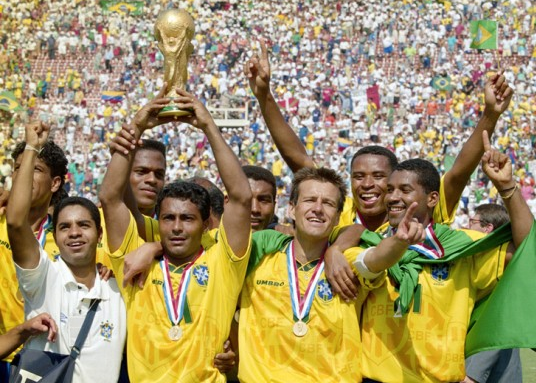
Brazil 1994
“England may have created football but Brazil made it an art form. Since the arrival of football in the South American country at the turn of the 20th century, Brazil have won eight Copa Americas and five World Cups. In doing so they have captured the hearts of millions of football fans and created a template for beautiful football. It’s impossible to dispute that as a nation Brazil has shaped football. What is often forgotten is how football helped shaped Brazil itself. Football’s beginnings in Brazil were humble. The game was first brought to the Samba Nation in the 1890s by British expatriates and returning Anglo-Brazilian students and at first it was played only amongst Brazilian elites.” backpagefootball

Clyne, Callejon and Talisca get their chance at international level

England v Slovenia - EURO 2016 Qualifier
“In the aftermath of the World Cup, with national teams beginning a new, four-year cycle, there have been plenty of debutants for major nations recently. Here are three players who were hoping to earn their first caps this week and how they might influence the play of their respective national teams, should they become regulars.” ESPN – Michael Cox

Maracana Upset Brings Robson Breathing Space

“If you can meet with triumph and disaster and treat those two imposters just the same… A Kipling today might have been tempted to add: You’ll be a successful football manager. For his words possess a sympathetic ring for England boss Bobby Robson. He took his battered, depleted England squad off to South America under round condemnation for the manner — rather than the size — of a 2-0 Wembley defeat by the Soviet Union. He returned with a balanced record of three games played, one won, one drawn and one lost. Respectable by any light. Doubly so in general, international opinion because of that 2-0 victory over Brazil in Rio de Janeiro. Yet critical echoes accompanied Robson and Co on the long flight home from Santiago because the ensuing displays and results against Uruguay and a dismal Chilean Olympic team didn’t match up to the expectations raised in Maracana.” In Bed With Maradona

Kaká and Scolari returned home for the hugs

“It still feels as though it was only yesterday – Luiz Felipe Scolari wandering hollow-eyed across the pitch after the final whistle, the Mineirão transformed into his own private Agincourt. Around him David Luiz, Julio Cesar and the rest his fallen troops lay prone, or sat broken on the turf. Others simply stood and stared into space. The chutzpah of a couple of hours before had been cruelly exposed by a lethal Germany. In the stands, the Brazilian fans that had not already left gazed through tears at the wreckage of their dreams or poured opprobrium down on their hapless manager.” Fusion

Brazilian football: FFP rules could ‘prompt revolution’

mmftbwcrojoargwinner20-8
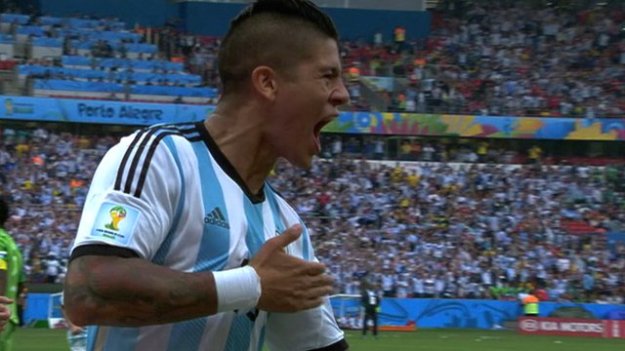
Marcos Rojo
“With 85% of teams inactive for more than six months of the year, leaving 16,000 players unemployed, Brazil’s professional football clubs are effectively in intensive care. So far they have been sustained by the drip-drip-drip of money from investors keen to buy a stake in players potentially destined for big-money European moves. But with world governing body Fifa’s recent announcement that it is banning third-party ownership, that lifeline is about to be withdrawn. That poses a major problem for Brazilian clubs, but it could be a decisive moment and one which prompts a much-needed revolution in the country’s domestic game.” BBC – Tim Vickery

Brazil is having its ‘England’ moment

“This year was not the first time that England flopped in a World Cup in Brazil. The fall was even harder in 1950, when making its debut in the competition, England also failed to make it out of the group stage, this time going down 1-0 to United States, still one of the most remarkable results in World Cup history. Great winger Stanley Matthews was not selected for that game, and watched horrified from the stands. He was much more impressed by a trip to the newly built Maracana stadium to watch the hosts in action.” The World Game – Tim Vickery

Abuse by Gremio fans highlights the fact that racism is doing just fine in Brazil

“At first it was hard to work out what exactly was going on. The Copa do Brasil first leg tie between Grêmio and Santos at the Arena do Grêmio in Porto Alegre two weeks ago was dwindling limply to a close, with the visiting team leading 2-0, when all of a sudden Santos goalkeeper Aranha started screaming and pointing at the crowd behind his goal, visibly upset. When the TV cameras zoomed in, they revealed a group of young men, some black, some white, shouting and jumping up and down and moving their arms in imitation of monkeys. Elsewhere in the ground, a well-dressed young woman was filmed cupping her hand around her mouth and shouting ‘macaco, macaco’ (‘monkey’) in Aranha’s direction.” Fusion

What Happens To Those Lost On the Road To Stardom

“There is a question I would love to ask – but every time the opportunity presents itself I am too scared to do it. The question, you see, could well be taken badly, as an insult, though I mean no disrespect. The question is this; when, as a young player, you have grown up with justified dreams of global stardom, how do you cope with mediocrity? The question is uppermost in my mind at the moment. I’m currently back in London, where I just performed the happy ritual of going along to White Hart Lane to watch Tottenham Hotspur in its Europa League tie against AEL Limassol of Cyprus.” The World Game – Tim Vickery

In Belo Horizonte, Cruzeiro fans turn to their club to forget World Cup rout

No other graveyard in the world could be this festive, this crowded, this loud. The Estádio Mineirão, where Brazil’s World Cup hopes were cut to pieces—seven, to be precise, one for each German goal—and buried without honor, is ablaze with life. A crowd that will swell to 42,000 is on its feet, waving huge blue-and-white flags and chanting to the insistent beat of bass drums. And the game hasn’t even started. Barely five weeks after the most humiliating home loss ever suffered by a World Cup contender, soccer fans here are again finding hope and joy in the game. That’s partly because, in a fine bit of redemptive irony, the Mineirão is the home pitch of Brazil’s best football club: Cruzeiro, the defending first-division champion and a favorite to repeat. And on this overcast Sunday afternoon it’s hosting a solid side from Santos, Pelé’s old team, newly fortified by the return to Brazil of Robinho.” SI

Hack to the future for Brazil

“It remains to be seen whether Brazil’s new coach Dunga, a vocal critic of the possession game in the past, has learned anything from Spain and Germany’s eight-year domination of international football. During an appearance on The World Cup Show, as events in Brazil unfolded before our eyes, Les Murray, Craig Foster and I tried to dissect what had gone wrong with the football played by the host. We did not limit ourselves to the 7-1 thrashing by Germany in the semi final. We commented that even while the Brazil team was winning games it was losing friends. I told the story of the Copa America final, seven years earlier in Venezuela. Brazil caused a surprise by beating Argentina 3-0.” The World Game – Tim Vickery (Video)

How Dunga Reflects Brazil

“Why a previous coaching failure is back to lead his country out of its current crisis. His hair is the color of tarnished steel, brushed into an aggressive flattop. There’s that chilling, perpetually angry gaze, the tightly clenched jaw. A single tense vein throbs furiously in his temple. I’ll be back, he might have growled in that dull metallic voice, all those years ago, and now here he is. But whereas the original Terminator had the relatively simple task of destroying humankind, Carlos Caetano Bledorn Verribut, better known as Dunga, faces a considerably more daunting challenge – how to restore dignity to the most storied soccer nation in the world after an especially harrowing public humiliation.” Fusion

Football in Brazil

PortoSeguro-Brazil
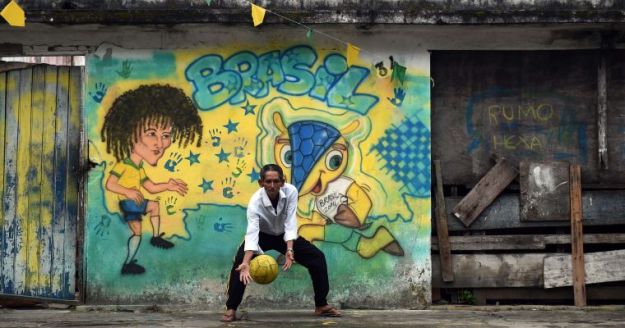
A Brazilian man plays football in Porto Seguro
Wikipedia – “Football is the most popular sport in Brazil. The Brazilian national football team has won the FIFA World Cup tournament a record five times, in 1958, 1962, 1970, 1994 and 2002, and is the only team to succeed in qualifying for every World Cup competition ever held. It is among the favorites to win the trophy every time the competition is scheduled. After Brazil won its 3rd World Cup in 1970, they were awarded the Jules Rimet Trophy permanently. But 365 days before World Cup 2014 begins, Brazil’s rank dropped to 22nd, an all-time-low position. … The governing body of football in Brazil is the Brazilian Football Confederation. Brazil is currently hosting the 2014 FIFA World Cup, in which they were knocked out by Germany in the semi-final with a humiliating 1-7 defeat.Wikipedia

Futebol Nation: The Story of Brazil through Soccer – David Goldblatt
“No nation is as closely identified with the game of soccer as Brazil. For over a century, Brazil’s people, politicians, and poets have found in soccer the finest expression of the nation’s collective potential. Since the team’s dazzling performance in 1938 at the World Cup in France, Brazilian soccer has been revered as an otherworldly blend of the effective and the aesthetic. Futebol Nation is an extraordinary chronicle of a nation that has won the World Cup five times and produced players of miraculous skill, such as Pelé, Garrincha, Rivaldo, Zico, Ronaldo, and Ronaldinho. It shows why the phrase O Jogo Bonito—the Beautiful Game—has justly entered the global lexicon. Yet there is another side to Brazil and its game, one that reflects the harsh sociological realities of the ‘futebol nation.’ David Goldblatt explores the grinding poverty that creates a vast pool of hungry players, Brazil’s corrupt institutions exemplified by its soccer authorities, and the pervasive violence that has seeped onto the field and into the stands.” amazon

The Country of Football.
Politics, Popular Culture, and the Beautiful Game in Brazil – Edited by Paulo Fontes and Bernardo Buarque de Hollanda
“Brazil has done much to shape football, but how has football shaped Brazil? Despite the political and social importance of the beautiful game to the country, the subject has hitherto received little attention. This book presents groundbreaking work by historians and researchers from Brazil, the United States, Britain and France, who examine the political significance, in the broadest sense, of the sport in which Brazil has long been a world leader. The authors consider questions such as the relationship between football, the workplace and working class culture; the formation of Brazilian national identity; race relations; political and social movements; and the impact of the sport on social mobility.” Hurst Pulishers

The Country of Football: Soccer and the Making of Modern Brazil – Roger Kittleson
“Soccer is the world’s most popular sport, and the Brazilian national team is beloved around the planet for its beautiful playing style, the jogo bonito. With the most successful national soccer team in the history of the World Cup, Brazil is the only country to have played in every competition and the winner of more championships than any other nation. Soccer is perceived, like carnival and samba, to be quintessentially Brazilian and Afro-Brazilian. Yet the practice and history of soccer are also synonymous with conflict and contradiction as Brazil continues its trajectory toward modernity and economic power.” amazon
Russia 2018: Major challenges for next World Cup hosts

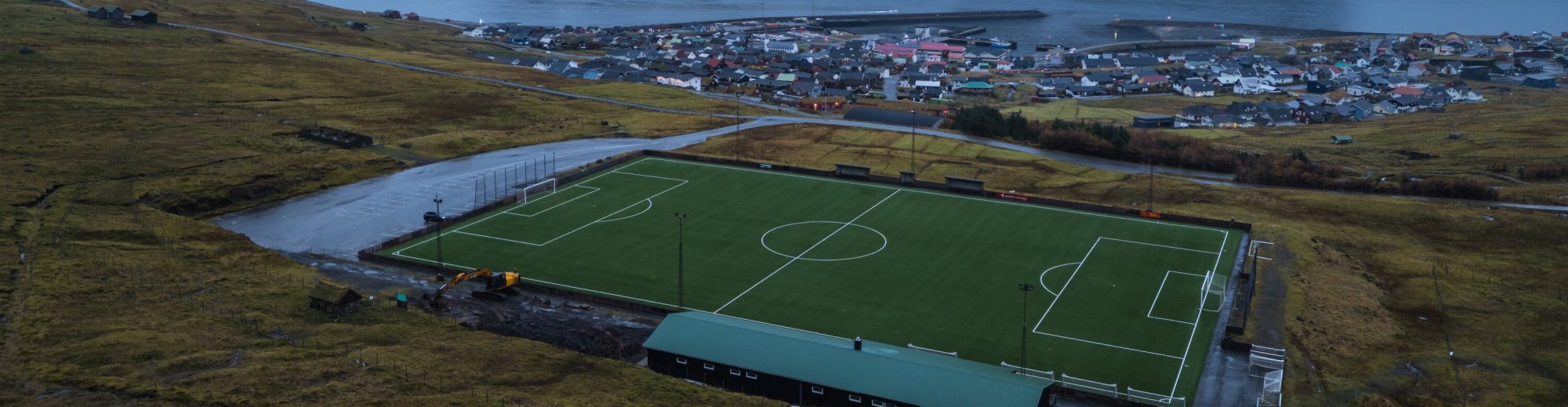
“After what was largely considered to be a successful World Cup in Brazil, international attention now turns to the next hosts, Russia. Whether current political tensions between Russia and the West will have any bearing on the staging of the tournament remains to be seen. What does seem assured is that the 2018 World Cup is set to top Brazil 2014 as the most expensive in history, with Russian sports minister Vitaly Mutko saying the budget for the tournament could total $40bn, having earlier estimated it at $19bn. The estimated cost of the stadiums alone in Brazil, in comparison, was in the region of $4bn.” BBC

Football is all the easier to love, or hate, because it is unquantifiable

July 9, 2014. “Sometime around the fourth goal, I descended into hysterics. No exaggeration – as Toni Kroos nicked the ball from Paulinho on the 25th minute and slotted the ball into the back of the net, almost from kickoff, moving and passing around Brazil’s backline like cones laid out on a training pitch, I convulsed with hysterical laughter. When the rational disappears, we must confront the irrational and unexpected, and there was little as unexpected as Brazil capitulating as they did last night. When the fifth went in I had to leave the room.” News Statesman

Exeter City return to Brazil one hundred years after special trip

“It almost seems unthinkable that a century of samba football was borne out of a bunch of Devon boys, a misjudged skinny dip and a pair of knocked-out teeth. How Exeter City, who finished just five points outside the League Two relegation places in 2014, helped form the first ever Brazilian side is little known, to those in both South America or south-west England. But it all happened when, en route home from their 1914 pre-season tour of Argentina, the Grecians stopped off in Brazil, after Nottingham Forest and Southampton turned down requests to make the trip.” BBC

Brazil’s national team, club woes are rooted in complex, long-term issues

Bsr4yzqIgAIo1ej.png large
“Now that the dust has settled and the visiting fans and teams have packed up and gone home – their suitcases filled with for the most part happy memories – it is time to look back and reflect. And, most importantly, it’s for Brazilian soccer to ask the question with the complex answer: What went wrong? It is perhaps fitting that in this country blessed with such abundant gifts but cursed with a luckless history – colonization and slavery bleeding into a 21-year military dictatorship and now this modern Brazil, where a stable democracy is tainted by an often grubby and corrupt governing class – that the team left with the most regrets after this kaleidoscopic tournament is the host nation. Like the high school student with no date to the prom, Brazil was left looking sadly on from the porch as Germany and Argentina donned their best tuxes, climbed into the limo, and drove off into the night.” SI

The Ninjas in Brazil

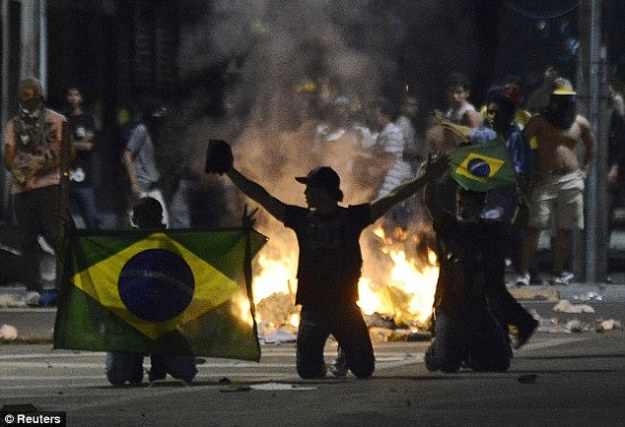
article-2345600-1A729DDD000005DC-654_634x434
“‘Stop. Stop. Stop, stop, stop,’ Caio says. He’s seen something. We’re on a side street in Rio de Janeiro — within walking distance of Maracanã Stadium, where Argentina is taking on Bosnia-Herzegovina in the first World Cup game the city is hosting — and a protest that had been marching on, compact and peaceful for the past hour, has just splintered. The packs of Rio police officers, who had been treading silently and steadily alongside the banner-waving protesters, suddenly formed a cordon. The tear gas quickly followed, sending the protesters helter-skelter. Now I follow Caio, a member of the independent media collective Mídia Ninja, a veteran of this kind of thing, out of the scrum. ‘It’s dangerous what they decide to do,” he says of the protesters. “The street is very small. There is no strategy.’” Grantland

Photos: Brazilian Riot Police Squashed a Big Protest During the World Cup Finals

“It was a whirlwind of a weekend in Rio de Janeiro. The drama began on Saturday with the third-place match, which is in and of itself a depressing affair. After being on the edge of fulfilling World Cup dreams, two teams are forced to conjure up one last effort to save face. Brazil, in its case, had just suffered one of the worst defeats in World Cup history and didn’t want to compound it with another loss. The Dutch coach, meanwhile, thought everyone should hang up their boots instead of tempting fate once more. Nothing felt right about the match, so instead I decided to visit the Maracanã, the epicenter of the futebol universe, where Brazil never got to play a match as host of this World Cup.” New Republic

The Two Brazils Revisited: What does the future hold after World Cup 2014?

“I first met Vitor Lira last December, when I was here on a reporting trip for an SI magazine story called The Two Brazils. The article examined the complex nature of a country that can both love soccer and engage in mass protests over the public spending and societal impact of the 2014 World Cup and the 2016 Olympics. Lira, 33, is a community leader in Santa Marta, one of Rio’s oldest favelas. Five generations of his family have lived there, and over the past two years he has organized resistance to the government’s plans for removals of Santa Marta residents as part of the sweeping changes in Rio around the World Cup and Olympics.” SI (Video)

World Cup Spirits Dampened, Brazilians Show Waning Support for 4th-Place Team

“The yellow-clad fans arrived at Estádio Nacional later, more quietly and with far less face paint than usual. And no wonder: They were attending the World Cup’s third-place game, a match that newspapers around the world had called ‘a meaningless exercise,’ ‘a pointless sideshow’ and ‘the final insult.’ André Gonçalves, 48, an accountant in Brasília who was attending his fifth game in the stadium with his family, was struck by the difference in the scene outside the stadium Saturday afternoon before the Netherlands played Brazil. ‘This silence, this calm,’ he said. ‘It conveys sadness.’ André Galvão, a reporter for TV Bandeirantes, was having trouble finding the usual energy from Brazil fans.” NY Times

Pichações: The Streets Against the World Cup

gabriel-7
“As the World Cup in Brazil comes to an end without the predicted large-scale protests, there’s been a subtle but consistent message visible on the streets, as photo-journalist Gabriel Uchida has documented. ‘Pichação’ is the punk brother of graffiti. Pichadores don’t want to make art, they want to shock, to vandalize. It’s made to be ugly and agressive. In Brazil it was born in São Paulo and their main influence was the typography of punk rock and heavy metal band logos. Although it is illegal, it’s the most current cultural expression in the Brazilian streets. It’s possible to see ‘pichações’ everywhere, even at the top of the highest buildings. As it’s made to protest, recently Brazilian ‘pichações’ have found a new target: the World Cup.” World Cup 2014

The Rio the World Cup didn’t show
“There’s shit in the water. Two days after Brazil crashed out of the World Cup, on Thursday morning, one of Rio’s foremost sanitation activists, Leona Deckelbaum, came down to Copacabana Beach to work. She couldn’t help laughing. Tourists swam in the ocean across the street, and up and down the coast in both directions. In a city with a terrible sewage system even in the fancy neighborhoods and no complete sewage or water service in any of the 900-plus favelas, this is a terrible idea.” ESPN

What Will We Take From This Tournament?

“In writing on sport there is always a fine line between reading too much into what happens on the field and reading too little into it. The problem is particularly acute when it comes to the World Cup: no other sporting event creates the same torrent of hyperbole and cliché, or incites quite the same kind of grandiose pontificating. The best of sports writing and commentary manages to deal with this through a combination of grace, humor, and true emotion: something that the Men in Blazers have offered us, thankfully, on ESPN, and that has defined the wonderful writing of Brian Phillips for Grantland during the tournament.” New Republic – Laurent Dubois

What the World Cup Looks Like to a Refugee Child

boy
“I wanted to write a post predicting who will win the World Cup, but then truly, who really cares about my prediction? What do I know? I’m no pundit, not that pundits know anything anyway. Also, I’m a firm Bohrian. It was Niels who said, ‘Prediction is very difficult, especially if it’s about the future.’ Basically, a child could do just as well as me. So why not have a child do it? Not just any child, but a refugee. I had friends who work with two NGOs ask kids served by their groups some questions about the World Cup. The first organization is the World Food Programme in Beirut, which provides essential food and nutrition to over a million Syrian refugees in Lebanon. The second is Faros, an NGO in Athens, Greece, that provides individual assistance and long-term, durable solutions for unaccompanied refugee minors, mostly from Iraq and Afghanistan.” New Republic

Soccer in Brazil, and Outside the World’s Glare

“Mauricio Lima has been in Brazil for the World Cup. Not exactly at the games, mind you, but going deep into the hearts — and jungles — where love of the game sustains and thrills (at least until the Brazilian team’s loss this week to Germany). He has ventured to a floating village where children kick improvised soccer balls along narrow docks, to a prison where inmates make balls, to an amateur tournament where teams and beauty queens compete together and to indigenous villages that are an overnight boat ride away from the nearest World Cup match.” NY Times

Humiliation, Honor, and Brazil

brazil-newspapers-FB
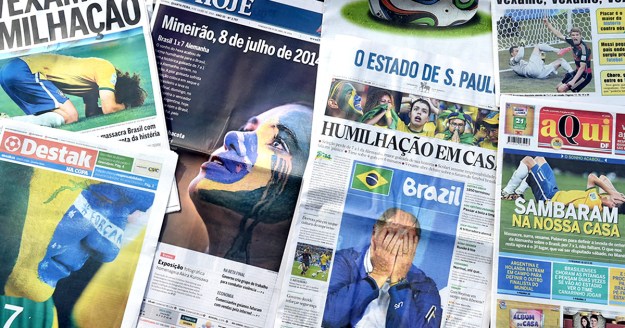
‘The morning after Brazil’s shocking, numbing 7-1 loss to Germany in the World Cup (which the commentators on ESPN have been instructed to call, robotically, the FIFA World Cup), my soccer-loving son mordantly read out English translations of the Brazilian headlines, which he had found online. All were brokenhearted—“FIASCO,” “AN EMBARRASSMENT FOR ETERNITY,” “EMBARRASSMENT DOES NOT EVEN BEGIN TO DESCRIBE IT,” and “WE CAN’T JOKE ABOUT IT: WE’RE TOO ASHAMED”—but the key word, over and over, was humiliation: “ULTIMATE HUMILIATION,” “HUMILIATING,” “FELIPE MISSES AND BRAZIL IS HUMILIATED,” “FROM DREAM TO HUMILIATION,” on and on like that.’ New Yorker

World Cup 2014: Brazil’s Neymar makes wheelchair claim

“Brazil’s Neymar broke down in tears as he claimed the challenge that ended his World Cup came close to paralysing him. The Barcelona forward, 22, fractured a vertebra in his spine when he was kneed in the back by Colombia’s Juan Zuniga during Brazil’s 2-1 quarter-final win. ‘I thank God for helping me, because if that blow had been a few inches lower I would have risked being paralysed,’ said Neymar.” BBC

YouTube: Brazil’s Neymar makes wheelchair claim

Argentines Sing of Brazil’s Humiliation, Loudly and in Rio

“As the Brazil team has come spectacularly undone in the World Cup, the pain for the host country has been compounded by the prospect that its hated rival, Argentina, could still lift the championship trophy on Sunday in Rio de Janeiro’s fabled Estádio do Maracanã, after Argentina won a tense semifinal against the Netherlands in a penalty shootout on Wednesday afternoon. The tens of thousands of Argentine fans who have invaded Brazil to cheer for their team, and taunt their hosts, brought with them a song that predicts not just triumph for Argentina, but deep humiliation for Brazil. And the players themselves have joined the choir.” NY Times (Video)

29 Minutes That Shook Brazil

“It started, innocently enough, in the 11th minute. Thomas Müller, Germany’s top scorer at this World Cup, slyly slid around the back of Brazil’s defense. When the ball arrived from a corner kick, he blasted it home. The Brazilian fans who made up most of the crowd of 58,000 went quiet for a moment. But then, unbowed, they resumed their defiant chants. In Ceilândia, some 450 miles north of the Estádio Mineirão, a housecleaner shrugged. ‘After the first goal, our reaction was not too much of a shock because Germany is a strong competitor,’ said the housecleaner, Neide Moura de Brito do Nascimento, who was watching on TV with her family. ‘We already expected one or two goals from them.’ Nothing else about Tuesday afternoon followed anyone’s expectations. From that modest beginning, this country went on to witness something never seen before in World Cup soccer: Germany scored five goals — more than many teams scored in the entire tournament — in the first 29 minutes of a World Cup semifinal on the way to a 7-1 victory. Those 29 minutes will be scrutinized for generations in Brazil, poked and prodded and dissected the way Brazil’s dreaded defeat to Uruguay in the 1950 World Cup final has been.” NY Times (Video)

No More Tears

IMG_2531
This “Jesus Wept” photo became a meme in the aftermath of Brazil’s defeat yesterday.
“O Lachryma Cristi, what has happened to our weepy Brazilians? Since day one of this tournament, it seems, they have been in tears. As the technical director Carlos Alberto Parreira reported, ‘They cry during the national anthem, they cry at the end of extra-time, they cry before and after the penalties.’ The sports psychologist Regina Brandão was rushed in, but failed to stem the flow; then it was the Pressure! The Pressure! A nation’s hopes, et cetera, et cetera. And now this 7-1 pasting, the iconic gone-viral boy in the crowd, glasses pushed up, fingers pressed to eyes, sobbing into his Coca-Cola cup; and somewhere else not too far off, the pretty girl with tears streaming down her cheeks, rivulets slowly obliterating the Brazilian flags she had painted there.” The Paris Review – Jonathan Wilson

Why Brazil Lost
“Most people are terrible singers, and yet football crowds are good at picking out a tune. Crowds are often flat on the high notes and tend to rush the tempo, but generally the combination of thousands of wrongs adds up to one big right. The Brazilian national anthem last night was different. All around the Mineirão people stood and roared it so loud that their eyes bulged. The words resounded with startling clarity but much too loudly for any music to be heard. Down on the field David Luiz and Júlio César were holding aloft the shirt of Neymar like a holy relic. The camera picked out a woman holding a placard that read, “Don’t worry—Neymar’s soul is here!” It was as though Neymar had died and was looking down at his former teammates from heaven, rather than watching them on television. The collective emotional frenzy of the scene was awe-inspiring.” Slate (Video)

The World Cup Beyond the Stadiums
“The matches of the FIFA World Cup have played out before crowds in stadiums—some barely finished—throughout Brazil, but the passions of the tournament can, at times, be most acutely felt far from the stands. Here, David Alan Harvey captures scenes from the favelas of Rio de Janeiro to Copacabana Beach.” New Yorker (Photo)

Why Brazil Crumbled
“Peeling back the layers of expectation. The weight of…a team. ‘A player plays for more than himself.’ That’s a common maxim echoed throughout dressing rooms across the globe. Players are also expected to play for teammates, families, communities, countries, continents, gods, and local bodega store owners probably. Every player on a World Cup team has shouldered a cross-section of these burdens on top of self-imposed expectations and demanding, perpetually looming coaching staffs armed with lots of professional badges. And the better the player, the more that weight is amplified. If a player is that good, he can become a meal ticket for all involved. All of that weight can rest on a selection of moments and touches. A final touch ending up in a net or in the lap of a cerveza-guzzling spectator can be the difference between being heralded in tribute videos or becoming an internet sensation for all the wrong reasons. This is the burden of performance, the burden of play.” Fusion