“It’s staring at me, that wallchart. It’s a little bit frayed and crumpled now since the move back from Greece and after finding its way around Jesse’s sticky fingers and teething gums. Since Sunday, I haven’t been able to summon the requisite will to complete the final vacant space. The one that states that Germany beat Argentina, one-nil, AET. It’s the finality that daunts me; the knowledge that once complete it becomes a historical artefact, no more a tantalising map of an unknown future. All those games, all those goals, all those hours. Gone forever.” Dispatches From A Football Sofa
Category Archives: Spain
World Cup Expectations Rankings: Brazil’s over- and underachievers

Cesare Prandelli
“Teams come to the World Cup with their own expectations. For some, just being there is enough, reaching the last 16 an almost impossible dream. For others, so exalted were their ambitions that even a quarterfinal feels like a disappointment. This is an attempt to grade teams according to how they did against their own expectations, looking both at results and at how well they played…” SI – Jonathan Wilson
World Cup 2014: Goals, drama & that bite – is Brazil the best?

“Record goals, Suarez gnaws, that James Rodriguez strike, passion, drama, colourful fashion – what a World Cup this has been. It was a tournament that started with a bang as the hosts came from behind to beat Croatia, and has since delivered fantastic entertainment almost game after game. Here, BBC Sport’s chief football writer Phil McNulty and the BBC’s much-loved and most experienced commentator John Motson consider whether this has been the best ever World Cup.” BBC
Spain ’82: My First World Cup
“The first World Cup I remember was Spain ’82. I was eleven and in my fifth year of primary school and living at the Holy Child Teacher Training College, in Ikot Ekpene, in southern Nigeria, where my mother taught home economics. This is about an hour from my village. It was two years since I watched Nigeria’s Green Eagles (as they were called then) defeat Algeria to lift the African Cup of Nations for the first time, in 1980. I remember the three goals against the Desert Foxes, or Les Fennecs, by Segun (Mathematical) Odegbami and Muda Lawal and the celebrations that swept through the land. The image of our captain, Christian (Chairman) Chukwu, lifting the cup after the game was something to behold.” New Yorker
Passing the World Cup’s Soccer Idealist Torch From Spain to Chile
“Soccer ideology on the international level is a rare thing. Managers are faced with a limited, static pool of talent and a training schedule that consists of, at most, a couple of weeks at a time most years. The ultimate result is qualifying for and performing well in the World Cup. It’s a goal that prioritizes getting results right now, because if you don’t you’re out, and if you’re out you’ve failed. Losing games in the present makes it hard to focus on building for the long term.” Grantland
World Cup Tactical Analysis | Cameroon 1-4 Brazil: Neymar guides the Selecao to the Round of 16

“Neymar netted twice to help put Brazil into the last 16 of the World Cup as his side flounced aside Cameroon on Monday night. The Barcelona star was at the crux of every move and scored once either side of a Joel Matip strike to ensure the Selecao would continue their World Cup campaign on home soil. Brazil No. 9, Fred finally got off the mark with his first World Cup goal in eight years, and although it should have been ruled offside, it stood and will give the Fluminense striker a major uplift. His goal gave Brazil some extra cushion, only to be topped by Fernandinho, who came on for Paulinho and added the clincher late to give Brazil an extra boost on its way out of the group stage.” Outside of the Boot
We Went There: Mexico Qualifies for the Round of 16 in a Green Sea
“The ‘Meh-he-co’ chants drowned out the AC/DC blaring from the speakers at Arena Pernambuco as the kickoff of El Tri’s match against Croatia drew closer. When the 15-by-25-foot LCD screens showed the starting lineups, the Mexican fans hurled their favorite FIFA-sanctioned slur at the head shots of their opponents.” Grantland (Video>
Mexico Finds Itself Knee-Deep in Victory
“When Andrés Guardado of Mexico finally freed himself from a swarm of teammates Monday and emerged back under the floodlights of the crammed stadium here, he crouched along the sideline, pointed a finger down to his knees as he comically wiggled his legs, and vigorously shook his head from side to side. A smile stretched across his face as he soaked in the deafening cheers. The night before Mexico and Croatia met in this Group A game, with a spot in the World Cup’s knockout round very much up for grabs, Croatia Coach Niko Kovac suggested that his team had nothing to fear, that if anyone’s knees were to tremble, it should be the players of Mexico.” NY Times
Brazil Romps Past Cameroon and Into Knockout Rounds
“An anxious nation and its capital exhaled on Monday. Their beloved national soccer team, which has not played with the precision and dominance that many had hoped for in the World Cup, nevertheless moved on to the next round with a convincing win. Playing in front of a pulsating record crowd at Estádio Nacional, Brazil beat Cameroon, 4-1, behind two goals from Neymar to win Group A. On Saturday it will play Chile, the runner-up in Group B, in the Round of 16.” NY Times
World Cup 2014: group stage, day 12. NETHERLANDS 2-0 CHILE. SPAIN 3-0 AUSTRALIA. MEXICO 3-1 CROATIA. BRAZIL 4-1 CAMEROON.
“… Mexico would have been happy with the draw – but were the better side for long periods, and deserved the victory. Croatia wingers v Mexican wing-backs. This was always likely to be the key battle, considering both Mexico’s previous opponents had problems containing their wing-backs. But the Croatian wingers had been extremely impressive in terms of their work rate and discipline in this tournament, and had constantly looked the most likely players to find the target. Could they pin back the Mexico wing-backs, or find space in behind them?” Zonal Marking
Group B – ESPN
The Reducer: World Cup Winners and Losers
“Can I interest you in March Madness spiked with second chances? Because that’s what we’ve got on our hands. After a little more than a week of World Cup action, we’ve seen the defending champions go crashing out, the hosts wobble, new stars rise, and established stars cement their place in soccer boot ads for years to come. We’ve seen a German-born defender become an American hero, a Brazilian-born striker be partially blamed for Spain’s early exit, and Mexico’s manager turned into an anime character.” Grantland
Laid Bare
“The same day that, in Chile, more than twenty previously unknown works by Pablo Neruda were discovered in the most unlikely of places—a drawer—Spain thought it was a good idea to continue their monarchy by changing the constitution so the prince could replace the abdicating king. I rejoiced at one and shrugged at the other. Fittingly, Chile beat Spain 2-0 yesterday. Chile showed the extent to which Spain is past its sell-by date. Spain has become a product, a collection of starry names to sell to a depressed populace.” The Paris Review
Spain undone by their own revolution

“It has been eight long years since Spain were last eliminated from a major international tournament. A 3-1 defeat to France in World Cup 2006 ensured Spain retained their status as Europe’s biggest bottlers, with no hint they were about to become the world’s most successful side — arguably in the game’s history. Amazingly, no fewer than seven players in the starting XI that day — Iker Casillas, Sergio Ramos, Xavi Hernandez, Xabi Alonso, Cesc Fabregas, David Villa and Fernando Torres — were in Spain’s squad for this World Cup, too. That summarises how Spain were simply too old, too tired. Nevertheless, some of the other names from the 2006 side indicate how far Spain have progressed. Mariano Pernia? Pablo Ibanez? They’d also been eliminated from Euro 2004 in embarrassing circumstances, against close rivals and hosts Portugal, failing to progress from the group stage.” ESPN – Michael Cox
Spain’s reign ends with a whimper after six years of dominance
“To watch the collapse of Spain, eliminated from the World Cup after a 2-0 defeat to Chile, was to be reminded of Hemingway’s comment on bankruptcy. The end came gradually, and then suddenly. Over the past couple of years, slight signs of vulnerability have appeared, in the 3-0 loss to Brazil in the 2013 Confederations Cup final and in surprising defeats in friendlies, which perhaps shouldn’t have been blamed as readily as they were on weariness brought on by the Spanish federation’s determination to flog its champions around the world in search of lucre. Players aged, hunger waned, doubts crept in.” SI – Jonathan Wilson
Fearless Chile end Spain’s reign
“Chile supporters made the most of Rio — indeed, a ticket-less band of them literally invaded the Maracana stadium before the game, charging in through the press entrance in a bid to watch their team. On the morning of the game in the streets of Copacabana, when groups of Chileans ran into each other they would clap and shout out that they were going to send Spain back home — and they seemed to believe it. Such is the faith in the side led by electric little coach Jorge Sampaoli, who seems to run on batteries as he paces up and down the touchline.” ESPN – Tim Vickery
Mighty Spain Goes Out of the World Cup Meekly
“The chants at the game between Spain and Chile began slowly, first from one side of Estádio do Maracanã, then from the other. By the time the final minutes had ticked off the clock Wednesday, tens of thousands of fans had joined in. ‘El-im-in-a-do! El-im-in-a-do!’ — eliminated — said those fans, who were leaping so wildly in their red shirts that they made the stands look like a supersize swath of roiling scarlet cloth. But those fans were not wearing the red jerseys of Spain, the defending World Cup champion and two-time European champion. They were wearing the red shirts of Chile, which eliminated Spain from this tournament in the first round, after Spain had played two games. No past World Cup defending champion had been knocked out of the tournament so quickly.” NY Times
World Cup 2014: group stage, day 7. NETHERLANDS 3-2 AUSTRALIA. CHILE 2-0 SPAIN. CROATIA 4-0 CAMEROON.
“… Spain’s incredible run of success is over – they were pressed into submission by a terrifyingly energetic Chile side. Pressing with caution. Spain suffered in the first game because of the Netherlands’ intense pressing, and therefore it was obvious approach Chile would take. They switched system to replicate the Dutch 3-4-1-2, taking out their number ten Jorge Valdivia, with Francisco Silva coming into the side at the back. Chile are better at pressing than any other international side, and from the outset showed their usual high-intensity approach, closing down Spain in midfield extremely quickly.” Zonal Marking
How We Play the Game

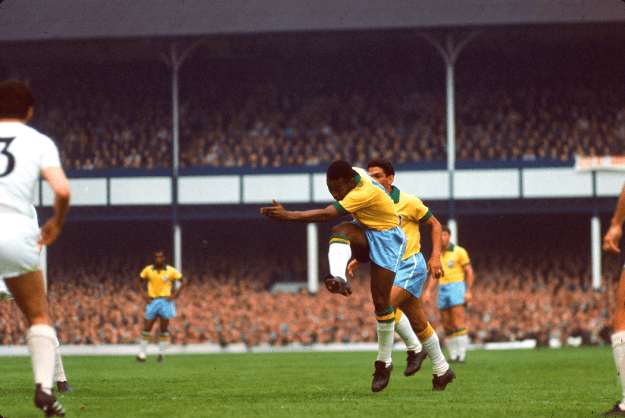
Pelé in a match at the 1966 World Cup in England.
“Every team is simply trying to score goals while preventing its opponent from doing the same. But they all seem to go about it in distinct ways, don’t they? To understand what is happening on the fields in Brazil at the World Cup, one must learn a bit about each country’s history, and literature, and music, and regionalism, and economy – not to mention bicycles and pottery. If you look closely enough at the X’s and O’s, you just might find a national poem.” NY Times
World Cup Tactical Analysis: Spain 1-5 Netherlands
“Day two of the 2014 FIFA World Cup saw the holders Spain taking on the Dutch in a highly anticipated rematch of the finalists from the last edition in South Africa. The build up to the World Cup has seen questions asked of both teams: Spain, despite their domination of the international scene in recent years, has been labeled as a fading dynasty that will fall apart with this year’s World Cup. Expectations for their opponents, the Netherlands, have also been at an all-time low as Louis Van Gaal’s men have been branded one of the worst Dutch teams to go to a World Cup. With all this being said, Spain were firm favorites ahead of the game and were expected to enjoy a comfortable win and take a commanding lead in Group B. However, the result could not have been more different.” Outside of the Boot
World Cup 2014: group stage, day 2. NETHERLANDS 5-1 SPAIN. MEXICO 1-0 CAMEROON. CHILE 3-1 AUSTRALIA.

“… A truly extraordinary game of football – Spain took the lead, but the Netherlands repeatedly breached their high defensive line and recorded a historic victory. High lines. This match was all about high defensive lines, a concept that has become a key part of both Spanish and Dutch football – the two are strongly linked, of course. At the last World Cup, barely any teams were brave with the positioning of their defensive line, instead sitting deep and allowing space in front of their defensive block. Here, the space wasn’t in midfield, where no-one had time to put their foot on the ball, but instead in behind the opposition.” Zonal Marking
The Play That Changed Holland vs. Spain
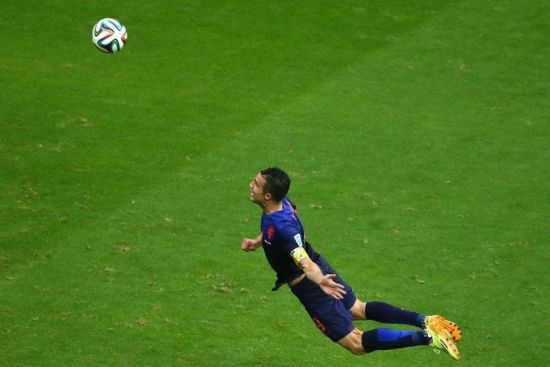
“For most of the first half of the Spain-Holland match, the defending champions had been in complete control and were up 1–0 as halftime approached. Then Robin van Persie struck in the 44th minute and turned the game upside down. … Ultimately, the first rule of defending is that you don’t let an attacker get behind you. But allowing a talented player like Van Persie to receive the ball 30 yards from goal in the middle of the field isn’t far behind. More than a tactical error, it seems that Spain’s biggest problem was Ramos’s and Pique’s execution. Notice that Pique is slightly behind the defensive line, holding Van Persie onside. If he had been in line with the rest of the defenders, RVP would have been offside. Now, it’s usually the opposite-side outside back or weak side center back who has the best view of a developing play, and so he calls the line, commanding his defensive partners in front of him to hold, step, or drop.” Fusion (Video)
Holland’s World Cup win over Spain wasn’t the return of Total Football – Louis van Gaal has created something new
” By 1661, Rembrandt had fallen on hard times. Golden Age Amsterdam was turning against the gritty, unglamorous realism of his paintings. They wanted lustre, not texture. But Rembrandt was not going to go down without a fight. And so, when he was commissioned to paint a historical scene to hang in Amsterdam Town Hall, he knew that he would be expected to produce something decorous, reverent, heroic: a bold piece full of strong colours and glorious poses, in keeping with the style of the age. The Conspiracy of Claudius Civilis, when it emerged, was none of these things. It was harsh, dimly lit, borderline disturbing. The barbarian chieftain of the title is depicted with his one blind eye not obscured in profile, but front-on, in full and queasy detail. It was one of Rembrandt’s greatest works. But it was too harrowing by far for the Amsterdam city council, who rejected it and returned it to the artist. In financial difficulties and now with a five-metre painting nobody wanted, Rembrandt was forced into the single most traumatic act that a painter can undertake.” Telegraph
Holland’s beautiful goals put the wonder back in World Cup
“Vicente del Bosque was not expecting that, and Louis van Gaal – “We had a plan but I never imagined it would work out quite so well” – was not expecting it either. Ron Vlaar, penalised for the first foul challenge after just 13 seconds, was not expecting it, and neither were the six Spain fans in replica shirts – three middle-aged couples from Valencia – who turned up a little sheepishly in a Salvador seafront restaurant on Friday evening and politely asked for a table without a view of the television. Not since the heyday of Monty Python, it appears, has anyone been quite so surprised by a Spanish inquisition.” Guardian
What If the Most Beautiful Goal of the World Cup Has Already Been Scored?
“I am sure there will be a few memorable goals during the rest of the World Cup—we’re only on day three—but the one scored by Robin van Persie of Holland against Spain to tie the game justifies the entire tournament. Those of us who wait four years for this fiesta de fútbol so that moments such as these might nourish us know full well they are few and far between. This one came early and might not be surpassed.” New Republic (Video)
Spain Was Asking for Trouble Against the Netherlands
“Spain played a high defensive line, positioning themselves well forward, near midfield. It left them vulnerable. . .” NY Times
Spain: can they keep their incredible run going?
“Spain’s current run of success is unprecedented – two European Championships, with a World Cup between. When you consider their distinctive playing style, and the way they’ve taken possession football to the extreme, they’re unquestionably one of the greatest international sides in history. They are, however, more vulnerable than in previous years. That’s because key players have declined since Euro 2012. While others have been in and out of the side, Xavi Hernandez and Andres Iniesta have been the two midfield stars consistent throughout Euro 2008, World Cup 2010 and Euro 2012. They’re the personification of Spain’s Barcelona-based tiki-taka game, and together they had their least impressive season for years. At his best, Xavi controlled matches better than any midfielder in the world, maybe better than any midfielder ever has, but now there are questions about his mobility and capacity to lead this side. Iniesta’s season at club level was disappointing, but he always delivers at international tournaments, and for the first time it is Iniesta, not Xavi, who must become Spain’s technical leader.” Zonal Marking
2014 World Cup Roundtable: Planet Futbol’s prediction panel
“The 2014 World Cup kicks off Thursday, when Brazil and Croatia open the highly anticipated competition in Sao Paulo. Every World Cup is met with excitement and intrigue, but there’s something extra special about the 2014 edition. Perhaps it’s the host and its tradition of excellence. Perhaps it’s the loaded tournament field. Or perhaps it’s that transcendent stars like Lionel Messi and Cristiano Ronaldo are in their primes at the most ideal time. Regardless, there is quite the chapter of international soccer that is on the cusp of being written. Our reporters on the ground in Brazil — Grant Wahl, Brian Straus, Jonathan Wilson and James Young — and our contributors throughout the tournament — Liviu Bird and Ben Lyttleton — offer their picks as the world’s spotlight gets firmly planted on Brazil for the next month.” SI
‘Miracle of Eibar’ – Can tiny Spanish club avoid cruel twist of fate?
“There is only one fairytale story in Spanish soccer this season, but will it have a happy ending? Forget Atletico Madrid’s first league title for 18 years, disregard its city neighbor Real concluding an exhaustive wait for ‘La Decima’ — a 10th European Champions League crown. Because this season is all about the ‘Miracle of Eibar.’ The Basque town has a population of just 27,000 and the club a budget dwarfed by almost all its rivals, yet back-to-back promotions have banked Eibar a place in the big time.” CNN
Key Battles: How to Defend

“How can defenders like Spain’s Sergio Ramos even hope to shut out the world-class strikers they’ll see in Brazil? It all starts at training camp with a clear strategy and a willing body double. Heading into the World Cup, most of the focus has been on the tournament’s large group of elite goal scorers: Ronaldo, Messi, Neymar, Suarez. All told, 14 goal mongers expected at this year’s Cup scored at least eight times in qualifying — and that doesn’t include the best from Brazil, which qualified automatically as host. But history shows it’s the team with the stingiest defense that hoists the trophy. Of the past five champions, all but one had the best goals-against average among the quarterfinalists. (Brazil was second to runner-up Germany in 2002.)” ESPN
Fascism & Football: The political history of Spanish football

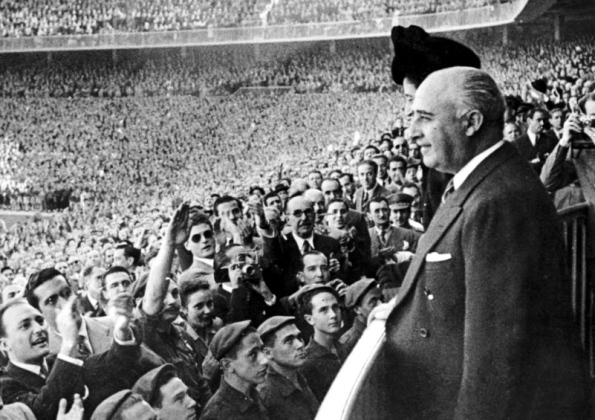
“Spain had been a notable absentee from the 1938 World Cup. The country was being torn apart by Leftist Republicans and a coalition of Nationalist Forces led by General Francisco Franco. The Spanish Civil War was instrumental in bringing three most powerful Fascist leaders together. In 1937, Mussolini sent a considerable number of men to support his Fascist ally. German involvement in the War began immediately as Adolf Hitler immediately sent powerful air and armoured units to assist Franco and his Nationalist forces along with considerable economic loans. By 1939, Franco was successful in curbing the last outbursts of his Republican resistance, including and importantly, the capital of Catalonia, Barcelona. In one week alone in the last year of struggle, 10,000 members of the anti-Franco brigade were executed in Barcelona. A further 25,000 were shot after the ceasefire in the city.” Outside of the Boot
Fascism and Football: How Italy won the 1934 and 1938 World Cup
Outside of the Boot
Fascism & Football: When Germany were the inferior team
Outside of the Boot
Mussolini’s Football
Soccer Politics
2014 Fifa World Cup draw: Guide to Group B

Sergio Ramos
“Gary Lineker’s verdict. … Style & formation: Spain’s possession game, coupled with their determination to quickly win the ball when they don’t have it, has been wearing down the opposition for over seven years. Spain typically play 4-3-3, with full-backs Jordi Alba and Alvaro Arbeloa attacking like wingers and centre backs Sergio Ramos and Gerard Pique often joining in play beyond the halfway line. Strikers only tend to enter the box at the last minute for the element of surprise.” BBC – Spain, Netherlands, Chile, Australia
Small-town Eibar to be punished for their success?
“At Ipurua, the mist rolls down the green hillside, across the roofs and right over the pitch. The town of Eibar has a population of 27,000 people and sits halfway up the valley of the River Ego in the Basque Country, northern Spain. At the top of the town, up steep streets, stands Ipurua, the picturesque home ground of Second Division club Eibar. It is surrounded by mountains to the north and south and the best view may just be the one from the two blocks of flats that tower over the stand. Not that they have to tower much to look over the short, squat side of this stadium.” ESPN
Wednesday’s friendlies: What we learned

“The final international break of the season produced some interesting results, and perhaps more importantly, offered a few hints about how major contenders might play in Brazil. Here are four conclusions from the week’s matches…” ESPN – Michael Cox (Video)
2014 Fifa World Cup: Gary Lineker’s guide to the eight seeds

“England have been drawn in Group D for the 2014 World Cup, meaning they will face seeded team Uruguay as well as Italy and Costa Rica. Hosts Brazil are in Group A, reigning world and European champions Spain are in Group B and three-time champions Germany are in Group G. Match of the Day presenter Gary Lineker, speaking before the draw was made, takes a closer look at the eight seeded national teams…” BBC
World Cup Qualifying: Standings and scenarios for Tuesday’s games

“World Cup dreams will be realized, dashed or deferred on Tuesday as qualifying continues around the globe. On the home front, the U.S. booked passage to Brazil last month and then clinched first place in CONCACAF’s Hexagonal with Friday’s 2-0 win over Jamaica. The only thing left to play for on Tuesday night in Panama is a seed next summer. Unfortunately for Jurgen Klinsmann and Co., chances are slim. The top seven sides in next month’s FIFA ranking (beside Brazil) will be anointed. According to ESPN statistican Paul Carr, the U.S. would have to defeat Panama while the Netherlands loses at Turkey, Switzerland loses to Slovenia, Poland ties or beats England, Ecuador ties or beats Chile and Uruguay misses out on qualifying altogether. Here’s a summary of what’s at stake elsewhere. Ties in group play are broken by goal differential in all games, goals scored in all games and then assorted head-to-head criteria.” SI
World Cup qualifiers: Romelu Lukaku sends Belgium to Brazil

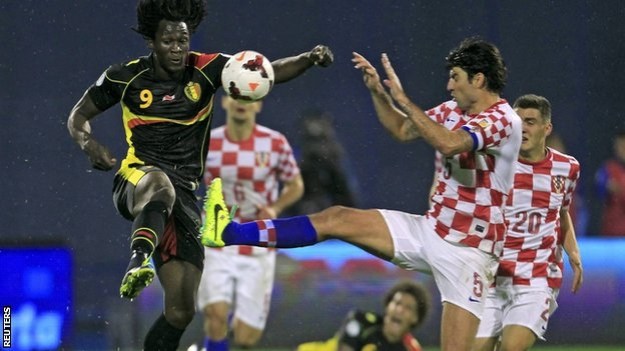
“Romelu Lukaku scored twice as Belgium beat Croatia 2-1 to secure their place at the 2014 World Cup in Brazil. Striker Lukaku, on loan at Everton from Premier League rivals Chelsea, scored twice in the first half, with Niko Kranjcar grabbing a late consolation. Belgium were joined by Germany and Switzerland in qualifying for next year’s tournament. Germany defeated the Republic of Ireland 3-0, while Switzerland won 2-1 in Albania.” BBC
The biggest problems facing World Cup contenders
“The fascinating thing about international football is that managers must cope with a very definite group of players. Whereas at club level, weaknesses can be solved by signing new players, at international level it’s not unusual for a top-class side to completely lack quality in one particular position. Sometimes, this forces managers to formulate innovative new tactical ideas to compensate for that weakness – but often, it simply means the side has a weak link. With eight months to go until the World Cup, here’s a look at six big international sides who have an obvious problem position.” ESPN – Michael Cox
Top 10 Young Football Managers
“Football, over the last couple of seasons, has been witnessing a ‘change of guard’. Players who we adored in their prime have retired, managers that headed some of the greatest sides in history have resigned. All this has given rise to the next generation of football personnel ranging from talented young footballers to talented young tacticians. In this piece we will be focusing on the Top 10 Young Football Managers, that could be at the helm of some of the biggest clubs in World Football, in the not-so-distant future.” Outside of the Boot – Part 1, Outside of the Boot – Part 2
Brazil’s Confederations outsiders face uphill battle to be included
“Brazil was obviously joyous at winning the Confederations Cup in such convincing style — but it would only be natural if there were some places where joy was somewhat confined. Those players outside the squad, for example, now face a much harder time getting back in.” ESPN – Tim Vickery (Video)
Hasn’t the Confederations Cup been great?
“Well, hasn’t it been great? From the opening minutes of that opening game when Neymar was firing home that impeccably executed volley, through the thrills and fun of the group games and semi-finals, to the final. I honestly cannot recall one bland game in over the 2 week duration of this year’s Confederations Cup. If this competition is merely Brazil’s supposed warm-up for the real deal of the 2014 World Cup, then we are in for a treat. Here are my 6 reasons why I believe the Conferedations Cup has been so flipping fantastic.” Outside of the Boot
Is the need for speed more important than tika-taka tactics?
“The Confederations Cup final between Spain and Brazil was a highly anticipated clash of two opposing brands of football. In fact, while Spain are well known for playing a possession based style of football, Luis Felipe Scolari has reshaped a traditionally flamboyant Brazilian side into a more defensive minded, counterattacking team.” Think Football
Brazil 3-0 Spain: Spain unable to cope with Brazil’s pace and power on the break

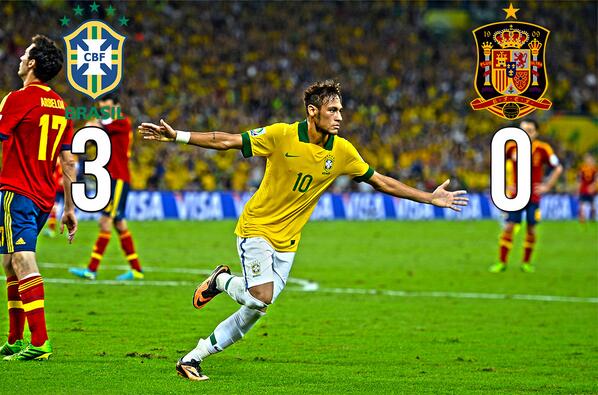
“Brazil won the Confederations Cup at the Maracana after a convincing demolition of the world champions. Luis Felipe Scolari stuck with his usual side – in five games he only deviated from this XI once, when Paulinho wasn’t 100% fit for the final group game. Vicente Del Bosque brought in Juan Mata on the left of his 4-3-3 system, but otherwise the side was unchanged. Brazil yet again started superbly – but Spain failed to mount a significant fightback.” Zonal Marking
“Brazil produced a breathtaking performance at the Maracana to overwhelm Spain and claim their third consecutive Fifa Confederations Cup. Driven on by the passion of a fiercely partisan crowd, the five-time world champions signalled their intent ahead of next summer’s World Cup by ending Spain’s 29-match competitive unbeaten record with a majestic display. Fred scored twice, but Neymar again stole the show, scoring Brazil’s second goal with a rasping left-foot shot. To compound Spain’s misery, Sergio Ramos missed a second-half penalty before Gerard Pique was sent off for bringing down Neymar as last man, with 22 minutes remaining.” BBC
Dream final a sub-plot to urban uprising (June 28)
“And so the 2013 Confederations Cup has its dream final – Brazil against Spain, the match the world has been waiting years to see. It is a clash of two philosophies. For the Brazilians, the star player (known over here as the ‘craque,’ from the English ‘crack’) tips the balance with a moment of individual inspiration. For the Spaniards the collective idea is all important – the constant passing at pace, the continuous formation of triangles, each one opening up new possibilities for a new combination, until a runner can be slipped through on goal.” The World – Tim Vickery
Brazil on the verge of greatness
“Forget history and superstition. You have to be pretty twisted to believe that because Brazil won the Confederations Cup in 1997 and 2005 and 2009 and then failed to win the big one the following year, beating Spain and lifting the trophy at the Maracana was anything but a good thing. Anyone who witnessed the performance against Spain, who felt the goose bumps from the Torcida, who saw Fred, then Neymar, then Oscar, then just about every member of the Selecao vault the pitch-side barriers and celebrate with the supporters will know just how important this was.” ESPN (Video)
Spain beats Italy on penalties

“Jesus Navas scored the decisive penalty as World Cup holder Spain beat Italy 7-6 in a shootout Thursday after extra time ended 0-0, setting up a showdown with host Brazil in the Confederations Cup final. Nobody missed in the shootout until Italy defender Leonardo Bonucci shot over the bar to give Navas an attempt at the winner. The recently signed Manchester City midfielder coolly beat goalkeeper Gianluigi Buffon to end a top-class battle and send Spain to another major final.” ESPN (Video)
Scolari to mull over Hulk dilemma ahead of final
“We cannot yet declare that Luiz Felipe Scolari has turned Brazil into a successful side, and it would be unrealistic to consider them an overly entertaining one. Nevertheless, among encouraging performances and positive results, the main feature of Brazil throughout the Confederations Cup so far has been the sheer consistency of selection.” ESPN (Video)
As opponents adapt, Jordi Alba helping to give Spain a new dimension
“The beauty of this Spain team is that it keeps evolving. After technical skill and the ability to retain possession finally overcame the neurosis of past failure at Euro 2008, there came the years of control in 2010 and 2012, as World Cup and another European Championsip were collected playing safety-first keep-ball. For all the criticism of its supposed negativity in Poland and Ukraine there were signs of another Spain emerging, one that had begun to come to terms with the problem posed by an opponent that sits deep against it.” SI – Jonathan Wilson
Brave Nigeria bow out as Spain soldier on
“A courageous Nigeria team exited the Confederations Cup with their dignity very much intact despite being on the wrong end of a 3-0 scoreline against European and world champions, Spain. At the final whistle, the Super Eagles left the field as the spectators’ clear moral victors with the crowd chanting ‘Nigeria! Nigeria!’ albeit in suspiciously Brazilian accents.” ESPN (Video)
Spain 2-1 Uruguay: Del Bosque changes his midfield structure, Uruguay are disorganised
“Spain’s level of dominance should have resulted in a much more emphatic victory. Xabi Alonso is unavailable for the Confederations Cup because of injury, and in his absence Vicente del Bosque changed the structure of his side, using Sergio Busquets as the sole holder, moving Xavi Hernandez into the role he plays at Barcelona, and introducing Cesc Fabregas as a number ten who could drive forward at the opposition defence. Roberto Soldado played upfront. Oscar Tabarez left Diego Forlan on the bench, with Edinson Cavani and Luis Suarez upfront. Gaston Ramirez and Cristian Rodriguez were the attacking midfielders, with Walter Gargano in the middle. Spain’s possession dominance was astonishing in the first period, as Uruguay struggled to get out of their own half.” Zonal Marking
Spain see off Uruguay in Confederations Cup
“Goals from Pedro and Roberto Soldado helped Spain to a 2-1 victory over Uruguay in the Confederations Cup in Recife on Sunday and reinforced their position as tournament favourites. Luis Suárez scored a late consolation for Uruguay but the European champions dominated the game from start to finish and could easily have won by more.” Guardian
Confederations Cup 2013: Spain remain team to beat in Brazil

“Despite some resistance from the Republic of Ireland at the Yankee Stadium, they outgunned Giovanni Trapattoni’s men 2-0 in their last game before the Confederations Cup campaign gets under way in Brazil this weekend. On Sunday, the world and European champions play their first group game against Uruguay, as La Roja begin their bid to bring yet another international trophy back to Madrid.” BBC
Uruguay’s fighting spirit comes to the fore
“Uruguay turning up for a tournament on Brazilian soil is enough to send a shudder down the local spine. The other day Pele was remembering the World Cup final of 1950, and his father in tears as the sky blues came from behind to shock the host in Rio’s newly built Maracana stadium. Now Uruguay is back once more, this time for the 2013 FIFA Confederations Cup.” The World Gane – Tim Vickery
Confederations Cup 2013: Spain team profile
“… Whether in a 4-3-3, 4-2-3-1 or 4-6-0 formation, the modern-day Spanish side, with a little help from their free-flowing Barcelona contingent, have ripped up the formation book – even winning tournaments with the false number nine/strikerless line-up. Barcelona’s Victor Valdes is expected to start the tournament as Spain’s number one goalkeeper in the major change from Euro 2012, with Iker Casillas missing out.” BBC
Face of World Cup host Brazil? Look no further than Neymar
“When the World Cup hopes and dreams of arguably the world’s most successful footballing country rest on your skinny shoulders, you’re going to need all the help you can get. It is not known what great works of literature Neymar chose when packing his suitcases for Barcelona, but he could have done worse than to seek solace in a little Shakespeare. Dank and drizzly though it can sometimes be, Santos’ Vila Belmiro stadium, our hero’s erstwhile home, is a long way from the gloomy battlements of Hamlet’s Elsinore. Nevertheless, there are more than a few parallels between the life and times of Brazil’s current idol and Shakespeare’s classic paean to troubled young manhood.” SI
Confed Cup Preview: 5 storylines to watch
“The Confederations Cup (June 15-30) is the ritual eight-team dry run designed to give the World Cup hosts the chance to iron out any kinks in their stadia and transport systems a year before the big show begins. The tournament pitches the hosts, reigning World Cup holders and six confederation champions (with Italy qualifying as Euro runners-up to World Cup holders Spain) into battle.” ESPN (Video)
A rare Confederations Cup – all the teams, for once, want to win it
“Tournaments are like birthdays: they are as significant as you want them to be. To many the Confederations Cup is a meaningless intrusion on the football calendar, a rinky-dink competition that proves nothing more than Fifa’s greed. After all, the World Cup already exists to establish the best team on the planet so what, other than money and attention-seeking, is the point of a mini-tournament between the leading teams from each continent?” Guardian
Starting anew: Deeper Spain lacks strong XI
“While club football’s evolution from a ‘team game’ into a ‘squad game’ has been widely acknowledged the past two decades, the situation at the international level remains uncertain. After all, major international tournaments are decided during the course of four weeks, rather than eight months. Whereas the speed and intensity of modern football ensures club managers frequently rotate their squad to prevent burnout in the spring, international managers often squeeze every last drop out of their regular starting XI.” ESPN – Michael Cox
France 0-1 Spain: both sides use one wide player for ball retention and the other for direct attacks
“Spain recorded a narrow victory, and go one point clear of France at the top of Group I. Didier Deschamps used Patrice Evra rather than Gael Clichy at left-back, and the late withdrawal of Mamadou Sakho saw Laurent Koscielny start at centre-back. But the key change was higher up – from the side that defeated Georgia 3-1, Olivier Giroud was dropped, with Yohan Cabaye coming into the centre of midfield, turning a 4-4-2 into a 4-5-1 / 4-3-3.” Zonal Marking
Valdés steps up in Casillas’ absence, backstops Spain past France
” The camera kept focusing on Iker Casillas, but his replacement took center stage. High in the stands at Saint-Denis, Spain’s captain sat watching his countrymen play France, a broken finger having denied him the chance to make his 144th appearance; down on the pitch, Víctor Valdés was the man chosen in goal instead. Like Casillas, he was about to prove decisive. For some he was about to prove a discovery — at the age of 31. Spain traveled to Paris knowing that if it did not win it risked not making it to Brazil in 2014; the world champions, unable to defend their crown.” SI
Spain’s streak ends, Belgium stays hot in Euro World Cup qualifying

“It was an incredible night of drama in the European World Cup qualifiers as Spain and Germany both conceded dramatic last-minute equalizers to end winning streaks. Meanwhile Belgium continued its positive run of form, while question marks remain over the future of Ireland coach Giovanni Trapattoni. Here is a wrap of Tuesday’s European World Cup qualifiers…” SI
Spain 1-1 France: Deschamps’ formation switch results in late France dominance
“Spain failed to win for the first time in 25 qualification matches. Vicente del Bosque continued with Sergio Busquets at the back and Xabi Alonso as the sole holding player. David Silva started on the left, but went off injured after 13 minutes, replaced by Santi Cazorla. Didier Deschamps started with a single striker, Karim Benzema, flanked by Jeremy Menez and Franck Ribery. Patrice Evra came back in for Gael Clichy, and Maxime Gonalons played as the holding midfielder. Spain dominated before the break, but France were excellent for the final half hour following a clever change in formation from Deschamps, and the away side created enough goalscoring chances to feel they merited a point.” Zonal Marking
Russia, England under scrutiny as World Cup qualifying resumes

Xabi Alonso, Franck Ribery, quarterfinal match
“1. Capello faces crunch match against Portugal. It’s far too early to call it a crisis, but for all the money that Russian football has lavished on players and coaches this summer, there has been precious little return — yet. The country’s two Champions League representatives, Zenit St. Petersburg and Spartak Moscow, are both pointless after two group games (despite Zenit spending €80 million on Hulk and Axel Witsel and Spartak playing Celtic at home), and now attention turns to the national team, World Cup hosts in 2018.” SI
UEFA World Cup qualifying: Spain wins opener; England ties Ukraine
“World Cup champion Spain defeated Georgia 1-0 on an 86th-minute goal by Roberto Soldado on Tuesday, the first step by the Spaniards on their road to the 2014 World Cup. This was the 23rd consecutive victory in qualifying matches for Spain, which has three points in Group I and is tied with Georgia. Spain is attempting to win an unprecedented fourth consecutive major title after repeating as European champion this summer.” SI
The messy history of Olympic football has robbed it of a coherent narrative

“Part of the allure of the World Cup is that, despite changes to format, entrants, moments in early history when certain European countries refused to send teams to South America one year and vice versa the next, the tournament has managed to maintain a linear quality stemming from a basic competitive consistency. One can trace, for example, the narrative thread from Brazil’s 2002 World Cup win back to its lacklustre turn in 1994 when Baggio missed, through to its peak in 1970 when Pele hosted the Jules Rimet trophy, all the way to 1950 when Ghiggia scored Uruguay’s winning goal in the 79th minute leaving the Maracana in deathly silence. There are recurring heroes and villains, classic semifinals, great teams that never won (the Netherlands, Hungary), touchstone moments that changed the direction of the sport. Even the most casual soccer person will be able to recount in a reasonably dependable chronology.” The Score
Can Uruguay roll back the years at London 2012?
“The Paris Olympics of 1924 are best remembered in Britain for providing the backdrop to ‘Chariots of Fire.’ But for all the heroism of Messrs Liddell and Abrahams, something happened there with far greater consequences – the birth of modern football. No one knew much about Uruguay as they sailed their way across the Atlantic to take part in the football tournament. But they strolled to the gold medal, and did it with a balletic, artistic style of play which captivated spectators and set off a fever for the game. Four years later, to prove it was no fluke, Uruguay won the gold medal at the Amsterdam Olympics. Argentina came across as well, and they took the silver.” BBC – Tim Vickery
Strange things happen at a football Olympics – Simon Kuper
“In 1996, the Nigerian football team arrived at the Atlanta Olympics in their usual financial chaos. They stayed first in a college dormitory, later in a cheap motel. Most days they slept late, and then went for brunch at a Chinese restaurant. Their Dutch coach, Jo Bonfrere (known by Nigerian custom as ‘Bonfrere Jo’) paid for the meals out of his own pocket. On the field the Nigerians attacked frantically and won gold – the first African nation ever to do so in the football Olympics. Nwankwo Kanu, their ‘Lucky Skipper’, said of his last-gasp equaliser in the semi-final against Brazil (after Nigeria had been 3-1 down): ‘That goal was the most beautiful moment of my life.’” MIO Stadium
Olympic Football – The Real Thing?
“BBC football commentator Jonathan Pearce got through last Friday evening without once name-checking his current love…Cristiano bloody Ronaldo. He also avoided one word you would have thought key to his commentary on a football match between Great Britain and Brazil. Britain. In an age where succinct branding is so important (and Google “Bill Hicks advertising marketing” for my “view” on such things), “Team GB” is about as much detail as the modern sports fan is deemed capable of understanding. So Stuart Pearce’s hastily-flung together team of B-list England stars and most of the best of the Welsh were “Team GB” for the night. Maybe if they had the ball long enough to force Pearce to use two descriptions…” twohundredpercent
Sergio Busquets: Re-inventing the midfield pivot role
“Karthik Venkatesh (KV) lets his imagination run wild, likening Sergio Busquets to the sitcom character Barney Stinson. Oh, and he also argues why Busquets is one of this generation’s most important players. Sergio Busquets is the ultimate ‘Bro’ on the pitch. His game is so astonishingly altruistic that he can be fittingly compared to the perfect ‘wingman’ who will do his all to set you up with that girl of your wildest fantasies.” The Arsenal Column
Can Brazil rekindle their magic?
“Spain’s Euro 2012 triumph – their third consecutive international title – has prompted many to reach for comparisons with Brazilian sides of old in the quest to answer the bar-room question: Which is the world’s best-ever international team? Spain’s Euro 2012 triumph – their third consecutive international title – has prompted many to reach for comparisons with Brazilian sides of old in the quest to answer the bar-room question: Which is the world’s best-ever international team? Fun stuff, but given the difficulties of comparing teams from different eras, it may be more worthwhile to peer in the other direction, looking forward rather than backward when making Brazil/Spain comparisons. The specific question is this: What impact might the success of Spain have on future Brazil sides?” ESPN – Tim Vickery
Five Games That Altered Spain’s History

GROUP H, Match #15: Spain 4-0 Ukraine, Germany
“The fanfare for Spain’s three tournament wins in a row will take a while to die down, but these five games show that it isn’t all about 20-year coaching strategies, sometimes you’ve got to learn on the job… From popular underachievers to feared world and two-time European champions, Spain have come an awful long way in recent years. Here are five games that proved crucial in the shaping of a side that has made winning a habit and an art form.” Sabotage Times (Video)
South Americans ready to stop Spanish stroll
“Spain’s win at Euro 2012 – their third consecutive major tournament win – has sparked off all kinds of comparisons in the bar room debate over the best international team of all time. Of course, such conversations have a strong subjective component, but it is hard to formulate arguments against the facts – and a fourth consecutive trophy will surely tip the balance in Spain’s favour. But title number four looks set to be the hardest of the lot. It entails doing what no European team has ever done – winning the World Cup on South American soil when the world come to Brazil in 2014.” BBC – Tim Vickery
The Best Football Shirts of Euro 2012
“Spain reigned supreme on the pitch, but which nation stole the sartorial show? Euro 2012 was a tame tourney for football kits when compared to some of the shock shirts of years past, but still had its fair share of gems which we will see again soon when World Cup 2014 qualifying begins this fall. And remember, all these shirts and more, including new Premier League releases for 2012-13, are available through epltalk.com.” EPL Talk
¡Tricampeones! Spain complete their cycle
“They are calling them el generation de fenómenos – ‘the generation of phenomenons.’ On the night of July 1, 2012, in Kiev, the most talented generation of footballers that Spain has ever produced – or, perhaps, will ever produce – fashioned their most lucid performance. With their destruction of Italy by four goals to nil, the largest margin of victory in a European or World cup final, Spain has become the only team to defend successfully the European Championship, and the first international side since the Uruguay teams of 1924, 1928, and 1930 to win a hat-trick – tres tantos – of consecutive major tournaments.” Soccer Politics
Devaluing the Euros
“After just over three weeks of football, the world’s second biggest football tournament has played out in front of our eyes in Poland and Ukraine. Sixteen of Europe’s best teams have competed in thirty nine games to determine who would win the Henri Delaunay and join the likes of France, Holland, Denmark, West Germany, Greece and Spain in being crowned the champions of European Football. A few weeks before the tournament the bookies suggested that you should look no further than 2008 champions Spain for the winner of the tournament and when Iker Casillas elbowed Platini out of the way to lift the trophy they proved that class and form were both well judged.” The Ball is Round
Internal strife forces Blanc, Van Marwijk to pay ultimate price
“The end of a major tournament often brings a rash of coaching changes. Euro 2012 has been no different. Some, like Franciszek Smuda (Poland), Dick Advocaat (Russia) and Slaven Bilic (Croatia) already were at the end of their contracts — but Laurent Blanc and Bert van Marwijk, who coached France and Holland, respectively, were two surprise coaching casualties following Euro 2012.” SI
ZM’s team of Euro 2012

Iker Casillas, Spain
“Iker Casillas, Spain. This wasn’t a tournament of particularly fine individual goalkeeping displays, but the best two goalkeepers of the tournament – and of the century – met as captains in the final. Until the, there was nothing to separate Casillas and Gianluigi Buffon, but after Casillas made a fine save from Di Natale and prompted Spain’s second goal with a good ball out to Alba, he must get the nod. …” Zonal Marking
Spain success built on clear football identity
“With a goal scrambled in from a set piece, Brazil beat Spain 1-0 in the final of the 2003 Under-17 World Cup in Finland. Spain, though, played most of the football. ‘We were the Brazilians today,’ said their coach Juan Santiesteban, after his team of little ball-players had lost out to opponents who carried much more physical presence. The overriding objective of youth football is to groom players for the senior side. Nearly a decade on, then, it is clear who really won the game. Not one of the Brazil team has played a serious competitive international. Cesc Fabregas and David Silva, meanwhile, have gone on to better things, combining on Sunday to put Spain on the way to a third consecutive major tournament win.” BBC – Tim Vickery
The greatest football team: Spain 2012 vs. Brazil 1970?
“After becoming the first team to defend the European Championships, adding a second continental title to the World Cup won in 2010, many observers have been quick to label Spain the greatest team in the history of international football. An emphatic 4-0 thrashing of Italy, the biggest margin of victory ever seen in a world or European final, continued a remarkable run which has seen Spain not concede a goal in a knockout match since the great Zinedine Zidane found the back of their net for France at the 2006 World Cup.” CNN
The Reducer: Euro 2012 Final Retro Diary

“When it was over, when Fernando Torres was wearing a look on his face that said, ‘Holy shit! I won the Golden Boot!?’ I didn’t want them to leave. I didn’t want it to be over. It had been a month, but it felt like it was just beginning. Some countries wait generations to win a major football tournament. Spain, for instance, waited 44 years. Then the right generation came along. On Sunday, Spain defeated a valiant, gassed Italy, 4-0, in Kiev, to win Euro 2012. They have now won two consecutive European championships and are the World Cup holders. They are the first team to ever successfully defend their European Championship. Spain’s victory on Sunday marked the third time they won the Euros. The only other country to pull off that feat is West Germany. In terms of accomplishments, this Spanish side can only be compared to the Brazil team, led by a young Pele, that won the World Cup in 1958 and 1962, or the early ’70s West Germany team that won the Euros in 1972, the World Cup in ’74, and placed as runners-up to Czechoslovakia in Euro ’76.” Grantland (Video)
Spain sheds ‘boring’ charges in Euro 2012 final, with Italy’s help
“Everything in football is relative. How one team plays is necessarily conditioned by how the opponent plays. When Spain was accused of being boring, the response was always that it was very hard for it not to be when opponents packed men behind the ball. Italy didn’t, and Spain showed just how unboring it could be, its 4-0 win the largest margin of victory in a European Championship or World Cup final. Spain’s game plan, essentially, was a game of chicken — and it never blinked first. When opponents sat deep against it — and in the past two tournaments only Chile and Italy have not — Spain held the ball.” SI – Jonathan Wilson
Euro 2012: Perfect Spain justify Vicente del Bosque’s beliefs
“Playing without a defined striker remains a relatively novel concept but Vicente del Bosque was actually returning to Plan A. After unsuccessful attempts to incorporate a proper No9 into his side Del Bosque reverted to his initial system of six midfielders and Spain became the first side to win the European Championship by using the same XI in their opening game and the final.” Guardian – Michael Cox
Friedrich Nietschze Reflects Upon the European Championships
“We are honored at Futfanatico to welcome Friedrich Nietschze as a visiting scholar, classical philologist, philosopher, and soccer analyst. The German intellectual heavyweight took a break from his grueling publish or perish schedule to answer pressing questions on the European Championships, the gay science, post-nihilist studies, and the final between Italy and Spain. His answers will probably confuse (but may amuse) you.” futfanatico
Spain earns the big prize, but here are my Euro 2012 tourney awards
“Spain ended two debates once and for all with its master-class performance in a sensational 4-0 Euro 2012 final victory against Italy: No, it is not boring to play with six midfielders and no clear center-forward; and yes, it deserves to be called one of the greatest teams of all time after becoming the first side to win three major international tournaments in succession.” SI
Spain cements its place in history with unprecedented title run

“Three thoughts after Spain’s 4-0 win over Italy in the Euro 2012 final: • Let’s call Spain what it is: The most accomplished international soccer team of all time. What more could you ask for? On a glorious summer night in Ukraine, Spain played a spectacular game against the four-time world champions, carving up the Italian defense with speed and precision to leave no doubt that this Spanish team’s accomplishments deserve to be in the sport’s pantheon ahead of Brazil (1958-62, 1970), France (1998-2000) and West Germany (1972-74). In doing so, Spain becomes the first country ever to be a two-time reigning European champion and World Cup champion at the same time. Just as importantly, Spain turned on the style more than it had at any point in this tournament, giving us brilliant passing sequences that led to goals by David Silva, Jordi Alba, Fernando Torres and Juan Mata. The highlights of their goals — the motion, the imagination, the beauty — will live on in the history of sports, and for that we can all be thankful that we got the chance to witness it.” SI
Spain 4-0 Italy: Spain win Euro 2012
“Spain produced by far their best performance of Euro 2012, and won the final with ease. Both teams were as expected. Vicente del Bosque made a single change – Cesc Fabregas returned upfront in place of Alvaro Negredo. Cesare Prandelli also made one change, bringing back Ignazio Abate at right-back, with Federico Balzaretti dropping to the bench. Giorgio Chiellini continued at left-back, although didn’t last long before Balzaretti replaced him. Spain were the better side by a considerable distance. They didn’t settle for mere dominance of possession, and instead attacked with speed and determination to produce a wonderful display of football.” Zonal Marking
Spain 4 Italy 0: match report
“This was so much more than a stunning Euro 2012 scoreline conjured up by one of the most magical collection of footballers in history. This was a statement by Spain, a thrilling 90-minute advertisement to the world over how the game should be played, with skill, movement, bursts of unstoppable pace, with pass after pass after pass. This was simplicity and beauty, golden football leading to silverware. This was history in the making, Spain recording an unprecedented three trophies in a row. Vicente Del Bosque’s side of all the talents were good from back to front. Iker Casillas made some important aerial interceptions. Jordi Alba was all shimmering class at left-back, Xavi and Andres Iniesta controlled midfield as if they had been presented with the title deeds while Cesc Fabregas was immense in attack.” Telegraph – Henry Winter
Euro 2012: Reign of Spain goes on as Italy trail in their stardust
“In the end, Spain were the best team in Euro 2012 by a considerable distance. They turned the final into a procession and, when they reflect on becoming the first nation to win three major tournaments in succession, the sense of jubilation should be greatly enhanced by this being the night when they were rewarded for having absolute conviction in their principles. They never wavered in the face of great scrutiny and Vicente del Bosque’s formation, however unorthodox, was shown ultimately to be based on the strongest of foundations, to the extent it feels bizarre in the extreme that a team of this brilliance could ever be accused of not entertaining.” Guardian
Euro 2012: Spain v Italy – five talking points
“Spain are not boring. They are unstoppable … Vicente del Bosque’s side are history-makers, their hat-trick of major trophies secured here in such scintillating if characteristic style. They were also, quite clearly, the best team at these finals. Others have attempted to stifle them, some relatively successfully, but Spain cannot be out-passed or unpicked: the statistics suggest as much, but a glance at their fluid approach-play is more revealing. Rather, it is awe-inspiring.” Guardian
Spain makes history against Italy
“In a bravura display of creative, free-flowing, tactically nimble football, Spain made history with a 4-0 victory over Italy. With a performance fitting of champions, Vicente Del Bosque’s Spain became the first team to win three straight major tournaments and the first to repeat as Euro champions. After their campaign had been stigmatized by allegations their possession-hungry style of play had become “boring,” La Roja summoned an extra gear in this final to elevate their game and eviscerate their critics.” ESPN (Video)
Euro 2012: The Final – Spain 4-0 Italy
“Football writers the world over will be frantically thumbing through their thesaureses this evening, desperately searching for new superlatives for a performance from Spain that we may well one day look back upon as the definitive of our age. Over the last few days a frankly tedious circular debate has been raging on the subject of whether Spain are ‘boring’ or not. It’s an argument that was rendered suddenly and startlingly obsolete this evening by a complete football performance which rendered a previously impressive looking Italian side bloodied and broken. If this match had been a boxing match, it would have been stopped long ago. Had it been a horse race, they’d have shot both the horse and the jockey.” twohundredpercent
Stats Zone: How Italy can counter Spain – and why Del Bosque should drop Silva
“For the fourth time in the last seven European Championships, the final is being contested by two sides who met in the group stage. The 1-1 draw between Spain and Italy in Group C’s opening game feels like an age ago, but both Vicente del Bosque and Cesare Prandelli will have reviewed that tape ahead of the final, trying to find weaknesses in their opponent.” FourFourTwo