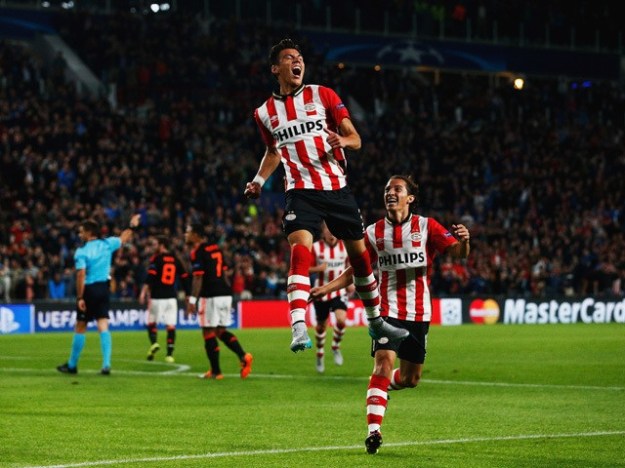
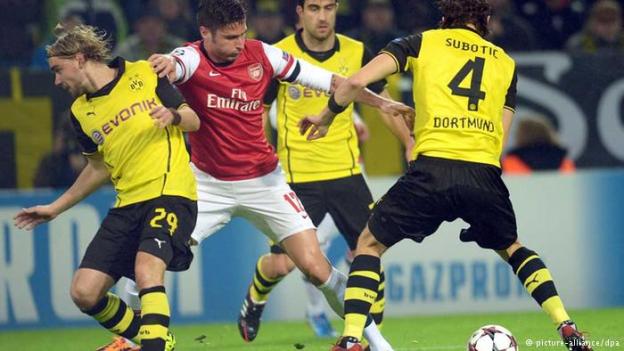
“There was a twist to the Champions League group stage draw in Monaco Thursday. UEFA’s new seeding regulations meant that only reigning champions would be picked from Pot 1, leaving some dangerous contenders in the lower pots. And so it proved, as Manchester City was drawn with Juventus and Sevilla while Real Madrid drew Paris Saint-Germain and Shakhtar Donetsk. The draw resulted in some intriguing individual storylines, powerhouses going up against one another and the first steps on the road to the San Siro.” SI (Video)
Category Archives: Holland
When They Mattered: Ajax and its failed chance at a second dynasty

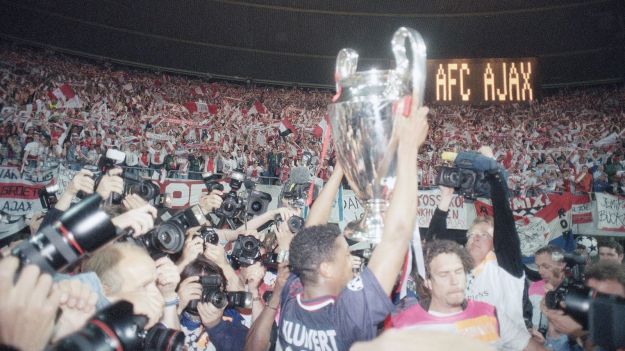
“The high point was also the tipping point. The slow and torturous decline began almost at the very moment 18-year-old Patrick Kluivert’s 84th-minute toe-poke skittered past Sebastiano Rossi and into AC Milan’s net to win the 1994-95 Champions League, whereupon the teenaged striker wheeled away as he twisted his jersey around on his torso so everybody could see real well.” Fusion (Video)
Rafeal van der Vaart needs Real Betis; Real Betis needs Rafael van der Vaart
“Dolores travelled 80 miles up the E-5 autovia from Chiclana de la Frontera to Seville. She wanted to be at Real Betis’s Bentio Villamarín stadium when it presented its new signing. She wasn’t the only one, either. Around 4,000 fans, either without jobs, on their lunch break or skipping work, also made their way towards Avenida de Heliópolis, clad in green and white and looking forward to catching a glimpse of Rafael van der Vaart. Van der Vaart’s road to Betis has seen stops at Ajax, Hamburg, Real Madrid and Tottenham. The midfielder who has made 109 appearances for the Netherlands’ national team describes himself as a street fighter, someone desperate to enjoy himself on the pitch and entertain fans.” Fusion
Tactical Philosophy: Frank De Boer
“While this website has made it’s name focusing on the lesser known youth of this beautiful sport, and combined it with a tinge of tactical flavour meant for the football enthusiast, we found a large gap to be exploited in terms of combining the two. This mini-series thus focuses on young managers (below the age of 45) and their tactical philosophies, deriving what got them here and where they could go. In this piece, Rishad Bharucha focuses on the Ajax’ highly successful manager, Frank De Boer.” Outside of the Boot
Talent Radar Player Rankings: Top 10 Young Forwards in 2014/15
“In the past two weeks, we’ve updated our Talent Radar player rankings in the Goalkeepers, Defenders and Midfielders section. We’re now left with this season’s final issue of the Forward Rankings. It’s common tendency that players playing up front attract the most attention, from both fans and clubs. Many of the names on this list will be the subject of transfer speculation in the coming months. We’re going to leave any kind of speculation surrounding these players out of this and give you an unbiased judgement of how the players have done this past season to let you know the reason for the hype around them.” Outside of the Boot
What if they met? Brazil, Netherlands national teams in the early 1970s
“What if? It’s a question so often posed in the realm of sports. What if a certain player wasn’t suspended, traded or hurt? What if a controversial call went another way? What if a coach had called a different play? What if a certain matchup had occurred at a different time. That last question, above the others, has piqued our interest. In light of Floyd Mayweather finally facing Manny Pacquiao this Saturday in Las Vegas, years after both boxing greats were widely considered to be at their absolute best, it got us wondering: What if two soccer titans of their era who never got the chance to meet at their peaks actually did? All week in the build-up to Mayweather-Pacquiao, Planet Fútbol will take a historical deep dive into some of the greatest teams in soccer history, why they ultimately never got the chance to meet their equals and what might have happened if they had.” SI – Jonathan Wilson (Video)
Scout Report | Anwar El Ghazi: Ajax’s proficient winger
“It’s an undeniable fact that Ajax has one of the best football academies and youth teams in world football. The Dutch club has had many talented youngsters in the club’s academy who turned out to be some of the best players to graze the surface of the earth: the names of Dennis Bergkamp, Marco Van Basten, Johan Cruyff and many more. One of the recent academy graduates is now considered as an upcoming hot prospect in football. He is the 19 year-old wonderkid, Anwar El Ghazi.” Outside of the Boot
Team Focus: Champions PSV Have Cocu to Thank For Eredivisie Success

“It is often said a great player doesn’t always make a good manager, which neatly brings us to events in Eindhoven where Phillip Cocu – widely regarded as one of Europe’s brightest young coaching talents – is proving the old adage wrong and more importantly starting to realise his potential. Guiding PSV to their 22nd championship – their first since 2008 and secured with three games remaining – has been emphatic as any of those won during the halcyon days of Guus Hiddink, who must be proud of his protégé. Getting there, when you consider the resources at his disposal, was only a matter of time, however it shouldn’t reduce his coaching prowess to a mere afterthought. He is every part the reason behind their resurgence.” Who Scored?
Netherlands and Spain’s recent World Cup meetings have grown a rivalry
“Most football rivalries originate from geographic or political concerns, but the most intriguing are often those based purely upon football. In this respect, the 2010 and 2014 World Cup matches between the Netherlands and Spain, who meet again in Amsterdam on Tuesday night, have been significant enough to form a brand-new rivalry on the international stage. Before the 2010 final, these two countries had never previously met at a major tournament. They’d faced one another in friendlies, in qualifiers and in the Olympic Games of 1920, but there were no previous encounters to set the scene, to provide a backdrop for a chance of competitive revenge.” ESPN – Michael Cox
Ranking the Top 10 Young Midfielders so far in 2014-15: Sterling moves up as Liverpool begin late season resurgence

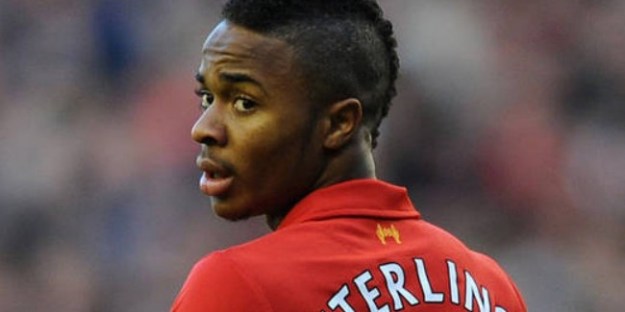
“After another minor break, the Talent Radar Player Rankings return, with the men in the middle of the park the focus of our attentions. A lot has changed since the last time the rankings were out, Borussia Dortmund’s fall was only just starting, Liverpool were still in the Champions League and the Italian Serie A race actually looked interesting. While the rankings itself saw Marco Verratti on top, with a couple of challengers looking to dethrone him. Here’s who continue to impress us as we move into the business end of the football season.” Outside of the Boot
Tactical Analysis: PSV 1-3 Ajax | Ajax win despite PSV dominance
“Usually when the last ‘De Topper’ of the season is played, it’s often a title decider, but not this year. PSV came into the game with 14-point lead, and most pundits had already sent the title to Eindhoven before the game. Ajax knew if there should be even a little glimmer of hope, then they needed to claim all 3 points at the Phillips Stadium this Sunday. In a game dominated by PSV, Ajax managed to grab a 3-1 victory, and maybe put a little bit of doubt into the heads of the Eindhoven players.” Outside of the Boot
Player Focus: Kahn and Van der Sar Inspiring Cillessen’s Progression at Ajax
“It’s somewhat fitting that the loneliest position in football is identified with the number one. In some circles the role has transcended beyond traditional convention, but one contemporary exponent is following a well-trodden path. Possession is nine-tenths of the law, and at this moment in time the Oranje’s goalkeeper jersey belongs to Jasper Cillessen; it’s been that way for the last 16 months. It’s a testament given the many challengers breathing down his neck and ready to pounce, but so far he’s shown no signs of resting on his laurels. Competition after all breeds excellence.” Who Scored
The Velvet Revolution
“‘This isn’t Ajax anymore,’ Johan Cruyff wrote in his De Telegraaf column in September 2010, venting his frustration after Ajax’s Champions League performance against Real Madrid – a desperate 2-0 defeat at the Estadio Santiago Bernabéu. ‘Let me get to the point: this Ajax is even worse than the team from before Rinus Michels’s arrival in 1965.’” Blizzard
Manchester City finds way through, Barca tops PSG in Champions League

“The final day of the Champions League group stage saw Manchester City produce probably the best Champions league performance in its history to book its place in the last 16 for only the second time. Barcelona outlasted PSG for first in their group behind goals from Lionel Messi, Neymar and Luis Suarez, and Schalke 04 also secured its place in the knockout phase on a night when John Obi Mikel broke a long-standing personal drought.” SI – Jonathan Wilson
Ranking the Top 10 Young Forwards so far in 2014-15: Depay & Alcacer swap positions
“Our Talent Radar Player Rankings, along-with our Talent Radar Team of the Week documents the progress of youngsters across Europe’s top six leagues, with those featuring in these regular pieces, eventually being recognised in our end of season Talent Radar Young Player Awards and 100 Best Young Players to Watch list. Read this document for all your queries on Talent Radar and explanation of the features under it.” Outside of the Boot
Checking In on Europe’s World Cup Heavyweights: What’s New in the Old World?
“… But guess what? We’ve got another international break on our hands, so there’s no club soccer until next weekend. And since it’s the last such intermission of the year, let’s check in with your favorite European World Cup squads as they’re about to put a bow on 2014.” Grantland
Vela, Tevez, crucial qualifiers headline 2014’s last international window
“The final international fixture window of 2014 features the long-awaited international return of some household names, crucial qualifiers on multiple continents and handfuls of intriguing friendlies. Here are 10 things to watch over the next week…” SI – Jonathan Wilson
The sad reality of the Netherlands and Mexico: There’s no revenge to be had in international friendlies
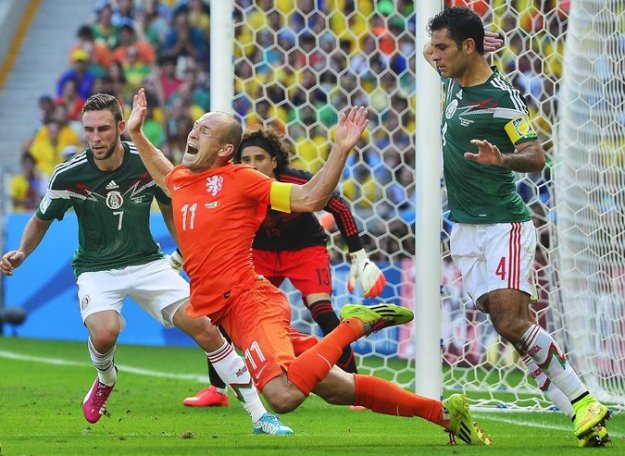
“Here’s the riff: After surprisingly making it out of their World Cup group, playing some highly entertaining, attacking soccer along the way, Mexico faced the Netherlands in the Round of 16 in Fortaleza, Brazil. For much of the game, Mexico more than held their own. In fact, shortly after the half, Mexico took a 1-0 lead off of a lovely finish from Giovani Dos Santos. But two late Dutch goals ended Mexico’s dreams of advancing. To make matters worse, the Netherlands’ equalizer came from a rather dubious penalty called on many people’s favorite villain, Rafa Márquez, against the obvious culprit, Arjen Robben. For many, the final result was compromised. But life goes on. Or does it?” Soccer Gods
Barcelona policy switch means they risk becoming just another superclub
“Barcelona’s peak under Pep Guardiola probably came at Wembley in the 2011 Champions League final. It was not only the performance, hugely impressive though it was, but the sense this was a dynasty that could last for an awfully long time. Barça beat Manchester United 3-1 to win the competition for the second time in three years – having missed out in the middle season because of a combination of extraordinary resilience from José Mourinho’s Internazionale, an Icelandic volcano and ill fortune. With a long-established philosophy and much-admired academy, they seemed to have the ideal platform for success.” Guardian – Jonathan Wilson
Mid-Group Stage Champions League Update

“We’re halfway through the 2014-15 Champions League group stage. The UCL is one of the greatest tournaments in all of sports because we get a chance to catch our breath for a couple weeks after every matchday. So let’s do so. Some groups are mostly decided, others hang in the balance. Who will go through in each four-team sector? To the groups!” Center Circle
Champions League: Bayern Munich thrashes Roma amid goal bonanza

“Tuesday’s Champions League action brought thumping wins for Chelsea, Shakhtar Donetsk and, perhaps most impressively, Bayern Munich, who hammered Roma 7-1 at Stadio Olimpico. Manchester City’s misery went on as it threw away a lead to draw in Moscow, while there was another defeat for Athletic Bilbao away to Porto. Here is what caught our eye from the day’s games, when a Champions-League-record 40 goals were scored…” SI – Jonathan Wilson
Robben impressed by rampant Bayern
“Arjen Robben, Bayern forward. Afterwards it’s always easy to talk. I’m still convinced Roma have a very good team – they’ve shown that this season – but we should pay a big compliment to us, to all the players, but also to the coaching staff who prepared this game in the way we played, the way we created chances and scored goals. There were some great goals tonight. We played a little different tonight. Everybody has seen it, but it’s not good to talk about our tactics and how we want to play. Everybody can see it and watch the match to analyse us. But a big compliment to the team and the tactics.” UEFA
Team Focus: Ajax Should Look Back to Past Formations in Order to Move Forward

“1984 is not only a great novel but also the year Johan Cruyff retired as a professional footballer. His decision to go into management forever altered the fortunes of his boyhood club Ajax and other love FC Barcelona – both competitively meeting for a third time on Tuesday – no individual has made a greater impact in both disciplines. Frank de Boer, with the way things are developing, ought to take a leaf out of Cruyff’s book and implement a 3-4-3 diamond or 3-1-2-1-3. Rinus Michels – whose ‘1-3-3-3’ system was the blueprint from which 3-1-2-1-3 derived – once described it as ‘spectacular but risky’. And that’s what’s missing from the Netherlands’ sole Champions League participant, a sense of vitality. The players seem to be just going through the motions, suffocated in the more rigid 4-3-3, when it is glaringly obvious – looking at the brand of football De Boer champions and the personnel at his disposal – that the Amsterdammers are better off going back to the future by deploying a 3-1-2-1-3.” Who Scored?
What’s the reason behind PSG’s current struggles?
“Usually clubs with wealthy benefactors aren’t simply attempting to buy success. They’re also attempting to buy style — and it’s extremely difficult to achieve both. … Paris Saint-Germain is a peculiar case, because there doesn’t seem to be any emphasis upon playing beautiful football. Since QSI bought the club in 2011, the results have been excellent — PSG have won the title for the past two seasons and have performed reasonably well in Europe, too.” ESPN – Michael Cox
Assessing Dutch football’s European chances
“With both the Champions League and Europa League group stages kicking off this week, what impact will Dutch sides AFC Ajax, Feyenoord Rotterdam and PSV Eindhoven make in their respective competitions? First things first: How did they get there? Ajax have made the groups this year by winning the Eredivise, as first place automatically qualify for the Champions League. Last season’s second place Feyenoord had a chance to qualify for the Champions League, but crashed out to Turkish giants Besiktas; they lost 5-2 on aggregate. Therefore Feyenoord had a chance to enter the Europa League, in a qualifying match against FC Zorya Luhansk, who Feyenoord defeated 5-4 on aggregate.” backpagefootball
Johan Cruyff: How will ‘militaristic’ Louis van Gaal manage all the egos at Manchester United?

“Johan Cruyff has come home to Amsterdam and, on a cloudy day in the old city where he was born, grew up and made his professional debut for Ajax 50 years ago this November, he moves with good-humoured elegance through the crowds calling out his name and trying to touch him. At the Olympic Stadium, walking around an arena which has been taken over for the day by his Foundation, this is an exercise in the familiar art of being Johan Cruyff. The 67-year-old reacts to the adoration, and even being cuddled by a grown man dressed up as a ‘Cruyffie’ mascot, with a wry smile. This is how it feels to have been a football icon for five decades.” Guardian
Dočkal celebrates Czechs’ Netherlands success
“Bořek Dočkal, Czech Republic midfielder. It is great, of course, but we definitely expected a really difficult game. We met a team that got to the semis in Brazil, they showed their quality. So we just tried to defend well and wait for counterattacks. It is a great victory for us. [For my opening goal] I received a good ball from our striker. I didn’t want to lose the ball, so I just tried to shoot and hit the top corner, so it was one of the best goals of my life.” UEFA
World Cup 2014 best XI

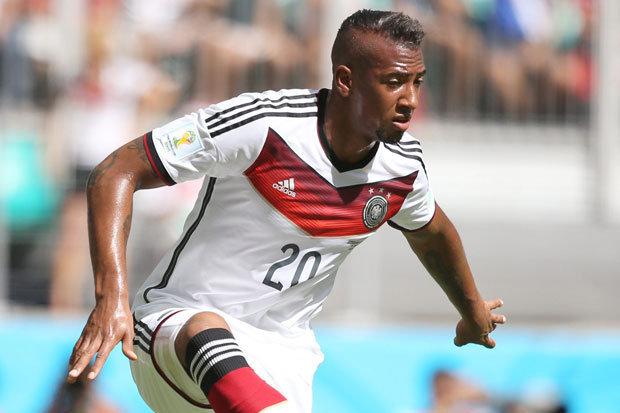
“… Jerome Boateng, Germany. Perhaps a controversial choice – Philipp Lahm is widely regarded as the best right-back of his generation, and captained Germany to victory. But Lahm spent the first couple of games in the centre of midfield, and didn’t play particularly well, making careless mistakes against both Portugal and Ghana. Had he played the entire tournament at right-back – a move which made Germany a better side – he’d be a shoo-in. Boateng, however, played well throughout the group stage at right-back – in the game against USA, for example, he was the man who led the attacking with some dangerous bursts and good crosses.” Zonal Marking
Brazil’s World Cup Was Never Simple, Always Irresistible
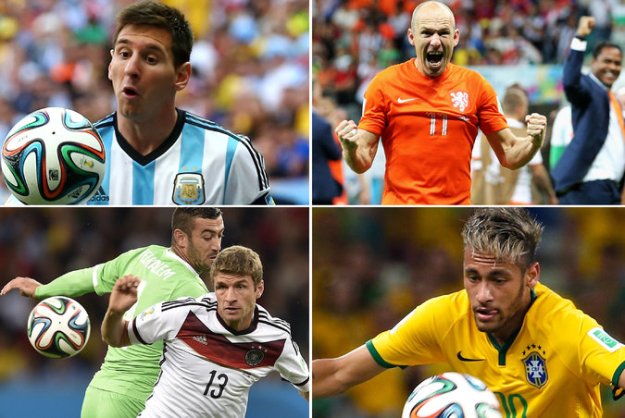
“They had a soccer tournament, and the best team won. If only the 2014 World Cup in Brazil were as simple as that. Let’s look backward—before Germany’s extra-time victory over Argentina in the final, before the host country’s agonizing, indelible 7-1 loss in the semifinals, before the individual greatness of Lionel Messi, Miroslav Klose, James Rodríguez, Neymar Jr. and Tim Howard. Before 20,000 fans jammed Grant Park in Chicago to watch the U.S. team. Before Luis Suárez launched his infamous incisors. Let’s go back to the beginning, to the original idea: a World Cup in Brazil.” WSJ
World Cup retrospective

“Well that was fun, wasn’t it? Previous World Cups have kind of come and gone from my consciousness: I was 8 for Italia ’90 and have very little recollection of it at all; I remember snatches from USA ’94, largely a grudging admiration for Taffarel; France ’98, a blur of blue and enormous jealousy that my sister was in Paris on a French exchange for the final; Japan and South Korea ’02, drunkenly going to first year university exams having watched games that started at 7, and manically cheering Senegal as my sweepstake team, especially after that win; and Germany ’10, revelling in that Spanish team. But, having started to write about football and, more importantly in many ways, become part of a community who talk and think about football, this is the first World Cup where I’ve really inhaled it, really been carried by the highs and lows of such a glorious celebration of football. So I thought I’d do a quick look-back. A good place to start would be the piece I did in The Football Pink: Issue 4 – The World Cup Edition, which was a group-by-group preview. And boy did I get some things wrong.” Put Niels In Goal
amazon: The Football Pink: Issue 4 – The World Cup Edition [Kindle Edition] $1.50, amazon: £0.97
World Cup 2014: BBC pundits pick their best moments in Brazil
“After 32 days, 64 games and 171 goals, there was only one winner. Germany are the new world champions after grabbing the glory at the 2014 World Cup in Brazil. The tournament will be remembered for its exciting games and spectacular goals but also some of the biggest shocks of recent times, with the hosts Brazil and defending champions Spain both suffering humiliating defeats. England, meanwhile, only lasted eight days and two games before being eliminated. BBC Sport’s TV and radio football presenters and pundits look back on the action and choose their best goal, best player and most memorable moment of the tournament, before considering how far away England are from being contenders.” BBC
2014 FIFA World Cup Awards: Best Player, Best Young Player, Best XI and many more
“With the World Cup drawn to a close, many are left disappointed while others celebrate their achievements. Germany won the World Cup, but many other individuals & teams left admirers in their wake. While FIFA gave out it’s individual honours with Messi the choice for Golden Ball particularly bewildering football enthusiasts. We at Outside of the Boot thought long & hard before deciding our choices which might just be a bit more fair & rational than FIFA’s choices! There are some surprises, and also occasions where the hipsters may not be pleased. Nevertheless, here are the best performers at the World Cup divided into Primary Awards, Talent Radar Awards and Secondary Awards.” Outside of the Boot
Die Größte Show Der Welt
“It’s staring at me, that wallchart. It’s a little bit frayed and crumpled now since the move back from Greece and after finding its way around Jesse’s sticky fingers and teething gums. Since Sunday, I haven’t been able to summon the requisite will to complete the final vacant space. The one that states that Germany beat Argentina, one-nil, AET. It’s the finality that daunts me; the knowledge that once complete it becomes a historical artefact, no more a tantalising map of an unknown future. All those games, all those goals, all those hours. Gone forever.” Dispatches From A Football Sofa
World Cup Spirits Dampened, Brazilians Show Waning Support for 4th-Place Team
“The yellow-clad fans arrived at Estádio Nacional later, more quietly and with far less face paint than usual. And no wonder: They were attending the World Cup’s third-place game, a match that newspapers around the world had called ‘a meaningless exercise,’ ‘a pointless sideshow’ and ‘the final insult.’ André Gonçalves, 48, an accountant in Brasília who was attending his fifth game in the stadium with his family, was struck by the difference in the scene outside the stadium Saturday afternoon before the Netherlands played Brazil. ‘This silence, this calm,’ he said. ‘It conveys sadness.’ André Galvão, a reporter for TV Bandeirantes, was having trouble finding the usual energy from Brazil fans.” NY Times
World Cup 2014: Goals, drama & that bite – is Brazil the best?

“Record goals, Suarez gnaws, that James Rodriguez strike, passion, drama, colourful fashion – what a World Cup this has been. It was a tournament that started with a bang as the hosts came from behind to beat Croatia, and has since delivered fantastic entertainment almost game after game. Here, BBC Sport’s chief football writer Phil McNulty and the BBC’s much-loved and most experienced commentator John Motson consider whether this has been the best ever World Cup.” BBC
World Cup Tactical Analysis | Netherlands 0-0 Argentina ( 2-4 pens ) : Netherlands’ discipline and Argentina’s narrow midfield
“After the ridiculously one-sided affair in the first semi-final, the second was always going to be a tight game. After seeing hosts Brazil blown away by Germany, both sides were set-up to primarily not concede. Something that they were successful in not only for the course of the 90′ but through extra time as well. Argentina was labelled as a lot of people’s favourites but are yet to convincingly stamp their authority on the tournament as front-runners. It is a strange accusation to level at the finalists of the tournament and yet there it is. They’ve relied on individual ability on multiple occasions in this tournament and will do so once again this Sunday. While the Dutch too have been beholden to Arjen Robben’s exploits to a certain degree, their progression has been characterized by multiple rabbits being pulled out of the hat by Van Gaal and his staff.” Outside of the Boot
Let’s Get Metaphysical
“Argentina and the Netherlands played yesterday’s second semifinal. That’s as much as should be said about the match, which forced us to appreciate what this World Cup has been, while remembering what it could have been. Throughout 120 minutes of football, there was first, last, and above all an air of safety that had been refreshingly absent from most of the games thus far—and with that absence came gifts of goals and good play. But yesterday, there was so much at stake: safe passage to a World Cup final. Since both teams are middling, professional, and graced by the presence of once-in-a-lifetime, left-footed talents, they took no risks—no playing the ball patiently through the midfield, no attempts at a tactical surprise. It was a game of chicken, and a penalty kick shoot-out was the inevitable collision.” The Paris Review
Brazil’s nightmare gets worse: Argentina to play for World Cup title

“A bad week for Brazil just got worse. There’s not much that could make the humiliation of Tuesday’s 7-1 defeat to Germany feel even grimmer, but Argentina winning the World Cup at the Maracana would be unbearable. The holiest of the holies has already been defiled once, by Uruguay in 1950, but that would be nothing to the desecration of seeing Lionel Messi and his side celebrating there on Sunday. Whether that’s likely is another matter. Argentina will go into the final as the underdog, and understandably so, given the respective performances in the semifinals, but it will not capitulate against Germany as Brazil did. This may be a limited side, but it is one with great character and spirit, a cold-eyed willingness to get the job done.” SI – Jonathan Wilson
Argentina 0-0 Netherlands: Argentina through on penalties
“Sergio Romero was the hero after an extremely uneventful 120 minutes. Alejandro Sabella brought back Marcos Rojo after suspension, while Enzo Perez deputised for the injured Angel di Maria. Louis van Gaal was able to bring back Nigel de Jong after injury, meaning Daley Blind moved across to wing-back in place of Memphis Depay. There was obviously great tension here, but not much happened – of the 62 games at this World Cup so far, this game featured the lowest shot rate, and the lowest percentage of touches in the opposition third.” Zonal Marking
After Long Stalemate, Argentina Breaks Through in Shootout
“Regulation and extra time brought 120 minutes of scoreless exasperation in a World Cup semifinal on Wednesday that was by turns tense, cautious, clumsy, gripping and stubbornly unyielding. There was little space to move, few chances to score. Sometimes the match was as dreary as the misty evening chill. If it possessed any beauty, it was not in gracefulness but in stark, struggling exertion. And finally, when grind and strain and labor could not bring a resolution, whimsy and caprice did. Argentina defeated the Netherlands by 4-2 on penalty kicks and advanced to Sunday’s final against Germany.” NY Times
Netherlands 0 Argentina 0 (Argentina win 4-2 on penalties)
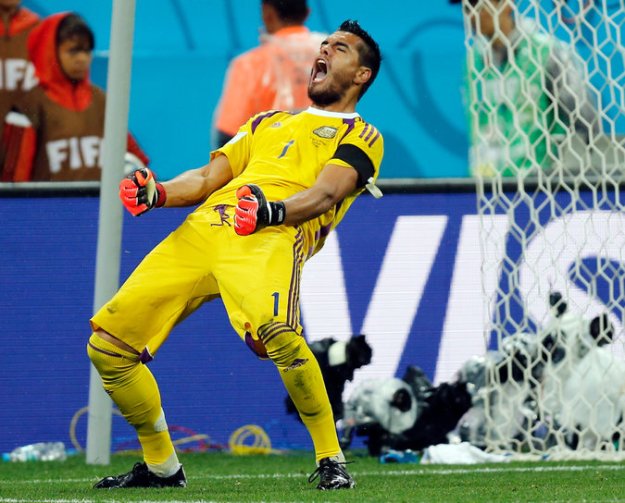
“Argentina will meet Germany in Sunday’s World Cup final at the Maracana after winning a penalty shootout to eliminate the Netherlands.After 120 tedious and goalless minutes that were in stark contrast to the spectacular shock of the first semi-final between Brazil and the Germans, Argentina prevailed and a repeat of the 1986 and 1990 finals – when they played West Germany – will be played out in Rio. Goalkeeper Sergio Romero was the hero with penalty saves from Ron Vlaar and Wesley Sneijder, while opposite number Jasper Cillessen was unable to repeat the feats of his deputy, Tim Krul, in the quarter-final win against Costa Rica.” BBC
World Cup Pass & Move: Semi-Charmed Lives
“Two semifinal matches, one penalty shootout, one plain old one-sided shootout. As the World Cup draws to a close, we look at some of the characters who made the semifinal round so wonderful, weird, glorious, ponderous, and heartbreaking.” Grantland
Is Arjen Robben a Jerk, or Does He Just Suffer From Jerk Face Syndrome?
“Name: Arjen Robben Home country: Netherlands Known for: Cutting inside and shooting with his left foot, diving, apologizing for diving, diving after apologizing for diving, promising not to dive again, diving after promising not to dive again, inspiring memes, Jerk Face. Why he might be a jerk: He looks like a pretty big jerk. The main manifestation of this jerkiness is the way his entire body explodes in apparent death throes every time he’s touched or nearly touched in the penalty area. His theatrics at the 2014 World Cup have set off this year’s version of the perennial hand-wringing over diving and whether it ruins soccer.” Slate (Video)
Every Sport (Including Baseball!) Has Its Version of the Dive
“One very sunny day on a pitch somewhere in America near sprawling farms and a single loitering country road, my college soccer team was playing a tight match. We were getting kicked so high into the air we must have looked from the distance like maroon grasshoppers leaping over some malicious kids’ boots. The referee wasn’t calling anything. And, as tends to be the case when that happens, the tackles got worse and worse. But we were all doing the American thing, playing through it, shaking everything off, or trying to play through it and shake everything off. Yet it wasn’t minutes after I said to the referee that someone was going to get hurt that our best player had his tibia and fibula snapped in two, right in front of me. I remember the sound of the bones breaking: I remember his scream and then his screams and then the silence.” New Republic
Semifinals Remain an Inner Sanctum Until Further Notice

“The World Cup, ultimately, is a highly exclusive club. To be sure, the World Cup lets in hoi polloi to give a glimmer of hope and inclusion, but the inner sanctum is usually sealed shut by the semifinals, sending home the pretenders. Not our kind. Check out the four semifinalists this time around. The outsider, the long shot, is merely a three-time finalist, respected all over the world for its Total Football, the open, offensive style that has influenced Spain, the nation; Barcelona, the club; and other appealing offensive systems. Yes, the Netherlands, destiny’s darling, is known universally as the greatest soccer nation never to win the World Cup. All over the world, the huddled masses like the United States, yearning to be significant, are asking themselves, What does it take to crash that club, to become a regular, a nation that feels at home in the semifinals? How do countries learn that self-assurance that wins dubious referee calls and takes over game-deciding shootouts?” NY Times
World Cup Tactical Analysis : Netherlands 0–0 Costa Rica (4-3 pens) | The Dutch exploit the right side and Krul enters the fray
“The Netherlands secured a stirring victory over Costa Rica to earn a place in the semi-finals of the World Cup with a win on penalties to end the minnows’ reverie. Van Gaal picked a very offensive line-up to start the game, with an almost in-existent midfield but a resilient defence and a luscious attack. Costa Rica took a somewhat pragmatic approach for the occasion in contrast, and the two sides largely squared each other, with the Ticos frustrating their more eminent opponents for much of the game. Van Gaal then made the intrepid decision to replace Jasper Cillessen with Tim Krul ahead of the penalty shootout, and the manoeuvre paid off as the Newcastle keeper saved from Bryan Ruiz to put his side through.” Outside of the Boot
Netherlands 0-0 Costa Rica: Oranje progress after van Gaal’s late keeper switch
“The Dutch dominated but couldn’t find a way past Keylor Navas – then finally broke their penalty shoot-out curse. Louis van Gaal played a more aggressive wing-back pairing than against Mexico, with full-back Paul Verhaegh making way for winger Memphis Depay. Costa Rica manager Jorge Luis Pinto was without suspended centre-back Oscar Duarte, so Johnny Acosta came into the side. In a long, drawn out and – eventually – dramatic 120 minutes, the Dutch dominated but were disappointing in the final third.” Zonal Marking
A Late Entry Helps the Dutch Avert an Exit

“With a World Cup quarterfinal in the closing moments of extra time on Saturday, Louis van Gaal, the coach of the Netherlands, made a move that was as bold as it was rare. As penalty kicks loomed in a 0-0 game, he replaced his starting goalkeeper, Jasper Cillessen, with Tim Krul, who had not played in the tournament but was confident to the point of haughtiness in a 4-3 victory in the shootout. After growing frustrated against Costa Rica, which seemed mostly content to sit back, surrender possession and play for penalty kicks, the Dutch became assured and clinical. The Netherlands made all of its penalty kicks, and the 6-foot-4 Krul made two dramatic saves after appearing to try to intimidate the Costa Ricans.” NY Times
Netherlands 0 Costa Rica 0 (4-3)
“Goalkeeper Tim Krul came off the bench late in extra time and saved two penalties as the Netherlands beat Costa Rica in a shootout to set up a World Cup semi-final against Argentina. Newcastle’s Krul saved from Bryan Ruiz and Michael Umana to send the Dutch through after the game finished 0-0. Wesley Sneijder had hit the woodwork twice for the Dutch, while Robin van Persie’s shot was turned onto the bar. They face Argentina, who beat Belgium, in Sao Paulo on Wednesday in the semis.” BBC
World Cup Tactical Analysis | Netherlands 2-1 Mexico: Oranje win battle of individuals
“Coming into the tournament, this was a clash that a lot of people didn’t expect to see. Netherlands weren’t really looked at as favourites in the way they are now, with many people doubting their ability to get out of the group. The same doubts were cast over Mexico, with people looking at Croatia as a team that could cause an upset or two. However, both these teams really overwhelmed all expectations in the group phase. Mexico earned a creditable draw against Brazil, while easing past their equals, Croatia. Netherlands stunned the world with their win over Spain and won all their group games to set up this clash.” Outside of the Boot
Netherlands 2-1 Mexico: Mexico dominate the start, but Van Gaal changes help the Dutch back into the game

“The Netherlands produced a dramatic late turnaround, meaning Mexico were eliminated in the second round for the sixth consecutive World Cup. Louis van Gaal welcomed back Robin van Persie after suspension, while Paul Verhaegh came into the side as the right-wing-back. Miguel Herrera was forced to cope without Jose Vazquez, who had been excellent throughout the group stage, so Carlos Salcido played the holding role. Mexico were clearly superior until they went ahead, then became too passive and the Dutch rallied to create a number of goalscoring chances.” Zonal Marking
This Time, the Dutch Did Not Capitulate in Fortaleza
“Before it was Fortaleza, it was the Dutch stronghold of Schoonenborch—the beautiful city. This was, it’s true, three hundred and seventy-odd years ago when the West India Company took north-east Brazil from the Portuguese, renamed it New Holland and then lost it again to the original colonialists in 1650s. Not much remains of the Dutch tropical moment in South America—the weirdly hallucinatory paintings of Frans Post, complete with sultry stillness and the occasional tapir. Even the old Pernambuco synagogue, survivors of the Inquisition finding a Dutch refuge in Brazil, got torn down in the last century. For the Dutch there was an acclimatization problem; the Company hard-pressed, over-stretched. And disinclined to put a hand on New Spain to the north. And so it was for much of today’s game: the Dutch battle plan, such as it was, wilting in the brutal heat. Both managers sported ties of their respective colors, though van Gaal’s is more a peach than an orange and as the game went on he wore it with increasing discomfort.” New Republic
Dutch Mount Dramatic Rally With Theatrical Fall
“Mexico’s coach, Miguel Herrera, has become an icon during this World Cup for his impassioned exhortations in front of the team bench. Herrera has stomped and stamped, whirled and whipped, flailed and frothed over everything from referee decisions to near misses to, most notably, goals scored by his players. Among the countless Internet tributes to Herrera is one delightful concoction in which Herrera’s wild gesticulations result in a violent thunderstorm.” NY Times
Five Burning Questions for the World Cup Knockout Rounds
“I am here to tell you about fire. The group stage of the 2014 World Cup was one of the most spectacular phases of a soccer tournament in recent memory. We’ve had torrential rains. We’ve had jungle heat. We’ve had moths the size of magazines. We’ve had wild upsets and crushing defeats; we’ve toppled the entire world order. We’ve seen more goals than in any major conflict since at least the French Revolution. And now — at last — this tournament is about to get serious.” Grantland
What we learned in the group stage
“Footballers are known for spouting clichés whenever possible, and when Marcelo was asked to summarise Brazil’s goalless draw against Mexico in the second round of group games, he immediately responded with a classic. ‘At the World Cup,’ he began, ‘there is no easy game.’ Bingo! There are no easy games at the World Cup, despite the fact that some teams are drawing upon the best players in the world, and others are selecting footballers plying their trade in second divisions across Europe. The World Cup sees the greatest players on the greatest stage, but sometimes also features the greatest (apparent) mismatches too. Argentina against Iran? How will the scoreboard cope?” ESPN – Michael Cox
The great Dutch football tradition
“When I arrived in the Netherlands in 1976, I was six years old and had never previously heard of the country. My father just happened to have taken a job there. We moved into a typical small Dutch terraced house, with big front windows through which passers-by could peer to make sure nothing untoward was happening inside. On our first Dutch evening, my brother and I ventured on to the street to meet the other children. They greeted us by singing what were probably the only English words they knew: ‘Crazy boys!’ But we soon became regulars in the street’s daily football match. It turned out that we had landed in the middle of a golden age. In 1974 Holland had reached the World Cup final playing glorious passing football. In 1978 they got there again. And the present Dutch team, which faces Mexico in the second round of the World Cup on Sunday, is in that tradition. It isn’t as good, yet it won its three group games. Holland’s football team may be the last surviving unmistakably Dutch cultural product.” FT – Simon Kuper
Shades of Oranje
“France ’98 remains the standard for World Cups in my lifetime. The number of great players in their prime, the quality of the games in the knockout rounds, the last-second drama of the now (thankfully) abolished Golden Goal—a rule by which the first team to score a goal in extra time won—it all proved irresistible. France as a nation had turned to embrace the right, and up had risen the National Front; nevertheless, people traveled in happy droves to spend days, if not weeks, in their dream of Romantic France. During those June days, football flourished under what should have been a crushing paradox of love and hate, more felt than fully understood.” The Paris Review
World Cup 2014: group stage, day 12. NETHERLANDS 2-0 CHILE. SPAIN 3-0 AUSTRALIA. MEXICO 3-1 CROATIA. BRAZIL 4-1 CAMEROON.
“… Mexico would have been happy with the draw – but were the better side for long periods, and deserved the victory. Croatia wingers v Mexican wing-backs. This was always likely to be the key battle, considering both Mexico’s previous opponents had problems containing their wing-backs. But the Croatian wingers had been extremely impressive in terms of their work rate and discipline in this tournament, and had constantly looked the most likely players to find the target. Could they pin back the Mexico wing-backs, or find space in behind them?” Zonal Marking
World Cup Tactical Analysis | Netherlands 2 – 0 Chile: Dutch successful on counter
“With both teams already qualified for the knockout stages, this match would decide which team would finish top and which team would have to be content with second. While the winner would gain first place outright, a draw would be enough for the Dutch to qualify first on goal difference. Both teams knew the importance of first place, with the second placed team most likely facing the daunting possibility of a round of 16 match-up with hosts Brazil. Even though the Netherlands beat Brazil in the quarter-finals in 2010, Brazil at home are a different proposition. Chile, of course, are well acquainted with their South American counterparts; in their last two World Cups (1998 and 2010), Chile were knocked out in the Round of 16 by Brazil. Neither team wanted to lose, setting up a cagey, tactical battle.” Outside of the Boot
World Cup 2014: Netherlands Defeats Chile, 2-0, to Win Group B
“Both the Netherlands and Chile entered the final match of group play knowing they were through to the knockout stage, but the Dutch are moving on as the champions of Group B thanks to 2-0 victory. The Chileans had their chances, controlling much of the possession and play early in the first half, but after the 35th minute it felt very much like the Netherlands’ game. The first goal didn’t come until the 76th minute, on a header by Leroy Fer. The Dutch offered a final exclamation point in stoppage time, when Arjen Robben raced up the left side and sent a cross to Memphis Depay.” NY Times
Group B – ESPN
Laid Bare
“The same day that, in Chile, more than twenty previously unknown works by Pablo Neruda were discovered in the most unlikely of places—a drawer—Spain thought it was a good idea to continue their monarchy by changing the constitution so the prince could replace the abdicating king. I rejoiced at one and shrugged at the other. Fittingly, Chile beat Spain 2-0 yesterday. Chile showed the extent to which Spain is past its sell-by date. Spain has become a product, a collection of starry names to sell to a depressed populace.” The Paris Review
World Cup 2014: group stage, day 7. NETHERLANDS 3-2 AUSTRALIA. CHILE 2-0 SPAIN. CROATIA 4-0 CAMEROON.
“… Spain’s incredible run of success is over – they were pressed into submission by a terrifyingly energetic Chile side. Pressing with caution. Spain suffered in the first game because of the Netherlands’ intense pressing, and therefore it was obvious approach Chile would take. They switched system to replicate the Dutch 3-4-1-2, taking out their number ten Jorge Valdivia, with Francisco Silva coming into the side at the back. Chile are better at pressing than any other international side, and from the outset showed their usual high-intensity approach, closing down Spain in midfield extremely quickly.” Zonal Marking
How We Play the Game

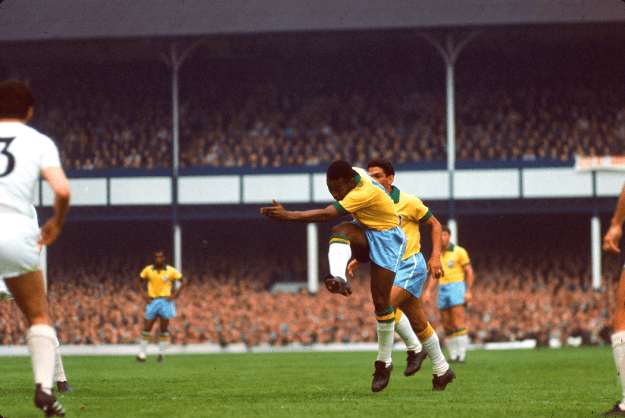
Pelé in a match at the 1966 World Cup in England.
“Every team is simply trying to score goals while preventing its opponent from doing the same. But they all seem to go about it in distinct ways, don’t they? To understand what is happening on the fields in Brazil at the World Cup, one must learn a bit about each country’s history, and literature, and music, and regionalism, and economy – not to mention bicycles and pottery. If you look closely enough at the X’s and O’s, you just might find a national poem.” NY Times
World Cup Tactical Analysis: Spain 1-5 Netherlands
“Day two of the 2014 FIFA World Cup saw the holders Spain taking on the Dutch in a highly anticipated rematch of the finalists from the last edition in South Africa. The build up to the World Cup has seen questions asked of both teams: Spain, despite their domination of the international scene in recent years, has been labeled as a fading dynasty that will fall apart with this year’s World Cup. Expectations for their opponents, the Netherlands, have also been at an all-time low as Louis Van Gaal’s men have been branded one of the worst Dutch teams to go to a World Cup. With all this being said, Spain were firm favorites ahead of the game and were expected to enjoy a comfortable win and take a commanding lead in Group B. However, the result could not have been more different.” Outside of the Boot
World Cup 2014: group stage, day 2. NETHERLANDS 5-1 SPAIN. MEXICO 1-0 CAMEROON. CHILE 3-1 AUSTRALIA.

“… A truly extraordinary game of football – Spain took the lead, but the Netherlands repeatedly breached their high defensive line and recorded a historic victory. High lines. This match was all about high defensive lines, a concept that has become a key part of both Spanish and Dutch football – the two are strongly linked, of course. At the last World Cup, barely any teams were brave with the positioning of their defensive line, instead sitting deep and allowing space in front of their defensive block. Here, the space wasn’t in midfield, where no-one had time to put their foot on the ball, but instead in behind the opposition.” Zonal Marking
The Play That Changed Holland vs. Spain
“For most of the first half of the Spain-Holland match, the defending champions had been in complete control and were up 1–0 as halftime approached. Then Robin van Persie struck in the 44th minute and turned the game upside down. … Ultimately, the first rule of defending is that you don’t let an attacker get behind you. But allowing a talented player like Van Persie to receive the ball 30 yards from goal in the middle of the field isn’t far behind. More than a tactical error, it seems that Spain’s biggest problem was Ramos’s and Pique’s execution. Notice that Pique is slightly behind the defensive line, holding Van Persie onside. If he had been in line with the rest of the defenders, RVP would have been offside. Now, it’s usually the opposite-side outside back or weak side center back who has the best view of a developing play, and so he calls the line, commanding his defensive partners in front of him to hold, step, or drop.” Fusion (Video)
Holland’s World Cup win over Spain wasn’t the return of Total Football – Louis van Gaal has created something new
” By 1661, Rembrandt had fallen on hard times. Golden Age Amsterdam was turning against the gritty, unglamorous realism of his paintings. They wanted lustre, not texture. But Rembrandt was not going to go down without a fight. And so, when he was commissioned to paint a historical scene to hang in Amsterdam Town Hall, he knew that he would be expected to produce something decorous, reverent, heroic: a bold piece full of strong colours and glorious poses, in keeping with the style of the age. The Conspiracy of Claudius Civilis, when it emerged, was none of these things. It was harsh, dimly lit, borderline disturbing. The barbarian chieftain of the title is depicted with his one blind eye not obscured in profile, but front-on, in full and queasy detail. It was one of Rembrandt’s greatest works. But it was too harrowing by far for the Amsterdam city council, who rejected it and returned it to the artist. In financial difficulties and now with a five-metre painting nobody wanted, Rembrandt was forced into the single most traumatic act that a painter can undertake.” Telegraph
Holland’s beautiful goals put the wonder back in World Cup
“Vicente del Bosque was not expecting that, and Louis van Gaal – “We had a plan but I never imagined it would work out quite so well” – was not expecting it either. Ron Vlaar, penalised for the first foul challenge after just 13 seconds, was not expecting it, and neither were the six Spain fans in replica shirts – three middle-aged couples from Valencia – who turned up a little sheepishly in a Salvador seafront restaurant on Friday evening and politely asked for a table without a view of the television. Not since the heyday of Monty Python, it appears, has anyone been quite so surprised by a Spanish inquisition.” Guardian
What If the Most Beautiful Goal of the World Cup Has Already Been Scored?
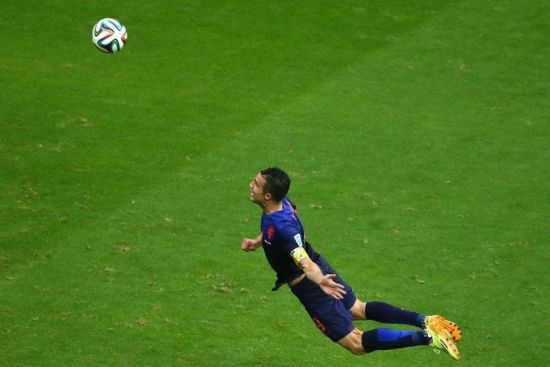
“I am sure there will be a few memorable goals during the rest of the World Cup—we’re only on day three—but the one scored by Robin van Persie of Holland against Spain to tie the game justifies the entire tournament. Those of us who wait four years for this fiesta de fútbol so that moments such as these might nourish us know full well they are few and far between. This one came early and might not be surpassed.” New Republic (Video)
Spain Was Asking for Trouble Against the Netherlands
“Spain played a high defensive line, positioning themselves well forward, near midfield. It left them vulnerable. . .” NY Times

2014 Fifa World Cup: Guide to Belgium’s Group H

Marc Wilmots
“Style & formation: Belgium gave a series of controlled and powerful displays throughout qualifying. Disciplined defensively, they are prepared to be patient but look to break with pace. A feature of their usual 4-2-3-1 system is the frequent positional interchanging between the three attacking midfielders.” BBC – Belgium, Algeria, Russia, South Korea
Memphis Depay By Adidas Foolball X Capa 90
“PSV’s Memphis Depay was confirmed in Louis van Gaal’s Netherlands squad for the World Cup earlier today, and is part of this year’s The 100. In this two-parter by adidas Football in partnership with Copa90, Depay and the people around him tell the story of a remarkable young player from his childhood in Moordrecht to the 2014 FIFA World Cup.” In Bed With Maradona (Video)
Key Battles: How to Defend

“How can defenders like Spain’s Sergio Ramos even hope to shut out the world-class strikers they’ll see in Brazil? It all starts at training camp with a clear strategy and a willing body double. Heading into the World Cup, most of the focus has been on the tournament’s large group of elite goal scorers: Ronaldo, Messi, Neymar, Suarez. All told, 14 goal mongers expected at this year’s Cup scored at least eight times in qualifying — and that doesn’t include the best from Brazil, which qualified automatically as host. But history shows it’s the team with the stingiest defense that hoists the trophy. Of the past five champions, all but one had the best goals-against average among the quarterfinalists. (Brazil was second to runner-up Germany in 2002.)” ESPN