
“With the first leg of the Champions League round of 16 done and dusted, here are five things we’ve learned…” ESPN
Five lessons from Europe
Leave a reply
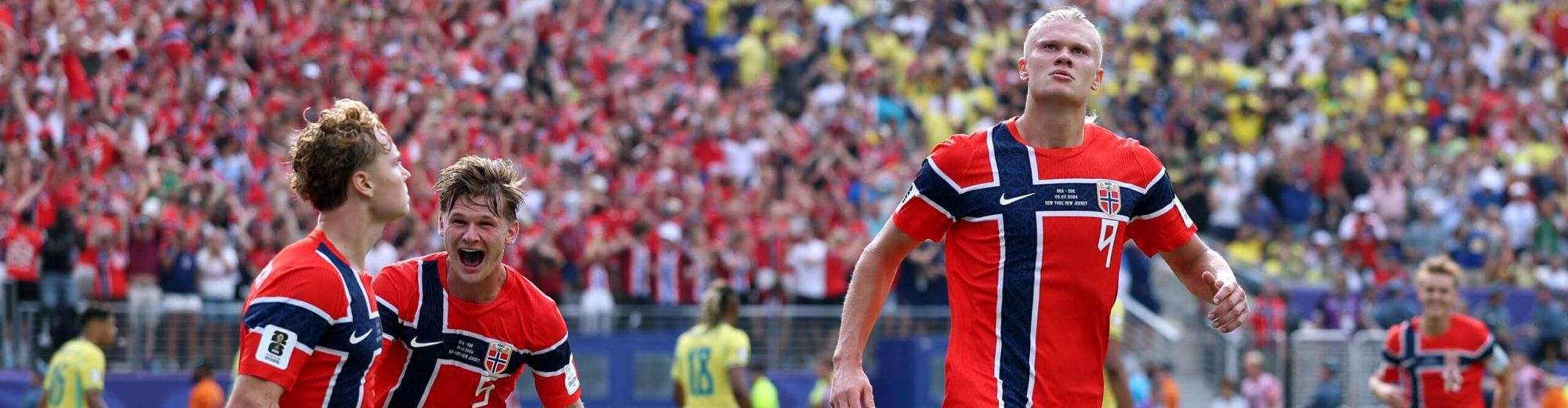
“With the first leg of the Champions League round of 16 done and dusted, here are five things we’ve learned…” ESPN

Antoine Jean Gros – La bataille d’Eylau
“Mario Gomez struck very late to give Bayern a crucial first leg lead. Leonardo was without Diego Milito (injured) and Giampaolo Pazzini (cup-tied). He played Dejan Stankovic and Wesley Sneijder off Samuel Eto’o. Louis van Gaal played the same XI that started the weekend game against Mainz, though had to make a change towards the end of the first half when Danijel Pranjic got injured. Breno replaced him, with Holger Bastuber going to left-back.” Zonal Marking
Inter Milan 0-1 Bayern Munich – Video Highlights, Recap, and Match Stats
The 90th Minute
Marseille 0-0 Manchester United: stalemate
“A lack of goalmouth action resulted in the only goalless game of the Champions League second round first legs. Mathieu Valbuena was only fit enough for the bench, and Andre-Pierre Gignac was out completely, so Didier Deschamps used a patched-up 4-2-3-1 with Brandao as the lone forward. Sir Alex Ferguson fielded Wayne Rooney on the left of a 4-1-4-1, with Darron Gibson surprisingly starting over Paul Scholes in the centre of midfield.” Zonal Marking
Marseille 0-0 Manchester United – Video Highlights, Recap, and Match Stats
The 90th Minute
“Bayer Leverkusen defeated relegation-haunted Stuttgart in a hugely entertaining game at the BayArena. Stuttgart will feel hard done by after giving a positive performance in and out of possession, but Leverkusen’s quality in front of goal helped seal all three points.” Defensive Midfielder
“An impressive display from Shakhtar gave them a clear advantage going into the second leg. Claudio Ranieri omitted Marco Borriello, with Rodrigo Taddei playing on the left. Philippe Mexes and Nicolas Burdisso started at centre-back, so Marco Cassetti moved out to the right-back spot. Mircea Lucescu played his usual 4-2-3-1 formation, with few surprises in personnel.” Zonal Marking
“An open game and some wasteful finishing resulted in a stalemate at the Mestalla. Unai Emery made surprises in his team selection, deciding to leave out his true wide players in favour of a very fluid 4-2-3-1 / 4-3-3 system. Aritz Aduriz and Roberto Soldado both started. Felix Magath’s selection was more predictable, it was the usual 4-4-2 / 4-2-2-2, with Raul dropping off Klaas-Jan Huntelaar upfront. Valencia started on top. They made use of having two strikers on the pitch (something they’re not always used to) by constantly sending longish, straight balls over the top of the defence – not necessarily for the two strikers to run onto and get through on goal, but to bring down and control after making diagonal runs. Zonal Marking
“It’s become fashionable to see friendly internationals as pointless. In a literal sense, they are, of course: neither money nor trophies are at stake, and the very idea of professional players risking their health for no tangible benefits (apart from the profits made by the federations and TV stations) is anathema to club supporters and managers.” SI
“Today would have been a USMNT match day but as I noted yesterday, the Federation made the safe and correct call in cancelling the Yanks’ fixture against Egypt in Cairo. There were plenty of FIFA internationals on the menu however, and at least a few storylines worth visiting on this busy day on the pitch. Here are three thoughts and observations.” The Yanks Are Coming

Giampaolo Pazzini
“Cesare Prandelli has brought in a style of play that is suited well to modern football – in South Africa last year Italy lacked any kind of cohesive gameplan. Despite the World Cup victory, you could say that was the situation throughout Marcello Lippi’s two tenures – Italy triumphed in 2006 because of a combination of (a) having a collection of superb footballers and (b) Lippi getting his tactical decisions correct every time. When the heroes of 2006 faded and Lippi got things wrong (most obviously against New Zealand), Italy were a very poor side – not creative, not threatening on the break, not good at keeping the ball.” Zonal Marking
Five conclusions about…Germany
“Many hoped that this game would see (yet another) new generation of German internationals – in particular, the group of youngsters that have taken Dortmund to the top of the table – Mario Götze, Mats Hummels, Marcel Schmelzer, Lars Bender and Kevin Grosskreutz. As it turned out, Jogi Löw chose pretty much last year’s World Cup side, with two changes in defence. The front six was very familiar.” Zonal Marking

“Hertha comfortably beat Arminia to notch up their 13th win of a professionally conducted 2. Bundesliga campaign. The home side created a nervy last few minutes when Josip Tadić scored in the 85th minute after their first incisive through-ball of the match (Christian Müller). But the away side fully deserved the win, and will go into next week’s derby against Union on top of the league and feeling on top of the world.” Defensive Midfielder
AZ 6-1 VVV
“Kolbeinn Sigþórsson grabbed a quintuple as Gertjan Verbeek’s side grabbed their first win at home since November. Graziano Pellè got an 89th-minute winner when these sides met at De Koel earlier this season, but there was never any danger of AZ needing a late match-clincher this time. The game was sealed just shy of the quarter-hour mark, but perhaps that was unsurprising – Venlo have been on a torrid run of form in the league recently, with no win since November 5, and now 25 goals leaked in the last eight games.” Defensive Midfielder
“One of the must see places in Europe during your lifetime has to be Monte Carlo, or Monaco to give it its true name. Essentially Monte Carlo is the main town within the principality of Monaco, but as the place is so small there isn’t really room for any other habitats and so the names tend to be interchangeable. The fact still remains though that it ranks up there as one of THE places to be seen in. However, whilst other high class spots such as Marbella, Cannes and Portofino are definitely the playground of the rich, Monaco is actually a place of work.” The Ball Is Round
“Duisburg beat Kaiserslautern in the quarter-finals of the DFB-Pokal as Milan Šašić got one over his former employers. Goals from Branimir Bajić and Goran Šukalo in either half saw the second division side beat their top-flight visitors comfortably at the noisy Schauinsland-Reisen-Arena. They’ll now join fellow 2. Bundesliga side Energie Cottbus in the last-four of Germany’s premier cup competition.” Defensive Midfielder
“All the goals came in the second half as Dortmund took another step towards the Bundesliga title. Jupp Heynckes made multiple changes to his side in the first game back after the winter break. Eren Derdiyok, Tranquilo Barnetta and Arturo Vidal were all left out, whilst Sidney Sam and Gonzalo Castro both switched from the right flank to the left. Patrick Helmes played just off Stefan Kiessling.” Zonal Marking

“Despite winning their last three matches before Germany’s winter break, including a notable success against reigning champions Bayern Munich, this season has been a mixed bag for Schalke 04. They have struggled in the Bundesliga, making a desperately poor start when they lost their first four games, including a crushing home defeat in the derby against bitter rivals Borussia Dortmund, but have cruised through their Champions League group, finishing ahead of Lyon and Benfica to secure a very winnable last 16 tie against an inconsistent Valencia.” The Swiss Ramble
“A week ago, there was an irate reader’s letter in the Monday edition of Kicker magazine that scolded the publication for naming Franck Ribéry its Man of the Year. The logical choice, said the letter, would have been Ralf Rangnick. Well, I concur with that.” ESPN
“Winter break in Bundesliga is underway. First half of the league finished last week with much clamor and glamour. We have witnessed fall of the giants and rise of the pretenders in this half, to say the least. This statement is true for the teams and the players alike. Some famous players departed and fresh new faces arrived and the ‘business’ went on with the same passion of the fans.” Football Stryder
“Schalke struck late to eliminate plucky Augsburg from the DFB-Pokal and move into the quarter-finals. This was the fifth consecutive game the Gelsenkirchen side had won in all competitions, and they’ll be disappointed that the winter break now eats into their momentum. The defeat was the first suffered by Augsburg in over two months, but they won’t be too disheartened as they seek to gain promotion to the top-flight for the first time in their history.” Defensive Midfielder
“The starting line-ups Dortmund weren’t at their best, but were still relatively comfortable. Jurgen Klopp selected an unchanged side, and with the exception of the absent Kevin Grosskreutz, this is the XI he has favoured so far this season.” Zonal Marking

Giulio Romano, The Battle of Zama
“Goals from Kevin Nolan, Joey Barton and Andy Carroll meant Newcastle leapfrogged Liverpool in the table. Alan Pardew’s intention was clear – change as little as possible. Joey Barton and Kevin Nolan returned to the side after being unavailable for last week’s defeat to West Brom, but the other nine players remained.” Zonal Marking
Tottenham 1-1 Chelsea: Drogba changes game, then misses crucial penalty
“Roman Pavlyuchenko’s opener was cancelled out by Didier Drogba’s powerful drive, before a frenetic finish. Harry Redknapp chose Roman Pavlyuchenko over Peter Crouch, and was without William Gallas, so Michael Dawson returned. Carlo Ancelotti left out Didier Drogba but maintained the 4-3-3 shape. Paulo Ferreira started at right-back with Branislav Ivanovic playing in the centre. Frank Lampard was on the bench.” Zonal Marking
Genoa 0-1 Napoli: Hamsik header decides match
“An intriguing game rather than an exciting one, as Napoli go up to second for the time being. Davide Ballardini seems to have settled on a four-man defence after preferring three at the back last seasonand in the opening games of this campaign. He shuffled his side with the return of Omar Milanetto. Marco Rossi played on the right, with Rafinha moving to right-back in place of Giandomenico Mesto.” Zonal Marking
Roda 1 – 1 ADO: The 4-4-2 diamond doesn’t help Roda at home
“Roda remain unbeaten at home, but fail to win a home game again. Difficulties to convert their possession into chances which seem connected to their formation and playing style seem related to their 3-6-0 home series. ADO replaced missing winger Kubik with Vicento, a similar type of player, rather than making adjustments to their system like in the away loss at AZ and came away with a point in a game they might just have been able to win.” 11 tegen 11
Heracles 2 – 2 VVV: Bad pitch, bad weather, bad footb….
“It may not have been the best of matches to watch, but VVV will definitely be happy coming away with a point after being 2-0 down at half time. Heracles easily dealt with VVV’s split 4-4-2 team in the first half, as they simply regained possession every time the ball was played up to VVV’s strikers who missed any connecting midfielders. In the second half VVV did connect to their forwards and imposed a physical direct game that proved too much for Heracles to deal with in the end.” 11 tegen 11
Freiburg 3-0 Borussia Mönchengladbach
“Papiss Cissé continued to show why Wolfsburg are intent on buying him to replace Edin Džeko as his brace and fantastic performance helped Freiburg defeat Mönchengladbach. Gladbach remain rooted in relegation trouble, but had they taken some of the numerous chances that came their way in the first half, the result could have been different.” Defensive Midfielder

“A brace from Didier Ya Konan punished two defensive mistakes as Hannover moved into second place. As a result, Stuttgart will be stuck in the bottom three over the winter break. Stuttgart came into this game as the only team who hadn’t won away from home in the Bundesliga this season, and knew that a win wouldn’t even be enough to lift them out of the drop zone. Hannover, on the other hand, went into the game knowing that a win would give them a new club record of five consecutive victories – and, as mentioned in the introduction, a win would also lift them up to second place. That’s Hannover. In second place. In December. Oh, and they’d be taking that position from Mainz. Yes, Mainz.” Defensive Midfielder
Tactical Breakdown: How High-Flying Hannover Edged Struggling Stuttgart
“A brace from Didier Ya Konan punished two defensive mistakes as Hannover moved into second place. As a result, Stuttgart will be stuck in the bottom three over the winter break. Stuttgart came into this game as the only team who hadn’t won away from home in the Bundesliga this season, and knew that a victory wouldn’t even be enough to lift them out of the drop zone. Hannover, on the other hand, went into the game knowing that a win would give them a new club record of five consecutive victories.” Goal

“I have to confess I am mystified why it has taken me so long to pencil in a football weekend in Hamburg. If you want to dive head first into two distinct cultural differences of German football, it does not come more fascinating than Hamburg SV and FC St Pauli. My preconceptions of Hamburg SV were of a traditional club, whose loyal working class supporters regularly troop out to the modern out of city centre sports stadium, Imtech Arena. The club has never been relegated from the Bundesliga and there love for former player Kevin Keegan is only matched back in Newcastle.” Budget Airline Football
Fan Power and the Brown Revolution
“You might not know it, but there is a myth in Europe that FC St Pauli are marketing and PR geniuses. The self-styled punks of European football, symbolised by their skull and crossbones symbol, have never played a competitive match outside of Germany, nor have they played much football in the Bundesliga. Yet despite this, there is considerable interest in the boys in brown and specifically in their supporters.” In Bed With Maradona
“A scoreline that barely makes sense given the away side’s dominance for the majority of the game. Felix Magath lined up with a lopsided and frankly disorganised 4-4-2 / 4-4-2 diamond shape. Jermaine Jones and Jefferson Farfan were dropped after last week’s 5-0 defeat to Kaiserslautern. Jose Jurado came in as a playmaker drifting to the left, and Ivan Rakitic played on the left of the centre of midfield.” Zonal Marking
“Wolfsburg and Bremen played out an entertaining scoreless draw but one that’ll only truly live on in the memory for Edin Džeko’s petulant reaction to being substituted. Bremen came into this game with a number of absentees, including Claudio Pizarro, Wesley, Naldo, and Tim Borowski. Wolfsburg, meanwhile, made do without just two first-choice players – Arne Friedrich, and Grafite.” Defensive Midfielder
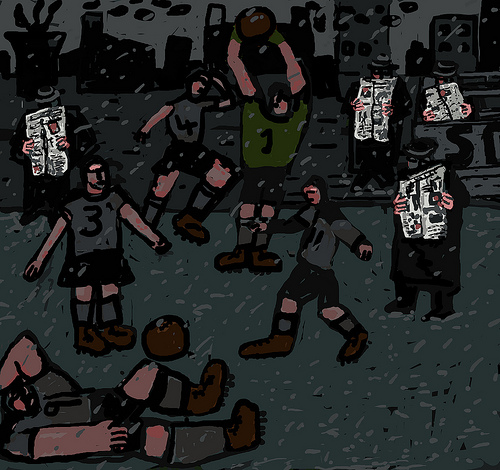
“The stifling of domestic talent is a concern that many countries with a strong league face. While Spain and Germany just about get the balance right, England stutters. Domm Norris looks at the issue in Russia.”
In Bed With Maradona
“A quickfire second half double saw Bayern Munich leapfrog Frankfurt in the table and move to within 5 points of the Champions League spots. From the off, Bayern deployed their usual pass n’ patience tactics in the face of a 4-5-1 – part and parcel of being the visiting side at the Allianz Arena. Louis van Gaal had two playmakers on the pitch in Bastian Schweinsteiger and Toni Kroos, and two direct attackers in Franck Ribéry and Thomas Müller. With so many options in the Frankfurt half, it’s little wonder Michael Skibbe kept his banks set, rather than pressing Bayern vigorously and leaving gaps for them to exploit.” (Defensive Midfielder)
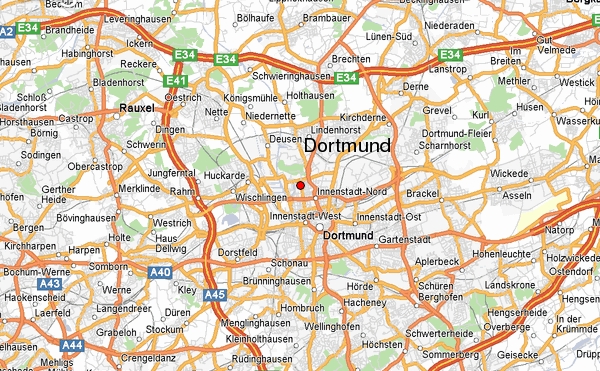
“Jurgen Klopp, sitting on the proverbial throne placed on the zenith of Die Südtribüne, has earned his position of Dortmund royalty this season. His tenderfoot squad has exceeded expectations, and after thirteen games lead the ‘World’s Best League’ by seven points. The path to seniority in the Bundesliga has not been through attritional, grinding football, but with an expansive and unrepressed style.” (Talking About Football)

Louis van Gaal
“‘This is a defeat we can live with,’ Karl-Heinz Rummenigge told sponsors and reporters at the official post-match banquet in the team hotel. ‘We’d all be well advised to deal with it in a serene manner.’ The Bayern Munich CEO has been around long enough to know that this advice will probably go unheeded. Germany’s biggest, brashest football club doesn’t do serenity — even when results are going to plan.” (SI)
“Claudio Ranieri tinkered at half-time, and the change meant Roma went from 2-0 down at the break, to 3-2 up by full time. From the start, Ranieri chose the 4-3-1-2 formation he’s favoured in recent weeks, with Jeremy Menez as the trequartista. Francesco Totti was on the bench with Mirko Vucinic and Marco Borriello upfront, and Matteo Brighi started in midfield alongside Leandro Greco.” (Zonal Marking)
“A decent game where neither side truly hit top form. Leverkusen kept the broad 4-2-3-1 system they’ve favoured this season, making two changes – Sami Hyypia came in at the back for Stefan Reinartz, whilst Erin Derdiyok was back in place of Patrick Helmes.” (Zonal Marking)
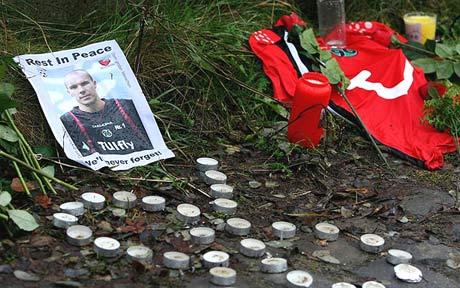
“It’s just over a year since Robert Enke, Hannover 96 and Germany goalkeeper, committed suicide at the age of 32. It emerged after his death that he had struggled with depression for years. To mark this bleak anniversary, BBC Radio 5live produced a half-hour special, featuring candid and illuminating interviews with, among others, Enke’s biographer, agent, and therapist.” (In Bed With Maradona)
5 live Sport
“Eleanor Olyroyd hosts a 5live Sport Special a year on from the tragic suicide of Germany goalkeeper Robert Enke. Eleanor visits Enke’s home town to speak to the people who knew him best and looks at a story that stunned Germany.” (BBC)
“It’s too early to tell whether Jürgen Klopp can follow in the footsteps of Bayern manager Louis van Gaal and win the Bundesliga championship this season. But the 43-year-old Klopp is certainly on course to have a similarly positive impact as the Dutchman had on the German national team.” (SI)
“It must have been a good day yesterday at the Spakenburg as I woke up with my feet in the mini bar and a Ijsselmeervogels temporary tattoo on my arm. How did I get here? It is all a bit of a blur but I do remember a man with a goat at some point and a taxi driver called Willem who claimed he was once an extra in Coronation Street, buying a bag of bomboms from Mavis Riley no less. I remember a school disco, a bloke dressed as a pope, Stoffers walking around with 25 beer glasses on his head and finally Smullers spicy crockets. Danny Last helps me remember some of the events in his report here but I still cannot fill in the blanks. I remembered I was in Utrecht, Holland’s 4th largest city and home to the Museum of Automatically Playing Musical Instruments. And why were we here? – for another game of course.” (The Ball Is Round)
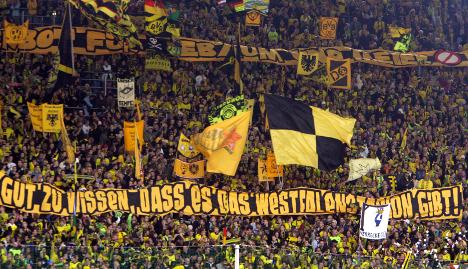
“Amid all the excitement about Mainz’s exhilarating start to the new German season, Borussia Dortmund’s surge into second place in the Bundesliga, winning seven of their first nine matches, including the impressive disposal of fierce local rivals Schalke 04 in the Revierderby, has gone largely unnoticed, even though Jürgen Klopp’s young, athletic team puts on show a similar brand of aggressive, attacking football.” (The Swiss Ramble)
“Some goals Werder Bremen conceded in the 4-0 drubbing at Internazionale last month were so soft that Italian football paper Gazzetta dello Sport rechristened the team ‘Werder Crema.’ It was a charitable assessment; Gazzetta easily could have reached for a stronger Italian word.” (SI)
Panathinaikos 0-0 Rubin Kazan: little invention from attackers and a good result for neither
“A disappointing match in which both sides’ shooting ability deserted them.
Panathinaikos lined up with their now customary 4-2-3-1 system. Simao sat infront of the defence with Kostas Katsouranis playing a more energetic role, and linking up with Giorgos Karagonis. Luis Garcia started from the left and drifted into the centre, whilst on the other side, Stergos Marinos linked up with with Loukas Vyntra, the right-back.” (Zonal Marking)
Inter Milan 4-3 Tottenham Hotspur – Video Highlights, Recap, and Match Stats
(The 90th Minute)
Twente 1 – 1 Werder Bremen: A self fulfilling prophecy for defensively tuned Twente
“Dutch champions FC Twente faced Werder Bremen at home for their third Champions League Group stage match tonight. This offered them a chance at revenge for both team’s match-up last season when the Germans knocked Twente out of the Europa League competition in the first knock-out stage. After winning 1-0 at home, Twente went on to lose the second tie 1-4.” (11 tegen 11)
UEFA Champions League Power Rankings After Matchday 3
“The Champions League is halfway through the group stage and the contenders to win the title have not really changed. Barcelona, Chelsea, Bayern, and Real Madrid remain at the top. Other teams showing great form are Arsenal and Lyon who are both 3-0-0. The rankings are below and through October 21, 2010 and only include the top 8 (along with teams just missing the cut).” (The 90th Minute)
“Schalke eventually found a way past Benfica, in a game between two sides lacking confidence. Schalke played a 4-3-1-2 / 4-4-2 diamond system, with Raul dropping off Klaas-Jan Huntelaar. Jefferson Farfan was the midfielder with most inclination to get out wide.” (Zonal Marking)
“Mainz are THE story of the European season so far – top of the Bundesliga with six wins from six. Five wins from five was good enough, but few expected the run to continue, since they faced a trip to last season’s champions. But Mainz triumphed 2-1 over Bayern, using a 4-3-1-2 formation and pressing all over the pitch.” (Zonal Marking)
“The Saturday evening tie for Round 6 in the Bundesliga saw Northern rivals Bremen and Hamburger SV face off. Coming seventh in the list of the nine fixtures that comprise the round, Hamburger SV began the clash in 7th place on 8 points, while Bremen found themselves in penultimate place on a mere three points.” (Defensive Midfielder)
“A thoroughly entertaining battle ended with a win for the home side thanks to a late Hugo Almeida goal. Bremen lined up with an attack-minded system which was vaguely a 4-2-3-1, with the front four players allowed to drift across the pitch, with the understanding that two of them would cover the wide positions and defend with two banks of four when they lost the ball. Generally this resulted in Marko Marin on the left and Aaron Hunt on the right, although sometimes Hunt ended up in the centre and one of the strikers provided right-wing width.” (Zonal Marking)
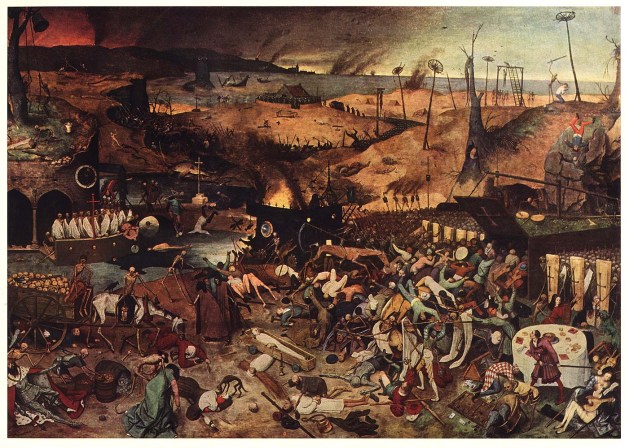
Triumph of Death – Pieter Bruegel
“Two historic matches take place in the industrial heartlands of England and Germany this Sunday that throw into focus just how little Premier League fans have been able to influence boardroom change. Thousands of Liverpool supporters will make the trip to watch their team play Manchester United at Old Trafford, with large majorities of both sets of fans unhappy about the way their clubs have been run by their respective American owners. Over in Germany, thousands of Borussia Dortmund fans are similarly unhappy – with the major difference that they will not be travelling to watch their team take on Schalke in the Bundesliga.” (BBC)
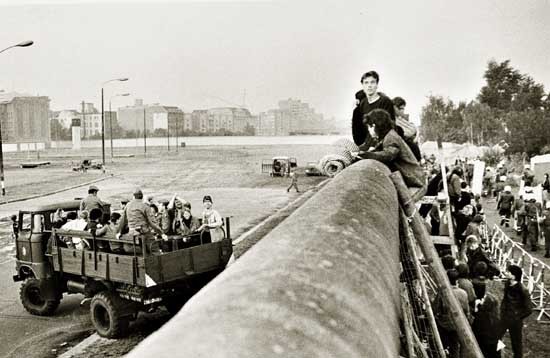
“Today, Germany’s second level Zweite Liga stages what is regarded as the first ever Berlin derby between Union and Hertha. (Strictly speaking there were fixtures in 1949-50 with one of Union’s previous incarnations, called Oberschöneweide.) ‘Hertha were talking about being German champions a year ago,’ says Union spokesman Christian Arbeit, ‘and now they are with us in the second division’. It’s 21 years since the Wall came down, but Union have been forging their own bit of history out to the east of the city in Köpenick.” (WSC)
“Bayern dominated the game from start to finish, but it took a superb Thomas Müller goal to break the deadlock. Bayern lined up in their usual 4-2-3-1 shape. Hamit Altintop started on the left in the absence of Franck Ribery, whilst Ivica Olic was the lone forward. Roma played a conservative, narrow 4-4-2 formation with Francesco Totti and Marco Borriello upfront. Aleandro Rosi made a rare start at right-back, so Marco Cassetti played on the left. Matteo Brighi was used in a right-sided midfield role.” (Zonal Marking)
“A frantic game that Spurs looked set to win at a canter, only to be pegged back in the second half. Harry Redknapp went with a fairly basic 4-2-3-1 shape, with Rafael van der Vaart in behind Peter Crouch. Jermaine Jenas was a surprise starter in the centre of midfield alongside Tom Huddlestone, whilst the rest of the side was as expected.” (Zonal Marking)
“The derby between FC Schalke 04 and Borussia Dortmund is probably the biggest in Germany. It is the German “Old Firm” and has had its fair share of highlights over the past decades. Jens Lehmann once scored in the dying seconds to equalise for Schalke, Borussia ruined Schalke’s title hopes in 2007 with a 2-0 win – one of only three wins for the Black and Yellows in the last 26 matches. On the terraces a banner reading Ein Leben Lang Keine Schale In Der Hand (A lifetime without a championship) greeted the 49th anniversary of Schalke’s last title.” (WSC)
“England opened their Euro 2012 qualifying campaign with a 4-0 win over Bulgaria, but Laurent Blanc’s first competitive game as France manager ended in a shock 1-0 defeat to Belarus and Portugal were held by Cyprus in an eight-goal thriller. Meanwhile, Spain cruised to a 4-0 win in Liechtenstein and Italy came from behind to beat Estonia.” (ESPN)
“An amazing second leg of a superb tie sees Bremen progress thanks to a dramatic late show, whilst Sampdoria must settle for the Europa League. Both teams changed shape from the first leg, with plenty of personnel changes too. Sampdoria set out with a strange formation vaguely resembling a 4-4-2 diamond (more on that later), with Stefano Guberti and Daniele Dessena starting in midfield, and Marius Stankevicius replacing the suspended Stefano Lucchini.” (Zonal Marking)
“A tremendous fixture to open the new Bundesliga season – the champions from the last two seasons going head-to-head – and it turned out to be a wonderful game. Bayern continued to use their 4-2-3-1 formation that brought them such success last season, with some notable modifications. Holger Bastuber moved to centre-back, with the promising Diego Contento starting at left-back. Toni Kroos has returned from a loan spell at Leverkusen and played behind Miroslav Klose, meaning Thomas Mueller played the right-wing role he thrived in at the World Cup.” (Zonal Marking)
“With the Bundesliga 2010/2011 season upon us and Bayern Munich’s players now back from a pretty good World Cup all round, our German football meister Geoff Edwards asks – who can stop FC Hollywood?” (Just Football)
“It was roughly two decades ago that the Crash Kid came to prominence in east Hamburg. For at least ten years, this schoolboy struck fear into the city’s car owners. He took, drove away, collided and repented – only to repeat the cycle at the first available opportunity. At round about the same time, a similar phenomenon was plaguing the western part of the city. This time, the car crashes weren’t being caused by a juvenile delinquent, but by the city’s leading football club.” (WSC)
“Spain or Barcelona? No contest. Week in, week out, Barcelona combine the midfield interplay of Xavi and Iniesta with the cutting edge of Lionel Messi, Daniel Alves and co. The comparison serves to confirm the impression that these days club football is of a much higher standard than international – as long as we restrict the debate to the major European leagues. The big clubs in Spain, England, Italy and Germany are in front of the national teams because of the time their players spend together and because they count on the best talent from all over the planet. When the World Cup stops and domestic football returns, the level of play goes up.” (BBC – Tim Vickery)
“Two billion souls: One must begin with that. That’s how many people, or nearly so, sat or stood in view of television screens to watch twenty-two men kick a white ball around a green field on a warm July night in Berlin four years ago. The twenty-two men comprised the men’s national soccer teams of Italy and France. The occasion was the final game of the 2006 World Cup. The cagey match, as the world now knows, turned on an extraordinary event near its end when France’s captain and star, Zinedine Zidane, strode toward the Italian defender Marco Materazzi and, for reasons unknown, drove his bald pate into the taller man’s chest. The motion mimicked one he’d used a few minutes earlier to head a flighted ball inches over the Italians’ goal, coming ago nizingly close to winning the day for France. Now Zidane was expelled, his team was rattled, and a player in blue whose name few outside Umbria and Trieste recall darted inside a player in white and curled the ball inside the French goal with his left foot, cueing images, on countless flickering screens around the planet, of his countrymen celebrating Italy’s triumph in the floodlit waters of the Trevi fountain in Rome.” (Laphams Quarterly)
“World Cup 2010 has been done and dusted, as we have found a champion out of the 32 teams competing for the biggest prize of all in footballing universe, Spain, as well as Thomas Muller, the winner of the Golden Boot award and also for the young German to officially announce his arrival in world football. However, there’s still one more award which drew quite a lot of criticisms and that’s the Golden Ball award, awarded to the best player in the tournament. In World Cup 2010, the winner is Uruguay’s Diego Forlan, and many pundits and fans, especially Internazionale fans out there feel that Forlan is not a deserving recipient of this award, as they feel that Wesley Sneijder, the runners-up for the award, or in other words the Silver Ball winner of this tournament who should have been the recipient of the Golden Ball.” (Beopedia)

Antonio Di Natale
“Starting with Nicolás Lodeiro back in December last year, Football Further selected 32 players to watch out for at the 2010 World Cup and then tracked their progress through the tournament via weekly scouting reports. Below is a full compilation of those reports, along with conclusions (and marks out of 10) on how each player performed.” (Football Further)
“Over the next couple of weeks, we’ll provide you with all the post-WC analysis you can handle, but for now, let’s talk about the final. As I was watching the game, I didn’t have a strong rooting interest either way, but I expected a great game. Both teams were stocked with All-Stars at virtually every position. The Spanish had won Euro; the Dutch were working on an undefeated tournament. Although the score line of a lot of the Spanish games this tournament were not as impressive as some of the other teams (Germany for example), anyone who watched a Spain game – watched the execution, understood their dominance on the ball, marveled at their ability to play ‘keep away’ after scoring a goal – knew that they were impressive. Meanwhile, the Dutch had seemingly rolled through the tournament and they managed to defeat mighty and heavily favored Brazil. This game was to be an epic showdown.” (Yanks are coming)
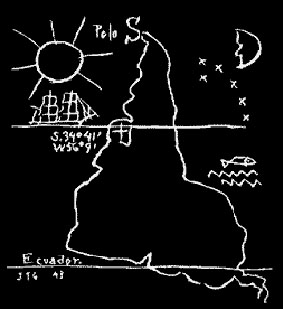
Mensaje de Eduardo Galeano para América Latina Cartagena de Indias, Julio de 1997
“Pacho Marturana, a man with vast experience in these battles, says that football is a magical realm where anything can happen. And this World Cup has confirmed his words: it was an unusual World Cup. The 10 stadiums where the Cup was played were unusual, beautiful, immense, and cost a fortune. Who knows how South Africa will be able to keep these cement behemoths operating amid pulverising poverty? The Adidas Jabulani ball was unusual, slippery and half mad, fled hands and disobeyed feet. It was introduced despite players not liking it at all. But from their castle in Zurich, the tsars of football impose, they don’t propose. …” (Dispatch)

Marcello Bielsa
“At the dawn of the tournament Football Further posed ten tactical questions that the World Cup would answer. Three days after Spain’s tense extra-time victory over the Netherlands in the final, the answers to those questions reflect a tournament in which defensive rigour was overwhelmingly de riguer and tactical innovation conspicious by its rarity.” (Football Further)
“Two days after the World Cup final, the whole event seems slightly surreal. I’m returning from South Africa today, having survived on my last day here a gauntlet of baboons and a march up a gorgeous mountain, after arriving on the 26th of June just in time to see Ghana beat the U.S. I’ve had the privilege of watching seven games, including the Cape Town semi-final and the final in Johannesburg. I’ve come to know and love the vuvuzela — and, yes, I’m bringing one home to blow at Duke soccer matches this fall. It was rapture on many levels, and now it’s passed.” (Soccer Politics)

“Someone wrote on Twitter yesterday that “Is Spain boring?” is the new “Will soccer ever make it in America?” And yes, it is, in the same way that it’s the new “Can Lampard and Gerrard play in the same midfield?” and possibly the new “Can Asians think?” It wants a word, nevertheless, if only because Spain-Germany was so divisive; and because this is the World Cup final, and a bubble of resentment against the pre-tournament favorites and anointed Best Team on Earth is one of the conditions in which history’s about to happen.” (Run of Play)
“In pouring rain on a ragged field, Germany and Uruguay staged a match entertaining enough to be for the World Cup title. Too bad it was only for third place. Sami Khedira scored in the 82nd minute to give Germany a 3-2 victory and third place for the second straight World Cup. But the Germans had to survive a final-second free kick by Uruguay star striker Diego Forlan from just outside the penalty area. It ricocheted off the crossbar, and the whistle sounded.” (ESPN)
World Cup 2010: Germany 3-2 Uruguay
“‘Let’s make this a celebration,’ intones ITV commentator Peter Drury, before kick-off, and millions of people, all at once, think, ‘yeah, lose your voice.’ Uruguay’s national anthem is what Billy Connolly had in mind all those years ago when he suggested replacing ‘God Save the Queen’ with the theme tune to ‘The Archers.’ It’s one of the things from this World Cup that I’ll remember, and I’ll miss it now it’s gone, for four years at least. La Celeste are wearing blue shorts for no obvious reason – Germany are in their change kit equally inexplicably, have Wednesday’s shirts not come back from the laundry? – and they look more like Coventry City with each misplaced pass.” (twohundredpercent)
Uruguay 2-3 Germany – Video Highlights, Recap, Match Stats – World Cup – 10 July 2010
“Germany once again would play in the World Cup third place match as they faced South American side Uruguay. It was a disappointing result for Germany to lose in the semifinals while Uruguay have exceeded expectations and had a great World Cup.” (The 90th Minute)
“Given that I’ll be shouting for the Germans in tonight’s 3rd place playoff, I thought it appropriate to show this clip of the Uruguayans – when the South American team were still World Champions – coming a horrible cropper against Scotland…” (More Than Mind Games)
“The semifinals of the World Cup 2010 have come and go. Holland managed to overcome the resilient but under strength Uruguay in a thrilling 3-2 encounter, while Spain finally managed to shake off their ‘flopping on a big stage’ curse and cruised to the final to face Holland after totally turning off the goal tap of Germany and finished them off by a narrow 1-0 scoreline. Holland and Spain will battle it out in a high stakes battle to become the very first European nation to win the trophy outside of their own continent and also for each of them to win the thing for the very first time in their respective histories. One main question which is undoubtedly in the minds of everyone associated with the respective teams the moment Spain defeated Germany 1-0 last night is surely just like what the title above is saying, ‘How to stop them?’. The following will be some possible ways that could be employed by the respective teams to halt the other in their quest for glory. In this first part, it will be about how to stop the first team that reached the final, and that’s Holland.” (Beopedia – How to Stop Them? (Part 1/2), How to Stop Them? (Part 2/2)
“This has been the tournament of 4-2-3-1. The move has been apparent in club football for some time; in fact, it may be that 4-2-3-1 is beginning to be supplanted by variants of 4-3-3 at club level, but international football these days lags behind the club game, and this tournament has confirmed the trend that began to emerge at Euro 2008. Even Michael Owen seems to have noticed, which is surely the tipping point.” (Guardian)

