Category Archives: Germany

Borussia Dortmund’s Road To Recovery


“Amid all the excitement about Mainz’s exhilarating start to the new German season, Borussia Dortmund’s surge into second place in the Bundesliga, winning seven of their first nine matches, including the impressive disposal of fierce local rivals Schalke 04 in the Revierderby, has gone largely unnoticed, even though Jürgen Klopp’s young, athletic team puts on show a similar brand of aggressive, attacking football.” (The Swiss Ramble)

Werder’s defense still an issue

“Some goals Werder Bremen conceded in the 4-0 drubbing at Internazionale last month were so soft that Italian football paper Gazzetta dello Sport rechristened the team ‘Werder Crema.’ It was a charitable assessment; Gazzetta easily could have reached for a stronger Italian word.” (SI)

Panathinaikos 0-0 Rubin Kazan: little invention from attackers and a good result for neither
“A disappointing match in which both sides’ shooting ability deserted them.
Panathinaikos lined up with their now customary 4-2-3-1 system. Simao sat infront of the defence with Kostas Katsouranis playing a more energetic role, and linking up with Giorgos Karagonis. Luis Garcia started from the left and drifted into the centre, whilst on the other side, Stergos Marinos linked up with with Loukas Vyntra, the right-back.” (Zonal Marking)

Inter Milan 4-3 Tottenham Hotspur – Video Highlights, Recap, and Match Stats
(The 90th Minute)

Twente 1 – 1 Werder Bremen: A self fulfilling prophecy for defensively tuned Twente
“Dutch champions FC Twente faced Werder Bremen at home for their third Champions League Group stage match tonight. This offered them a chance at revenge for both team’s match-up last season when the Germans knocked Twente out of the Europa League competition in the first knock-out stage. After winning 1-0 at home, Twente went on to lose the second tie 1-4.” (11 tegen 11)

UEFA Champions League Power Rankings After Matchday 3
“The Champions League is halfway through the group stage and the contenders to win the title have not really changed. Barcelona, Chelsea, Bayern, and Real Madrid remain at the top. Other teams showing great form are Arsenal and Lyon who are both 3-0-0. The rankings are below and through October 21, 2010 and only include the top 8 (along with teams just missing the cut).” (The 90th Minute)

Schalke 2-0 Benfica: two diamonds, little sparkle

“Schalke eventually found a way past Benfica, in a game between two sides lacking confidence. Schalke played a 4-3-1-2 / 4-4-2 diamond system, with Raul dropping off Klaas-Jan Huntelaar. Jefferson Farfan was the midfielder with most inclination to get out wide.” (Zonal Marking)

How Mainz stopped Bayern – in ten steps

“Mainz are THE story of the European season so far – top of the Bundesliga with six wins from six. Five wins from five was good enough, but few expected the run to continue, since they faced a trip to last season’s champions. But Mainz triumphed 2-1 over Bayern, using a 4-3-1-2 formation and pressing all over the pitch.” (Zonal Marking)

Werder Bremen 3-2 Hamburger SV

“The Saturday evening tie for Round 6 in the Bundesliga saw Northern rivals Bremen and Hamburger SV face off. Coming seventh in the list of the nine fixtures that comprise the round, Hamburger SV began the clash in 7th place on 8 points, while Bremen found themselves in penultimate place on a mere three points.” (Defensive Midfielder)

Werder Bremen 3-2: Hamburg: Wesley-inspired Bremen make Hamburg pay for wasted chances

“A thoroughly entertaining battle ended with a win for the home side thanks to a late Hugo Almeida goal. Bremen lined up with an attack-minded system which was vaguely a 4-2-3-1, with the front four players allowed to drift across the pitch, with the understanding that two of them would cover the wide positions and defend with two banks of four when they lost the ball. Generally this resulted in Marko Marin on the left and Aaron Hunt on the right, although sometimes Hunt ended up in the centre and one of the strikers provided right-wing width.” (Zonal Marking)

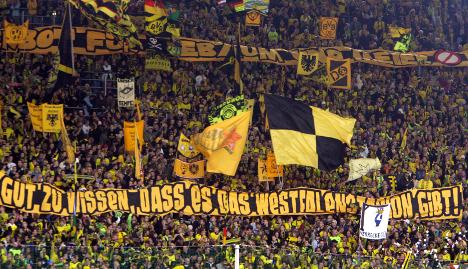
German club fans set for boycott


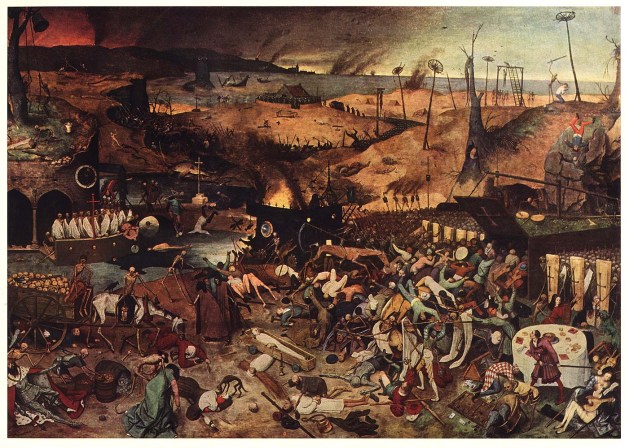
Triumph of Death – Pieter Bruegel
“Two historic matches take place in the industrial heartlands of England and Germany this Sunday that throw into focus just how little Premier League fans have been able to influence boardroom change. Thousands of Liverpool supporters will make the trip to watch their team play Manchester United at Old Trafford, with large majorities of both sets of fans unhappy about the way their clubs have been run by their respective American owners. Over in Germany, thousands of Borussia Dortmund fans are similarly unhappy – with the major difference that they will not be travelling to watch their team take on Schalke in the Bundesliga.” (BBC)

A momentous match for football in Berlin


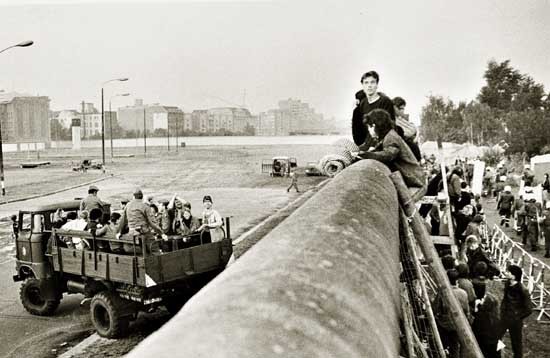
“Today, Germany’s second level Zweite Liga stages what is regarded as the first ever Berlin derby between Union and Hertha. (Strictly speaking there were fixtures in 1949-50 with one of Union’s previous incarnations, called Oberschöneweide.) ‘Hertha were talking about being German champions a year ago,’ says Union spokesman Christian Arbeit, ‘and now they are with us in the second division’. It’s 21 years since the Wall came down, but Union have been forging their own bit of history out to the east of the city in Köpenick.” (WSC)

Bayern 2-0 Roma: Ranieri’s side show shocking lack of ambition

“Bayern dominated the game from start to finish, but it took a superb Thomas Müller goal to break the deadlock. Bayern lined up in their usual 4-2-3-1 shape. Hamit Altintop started on the left in the absence of Franck Ribery, whilst Ivica Olic was the lone forward. Roma played a conservative, narrow 4-4-2 formation with Francesco Totti and Marco Borriello upfront. Aleandro Rosi made a rare start at right-back, so Marco Cassetti played on the left. Matteo Brighi was used in a right-sided midfield role.” (Zonal Marking)

Werder Bremen 2-2 Tottenham: Schaaf’s early tactical shift rescues a point for Bremen

“A frantic game that Spurs looked set to win at a canter, only to be pegged back in the second half. Harry Redknapp went with a fairly basic 4-2-3-1 shape, with Rafael van der Vaart in behind Peter Crouch. Jermaine Jenas was a surprise starter in the centre of midfield alongside Tom Huddlestone, whilst the rest of the side was as expected.” (Zonal Marking)

German fans fighting Bundesliga price rises

“The derby between FC Schalke 04 and Borussia Dortmund is probably the biggest in Germany. It is the German “Old Firm” and has had its fair share of highlights over the past decades. Jens Lehmann once scored in the dying seconds to equalise for Schalke, Borussia ruined Schalke’s title hopes in 2007 with a 2-0 win – one of only three wins for the Black and Yellows in the last 26 matches. On the terraces a banner reading Ein Leben Lang Keine Schale In Der Hand (A lifetime without a championship) greeted the 49th anniversary of Schalke’s last title.” (WSC)

Belarus beat France, England cruise

“England opened their Euro 2012 qualifying campaign with a 4-0 win over Bulgaria, but Laurent Blanc’s first competitive game as France manager ended in a shock 1-0 defeat to Belarus and Portugal were held by Cyprus in an eight-goal thriller. Meanwhile, Spain cruised to a 4-0 win in Liechtenstein and Italy came from behind to beat Estonia.” (ESPN)

Sampdoria 3-2 Werder Bremen (AET): Pazzini puts Sampdoria in charge, but subs prove crucial

“An amazing second leg of a superb tie sees Bremen progress thanks to a dramatic late show, whilst Sampdoria must settle for the Europa League. Both teams changed shape from the first leg, with plenty of personnel changes too. Sampdoria set out with a strange formation vaguely resembling a 4-4-2 diamond (more on that later), with Stefano Guberti and Daniele Dessena starting in midfield, and Marius Stankevicius replacing the suspended Stefano Lucchini.” (Zonal Marking)

Bayern 2-1 Wolfsburg: Heartbreak for McClaren as Schweinsteiger strikes late

“A tremendous fixture to open the new Bundesliga season – the champions from the last two seasons going head-to-head – and it turned out to be a wonderful game. Bayern continued to use their 4-2-3-1 formation that brought them such success last season, with some notable modifications. Holger Bastuber moved to centre-back, with the promising Diego Contento starting at left-back. Toni Kroos has returned from a loan spell at Leverkusen and played behind Miroslav Klose, meaning Thomas Mueller played the right-wing role he thrived in at the World Cup.” (Zonal Marking)

Hamburg in a mess

“It was roughly two decades ago that the Crash Kid came to prominence in east Hamburg. For at least ten years, this schoolboy struck fear into the city’s car owners. He took, drove away, collided and repented – only to repeat the cycle at the first available opportunity. At round about the same time, a similar phenomenon was plaguing the western part of the city. This time, the car crashes weren’t being caused by a juvenile delinquent, but by the city’s leading football club.” (WSC)

Brazilian league lacks bite

“Spain or Barcelona? No contest. Week in, week out, Barcelona combine the midfield interplay of Xavi and Iniesta with the cutting edge of Lionel Messi, Daniel Alves and co. The comparison serves to confirm the impression that these days club football is of a much higher standard than international – as long as we restrict the debate to the major European leagues. The big clubs in Spain, England, Italy and Germany are in front of the national teams because of the time their players spend together and because they count on the best talent from all over the planet. When the World Cup stops and domestic football returns, the level of play goes up.” (BBC – Tim Vickery)

Not For Glory Alone

“Two billion souls: One must begin with that. That’s how many people, or nearly so, sat or stood in view of television screens to watch twenty-two men kick a white ball around a green field on a warm July night in Berlin four years ago. The twenty-two men comprised the men’s national soccer teams of Italy and France. The occasion was the final game of the 2006 World Cup. The cagey match, as the world now knows, turned on an extraordinary event near its end when France’s captain and star, Zinedine Zidane, strode toward the Italian defender Marco Materazzi and, for reasons unknown, drove his bald pate into the taller man’s chest. The motion mimicked one he’d used a few minutes earlier to head a flighted ball inches over the Italians’ goal, coming ago nizingly close to winning the day for France. Now Zidane was expelled, his team was rattled, and a player in blue whose name few outside Umbria and Trieste recall darted inside a player in white and curled the ball inside the French goal with his left foot, cueing images, on countless flickering screens around the planet, of his countrymen celebrating Italy’s triumph in the floodlit waters of the Trevi fountain in Rome.” (Laphams Quarterly)

Diego Forlan Deserves the Golden Ball

“World Cup 2010 has been done and dusted, as we have found a champion out of the 32 teams competing for the biggest prize of all in footballing universe, Spain, as well as Thomas Muller, the winner of the Golden Boot award and also for the young German to officially announce his arrival in world football. However, there’s still one more award which drew quite a lot of criticisms and that’s the Golden Ball award, awarded to the best player in the tournament. In World Cup 2010, the winner is Uruguay’s Diego Forlan, and many pundits and fans, especially Internazionale fans out there feel that Forlan is not a deserving recipient of this award, as they feel that Wesley Sneijder, the runners-up for the award, or in other words the Silver Ball winner of this tournament who should have been the recipient of the Golden Ball.” (Beopedia)

World Cup scouting: The 32 – Conclusions


Antonio Di Natale
“Starting with Nicolás Lodeiro back in December last year, Football Further selected 32 players to watch out for at the 2010 World Cup and then tracked their progress through the tournament via weekly scouting reports. Below is a full compilation of those reports, along with conclusions (and marks out of 10) on how each player performed.” (Football Further)

From Total to Anti-Football: Why Holland Lost, and I’m Glad

“Over the next couple of weeks, we’ll provide you with all the post-WC analysis you can handle, but for now, let’s talk about the final. As I was watching the game, I didn’t have a strong rooting interest either way, but I expected a great game. Both teams were stocked with All-Stars at virtually every position. The Spanish had won Euro; the Dutch were working on an undefeated tournament. Although the score line of a lot of the Spanish games this tournament were not as impressive as some of the other teams (Germany for example), anyone who watched a Spain game – watched the execution, understood their dominance on the ball, marveled at their ability to play ‘keep away’ after scoring a goal – knew that they were impressive. Meanwhile, the Dutch had seemingly rolled through the tournament and they managed to defeat mighty and heavily favored Brazil. This game was to be an epic showdown.” (Yanks are coming)

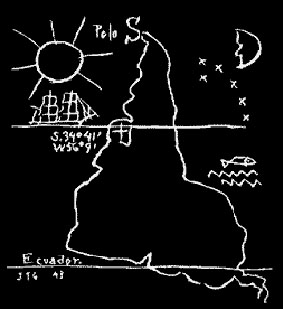
‘Octodamus’ and other surprises – Eduardo Galeano


Mensaje de Eduardo Galeano para América Latina Cartagena de Indias, Julio de 1997
“Pacho Marturana, a man with vast experience in these battles, says that football is a magical realm where anything can happen. And this World Cup has confirmed his words: it was an unusual World Cup. The 10 stadiums where the Cup was played were unusual, beautiful, immense, and cost a fortune. Who knows how South Africa will be able to keep these cement behemoths operating amid pulverising poverty? The Adidas Jabulani ball was unusual, slippery and half mad, fled hands and disobeyed feet. It was introduced despite players not liking it at all. But from their castle in Zurich, the tsars of football impose, they don’t propose. …” (Dispatch)

World Cup 2010: A tactical review


Marcello Bielsa
“At the dawn of the tournament Football Further posed ten tactical questions that the World Cup would answer. Three days after Spain’s tense extra-time victory over the Netherlands in the final, the answers to those questions reflect a tournament in which defensive rigour was overwhelmingly de riguer and tactical innovation conspicious by its rarity.” (Football Further)

Finale

“Two days after the World Cup final, the whole event seems slightly surreal. I’m returning from South Africa today, having survived on my last day here a gauntlet of baboons and a march up a gorgeous mountain, after arriving on the 26th of June just in time to see Ghana beat the U.S. I’ve had the privilege of watching seven games, including the Cape Town semi-final and the final in Johannesburg. I’ve come to know and love the vuvuzela — and, yes, I’m bringing one home to blow at Duke soccer matches this fall. It was rapture on many levels, and now it’s passed.” (Soccer Politics)

Ballet of Frost


“Someone wrote on Twitter yesterday that “Is Spain boring?” is the new “Will soccer ever make it in America?” And yes, it is, in the same way that it’s the new “Can Lampard and Gerrard play in the same midfield?” and possibly the new “Can Asians think?” It wants a word, nevertheless, if only because Spain-Germany was so divisive; and because this is the World Cup final, and a bubble of resentment against the pre-tournament favorites and anointed Best Team on Earth is one of the conditions in which history’s about to happen.” (Run of Play)

Uruguay 2 – 3 Germany

“In pouring rain on a ragged field, Germany and Uruguay staged a match entertaining enough to be for the World Cup title. Too bad it was only for third place. Sami Khedira scored in the 82nd minute to give Germany a 3-2 victory and third place for the second straight World Cup. But the Germans had to survive a final-second free kick by Uruguay star striker Diego Forlan from just outside the penalty area. It ricocheted off the crossbar, and the whistle sounded.” (ESPN)

World Cup 2010: Germany 3-2 Uruguay
“‘Let’s make this a celebration,’ intones ITV commentator Peter Drury, before kick-off, and millions of people, all at once, think, ‘yeah, lose your voice.’ Uruguay’s national anthem is what Billy Connolly had in mind all those years ago when he suggested replacing ‘God Save the Queen’ with the theme tune to ‘The Archers.’ It’s one of the things from this World Cup that I’ll remember, and I’ll miss it now it’s gone, for four years at least. La Celeste are wearing blue shorts for no obvious reason – Germany are in their change kit equally inexplicably, have Wednesday’s shirts not come back from the laundry? – and they look more like Coventry City with each misplaced pass.” (twohundredpercent)

Uruguay 2-3 Germany – Video Highlights, Recap, Match Stats – World Cup – 10 July 2010
“Germany once again would play in the World Cup third place match as they faced South American side Uruguay. It was a disappointing result for Germany to lose in the semifinals while Uruguay have exceeded expectations and had a great World Cup.” (The 90th Minute)

How to Stop Them? (Part 1/2)

“The semifinals of the World Cup 2010 have come and go. Holland managed to overcome the resilient but under strength Uruguay in a thrilling 3-2 encounter, while Spain finally managed to shake off their ‘flopping on a big stage’ curse and cruised to the final to face Holland after totally turning off the goal tap of Germany and finished them off by a narrow 1-0 scoreline. Holland and Spain will battle it out in a high stakes battle to become the very first European nation to win the trophy outside of their own continent and also for each of them to win the thing for the very first time in their respective histories. One main question which is undoubtedly in the minds of everyone associated with the respective teams the moment Spain defeated Germany 1-0 last night is surely just like what the title above is saying, ‘How to stop them?’. The following will be some possible ways that could be employed by the respective teams to halt the other in their quest for glory. In this first part, it will be about how to stop the first team that reached the final, and that’s Holland.” (Beopedia – How to Stop Them? (Part 1/2), How to Stop Them? (Part 2/2)

The Question: What have been the tactical lessons of World Cup 2010?

“This has been the tournament of 4-2-3-1. The move has been apparent in club football for some time; in fact, it may be that 4-2-3-1 is beginning to be supplanted by variants of 4-3-3 at club level, but international football these days lags behind the club game, and this tournament has confirmed the trend that began to emerge at Euro 2008. Even Michael Owen seems to have noticed, which is surely the tipping point.” (Guardian)

Exclusive Soccer Club? Not Anymore


The Lower Buttons – Intogeymy 1967
“Arriba, Puyol! That’s how I will think of him from now on, this muscular defender, with his ringlets flopping all over the place, leaping above the tall timber of the German defense and heading the Spanish where they have never been before. Carles Puyol looks so much bigger in the photos, but in reality he’s short for a central defender, reminding me of Yogi Berra, who could hit a ball off his shoe tops and send it over a building in the biggest of games. Puyol can leap beyond his 5 feet 10 inches and did it in the 73rd minute Wednesday night to give Spain a 1-0 victory over Germany.” (NYT)

German counterattack negated by Spain’s dominant possession

“So in the end, Germany came up against a team that could defend, and the great counterattackers were exposed in a 1-0 loss to Spain in the World Cup semifinals on Wednesday. Without an early goal to protect, without opponents that poured forward and left spaces behind them, the Germans were left bereft, and as they chased a goal in the final stages, it became clear just how limited they are as a creative force.” (SI)

Spain 1-0 Germany: Pressing, passing and Puyol


Carles Puyol “A narrow but deserved victory for Spain, who simply carried out their gameplan more effectively than their opponents. There were two issues to be decided with the starting line-ups. Joachim Loew chose Piotr Trochowski ahead of Toni Kroos to replace Thomas Mueller, whilst Vicente del Bosque finally dropped Fernando Torres, opting for Barcelona’s wide forward Pedro instead.” (Zonal Minute)

Homage to Catalonia

“There’s no doubt that Germany looked magisterial against Argentina. Late last year, I watched a team pummel Diego Maradona’s team in similar fashion. They ran all over them with astonishing ease, making them look like a third division team on the brink of the brink of relegation. This was a particularly low moment for Maradona, the winter when his team was more messy than Messi. Still, the side that beat them clearly possessed players of superior quality. That was last December when the albiceleste ventured into Barcelona’s Nou Camp. They left the stadium that day defeated 4-2. The team that thrashed Maradona’s men didn’t qualify for the World Cup. In fact, it can’t. FIFA won’t let it. But anyone who has paid attention to this tournament knows its best players well.” (TNR)

Spain optimistic despite facing their toughest game


“Confidence in Spain’s World Cup hopes has been fragile ever since Gelson Fernandes bundled home Switzerland’s winner in their opening group game. Concern at their lack of fluidity has expressed itself in the form of debates about tactics and personnel, the latest of them revolving around Fernando Torres’ misfortunes in front of goal. Yet since Saturday’s nervy win over Paraguay that faith has suddenly returned, a strange turn of events considering the identity of Spain’s semi-final opponents, the form team of the tournament.” (WSC)

Germany v Spain: tactical preview

“The pre-tournament favourites versus the most impressive team in the competition so far. A repeat of the 2008 European Championships final it may be, but this is completely different contest. For a start, David Villa and Mesut Ozil – the two star men – were not involved two years ago. Of the Germans, only Miroslav Klose, Per Mertesacker and Lukas Podolski remain in the same positions from that final, whilst Spain will start with a different formation to in 2008, even the side contains a number of the same players.” (Zonal Marking)

The World Cup and National Narratives

“As I mentioned when we discussed what constituted an American-style of play here a couple of weeks ago, outsiders like to form a stereotypical view of how a national team plays based all-too roughly on certain past performances. It helps us organise stories in our heads about each team when the World Cup rolls around every four years.” (Pitch Invasion)

I tipped Spain but Germany’s pace could expose them

“Everyone wanted the FA to build its own version of Clairefontaine when France won the 1998 World Cup and 2000 European Championship and they had a consistent production line of young talent. Now the talk is of copying the coaching system that produced the young Germany team that has excelled in South Africa. The debate is cyclical but what is constant is Germany’s ability as a tournament team. Eleven World Cup semi-finals since 1954 says this isn’t a recent phenomenon. It says they’ve had it right for over 60 years.” (Guardian)

Europe is still football’s dominant force

“Wasn’t it just a few glasses of Chardonnay ago that European soccer was melting faster than a wedge of warm Brie? France, Italy and England — three of the continent’s soccer superpowers — had gone home in various levels of disgrace. To make matters worse, all five of South America’s entrants had moved on to the knockout round, with all but Chile winning its group.” (ESPN)

The Reason Behind Germany’s Success: They’ve Got 13 Men!


“It’s hard not to resort to cliche when looking at the intricate preparations undertaken by Germany when it comes to World Cup’s, or indeed anything they do in relation to football. But if they do go on to lift their fourth trophy next Sunday night at Soccer City, FIFA may well need to make some extra medals.” (TIME)

The Currents of History: What does it take to win the World Cup?


Giovanni Battista Di Jacopo, Pieta
“‘What does it take to win the World Cup?’ asked Henry D Fetter of The Atlantic a couple of days ago, in a post called ‘What It Takes To Win The World Cup’.” (Pitch Invasion)

Özil the German
“No player has fascinated me more at the World Cup than Mesut Özil. He has the languid self-assurance on the ball that comes only to the greatest footballers. Where others are hurried, he has time. He conjures space with a shrug. His left foot can, with equal ease, caress a pass or unleash a shot.” (NYT)

Tap-in and Taboo
“If this happens, what will people say about Bryan Thomas (on Twitter, in newspapers, on comment threads)? Will anyone say that he has violated the ethics of the game, that he deserves further punishment? Will anyone argue that the rules of the game need to be changed so that teams cannot benefit from committing a penalty? I suspect, rather, that Thomas will be generally credited with a very smart play. How is what Luis Suárez did at the end of yesterday’s match against Ghana any different?” (Run of Play)

when i get older
“Brian at the Run of Play did a very good job crushing the idea floated in The Atlantic that countries with an authoritarian history play more winning football. The idea memed, nonetheless. (Shocked that highbrow soccer dorks — my favourite phrase this World Cup, used by TNR Goalpost to describe their ideal reader base) appear not to check RoP before coffee.) Laughable, snobbish solipsism — it’s not just for FIFA anymore, kids.” (Treasons, Statagems & Spoils)

Time Can Do So Much
“What I want to know is whether we’ll remember any of this in ten years, or if we’ll look back on it as the mass blackout during which we all wrote mystic texts. I can’t remember two more deranged or thrilling days of soccer, or four more shocking games, in any recent tournament, and Euro 2008 made me compare Aphrodite to a Toyota Prius. It was all the more stunning because it came out of nowhere—that’s not to say this World Cup had been boring, but it had rolled along at a pretty regular tempo and, apart from a few moments of madness and bliss, within a fairly livable emotional band.” (Run of Play)

Argentina Flounder Before German Unity

“Out of the chaos of the quarter-finals of the 2010 World Cup has come some degree of consensus. If today’s newspapers have one theme running through them, that theme is that Germany are currently the best football team in the world and that, to a point, it would be a travesty if they didn’t win the competition. All of this is somewhat odd, since it is effectively an admission that they got their predictions wrong before the start of the tournament (there weren’t many in the mainstream press that didn’t predict Brazil or Spain), but this groundswell of opinion has been building for the last few days.” (twohundredpercent)

Inventing The New Germany: Youth Development and the Bundesliga


“One should be wary of generalising too much from a sample of five games, but Germany’s tremendously successful World Cup so far and the quality of its young players, with its youngest-ever team at the tournament averaging out at 24.7 years-old, has sparked plenty of understandable interest in its youth development system.” (Pitch Invasion)

Europe dominates semifinal lineup

“So much for South Americans dominating this World Cup. Three sides from the continent were eliminated in the quarterfinals, leaving Uruguay, the last team to qualify for the competition after a playoff win over Costa Rica, as its only representative. In similar fashion, the demise of the European nations appear to have been exaggerated with Germany, Spain and the Netherlands advancing to the final four.” (SI)

Germany 4-0 Argentina: Germany are getting better and better and better


“Germany put in one of the most impressive performances in recent World Cup history to absolutely thrash Diego Maradona’s Argentina side. No surprises in terms of line-ups – they were as predicted in the preview, and Argentina remained with their loose 4-4-2 diamond shape.” (Zonal Marking)

Emotion no substitute for clear thinking
“Diego Maradona compared Argentina’s 4-0 World Cup defeat by Germany to being on the wrong end of a punch thrown by Muhammad Ali. Perhaps he needed Ali’s legendary trainer Angelo Dundee alongside him on the bench. In one of the great sports books. David Remnick’s ‘King of the World,’ Dundee recalled his involvement in the first fight with Sonny Liston, when Cassius Clay (as Ali was still called at the time) had been blinded by a substance allegedly put on Liston’s gloves. He was threatening to abandon the fight, but Dundee managed to calm him down.” (BBC – Tim Vickery)

Argentina: Still Bipolar
“The ups and downs of the past 24 hours here have been brutal, saddening, and well, very Argentine. The knives will likely come out now for Diego Maradona as quickly as the flurry of mea culpas came in during the days leading up to today’s match with Germany. Not full mea culpas mind you, but the extent to which you will come across one at all among Argentina’s leaders, in politics, business, and most definitely the media—more like rationalizing.” (TNR)

Maradona gambles on the ‘owner’ to deliver Cup glory
“In the German squad’s five-star hotel outside Pretoria, their match analysts have spent days thinking about Lionel Messi. Germany enter Saturday’s World Cup quarter-final against Argentina in Cape Town with a “Messi strategy”. It may well work. There is a way to stop the world’s best footballer, and Messi’s own coach, Diego Maradona, may inadvertently have stumbled upon it.” (FT – Simon Kuper)

Argentina vs. Germany – Painless ’til the End
“I’ve tried for four years to explain to new American soccer fans what it means to lose to Germany. All metaphors escape me expect for horror films. On the one hand, the German experience is a profound blow psychologically. Even when the scoreline reads 4-1 or 4-0, the Germans always give the other team enough of the ball to make them feel the result was within in reach. If only Lampard’s goal was ruled a goal, if only Dimaria had kept his shot low, if only Romero had commanded his box.” (futfanatico)

Germany, playing for more than a win
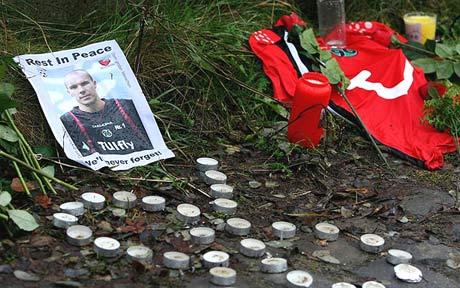
“On the eve of the World Cup, players reminded the press that this tournament was different. This year, they were playing in the wake of traumatic loss, and would do their best to honor the memory of Robert Enke, the German National Team goalkeeper who committed suicide in November 2009. In his story for The Guardian, Dominic Fifield explains…” (From A Left Wing)
How Germany reinvented itself


Thomas Muller
“In 1997, German football was on top of the world. Borussia Dortmund and Schalke 04, the two powerhouses from the Ruhr area, had won the Champions League and UEFA Cup, respectively. A year earlier, Berti Vogts’ Germany had triumphed in the Euro 1996 final against the Czechs. Below the radar, however, something strange and disconcerting was happening: Germany was running out of decent players.” (SI)

Argentina 0 – 4 Germany
“No trash talking needed. Germany was just too good for Argentina. Miroslav Klose scored twice to move into a tie for second on the all-time World Cup scoring list, and Thomas Mueller and Arne Friedrich added goals to give Germany a resounding 4-0 victory Saturday in the World Cup quarterfinals. As cameras flashed, the Germans hugged and high-fived each other before walking around the edge of the field, saluting their fans.” (ESPN)

Germany Eliminates Argentina From World Cup (HIGHLIGHTS, VIDEO)
“No trash talking needed. Germany was just too good for Argentina. Miroslav Klose scored twice to move into a tie for second on the all-time World Cup scoring list, and Thomas Mueller and Arne Friedrich added goals to give Germany a resounding 4-0 victory in the World Cup quarterfinals. As flashbulbs popped, the Germans hugged and high-fived each other before walking around the edge of the field, saluting their fans.” (Huffington Post)

Argentina 0-4 Germany – Video Highlights, Recap, Match Stats – World Cup – 3 July 2010
“It was a match-up of two top teams in the World as Argentina faced Germany in the quarterfinals on Saturday, July 3, 2010. The winner of the match would play either Paraguay or Spain in the semifinals. Argentina was coming off a 3-1 win over Mexico in the round of 16 while Germany beat England 4-1 in the round of 16.” (The 90th Minute)

Better to be Feared

“In his 2006 book How Soccer Explains the World, author and editor Franklin Foer examined the role that a given nation’s government plays in its World Cup success. As it turns out, the correlations between repression and good soccer seem to be closely related. With the exception of 1998 champions France (its 1940-44 Vichy regime notwithstanding), only one World Cup champion since 1970 can boast of a fascist-, strongman-, or junta-free twentieth-century history. Notably, 1970 champions Brazil and 1978 hosts and winners Argentina won their titles while toiling under authoritarian military juntas.” (Laphams Quarterly)

Argentina v Germany: tactical preview


Miroslavas Klose
“Remember this fixture from 2006? The goals, the penalties, the fights? Of most interest in tactical terms was Jose Pekerman’s decision to withdraw Juan Roman Riquelme towards the end of normal time, and replace him with the far more defensive-minded Esteban Cambiasso. In doing so, he gave up on his preferred 4-3-1-2 / 4-4-2 diamond shape, and switched to a very basic, rigid 4-4-2. Argentina went from being 1-0 up, to 1-1, to losing the game on penalties.” (Zonal Marking)

Germany’s Opponents: Part Five – Argentina
“Germany go into Saturday’s quarter-final clash against Argentina as the underdogs. Despite their 4-1 win over rivals England, Germany will still be looked at as second best compared to Diego Maradona’s Argentina. Argentina’s form so far during the World Cup has been sensational, and the goals from the albiceleste have been flowing. Diego Maradona has his side playing controlled, attacking football, while also being responsible defensively.” (Bundesliga Talk)

World Cup Quarters – “& Then There Were 8″

“The typical suspects have overcome group stage difficulties to rise to the top. However, no smoking gun has appeared to point out the single culprit most likely to win the tournament. Using a really big magnifying glass, a trench coat, a smart talking sidekick, and intuition, we embarked on an investigation of the remaining teams in this World Cup quarterfinals, searching for clues in a sea of uncertainty. Our conclusion as to who will win the World Cup?” (futfanatico)

World Cup tactics: How the quarter-finalists line up

“On the eve of the World Cup, Football Further asked whether the 4-2-3-1 formation would continue to dominate as it did at the last tournament in 2006. The average position diagrams below, taken from all eight last-16 matches, demonstrate that while it remains the most popular shape in the international game, variations in tactics mean that it is being deployed in very different ways.” (Football Further)

Facing the Two-Day Football Fast

“It’s alarming to even consider, but for the next two days there will be no World Cup matches. After gorging ourselves on football of varying quality for the past weeks, we suddenly have to think of others things to do. Read a book? Take a walk? But to what end and purpose, when all we have known for weeks is the spectacle of the fates of nations unfolding before our eyes?” (Soccer Politics)

The Questions: 6 Questions on England v Germany


Fabio Capello
“After England’s hugely disappointing 4-1 defeat to Germany in the World Cup 2010 round of 16, Just-Football.com asked some of it’s contributors (and a special guest) to analyse the flaws and the future for the England national team in the rebirth of a new feature, The Questions. Is it now time for serious structural change in English football?” (Just Football)

Is it time for England to ditch the 4-4-2 and play like the rest of the world?
“Terry Venables tells a story about Paul Gascoigne at Tottenham. Gazza, with his limited attention span, was forever bemoaning the time spent working on tactics. Then he went to Italy to play for Lazio. When Venables saw him next, Gascoigne had changed his tune, even admitting that, after confronting the deep and well-organised defences of Serie A, he realised how important tactics were.” (Independent)

England’s Loss to Germany
“England’s performance was in a different league of awfulness from the regular awfulness that had been seen in earlier games. Before, the problem had been one of not seeming to care; the players behaving as though they deserved to win by virtue of the size of their wages. This time they definitely cared, they were fired up, ready to go and then when they got there, they were just awful.” (The Paris Review)

An open letter to Sir Dave Richards, re: the England job
“Dear Dave, In the next twelve days, I’m told, you and the Football Association board will decide whether or not to relieve Fabio Capello of his duties as England manager. Matt Dickinson, who normally gets these things right, said on The Times podcast that you guys will most likely base part of your decision on what the media say. Given that I am a small part of the media, I’m offering up my two pence, not just on Capello, but on the England team’s future.” (The Game Blog)

World Cup 2010: Ten things Fabio Capello got wrong
“The England manager exposed his fallibility with a series of bad calls during the World Cup campaign” (Guardian)

There is only one thing tired about England… the excuses

“As hard to believe as it may be, England are actually worse off now than when Steve McClaren was sacked almost three years ago. Back then, you see, there was a plan. The Football Association were going to throw money at the problem like never before; they were going to write a cheque that would make Sven Goran Eriksson’s second contract seem like luncheon vouchers.” (Daily Mail)

England’s Loss to Germany

“England’s performance was in a different league of awfulness from the regular awfulness that had been seen in earlier games. Before, the problem had been one of not seeming to care; the players behaving as though they deserved to win by virtue of their size of their wages. This time they definitely cared, they were fired up, ready to go and then when they got there, they were just awful.” (The Paris Review)

Germany 4-1 England

“England’s World Cup ended in a mixture of humiliation and controversy as they were thrashed by Germany in Bloemfontein. Germany’s deserved win and convincing victory margin will be overshadowed forever in the minds of Fabio Capello and his squad by a moment they believe robbed them of the hope of reaching the last eight. Matthew Upson had thrown England a lifeline just before half-time after a vastly superior Germany had taken a stranglehold on the game with goals from Miroslav Klose and Lukas Podolski.” (BBC)

World Cup 2010: Germany 4-1 England
“There have been times over the previous four or five days or so that this afternoon’s match between Germany and England has threatened to collapse under the weight of its own hubris. England, seemingly unable to wait for this afternoon to come around, has become a nation of tea leaf readers, swirling a cup which contains the history of the matches between the two nations in a desperate attempt to try and pre-determine what is going to happen. The coverage in the press has taken a turn for the weird. A Steven Gerrard press conference was the lead story for much of the press this morning, with the England captain being described in various organs as having “roared” at it, which will have come as news to anyone that has seen Gerrard being interviewed in the press before. This afternoon, however, any talk of ‘roaring’ couldn’t be any more misplaced.” (twohundredpercent)

Germany 4-1 England – Video Highlights, Recap, and Match Stats – World Cup – 27 June 2010
“One of the rivalries in international competition, England v Germany, was renewed with the teams meeting in the round of 16 of the 2010 FIFA World Cup. Germany won Group D while England was second in Group C. It was a match that was about even as far as the oddsmakers.” (The 90th Minute)

World Cup scouting: The 32 – Week Two


Rene Krhin (Slovenia)
“The following 32 names represent Football Further‘s players to watch at the 2010 World Cup. We’ll be following their performances closely over the course of the tournament, with weekly scouting reports rounding up their progress.” (Football Further), (Football Further – Week One)

Why England’s fans loathe their celebrity team

“At least I have an excuse for not supporting England. As a British citizen of mongrel origins who moved to the Netherlands aged six, I support Holland. So I view the relationship between the English and their football team with distance, and it always surprises me how badly the two parties get on. Going into tomorrow’s crunch game against Germany, the relationship consists of its typical blend of love and dislike.” (FT – Simon Kuper)

Trying To Make Some Sense Of Germany vs England

“Clowns to the left of me, jokers to the right. Being English during the World Cup finals really does feel like being “stuck in the middle with you”, to labour a pun. On the one hand, there are the newspapers (and not exclusively the tabloid ones), the television commentators, and those that belch in your face and shout, “INGERLAND” at you as if this will somehow help something, somewhere. On the other, there is the rest of the world, which often seems to go out of its way to remember just how much it hates the British, the English, people that wear plastic hats with St Georges crosses painted upon them or whatever. There seems to be no middle ground with England, no way of approximating anything like rationality.” (twohundredpercent)

Germany 1-0 Ghana: Ghana pay the price for not picking up Özil, but both progress

“Like yesterday’s Uruguay v Mexico game – a strange contest, because both teams were happy with the scoreline as it stood for most of the second half.
As such, mentality and strategy are difficult to assess, but these are certainly the best two sides in the group, and they put on a great show in Durban that resulted in a narrow victory for Germany, the group winners.” I(Zonal Marking)

World Cup 2010: Ghana 0-1 Germany
“If England supporters had reason to be concerned that their run of not having been knocked out at the opening stages of the World Cup finals since 1958 mind come to an end, then the question of what might be running through the minds of German supporters this evening probably also merits our consideration. Germany last failed to get through the opening round of the World Cup finals in 1938 and, unlike England, they have qualified for every tournament since then. Yet the precariousness of their position has gone curiously unmentioned in the British press. If Germany fail to beat Ghana this evening and Serbia beat Australia, Germany, who had everyone singing their praises after the opening match hiding that they dished out to Australia, will be out in the first round of the World Cup finals.” (twohundredpercent)

Ghana 0-1 Germany – Video Highlights, Recap, and Match Stats – World Cup – 23 June 2010
“Germany and Ghana played their final group stage match with a chance at the knockout stage still alive. The winner would win Group D and likely play England in the next round. Germany would be favored but Ghana came into the match with the lead with four points.” (The 90th Minute)

Australia 2-1 Serbia – Video Highlights, Recap, and Match Stats – World Cup – 23 June 2010
“Australia needed a win and some help while Serbia could advance with a draw as the two teams played in Group D. Serbia would favored but Australia will be wanting to show their run into the round of 16 in 2006 was not a fluke. Australia was unlikely to have a chance to win the group while Serbia could with a win and better goal difference then Germany (if they won).” (The 90th Minute)

2010 FIFA World Cup Group D Final Standings: Germany & Ghana advance
“The matches in Group D are finished in the 2010 FIFA World Cup as Germany & Ghana have advanced. Ghana topped Australia on goal difference while Germany led the final standings with six points. Australia just missed out on goal difference as they beat Serbia 2-1 in their final match. It was a close group in the end and all three teams still had a chance going into their final match. Germany will now place England in the next round while Ghana faces the USA.” (The 90th Minute)

England 1-0 Slovenia: England more balanced and better in possession

“A much improved performance from England that sees them narrowly progress into the knockout stages of the competition. Slovenia looked to be through at full-time, but a late goal from Landon Donovan against Algeria sends them out. England made three changes from their 0-0 defeat with Algeria. Matthew Upson replaced the suspended Jamie Carragher, with John Terry shifting across to play as the right-sided centre-back. James Milner came in for Aaron Lennon, and Jermain Defoe was ahead of Emile Heskey.” (Zonal Marking)

Slovenia 0 England 1: match report
“It’s the Germans again. It’s history and hysteria again, hopes and fears rolled into one heaving, epic confrontation again. At 3pm on Sunday, the nation will stop, tune in and watch nervously the pictures of the drama unfolding in Bloemfoentein. The streets will be empty, the front rooms full because it’s England versus Germany, the fixture that fixates.” (Telegraph – Henry Winter)

James Lawton: Dare we believe the hype again? A little fighting spirit can go a long way
“England are not much nearer to winning the World Cup, not with rampant Argentina as potential quarter-final opponents, and finishing second in the Group of Extremely Unlikely Death will never rate as one of the great battle ribbons. It’s also true that the old nemesis Germany lurks in Bloomfontein on Sunday. No, the path to World Cup glory has not exactly opened up. Germany, Argentina, Spain, and then Brazil, maybe, are a series of hurdles that stretch out to a Himalayan degree.” (Independent)

Altitude may be dragging Wayne Rooney down
“No footballer has ever seemed less enigmatic than the Wayne Rooney who erupted on to the scene as a pugnacious teenager, still 16 when his spectacular last-minute goal at Goodison Park ended Arsenal’s 30-match unbeaten run in the league. At 17 he was given his first start in a senior international match, and those who were at Sunderland’s Stadium of Light to see him inspire the defeat of Turkey in a Euro 2004 qualifying match will never forget the impact of a player to whom fear and self-doubt were strangers.” (Guardian)