Category Archives: Football Manager

Hull City – What’s My Name?

Hull City fans
“Hull City started the 2014/15 season with much optimism after the previous year’s exploits, when they had comfortably retained their Premier League status and reached the FA Cup final for the first time in their history, only losing 3-2 to Arsenal after extra time in a thrilling match. It was therefore particularly disappointing the way things turned out, as their Europa League adventure ended almost before it had started and, most painfully, they were relegated on the last day of the season.” The Swiss Ramble

Scottish Premiership ins and outs – Summer 2015

boyata
“With Celtic, Aberdeen, Inverness Caledonian Thistle and St Johnstone all involved in European competition qualifying, several Scottish Premiership managers have a particularly short close season during which to reshape their squads. Champions Celtic are the only club with the financial muscle to splash significant amounts of cash in the transfer market and started their summer recruitment by paying £1.5m to Manchester City for central defender Dedryck Boyata. However, it is Dundee who have had the most significant turnover of playing staff so far.” BBC

Tactical Philosophy: Besnik Hasi

“Born in Gjakovë, Kosovo on 25th December 1971, Besnik Hasi started his football career at Liria Prizren (then a team playing in the Superliga of Kosovo), before moving to many different clubs in Balkan leagues, and then in 1994, found as he recalls his 2nd home: Belgium. In 1994 he signed for the KRC Genk, where he played 141 games, winning the Belgian Pro League and Belgian Cup once each.” Outside of the Boot

Players swap a Greek tragedy for desert bounty

greece
“Whilst the rest of Europe anxiously awaits the decision on Greece’s financial future, the nation’s football clubs are trying their best to prepare for another league campaign. Unfortunately, it is becoming harder to entice players to head to southern Europe, such is the uncertainty that surrounds both the country and its football, meaning more stars are looking east rather than risk the financial uncertainty in southern Europe. Last season saw Greek football reach its lowest point. There was a surge in crowd violence, including wild scenes before February’s Panathinaikos-Olympiakos derby as visiting coach Vitor Pereira, formally of Saudi Arabia’s Al-Ahli, was chased from the pitch by angry PAO ultras, whilst one fan was killed before a derby game in Crete.” Football Pink

Social media and a new wave of football hooliganism

“British football has a prolonged and uncomfortable history with hooliganism. From 1960 to the 1990s, that destructive culture of criminal behaviour spread dramatically to the extent where violence, fights and rioting became common both outside and in stadiums. Reducing it required a massive operation involving the deployment of more policemen, identifying and banning culprits and restructuring stadiums.” backpagefootball

A leader, a mentor, a teacher…a captain is the manager’s right hand man

“How to sum up Tottenham Hotspur’s last season in words – Harry Kane, 5-3 win over Chelsea, runners-up, fifth again or maybe even young talent. However you look at it, it’s been interesting. But what’s lacking? It’s not a goalscorer that’s for sure and it definitely wasn’t a lack of depth, yet something was missing. Now I could write and write, making you read a big anti-climaxing paragraph of what Tottenham need but instead I’m just going to come out and say it…they need a captain.” backpagefootball

Can Louis van Gaal Get the Best out of Bastian Schweinsteiger for a Second Time?

“In the midst of Bastian Schweinsteiger’s departure, there has been a sense of disappointment amongst the Bayern Munich fans. As a much-loved figure in the Bavarian capital, Schweinsteiger’s exit leaves a somewhat sour taste for them. And yet for all of his achievements at Bayern, and all of the trophies he has inspired, manager Pep Guardiola could no longer guarantee his continual place in the side. A therefore disgruntled ‘Basti’ may have needed to content himself with a place on the bench, and as an instigator of accomplishment and an icon amongst the Bayern faithful, that, clearly, wasn’t an option he entertained.”> Licence to Roam

Tactical Philosophy: Besnik Hasi

“Born in Gjakovë, Kosovo on 25th December 1971, Besnik Hasi started his football career at Liria Prizren (then a team playing in the Superliga of Kosovo), before moving to many different clubs in Balkan leagues, and then in 1994, found as he recalls his 2nd home: Belgium. In 1994 he signed for the KRC Genk, where he played 141 games, winning the Belgian Pro League and Belgian Cup once each.” Outside of the Boot

Tactical Philosophy: Andre Breitenreiter
“Andre Breitenreiter, the footballer, was horribly unlucky. His luck started out undeniably positive as at only 17 years old, he lifted the Deutscher Pokal in 1992 with Hannover 96. Then plying his wares in the second tier, Breitenreiter became an overnight sensation. ‘The Lightning Bomber’ as he was known in Germany, made the jump to the Hamburger SV in 1994 and at 19 years of age, scored a 19 minute hat-trick in the now defunct Inter-Toto Cup against Danish side Ikast FS. His Bundesliga debut came against, of all the sides, Bayern München. His brace helped Hamburger SV to the victory. Andre Breitenreiter, the footballer, had arrived and tragically his luck decided to strike two days after that momentous victory over Bayern when he broke his cheekbone and jaw and was sidelined for the rest of the season.” Outside of the Boot

West Bromwich Albion – Like Clockwork

“As West Bromwich Albion prepare for their sixth consecutive season in the Premier League, it’s fair to say that they have managed to have rid themselves of the unwanted tag of being a “yo-yo” club that constantly bounces between the Championship and the top flight. However, the fight to retain their Premier League status has not been without problems in the last two years. They narrowly avoided relegation in 2013/14 when they finished in 17th place, while Albion looked in some danger last season before the Tony Pulis effect kicked in with the results under the experienced manager enough to guide the team to mid-table security. Chairman Jeremy Peace said that this was ‘testament to the relentless intensity that (Pulis) brings to the challenge’ and the team’s improvement fully justified his decision to bring in the Welshman in January.” The Swiss Ramble

Tactical Philosophy: Hamza Hamzaoğlu

Hamza-Hamzaoglu-2015-3
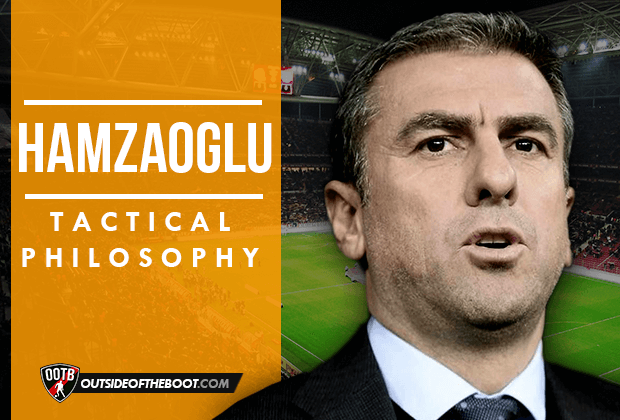
“Hamzaoğlu was born in in Greece but after spending 7 years on the west side of the Aegean sea, Hamzaoğlu had to move to Turkey with his family due to problems caused by the Cyprus dispute. The family moved to İzmir following a few traumatic weeks of uncertainty on the road and young Hamza managed to settle quickly in his new city. At the age of 14, he put together a team in his neighborhood and coached the team for local matches. This got him noticed by various local football men. Hamza Hamzaoğlu was always crazy about football, and he played for 8 different clubs including boyhood love Galatasaray.” Outside of the Boot

Tactical Philosophy: Garry Monk
“Garry Monk’s Swansea journey began back in 2004 where the team was playing in League Two, the fourth tier of English football. His first season saw the Welsh side get promoted and the rise to the Premier League followed. Playing under the likes of Roberto Martinez, Brendan Rodgers and Michael Laudrup, Monk played through times of possession based success and his own management style was only going to go one way. Having played during Swansea’s first major trophy under Laudrup, Monk witnessed how to bring success to a mid-table side, and this high-pressing, possession based game came be heavily seen in Monk’s Swansea side.” Outside of the Boot

A guide to formations: The 4-3-3

“The 4-3-3 formation is designed to both gain control of the central midfield whilst also allowing for variety in attack. It is common for one of the three midfielders to operate as a defensive midfielder whilst the two remaining midfielders have more responsibility in attack. The 3 attackers are often split into two wingers (LW and RW) and 1 striker; the wingers do have some defensive responsibility though and if they are ignored then it can cause plenty of problems when out of possession.” Outside of the Boot

A guide to formations: The 4-1-2-1-2

“The 4-1-2-1-2 formation is a variation of the standard 4-4-2 and there are two versions of this formation. In both versions, the back 4, central defensive midfielder, the central attacking midfielder and the two strikers stay the same. The main difference is the role of the two extra midfielders. In one variation, they play as wide midfielders and in the other, as central midfielders. This slight difference in positions has a large impact on the roles of the other players and the team’s overall style of play.” Outside of the Boot

Copa America 2015: Team of the Tournament

“Chile ended their near century drought with a penalty shoot-out victory over Argentina in front of a sea of red in Santiago on Saturday to claim their first ever Copa America. It was a triumph of the collective over the individual and fittingly rewarded the country’s best ever generation with victory on home soil. Yes, there had been some kind refereeing decisions that had gone their way but that shouldn’t take anything away from a fantastic team performance by Sampaoli’s men. For Argentina, it was so close but yet so far as they fell at the final hurdle for the second year in a row. For them the wait continues. After a memorable tournament, now comes the time for reflection and a chance to recognise some of the best performers from Chile 2015. Playing in a 4-2-3-1, here are the players that stood out for me over the course of the last few weeks.” Outside of the Boot

Lyon – All The Young Punks

lyon_f_c__wallpaper_by_bratminli-d5iwmff
“At the beginning of the 2014/15 season very few analysts expected Lyon to be among the front-runners in Ligue 1, given that they had just changed their manager, replacing Rémi Garde with Hubert Fournier, and spent virtually no money. However, their exciting young side led the table for a lengthy period before finishing in a highly creditable second place behind the expensively assembled Paris Saint-Germain, thus qualifying for the Champions League. Expectations were on the low side, as Les Gones had endured much disappointment in the previous two seasons, failing to reach their previous heights by only finishing 3rd and 5th in the league.” The Swiss Ramble

O, Louis: In Search of Louis van Gaal

media_xll_2968832
“… The book, translated by David Doherty, is very good but it is as much about its author, Hugo Borst, as it is about Van Gaal. Its success is largely dependent on whether the reader can find Borst as interesting – as engaging, as irritating, as quotable, brilliant, monstrous and human – as his subject. The answer to that changes from page to page – yes, no, maybe, no, yes, maybe, no, no, Jesus no, no, maybe. It’s like reading about a match that goes into extra time and endless mucky replays, between Borst and Van Gaal or, more accurately, Borst and Borst. Borst, the Van Gaal lover versus Borst, the Van Gaal hater; Borst, the man who wants to be Van Gaal’s best friend versus Borst, the man who wants to annihilate Van Gaal; Borst, the gobshite, versus Borst, the astute, passionate, sometimes brilliant, football writer. It’s a great game for the neutral. But those of us who love our football know that there is no such thing as neutrality.” Guardian

Louis van Gaal: the liberal, the enemy and… err, the poet
“He finds enemies when they are not there. There was a falling out between Louis van Gaal and his biographer, Hugo Borst, seven years ago when the former was coach at AZ Alkmaar. Van Gaal accused Borst of giving away his mobile phone number. Borst took exception. Things were never the same between the pair, who had been close, and Borst’s highly entertaining work is not flattering.” Independent

amazon – O, Louis: In Search of Louis van Gaal

Tactical Philosophy: Brendan Rodgers

“While this website has made it’s name focusing on the lesser known youth of this beautiful sport, and combined it with a tinge of tactical flavour meant for the football enthusiast, we found a large gap to be exploited in terms of combining the two. This mini-series thus focuses on young managers (below the age of 45) and their tactical philosophies, deriving what got them here and where they could go. In this piece, Shubham Ahuja takes a look at what makes Brendan Rodgers, the man who divides so much opinion, worth the fuss.” Outside of the Boot

From the Back Page to the Front Room

“It’s funny how just an idea for a book can make you think differently. In this one, Roger Domeneghetti looks at how the media and football are now almost always intertwined and linked and how they can both dominate our lives. We all remember the Prime Minister talking about David Beckham’s metatarsal, right? Of course we do, it was reported as huge news! I’ve read many a football book, I love reading about different aspects of our beloved game. Yet no book has sent me nostalgically back to the classroom like this one. That is in no way a criticism, I adored my history lessons and this book is a bit like learning from a wonderful historian that can get you thinking of ancient times and relating it to the present day. In the opening chapter it dispels the myth that football was born in England, nope instead it origins probably started in China around 225BC, not many football books will take you to the Tsin Dynasty.” The Footy Blog

amazon

The Ugly Game – How football lost its magic and what it could learn from the NFL

“Martin Calladine is a disillusioned football fan who is going over to the ugly game that is American football. On his way out he offers observations on the differences between the two sports in 20 loosely connected short essays. He is an intelligent consumer of the sports, rather than a business insider or supporter activist, and brings some interesting perspectives to bear on the current failings of football. But The Ugly Game is not even a wish list, let alone a manifesto for change. There is no rigour in the 
comparisons; he uses the Premier League, English football and football in general interchangeably. The hugely differing structures and contexts that surround the NFL and Premier League are ignored. Calladine has a desirable destination in mind but no means of direction towards it.” WSC

Piece for TheSecretFootballer.com: Five lessons the Premier League could learn from the NFL
“In the United States, you can buy almost anything. Anything that is but the Super Bowl. Because, remarkably, the National Football League (NFL) is a sport where the worst team still gets the first pick of the best players. A sport where the amount that clubs can spend is tightly controlled to prevent billionaires buying success. A sport where TV income is shared equally, where there’s no prize money for winning the Super Bowl and where smaller clubs can hold on to their star players. For the growing band of British NFL fans, then, the game offers not just an exhilarating sporting spectacle but a vivid reminder of where English football has gone wrong. Here’s five lessons – of many – that the Premier League could learn from the NFL …” The Ugly Game

amazon – The Ugly Game

Golazo! The Beautiful Game from the Aztecs to the World Cup: The Complete History of How Soccer Shaped Latin America.

“THERE has been perhaps no better fullback in the history of football than Domingos da Guia (pictured). The strong and elegant defender, known as the ‘Fortress’, guarded Brazil’s flank in the 1930s and 1940s. Yet as a boy he was afraid to play until his brother prodded him: ‘Aren’t you any good at dancing?’ Domingos was and he brought his samba skills to the pitch, swinging his hips and evading opponents, a precursor to the joga bonito (‘play beautifully’) style of recent Brazilian stars.” Economist

Golazo! by Andreas Campomar and Futebol Nation by David Goldblatt: the football myth behind Brazil’s World Cup
“On 12 June, the World Cup will kick off in São Paulo. Until recently, there’s been an assumption that, certainly by comparison with the two World Cups to follow, in Russia and Qatar, this would be a fun tournament, a month-long carnival in the home of Pelé and “the beautiful game”. What, after all, is Brazil other than football, and who has ever played the game better? Then came the Confederations Cup, the eight-team warm-up event for the tournament, last summer. Matches came to be preceded by a familiar ritual of street protest – sparked by a proposed increase in bus fares in São Paulo, but soon encompassing a range of issues, from corruption to fury that so much has been spent on the World Cup when so many public services are in disrepair. With a sense of shock, the world realised that Brazil is not universally supportive of the tournament and there is a very real prospect of chaos. As these two books demonstrate, though, Brazil’s relationship with football has never been the easy romance of stereotype.” <a href=”

amazon – Golazo! The Beautiful Game from the Aztecs to the World Cup

Hosts Chile stun Argentina to claim first Copa América title on penalties

chileWinCopaAmerica_large
“After 99 years, it came down to Alexis Sánchez against Sergio Romero from 12 yards. The Arsenal forward attempted a Panenka, scuffed it badly, and scored anyway as the goalkeeper dived to his left. Misses from Gonzalo Higuaín and Éver Banega in the shootout proved decisive and, finally, Chile, one of the four participants at the inaugural Copa América, had a first international trophy. For Argentina the drought goes on: 22 years since their last trophy and an increasing sense that this gifted generation of players will remain unfulfilled.” Guardian – Jonathan Wilson (Video)

Argentina’s painful title drought continues with loss in Copa final
“As the last penalty of this Copa America final was taken, Lionel Messi stood slightly apart from the rest of the Argentina team, hands clasped tightly behind his back. When Alexis Sanchez’s shot hit the back of the net and the sea of red-clad fans inside the Estadio Nacional here erupted, Messi remained motionless for a few long, poignant seconds, staring straight ahead, before walking away. There was just time enough for a slow gaze over his shoulder at the wildly cavorting Chilean players near the corner flag before he was embraced by a supportive teammate.” SI

Chile beats Argentina on penalties in Copa America to win first major title
“A nation could barely watch, but Alexis Sanchez, given his third chance to win the Copa America, accepted it, scuffing an attempted Panenka but deceiving goalkeeper Sergio Romero anyway to give Chile a 4–1 win on penalty kicks after a scoreless draw. For Chile, the 99-year wait for a first-ever international trophy was over; for Argentina, the 22-year drought goes on. It had been a game that, after a bright start, had degenerated into a bruising, physical encounter in which fluent play was at a premium. Chances were rare—there were a couple of snap-shots from Sanchez and Ezequiel Lavezzi squandered a break with an overhit cross, but essentially this was an ugly midfield scrap.” SI – Guardian – Jonathan Wilson

Copa América final: Messi stands in way of Chile’s inspired realists
“The training field echoes with laughter. Someone makes a joke about Lionel Messi, Ezequiel Garay and their shared love of Newell’s Old Boys. The players are, demonstrably, having fun: talk of splits and the destabilising presence of Carlos Tevez seems a long way in the past. Inside, Animal Planet still plays silently on the television in the corner and the technical staff still analyse their data, but they are no longer mumbling darkly about Louis van Gaal giving them a ‘ruined’ Ángel Di María, short on game-time and confidence. Argentina’s mood is noticeably relaxed.” Guardian – Jonathan Wilson

Copa America 2015 Final | Key Battles: How to stop Messi, midfield battle and more
“60 years after these two sides met in the South American Football Championship final, they face up against each other in the modern version of the tournament. While Argentina may be favourites for the 2015 Copa America final, hosts Chile will prove to be a difficult opponent. Tom Robinson has a look at the key battles for the clash at the Estadio Nacional.”

Tactical Analysis: Chile 2-1 Peru | Vargas brace sinks spirited Incas

“Relations between neighbouring countries Chile and Peru have been fraught with difficulties and tension since as far back as 1880, so a semi-final Clasico del Pacifico was always likely to be hotly disputed contest.  And so it proved, with a contentious early red card and a couple of debatable decisions which eventually saw hosts Chile emerge victorious to book a place in Saturday’s final.  Argentina await them in Santiago as La Roja look to finally end their 99-year Copa America drought.” Outside of the Boot

Tactical Philosophy: Frank De Boer

“While this website has made it’s name focusing on the lesser known youth of this beautiful sport, and combined it with a tinge of tactical flavour meant for the football enthusiast, we found a large gap to be exploited in terms of combining the two. This mini-series thus focuses on young managers (below the age of 45) and their tactical philosophies, deriving what got them here and where they could go. In this piece, Rishad Bharucha focuses on the Ajax’ highly successful manager, Frank De Boer.” Outside of the Boot

Missing Lions: The true cost of English football’s class divide

e1435920131452
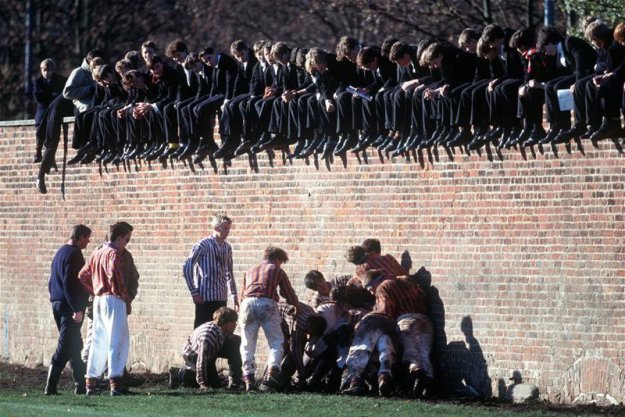
Eton schoolboys gather to watch The Wall Game.
“Class and football is inseparable as far as England is concerned. No other nation outside of the British Isles seems to hold the same pretensions and stresses over the social strata that its footballers and football supporters belong to, or appear to belong to, as England does. Though the late-19th Century public schools may have moulded and codified its laws, and helped spread the sport across the world through the networks of the empire and enterprise, it is unquestionably the game of the working class. Urbanisation and industrialisation brought people together like never before to learn, play and grow football into a national pastime, and ultimately a cultural phenomenon in its own right. But where did all the public school boys go after the masses ran away with their rule book?” Squawka

Tactical Analysis: Argentina 6-1 Paraguay | Albiceleste exploit space between lines to cruise to victory

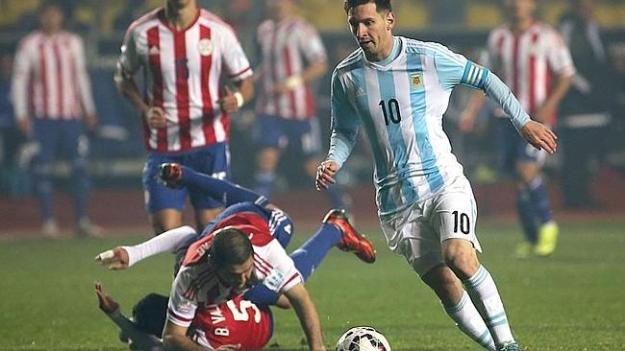
“A place in the final was up for grabs as the favourites, Argentina were up against Paraguay, who against all odds overcame what was a mediocre Brazil side in the quarter finals. The two sides had met previously in the competition with Argentina squandering a two goal lead in the second half. That, along with Albiceleste manager, Gerardo Martino’s history as coach of the Paraguayan national team made for an intriguing clash and one that some thought may go down to the wire. However, those expecting a close game saw the complete opposite as Argentina ruthlessly swept Paraguay aside by 6 goals to 1 with Lionel Messi once again at his brilliant best, laying on the assists for 3 of his team’s 6 goals. The ridiculous amount of space between the lines and Argentina’s exploitation of the right-hand side proved Paraguay’s undoing. No mercy was shown to the Paraguayans with Martino’s men looking to cement their place in the final; they showed no signs of letting their 2 goal lead slip this time around despite Lucas Barrios halving the deficit on the stroke of half-time.” Outside of the Boot

Sacked! Profiling Managers Who Failed

“Every year in the Premier League, around November (though increasingly it seems earlier), the press starts to talk about the ‘sack race’. In this time, it is not uncommon to see headlines like ‘X is one bad result from the sack’ or ‘Loss in game against Y could spell end for Z’. The focus on results has always seemed slightly odd to me. What if manager X inspires a great performance only to lose against the run of play? Should he be sacked? Conversely, if the team puts out the worst performance of the season but manage to scrape a point (or three), should that really influence your decision to sack the current boss?” Statsbomb

Messi takes over, Argentina trounces Paraguay in Copa America semi

bc3c114-1f99-11e5-9bcb-f95a534f046c
“There was no goal for Lionel Messi, but there was everything else in Argentina’s 6-1 win over Paraguay in the Copa America semifinal on Tuesday. Messi orchestrated an Argentina performance that at last reached the attacking heights if which it should be capable, setting up five of the six goals and generally playing with a playful menace. Marcos Rojo put Argentina ahead after 15 minutes and when Javier Pastore added a second 12 minutes later, the game already seemed over.” SI – Jonathan Wilson (Video)

Even hostile Chile fans forced to acknowledge Lionel Messi’s greatness
“The problem with a genius like Lionel Messi is that you’re always waiting for him to perform. You can’t watch a game he plays in as you watch any other game because you’re always hoping that this will be of those days when he turns it on, and if he doesn’t you end up feeling a little cheated. Nobody felt cheated on Tuesday night, just grateful to have been there, unless you had the misfortune to be a Paraguayan defender. The Chile fans who made up most of the crowd and who had begun the game by jeering the Argentinian national anthem and chanting ‘Argentinos – hijos da puta’ ended it in awed applause.” Guardian – Jonathan Wilson

Tactical Analysis: Argentina 0-0 Colombia (5-4 pens) | Messi and co. through to semis despite ultra-defensive Colombia
“In another battle between two giants of South American football, Argentina squared up against Colombia with the tantalising prospect of a possible semi-final clash with Brazil. Gerardo Martino’s men were tipped by many to go all the way in the competition and have looked on course to do so, though they are still yet to hit their stride. Colombia, on the other hand, have underwhelmed throughout the competition, scraping through to the quarter finals and scoring just one goal in their first three games.” Outside of the Boot

Attacking stars set to light up Copa America final

“So will Chile finally have something to put in its trophy cabinet? Or will Argentina win its first senior title since 1993? There is plenty at stake, then, in the final of the 2015 Copa America. Many treat this tournament as a warm up for the coming World Cup qualifiers, but not these two teams. Chile, as host, is obliged to put on a show, especially given the fact that it has never won the competition. A sense of ‘if not now, when?’ has hung over Chile in this Copa. It has probably its best ever generation, with a group of players in their prime with the experience of two World Cups to help them through. The tournament has been set up for them to reach the final – they were in the easiest group, have played all their games in Santiago’s Nacional Stadium and have avoided the heavyweights – until now.” World Game – Tim Vickery

Hope and faith – the anatomy of Peru’s transformation

“When Copa America 2015 was about to get underway, you would find very few people that would have backed Peru to win the tournament at a whopping 100/1. Only two nations were given less of a chance of winning the tournament – Bolivia (200/1) and Jamaica (500/1). If you fancied a punt on the competition’s top scorer, you could’ve gotten 125/1 on Peru’s hat-trick hero Paolo Guerrero topping the charts; before Peru’s match against Chile the best odds you’d have found was 3/1. In a group with Brazil, Colombia and Venezuela, Peru weren’t given a chance. No-hopers. Whipping boys.” backpagefootball

Valeriy Lobanovskyi: Football’s Premier Scientist

“Through the annals of footballing history, there have been a multitude of figures whose contribution to the game can be termed as colossal. Names such as Jimmy Hogan, Herbert Chapman, Victor Maslov, Rinus Michels, Arrigo Sacchi, have left their inedible mark on the sport through their philosophies of how the game should be played. But among these, the name of Valeriy Lobanovskyi has long gone unnoticed and underappreciated. His contribution to the game is as important and as ground breaking as any of the contributions of the rest of these eminent personalities. Born in Kiev in 1939, the young Valeriy was a smart kid, evidenced by his gold medal in mathematics which he was gifted when he left high school.” Outside of the Boot

Beauty leaves the Brazilian game as glitter gives way to grit

“It was not 7-1. It was not an epic humiliation. It was not a result that will reverberate through the generations. But in a sense, Brazil’s Copa América exit to Paraguay is all the more crushing for that. It was not some devastation to be written off as a freak; it was quotidian. Brazil went out of the Copa América by losing a mundane game 4-3 on penalties after a 1-1 draw because these days they are a mundane team; they no longer generate the emotional extremes they once did.” Guardian – Jonathan Wilson

Derlis Gonzalez, David Ospina and more – 4 Players who defined the Copa America 2015 quarters

“Brazil’s ousting in the quarter-final stage was the talking point, but Peru’s run along-with Chile’s impressive showing has kept enthusiasts intrigued. Though Argentina remain as favourites with online sports betting at Sportsbook.ag, it may not be as simple to call these games. Paraguay too who eliminated Brazil for the second successive Copa America, have shown they aren’t to be overlooked. Finley Crebolder picks his four players that defined the quarter-final stage, a stage that has left us with two enticing fixtures.” Outside of the Boot

Argentina outlasts Colombia in PKs in heart-stopping Copa quarterfinal

argentina-colombia-copa-america-quarterfinals
“The bare facts are that Argentina reached the semifinals of the Copa America, defeating Colombia in penalty kicks (5–4) after a goalless draw, but that hardly tells the full story of the match. It had been an astonishing game, which Argentina had dominated almost from start to finish without being able to score. David Ospina, the Colombia goalkeeper, made a number of fine saves, chances were missed, the woodwork was struck twice and, even when Carlos Tevez got by all those obstacles with two minutes to go, Jeison Murillo was on hand to hook the ball clear.” SI – Jonathan Wilson

James Rodríguez irked at Copa América, a year on from World Cup wonder goal

“On Sunday, it will be a year since James Rodríguez scored the goal against Uruguay that, emblematically at least, confirmed his talent. His performances for Porto and Monaco had marked him out as a player of great potential and the rumours linking him with a move to Real Madrid were well-established, but it was his sumptuous chest and volley against Uruguay in the last 16 of the World Cup that provided the image of his brilliance, a shorthand for what he is capable of.” Guardian

Chile end Copa America quarterfinal curse by defeating feisty Uruguay

bbb
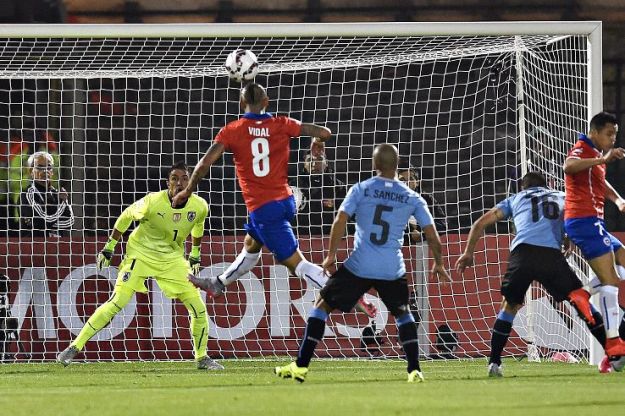
“And so Chile did not fall foul of the Copa America curse of the quarterfinals. In four of the past five tournaments the hosts have been eliminated at this stage — three times by Uruguay. This time, though, there were no slip ups, and Uruguay were beaten 1-0. Ninety-nine years ago they kicked off the first Copa America — against Uruguay — and they are still looking for their first tournament win. Their golden generation is at its peak. They are at home, with all of their games taking place in Santiago’s National Stadium. But for a long time on Wednesday night, it was looking like a case of ‘if not now, when?’ for the Chilean team.” ESPN – Tim Vickery

A Guide to Copa America, in Queens

el-gauchito-nyc
El Gauchito, 94-60 Corona Ave in Queens.
“Copa América, the South American soccer championship, is in its third week in Chile, and has given the world everything it could handle from a tournament: dramatic comebacks, shocking suspensions, all-out scoring feasts, and acts of idiocy and manslaughter off the pitch. Now, after the end of the group stages, eight of the original 12 teams remain, and they will begin the direct elimination rounds today. There is still plenty of action to catch—with some potential classic matchups coming up—and as we wrote during the World Cup, there is no finer place to watch international soccer than New York City. So if you aren’t able to make your way over to Chile, your next best shot at living the fever of South American soccer is right here, in the almost impossibly diverse borough of Queens. From Astoria to Sunnyside, bars, bakeries and butcher shops are turning their establishments into prime viewing spots. Here are the upcoming matches and the best places to catch them with diehard fans from each country.” ROADS & KINGDOMS

Uruguay have the history to hit Copa América heights against Chile
“Chile have scored more than twice as many goals as anybody else in this Copa América. They will be playing at home in front of 40,000 red-shirted fans. They have played with a verve and a fluidity nobody else in this tournament has matched and, if anything, Arturo Vidal’s drink-driving charge, which could have been a destabilising influence, seems to have given them an enhanced sense of purpose. Uruguay scraped through their group in third place, having scored only two goals. Other sides in their position might have approached Wednesday night’s quarter-final like lambs to the slaughter but not Óscar Washington Tabárez’s team. This is the sort of situation Uruguay have traditionally relished.” Guardian – Jonathan Wilson

Copa America: Group C’s key tactical system, game-changing performance, and best young player
“Group C has easily been the Copa America’s most engaging, as shock wins by Venezuela and Colombia saw all four teams level on points entering the final match day. With a resurgent Thiago Silva leading Brazil to victory over Venezuela to top the group, the final placing may not seem like much of a surprise. However, with Brazil needing a last-minute winner to beat Peru, Neymar’s suspension, and a host of strong defensive performances, many from unsung, domestically based players, these six games provided us with multitudes of knife-edge tension. As the three survivors lick their wounds ahead of the quarterfinals, here is a brief look back at some of the keys to the way things played out.” Outside of the Boot

Copa America quarterfinals: Argentina and Brazil face tense challenges
Chile vs. Uruguay. All the momentum is with Chile, but all the history is with Uruguay. The hosts have looked to be far and away the best team in this tournament so far, scoring twice as many goals as everybody else, but Uruguay have by far the best record in spoiling such house parties. On the past three occasions that the latter have met the home team — Argentina 2011, Venezuela 2007 and Paraguay 1999 — they have eliminated them. That’s all the more relevant here because it reflects just how good the Uruguayans are at digging in and disrupting more exciting and excitable sides. Oscar Tabarez’s current side are experts at that, and abnormally difficult to beat. … ” ESPN

Cardiff City – Bullet The Blue Sky

“Having tried so hard to reach the Premier League, it must have been a bitter pill to swallow for Cardiff City, as the Bluebirds only managed to stay in the top flight for one brief season before dropping back to the Championship. They had been knocking on the door for so long, being eliminated in the play-offs for three consecutive seasons, before finally securing automatic promotion after comfortably winning the division in 2013. The club had been guided to success in that memorable season by Malky Mackay, but a disappointing start to Cardiff’s first ever Premier League campaign, allied with a breakdown in trust over transfers between the manager and owner, Vincent Tan, resulted in the Scot’s departure in December.” The Swiss Ramble

Tactical Analysis: Brazil 0-1 Colombia | Colombia’s counter-press proves effective as Dunga’s men finally lose

“Brazil entered this heavyweight clash in Santiago brimming with confidence and seeking their 13th straight win since manager Dunga was reinstated. After narrowly edging past minnows Peru thanks to Neymar’s brilliance, Brazil topped the group going into this game. However, a much better performance was required if they were to overcome the threat of Colombia, desperately needing victory to avoid elimination from the tournament. With world-class attacking talents such as Neymar, James Rodriguez and Falcao on display and Colombia’s survival in the competition on the line, this had all the makings of a memorable game and was one that would have been worthy to grace the final. Alas, excluding the post-match brawl, this was anything but a memorable game mainly due to Brazil’s awful decision making in the attacking phase and an over-reliance on Neymar as well as a frighteningly high tempo throughout the 90 minutes which denied both sides the opportunity to find any real rhythm in the game. In the 3rd meeting between these teams since their World Cup quarter-final clash in Brazil, Colombia’s superb counter-pressing system and Jeison Murillo’s scrappy finish from Juan Cuadrado’s free kick in the 36th minute ensured a nervy 1-0 victory for los Cafateros.” Outside of the Boot

To the Five Boroughs

“It was in the fourth minute of sudden death extra time at Robert F Kennedy Stadium in Washington DC when Lothar Matthäus registered his first assist in Major League Soccer. While playing for the impossibly named New York/New Jersey MetroStars in the first spring of the new millennium, the former European and World Footballer of the Year took a free kick that was headed in by his fellow defender Mike Petke for a 3-2 win at defending champions DC United. Under the league’s rules at that time, this meant that the MetroStars had won the game. I remember the moment as much for what happened next. As his team-mates mobbed Petke and buoyantly celebrated a rare away victory at their east coast rivals, Matthäus stayed well away from the melee, pointedly abstaining from joining the jubilation. The team captain and expensive marquee star was showing everyone just what he thought of a league that was not yet five years old. This is Mickey Mouse football. Two months ago I was still playing for Bayern Munich in the Champions League against Real Madrid. …” In Bed With Maradona: CONTRASTING APPLES: KAISER AND LOTHAR

To the Five Boroughs: IBWM Assignment #1 – New York

Arturo Vidal and Neymar subplots in a Copa América rich with stories

“There is nothing quite so effective at removing stains of ignominy as victory. Chile’s game against Bolivia on Friday began with Arturo Vidal’s name being cheered by the 45,000 fans at the Estádio Nacional, a clear message of support after he was charged with drink-driving. It ended with Chile having won 5-0 after a display of exhilarating football and, to the local media at least, questions about whether Vidal should have been allowed to play on were fading before the thought that this Chile squad is probably better equipped than any other in the country’s history to win the Copa América. A wait that began in the very first continental tournament in 1916 may be about to come to an end.” Guardian – Jonathan Wilson

Tactical Analysis: Argentina 1-0 Uruguay | Argentina exploit width to win a tight game

ArgUru
Argentina 1-0 Uruguay
“The classic clash of South America, had the favorites (Argentina) as the winners of the match. With Messi in charge, Argentina are the favorites to win it all. A very clear game, with one team playing attack minded football and the other team focusing on blocking the spaces. Uruguay were focusing on the counter-attacks and did create some chances and were really close to scoring a late equalizer. Argentina were the better side this evening, even if they were struggling to play through this low positioned Uruguay team, and they did find the goal with a cross from Zabaleta to Aguero, scoring the only goal of the game.” Outside of the Boot

Football Management – Davis Muthoka

Football Management is a blog maintained by Dr. John Beech an independent academic who is an Honorary Research Fellow at Coventry University where he was Head of Sport & Tourism at the Applied Research Centre in Sustainable Regeneration (SURGE). Through his work on this blog, Dr. John Beech received the Football Supporters’ Federation Writer of the Year Award for season 2009/10. With detailed data on over 200 English soccer clubs, the blog offers commentary on current as well as historic issues on management and governance of English league clubs. The blog is read in over 175 countries across the globe. The homepage of Football Management is easy to navigate. The first section on the homepage is the Recent Posts section. An article that caught my attention under this section is titled Opening a can of worms ?.This article covers the issue of the relationship between English clubs’ management and their local councils especially when the clubs are at the center of an issue. Given the big roles these clubs play in the economies and the unwillingness of the councils to anger fans, the author claims there is a possibility of these clubs failing to be subjected to the due legal process in settling significant issues. …” Soccer Politics

Radamel Falcao is the reason Colombia isn’t playing as well as it did at the World Cup

ap787677653632
“When news broke in January 2014 that Colombian star Radamel Falcao had picked up a serious knee injury playing for club team, AS Monaco, an entire nation held its breath… with one notable exception. While Colombia and the wider soccer world was left to lament a World Cup without arguably the game’s best out-and-out center-forward, coach José Pékerman could have been forgiven for feeling a certain sense of relief. On the surface, it was a huge blow. Los Cafeteros had just secured its first trip to a World Cup in 16 years during a qualification campaign that saw it hammer defending South American champion Uruguay 4-0, pick off Chile 3-1 in Santiago, and become just one of two sides to prevail at the dizzy heights of La Paz. Expectations were at their highest since Carlos Valderrama led his 1994 side to the United States with realistic aspirations of becoming world champions.” Fusion

Arturo Vidal, Chile cruise past Bolivia to finish atop Group A in Copa America

“Led by a brace from Charles Aranguiz, host Chile cruised to a 5–0 win over Bolivia on Friday in its final group stage game in the Copa America. The victory meant Chile finished atop Group A, while second-place Bolivia will also advance to the quarterfinals. Here are three thoughts on Chile’s win.” SI – Jonathan Wilson

Why a tough start to the season is the perfect opportunity for Brendan Rodgers

“Liverpool endured a horrible campaign last season. There was however, a 13 game unbeaten run which makes many wonder if the season was as terrible as is being suggested in various articles and on social media platforms. The short answer is yes, it was. Liverpool failed to meet any of their intended goals from the season and more importantly, did so in a horrible fashion. In the last month, there was absolutely no identity left in their game and the players were playing without any purpose. The last game of the season ended in an embarrassing 6-1 defeat for Liverpool, a game which was Steven Gerrard’s last in the Red jersey. This game could be cast off as dead rubber but it would be incredibly naïve to do so.” Outside of the Boot

Brazil’s inadequacies echoed by Neymar’s lack of patience against Colombia

aa460x276
“Disappointment would have been bad enough for Brazil, but after the final whistle it became disgrace. Defeat to Colombia, followed by Neymar’s red card, may not resonate like the 7-1 defeat to Germany in the World Cup semi-final last year did, but the shame is just as real. After all the talk of trying to find some sort of redemption in the Copa América, all the same old flaws were there, just without quite the same hysteria. This was a petulant, complacent, unimaginative Brazil and they now, almost unbelievably, must beat Venezuela in their final group game on Sunday to be sure of making it to the quarter-finals – and they will have to do it without the player on whom they have become so reliant.” Guardian – Jonathan Wilson

Breaking down last night’s Colombia-Brazil nonsense with the power of GIF
“Last night, Brazil and Colombia met in a Copa América group stage game, almost one year after Brazil eliminated the Colombians in Forteleza in the 2014 World Cup quarterfinals. But this time was different. Colombia, having already succumbed to Venezuela in its opening game, managed to pull itself together and frustrate Brazil for 90 minutes, eeking out a 1-0 victory. Typically, that would be the story. Colombia exacts revenge on the Samba Boys. Or something basic like that. But that would be a disservice to the real story: These two teams wanted to murder each other, and they came damn close after the final whistle.” Fusion

Neymar’s brilliance and immaturity have been on display at Copa America
“There was a time not long ago when Brazil boasted countless world-class attackers. It was a time when, for example, Marcio Amoroso could finish as top goal scorer in Brazil, Italy and Germany, but count himself fortunate simply to be named in the Brazil squad. Mario Jardel scored 130 goals in 125 league games for Porto and collected only 10 caps, usually as a substitute. Giovane Elber, meanwhile, spent a decade banging in the Bundesliga goals and managed just 15 caps.” ESPN – Michael Cox

Gerardo Martino’s shrewd tactical tinkering helps Argentina pip Uruguay

“The old rivals rose to the occasion. The match between Argentina and Uruguay may not have offered up all of the goals of the previous night’s action in the Copa America, but there was quality and drama to the end as Argentina held off a late Uruguayan rally to win by the lone goal. Argentina coach Gerardo Martino had prepared a trap for his opponents. Lionel Messi dropped deep, into a position where, like some general of old, he could survey the battlefield in search of the enemy’s weak point. He also drew attention of the Uruguayan markers, creating space for Javier Pastore to advance and set up the play some 30 metres from goal. With Angel Di Maria elusively wandering in from the left flank, Argentina opened up with a fluidity which threatened an early breakthrough.” ESPN – Tim Vickery

Sergio Aguero rescues labourious Argentina in 1-0 win over Uruguay
“Three quick thoughts on Argentina’s frantic 1-0 win over Uruguay in the Copa America on Tuesday night. 1. Argentina learn from Paraguay mistakes. Sergio Aguero scored a goal to light up a game, even if this was not a game to light up a tournament. Argentina have at least renewed their spark, however, after claiming their first win of the Copa America with this hard-fought 1-0 win over Uruguay. Their manager, Gerardo Martino, was sent off for first-half touchline remonstrations, but his team are finally off and running. The frustration after the 2-2 draw with Paraguay has now evaporated, and the relief could be witnessed at the final whistle.” ESPN

Team Focus: Neymar Reliant Brazil Still Showing Problems of Old

NeymarBraHeader
“Brazil’s Copa America group match against Peru may ultimately have produced the result that had been widely anticipated, but it’s fair to say nobody was expecting the game to play out quite like it did. Dunga’s Brazil was supposed to be dogged and cautious, to have shorn the wildness that ultimately undid Luiz Felipe Scolari’s side at the World Cup, but the game in Temuco, in the first half in particular, was raggedly end-to-end. Brazil had won 10 friendlies in a row since Dunga took over at the end of the World Cup – one more than they had under Scolari in the build-up to that tournament. That seemed room for cautious optimism, but after two minutes, very familiar old failings had surfaced.” Who Scored? – Jonathan Wilson

The dilemma of a Middle Eastern footballer

“Football in the Middle East has grown but perhaps not fast enough. It has emerged as another place for Europe’s elite to finish their careers at but what about transfers the other way? Strict work permit regulations have thwarted the efforts of numerous Middle Eastern footballers looking to ply their trade in Europe. Hamoudi Fayad has a look at the state of affairs.” Outside of the Boot

Football League season review: Charlton Athletic – Striking while the iron is hot

“Charlton’s season ended with half the club’s support applauding one of their favourite strikers, celebrating his successful end to the season. In the final game of 2014/15, celebrations at The Valley echoed the League One victory of 2012. Then, the Addicks cantered to the title with a grand title of 101 points – driven on by the management of Chris Powell and the forward presence of Frenchman Yann Kermorgant, alongside Bradley Wright-Phillips. The future looked bright for Charlton then. Sadly, issues of funding and ownership got in the way with no real investment in the successful squad. Come the winter of 2014, a new owner came along in the form of a Belgian businessman named Roland Duchatelet. Armed with his own ideology of how things should be done, a host of foreign imports replaced established stars on the sidelines and on the pitch. Kermorgant, perhaps considered too old for a long-term contract, was sold to Bournemouth and Chris Powell was sacked as the team struggled at the foot of the table.” The Football Pink

Eight things we learned from the Internet about Copa América 2015

ap590870256452
“For the next three weeks, the pulse of South American futbol beats from Chile, where the continent’s 10 national teams plus invitees Mexico and Jamaica will battle it out for a piece of international silverware that’s been contested for 99 years. This is the Copa América, a tournament renowned for its storied rivalries, vibrant fan support, politically-charged history, and incredible star power on the pitch; a competition which, for the past near-century, has ignited a continent. With just days left until the tournament kicks off, we turned to the world’s greatest source for information on the tournament — Wikipedia — and came back up with a few gems. The Copa América, it turns out, is a weird, weird tournament.” Fusion

Copa America preview roundtable: Games, players, stories to watch
“For a second straight summer, a massive international prize is on the line in South America, and even though it may not carry the weight of the World Cup, the 2015 Copa America features plenty of star power and a winner’s medal that includes a ticket to the 2017 FIFA Confederations Cup. Days after winning the Champions League together, two-thirds of Barcelona’s record-setting front line–Lionel Messi and Neymar–will be on display as adversaries (the third member, Uruguay’s Luis Suárez, is still banned internationally for his World Cup bite of Giorgio Chiellini); Brazil puts its undefeated mark under Dunga (this time around, anyway) on the line in its first meaningful games since last summer’s disappointment on home soil; host Chile and Colombia aim to build on the success they enjoyed last summer; and a series of upstarts look to spring surprises in what promises to be an intense 12-team competition. Jonathan Wilson and James Young are on the ground in Chile, and here are some of their games, story lines and other items to watch over the next three-plus weeks…” SI – Jonathan Wilson

Tactical Analysis: France 3-4 Belgium | Belgium’s fluidity in midfield and France’s shift to a 4-2-3-1

“Drawing ‘big picture’ conclusions from friendlies, especially after a long and gruelling European campaign, can often be an exercise in futility. This is doubly true with top teams such as Belgium and France, most of whose players were involved in additional 10-20 matches in lengthy European and cup campaigns. With key players such as Paul Pogba, Patrice Evra, Thomas Vermaelen, Vincent Kompany and Kevin de Bruyne missing from both sides, one might have hoped that rather than playing for the result, both teams might be given to a bit of experimentation on the day, with a chance to see some new faces or perhaps a bit of tactical innovation. After all, despite France being qualified as hosts of Euro 2016 and Belgium topping their group, neither have been as scintillating as one might expect.” Outside of the Boot

Watford – Upwards And Onwards

“Amidst all the excitement about Eddie Howe’s Bournemouth securing promotion to the Premier League, Watford’s similar feat has been a little overlooked, which is a shame, as the story is just as interesting. The turnaround since the Pozzo family purchased the Hertfordshire club, both on and off the pitch, has been remarkable. Watford narrowly missed out on a Premier League place in the Italians’ first season in 2012/13, when Gianfranco Zola’s team was defeated 1-0 by Crystal Palace in the Championship play-off final with an extra-time penalty. Zola had replaced the popular Sean Dyche and enjoyed immediate success, but struggled the following season, when the club appointed Beppe Sannino. After Watford finished a disappointing 13th, the writing was on the wall for Sannino, who resigned early in the 2014/15 season.” The Swiss Ramble

Borussia Dortmund: What went wrong?

“It was not the happy ending everyone at the club wanted. Borussia Dortmund lost to VfL Wolfsburg in the DFB Pokal final in what was Jürgen Klopp’s last match as BVB coach. After being at rock bottom in February, the Schwarzgelben were able to gain momentum and eventually reached seventh place in Bundesliga. That means they will play the Europa League qualifiers, when Thomas Tuchel takes over as new manager at Signal Iduna Park. But after a disappointing season, the reasons behind what went wrong must be investigated. Here are ten points, raising no claim to completeness.” Outside of the Boot

Barcelona 3-1 Juventus: Barca pounce to end spells of Juve pressure

“Barcelona won the European Cup – and completed a treble for the second time in seven years – with a 3-1 victory over Italian champions Juventus. There were no surprises on Luis Enrique’s teamsheet. Andres Iniesta had been the only slight injury doubt, but he was fit to start and wore the captain’s armband. Luis Enrique continued with his policy of using his reserve goalkeeper in cup competitions, which meant Marc-Andre ter Stegen started on home soil, with Claudio Bravo on the bench.” Zonal Marking

Liverpool’s Striking Choices And Problem Shooters In The Premier League 2014-15

“If you are a club aiming to infiltrate the Premier League’s top four on a regular basis, how does this sound as a description of one of your strikers for next season: 4 time League Champion in Top 5 leagues; 2 time Domestic Cup winner; Champions League Winner; Established international for major European nation; 24 years old. This player is coming into his peak years and his club have already secured his services on a long contract. This is a winning situation, right?” StatsBomb

Juventus, Barcelona, and Beyond: How the Champions League Final Challenges What We Thought We Knew About Soccer

image-a-24_1433625344988
“Thanks to Sepp Blatter, the FBI, a hastily called FIFA press conference, and years and years of unchecked corruption, the state of the game has been the talk of the soccer town this week. Of course, none of that talk has anything to do with, well, the way soccer is played on the field. Thankfully, tomorrow we get the biggest (men’s) soccer game of the year: the Champions League final between Barcelona and Juventus. With championship games, there’s always a temptation to turn the result into a referendum after the fact, to take what happened in the final and retroactively apply it to the season gone by. But if Barcelona lose tomorrow despite their status as heavy favorites, it doesn’t mean they were any less dominant for the six months prior, and if Juventus get blown out, that doesn’t make their unlikely finals run any less meaningful. It’s not the final game that makes the trend; it’s everything leading up to it.” Grantland

How do Juventus stop Lionel Messi and Barcelona’s front three?
“It’s a question that opponents have been asking since the four-year-old Lionel Messi first wandered on to a dusty pitch in the Rosário suburb of Grandoli, nudged the ball in front of him and set off on a slaloming gambeta that took him past three players. How do you stop him? Before the semi-final Pep Guardiola, who perhaps knows his game as well as anybody, admitted that you just couldn’t. As Messi demonstrated against Athletic Bilbao in last Saturday’s Copa del Rey final, when he’s in the sort of form he is in at the moment, even surrounding him with three players and placing another three between him and the goal isn’t enough. So what do Juventus do?” Guardian – Jonathan Wilson

Vintage Barcelona display suggests Champions League legacy has a future
“The holy grail of becoming the first team to retain the Champions League remains unclaimed but this Barcelona, after winning a third European title in seven years on Saturday, can surely be regarded now as not merely a great team but a great dynasty. This Barça perhaps now stand comparison with the Real Madrid team that won the first five European Cups. That is not to say that winning three times in seven years with three semi-final appearances is greater than winning five in a row, it’s to say that the core of this Barça side has remained more consistent than the core of that Madrid one; that – remarkably in this age of transfer-market frenzy – this Barcelona have managed to keep winning with essentially the same players.” Guardian – Jonathan Wilson

Tactical Analysis: Juventus 1-3 Barcelona | Barcelona’s quality, and poor positioning from Juventus make the difference
“We all waited for this fantastic evening, and what a game it was. Barcelona took on the lead very early after a pretty shaky period for Juventus, thanks to the man of the match, Iniesta who found Rakitic with a cut-back pass into the penalty-spot. Juventus did eventually shake things up and did also find the equalizer to keep the final dramatic enough, but with the attacking-trio of Barcelona, Juventus proved to be too vulnerable to direct counter-attacks.” Outside of the Boot

4 Champions League Final Storylines – and How Messi’s Presence Could Make Them Irrelevant
“In coming up with an angle for writing this, I was conflicted. On one hand, there are an exorbitant number of spectacular storylines for Saturday’s Champions League Final. When this many legends-in-the-making take the pitch at once, there are bound to be more than a few fascinating plot points. But then I kept coming back to one thing: Lionel Messi will be on the field. I’m going to run through four of the most interesting storylines for Barcelona vs. Juventus on Saturday, and then I will get to Messi. As you read them, just remember the presence of that diminutive Argentine could render all of them basically irrelevant. Here we go.” Soccer Pro

Europe’s best, Barcelona finishes treble run with 3-1 win over Juventus
“Barcelona capped an incredible season with a 3-1 win over Juventus in the Champions League final on Saturday, sealing a treble of trophies and ending the 2014-2015 European soccer season on an exciting high note. Ivan Rakitic opened the scoring in the fourth minute with the fourth-fastest goal in a Champions League final, and it looked like Barcelona would ease to the title. But Gianluigi Buffon made a number of clutch saves, and Alvaro Morata, the former Real Madrid striker, found an equalizer in the 55th minute, finishing off a rebound from a Carlos Tevez saved shot.  Luis Suárez scored the eventual winner 13 minutes later, though, and Neymar, who earlier had what he thought was Barca’s third goal ruled out for a handball, tallied the insurance goal with the last kick of the game.” SI

How Barcelona’s tactics helped it beat Juventus in Champions League final
“As long as it played to its capabilities, Barcelona always seemed likely to win the Champions League final against Juventus on Saturday. It did just that, taking its fifth European Cup with a 3-1 victory while controlling most of the match with its flexible possession. Barcelona’s unchanged lineup set out in its traditional 4-3-3 system. Neymar played wider than Lionel Messi, who cut inside as a situational No. 10. A relatively flat line of three in midfield filled in the front line’s gaps, and the fullbacks also provided width when the forwards tucked in.” SI
Wolfsburg 3-1 Dortmund: Wolfsburg comfortable despite rarely dominating

“Jurgen Klopp waved farewell to Dortmund with a defeat in the German Cup final. There were few surprises in Dieter Hecking’s team selection. Andre Schurrle continues to be left on the bench ,with both wide players in good form. Timm Klose has displaced Robin Knoche at the heart of Wolfsburg’s backline, while Naldo – who had been an injury doubt – was fit to start alongside him.” Zonal Marking

How Barcelona’s Luis Enrique proved everyone wrong – and ended the hunting season

BarJuvPred
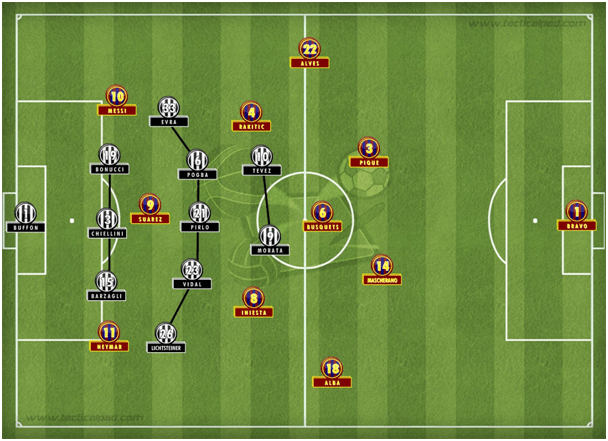
Juventus’ possible defensive formation.
Luis Enrique declared hunting season open in the first week of November and it lasted well into the new year. Barcelona had just been beaten at home by Celta de Vigo, the first time the Galicians had ever won at the Camp Nou, and the Catalans’ coach, who had watched the criticism grow almost from the start, sarcastically foresaw a ‘nice week’ ahead. As it turned out, that was optimistic: it was more than a week and it would get a whole lot ‘nicer’. A 0-0 draw with Getafe followed in December and when 2015 opened with a 1-0 defeat at Real Sociedad, a crisis opened.” Guardian

UEFA Champions League Final: How will the teams tactically set-out?
“We have now finally come to the final stage of the Champions League, with a team that has not been good enough in the past few editions of the Champions League in Juventus, and Barcelona, who also started off this season with problems as well on and off the pitch, with an apparent rift between Messi and Enrique, but after the defeat against Moyes’ Real Sociedad, has transformed into an unstoppable team, not losing a single game. If we could separate these teams in any way, than that would without doubt be on the basis of style of play. The percentage of the ball-possession that Barcelona has in a game on average (this season) is 62 % while on the other hand you have Juventus with 52 %.” Outside of the Boot

Juventus and their Champions League conquest
“For the first time since 2003, the black and blue striped jerseys of Juventus FC, will be seen in the Champions League Final, which this year will be held at the Olympiastadion in Berlin. On June 6, Gianluigi Buffon will have the chance to lift the trophy for the first time in his career and there is no better time than right now for him and Juventus to win the Holy Grail. After many years of failure in Europe, Juventus have finally made it to the big time. What has changed? What finally made the Old Lady sing in tune? To start off, we must address what makes Juventus such a difficult team to beat. What cannot be denied, is their defensive prowess, composure and organisation.” backpagefootball

Find a Free Pirlo: How Juventus Built a Champions League Finalist on a Budget
“Why are Juventus in the Champions League final? The short answer is Paul Pogba, the guy who might just be the best player in the world not named ‘Lionel Messi’ or ‘Cristiano Ronaldo.’ After joining Manchester United at 16, Pogba’s relationship with Sir Alex Ferguson soured over a lack of playing time. He left on a free transfer,1 signed with Juventus, and, three years later, here they are: one win away from a treble. Of course, the longer answer is, well, longer. But Pogba’s move is of a piece with an approach that built a team capable of overcoming plenty of more expensive teams.” Grantland

Sepp Blatter to Resign as FIFA President

aaaa
“Sepp Blatter, who led world soccer’s governing body for 17 years and had just won re-election for a fifth four-year term, resigned his position at a hastily called news conference in Zurich on Tuesday evening in the wake of an international corruption inquiry. In a short speech delivered at the headquarters of FIFA, which oversees global soccer, Mr. Blatter said that ‘FIFA needs a profound restructuring’ and that he had decided to step away from the organization for which he had worked in various positions for 40 years. Mr. Blatter, 79, who spoke in French, then referred to his recent re-election by FIFA’s 209 member nations when he said, ‘Although the members of FIFA have given me the new mandate, this mandate does not seem to be supported by everybody in the world of football.’ …”
NY Times, The Rise and Fall of Sepp Blatter

Sepp Blatter to resign as Fifa president amid corruption scandal
“Sepp Blatter says he will resign as president of football’s governing body Fifa amid a corruption scandal. In announcing his exit, the 79-year-old Swiss has called an extraordinary Fifa congress “as soon as possible” to elect a new president. Blatter was re-elected last week, despite seven top Fifa officials being arrested two days before the vote as part of a US prosecution. But he said: ‘My mandate does not appear to be supported by everybody.'” BBC (Video)

John Oliver and Last Week Tonight went after FIFA again
“Soccer fan and HBO’s Last Week Tonight host John Oliver isn’t afraid of taking FIFA to task for, well, being FIFA. Two weeks ago, Oliver provided a brief update on the troubled non-profit organization in advance of its presidential elections. But now that the election is over and FIFA has overwhelmingly voted to give ‘President for Life’ Sepp Blatter a fifth term, Oliver and his team have brandished the knives once again. Apparently, no one is safe. This time, those caught in the Last Week Tonight wake include alleged FBI snitch and acclaimed cat person Chuck Blazer, the spectacularly and often hilariously allegedly corrupt former CONCACAF ringmaster Austin ‘Jack’ Warner, as well as FIFA’s corporate sponsors. …” Fusion (Video)

Sepp Blatter to resign FIFA presidency
“In a stunning announcement made at a hastily called news conference Tuesday in Zurich, FIFA President Sepp Blatter said he will resign after FIFA elects a new leader at an ‘extraordinary congress’ that will be called by the organization’s executive committee. The election will be at least four months away, a FIFA official announced. FIFA’s next congress, at which such decisions usually are made, is not until next May in Mexico, but FIFA announced its desire to speed up the process in order to put the scandal in the past.” Washington Post (Video)

These 5 alternatives to Sepp Blatter are just as likely to fix a broken system
“For the past week, the soccer community has been discussing the FIFA investigations, indictments and arrests in a way that’s made me want to do the unthinkable and delete my Twitter account. The rhetoric from soccer journalists, commentators, and outside observers has come across like a public contest to decide who can most poetically (or angrily, if you like your takes hot n’ fresh) make painfully obvious points like ‘bribery is bad,’ ‘Qatar is a weird place to play soccer,’ and ‘women are people, too’ sound like groundbreaking shit. I hate it, but at the same time, I understand the struggle.” Fusion

Salt Lake Olympic, global finance scandals hint charging FIFA execs could prove much easier than punishing them
“On June 8, 1998, two days before Brazil opened France’s World Cup with a 2-1 win over Scotland, a former head of the World Society of Friends of Suspenders from rural Switzerland was elected as FIFA president. Sepp Blatter’s rise to power has proved to be a pivotal moment in modern sports history, but it was far from the biggest sports governance story of the year. That came in that winter, when the International Olympic Committee (IOC) was mired in a scandal related to its award of the 2002 Winter Olympics to Salt Lake City.” Fusion

How Fifa can find a new direction and start the clean-up of corruption
“The 161-page indictment of 14 Fifa officials and marketing executives is pretty repetitive. They are accused of a simple scheme to extract bribes and kickbacks, repeated many times over. National football associations, federations and confederations own the broadcast and marketing rights to the national teams that everyone likes to follow. The elected officials in these organisations are supposed to use the revenues they generate to support the development of the game – but many seem to want to enrich themselves instead.” Guardian

Bulgaria and the secret service

bbb
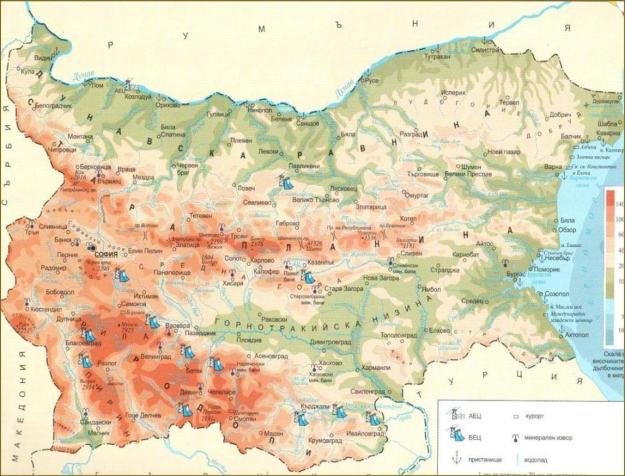
“During the years of the Cold War, the Eastern European secret services were involved in all aspects of everyday life. Football, the greatest social phenomenon of the 20th century, was not an exception. Behind the Iron Curtain, the beautiful game was under the command of a system of departmental clubs. In every Eastern European country, the main derby was between clubs of the army and the interior ministry – with many clubs taking their name from the associated departments, with the club’s associated to the police being named Dinamo (e.g. Kiev, Tbilisi, Bucharest, and Zagreb). The degree of intervention from the secret service depended upon the specificities of the regime.” Slavic Football Union