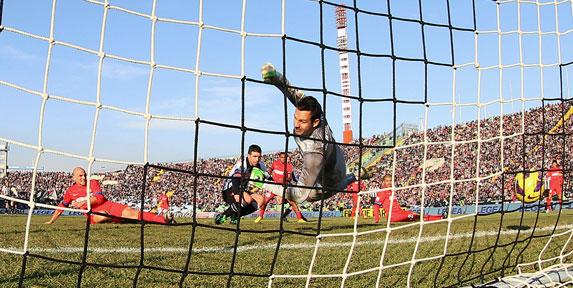
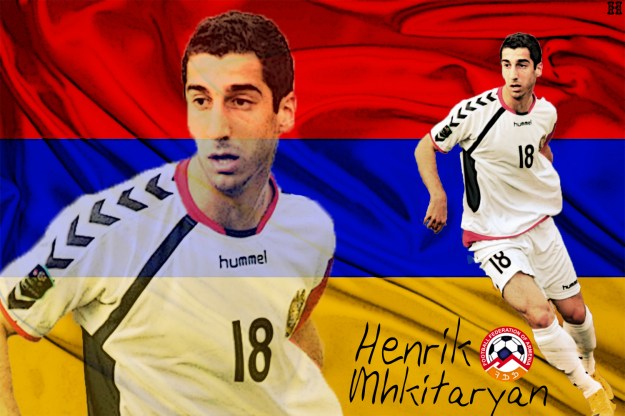
“Helder Postiga’s goal was enough to propel Portugal to the top of their World Cup qualification group with a 1-0 win as Russia dropped the first points of their campaign. Russia had arrived in Portugal top of Group F with a 100% record after four games although the build-up to the game had been overshadowed by speculation over manager Fabio Capello’s future. For Portugal, the game was crucial as they lay third behind Russia and Israel with just three wins from six matches.” ESPN (Video)
Category Archives: Europe
Fabio Capello’s Russia show Portugal the benefits of a strict regime
“Managers react to leaving the England job in a number of ways. Glenn Hoddle resumed a club career. Kevin Keegan seemed to give up on football management altogether. Sven-Goran Eriksson became a preposterous playboy, linked with such increasingly outré schemes that it always comes as something of a start to remember he once made IFK Gothenburg one of the leading forces in Europe. Steve McClaren took himself off inter-railing round medium-sized clubs in the Netherlands and Germany. And Fabio Capello set his not inconsiderable jaw at the world, put a not inconsiderate pay cheque in his pocket and set about making Russia at last live up to its potential.” Guardian – Jonathan Wilson (Video)
Albania cast their net wide and reap the dividends
“Albania has, for all of its footballing history, been a minnow, never qualifying for the finals of a major tournament once, or really ever coming close for that matter. Their largest margin of victory was a 5-0 result against Asian also-rans Vietnam in a friendly in 2003. Most of today’s best ethnic Albanian footballers are representing other national teams. During their last qualifying campaign for Euro 2012, Albania could only muster wins against bottom side Luxembourg and Belarus, flaming out of qualifying once again.” World Soccer
The Beautiful Game behind the Iron Curtain
“If I were to walk into a bar in England, Spain or any of the ‘big’ football nations of the world, and tried to start a conversation about Russian football, the dialogue would most likely sway towards one of three topics: 1) Racist fans 2) ‘The team that Eto’o plays for’ (Anzhi Makhachkala 3) Roman Abramovich. Perhaps past images of communism, dictatorship and war prelude the fine standard of football Russians are treated to week in, week out. Or perhaps maybe people just don’t care much for football that isn’t shown on prime time television. Whatever the reason, millions are missing out on the superb action taking place in the former USSR.” Outside of the Boot
UEFA Prize Money – Rhapsody In Blue

“The Europa League has long been regarded by leading clubs as a poor relation to the far more lucrative Champions League, but Chelsea’s prodigious efforts after parachuting in to the junior competition might just give pause for thought, as they will end up earning more from Europe this season than any other English club. Although they earned €5 million less than Manchester United from the Champions League after exiting at the group stage, they will receive at least €6.5 million from the Europa League, even if they lose the final. If they repeat last season’s victory in the Champions League, the sum earned will rise to around €9 million.” The Swiss Ramble
Hristo all mighty!
“In the middle of the 4th century B.C., the all-conquering army of Philip II of Macedon swept southwards through the Balkans, thus setting into motion an enduring legacy that would be continued and expanded upon by Philip’s more renowned son; the famous, infamous, and glorious Colin Farrell.” World Soccer
Hajduk Split Torcida: trailblazers across Europe
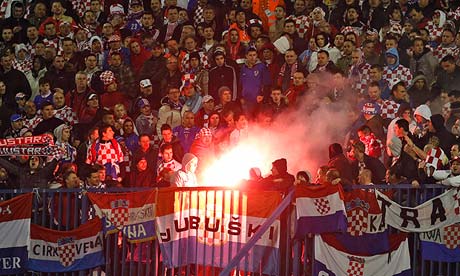
“Astronauts looking down on earth in February 2011 would’ve been greeted with an unusual sight. Alongside the Great Wall of China and Felix Baumgartner on practice missions, thousands of flares lit up the night sky as the Torcida celebrated the 100th year of their beloved club Hajduk Split. Their slogan, ‘Hajduk lives forever’, appears apt.” World Soccer
Galatasaray 3-2 Real Madrid: Terim’s half-time switch gives Galatasaray hope
“Cristiano Ronaldo’s early strike left Galatasaray needing five – and they created enough chances to give Real a fright. Without Burak Yilmaz, Fatih Terim brought in Umut Bulut and stuck to his diamond system, rather than switching to a 4-4-1-1, as rumoured. Jose Mourinho was without Xabi Alonso and Sergio Ramos – he named the expected outfield side with Gonzalo Higuain upfront. Diego Lopez continued in goal. Real’s early goal suggested the tie was over – but Galatasaray stormed back.” Zonal Marking
Drama drips in Dortmund as favorites advance in Champions League

“What a night of Champions League action. A night that provided us with the semifinalists our heads told us to expect — Real Madrid and Borussia Dortmund — as well as the kind of thrilling narrative that our hearts hoped might be possible.” SI
The Question: How is interpretation of the playmaker role changing?
“Perhaps no position is undergoing such evolution so rapidly as the playmaker – or, as it is probably more accurate to call him in his present guise, the creative midfielder. This week, the Champions League quarter-finals seemed almost to showcase the changing interpretations of the position – albeit in the most modern case in unfortunately truncated form.” Guardian – Jonathan Wilson
Özil shines for Madrid, while Dortmund does everything but score
“Jose Mourinho managed to neutralize his former players Didier Drogba and Wesley Sneijder as Real Madrid ran out comfortable 3-0 winners over Galatasaray in its Champions League quarterfinal first leg. Meanwhile Borussia Dortmund remains the only unbeaten team left in the competition after drawing 0-0 with Malaga, even though it created more chances. Here is the rundown of tonight’s action…” SI
Deconstructing the Plovdiv Pistolero
“In the middle of the 4th century B.C., the all-conquering army of Philip II of Macedon swept southwards through the Balkans, thus setting into motion an enduring legacy that would be continued and expanded upon by Philip’s more renowned son; the famous, infamous, and glorious Colin Farrell. In the course of that marauding charge – in 342 B.C., to be precise – Philip passed through the now-Bulgarian city of Plovdiv, renaming it after himself as he did so (Philippopolis). The arrival of Philip preceded centuries – millennia, even – of invading forces pitching their tents at the walls of Plovdiv, attempting to make the city their own. 72 B.C. saw the Romans give it a shot, under the leadership of Marcus Lucullus. More than a hundred years later, in 46 A.D., Plovdiv finally ceded to the Romans and their Emperor Claudius.” In Bed With Maradona
Croatia 2-0 Serbia: brave decision to use Kovacic in midfield helps Croatia dominate the game
“Croatia’s two strikers – Ivica Olic and Mario Mandzukic – scored a goal apiece before half-time, to win an incredibly hotly-anticipated derby. Igor Stimac’s major decision was the surprise selection of 18-year-old Mateo Kovacic for his international debut in the centre of midfield. Sinisa Mihajlovic used Ivan Radovanovic as a holder, and Alen Stevanovic rather than Dusan Tadic on the left. Marko Scepovic played upfront, although he lasted less than ten minutes. Why Croatia v Serbia? Well, for both political and football reasons, this was an absolutely huge fixture – especially the meeting between fierce rivals Stimac and Mihajlovic. For the incredible background to the story, read this excellent summary – with that in mind, the main feature of the match was its surprisingly sporting nature.” Zonal Marking
Sinisa Mihajlovic embodies the bonds broken by Balkan wars

“The wind howls down a bleak street in Croatia’s Borovo Naselje, lashing the rain against the garage door that Sinisa Mihajlovic’s father had to replace every few weeks because of the force with which his son practised his free-kicks against it. It is not just the garage door that has been replaced. The whole house was destroyed during the Yugoslav war. Mihajlovic, wonderful and controversial footballer and now manager of Serbia, is defined by the war, adding another layer of complexity to the already incendiary meeting between Croatia and Serbia in World Cup qualifying on Friday night.” Guardian – Jonathan Wilson (Video)
Croatia v Serbia: the sporting rivalry – in pictures
“Ahead of Friday night’s World Cup qualifier between neighbours and long-standing enemies, Croatia and Serbia, Alex Fenton-Thomas reviews some of their most hostile sporting encounters of the past two decades”
Guardian
Croatia beat Serbia in bitter World Cup qualifier between Balkan foes
“Croatia beat Serbia 2-0 in a highly charged 2014 World Cup qualifier on Friday, the first match as independent states between the bitter Balkan foes since their war in the 1990s. Serbian players were greeted with nationalist chants – including ‘Kill, Kill the Serbs’ – from the packed Maksimir stadium, where thousands of riot policemen were deployed to prevent trouble from the home fans.” Guardian
Assassin. War Criminal. Football Club Owner.
“In 2006, FK Obilić Belgrade, the only team to have ever been crowned champions of Serbia that wasn’t Red Star or Partizan, were relegated from the Serbian top flight. Five more relegations over six seasons followed, meaning a team, who at the start of the 1998/99 season drew 1-1 with eventual finalists Bayern Munich in the Champions League qualifiers, kicked off this season playing seventh tier football. All this in a country whose top two divisions are the only two that aren’t regional.” Slavic Football Union
Reunions, stars clashing lead Champions League quarterfinal draw
“The Champions League quarterfinal draw took place Friday morning in Nyon, Switzerland, with the competition harder than ever to call. If Bayern Munich was the dominant side after its round of 16 first-leg win at Arsenal, the performances of Barcelona and Real Madrid in their second legs reminded everyone of the talent of the La Liga sides. Here is the rundown of the draw for the last eight …” SI
Manuel Pellegrini and Fatih Terim back where they belong

Fatih Terim
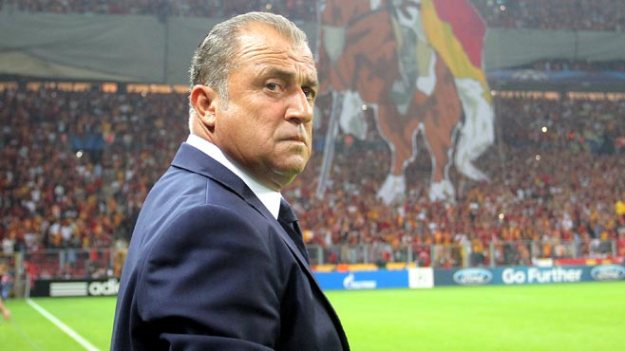
“By common consent, five of the eight remaining sides in the Champions League have a good chance of lifting the European Cup at Wembley in May. Barcelona, Real Madrid, Borussia Dortmund, Bayern Munich and Juventus — current league champions, imminent league champions or, in Juve’s case, both. The dark horse? Paris St Germain have performed well in Europe under Champions League specialist Carlo Ancelotti, and following their recruitment of Zlatan Ibrahimovic, Thiago Silva and Ezequiel Lavezzi, their presence is no great surprise.” ESPN – Michael Cox
Arsenal’s loss the latest setback in EPL’s steady decline
“It was, in the end, heroic failure for Arsenal, undone only on the away goals rule — but failure it was. Bayern Munich was surprisingly sloppy — perhaps precisely because the first leg was so simple for the club — but Arsenal regained a significant amount of self esteem with its performance in a valiant 2-0 win that wasn’t quite enough. And so, for the first time since 1996, there is no Premier League team in the quarterfinals of the Champions League.” SI – Jonathan Wilson
What are the potential consequences of Arsenal finishing outside of the top four?

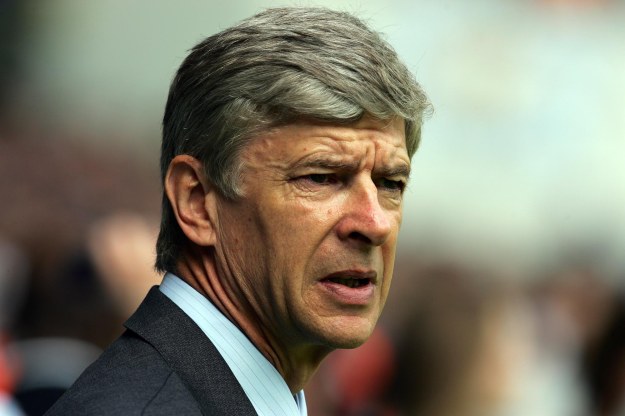
“‘Every remaining game is a Cup Final’ is a phrase most commonly used by teams in the bottom five of the table around this time of the season. But, the phrase is arguably applicable to Arsenal as well. Arsene Wenger has his work cut out just as much as the likes of Harry Redknapp, Paul Lambert and Roberto Martinez, as he too faces an uphill struggle to remain within a particular elite. Falling short of entering the European elite is something very difficult to recover from. Just ask Liverpool Football Club who have an illustrious history in the competition, yet finished 7th in the League in 2010, only to be followed by three seasons without Champions League football.” Think Football
Dortmund 3-0 Shakhtar: Dortmund exploit Shakhtar’s poor positional play
“After a 2-2 first leg draw, Dortmund performed excellently to qualify for the quarter-finals with surprising ease. Jurgen Klopp was still without Mats Hummels, so Felipe Santana and Neven Subotic continued at the back. Otherwise, the side was as expected, and played in the traditional 4-2-3-1, rather than the 4-3-3 we saw against Bayern last week. Mircea Lucescu named Taison on the left wing. Douglas Costa was only on the bench. In a game between two similar sides, Dortmund were better in almost every department, dragging Shakhtar out of shape and exploiting the spaces in behind.” Zonal Marking
Win or bust as Shakhtar Donetsk and Borussia Dortmund meet again
“It was business as usual for Shakhtar Donetsk in the Ukrainian Premier League on Friday, and that in a sense is part of the problem. They hammered Volyn Lutsk 4-1 and lead the table by 13 points with 11 games remaining. They are in the quarter-final of the cup and, with Dynamo Kyiv and Metalist Kharkiv out, Dnipro Dnipropetrovsk stand as the only other probable winners. This has been a crushingly easy season for Shakhtar.” Guardian – Jonathan Wilson (Video)
Borussia Dortmund Make the Big Leap Forward
“Borussia Dortmund have reached the quarterfinal round of the UEFA Champions League for the first time since the 1997/1998 season following an emphatic 3-0 win Tuesday night over Shakhtar Donetsk at Signal Iduna Park. Despite their recent domestic success, Dortmund made a big leap forward in advancing to the quarterfinals following two previous seasons of not advancing from European group stages. While the Ukrainian side held off Dortmund for the first 30 minutes of the match, the uneasy feeling for Dortmund supporters of a result going awry was dispensed with Felipe Santana’s powerful header in the 31st minute, as the Germans went on to create what Coach Jurgen Klopp deemed ‘an extraordinary moment’.” Bundesliga Fanatic
Spartak Trnava, FC Nitra and the Irrevocable Necessity Of Apology

“When Slovakia’s Corgoň Liga re-emerges from its long winter break on the first weekend of March, the fixture most observers will be watching for is the one between Spartak Trnava and FC Nitra, the bottom two clubs. The reason is less the fact that both sides are in urgent need of points than that their last meeting, on September 14th last year, resulted in one of the most controversial games ever played in the country. Nitra went into that match in the top half of the table and in encouraging form. Two weeks earlier, I’d seen them draw 1-1 away to champions Žilina. Seydouba Soumah, their 21-year-old Guinean forward, justified his growing reputation with an outstanding performance and the whole team looked bright and full of running. Trnava, by contrast, were in a mess.” In Bed With Maradona
Philip Roth and Zlatan Ibrahimović
“The best footballer’s autobiography of recent years is probably I Am Zlatan Ibrahimović. In it, the Swedish striker recounts his rise from an ethnic ghetto in Malmö to greatness. Zlatan (as he is usually known) is currently banging in goals for Paris St Germain. Zlatan has a Bosnian father and Croatian mother. They married to get the dad a Swedish resident’s permit, and soon separated. Zlatan’s book, ghostwritten by David Lagercrantz, is an immigrant’s tale. In fact, having sold 700,000 copies in Sweden alone and been published in 15 countries, it’s probably the bestselling European immigrant’s tale since Zadie Smith’s White Teeth (2000). The book was also shortlisted for Sweden’s prestigious literary award, the August Prize.” FT – Simon Kuper
Wesley Sneijder’s step into the past leaves questions for Galatasaray
“After all the excitement and all the hype, Galatasaray’s big night in the Champions League fell rather flat. A Schalke side that has been in dire recent form went to Istanbul as patsies in the great narrative of Didier Drogba and Wesley Sneijder. But from the point of view of the home fans, they showed themselves rather better than had been anticipated, exposing the flaws that exist in this Galatasaray side despite their recent injection of glamour.” Guardian – Jonathan Wilson
Schalke raise questions over Drogba
“Schalke have announced they have lodged an appeal with UEFA after Didier Drogba was selected for Galatasaray in Wednesday’s 1-1 draw in the Champions League. The club tweeted: ‘There are doubts about the validity of the permission to play for Drogba in the Champions League. Schalke 04 reserves its rights and is looking into this.’ Drogba, 34, joined the Turkish side in January after claiming his contract with Shanghai Shenhua had been terminated as a result of a failure to pay his wages for three months. The Chinese club issued a statement on their website describing themselves as ‘deeply shocked’ by the move.” ESPN
Gazprom face UEFA stand off

“How does one begin to comprehend the manner in which football and politics have become so inextricably linked? It is disturbing to contemplate that such a truly global sport is quite possibly one of the most corruptible institutions in the modern era. It has got to the point where there are simply too many issues upon which we must turn a blind eye in order to replicate the perceived naivety of days gone by – with the game finding that its hands are increasingly tied behind its own back. Such a situation is glaringly apparent in Eastern Europe, where discussions have continued over the viability of the formation of a league system comprising of sides from Russia and Ukraine.” SFUnion
Cerci finally lives up to hype
“Every now and again Alessio Cerci still thinks about it. Why wouldn’t he? Things could have been so so different. Watching Manchester City dramatically win the Premier League title in stoppage time on the final day of last season, a part of him presumably thought that it should have been him. Roberto Mancini had apparently wanted to buy Cerci from Fiorentina ahead of that campaign. ‘He’s the best winger in Italy,’ the City manager supposedly said. Yet his interest in Cerci was quite surprising.” Pitchside Eurosport
Victorious Zenit St Petersburg set Liverpool a tough task at Anfield
“Relief for Liverpool came only from the terraces at Zenit St Petersburg. Fears of racist abuse from sections of the home support proved unfounded but the reputation of the Russian champions did not as they left Brendan Rodgers’ team with a major task to preserve their final hope of silverware this season. On current form or, specifically, current finishing, you would not bet on another Anfield recovery in the second leg.” Guardian
How is wrestling at corners interpreted in different European leagues?
“… If you are English and ask anybody in Russia about wrestling at corners, the discussion inevitably turns to a World Cup qualifier in Ljubljana in 2001. With the score at 1-1, Slovenia won a last-minute corner. The referee, Graham Poll, twice prevented it being taken to warn Russian defenders about shirt holding. When the corner finally came in, Viacheslav Daev tussled with Zeljko Milinovic and Poll, his patience gone, gave a penalty. While shirt-pulling and wrestling certainly goes on in the Russian league, the hangover from that decision means that it is seen as very much a British obsession. Jonathan Wilson” Guardian – Jonathan Wilson
Sneijder confident in taking road less traveled to Turkey
“Wesley Sneijder, the Dutch national team captain, was on the phone from Istanbul, and I asked him something that had never entered my mind until this week: Is it realistic to think Galatasaray could win the UEFA Champions League? The Turkish club may be the most intriguing team in world soccer right now after pulling off a double-stunner in the past week to acquire Sneijder and Ivory Coast star striker Didier Drogba. Sneijder chuckled a little bit at the question. He has won a Champions League, after all, with Inter Milan in 2009-10, and he knows how hard it is to raise the most important trophy in world club soccer. But doing it with Galatasaray?” SI
Galatasaray adds Sneijder, Drogba and intrigue
“You have to feel sympathy for Schalke fans this week. As they gathered around televisions to watch the Champions League second-round draw in December, they would have been content with a meeting against Galatasaray. There was the problematic trip ‘to hell’ to overcome, of course, but over two legs and looking at the two lineups, Schalke would have been confident of progression. But in the same week that Lewis Holtby’s transfer to Tottenham was brought forward, robbing Schalke of their inspirational attacking midfielder, Galatasaray completed one of the most remarkable double swoops in recent footballing history.” ESPN – Michael Cox (Video)
Galatasaray 2-1 Besiktas: Gala comfortably win the derby – now for Sneijder and Drogba
“Galatasaray outplayed Besiktas across the pitch – and were rarely troubled even after Felipe Melo’s red card. Fatih Terim was without right-back Emmanuel Eboue and left-sided midfielder Nordin Amrabat because of the Africa Cup of Nations, so played Sabri Sarioglu and Emre Colak. Johan Elmander started rather than Burak Yilmaz, and Wesley Sneijder was only on the bench. Samat Aybaba was forced to cope without striker Hugo Almeidia, which meant Filip Holosko was pushed upfront to play as a lone centre-forward, and Roberto Hilbert was moved forward to play on the right of midfield, perhaps to deal with Albert Riera. Mehmet Akgun made a rare appearance at right-back, while Gokhan Suzen came in at left-back.” Zonal Marking
Offsides, Part 1, Part 2

“Mirko Vučinić showed up to the first day of soccer season this summer with a mustache. It was a thin one, and it made him look like a character out of an Italian neorealist homage to the dignity of the working class—handsome and proud, and heroic because ultimately he is up against forces that are far too great for him to succeed. Vučinić is the starting striker for Juventus, Italy’s Serie A defending champion. To date, though, he may be most famous for dropping his shorts, placing them on his head, and running around the pitch in his underwear after he scored a goal in an international match against Switzerland in 2010. You likely wouldn’t see that in an Italian neorealist film. But that’s all right, because Vučinić isn’t Italian. He’s Montenegrin, and Montenegro has a story of its own.” The Paris Review – 1
Offsides, Part 2
“Like Savićević, the Croatian Zlatko Kranjčar, fifty-six, had been a successful, offensive-minded player in his day, and one who understood the importance of international soccer. Nearing the end of his career in 1990 at the age of thirty-four, Kranjčar captained Croatia’s first national game of its post-Yugoslavia era. As a coach he led the Croatian national team into the 2006 World Cup. He had experience, and a lot of it. When Savićević hired him in 2010 as Montenegro’s new manager, it was Kranjcar’s eighteenth year of coaching and his twentieth job.” The Paris Review – 2
Soviet giants have enjoyed mixed fortunes since the Iron Curtain fell

“The domestic football league of the old USSR was a vast, vibrant, and powerful competition, containing as it did clubs such as the Moscow giants Dynamo, Spartak, CSKA – and occasionally Torpedo – as well as influential teams from the republics, like the Dynamos of Kiev, Tbilisi, and Minsk. Evidently, the league would have been exceptionally strong and closely contested – it was so strong, in fact, that it rose to second place in UEFA’s league rankings.” World Soccer
Football Book Review: Behind the Curtain by Jonathan Wilson

“In this book, Wilson tackles the perennial question of why Eastern European football isn’t very competitive with Western European, both at the club and national levels. Some things have changed since its publication in 2006, but, in general, the nations discussed—Ukraine, Poland, Hungary, the Balkans, Bulgaria, Romania, Georgia, Armenia, Azerbaijan, and Russia—are still in the situation he describes. At 300 pages, it is not an in-depth history of football in any of these countries, not by any means, but it gives the reader an overview of football during the communist era and in the first fifteen years following the collapse of the Soviet Union. As the title suggests, it’s a travelogue. He discusses matches he’s seen and people he’s interviewed as a football journalist and puts them into the greater historical context.” Bundesliga Fanatic
“When Jonathan Wilson entered Partizan stadium in Belgrade, he was frisked so efficiently that the police even took his Lemsip. That didn’t diminish his passion for the former Yugoslavia, an obsession that he blames on cold war spy movies and childhood holidays in Montenegro. Since then, he has huddled in brutalist football grounds from Slovenia to Azerbaijan, Sofia to St Petersburg, watching innumerable matches while working as a correspondent for a now-defunct website and the Financial Times. Behind the Curtain recounts his travels and gives a little footballing history of each country, focusing on prominent clubs or memorable incidents. Wilson obviously retains a particular affinity with the Serbs: he writes an unusually sensitive character sketch of Sinisa Mihajlovic, one of the most reviled men in European football, and even admits a sneaking warmth for the Delije, the hooligans closely associated with Arkan.” Guardian
“It was Christmas Eve and all through the house, nothing was stirring – because everyone had eaten too much barszcz, carp and cake during Wigilia dinner. When the time came to look under the Christmas tree for presents, little Decoy’s eyes lit up, as he saw what Santa Claus had brought. Mikołaj knew that Decoy liked reading books and also liked football, so it was a pleasant surprise to see books about football wrapped up neatly. One of the books received was ‘Behind the Curtain: Travels in Eastern European Football’ by Jonathan Wilson. Wilson is a football journalist who writes for Sports Illustrated and the UK-based newspapers The Independent and The Guardian. He specialises in writing about football tactics and also football based in ‘Eastern’ Europe – i.e. those countries lying behind the Iron Curtain before 1989/90. His articles analysing tactical nuances on the Guardian website prove particularly popular with readers there.” Polandian
8/26/2012 – Behind the Curtain: Travels in Eastern European Football – amazon
Revival of Videoton bodes well for Hungary
“Twenty-six long years have passed since Hungary last participated in a major footballing tournament. It was the World Cup of 1986 in Mexico and even though confidence was high, the Magyars crashed out in the group stage after disappointing results to France and their bitter foes, the Soviet Union.” World Soccer
After the Curtain Had Fatten
“The domestic football league of the old USSR was a vast, vibrant, and powerful competition, containing as it did clubs such as the Moscow giants Dynamo, Spartak, CSKA – and occasionally Torpedo – as well as influential teams from the republics, like the Dynamos of Kiev, Tbilisi, and Minsk. Evidently, the league would have been exceptionally strong and closely contested – it was so strong, in fact, that it rose to second place in UEFA’s league rankings.” In Bed With Maradona
Top 10 footballing moments of 2012
“It’s been an incredible year for football, both at the club and international level — with that in mind, here are 10 of the most memorable moments of 2012.” ESPN – Michael Cox (Video)
The Renovation Of Videoton
“Twenty-six long years have passed since Hungary last participated in a major footballing tournament. It was the World Cup of 1986 in Mexico and even though confidence was high, the Magyars crashed out in the group stage after disappointing results to France and their bitter foes, the Soviet Union. In 1985 Hungarian football was at the centre stage of European football as a small side named Videoton from Szekesfehervar in Western Hungary shocked the continent to reach the UEFA Cup final after beating English giants Manchester United along the way. A 3-1 aggregate loss to Real Madrid in the final was to be expected, but nonetheless, it took nothing away from the achievement of the players who became the first Hungarian side to reach a major European final since Ferencváros ten years earlier.” In Bed With Maradona
Madrid-United the gem of Champions League Round of 16
“A dramatic Champions League Round of 16 draw was made Thursday morning in Nyon, Switzerland, giving football lovers exciting matchups to look forward to in February and March. Part of the drama of drawing the eight pairings now comes from not knowing exactly how the teams will be playing when the games come along in eight weeks’ time: confidence, injuries and general form could all change the picture between now and then. Not to mention the longer-than-usual three weeks between first and second legs. Here is a breakdown …” SI
Zenit St Petersburg take first confused steps away from prejudice
“Let’s imagine that fans of Sunderland (and I use the example purely because that is who I support), tiring of the constant churn of the transfer market, decide that enough is enough and they want their team to do things differently. They get together and hammer out a manifesto which they then post as an open letter to the club hierarchy. Among a number of points about the need for absolute commitment and an abhorrence of cheating, they suggest they would rather the club focused on local players.” Guardian – Jonathan Wilson
Identity crisis: America’s dual nationalities face a tricky choice
“Fans of the United States national team have a tradition of eager impatience upon the release of the squad for any game. When the squad was named before their game against Russia last month there was general surprise to see the re-inclusion of Nuremberg’s Timmy Chandler, sparking the latest chapter in a raging debate about football and identity.” World Soccer
Commons touch takes Celtic into knockout stages
“A Kris Commons penalty nine minutes from time took Celtic FC into the UEFA Champions League round of 16 for the first time in five seasons as a narrow victory against FC Spartak Moskva secured second place in Group G. The Scottish champions kicked off level with SL Benfica on seven points but needing to better their Portuguese rivals’ result to go through for the first time since 2007/08. All looked promising when Gary Hooper fired them into a 21st-minute lead only for a delicate Ari chip to bring eliminated Spartak level before the break. With time running out, Celtic pushed for a winner and were rewarded when Giorgos Samaras was impeded by Marek Suchý, Commons smashing his spot kick in off the underside of the crossbar to earn a result that, combined with Benfica’s draw in Spain, sparked joyous scenes at the final whistle.” UEFA
Shakhtar 0-1 Juventus: Juve’s bravery pays off
“Juventus were the better side, and won to secure their place in the knockout stages, at the expense of Chelsea. Mircea Lucescu was without two key players, Luiz Adriano and Tomas Hubschmann. He selected Eduardo upfront. Antonio Conte was without the suspended Claudio Marchisio so played Paul Pogba in midfield, while Sebastian Giovinco was chosen alongside Mirko Vucinic upfront. Of course, the interesting factor here was that a draw was a satisfactory result for both. Shakhtar had already confirmed their qualification for the knockout stages, but a draw would ensure them topping the group. Juventus were at risk of going out (with Chelsea winning, as expected, against Nordsjaelland) but a draw would confirm qualification.” Zonal Marking
Spartak Moscow’s season of self-destruction could suit Celtic
“The Russian newspaper Sovetsky Sport on Monday ran a column that spoke of Chelsea, the St Petersburg ice-hockey team SKA and Spartak Moscow as ‘three broken toys’. All of them, it pointed out, are owned by oligarchs, all have had recent success and all have been undermined by meddling from the top that, to those on the outside, seemed baffling. It compared Roman Abramovich to a boy who loved something so much he hugged it until it suffocated.” Guardian – Jonathan Wilson
Ruch Chorzów standard bearers for Upper Silesia

“We’re not German; We’re not Polish; We’re Silesian. This is a common refrain from members of the Silesian minority in the industrial region of Upper Silesia in southern Poland. With a population of around 2,000,000, the Upper Silesian Metropolitan Union (GZM), whose largest city is Katowice, is one of the biggest urban agglomerations in Europe. For many years, this densely populated region straddled the border between Germany and Poland, with Katowice (Kattowitz) part of the German Empire and neighbouring Sosnowiec part of Congress Poland.” World Soccer
Champions League group stage approaching a climactic finish
“This has been one of the most memorable Champions League group stages in history, and Matchday Five will be a pivotal moment for several big clubs. It could see the elimination of champions from England, Holland, Russia, Portugal, and Italy, while reigning champion Chelsea has a nerve-wracking away game to negotiate too. The previous Matchdays have provided late drama, superb goals, surprising shocks and stars of the future. Here are some storylines to watch from Matchday Five…” SI
Galatasaray – Manchester United: 1993-2012 Whats Changed?

“Galatasaray welcome Manchester United to hell… well not quite, the famous chants and Welcome To Hell banners may be the same but the city has gone through a major transformation since the early 90’s when the giants of English football met the titans of the Turkish game. United fans looking around for the Ali Sami Yen Stadium will probably be glad to know it doesn’t exist anymore. The stadium renowned for unbelievably passionate supporters and an atmosphere which was off the richter scale has been reduced to the history books. The ramshackle stadium in Mecidiyeköy, right in the middle of one of the busiest urban residential areas of the city has moved uptown and upscale to the beautiful surroundings of the Belgrade forest in the northern suburbs of the city.” Turkish Football
Harry Redknapp the preferred candidate to be Ukraine manager
“Five months after leaving Tottenham Hotspur, Harry Redknapp could be making an extraordinary return to football as manager of Ukraine. The Ukrainian Football Federation has been seeking a new manager since Oleh Blokhin resigned last month to take charge of Dynamo Kyiv, and announced on Tuesday that it will open negotiations with Redknapp’s representatives. Redknapp is known to be keen to return to management and has been strongly linked with QPR, whose manager Mark Hughes is under pressure after taking only four points from the opening 12 games of the season.” Guardian – Jonathan Wilson
Freedom for Pavlychenko
“For those who have been paying attention to Eastern European football over the past couple of weeks, you may well have noticed a name gradually becoming increasingly prominent across the region. ‘Pavlychenko ‘ is the name that has become more and more apparent, donning the often provocative banners that line the masses of football fans who take to the stands on any given matchday. It is difficult to truly grasp the manner in which football is perilously divided across the entire region of Eastern Europe. The tribalistic mentality in which fresh generations of fans are brought up within means that time has only ever served to make rivalries between specific clubs, cities and nations even more bitter and twisted than previously.” SF Union
The Question: why are more goals being scored?

Athletic Bilbao coach Marcelo Bielsa
“A spectre is haunting Europe – the spectre of goals. They’re everywhere – in every competition, in every country, in every stadium (apart from games involving Sunderland). Four-goal leads are regularly obliterated (Angola v Mali, Newcastle v Arsenal, Germany v Sweden, Arsenal v Reading). Lionel Messi, Cristiano Ronaldo and Radamel Falcao break goalscoring records every week. Everybody attacks, all the time. In the top flights of England, France and Spain, there has been a clear upward trend in the numbers of goals scored per game over the past decade. Last season, for the first time ever, the knockout stage of the Champions League yielded more than three goals per game and that has continued into this season’s group stage, with 3.03 goals per game. And even in Italy and Germany, where goals per game have remained relatively constant for 10 years, this season is showing above average numbers of goals.” Guardian – Jonathan Wilson
How English game of pace and power benefits from European precision
“More passes, less ‘hoofs’ from back to front, and a slicker goalscoring rate: the Premier League has become a more technical “continental” competition that is a fusion of English pace and power and European subtlety. These are the implications of statistics from Opta that chart a shift over the past five years from a direct approach to a more patient game that now features greater precision in passing and finishing. The national team continue to see little benefit from this evolution, with experts citing the prime factors as the influx of foreign players and coaches, better club pitches and training facilities, a clampdown on tackling and the influence of a Champions League dominated by Barcelona’s carousel-passing style.” Guardian
Dictators and Soccer: Mobutu Sésé Seko of Zaïre

Mobutu (right) with Pelé in 1968 – Zaïre – 1974 World Cup
“In 1974 the ex-colonial and newly named Zaïre played its first World Cup in West Germany. The country’s diminutive strongman Mobutu Sésé Seko, famous for his trademark leopard-print pillbox hat, had rechristened the Lions the Leopards. (Consistency is key in propaganda.) He had convinced himself that Zaïrean soccer could further elevate his own stature. He liked elevating himself and he liked renaming things. He’d re-minted the country from Congo Crisis First Republic (formerly The Belgian Congo) to Zaïre, which translated to, ‘The river that swallows other rivers.’ He fully intended to hoover up every power and exploit every possibility. He’d already outlawed all political parties except his own, and outlawed all wearing of leopard-print hats, except of course his own.” Cult Football
Dictators and Soccer: Nicolae Ceaușescu, Genius of the Carpathians
“Up until Christmas 1989 when a three-man firing squad executed Nicolae Ceaușescu and his wife Elena after a quickie two hour tribunal, the archetypal Iron Curtain strongman ruled Romania with an iron fist. After getting strafed with bullets, however, the iron fist swiftly went limp, then rigor mortis. And as the title up top suggests, soccer most definitely played its part in the image engine of the autocratic regime.” Cult Football
Diskerud goal in injury time gives Americans draw at Russia
“Mix Diskerud scored his first international goal in the third minute of injury time, giving the United States a 2-2 draw against Russia on Wednesday in a friendly at Krasnodar. Michael Bradley, who scored in the 76th minute, sent a long ball into the penalty area toward Terrence Boyd, who was marked by defender Sergei Ignashevich. The ball rebounded off Ignashevich to Diskerud, and the 87th-minute substitute sent a 20-yard, right-foot shot in off a hand of goalkeeper Vladimir Gabulov.” SI
U.S. fortunate to escape Russia with draw in final match of 2012
“The U.S. got a tie despite being largely outplayed. This was just a friendly, so there’s little reason to make much of the result, just as there was little reason to do so when the U.S. won at Italy and Mexico in friendlies earlier this year. That said, there’s still some value in bagging a tie even when you weren’t the better team on the day, and the U.S. managed to do so thanks to Mix Diskerud’s injury-time equalizer. Goalkeeper Tim Howard made several key saves that kept the U.S. in the game, and give some credit to subs Juan Agudelo and Terrence Boyd, who had knockdown header assists on the U.S. goals. It’s fair to ask if Michael Bradley may now be making The Leap. The Roma starter was the best player on the U.S. squad, continuing an upward trend in his play over the past year, and his opening strike from distance was a thing of beauty.” SI
Steve Zungul: the Lord of all Indoors
“Here’s a perfectly geeky question for your pub quiz night: which player was the top goalscorer for two different teams within the same season, both champions of their respective countries? Help: it was on two different continents. And in two different sports. Of course, posing that question would only make sense if you’re somewhere in what was once Yugoslavia. Maybe also in certain places in the US, such as Long Island and Manhattan’s Upper East Side – the old stomping grounds of Steve Zungul. The rest of the football World has forgotten about the player who had variously been nicknamed the ‘Yugoslav Gerd Müller’, ‘The Nureyev of soccer’ and, perhaps most famously, ‘The Lord of all Indoors’. The forward whom the legendary Giorgio Chinaglia, famous for his bad-mouthing of Beckenbauer, Cruyff and even Pelé, once described as ‘almost perfect’.” World Soccer
Shakhtar Donetsk have learned lessons and again stand in Chelsea’s way
“And so it goes on. Shakhtar Donetsk beat Metalurh Zaporizhzhya 2-0 on Saturday – Douglas Costa converted a penalty before a late goal from Luiz Adriano sealed it – to take their winning streak in the Ukrainian league to 23 games, 14 of them this season. They lead the table by 12 points and, already, with the season one game from its halfway point, it seems inconceivable that they will not lift a seventh title in nine years. The focus, understandably, is all on the Champions League and Wednesday’s game against Chelsea.” Guardian – Jonathan Wilson
Chelsea 3-2 Shakhtar Donetsk
“Victor Moses came off the bench to score an incredible last-gasp winner tonight as Chelsea somehow survived a Shakhtar Donetsk onslaught to keep their Champions League fate in their own hands. The Blues were in danger of being the first holders to crash out of the competition before Christmas as former target Willian twice cancelled out almighty howlers from goalkeeper Andriy Pyatov which gifted goals to Fernando Torres and Oscar, the latter’s fourth in as many Champions League games.” ESPN
The ‘Polish Barcelona’: This Is Ruch Chorzow

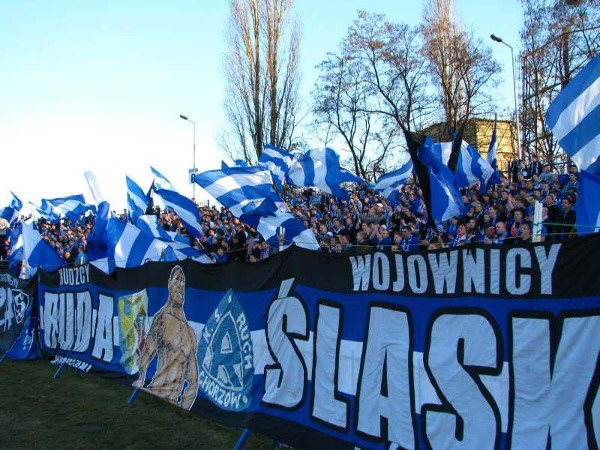
“‘We’re not German; We’re not Polish; We’re Silesian.’ This is a common refrain from members of the Silesian minority in the industrial region of Upper Silesia in southern Poland. With a population of around 2,000,000, the Upper Silesian Metropolitan Union (GZM), whose largest city is Katowice, is one of the biggest urban agglomerations in Europe. For many years, this densely populated region straddled the border between Germany and Poland, with Katowice (Kattowitz) part of the German Empire and neighbouring Sosnowiec part of Congress Poland. After the First World War, the League of Nations arranged for a plebiscite to determine the fate of the region, with Western Upper Silesia remaining part of Germany and Eastern Upper Silesia joining with the Second Polish Republic (although given a considerable degree of political autonomy). When the Germans invaded in 1939, Polish Upper Silesia was annexed to the Third Reich and many Silesians were granted German citizenship.” In Bed With Maradona
Shakhtar Donetsk have learned lessons and again stand in Chelsea’s way
“And so it goes on. Shakhtar Donetsk beat Metalurh Zaporizhzhya 2-0 on Saturday – Douglas Costa converted a penalty before a late goal from Luiz Adriano sealed it – to take their winning streak in the Ukrainian league to 23 games, 14 of them this season. They lead the table by 12 points and, already, with the season one game from its halfway point, it seems inconceivable that they will not lift a seventh title in nine years. The focus, understandably, is all on the Champions League and Wednesday’s game against Chelsea.” Guardian – Jonathan Wilson
Zenit learning that money doesn’t always buy success
“After a couple of seasons mixing domestic success with continental disappointment, 2012-13 should have been Zenit St Petersburg’s time to shine in the Champions League under highly rated coach Luciano Spalletti. There were various reasons for optimism. After an 18-month transition season to shift the Russian Premier League from a summer to a winter calendar, in keeping with the rest of Europe, Zenit could have no complaints about fitness levels at certain stages of the campaign — a common complaint for many Russian clubs over the years.” ESPN – Michael Cox
Shakhtar 2-1 Chelsea: Shakhtar attack with pace and forward bursts from Fernandinho and Srna
“Shakhtar dominated the match, and should have won by more. There were no major surprises from Mircea Lucescu – Alex Teixeira was on the right, and Tomas Hubschman in the centre of midfield. Roberto Di Matteo brought Frank Lampard back into the side, with Ramires pushed to the right. But Lampard only lasted 18 minutes – Eden Hazard came on, Ramires dropped back into the centre of midfield, and Chelsea were back to their usual format of three rotating attackers. John Terry returned in place of Gary Cahill. This was an extremely fast, frantic game that Shakhtar dominated primarily of better attacking combinations.” Zonal Marking
Euro preview: Meet Liverpool’s opponents Anzhi Makhachkala
“Anzhi’s most famous player – and certainly their richest – is Samuel Eto’o, who has a knack of scoring against English clubs in Europe. At Barcelona he relied upon sheer pace in behind defenders, while later in his career (when Lionel Messi became a false nine towards the end of Pep Guardiola’s first season in charge, and then under Jose Mourinho in the treble-winning season at Inter) he became a left-winger.” FourFourTwo – Michael Cox
Henrik Mkhitaryan orchestrates Shakhtar Donetsk’s great leap forward

“Henrik Mkhitaryan is only 23 but this year he will almost certainly win his third Armenian player of the year award. So consistent has his excellence been that the surprising thing now is not that he was won so much so young, but that he did not win the award in 2010. The Metalurh Donetsk midfielder Karlen Mkrtchyan had better have made the most of that success, because there’s little chance of Mkhitaryan relinquishing the award any time soon.” Guardian – Jonathan Wilson
Dzeko, child of Sarajevo, grows into humble star for rising Bosnia
“The lights in tower blocks that stand at one end of the Bilino Polje Stadium glimmer through a thick haze. It feels foggy, as it always does on match nights in Zenica, the industrial town where Bosnia-Herzegovina plays its home matches, but this isn’t mist; rather it’s the oily smoke from the dozens of cevapi stalls that line the streets around the ground. And if you peer hard enough through the murk, you see the same face staring back from every T-shirt stall: Edin Dzeko.” SI – Jonathan Wilson
Bosnia-Herzegovina move beyond hope towards expectation
“For Bosnia-Herzegovina, the hope is becoming unbearable. Tuesday night’s 3-0 victory over Lithuania, coming after a 0-0 draw in Greece the Friday before, has put them at the top of their group with four games played. There is optimism that they will qualify for the World Cup for the first time, but it is tempered by the memories of the recent past.” Guardian – Jonathan Wilson
The Peerless Jozsef Bozsik

“Among the most widely noted tactical phenomena of the last ten years has been the increasing importance of the ‘deep lying playmaker’. As teams have lined up with ever more defensive midfielders, previously advanced midfielders have dropped ever deeper themselves in search of precious space. In many ways this isn’t a new trend, but simply a return to a practice of the 1950s and earlier. For prior to the advent of the WM, the deep lying playmaker (such as Austria’s attacking centre-half, Ernst Ocwirk) was a mainstay of the game.” In Bed With Maradona
Old habits die hard for Capello
“When Fabio Capello was unveiled as Russia manager in July, one of the most astute questions put to him by the press was from an Englishman, BBC Moscow correspondent Daniel Sandford. Since the 66-year-old Capello quit the England job because of political interference — from the FA, which meddled in his choice of captain — why, Sandford mused, did Capello take a job in Russia, a country where personal autonomy is never guaranteed? (Especially if you’re a football manager earning a reported $12.5 million per year.)” ESPN
Russia, England under scrutiny as World Cup qualifying resumes

Xabi Alonso, Franck Ribery, quarterfinal match
“1. Capello faces crunch match against Portugal. It’s far too early to call it a crisis, but for all the money that Russian football has lavished on players and coaches this summer, there has been precious little return — yet. The country’s two Champions League representatives, Zenit St. Petersburg and Spartak Moscow, are both pointless after two group games (despite Zenit spending €80 million on Hulk and Axel Witsel and Spartak playing Celtic at home), and now attention turns to the national team, World Cup hosts in 2018.” SI