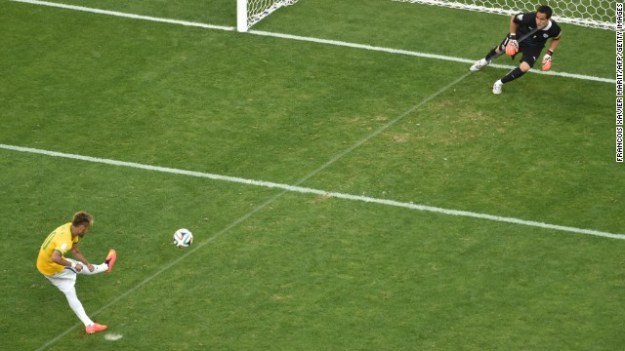
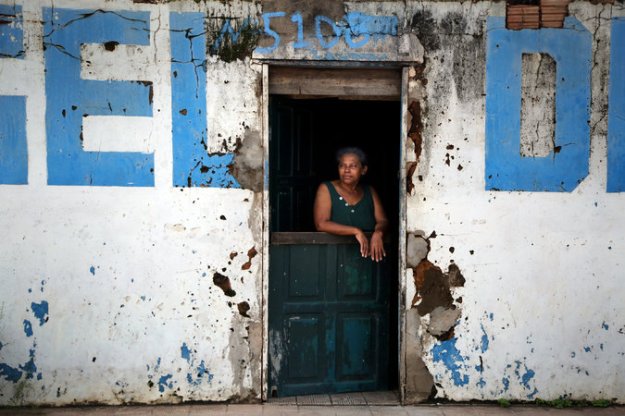
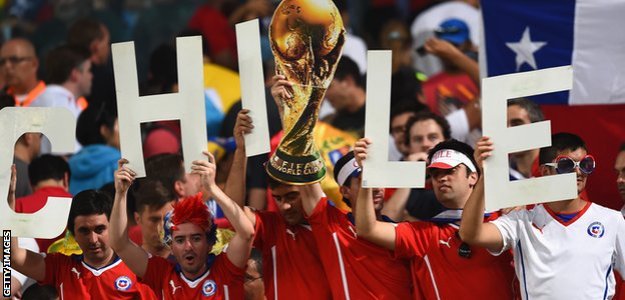
“In this floating village, there is only one way to travel. Students go to school by boat. Pentecostals go to church by boat. Taxis arrive by boat. Even the soccer field is often a boat. There are three homemade fields on land, but they are submerged now in the annual flooding of the Black River, which meets nearby with the Solimões to form the Amazon. If the wooden goal posts had nets, they would be useful this time of year only for catching fish. So young players and adults improvise. They play soccer at a community center that has a roof but no walls. They play on the dock of a restaurant. And they play on a parked ferry, a few wearing life jackets to cushion their falls on the metal deck and stay afloat while retrieving the ball from the river.” NY Times
Author Archives: 1960s: Days of Rage
How the World Cup Is Damaging Brazil
“Don’t believe journalists who tell you the tournament is going smoother than expected. In a normal month of June, Rio de Janeiro hosts at least 16 first-division soccer matches. São Paulo will typically see the same number. Salvador usually has around 8; ditto Recife, Fortaleza, Porto Alegre, Belo Horizonte, and Curitiba. None of these cities will host more than seven during the World Cup.” Fusion
For Bellicose Brazil, Payback Carries Heavy Price: Loss of Neymar
“A Colombian defender named Juan Camilo Zúñiga ended the World Cup for the Brazilian star striker Neymar on Friday with a nasty knee into Neymar’s back that fractured one of his vertebrae. It was an ugly play and a bad foul. It deserved, at least, a yellow card. Yet within any game, there is always a road map to every flash point. The beauty of soccer’s continuous flow is that one thing leads to another (and another and another), and that makes it possible to trace a path to a game’s most memorable moment. In a game like Friday’s, doing so makes it easier to see where things went wrong. So what happened to Neymar? How did the face of this tournament end up in a hospital? Brazilian fans will not like to hear it, but while Zúñiga was directly responsible for causing Neymar’s injury, Neymar’s teammates — specifically Fernandinho, though there were others — as well as the referee, Carlos Velasco Carballo, deserve their share of the blame, too. They did not commit the crime, but they contributed to an environment of lawlessness that led to Neymar’s being battered.” NY Times
Talent Radar: Paul Pogba shackled and Raphael Varane stutters as France bow out of World Cup
“… Paul Pogba. France’s midfield has won many an admiring glance over the course of their World Cup journey and the match-up against Germany saw the clash of the 2 arguably best central midfields. With Cabaye playing in the regista position, both Matuidi and Pogba have been responsible for providing thrust to the French attack using their physicality and embarking on their trademark driving runs. … Raphael Varane. Despite being only 21, Varane was France’s first choice centre-back leaving Koscielny and Sakho to battle it out for the other position. The Real Madrid defender had a decent game but in the end the solitary goal of the game came directly as a result of his error although credit must be given to Mats Hummels too who was excellent on the night aside from his goal.” Outside of the Boot
Soccer-inspired graffiti a mainstay of Rio de Janeiro, Brazilian landscape

“Jorges Leon Brasil is not lost. He started chauffeuring tourists and businessmen and urban adventurers all over Rio 26 years ago, when he was 18. His time-tested version of GPS is to squint his eyes in deep thought and—pop!—Ah yes, I know this place. He’s just not sure where he’s going this morning. A rest day during the World Cup has turned into a driving tour of Rio’s burgeoning graffiti scene, and I’ve asked Brasil—Junior to his passengers; he was named after his father—to be my guide in finding some soccer-inspired art. He has experience, after all. As a young boy growing up outside of Rio in the 1980s, in Vista Alegre (‘Happyville, you would say, in English’), Junior would join the local children at night during World Cup summers and literally paint the town center yellow and green, with Brazilian flags and soccer imagery celebrating his generation’s stars: Zico, Romario, Bebeto. . . It’s part of a tradition that carries on today.” SI
Brazil Takes a Painful Step Forward
“It was an enormous win for Brazil, but it came at a gigantic cost. Brazil on Friday powered to an impressive 2-1 quarterfinal victory over upstart Colombia at Estádio Castelão, setting off another round of raucous nationwide partying. But the noise and jubilation proved short-lived, as it was revealed after the game that Neymar — the country’s best player and biggest star — would miss the rest of the World Cup after injuring his back in the dying minutes of the hugely physical game. The Brazilian team has had only one goal this summer: to win the country’s sixth World Cup trophy while playing on home soil. The victory on Friday was an important step, setting up a semifinal next Tuesday against the powerful German squad.” NY Times
Odd couple pulls Brazil through
“On a day when Brazil lost star midfielder Neymar for the rest of the World Cup with a fractured vertebra, the Selecao turned to their odd couple — defenders Thiago Silva and David Luiz — to pull them through. The two leaders in the back scored goals either side of halftime to propel Brazil to a 2-1 quarterfinal victory over Colombia. Silva latched onto a Neymar’s corner kick and deflected the ball home with his knee with the game less than seven minutes old. In the 69th minute, Luiz hit a scorching 34-yard free kick past Colombia goalkeeper David Ospina. It was difficult to tell what possessed more maniacal ferocity — the shot, or his celebratory run to the near side corner flag.” ESPN
Germany Wins a Battle of the Old Guard
“As appetizers go, it was more of a dessert: a World Cup quarterfinal at Estádio do Maracanã between two European powerhouses featuring 22 starting players who play club soccer in England, Spain, France, Italy or Germany. For much of the world, it was a heavyweight fight contested in one of the sport’s greatest venues. Here, of course, it was a distinct undercard. Brazil defeated Colombia, 2-1, later Friday afternoon in a game so big it prompted the Colombian government to declare a national holiday.” NY Times
France 0 Germany 1
“Germany became the first nation to reach four consecutive World Cup semi-finals as Mats Hummels’ early header proved enough to see them past France at the Maracana. The three-time champions needed extra time to beat Algeria in the last 16 and suffered a bout of illness in midweek, but they were comfortable victors over a disappointing France in Rio de Janeiro. Hummels got the better of Raphael Varane to score what proved to be the winning goal and Germany can now prepare for a meeting with Brazil in Belo Horizonte on Tuesday after the hosts beat Colombia.” BBC
World Cup: Germany defeats France to reach semifinals
“It’s a demon buried deep within the French psyche — a demon which refuses to be exorcized. A word which brings shivers down the spine and strikes a fear into the heart of the country’s football fans. In Rio de Janeiro, the ghosts of years past haunted France again — the ‘Angstgegner’ returned. Germany, the ‘bogey team’ as it is known in France, wrote another painful chapter into Les Bleus’ World Cup history on Friday. A 1-0 victory secured Germany’s place in the semifinals for a record fourth consecutive tournament. But unlike in 1982 and 1986, when Germany defeated the French in the last four on both occasions, this was not a battle of epic proportions. There was not the drama, nor the controversy — but the end result was the same.” CNN
Who Won the World Cup of Arm-Folding?
“This year’s World Cup has featured some of the planet’s greatest athletes performing seemingly impossible physical tasks. Bicycle kicks. Spectacular goals. Mind-bending saves. Displays of endurance, determination, and balletic grace. And, of course, turning to the left and folding your arms. It turns out that’s surprisingly hard to ace on your first (and, presumably, only) try. Hundreds upon hundreds of millions of television viewers have watched players from all 32 teams botch this seemingly simple technique in the lineup presentations before each World Cup match.” Slate (Video)
The Hopes of Central America Rest on a Perpetual Underdog
“When Costa Rica played Uruguay on June 14 in its first game of the World Cup, it was not so much a case of David versus Goliath as it was David versus David. That time fortune favored the Central Americans: Against all expectations — they had never beaten Uruguay, the two-time Cup winners — the Costa Ricans won, 3-1. But if ever there were a country from which La Sele (the Costa Rican national team), which will face the Netherlands in the quarterfinals on Saturday, might learn how to punch above its weight, it would be plucky little Uruguay.” NY Times
Costa Rica’s Midfield Has Used the World Cup As a Stage For Redemption
“The Ticos no one wanted are suddenly in demand. The Costa Rican national team entered the World Cup hoping to send a message to the world. ‘That was one of our main goals here in Brazil, letting the world know about Costa Rican football,’ defender Giancarlo Gonzalez told reporters on Tuesday.” Fusion
Costa Rica’s Number One Soccer fan Is a Nun with her own TV Show
“Sister Aracelly Salazar is Costa Rica’s self-proclaimed number one soccer fan. When she is not kicking the ball around, she hosts a TV show on a religious channel to relive the national team’s best moments, with thousands tuning in every Saturday to hear her analysis.” Fusion
A Wonderful Tournament—But Just How Good Are Brazil, or the Rest?

“‘How good was that?’ Anyone who watches sport on British television will be familiar with the Question Asinine asked by interviewers after a game. In the case of this World Cup, we can say already, ‘Very good indeed.’ This is one of the best tournaments even those with long memories can recall, endlessly exciting and continually surprising, with a feast of great goals, and almost more of great goalkeeping. Apart from anything else, the epic Thibaut Courtois v Tim Howard match, aka Belgium v USA, showed that an amazing save can be as good to watch as an amazing goal.” New Republic
Stop Making Sense
“Should we talk about where we’ve just been? The group stage was one coup after another, a sequence of thrilling games that gradually dismantled the existing order of international soccer. The last two world champions died in their baths. Italy, never expected to be a real threat, went down screaming about tooth marks, collateral damage in the Luis Suárez carnival of shame. Spain, the team that spent six years enforcing stability at the top of the sport, went out almost before the tournament had even started, like the first corpse in a murder mystery: Robin van Persie, with the forehead, in the invisible wind tunnel.” Grantland – Brian Phillips
Javier Mascherano, Argentina’s Rock fusion
“Why Lionel Messi’s Barcelona teammate may hold the key to Albiceleste’s success. Lionel Messi was, quite understandably, named man of the match of Argentina’s first four games. But Javier Mascherano is having just as big an influence on the Albiceleste’s World Cup campaign. Mascherano has one of the most difficult jobs at the competition: to make coach Alejandro Sabella’s (or, according to widespread reporting, Messi’s) 4–3–3 system a success, and allow his higher-profile attacking teammates to shine. He’s no stranger to difficult tasks, having spent most of the last four seasons at center back for his club, despite being too small (5-7) and light (170 pounds) for the position. During that time he has won six trophies (including two La Liga titles and one Champions League), while also becoming one of the few “outsiders” to gain acceptance in the Camp Nou dressing room.” Fusion
Statkeepers Call the Shots, But They Can’t Agree on Them
“In the third minute of added extra time in Tuesday’s Belgium-U.S. World Cup match, Belgium’s Kevin De Bruyne took a pass in the box, dribbled to his right and hooked the ball into the left side of the net. Finally, after 31 shots, the Belgians had broken through. Or … wait. Was it 32 shots? It depends on which Twitter account you follow. ESPN’s Stats & Information Group tweeted that Belgium had scored on its 31st shot of the day. OptaJoe, the U.K. Twitter account of the soccer stats company Opta, said it was the 32nd. At the World Cup, shots are in the eye of the beholder. At least three major soccer stats companies are logging every match, and they have yet to all agree on each team’s number of shots and shots on goal. For every one of the 58 games so far, the companies can’t quite get their stories straight. Sometimes their counts have differed by as much as two or three.” fivethirtyeight
Unorthodox Bookends Leading the Germans

“It has been a hot and cold World Cup for Germany: from its bold statement match in steamy Salvador against Portugal to its botched lines and opportunities in the chill and drizzle of Porto Alegre against Algeria. Despite fluctuating form and Manager Joachim Löw’s concern about seven players with mild flu symptoms, the Germans are, as usual, in contention with the World Cup reaching its business end. The next obstacle amid national angst: Friday’s quarterfinal against resurgent France. Germany is hard to read and difficult to categorize, and its protean nature is particularly evident at the front of the attack and the back of the defense. Thomas Müller, again its leading scorer, is an unconventional, unusually versatile forward. Manuel Neuer is an unconventional, unusually versatile goalkeeper.” NY Times
The Netherlands’ Odds Rise Dramatically in Big Bank’s Fancy World Cup Predictions
“Banks are good at making money (or crashing the economy), but can they predict the outcome of the World Cup? The short answer: kind of. On May 30, Goldman Sachs released its 67-page World Cup and Economics 2014 report, that—between interviews with Franz Beckenbauer and in-depth breakdowns of every team (really, it’s a pretty good read)—includes a statistical model designed to predict the outcome of the tournament.” New Republic
Mario Yepes, Colombia’s Grand Old Man
“The 38-year-old Cafeteros captain persevered through the national team’s dry spell but now leads a new golden generation. Mario Yepes watched the 1994 World Cup like most of the rest of us, on television. He had just completed his first professional season, helping second division Cortulua gain promotion to the Colombian top flight. He was a striker then, but new manager Reynaldo Rueda had other ideas. Yepes would be converted to center back, to play as a libero. He was big, fluid, and rangy, but never fast, even before he became slow, never the brand of Colombian burner that has set this tournament alight.” Fusion
Impossible Isn’t French: Can France Go All the Way this World Cup?
“In early June, I had an appointment at the French Football Federation (FFF) headquarters, a modern building with lots of glass and light in Paris’ 15th arrondisement. The place hummed with activity and there was a contagious undercurrent of optimism and eager anticipation. My visit occurred just after the last of Les Bleus’ three pre-World Cup tune-up matches (a win vs Norway, 4-0; a draw vs. Paraguay, 1-1; a win vs Jamaica, 8-0), so perhaps those successes fed into the confidence emanating from 87, boulevard de Grenelle. Yet, the atmosphere differed from September, when the air was more heavily perfumed with the “we’ve got hard work to do” odor of determination. This time around, even the French media, often highly critical of Les Bleus, reflected an upbeat sentiment.” New Republic
World Cup From Carrying Water to Stirring a Nation
“For a man once belittled by Eric Cantona as ‘a water carrier,’ Didier Deschamps has certainly made a habit of carrying lots of trophies. French reporters like to ask Deschamps, now the French national team manager, if he was born under a ‘bonne étoile,’ a lucky star. But there is clearly much more than good karma and good timing involved at this stage of the game. He was captain of the French team that won the 1998 World Cup and the 2000 European Championship and a key player for Marseille and then Juventus when each club won the Champions League.” NY Times
What’s Behind the World Cup’s Second-Round Slowdown?
“It feels like something has gone missing from Brazil in the past week. After an opening group stage that had been almost universally praised as the best-played and most entertaining World Cup in decades, the recent round of sixteen was a little more ordinary. Fouls are up and offense has slowed down, with the celebrated statistic of 2.83 scores per game in the group stage dropping by more than half a goal in the second round. Yes, it’s still the knockout stage of the World Cup, but it has sometimes felt uninspired—prosaic play clothed by the tension of high-stakes games with close final scores, extra-time finishes, and penalty shots.” New Yorker
The Making of Belgium’s Golden Generation, and Imported Versus Cultivated Talent

“At its best, the World Cup produces games that are works of art, narratives that can rival our greatest plays and novels for what they tell us about ourselves and our world. Opinions will differ, of course, about any work of art, and our and interpretation always depends on what we carry with us. I’m certainly biased in this case: I am Belgian-American, and deeply invested in the stories both these teams brought to the pitch. Though I’m a bit of specialist in ambivalent fandom, yesterday’s brought my level of fragmentation to new levels. But I survived, and am grateful for what last night offered us.” New Republic – Laurent Dubois
Attack-minded Belgium finds way through USA, defiant Tim Howard
“It looked chaotic at times, and playing an extra 30 minutes wasn’t in the plan, but Belgium’s 2-1 win over the United States on Tuesday went about as Belgian manager Marc Wilmots scripted it. Belgium still hasn’t scored a goal this World Cup before the 70th minute, but the Red Devils were still the best team across 120 minutes of play. Both teams fielded fairly attack-minded lineups, with the U.S. playing 4-1-4-1 for the first time in the tournament. Belgium stuck with its usual 4-3-3, and all 10 field players had their moments in attack, including center back Vincent Kompany, who dribbled the length of the pitch in the 90th minute and turned it into a scoring opportunity.” SI
Belgium 2-1 USA: Belgium dominate but take ages to make the breakthrough
“USA put up a brilliant fight in extra-time, but Belgium had been the superior side for the majority. Marc Wilmots selected Divock Origi upfront, rather than the underwhelming Romelu Lukaku. Jurgen Klinsmann brought Alejandro Bedoya back into the side, and made the surprising decision to select Geoff Cameron rather than Kyle Beckerman in midfield, supposedly because of his greater mobility. This was a tremendously entertaining game, but Belgium should have put it to bed much earlier – only a tremendous goalkeeping display from Tim Howard kept USA in it.” Zonal Marking
World Cup Tactical Analysis | Belgium 2-1 USA: Sudden shift proves costly
“Although these two teams’ pre-tournament expectations were widely conflicting, both now found themselves facing off in what was being touted as a fairly balanced encounter. Belgium were expected to deliver and did with three wins and just 1 goal conceded (from the spot). The US on the other hand were expected to bow out early, but emerged ahead of Portugal & Ghana (so nearly Germany too). In a 5th round of 16 game that went into extra-time, Belgium emerged victorious, possibly deservedly, but the US could have so easily forced penalties.” Outside of the Boot
USA 1:2 Belgium – The What If Game
“In the end, it was a deserving result. The universe or fate or the soccer gods or whatever didn’t mess up and wrong the United States Men’s National Team. We didn’t play better than the other team, simple as that. And yet, how do you explain that feeling in the pit of every U.S. fans’ stomach? That sick, awful feeling that things could have been different. Soccer is a funny game. You can be clearly inferior for the entire match and still somehow win. If your defense holds and you capitalize on your lone scoring chance, then you can knock off a better side. This almost happened last night. In stoppage time of regulation, Chris Wondolowski had the ball on his foot six yards from the goal line. If he puts it in the back of the net, the United States are through to the World Cup quarterfinals. Belgium wouldn’t have deserved that, but to quote Will Munny: ‘Deserve’s got nothin’ to do with it’.” Soccer Pro
Hooray for Losers
“Americans are learning how to lose, and soccer is teaching them how to do it. For the longest time, second place in any competition, domestic or international, has been regarded in the USA as a disaster of unmitigated proportions. (Third was not even worth acknowledging.) While other countries celebrated their silver or bronze medals with parties and parades, American commentators thrust microphones into the faces of the ‘losers’ and asked, sotto voce and with unconcealed disappointment, ‘What happened?’ or ‘What went wrong?’” The Paris Review – Jonathan Wilson
Argentina 1-0 Switzerland (AET): Switzerland concentrate on stopping Messi
“In a very enjoyable World Cup second round, this was surely the least exciting game. Everything went through Leo Messi, and he eventually assisted the winning goal. Alejandro Sabella was without Sergio Aguero, so brought Ezequiel Lavezzi into the side – he started on the right, and Argentina were pretty much a 4-4-1-1 / 4-2-3-1 system. Ottmar Hitzfeld kept an unchanged side for his last game as a manager before retirement. This was a very poor game, with essentially only one major question – could Switzerland successfully shut down Messi, or would he come up with a moment of magic to win the game?” Zonal Marking
Rio Ferdinand column: Paul Pogba will be world’s best midfielder

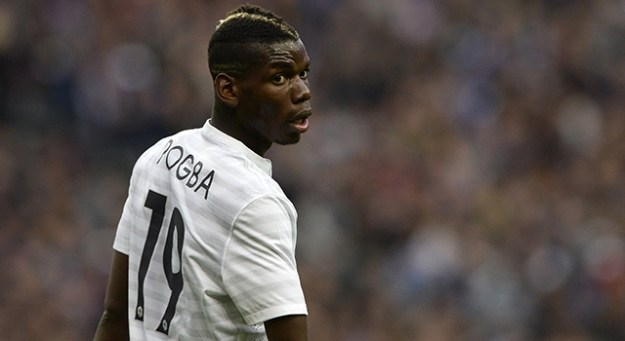
“Young France midfielder Paul Pogba has been one of the stars of this World Cup but I am not surprised by his impressive form in Brazil. Pogba did not play much during his time as a team-mate of mine at Old Trafford, but the things he did in training meant every member of Manchester United’s first-team squad was in no doubt how good he was, and how good he could be. It was a big disappointment when he left to join Juventus in 2012, and it was definitely a mistake by United to let him go.” BBC
France’s Paul Pogba: a complete midfielder worth ‘two Gareth Bales’
“Paul Pogba’s nickname has morphed since he arrived in Brazil. For most of his France team-mates he will still always be La Pioche, literally “The Pickaxe” though, in this context, a kid selflessly going about his business to help the collective. The locals, however, have been seduced by the blend of brute force and sinewy skill delivered in flashes by the youngster. They took one look at that eagerness to dribble, spray a pass or crunch a shot at goal, and awarded him their own moniker. He will take to the field at the Maracanã on Friday as Pogiba.” Guardian
World Cup 2014: Futsal – the game behind Brazil’s superstars
“There is a saying in Brazil that a great footballer is born here every day. A stroll along Rio’s breathtaking beaches is enough to show you why they believe that. As far as the eye can see, footballs dance in the evening air, propelled by one deft touch after another. Alongside the sun-worshippers, towel hawkers, muscle-men and bar-crawlers are boys and girls, men and women, repeating skills and drills, honing their feel for the football, hour after hour.” BBC (Video)
The Powerful Throat is giving favelas a World Cup voice in Brazil
“There’s a little football pitch up on the fifth station of the Santa Marta morro, in the Botafogo neighbourhood of Rio de Janeiro, where a group of Brazilian children who live in the favela are playing against some visiting Argentinian youths. The local kids hold a white ball, worn and battered, and they have challenged the Argentinians, saying if they win they will take their Fifa Brazuca football as the prize. The midday sun shines on the dry top of the morro, where the view of Christ the Redeemer on a nearby mountain top, and the undulating bays of Rio flanked by hills, literally stuns – can such beauty be humanly possible?” Guardian
Passion, pressure and prayers carrying Brazil on seven steps to heaven
“It was as Atlético Mineiro trailed 2-0 at half-time in the second leg of last season’s Copa Libertadores final against Olimpia of Paraguay that one of their supporters, wired on a cocktail of nerves, frustration and booze, decided to pop out for a smoke. He needed it. The Mineirão in Belo Horizonte was a maelstrom. Tears and prayers were seemingly everywhere. Another fan further down the row bawled his eyes out as he bellowed to the heavens. It was as if he were having an argument with the Big Referee upstairs. Atlético had never previously won the Libertadores. Their hated rivals, Cruzeiro, were on course to take the Brazilian league title. Atlético had to win this game.” Guardian
The Story of Resistance to FIFA’s War on Brazilian People – Video Blog

June 13, 2014. “FIFA’s 50 billion dollar war on Brazilian people, started with the first worker oppressed, the first poor black person killed by police, the first indigenous forcefully evicted, the first teacher beaten by police, the first journalist or social activist attacked, the first protestor clubbed, the first kid in the favela murdered by state uniforms, the first sex worker raped by police, and the first child sold into sexual slavery. The World Cup is for the rich, the cops are for the poor. It started with the first home stolen, with the first rent raised, with the first law changed for FIFA’s sponsors, with the first patient left to die at the hospitals’ doors, with the first worker killed in their stadiums.” Revolution News (Video)
Stop Treating Women Like They Don’t Know Anything About Soccer
“Last week, Helena Costa resigned from her job as the head coach of second-division French club Clermont Foot. In the midst of World Cup fever, the news slipped under the radar, but it was momentous. The first woman ever appointed to lead a professional men’s club just quit her groundbreaking job—before the first ball was even kicked. Costa, who had previously scouted for Celtic and coached the Iranian and Qatari women’s national teams, had only been appointed in May in what had been praised around the world as a landmark decision.” New Republic
World Cup 2014: Who holds the balance of power in world football?
“Brazil’s World Cup has been played in the style that so many hoped for once football’s showpiece was awarded to the country regarded as the home of the game’s free spirits. The last three weeks have provided a consistent narrative of fast, attacking football and excitement – exactly as the game’s rulers would have imagined it when they handed the tournament to Brazil. Even the line-up for the last eight has a balance that brings pleasure to the purists, as four teams from the Americas are complimented by a quartet from Europe – all of them group winners.” BBC
Neymar v James Rodríguez – the first clash of the glamour boy No10s

“Shortly before the start of Brazil and Chile’s World Cup last-16 match in Belo Horizonte there was a sudden kerfuffle in the Estádio Mineirão media centre. Voices were raised, chairs overturned, necks craned anxiously. Was this another riot? A security threat? A Western-style brawl between Peruvian TV and Norwegian state radio? As it turned out the calm centre of this storm was Miss Chile, present in her official capacity – and a very small pair of shorts – to be snapped and vox-popped and camera-phoned and generally gaped at by a throng of suddenly very animated journalists. Not that Miss Chile seemed uncomfortable with the process, bouncing around with practised ease and, in a dramatic finale, hoisting up her T-shirt to reveal (a) her brassiere; and (b) a preview of tomorrow’s inside back pages.” Guardian
The Eternal Cult of Zinedine Zidane
“This story first appeared in Eight by Eight magazine’s World Cup issue. ICON (also ikon) 1. A devotional painting of Christ or another holy figure, typically executed on wood and used ceremonially in the Byzantine and other Eastern Churches. 2. A person or thing regarded as a representative symbol or as worthy of veneration: ‘this iron-jawed icon of American manhood.’ So says the Oxford English Dictionary. ‘Zinedine Zidane’ would be a tempting addition: ‘regarded … as worthy of veneration’—yes, certainly. When your face is beamed on the Arc de Triomphe on the night of France’s greatest-ever sporting exploit, of which you’ve been the undoubted hero, how could you not be? To acknowledge Zidane’s iconic status does not necessarily mean, however, that it was bestowed on him by a nation united in gratitude, as I was recently reminded in a Paris cab.” New Republic
The 2014 World Cup All-Hair Team
“After a scintillating batch of round-of-sixteen matches, it’s time once to announce the World Cup All-Hair Team. The All-Hair Team Selection Committee deployed a meticulous, scientific rating system to assess the coiffures of the 736 players who made the voyage to Brazil. The committee considered four main criteria…” Fusion
Hail to the Alamo: Team U.S.A. Goes Down Fighting

“In the very end—after the comeback goal from Julian Green, a nineteen-year-old World Cup débutant; after the close-range miss from Clint Dempsey that almost levelled it; after the final whistle that sent Team U.S.A. home; after the expressions of pride from Alexi Lalas in the ESPN studio on Copacabana Beach; after all the grandstanding tweets from politicians praising the U.S. team for displaying great valor—after it had all gone down, there was Tim Howard, the American stopper who had made an incredible sixteen saves to keep the United States in the game, a feat of goalkeeping prowess with no equals in World Cup history.” New Yorker
World Cup Pass & Move: The Boys of Summer
“For the last two weeks, the United States men’s national team has had your neighbor talking about 4-3-3 formations, the lady on the bus wearing a Clint Dempsey–riding-Falkor T-shirt, and has probably been the reason dozens of babies will be named John Anthony in nine months. The American players helped inspire a palpable passion around the game in this country, unlike anything we’ve felt before. And they helped make this truly extraordinary World Cup one that none of us will ever forget. With the United States’s exit from the tournament at the hands of Belgium, a few Grantland writers — Brian Phillips, Chris Ryan, Mike L. Goodman, Noah Davis, Ryan O’Hanlon, and Bill Barnwell — wanted to take the opportunity to pay tribute to the players that gave us so much this summer.” Grantland
Wild Ride by U.S. Comes to End, but Soccer Is the Winner
“It felt as if Tim Howard would never go down. As if the United States would never go down, standing there, taking shots like an undersize fighter clinging desperately to a puncher’s chance. Howard saved with his hands. His feet. His legs. His knees. At one point, Howard even had a shot bounce off the crest over his heart. Trying to figure out where soccer fits into the fabric of America is a popular topic but, for one afternoon at least, there was this unexpected truth: All around the country, from coast to coast and through the nation’s belly, sports fans of every kind were inspired by the performance of a soccer goalkeeper. In a loss. The ending was cruel, but then so is the game.” NY Times
World Cup: USA dream shattered by Belgium
“No guts no glory, or so the saying goes. But perhaps the vanquished United States soccer team can rest in the knowledge that if the World Cup was decided on guts, it would surely be lifting the trophy in Brazil. For 120 minutes of Tuesday’s ultimately unsuccessful last-16 clash with Belgium, each one of Jurgen Klinsmann’s men left everything on the field in Salvador. From the second the Americans went 2-0 down in extra time thanks to goals from Kevin De Bruyne and Romelu Lukaku, the rearguard action started. Substitute Julian Green’s goal offered the nation a lifeline and energized its fatigued players with a quarter of an hour to play. And you could almost hear the sigh of despair from New York to Nevada as late chances for Jermaine Jones and Clint Dempsey were agonizingly spurned. The final whistle signaled tumult at either end of the emotional spectrum as Belgium advanced to a quarterfinal with Argentina on Saturday and the U.S. departed. Beaten, yes, but not bowed.” CNN
A Eulogy for the Most Intoxicating USMNT of all Time
“There was a point during the end of the Belgium game, when Lukaku roofed that second goal, and we could see the end was nigh, that I stopped being stressed out, and started to just feel proud. The score didn’t matter, I told myself. This team has given every last iota of whatever nutritional substance is fueling their bodies. I will be fine with whatever happens. And then—of course—Julian Green comes on and buries a volley in the Belgian net to create the most frenzied final six minutes in US soccer history.” New Republic

We Watched a World Cup Game With One of Rio’s Most Violent Drug Gangs
“The sight of young men in board shorts and flip-flops holding high-powered assault rifles is one you never get used to. A few weeks ago in one of Rio de Janeiro’s most violent favelas, half a dozen such young men were sitting on plastic chairs around a small TV set that had been brought onto the street. They drank beer and chain smoked bagulhos, fat conical joints. One guy wore a thick gold chain with two plastic baggies dangling off it, one filled with white powdered cocaine, the other crack. A couple of others, we noticed, accessorized with grenades strapped to their belts. Just a few miles away, thousands of fans from around the globe were gathering at Fan Fest on Copacabana Beach to watch the opening World Cup match between Brazil and Croatia.” Fusion (Video)
Messi, as Always Expected, Rescues Argentina

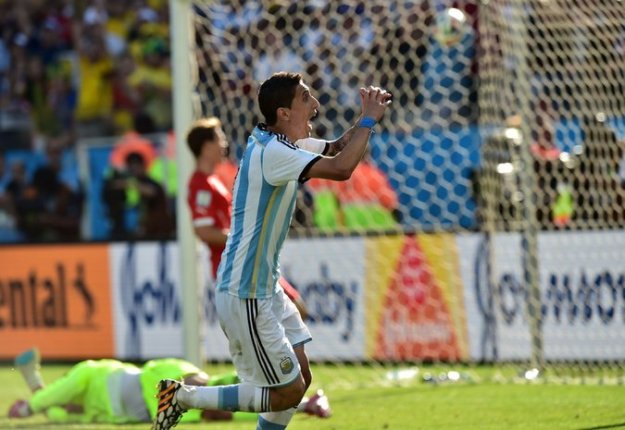
“Lionel Messi is often the smallest player on the field. But it is clear that he possesses his own gravitational pull. Just look at how opposing players — entire teams — drift toward him, one after another, and impulsively flinch at his every step and feint. Look at how magnetically he draws a crowd’s collective gaze, how hushed with expectation a building can become whenever he makes a run. Look at how quickly the ball zips its way back to his feet whenever his team feels the slightest bit of anxiety. Messi’s stature, already large, has grown considerably in this World Cup, and it grew somehow bigger still Tuesday as he inspired Argentina to a 1-0 victory over Switzerland at Arena Corinthians.” NY Times
The Dilemma of Broadcasts: Univision, ESPN, and the Radio
“For this bilingual World Cup enthusiast, the beginning of each game requires a decision: watch the broadcast in English on ESPN (or sometimes on ABC), or in Spanish on Univision. I thought at first that what would make me choose one over the other would be a momentary preference for the agitation and drama associated with the Spanish broadcast or the calmness and restraint of the English broadcast. But later I realized it wasn’t that simple, that my choice was governed by darker motives that had to do with memory and the radio. I realized that the difference between the two broadcasts has to do not only with the languages they use but also in their tolerances for silence.” New Republic
It’s Time for Argentines to Get Behind Their Team
“The Albiceleste won all three first round games, but that hasn’t kept its demanding supporters from complaining. From one Che to another: Shut up and enjoy the team! As Argentina readies for its second-round game against Switzerland, its fans are getting, well, tense. Is Argentina playing to its full potential? No, it is not. Is it the worst team at the World Cup? No, far from it. Yes, many of us have been frustrated by the performance of our team at this World Cup, despite its perfect record in the first round. Alejandro Sabella’s men have been static and even boring at times with neither Sergio Aguero nor Gonzalo Higuaín up to their usual standards.” Fusion
Argentine Fans Feel Right at Home
“Tens of thousands of soccer fans came from all parts of Argentina. It does not matter that there were no tickets left for the match. This seemed an irrelevance. The main thing was to have been here, and to have witnessed Argentina take on Switzerland. In a sliver of park overshadowed by the modern office buildings of downtown São Paulo, FIFA has installed large screens for those without tickets. The fans know that tickets were going for between $2,000 and $3,000. Not that there were any for sale. Those who had come from the Arena Corinthians complain that there are only buyers and no sellers. Even two hours before the match started, the Argentines appeared en masse with their flags of light blue and white. The stripped albiceleste shirts are ubiquitous; even children in strollers were wearing them. The drinking started early. One fan, while being frisked at the turnstile, shouted: ‘Today, we’re all brothers. Boca-River, it doesn’t matter.’ He was referring to the rival clubs River Plate and Boca Juniors.” NY Times
In Brazil, the Joy of English
“Twenty minutes from the end of their opening game in the group stage of the World Cup, Belgium—Team U.S.A.’s upcoming round-of-sixteen opponent—was trailing the underdog Algeria, 1-0. But then the Belgian substitute midfielder Marouane Fellaini, hitherto remarkable only for his spectacular Afro, outjumped a defender and headed home the equalizer. ‘Big man … big stage … big hair … big goal … Belgium back in business.’ What would the World Cup be without these over-the-top grace notes from English commentators like Adrian Healey, who called the game for ESPN?” New Yorker
Variation on a Theme of Jacques Brel
“The United States plays Belgium today in the round of sixteen, with the winner moving on to the quarterfinals of this 2014 World Cup. It’s an accomplishment the U.S. has only managed once before, in 2002, by beating Mexico, before losing a tightly contested match to Germany, the eventual tournament runners-up. Belgium has gone further—they arrived as far as the semifinals in 1986 before succumbing to two Diego Maradona goals and then losing to France 4-2 in extra time in the consolatory third-place game. That was an extraordinary Belgian side: Enzo Scifo, Eric Gerets, Jean-Marie Pfaff in goal, Jan Ceulemans. Since then, Belgium has fared no better in the World Cup than the U.S. has—three exits at this very same round of sixteen, one exit at the group stage, and, in 2006 and 2010, a failure even to qualify for the tournament. The U.S. hasn’t missed a World Cup since, coincidentally, 1986.” The Paris Review
8 Books to Guide You Through the World Cup

Golazo!: The Beautiful Game from the Aztecs to the World Cup: The Complete History of How Soccer Shaped Latin America by Andrea Campomar
“The world is divided into two groups of people: those who look forward to the World Cup every four years, and those who don’t realize they’re soccer fans until the World Cup starts. For the latter, those recent converts to the soccer religion, here is a reading list you’ll want to page through before the 2016 Summer Olympics in Brazil, so you too can become a soccer expert.” Fusion
A Definitive Reading Guide To The 2014 World Cup
“In Brilliant Orange, the English writer David Winner’s celebrated study of Dutch soccer culture, he quotes voetbal-loving artist Jeroen Henneman on the subject of the Brazilian game: ‘I was so disappointed when I went to Brazil,’ he tells Winner, describing his first trip to the country that will host this summer’s World Cup. ‘I’d thought: finally I will see the great Brazilian football! I expected to see a very ‘roomy’ football. But they play in the most boring way, on technique, only to show off… So slow! They go forward, they go back. Some do little tricks, nice little things. But it is not football.’ It is not football.” Huffingtonpost
Your World Cup Ethical Questions, Answered
“Was Luis Suárez’s bite of an opponent any more unethical than other forms of direct harm, such as a stomp or a professional foul in which the risk of serious injury is more likely? Or does the fact that biting is viewed as ‘uncivilized’ make it uniquely worse? JACK HIGGINS, posted on Facebook” NY Times
Exit Happiness: Nigeria’s World Cup Run Comes to an End
“‘I haven’t heard the halftime yet,’ said Obie, one of the many Nigeria supporters on hand for the Super Eagles’ watch party at the Nigerian comfort-food spot Buka. He motioned toward a projection of the currently level France-Nigeria match and the broadcasters breaking it down at halftime, albeit inaudibly. ‘We’re so loud.’ Noise is a good thing to keep in mind when thinking about Nigeria’s presence in the round of 16 — noisy in appearance because of its lime-green jerseys, noisy because of Africa’s waning presence in the World Cup and the rallying cries joining the Eagles, noisy because of the atrocities happening in the northern part of their home country.” Grantland
Germany 2-1 Algeria (AET): Algeria press and counter-attack brilliantly

“Germany’s quality eventually shone through, but Algeria produced one of the best tactical performances of the tournament. Mats Hummels was out injured, so Jogi Low moved Jerome Boateng into the middle and brought Shkodran Mustafi into the side at right-back. Vahid Halilhodzic again made huge changes to his side – he switched five players from the XI which drew against Russia, including four of his front six. Interestingly, he didn’t select anyone who was a booking away from suspension. Algeria had a very obvious gameplan here, and with more composure in the final third, it could have resulted in a famous victory…” Zonal Marking
Mourning Algeria’s Cruel, Beautiful Loss to Germany
“Is there such a thing as a beautiful defeat? If I believed there was, I would call the Algeria-Germany match just that. Algeria played gorgeously, joyfully, unafraid, and unfettered. And Germany was clearly afraid, on the defense for much of the game, a little surprised perhaps to be facing one of their toughest challenges in recent history from the Fennecs. For many, many minutes, it felt like Algeria would score, and would win. And yet there was, as we all watched, that terrible feeling in the gut that comes whenever a team you are supporting is playing Germany. The sense of the inevitable: the gloom of knowing that, however much you might dream of something different, there is a relentless truth in the World Cup: more often than not, Germany wins no matter how hard you pray for something else to happen.” New Republic
Germany pushed to the limit
“Here are three thoughts from Germany’s hard-fought 2-1 win over Algeria in the World Cup round of 16. 1. History drives Algeria on, but not far enough. History didn’t repeat itself, but it did have a few echoes. After a somewhat harsh elimination for an admirable Algeria side, Germany will meet France in a heavyweight quarterfinal. The game did not involve all the controversy of 1982, but it was still difficult not to feel some sympathy for the North African side. They pushed Germany to the edge, and almost out of the competition.” ESPN
World Cup: Germany survive scare against Algeria to reach quarterfinals
“Extra-time goals from Mesut Ozil and Andre Schurrle spared Germany’s blushes against Algeria in the World Cup last 16 tie at Port Alegre on Monday. Following 90 minutes of stalemate it was Joachim Low’s side who finally broke the deadlock in the second minute of extra time when Thomas Muller squared the ball for Schurrle to cleverly back heal the ball past goalkeeper Rais Mbolhi. Ozil drilled in a shot to double the lead in the final minute of the second extra period before Abdelmoumene Djabou pulled one back for Algeria in injury time. It was a cruel end to what was a brave performance by Vahid Halilhodzic’s side who were looking to settle an old score from the 1982 World Cup.” CNN
The Secret History Behind Today’s Algeria-Germany #WorldCup Match
“Today, Germany’s Mannschaft will face Algeria’s Fennecs at Porto Alegre, after both teams made it through the group stage of the FIFA World Cup. Though it has yet to be played, the match is already being hailed as an historic, even epic, event. Why? Because it represents the first time the Algerian squad has progressed to the final sixteen at a World Cup. Its larger symbolism, however, is rooted in a longstanding Algerian resistance to French colonialism, which underpinned the secret history of Algerian-German football relations.” Imperial & Global Forum
How World Cup Goalies Prepare for and Handle Penalty Shoot-Outs
“The World Cup’s knockout stage began this weekend. From here on out, each match must have a winner and a loser, and if the game is tied after 120 minutes of open-field play, it gets decided by penalty kicks. On Saturday, Brazil played Chile in the very first of these matches, in the tournament’s Round of 16, and it ended with the most dramatic penalty shoot-out since Italy beat France in the 2006 World Cup final. You got the sense that everything Brazil had put into hosting this year’s event was at stake—not just the money or the national pride Brazilians take in their own soccer superiority, but also the public’s tolerance for the outright absurdity and lack of humanity of the government’s investment in the tournament. The Brazilian team doesn’t have to win the World Cup to keep its people’s political dissatisfaction at bay, but it has to get pretty close. The Round of 16 is not close.” Vanity Fair
Notes on Penalty Kicks and Other Neuroses
“These are terrible times in which the ‘beautiful game’ can be reduced to Long Day’s Journey Into Night. Not since the summer of 1914 has the world had such reason for anxiety and neurotic behavior. I am referring to the dreaded penalty shoot-out that threatens to consume the progress of our World Cup now that it has reached its knockout stages. Famously it is the goalkeeper who is alleged to be anxious over the penalty kicks. But in truth we are seeing great and brave players hiding from their coaches in the huddle and begging to be excused the nightmarish duty.” New Republic
Costa Rica 1-1 Greece: Costa Rica through on penalties despite playing an hour with ten men
“The Costa Rica miracle continues – they’re through to the quarter-finals after a shoot-out victory over Greece. Jorge Luis Pinto named his first-choice XI, having rotated for the final group game. Fernando Santos continued with Georgios Samaras upfront following his great performance against Ivory Coast, while Georgios Karagounis continued in midfield. Greece had the better of this game, even before Oscar Duarte’s red card.” Zonal Marking
World Cup: France sees off Nigeria to reach last eight

“Redemption is not easy to attain. Four years on and the scars still remain. When France’s footballers left for Brazil, they were under no illusions — it cannot happen again. At South Africa 2010, ‘Les Bleus’ became a laughing stock as players and coaches clashed, strikes were threatened and results embarrassed a nation. Players were suspended, the entire country waged war on a group which had imploded and exited at the group stage after failing to win a single game. Four years ago the picture was grim.” CNN
France 2-0 Nigeria: France prosper when returning to a one-striker system
“France took a while to show their best football, but dominated the final half hour. Didier Deschamps’ big decision was whether to start striker Olivier Giroud or left-winger Antoine Griezmann, with Karim Benzema’s position dependent upon that choice. Giroud got the nod. Stephen Keshi was without Michael Babatunde through injury, and his latest attempt to solve the problem at number ten was playing Victor Moses there, behind Emannuel Emenike. Nigeria started strongly and dominated the first quarter of the game, but France slowly showed their quality.” Zonal Marking
Exit Happiness: Nigeria’s World Cup Run Comes to an End
“’I haven’t heard the halftime yet,’ said Obie, one of the many Nigeria supporters on hand for the Super Eagles’ watch party at the Nigerian comfort food spot Buka. He motioned toward a projection of the currently level France-Nigeria match and the broadcasters breaking it down at halftime, albeit inaudibly. ‘We’re so loud.’ Noise is a good thing to keep in mind when thinking about Nigeria’s presence in the round of 16 — noisy in appearance because of its lime green jerseys, noisy because of Africa’s waning presence in the World Cup and the rallying cries joining the Eagles, noisy because of the atrocities happening in the northern part of their home country.” Grantland
World Cup Players to Know: France’s Midfield General, Paul Pogba
“… But the brief on Pogba is thus: grew up outside of Paris, joined Manchester United at 16 under allegations that the club had, in effect, bribed his parents, played three games for the Red Devils in three years, refused to pen a new contract in 2012 because, he says, Sir Alex Ferguson “didn’t show me enough that he wanted me in his squad,” joined Juventus on a free transfer, was painted in the press by his former coach as a bigger problem than he was worth, and then promptly became one of the best midfielders on the planet.” Grantland
World Cup Tactical Analysis | France 2-0 Nigeria: Super Eagles’ impressive possession game not enough
“Paul Pogba lead a determined France through to the quarter finals against a Nigerian team that wasn’t going to give up that easily with Enyeama between the sticks. An own goal at the end however, killed the dreams of the African country that was never afraid to dream.” Outside of the Boot
World Cup Tactical Analysis | Netherlands 2-1 Mexico: Oranje win battle of individuals
“Coming into the tournament, this was a clash that a lot of people didn’t expect to see. Netherlands weren’t really looked at as favourites in the way they are now, with many people doubting their ability to get out of the group. The same doubts were cast over Mexico, with people looking at Croatia as a team that could cause an upset or two. However, both these teams really overwhelmed all expectations in the group phase. Mexico earned a creditable draw against Brazil, while easing past their equals, Croatia. Netherlands stunned the world with their win over Spain and won all their group games to set up this clash.” Outside of the Boot
Match Report: On Yesterday’s Greek Tragedy
“In the end, not even Greece’s Gods could save her. It seems that the penalty shoot-out belongs so squarely and brutally in the realm of chance that it was beyond even their powers of intervention. For once in a high-stakes match, she had been the better side. But she had proved unable to kill off the surprisingly meek Costa Ricans, who had been playing since the 66th minute with 10 players. The Central American team was able to hold on until the end of extra time and relief at this seemed to turn into boundless confidence during the penalties. The Greeks matched them goal for goal until the fourth, when the Costa Rican keeper Keylor Navas produced a spectacular one-handed save to deny Fanis Gekas. The next shot sent Costa Rica into the quarterfinals for the first time in its history and left Greek fans tasting an unfamiliar flavour: the bitterness of undeserved defeat.” New Republic
World Cup Tactical Analysis | Costa Rica 1–1 Greece (5-3 pens): Keylor Navas hands glory to the Los Ticos

“A second-half sending off, a last-minute Greece equalizer and an extra-time fusillade to go on to penalties were not enough to hinder Costa Rica’s dream run to the quarter finals. Backed by five turbulent spot-kicks from his team-mates, Levante stopper, Keylor Navas ensured his tiny Central American nation will take part in their first ever World Cup quarter-final, despite playing for virtually an hour with a man down. They retorted to misery having been seconds from victory before Sokratis Papastathopoulos emerged unmarked to keep the Greeks in the contest with an injury time goal which nullified the opener scored by Bryan Ruiz. Greece seemed sure to win from this point but Costa Rica dug in, rode their luck it has to be said, relied on their brilliant goalkeeper to play out extra time and triumphed on penalties.” Outside of the Boot
Costa Rica 1 Greece 1
“Costa Rica are into the quarter-finals of the World Cup for the first time in their history after beating Greece 5-3 in a penalty shootout in Recife. Sokratis Papastathopoulos’s injury-time equaliser for Greece had cancelled out Bryan Ruiz’s side-footed opener and sent the game into extra time. Costa Rica, down to 10 men for almost an hour after Oscar Duarte’s dismissal, scored their first four spot-kicks. Theofanis Gekas missed for Greece, and Michael Umana settled the tie. It means the Central American side – surprise qualifiers from a group containing England, Italy and Uruguay – go through to face the Netherlands on Saturday for a place in the semi-finals as their unlikely run at the World Cup continues.” BBC
World Cup 2014: Costa Rica Defeats Greece on Penalty Kicks, 1-1
“For the first time in its history, Costa Rica will play in the quarterfinal of the World Cup after defeating a dour, defensive Greece team in a penalty shootout. The Round of 16 match in Recife, Brazil, was tied 1-1 after regulation. Greece scored a late goal in stoppage time to even the score. Costa Rica was playing with only 10 men after one of its defenders, Oscar Duarte, was ejected in the 66th minute.” NY Times
World Cup: Costa Rica sets up Dutch quarterfinal
“Nobody gave them a chance — nobody. Perhaps nobody was listening. Perhaps they didn’t want to. For all of the joking and laughing that Costa Rica would simply turn up in Brazil to make up the numbers, there were those who knew the reality would be different. ‘Think big’ is the motto that Costa Rica coach Jorge Luis Pinto has always subscribed to.” CNN
Middle Class Brazilians Watch from Afar
“The Country’s Classe C is the engine of Brazil’s Fan Culture, but You Won’t See Them in the Stadiums. Even after the sun has sunk beneath the horizon, the city of Fortaleza in the northeast of Brazil remains as warm as a steam bath. On a narrow, poorly lit street in the bairro of Mucuripe, the soft breeze coming off the Atlantic whips the hundreds of cheap yellow and green streamers hung between the cramped houses back and forth. It lifts up dust and sand too, covering the plastic tables and chairs of the Bar do Amiguinho (‘the Little Friend Bar’) in a thin layer of silt.” Fusion
A New York Odyssey Through World Cup Fandom

“Interest in the World Cup is surging in the United States, with record television ratings, outdoor viewing parties and midday breaks for workers to watch the United States battle its way into the second round. Here, in an extremely diverse New York City, where soccer has long been popular in some neighborhoods but is now gaining wider traction, just about every team has its fans. A random survey was attempted during the first round of the tournament. The games were on across the city. Some places were crowded and boisterous but others were, well, pretty empty. Some fans yelled together, while others commented about the games in virtual solitude. But it was hard to find a place where the games were being ignored.” NY Times
Nigeria’s Coach Makes History
“Stephen Keshi is the first African to lead an African team to the second round. Progress in African soccer should not be measured only by how the continent’s teams progress through the World Cup brackets. You can also judge the pace of evolution by looking at who’s standing in the technical area. On Monday in Brasilia, Stephen Keshi will be inside the dotted white lines as his Nigeria side face France for a place in the quarterfinals. Even this early in the tournament, Keshi is a pioneer: the first African head coach to lead a team into the round of 16.” Fusion
Algeria Looks for Revenge, 32 Years Later
“At the 1982 World Cup, West Germany and Austria colluded to eliminate the upstart North Africans—or did they? Algeria has been waiting 32 years for Monday’s match against Germany, which is one year more than the age of the oldest member of its national team. But even if most of them weren’t around for the ‘Game of Shame,’ it has been ingrained in the collective consciousness of Algerians, who do not tend to easily forget injustices.” Fusion
Netherlands 2-1 Mexico: Mexico dominate the start, but Van Gaal changes help the Dutch back into the game

“The Netherlands produced a dramatic late turnaround, meaning Mexico were eliminated in the second round for the sixth consecutive World Cup. Louis van Gaal welcomed back Robin van Persie after suspension, while Paul Verhaegh came into the side as the right-wing-back. Miguel Herrera was forced to cope without Jose Vazquez, who had been excellent throughout the group stage, so Carlos Salcido played the holding role. Mexico were clearly superior until they went ahead, then became too passive and the Dutch rallied to create a number of goalscoring chances.” Zonal Marking
This Time, the Dutch Did Not Capitulate in Fortaleza
“Before it was Fortaleza, it was the Dutch stronghold of Schoonenborch—the beautiful city. This was, it’s true, three hundred and seventy-odd years ago when the West India Company took north-east Brazil from the Portuguese, renamed it New Holland and then lost it again to the original colonialists in 1650s. Not much remains of the Dutch tropical moment in South America—the weirdly hallucinatory paintings of Frans Post, complete with sultry stillness and the occasional tapir. Even the old Pernambuco synagogue, survivors of the Inquisition finding a Dutch refuge in Brazil, got torn down in the last century. For the Dutch there was an acclimatization problem; the Company hard-pressed, over-stretched. And disinclined to put a hand on New Spain to the north. And so it was for much of today’s game: the Dutch battle plan, such as it was, wilting in the brutal heat. Both managers sported ties of their respective colors, though van Gaal’s is more a peach than an orange and as the game went on he wore it with increasing discomfort.” New Republic
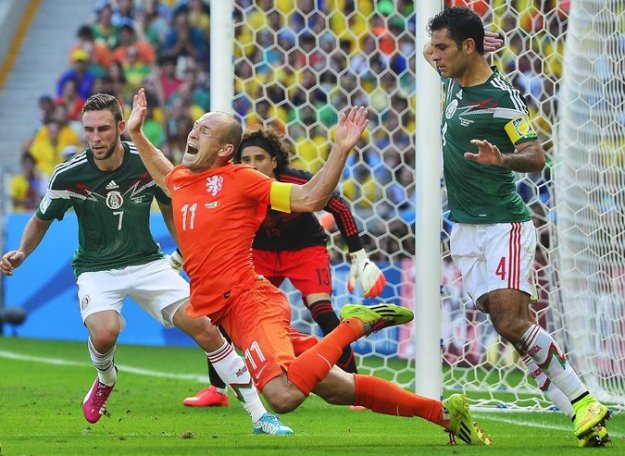
Dutch Mount Dramatic Rally With Theatrical Fall
“Mexico’s coach, Miguel Herrera, has become an icon during this World Cup for his impassioned exhortations in front of the team bench. Herrera has stomped and stamped, whirled and whipped, flailed and frothed over everything from referee decisions to near misses to, most notably, goals scored by his players. Among the countless Internet tributes to Herrera is one delightful concoction in which Herrera’s wild gesticulations result in a violent thunderstorm.” NY Times
Colombia 2-0 Uruguay: James Rodriguez steals the show
“Colombia took a while to get going, but never looked in trouble after James Rodriguez’s astonishing strike. Jose Pekerman selected Jackson Martinez, though he played from the left rather than alongside Teo Gutierrez upfront. Oscar Tabarez was without Luis Suarez, as you might have heard…Edinson Cavani moved upfront, and Diego Forlan played the support role. Tabarez stuck with the 3-5-2, so Maxi Pereira returned with Alvaro Gonzalez shifting inside and Nicolas Lodeiro dropped. This was a pretty simple victory – Colombia are a far superior side to Uruguay, and demonstrated that for the first 50 minutes before sitting back.” Zonal Marking
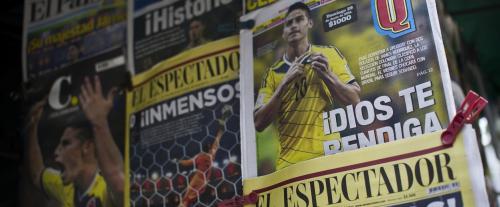
James Rodriguez Is the Best Player of This World Cup
“When James Rodriguez was four years old, he wanted to be a footballer, and so his mother bought him his first football. At the time, however, his hero wasn’t Freddy Rincón or Pibe Valderrama, the heroes of the 1990s Colombian team, but Oliver Atom, the protagonist of Japanese TV series Supercampeones (originally Captain Tsubasa), an anime chronicling the adventures of a youth football team. Now, 18 years later, James Rodriguez has far eclipsed Oliver Atom, sitting alone at the top of the World Cup scoring charts with five goals and two assists in four games, above global superstars such as Neymar and Messi.” New Republic
World Cup: Brazil defeats Chile on penalties

“And so the carnival carries on. Brazil, the team which manages to thrill and frustrate almost simultaneously, clinched its place in the quarterfinal of the World Cup following a tension-fueled encounter with Chile. A 3-2 victory on penalties following a 1-1 draw in Belo Horizonte means Luiz Felipe Scolari’s side’s quest to win the World Cup on home soil remains alive. It will now turn its attention to a last eight contest with Colombia — a team which has thrilled so far in this tournament. While Brazil will take the plaudits, Chile should be commended for a performance which at times defied the ability of the human body to run and hustle as its players did.” CNN (Video)
Brazil 1-1 Chile: Brazil progress by the finest of margins
“Brazil won on penalties after an incredibly tense and tiring contest. Luiz Felipe Scolari selected Fernandinho following his good impact in the win over Cameroon, with Paulinho on the bench. Jorge Sampaoli brought back Arturo Vidal after he was rested for the defeat to the Netherlands. The first half was an extremely fast-paced battle of pressing, and that tired both teams for the final 75 minutes, with the quality of football declining rapidly after half-time.” Zonal Marking
World Cup 2014: Brazil Survives Shootout Against Chile
“With the pressure of an anxious nation bearing down on them with each passing minute, the Brazilian players teetered on the brink of a defeat that would have wounded a country’s soul. Brave Chile was refusing to back down, demonstrating to 57,714 howling fans at Estádio Mineirão and millions more watching at homes, restaurants and bars that the team had the nerve to stand up to the mighty host nation through 120 minutes of the most tense and exhilarating soccer seen so far at the 2014 World Cup. After 30 minutes, it looked like the most fast-paced, breathtaking game of the tournament. After 90 minutes, the teams were even, at 1-1, after Chile had controlled play through much of the second half, leaving the Brazilian fans nervous and agitated. Through 30 draining minutes of extra time — which included a thunderous Chilean shot that struck the crossbar in the 120th minute, inches from knocking Brazil out — neither team could take a lead.” NY Times
Brazil shootout hero Júlio César: I have won the country’s trust back
“Júlio César, Brazil’s hero in the penalty shootout win against Chile, reflected on the prize of a World Cup quarter-final and said he felt he had won back the country’s trust after being the scapegoat in South Africa four years ago. Júlio César saved Chile’s first two penalties and referred immediately to his mistake in the quarter-final against Holland at the last World Cup.” Guardian
World Cup 2014: Coaches praise Colombia’s James Rodriguez
“His name is James, but he pronounces it Hahm-ez, and that was the way the Colombian fans shouted it on Saturday night. They have been singing James Rodríguez’s praises all along, in fact, but in the flurry of goals and teams and story lines in this World Cup, there was a chance a few people had not yet noticed Rodríguez. Everyone knows him now. Rodríguez scored two more goals — giving him five at this World Cup — in a 2-0 victory over Uruguay that sent Colombia to the quarterfinals for the first time.” NY Times
World Cup Tactical Analysis: Colombia 2-0 Uruguay | Pekerman’s smart James plan
“In the second all-South American Round of 16 clash at the World Cup, the ever impressive Colombia took on Uruguay for a chance to face hosts Brazil. Colombia came into the game on the back of three comfortable wins in the group stage; Uruguay on the other hand, despite defeating both England & Italy, were yet to convince anyone of their proposed superiority and this was further thrown into doubt with Luis Suarez and his ‘behaviour’ once again.” Outside of the Boot
The Dazzle and the Desolation of Stadiums in World Cup Host Cities

“NATAL, Brazil — From her crumbling house with the leaky roof, across a new highway from a new World Cup stadium, Maria Ivanilde Oliveira heard everything. Notes of the national anthems floated through the humid air into her living room, where her black vinyl couch was losing its stuffing and a metal bookshelf was secured by gnarly wire. A mix of loud cheers and moans from 40,000 soccer fans told her that a team had scored. With no job and little money, Oliveira, 62, could not afford a ticket to see one of the four games played at the $450 million Arena das Dunas, one of 12 stadiums hosting the World Cup in Brazil.” NY Times
Were the Billions Brazil Spent on World Cup Stadiums Worth It?
“Aside from some brilliant play by Mexican goalkeeper Guillermo Ochoa that turned an expected victory for the Brazilian national team into a draw, so far the 2014 World Cup has gone well for host Brazil. The home team won its group and advanced to the Round of 16, and the widespread concerns about social unrest, street crime and stadium completion have faded as the games have largely gone off without a hitch. Of course, with a price tag estimated at $11.3 billion in public works spending alone, it will take more than just a trouble-free four-week tournament to justify Brazil’s heavy investment in hosting the World Cup.” fivethirtyeight
Viva El Piojo: How the fiery Herrera has revived once-rudderless Mexico
“Mexico’s national soccer team trains in a modern facility in a neighborhood where the vast sprawl of Mexico City begins to fade southward into the mountains of the state of Morelos. The setting is almost idyllic: golf carts, low-slung country-club architecture, wide soccer fields landscaped into the hills. Were it not for the hovering smog and the bare cinder-block apartments rising behind high fences, you could mistake this for Tucson. Miguel Herrera eases up to the complex’s gate in a black coupe with a 10‑cylinder engine.” SI
World Cup 2014: Might Brazil be the next victims of Chile?

“Shortly after the World Cup draw was made in December, Brazil coach Luiz Felipe Scolari named the opposition he wished to avoid should his men reach the last 16. ‘I hope Chile don’t qualify,’ said Scolari. ‘I’d rather play any of the others. They’re a pain to play against. They’re well organised and intelligent. It’s better to face a European team.’ The 65-year-old was tempting fate and it came to pass when Chile finished second in Group B and Brazil won Group A, setting up an mouthwatering contest in Belo Horizonte on Saturday. It is the coming together of two attacking powerhouses and, while Brazil cannot contemplate defeat as they pursue a title viewed by the host nation as a birthright, Chile intend to spoil the party.” BBC
Chile will press on against Brazil
“In years to come, when the 2014 World Cup is remembered, most of the focus will fall on the knock out matches. What came before, Luis Suarez and open attacking play included, is all prelude. One fear, then, is that when the competition reaches the business end it might suddenly go cautious; as sapping conditions take their toll and the less ambitious teams seek to grind out their passage into the next round by taking the tie to a penalty shoot out. But there would seem to be little danger of caution playing much part in the first knock out match, the all South American clash in Belo Horizonte between Brazil and Chile.” ESPN – Tim Vickery
Babylon on the Beach
“There have been other parties on this beach. Not just the annual Carnival bacchanal or the New Year’s fireworks, which are massive and can run ragged (as a friend here told me, ‘you watch the fireworks and then run home so nothing bad happens to you’). Copacabana beach, the ‘billion dollar crescent’, as the New York Times called this strand fifty years ago, has hosted everyone from the Rolling Stones to Pharrell. Three million people showed up on its shore for Pope Francis last year, even more than that came for Rod Stewart a decade earlier. Five years ago, 100,000 people turned out just to celebrate the announcing of Rio as 2016 Olympic host—a party to celebrate a future party. But it’s still worth appreciating the unique wilding that is Copacabana this month during the World Cup. The Argentines are camping, the Chileans are chanting, the Costa Ricans are weeping, the Brazilians are hustling, and everywhere are the Americans, baying and bro-ing. Kiosks sell Ruffles and Lucky Strikes and Prudence condoms while sidewalk touts shove apitos and off-label FIFA tchotchkes in your face. Beach cruiser bikes weave around clusters of flagthumpers on the swirled stone promenade. A Uruguayan takes off running to the west for no apparent reason. A naval warship lingers just offshore; police helicopters buzz the beach. The atmosphere is somewhere between Spring Break and the Fall of Saigon.” Roads and Kingdoms