
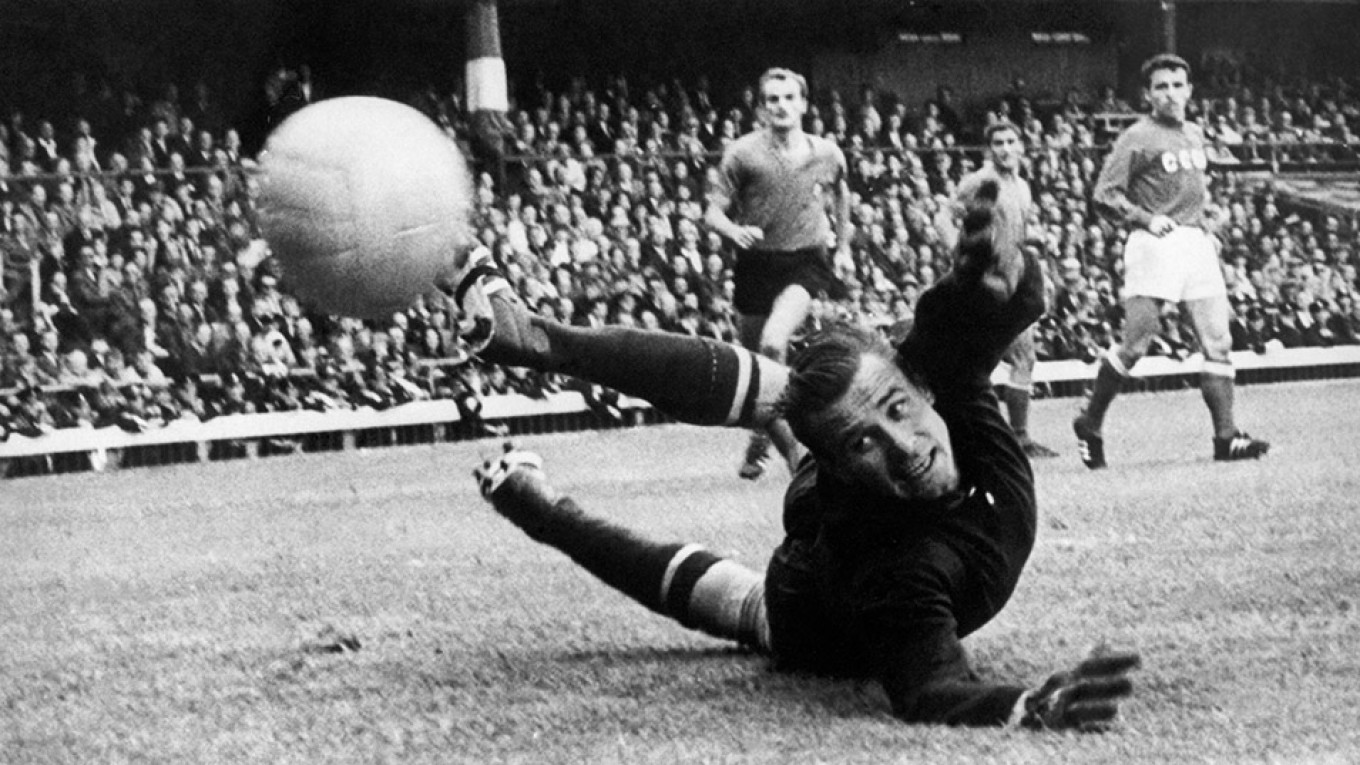
Lev Yashin
“The relationship between players and numbers is a long-established one filled with memories and fascinating as well as fun stories behind them. With that in mind, the Guardian has had a go at deciding which male player is best associated with each squad number, from 1-50. Various factors were taken into consideration, including how long a player wore/has worn that number, what they achieved/have achieved in it, why they decided to wear it in the first place and, in some cases, how distinctly it has become associated with them in death. The below list is highly subjective and ultimately a bit of fun, but don’t let that stop you being shocked and furious in equal measure. …”
Guardian
From W-M to the No 10, shirt numbers tell a story of football’s tactical evolution
“Numbers have a fascination. The No 10 is revered almost everywhere, but perhaps most especially in Argentina, where it denotes the playmaker, the enganche, the quasi-mythical figure who links the front and back of the team. Liverpool and Manchester United have reasons to celebrate their No 7. Ajax retired No 14 for Johan Cruyff, Milan their No 3 and No 6 for Paolo Maldini and Franco Baresi respectively and Birmingham their 22 for Jude Bellingham as gestures of respect for their abilities. Other numbers have been retired to mark premature deaths: the No 20 at Liverpool for Diogo Jota, the No 23 at Manchester City for Marc-Vivian Foé, the 21 at Espanyol for Daniel Jarque. …”
Guardian – Jonathan Wilson
Bosnia-Herzegovina’s life after Edin Dzeko is a revolution built on something stronger than football ‘The Boy’s A Bit Special’
“Following the retirement of long-time talisman Edin Dzeko, Bosnia-Herzegovina is undergoing a generational shift. Largely, and somewhat uniquely, it is being powered by the emotional pull of a vast global diaspora. With the domestic league severely underfunded and ill-equipped to serve as a reliable talent conveyor belt for the national team, looking beyond its borders has become a necessity. A series of gifted foreign-born prospects, eligible for their countries of birth yet choosing instead to represent their heritage, is reshaping the team’s identity. At the heart of this recruitment drive is former captain turned sporting director Emir Spahic, who framed the philosophy in late 2024 with a simple declaration. …”
Four Four Two
How Germany’s greatest goalscorer is guiding the next generation
“It is no surprise Miroslav Klose recognises the value of a true goalscorer. He is, after all, Germany’s all-time leading marksman and until this summer had netted more than any other player in men’s World Cup history. Even now, only Kylian Mbappe and Lionel Messi can top his 16 across four tournaments. But of the more than 300 goals Klose scored in a career that began in Germany’s amateur leagues and spanned Kaiserslautern, Werder Bremen, Bayern Munich and Lazio, he reckons all but two came inside the penalty area. …”
BBC (Video)
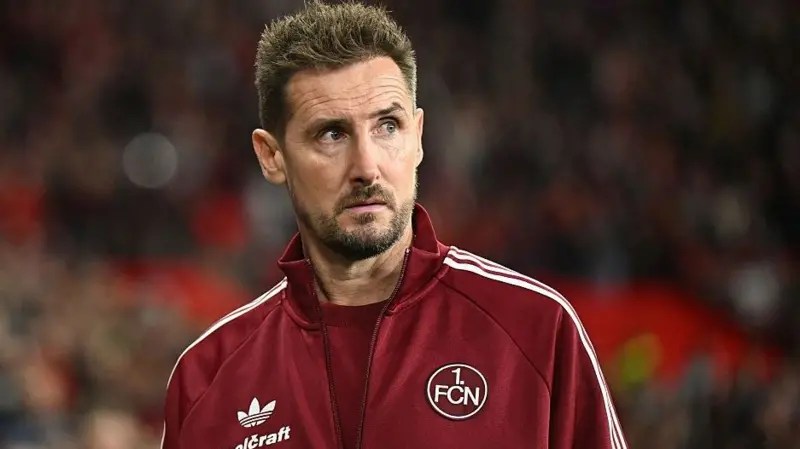 Miroslav Klose’s FC Nuremberg side sit second in the 2. Bundesliga

