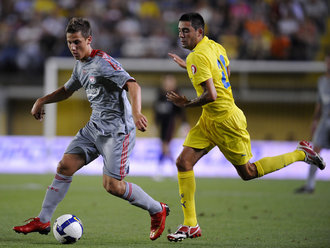
“The World Cup has gone, but the embarrassment lingers for England and its Italian coach, Fabio Capello. The coach and his legal advisers are seeking to distance him from an online rating of players’ performances that bears his name. The Web site, the Capello Index, published last week, does not list one English player among the top 70 at the World Cup after the country was beaten 4-1 by Germany in the first knockout stage.” (NYT)
Monthly Archives: July 2010
Bhoys are back
“Celtic Football Club played its first game on ‘an unusually cold evening in late May of 1888,’’ according to ‘Celtic: A Complete Record 1888-1992.’’ Celtic defeated Rangers, 5-2, beginning a rivalry that transcends sport, kicking off the history of one of the most widely-followed clubs in the world.” (Boston)
On Losing

Paolo Uccello, The Battle of San Romano
“Now that the World Cup is over and the Spaniards and everyone else who admired their elegant way of playing soccer is happy, and the few nations whose teams either exceeded expectations or did okay in the month-long tournament have returned to their normal lives, the fans in underachieving countries are still fuming, many of them destined to recall for the rest of their days how their side either disgraced themselves, or were the victims of gross injustice. For those of them that have been following their national team for years, they’ve most likely already suffered more than any holy martyr in the history of the church, and yet it’s doubtful that even one of them will go to heaven, because they cursed and swore till they were blue in the face each time their team lost.” (NYR – Charles Simic)
Learning curves
“Giancarlo Rinaldi on how the big four in Serie A – Inter, Milan, Juventus and Roma – are preparing for the new campaign. Every pre-season is always packed with clubs getting used to new Coaches, players and tactics. Between friendly matches and training sessions there is an awful lot to be taken on board. This year, perhaps more than any other, the whole of Serie A seems to be on a crash course just to be ready for when the real hostilities begin.” (Football Italia)
New FIFA Rankings
“No surprise — Spain is the new No. 1 in the world rankings released by FIFA only days after the completion of the 2010 World Cup in South Africa. Brazil, ousted in South Africa by the Netherlands, was replaced by the Dutch as the No. 2 team in the world. The rest of the top five: Brazil, Germany and Argentina.” (NYT)
Top ten managers of the World Cup

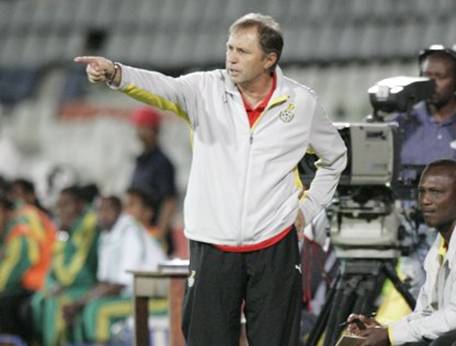
Milovan Rajevac
“Sometimes in-depth tactical analysis can overcomplicate the fairly basic job of a manager – to get the best out of his players. Here are the ten managers who did that well at this World Cup.” (Zonal Marking)
US World Cup Cycle Report Cards: Goalies Edition
“This is the first of a four-part Series of Report Cards for the U.S. Men’s National Team’s Four Year World Cup Cycle, 2007-2010. While we are not issuing grades for all 92 players capped by Bob Bradley during the cycle, we will feature players not on the World Cup roster who either figured prominently in the run-up to the 2010 World Cup. We will issue grades of A-F, rather than player-rankings style grades of 1-10. We’ll also account for players who will surely be on the USMNT radar as they prepare to find 23 good men to travel to Brazil. We begin with goalkeepers.” (Yanks are coming)
Trying To Unwrap The Joe Cole

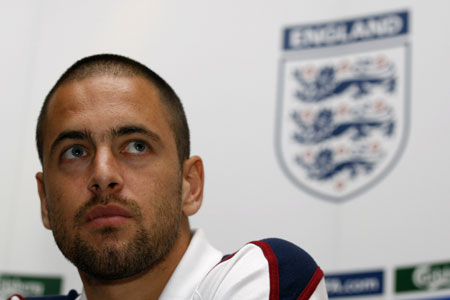
Joe Cole
“At first glance, the signing of Joe Cole by Liverpool might seem like madness. Cole will be twenty-nine years old later on this year and has had a wretched time of it with injuries over the last year or so. He remains a player whose best position remains something of a mystery after ten years of professional football. His four year contract will be worth almost £19m, and his physical condition is, if anything, more likely to slip further rather than improve as he turns thirty. This could turn out to be wrong, but in terms of signing footballers, as in the buying and selling of all other commodities, it’s a matter of balancing probabilities.” (twohundredpercent)
Jamie Redknapp: Joe Cole was right to choose Liverpool over Tottenham and Arsenal
“Joe Cole has made the right decision. Going to Anfield to play for Liverpool is the right move.
I know my dad, Harry, tried to take him to Tottenham and I can see why. He’s a clever footballer, who unlocks defences and who still has so much to offer, an old fashioned dribbler.” (Daily Mail)
For Hodgson, success won’t come easy in his step up to Liverpool
“Roy Hodgson arrived at Fulham in 2007 without much fanfare. He was regarded, probably largely because of an unhappy spell at Blackburn Rovers, as a moderate manager who’d had reasonable success abroad with a string of mid-ranked countries — Finland, Switzerland, Sweden — but who couldn’t really cut it at the highest level. His two years of rebuilding work at Internazionale in the 1990s, in which the Italian club finished seventh and third and reached the final of the UEFA Cup, was broadly ignored.” (SI)
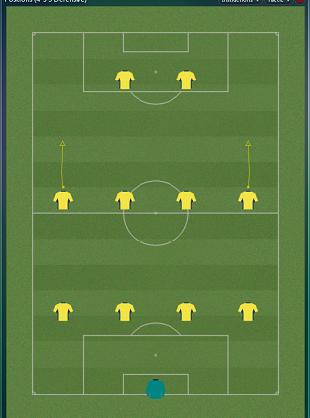
The W-W formation: the future?!
“It is hard to envisage how formations will evolve in response to the current formational hegemony 4-2-3-1. It is an adaptable format which matches up well against other approaches. Two defensive midfielders provide a shield for the back four, which allows the full-backs to advance. The attacking midfielder has the freedom in behind the centre-forward to influence forward play without being mired in the opposition’s central defence – and they also prevent the team from being outnumbered in midfield.” (World Cup College)
The Ball Day 45 – Mali backtracking, hair braiding & football
“Bus rides, hair braiding, and the spirit of football go hand in hand. The Ball continues its journey through Mali this time heading out on some backtracking through more remotes parts of Mali away from Bamako.Today’s EP features music from Akwaaba Music artist Iba Diabate with ‘Dakan Tessa’ listen and download the track at Bandcamp. The second track is from Mamou Sidibe with ‘Tounge’ and you can find it on iTunes right here.” (The Ball 2010)
FIFA’s Foul Play

Cape of Good Hope
“For any practitioner of Zen who imagines he has achieved a state of detached equanimity, the ultimate test must be to watch his national side play at soccer’s World Cup. That England’s team is dull, I tell myself after the first game, I can handle; that they are truly dire, I reflect after the second and third, is perhaps only par for the course. When, in their first knockout match, England goes 2–0 down to a fluent and attractive Germany, it seems the perfect opportunity for resignation and acceptance.” (NYB)
Brazilian league lacks bite
“Spain or Barcelona? No contest. Week in, week out, Barcelona combine the midfield interplay of Xavi and Iniesta with the cutting edge of Lionel Messi, Daniel Alves and co. The comparison serves to confirm the impression that these days club football is of a much higher standard than international – as long as we restrict the debate to the major European leagues. The big clubs in Spain, England, Italy and Germany are in front of the national teams because of the time their players spend together and because they count on the best talent from all over the planet. When the World Cup stops and domestic football returns, the level of play goes up.” (BBC – Tim Vickery)
Remediations
“I was born in the age of the instant replay, but only just – if it was in fact in 1970 that they started using it, as I seem to recall having heard once. I wasn’t able to confirm that, and still wonder if Hurst’s goal of 1966 was available to the television audience for immediate review, however grainily. I know for a fact the games were broadcast in black and white back then, and that it was only cinemagoers who got to see the highlight packages in colour. At any rate, the first World Cup in my actual memory is the one of 1978 and at that stage you could watch the games live – still only in black and white in our household – and the replays of the goals during the games themselves, but that was it.” (Miinus the Shooting)
The final analysis, part five: Iniesta takes up increasingly advanced positions before pouncing
“The first sign that Andres Iniesta was the danger man came midway through the second half of normal time, when he found himself through on goal (pink), but took too long to get a shot away.” (Zonal Marking)
The King of Football – Pele on Postage Stamps

“FIFA player of the century Pele is widely regarded as the greatest footballer of all-time. He is the all-time leading scorer of the Brazilian national football team and the only footballer to be a part of three World Cup-winning squads. In 1957 just 3 months short of his 17th birthday he made his international debut and scored. That goal making him the youngest player to score in a full international match. A year later he took the world by storm.” (Footysphere)
Feel It: Reflections on South Africa 2010 and the Contradictions of Fandom
“Though a round-about series of unplanned events, a few weeks ago I ended up watching South Africa play France in an immense and busy fan park in a dusty working class outskirt of Pretoria/Tshwane. In the fan park, while stumbling around looking for an angle on one of the big-screens, a couple South African fans glommed onto my American friend and me with curiosity: other than some staff running the show, we seemed to be two of the few white people in the place and we obviously didn’t quite know what we were doing. So, as always seemed to happen during World Cup 2010, the locals took it upon themselves to look out for us.” (Pitch Invasion)
ZM’s World Cup 2010 Best XI
“This was the tournament in which many of the big names failed to perform, but few of this XI were unknowns before the tournament started. No rules about number of players per country, here’s ZM’s all-star XI.” (Zonal Marking)
This time for South Africa?

“As the sound of the Vuvzelas dies away – at least until the start of South Africa’s domestic league season – many South Africans begin to get on with their normal lives. But did the tournament, which was hailed as an unprecedented success, really make things better for South Africans like the papers are saying it has? I decided to ask them.” (Not on the Wires)
Agincourt and England 2010
“Paul Carpenter (Carpsio) takes the ‘passion and commitment’ line of England criticism in an interesting direction with an informed comparison of Agincourt to that 4-1 defeat to Germany…” (More Than Mind Games)
Africa’s World Cup?
“On the eve of Ghana’s fateful loss to Uruguay in the quarterfinals, South Africa’s ruling party, the African National Congress, declared them the Black Stars of Africa. Locals joined their compatriots across the continent in willing the Black Stars on. When Uruguayan gamesmanship prevailed in the end, the disappointment seemed genuine. Even Nelson Mandela sent “a message of condolence” to Asamoah Gyan, the Ghana forward, who missed the dramatic penalty at the end of extra time. (Ghana eventually lost on penalties.)” (Social Text)
Thomas Hobbes & English Mechanism

Thomas Hobbes
“WCC has noted previously that the England team appears to operate somewhat mechanistically. Even over a successful qualification campaign it seemed that Fabio Capello’s efforts had yielded mechanical rather than organic solidarity. The team was playing well together, but like an ordered collection of components rather than a smooth functioning whole. This reflects English society to a degree: this nation is closely defined by the temporal framework of a 9 to 5, Monday to Friday culture. Collectivist solutions to social problems such as the Welfare State, which were predominantly put into place in the immediate post-war era, also have something of an overarching mechanistic quality.” (World Cup College)
USMNT: Summer Transfer Window Survival Guide
“With the Go-Go-USA lovefest starting to fade into the rearview mirror, we’ve reached the one time of year tough for soccer fans—the dog days of July. It’s always tougher to deal with the dog days after the excitement of a major international tournament, and nearly impossible after a World Cup. A week removed from the World Cup Final, soccer junkies from Atlanta to Australia are stuck, for the moment, in soccer Siberia. Essentially soccer’s dog days of July are similar in misery to the sporting month they reference—baseball’s ‘dog days of summer’, which are the brutal just past 100 games but not close to September stretch of the schedule played in the big leagues in late July and August, featuring frequently poorly played and error-prone games where the goal is to avoid injury and as a team try not to lose the division before you win it in September.” (Yanks are coming)
FA Cup Replays and the Winter Break
“Earlier this week, Owen Gibson of the Guardian reported that the FA were considering making a change to the FA Cup (under a banner of revitalisation for the competition) in order to help create a mid-season break, in order to the England squad. The change is one that would seismic across English football, and that change would be scrapping FA Cup replays. Even in the article itself, the suggestion is that the scrapping of FA Cup replays would only free up one midweek date, and that midweek date would be filled by a set of fixtures allowing for a two week break, or in other words, one Saturday off. However, far from revitalising the competition, it may be the beginning of the end for the world’s oldest football competition.” (twohundredpercent)
World Cup 2010: Henry Winter diary part 1

“June 3: Pride before a fall. England swan into town and the locals start dancing. They’ll soon be laughing, but for now respect fills warm air of the savannah at the Bafokeng Sports Campus outside Rustenburg. Even the king of the Bafokeng tribe turns up to greet Wayne Rooney, Steven Gerrard and Rio Ferdinand. The noble warrior does well to get close. England are surrounded by heavy security as they disgorge from a battle-bus emblazoned with the slogan ‘Playing With Pride And Glory’’. Someone obviously has a sense of humour. A nearby building would be better suited to hosting England — the Phokeng Trauma Centre.” (Telegraph – Henry Winter, Part 1), (Telegraph – Henry Winter, Part 2), (Telegraph – Henry Winter, Part 3)
Not For Glory Alone
“Two billion souls: One must begin with that. That’s how many people, or nearly so, sat or stood in view of television screens to watch twenty-two men kick a white ball around a green field on a warm July night in Berlin four years ago. The twenty-two men comprised the men’s national soccer teams of Italy and France. The occasion was the final game of the 2006 World Cup. The cagey match, as the world now knows, turned on an extraordinary event near its end when France’s captain and star, Zinedine Zidane, strode toward the Italian defender Marco Materazzi and, for reasons unknown, drove his bald pate into the taller man’s chest. The motion mimicked one he’d used a few minutes earlier to head a flighted ball inches over the Italians’ goal, coming ago nizingly close to winning the day for France. Now Zidane was expelled, his team was rattled, and a player in blue whose name few outside Umbria and Trieste recall darted inside a player in white and curled the ball inside the French goal with his left foot, cueing images, on countless flickering screens around the planet, of his countrymen celebrating Italy’s triumph in the floodlit waters of the Trevi fountain in Rome.” (Laphams Quarterly)
Those Who Strive
“I read an article this morning about how to build an audience on the internet. People on the internet, it said, don’t want a lot of fancy explanations and preambles. They just want to get in, get the information, and get out. People on the internet don’t need to know why you’re introducing something in a certain way, or where you’re thinking about going with it. They just want facts.” (Run of Play)
“They Didn’t Have to Deserve It … They Were Just Playing”

Andrés Iniesta
“His control of the ball, his first touch, looked just a tiny bit heavy by the exalted standards of Andrés Iniesta. The football popped up in the air and seemed to hang there, as Iniesta turned toward it with intent. Around the world we held our breath or shouted out or just waited to see if, after two hours of soccer, we would at last see a goal, and thus be spared the cheap drama of a penalty shootout to decide the destination of the World Cup trophy.” (counterpunch)
What Not To Wear 2010/11: The Premier League
“Now that the World Cup is over (and there will be a couple more bits and pieces to tidy it up over the next couple of days), it is time to start looking forward to the new domestic season, which starts in just over four weeks, and what better way could there be to start it all off than with our annual look at the kits that the teams of 2010/11 will be wearing. As ever, it’s a mixed bag in the Premier League this season, with some clubs getting it right, some clubs getting it woefully wrong and a couple of clubs treating the launch of their new kit as if it is some sort of state secret.” (twohundredpercent)
The final analysis, part four: second half changes on the flanks
“As the game wore on, Arjen Robben took up even more advanced and central positions when Holland had the ball. Indeed, the shot below sees Robben (green) about to race through for his one-on-one with Iker Casillas, and the Spain defence temporarily looks like a back three up against two strikers, with two man-markers and Gerard Pique (yellow) as the sweeper.” (Zonal Marking)
Del Bosque finally proves he’s far more than just a player’s coach

Vicente del Bosque
“‘Vicente del Bosque is a lovely man.’ Rarely has anyone been quite so damned with faint praise; never has a human strength been so readily and immediately presented as a professional weakness, a quality presumed to be a defect. Del Bosque is indeed a lovely man, a good man — impeccably polite, overwhelmingly decent. Loyal, humble, kindly, he is like a favorite uncle with a bushy ‘tache, a portly belly and the warmest of handshakes. But by extension, by definition, he is not much of a coach. After all, nice guys come last.” (SI)
Diego Forlan Deserves the Golden Ball
“World Cup 2010 has been done and dusted, as we have found a champion out of the 32 teams competing for the biggest prize of all in footballing universe, Spain, as well as Thomas Muller, the winner of the Golden Boot award and also for the young German to officially announce his arrival in world football. However, there’s still one more award which drew quite a lot of criticisms and that’s the Golden Ball award, awarded to the best player in the tournament. In World Cup 2010, the winner is Uruguay’s Diego Forlan, and many pundits and fans, especially Internazionale fans out there feel that Forlan is not a deserving recipient of this award, as they feel that Wesley Sneijder, the runners-up for the award, or in other words the Silver Ball winner of this tournament who should have been the recipient of the Golden Ball.” (Beopedia)
World Cup scouting: The 32 – Conclusions

Antonio Di Natale
“Starting with Nicolás Lodeiro back in December last year, Football Further selected 32 players to watch out for at the 2010 World Cup and then tracked their progress through the tournament via weekly scouting reports. Below is a full compilation of those reports, along with conclusions (and marks out of 10) on how each player performed.” (Football Further)
From Total to Anti-Football: Why Holland Lost, and I’m Glad
“Over the next couple of weeks, we’ll provide you with all the post-WC analysis you can handle, but for now, let’s talk about the final. As I was watching the game, I didn’t have a strong rooting interest either way, but I expected a great game. Both teams were stocked with All-Stars at virtually every position. The Spanish had won Euro; the Dutch were working on an undefeated tournament. Although the score line of a lot of the Spanish games this tournament were not as impressive as some of the other teams (Germany for example), anyone who watched a Spain game – watched the execution, understood their dominance on the ball, marveled at their ability to play ‘keep away’ after scoring a goal – knew that they were impressive. Meanwhile, the Dutch had seemingly rolled through the tournament and they managed to defeat mighty and heavily favored Brazil. This game was to be an epic showdown.” (Yanks are coming)
The final analysis, part three: brilliant Busquets
“As is customary after a Spain or Barcelona success, the performance of Sergio Busquets (two La Ligas, a Champions League and a World Cup after two seasons of professional football) has largely been ignored. In the World Cup final he was one of the key players for Spain – keeping Wesley Sneijder quiet, providing his usual solid, reliable passing from a deep midfield position, and dropping between his centre-backs to turn Spain’s 4-2-3-1 into something more like a 3-3-3-1 or 3-4-3 when in possession.” (Zonal Marking)
World Cup 2010 Redux: Links & Videos
“So, yeah, the World Cup has ended. Some hated it. I enjoyed it. Of course, I took into account that no even can realistically live up to the hype as “the greatest and most entertaining” sporting event on Earth. Still, from the fluid counter-attacking Germans to the patient passing Iberians, this tournament was light years ahead of the catenaccio Italians and plodding French of 2006. Yes, Zizou was amazing in the outrounds of that tournament. No, that did not redeem the other 31 teams or other games. But enough of that, onto links and classic videos from South Africa 2010.” (futfanatico)
Old Firm Haves and Have Nots

Joe Ledley
“Another summer in Scotland, and another period where Celtic possess the money to strengthen their squad and Rangers are forced to sell their most bankable assets. These last few days have seen a whirl of activity surrounding the Old Firm, but once again, as during the past 18 months, the main questions seem to be: where is Rangers’ money? And why is there already a sense of deflation around the reigning SPL champions?” (ESPN)
Lennon confident on Juarez
“Celtic manager Neil Lennon believes he is close to making Mexico midfielder Efrain Juarez his latest summer signing. Lennon is confident of landing Pumas UNAM starlet Juarez, 22, and hopes he could even make his Celtic debut against Manchester United while on their pre-season tour of North America.” (ESPN)
Champions League is perpetrating big-fish-in-small-pond syndrome
“For half an hour on Tuesday in the Champions League qualifiers, Dinamo Zagreb was worried. Davor Bubanja had given Koper the lead, and the specter of yet more European failure was raised. But then the excellent Milan Mandzukic equalized, and Miroslav Slepicka had the Croatian champion ahead. Second-half goals from Mandzukic and the two Brazilians, Sammir and Etto, gave Dinamo a 5-1 win and should have put the tie to bed.” (SI)
Why football can’t save the world
“Now the tournament is over, it’s a good time to get some perspective on the World Cup. In the latest WSC, Ian Plenderleith looks at some sporting (and marketing) myths.” (WSC)
‘Octodamus’ and other surprises – Eduardo Galeano

Mensaje de Eduardo Galeano para América Latina Cartagena de Indias, Julio de 1997
“Pacho Marturana, a man with vast experience in these battles, says that football is a magical realm where anything can happen. And this World Cup has confirmed his words: it was an unusual World Cup. The 10 stadiums where the Cup was played were unusual, beautiful, immense, and cost a fortune. Who knows how South Africa will be able to keep these cement behemoths operating amid pulverising poverty? The Adidas Jabulani ball was unusual, slippery and half mad, fled hands and disobeyed feet. It was introduced despite players not liking it at all. But from their castle in Zurich, the tsars of football impose, they don’t propose. …” (Dispatch)
Paving The Way For South Africa 2010: Ydnekatchew Tessema, Forgotten Hero Of African Soccer
“National team player, national team coach for his country’s only major international triumph, co-founder of his continent’s FIFA confederation, president of that confederation for 15 years, and in many ways the man who set in motion the whole chain of events that led to South Africa becoming the first African nation to host the World Cup: the late Ethiopian visionary Ydnekatchew Tessema deserves greater prominence in the annals of soccer history than he has received. Tessema’s remarkable story intertwined with deconolisation, the fight against apartheid in South Africa and the battle for respect and opportunities for African soccer in the face of a Eurocentric FIFA.” (Pitch Invasion)
The final analysis, part two: different ways of dealing with wingers
“Giovanni van Bronckhorst’s lack of pace was cited as a potential weakness before every Holland game, and the Dutch captain seemed to acknowledge his weakness in that respect. Therefore, he made sure to stick tight to whichever winger he came up against. Here, Pedro comes very deep to get the ball, and van Bronckhorst tracks him all the way.” (Zonal Marking)
All Hail Spain, Champions Of The World
“Obviously, for a football snob like myself, even the best televised football is a poor substitute for watching a couple of Scottish lower league sides playing kick and rush on a muddy pitch, but I have to say I enjoyed that World Cup. More than any other since 1994, at least, though admittedly I didn’t watch so much of the last couple. Maybe there weren’t any real classic games like the Romania v Argentina game of that year, or France v Brazil from 1986, maybe there weren’t many outstanding individual performances, but after a quiet start it developed into an enthralling tournament.” (twohundredpercent)
Hodgson hopes to convince stars to stay

Krisztian Nemeth
“Roy Hodgson is concerned some elements of the Liverpool squad are “disenchanted” as a result of a disappointing 2009-10 season, but the club are ‘working very hard’ to ensure their best players remain at Anfield. Liverpool failed to qualify for the Champions League last season and previous manager Rafa Benitez departed Anfield, leaving Hodgson with the task of convincing the likes of Steven Gerrard, Fernando Torres and Javier Mascherano that they would be best served by remaining on Merseyside.” (ESPN)
Inter coy on Mascherano“Inter Milan sporting director Marco Branca has refused to rule out a move for Liverpool midfielder Javier Mascherano. Mascherano has been strongly linked with an exit this summer and, amid reports he is set for a reunion with Rafael Benitez, he has revealed he is learning Italian.” (ESPN)
BLOOD RED: Joe Cole fits the bill for Liverpool FC
“WHAT have Thierry Henry and Joe Cole got in common? They’ve both been spotted around Liverpool city centre more than the Superlambanana in recent times. Just as there were numerous sightings of Henry from Lime Street to the Lobster Pot prior to him joining Barcelona three years ago, rumours were rife this week that Cole was camped out at Melwood.” (Liverpool Echo)
Liverpool FC striker Krisztian Nemeth still eager to be a hit at Anfield
“YOUNG Liverpool striker Krisztian Nemeth could be facing an uphill battle to break into new boss Roy Hodgson’s first team plans this season – but remains hopeful of succeeding at Anfield.” (Liverpool Echo)
Roy Hodgson
“Hodgson is the very definition of ‘seen it all before’ and has English top flight experience in the form of an impressive stint with Blackburn (guiding them to a UEFA Cup spot) and Fulham (with a Europa League final spot). Indeed, after a career trailing around Europe, he now cuts a convincing figure as the stereotypical cultured, cosmopolitan European coach, despite his current location on Merseyside.” (ESPN)
World Cup 2010: Why It’s Time To Reinvent Televised
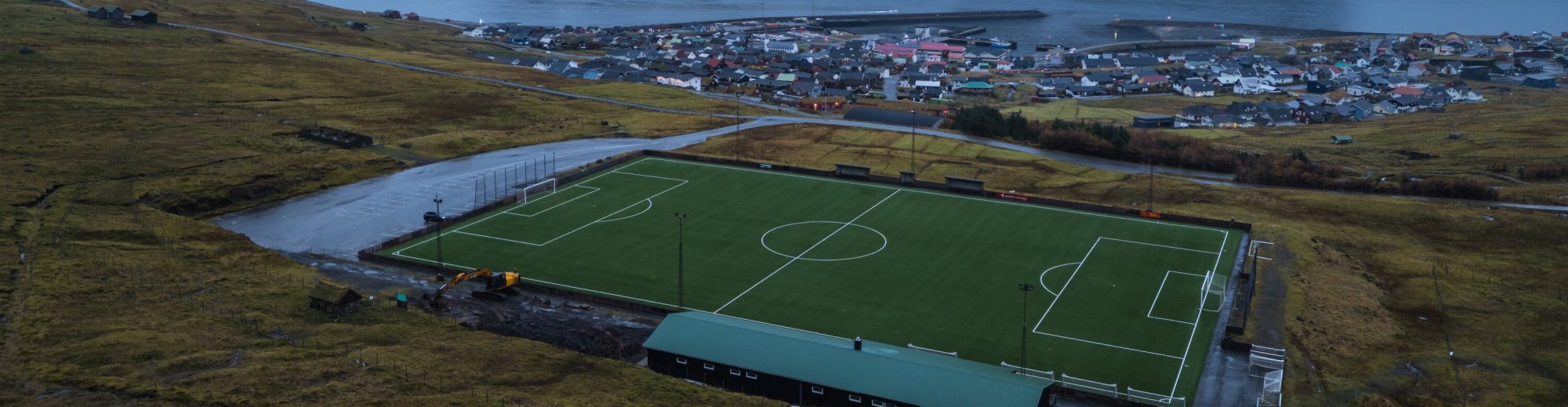
“Last night, Mark Murphy tore into the coverage of the 2010 World Cup in British television. This evening, in the second of our two-parter on British television at the World Cup, Ian King argues that it is time to rip up the rule book and start all over again.” (twohundredpercent)
Operation Phantom Hooligan
“The police operation to stop hooligans travelling to South Africa was launched with a blaze of publicity. Now the World Cup has ended the Football Supporters’ Federation’s Michael Brunskill explains the problems with the campaign and what it meant for the average supporter” (WSC)
The Ball Day 43 – Bamako Mali: The Ball is about…
“The Ball continues its travels in Mali experiencing the randomness that is The Ball’s daily life. Music in this EP from Figura “Ze Bula” (Chancha via Circuito Remix) find the track right here. Next track is from Senegalese artist Rahmane Diallo with “Ndeye Fama” find some of their music here. The last track is from Mamou Sidibe with “Filalou” find the song here and more about this artist from Mali here at Akwaaba Music.” (Blip)
World Cup 2010: A tactical review

Marcello Bielsa
“At the dawn of the tournament Football Further posed ten tactical questions that the World Cup would answer. Three days after Spain’s tense extra-time victory over the Netherlands in the final, the answers to those questions reflect a tournament in which defensive rigour was overwhelmingly de riguer and tactical innovation conspicious by its rarity.” (Football Further)
The final analysis, part one: the basic shapes, and pressing
“Here is Holland’s basic shape when they have the ball with their goalkeeper, Maarten Stekelenburg. This shows their defence (red), their holding midfielders (yellow), the attacking band of three (green) and the striker (blue). Note how wide their side is, starting from the centre-backs. Another interesting feature is how much more advanced Mark van Bommel (the right of the holding midfielders) is compared to Nigel de Jong.” (Zonal Minute)
Spain’s success could inspire Brazil’s return to attacking style
“The status of the Brazilian national team — and its value to its international sponsors — does not rest solely on the fact that it is the only country to have won the World Cup five times. It is a style thing. There is a way of playing associated with Brazil, joyful and expressive, which has made the Selecao a favorite of people all over the planet. Inventors of the joga bonito, Brazil is sold as the spiritual guardian of the game.” (SI)
A Reaction From the Streets of Catalonia

Catalan
“Standing on the streets of Barcelona – capital of Spain’s Catalonia region – last Saturday, one would have had no idea that the country was preparing to watch its national team compete in the World Cup the very next day. That afternoon, over a million people flooded the downtown to protest a decision issued Friday by the country’s constitutional court striking down some provisions of the territory’s 2006 autonomy statute.” (TNR)
Scan shows Fernando Torres injury not as serious as first feared
“Fernando Torres could be fit for the start of the season after it emerged the thigh injury that ended his involvement in the World Cup final was not as serious as had been feared. Torres suffered only a small tear to his left thigh after coming on as a late substitute in Spain’s 1-0 victory over Holland. He has been told to have three weeks of complete rest and will then undergo a specially tailored rehabilitation programme aimed at getting him fit for Liverpool’s opening game against Arsenal on 15 August – if he decides to stay at Anfield in the face of persistent interest from Chelsea.” (Guardian)
Listening to the World Cup
“With ESPN’s broadcast of the World Cup’s opening match, my fellow tweeters began to crack jokes about The Lion King. We imagined Rafiki calling the matches, or Mufasa, and half expected the referees to lift up the Jabulani to announce the arrival of the New Ball. Most folks simply observed, ‘I feel like I am watching The Lion King.’ There is a good reason for this. The score used by ESPN to frame its coverage was written by Lisle Moore. The Utah composer gave us muscular music for a sporting event, upbeat music for a media event organized around putting us all in the mood to buy a shirt, a ball, or a Coke. Layered over the orchestral swells are the oddly familiar sounds of African voices, or, I should say, African-sounding voices. Africa is scored here as a noble landscape, peopled by a unified chorus, singing together in a harmonic convergence of tribal cultures.” (Social Text)
Finale
“Two days after the World Cup final, the whole event seems slightly surreal. I’m returning from South Africa today, having survived on my last day here a gauntlet of baboons and a march up a gorgeous mountain, after arriving on the 26th of June just in time to see Ghana beat the U.S. I’ve had the privilege of watching seven games, including the Cape Town semi-final and the final in Johannesburg. I’ve come to know and love the vuvuzela — and, yes, I’m bringing one home to blow at Duke soccer matches this fall. It was rapture on many levels, and now it’s passed.” (Soccer Politics)
The Question: What next for 4-4-2?

“This was a bad World Cup for a lot of old favourites – anybody who appeared on the Nike ad, Marcello Lippi, preconceptions about Africa – but none of them had quite such a miserable tournament as 4-4-2. When even its old friend Michael Owen starts doubting it, the future for the formation that has ruled British football for 40 years looks bleak. Johan Cruyff got stuck in as well last week – not particularly surprisingly given his lifelong ideological insistence on 4-3-3 – pointing out that ‘the numbers don’t match up’ and explaining that a system of three straight bands doesn’t lend itself to the creation of passing triangles.” (Guardian)
Watch the Narco-Soccer Documentary “The Two Escobars” on ESPN
“Jeff and Michael Zimbalist’s documentary The Two Escobars brings us a tale of a nation gripped by crime, drugs and a passion for soccer. At the time (circa 1994), Colombia was seen as one of the world’s most reviled narco-states and one of the world’s best soccer nations, at one point ranked 4th in the FIFA rankings. During this period, many Colombians were hoping that victory at the 1994 World Cup would help rebuild the country’s tattered image.” (Nutmeg Radio)
Soccer puritanism and the sin of “entertainment”
“There is a feeling in the air, a sort of sea change, following Sunday’s final. You mostly find it on apologist message boards and blog comment sections, but some have written long form posts on it. It’s the idea that “entertaining football” is a crass Americanization, a romantic revision born in Mexico 1970. Under this view, television cameras, wages and commercial sponsorships are merely incidental to the purity of twenty-two players playing a soccer game.” (A More Splendid Life)
Spain’s Moral Victory

Nico Di Jerlando. …A MORAL VICTORY AND HIS SPIRIT LIVES ON FOREVER…
“Sunday was a moral victory: Spain clearly deserved to win not only the World Cup but also the actual game at hand. The great Johann Cruyff came out today and accused the Dutch of being anti-football and, among other crimes, ‘hermetic.’ He’s right about the anti-football. The Dutch strategy was as predicted: Mark van Bommel and Nigel de Jong set out to kick the Spanish into submission so Robben and Sneidjer would have a chance to win the game for Holland. Spain refused to let this happen and, as with Germany, imposed their methodical game of possession, albeit with more bruises, and won, as they so often did, 1-0.” (The Paris Review)
A Reaction From the Streets of Catalonia
“Standing on the streets of Barcelona – capital of Spain’s Catalonia region – last Saturday, one would have had no idea that the country was preparing to watch its national team compete in the World Cup the very next day. That afternoon, over a million people flooded the downtown to protest a decision issued Friday by the country’s constitutional court striking down some provisions of the territory’s 2006 autonomy statute. That legislation devolved a number of important powers to the region, but was challenged by the country’s conservative political party, the Partido Popular. In their ruling, the judges found that “Our constitution recognizes no nation but Spain,” in effect dealing a blow to Catalan nationalists.” (TNR)
World Cup 2010 Goals of the Tournament
“In purely chronological order, Football Further presents the 10 best goals of the 2010 World Cup. Apologies for the video quality. FIFA leaves us no choice.” (Football Further)
Liverpool hopeful on Torres injury
“Liverpool medical staff believe the adductor injury sustained by striker Fernando Torres in the World Cup final may not be as serious as initially feared. Torres, who returned from knee surgery just in time for the finals in South Africa, pulled up in extra-time during Spain’s victory over Netherlands, leading to universal gasps of concern from the red half of Merseyside.” (ESPN)
Cisse targets future Liverpool return
“Former Liverpool striker Djibril Cisse admits he would relish a dream return to the club, and insists that he never got the opportunity to prove himself at Anfield. Cisse, currently plying his trade with Greek side Panathinaikos, joined Liverpool for £14 million in 2004, having been singned by Gerard Houllier just before he was replaced by Rafael Benitez.” (ESPN)
Nabil El Zhar and Emiliano Insua set for Liverpool FC exit while Reds eye move for Paul Scharner
“MOROCCAN winger Nabil El Zhar wants a move away from Liverpool. The 23-year-old is frustrated at the lack of first-team football at Anfield and is not convinced he will be given a chance to impress new Reds boss Roy Hodgson.” (Liverpool Echo)