“The status of the Brazilian national team — and its value to its international sponsors — does not rest solely on the fact that it is the only country to have won the World Cup five times. It is a style thing. There is a way of playing associated with Brazil, joyful and expressive, which has made the Selecao a favorite of people all over the planet. Inventors of the joga bonito, Brazil is sold as the spiritual guardian of the game.” (SI)
Tag Archives: World Cup 2010
A Reaction From the Streets of Catalonia

Catalan
“Standing on the streets of Barcelona – capital of Spain’s Catalonia region – last Saturday, one would have had no idea that the country was preparing to watch its national team compete in the World Cup the very next day. That afternoon, over a million people flooded the downtown to protest a decision issued Friday by the country’s constitutional court striking down some provisions of the territory’s 2006 autonomy statute.” (TNR)
Listening to the World Cup
“With ESPN’s broadcast of the World Cup’s opening match, my fellow tweeters began to crack jokes about The Lion King. We imagined Rafiki calling the matches, or Mufasa, and half expected the referees to lift up the Jabulani to announce the arrival of the New Ball. Most folks simply observed, ‘I feel like I am watching The Lion King.’ There is a good reason for this. The score used by ESPN to frame its coverage was written by Lisle Moore. The Utah composer gave us muscular music for a sporting event, upbeat music for a media event organized around putting us all in the mood to buy a shirt, a ball, or a Coke. Layered over the orchestral swells are the oddly familiar sounds of African voices, or, I should say, African-sounding voices. Africa is scored here as a noble landscape, peopled by a unified chorus, singing together in a harmonic convergence of tribal cultures.” (Social Text)
Finale
“Two days after the World Cup final, the whole event seems slightly surreal. I’m returning from South Africa today, having survived on my last day here a gauntlet of baboons and a march up a gorgeous mountain, after arriving on the 26th of June just in time to see Ghana beat the U.S. I’ve had the privilege of watching seven games, including the Cape Town semi-final and the final in Johannesburg. I’ve come to know and love the vuvuzela — and, yes, I’m bringing one home to blow at Duke soccer matches this fall. It was rapture on many levels, and now it’s passed.” (Soccer Politics)
The Question: What next for 4-4-2?

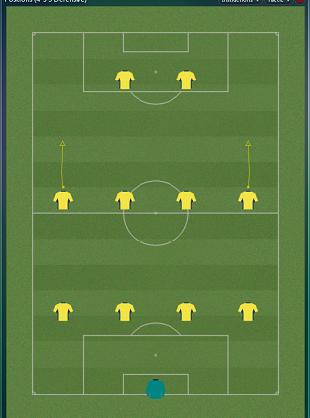
“This was a bad World Cup for a lot of old favourites – anybody who appeared on the Nike ad, Marcello Lippi, preconceptions about Africa – but none of them had quite such a miserable tournament as 4-4-2. When even its old friend Michael Owen starts doubting it, the future for the formation that has ruled British football for 40 years looks bleak. Johan Cruyff got stuck in as well last week – not particularly surprisingly given his lifelong ideological insistence on 4-3-3 – pointing out that ‘the numbers don’t match up’ and explaining that a system of three straight bands doesn’t lend itself to the creation of passing triangles.” (Guardian)
Soccer puritanism and the sin of “entertainment”
“There is a feeling in the air, a sort of sea change, following Sunday’s final. You mostly find it on apologist message boards and blog comment sections, but some have written long form posts on it. It’s the idea that “entertaining football” is a crass Americanization, a romantic revision born in Mexico 1970. Under this view, television cameras, wages and commercial sponsorships are merely incidental to the purity of twenty-two players playing a soccer game.” (A More Splendid Life)
Spain’s Moral Victory

Nico Di Jerlando. …A MORAL VICTORY AND HIS SPIRIT LIVES ON FOREVER…
“Sunday was a moral victory: Spain clearly deserved to win not only the World Cup but also the actual game at hand. The great Johann Cruyff came out today and accused the Dutch of being anti-football and, among other crimes, ‘hermetic.’ He’s right about the anti-football. The Dutch strategy was as predicted: Mark van Bommel and Nigel de Jong set out to kick the Spanish into submission so Robben and Sneidjer would have a chance to win the game for Holland. Spain refused to let this happen and, as with Germany, imposed their methodical game of possession, albeit with more bruises, and won, as they so often did, 1-0.” (The Paris Review)
A Reaction From the Streets of Catalonia
“Standing on the streets of Barcelona – capital of Spain’s Catalonia region – last Saturday, one would have had no idea that the country was preparing to watch its national team compete in the World Cup the very next day. That afternoon, over a million people flooded the downtown to protest a decision issued Friday by the country’s constitutional court striking down some provisions of the territory’s 2006 autonomy statute. That legislation devolved a number of important powers to the region, but was challenged by the country’s conservative political party, the Partido Popular. In their ruling, the judges found that “Our constitution recognizes no nation but Spain,” in effect dealing a blow to Catalan nationalists.” (TNR)
World Cup 2010 Goals of the Tournament
“In purely chronological order, Football Further presents the 10 best goals of the 2010 World Cup. Apologies for the video quality. FIFA leaves us no choice.” (Football Further)
World Cup: Era, Or Accident?
“The 2006 World Cup final left behind very little except for the headbutt. Zinedine Zidane’s baffling last act as a player overshadowed the result, and a penalty-kick winner always feels like a co-champion, not a conqueror. In any case, Italy was a weak champion. Oh, a tough, clever, talented side, no doubt—but no one really wanted to play like them. With just about everyone playing in Serie A, they did not have a style or philosophy to export. The squad went stale almost instantaneously, and by Euro 2008, it was obvious that the Italian moment was just a moment. The next great Italian side, Jose Mourinho’s Inter Milan, fields very few actual Italians.” (True Sland)
Islamists Claim Attack in Uganda
“Somalia’s most feared insurgent group, the Shabab, claimed responsibility on Monday for the coordinated bombings that killed more than 70 people in Uganda as crowds gathered to watch the final match of the World Cup.” (NYT)
“dick tuinder on holland winning the world cup” – dick tuinder
“Yes, I also hope for a dutch victory,
if only to reward the high expectations of the dutch,
and the incredible deception that awaits the populous
(and my dear son) in case of a spanish defeat.
Although it does seem that the spanish,
as a nation, need it more these days.
It has been complete madness these last few weeks here.
It lead me to the conclusion that people will take any
excuse to go out of their mind.
It is a most peculiar thing.
On the other hand, like that thing called love, it has a lot to do with beer.”
Sorry if you think soccer sucks. But nobody cares what you think

“That’s it then. Spain beat The Netherlands in a game that was persistently scrappy until extra-time. There were countess fouls. The main Dutch plan, facing Spanish artistry, was to kick at ankles, tug shirts, and manhandle opposing players. But Spain won – a victory of grace and technique over muscle and force. All good, really.” (The Globe and Mail)
Dutch unveil new brand of ‘Total Bastard Football’
“After decades of careful refinement, precision training and deep aesthetic study – then canning all that nonsense – Sunday’s World Cup was the scene for the unveiling of Dutch football’s latest revolution, the new style of ‘Total Bastard Football’.” (Fisted Away)
Card-waving is no worse than tactical fouling
” There is nothing that annoys football commentators more than seeing players wave an imaginary card after they have been fouled. Jonathan Pearce, Peter Drury and co seized on such displays during the World Cup with weary despair. Some of the things imported into British club football from abroad in recent times are tolerated – over-elaborate stepovers and wearing undershirts displaying messages for God are just about acceptable – but the card mime is beyond the pale.” (WSC)
World Cup 2010 Oscars: And the Winner Is…
“The World Cup is over. Carlos Puyol is a world champion but still refuses to get a haircut. Africa’s first World Cup has ended without any of the players falling prey to lions and tigers like in Kenya, or polar bears or unicorns for that matter. As far as we know, Jacob Zuma hasn’t married anyone else and the universe is still in decent running condition, not great, but decent.” (Nutmeg Radio)
Spain 1-0 Holland: Iniesta settles a tight game

“Spain are the World Champions. They were the better side and played a more positive, cohesive brand of football throughout. There were no surprises when the team line-ups were announced just over an hour before kick-off, they were as predicted in the preview. Vicente del Bosque kept with the side that beat Germany in the semi-final, meaning Pedro Rodriguez started ahead of Fernando Torres. Holland, meanwhile, welcomed back Gregory van der Wiel and Nigel de Jong from suspension, meaning they returned to their first choice XI – as evidenced by them lining up with the numbers 1-11.” (Zonal Marking)
Spain dominates in distinctive way
“Now, that is a postmatch interview. And what a difference a month makes. At the end of Spain’s first match at this World Cup, a 1-0 loss to Switzerland, Sara Carbonero was waiting in the tunnel for Iker Casillas, clutching a microphone. Now, for those who have not been acquainted with her, Carbonero is a journalist and interviewer with the Spanish television channel TeleCinco. She is also Casillas’ girlfriend. Not that you would have known it as she held out the microphone and asked bluntly: “How did you manage to lose that?” Casillas barely looked her in the eye, mumbled some cliché and departed.” (SI)
It’s not the Cup, it’s the qualifying
“A European team has finally won the World Cup outside its home continent. More than that, for the first time since 1954, Europe is now ahead of South America in the number of World Cup wins – with a strong advantage. Europe has staged the tournament 10 times and South America just four – but in 2014 the World Cup will return to the continent of its birth for the first time in 36 years.” (BBC – Tim Vickery)
The 2010 World Cup Final: Netherlands 0-1
“It’s a curious sight. The BBC’s panel is sitting, for the first time in this tournament suited and booted, in its base studio outside the Green Point Stadium in Cape Town, almost eight hundred miles from Johannesberg, where the match itself is being played. It looks deserted, behind them. It probably is – everybody will be at home, watching the build-up to the 2010 World Cup final. Still, at least they won’t have anybody banging on the glass behind them and laughing at Alan Shearer’s male pattern baldness. The preamble to this match carries a somewhat curiously dislocated air to it. The Netherlands have never played Spain in either the European Championship or World Cup finals, so there is no historical precedent between the two teams that can particularly drawn upon, no matter how irrelevant it may be.” (twohundredpercent)
Our team of the tournament
“Our writers pick their team of the tournament in the 4-2-3-1 formation employed by most of the better teams on show in South Africa” (Guardian)
Africa, FIFA and Government Interference: Dealing With Corruption In Soccer
“The most important development in African soccer taking place this year might not be the World Cup in South Africa — despite its successful staging (oh, yeah, it seems to have turned out that Cabinda is not in South Africa) — argues Paul Doyle in an excellent Guardian piece on domestic African leagues, specifically, the possibility that Kenya might be leading the way with new leadership in the Kenyan Premier League…” (Pitch Invasion)
Spain v. Netherlands – Red Herring Revisionary
“The end of the World Cup is like quitting smoking cold turkey, only you can’t cheat. No matter how hard you try, no matter how many old recordings you have of classic games, the sensation, the media overload, the frenzied tidal wave of live games cannot be reproduced. As the tournament progresses, the teams get eliminated, and the games get even tighter, you find yourself searching for an equivalent fix. But there’s no hidden pack in your car’s glove compartment. There’s no friend who you can bum a smoke off of. There’s just an old archive of youtube clips, a tome covered in dust wit a few words written about something that people back in the day thought was exciting. Take a deep breath. And try to hide your disappointment.” (futfanatico)
To Those With Nothing, Soccer Is Everything
“Jessica Hilltout, a nomadic, Belgian-born photographer, loaded sacks of deflated soccer balls onto the roof of a battered yellow Volkswagen Beetle last year and began a seven-month road trip across Africa to document the continent’s love of the game. She found it in villages where children played with joyous abandon on dusty patches of ground, sandy beaches and lush fields, far from the stadiums where Africa’s first World Cup would be held.” (NYT), (Jessica Hilltout)
Front Page: Barcelona Win The World Cup
“Most of the Spanish newspaper front pages today go with a variation on a simple ‘Spain, world champions’ headline (as El Pais does), but as commenter ursus actos noted yesterday in our discussion of Catalan nationalism and the complicated support for Spain’s national team in the region, a victory for Spain could easily be seen as a victory for Catalonia, with half the Spanish team having also represented the Catalan national team.” (Pitch Invasion)
World Cup 2010
“In this dossier, a series of football enthusiasts (who also happen to be social and cultural critics), offer their reflections upon the meaning and significance of the 2010 World Cup in South Africa. Much commentary and controversy has already been generated by this global event, the first World Cup, and indeed the first global sporting event of any significance to be held in “Africa’. The specific importance of South Africa as a relatively privileged outpost, what some would describe as an ‘exceptional’ civil and political space on the African continent–lends additional weight and distinctiveness to these reflections.” (Social Text)
Taking a turn ‘in the woods,’ confronting the goalkeeper’s choice
“As Paul the Octopus shows, a life fully lived—even as an exotic sea creature—involves choice. Probability experts could state the odds of Paul’s being right about the World Cup final between Holland and Spain. Every cephalopod is due a hot streak. Theorists of chance and the mind long ago started applying their models to football games, with special attention to the penalty kick.” (The Global Game)
Spain wins first World Cup on Iniesta’s goal late in extra time

“Spain rules the soccer world, winning the World Cup at long, long last. It came after an exhausting 1-0 victory in extra time over the Netherlands on Sunday. Two years after winning the European title, the stylish Spaniards did even better.” (ESPN)
Did Spain Deserve to Win?
“The best part of this match was that it ended before penalty kicks, where the Dutch could have squeezed out a win and enjoyed the fruits of their goonish performance. Simon Kuper wrote a great column in last week’s Financial Times, where he bemoaned how Holland had turned away from idealism in its football and in its politics.” (TNR)
World Cup 2010 final: Andrés Iniesta finds key for Spain to beat Holland
“To Spain the glory of a World Cup triumph in which they prevailed over a deplorable Holland side that was reduced to 10 men when the English referee Howard Webb eventually dismissed the Dutch defender John Heitinga with a second caution in the 109th minute. Cesc Fábregas, on as substitute, fed Andrés Iniesta to score the winner seven minutes later.” (Guardian)
Netherlands 0-1 Spain (aet)
“Andres Iniesta struck a dramatic winner late in extra time to give Spain World Cup glory for the first time but condemned the Netherlands to their third defeat in a final. Iniesta drilled his left-foot strike across goal – but the Dutch were incensed after referee Howard Webb had failed to award their side a corner moments earlier when a free-kick took a sizeable deflection off Cesc Fabregas.” (BBC)
Netherlands 0-1 Spain – Video Highlights, Recap, Match Stats – World Cup – 11 July 2010
“The 2010 FIFA World Cup final featured two sides who had never won the title as the Netherlands faced Spain. The Dutch have played in two previous finals while it was the first for the Spaniards.” (The 90th Minute)

In Celebration of Soccer Artistry, a Mix of Styles

Guguletu Strike, Ed Gray
“For most South Africans, soccer looks like the images in Clint Strydom’s high-contrast black and white photographs. Barefoot pre-teen boys sporting broad smiles kicking a ragged ball through sand and dirt in KwaZulu Natal. ” (NYT)
Holland v Spain: tactical preview
“So here we are, the biggest game in football. A clash of the two most successful sides in World Cup history to have never won the trophy itself, it is tactically fascinating in a historical sense. Taking into account both the qualifiers and the six World Cup games itself, Holland are P14 W14, Spain are P16 W15 L1.” (Zonal Marking)
Front Page: All Of Spain Behind La Roja?
“Two of the leading newspapers in the Catalan region of Spain splash huge crowds with flags flying across their front page: but there is not a World Cup referencing Spanish-flag to be found on the day of the World Cup final. Instead, both El Punt (the leading newspaper only published in the Catalan language) and La Vanguardia (Spain’s fourth most-read newspaper, mainly sold in Catalonia) devote their covers to the mass political protests in Barcelona yesterday. El Punt’s headline: The cry of a people.” (Pitch Invasion)
Ballet of Frost

“Someone wrote on Twitter yesterday that “Is Spain boring?” is the new “Will soccer ever make it in America?” And yes, it is, in the same way that it’s the new “Can Lampard and Gerrard play in the same midfield?” and possibly the new “Can Asians think?” It wants a word, nevertheless, if only because Spain-Germany was so divisive; and because this is the World Cup final, and a bubble of resentment against the pre-tournament favorites and anointed Best Team on Earth is one of the conditions in which history’s about to happen.” (Run of Play)
Spain vs. The Netherlands: A Neutral’s Dilemma
“World Cup soccer is often the continuation of war by other means, a ritual reenactment of past conflicts that allows those who perceive themselves as victims to claim some sort of symbolic vengeance. Algeria’s coach sought to raise his players’ passion for their showdown with England by showing them watch The Battle of Algiers, a movie depicting their country’s battle for independence from France. England’s tabloid newspapers couldn’t resist the temptation to evoke memories of Churchill and World War II in their coverage of the match against Germany. And most Argentines have little problem with Diego Maradona’s 1986 ‘Hand of God’ goal against England, coming just four years after hundreds of their soldiers had been killed in a war with Britain over the Falklands/Malvinas islands.” (TIME)
England left behind in a world for the fleet of foot
“This was the World Cup that killed the fixed identity. At assorted moments in the preceding years Brazil woke up and wanted to be Germany, the Germans decided they would quite like to be Dutch and Holland thought it would be a good idea to make a pantomime horse out of an Italian rear and a Spanish front.” (Guardian)
Soccer shatters ethnic myths
“The World Cup, which has been reduced to a stark contest between Northern and Southern European soccer cultures, is always about national mythologies. Sometimes, it confirms them. On Sunday, we will doubtless watch a display of Dutch stubbornness and unpredictability pitted against Spain’s mesmerizing bolero of syncopated passing.” (The Globe and Mail)
The Football Stamps of Spain – Los sellos de fútbol de España

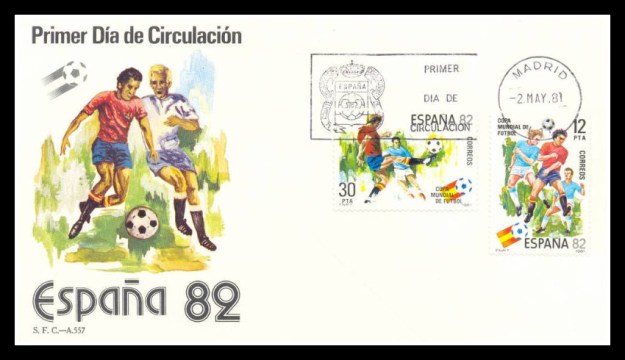
“Following on from yesterdays post featuring the football stamps of the Netherlands today it’s the turn of fellow 2010 World Cup finalists Spain. The first Spanish stamps to feature a football theme were released in 1960 as part of a 12-value set commemorating various sports.” (footysphere)
Bonuses for footballers at 2010 World Cup
“FIFA actively encourages teams with bonus payments for good results at the World Cup” (RIA Novosto)
Slavoz Zizek Predicts the World Cup Final
“Despite the parakeet, the octopus, and an assortment of other animals, only one entity can accurately predict the World Cup final: Slovenian philosopher and critical theorist Slavoj Zizek. We had a quaint chat with the man to wax Marxism, the Lacanian real, and Mark Von Bommel. What he had to say will probably only confuse you, unless of course you obtained a doctorate from the European School of Philosophy. But not the University of Chicago – everybody knows those hacks just say really big words. Ahem. Now onto the interview!” (futfanatico)
Uruguay 2 – 3 Germany
“In pouring rain on a ragged field, Germany and Uruguay staged a match entertaining enough to be for the World Cup title. Too bad it was only for third place. Sami Khedira scored in the 82nd minute to give Germany a 3-2 victory and third place for the second straight World Cup. But the Germans had to survive a final-second free kick by Uruguay star striker Diego Forlan from just outside the penalty area. It ricocheted off the crossbar, and the whistle sounded.” (ESPN)
World Cup 2010: Germany 3-2 Uruguay
“‘Let’s make this a celebration,’ intones ITV commentator Peter Drury, before kick-off, and millions of people, all at once, think, ‘yeah, lose your voice.’ Uruguay’s national anthem is what Billy Connolly had in mind all those years ago when he suggested replacing ‘God Save the Queen’ with the theme tune to ‘The Archers.’ It’s one of the things from this World Cup that I’ll remember, and I’ll miss it now it’s gone, for four years at least. La Celeste are wearing blue shorts for no obvious reason – Germany are in their change kit equally inexplicably, have Wednesday’s shirts not come back from the laundry? – and they look more like Coventry City with each misplaced pass.” (twohundredpercent)
Uruguay 2-3 Germany – Video Highlights, Recap, Match Stats – World Cup – 10 July 2010
“Germany once again would play in the World Cup third place match as they faced South American side Uruguay. It was a disappointing result for Germany to lose in the semifinals while Uruguay have exceeded expectations and had a great World Cup.” (The 90th Minute)
Thirteen World Cup Theses
“1) Nobody plays “total football” any more, so please stop referring to it unless you are providing helpful historical context. Even if you call it Totaalvoetbal, teams would get slaughtered if they tried it against modern tactical sides. 2) The current Dutch team aren’t the “heirs” of anything except perhaps the drills created and overseen by coaches and trainers at Ajax’s football academy. 3)…. (Run of Play)
Zero Hour in South Africa
“There are two games left. The third place playoff takes place on Saturday, Uruguay against Germany in a game often described as one nobody wants to play in. It can be well worth watching though—teams have been known to forget about tactics and play with something approximating wild abandon, which in this World Cup will come as some relief. Then on Sunday, it’s Spain against Holland; one of two favorites going into the tournament against the perennially-highly-fancied World Cup bridesmaids.” (The Paris Review)
The Beautiful War – Rinus Michels & The Reinvention Of Dutch Football
“One of the more surprising requirements made of the Dutch team playing in this week’s World Cup final is that it is not enough for them merely to win the tournament. They are still widely expected to win it with style, and this level of expectation is largely the responsibility of one man – Rinus Michels. Never mind the fact that the Netherlands has a population that is one-third that of England, or that they didn’t even qualify for the finals of the competition between 1938 and 1974. The Dutch team that Michels built inspired such awe that the burden of expectation continues to cast its long shadow more than three and a half decades after it made its debut.” (twohundredpercent)
Myths Of The Near Past
“I’m loathe to mention him here, particularly in a vaguely positive light, but Nick Hornby once said something interesting about football. It was in Fever Pitch, if I remember rightly, and it was to do with the way that supporters tend to use players as a mirror of their own values. So, a certain kind of middle class, thinking man’s fan will praise players for their intelligence and their artistry, particularly ones with a ‘cultured left foot’.” (Minus the Shooting)
FIFA 2010
Stars as Teammates: Not a New Concept
“Welcome to the World Cup, where every team is the Galácticos. The nickname refers to Real Madrid, the most famous and successful soccer club in the world, which has made a practice, in the past generation, of spending enough money to recruit Zidane and Beckham and Cannavaro. Oops, almost forgot Cristiano Ronaldo.” (NYT)
Racial harmony? Not yet, but SAfrica makes strides
“World Cup fever, and the racial harmony it has inspired in her country, is something Caroline Motholo has experienced only from afar. On the periphery of her more-than-full life – she runs a day-care center catering mostly to orphans whose parents have died of AIDS – she has seen the images: white and black South Africans side by side in the stadiums and fan parks, cheering together for their national team before its ouster, sharing pride that their once-shunned homeland is host for such a grand event.” (SI)
And Then We Came to the End
“In the World Cup, as in any tournament, half of the field is eliminated in the first round, and half again in each succeeding round—a method of crowning a champion devised by Zeno and guaranteed to bring the whole thrilling spectacle to a buyer’s-remorse anticlimax. (You can see the diminishing interest in the now-trickling coverage in outlets both mainstream and semi-pro.) Whichever second-rate European nation triumphs on Sunday—if they can control the midfield as smugly as they did against Germany in Wednesday’s semifinal it will surely be Spain—will look a lot less truly top-dog than simply last-man-standing.” (The Paris Review)
Tiki-taka and Total Football
“Spain Soccer News Topics are currently averaging 1.17 goals per game at this World Cup Soccer News Topics, sitting right behind the United States (1.25) in 12th place out of the 32 teams who started the tournament. Of course, unlike all but one of those teams above them (the Netherlands, in 3rd place, averaging 2.00 goals per game), they still have a chance to win the whole thing. But that hasn’t stopped the criticism of Spain’s ‘dull’ play.” (Big Soccer)
Nigeria and Match-Fixing at the World Cup: The Vulnerability Remains
“Just to end the week on a depressing note, we hear about a BBC Newsnight report that says FIFA was warned Nigeria might be ‘vulnerable to match-fixing’.” (Pitch Invasion)
Orange Devolution

“Like all soccer writers, I have a debilitating nostalgic streak, and like all soccer writers, I love Holland. The Dutch, who face Spain in Sunday’s World Cup final, are soccer’s most gorgeous losers, a team defined by a single generation of players who brilliantly failed to reach their potential. The Dutch teams of the 1970s—led by the mercurial Johan Cruyff, who’s widely considered the greatest European player of all time—launched a tactical revolution, played one of the most thrilling styles of their era, and lost two consecutive World Cup finals in memorable and devastating ways.” (Slate)
The Name of the Game
“Do Americans hate football? Not regular football, of course. Not football as in first and ten, going long, late hits, special teams, pneumatic cheerleaders in abbreviated costumes, serial brain concussions—the game that every American loves, apart from a few, uh, soreheads. Not that one. The other one. The one whose basic principle of play is the kicking of a ball by a foot. The one that the rest of the world calls ‘football,’ except when it’s called (for example) futbal, futball, fútbol, futebol, fotball, fótbolti, fußball, or (as in Finland) jalkapallo, which translates literally as ‘football.’ That one.” (New Yorker)
Argentina’s Gaping Holes (Part 2/2)
“In this second part about Argentina’s visible gaping holes in their squad, it will now be about Javier Zanetti’s possible impacts on the team had he been included in Maradona’s 23 man squad alongside Esteban Cambiasso, whose analysis on his possible impacts have been explained in part 1. To be frank, no matter how well argued arguments such as the one written by yours truly in part 1 about the justifications for Cambiasso’s inclusion in the squad, many would be able to still argue against it in a relatively effortless manner.” (Beopedia)
How to Stop Them? (Part 1/2)
“The semifinals of the World Cup 2010 have come and go. Holland managed to overcome the resilient but under strength Uruguay in a thrilling 3-2 encounter, while Spain finally managed to shake off their ‘flopping on a big stage’ curse and cruised to the final to face Holland after totally turning off the goal tap of Germany and finished them off by a narrow 1-0 scoreline. Holland and Spain will battle it out in a high stakes battle to become the very first European nation to win the trophy outside of their own continent and also for each of them to win the thing for the very first time in their respective histories. One main question which is undoubtedly in the minds of everyone associated with the respective teams the moment Spain defeated Germany 1-0 last night is surely just like what the title above is saying, ‘How to stop them?’. The following will be some possible ways that could be employed by the respective teams to halt the other in their quest for glory. In this first part, it will be about how to stop the first team that reached the final, and that’s Holland.” (Beopedia – How to Stop Them? (Part 1/2), How to Stop Them? (Part 2/2)
The Question: What have been the tactical lessons of World Cup 2010?
“This has been the tournament of 4-2-3-1. The move has been apparent in club football for some time; in fact, it may be that 4-2-3-1 is beginning to be supplanted by variants of 4-3-3 at club level, but international football these days lags behind the club game, and this tournament has confirmed the trend that began to emerge at Euro 2008. Even Michael Owen seems to have noticed, which is surely the tipping point.” (Guardian)
World Cup 2010 – a truly international tournament
“After travelling through South Africa for three weeks I have struggled to find anyone who is not interested in the World Cup. The owner of the guesthouse I stayed at in Johannesburg, a former rugby professional, has watched every televised game. I spoke to an old anti-Apartheid campaigner at the fan-park in Cape Town.” (WSC)
Univisión, Latino (Dis)Unity, and the World Cup
“In this past month of World Cup football, I have seen my facebook stream lit up by ‘friends’ claiming that they are loving to watch coverage in Spanish. In many cases, these friends speak Spanish as a second language; I even have friends who don’t speak Spanish well at all, yet watch the Spanish coverage because they claim it is more dramatic.” (Soccer Politics)
Exclusive Soccer Club? Not Anymore

The Lower Buttons – Intogeymy 1967
“Arriba, Puyol! That’s how I will think of him from now on, this muscular defender, with his ringlets flopping all over the place, leaping above the tall timber of the German defense and heading the Spanish where they have never been before. Carles Puyol looks so much bigger in the photos, but in reality he’s short for a central defender, reminding me of Yogi Berra, who could hit a ball off his shoe tops and send it over a building in the biggest of games. Puyol can leap beyond his 5 feet 10 inches and did it in the 73rd minute Wednesday night to give Spain a 1-0 victory over Germany.” (NYT)
German counterattack negated by Spain’s dominant possession
“So in the end, Germany came up against a team that could defend, and the great counterattackers were exposed in a 1-0 loss to Spain in the World Cup semifinals on Wednesday. Without an early goal to protect, without opponents that poured forward and left spaces behind them, the Germans were left bereft, and as they chased a goal in the final stages, it became clear just how limited they are as a creative force.” (SI)
Triumphant procession down the road of quease
“Take, if you will, Hungary’s Golden Team. The story may be familiar to you: a near-perfect marriage of radical tactics with great players (Puskás, Hidegkuti, Kocsis, Bozsik, Czibor…), producing a new, adventurous style which was seemingly irresistible; an Olympic gold medal, won with five straight wins by an aggregate score of 20-2; a tying-up of the loose ends of the Dr. Gerö Cup; the Wembley 6-3, with the “people from outer space” and the “fire engine heading to the wrong fire” and the ‘utter helplessness’; the 7-1 return in the Népstadion; the four-year, 28-game unbeaten run (if we don’t count a loss to a Moscow representative selection. And we don’t, apparently) the team took into the 1954 World Cup, and not just any unbeaten run, but one in which they truly trounced opponents; the breeze through the group stage (two games, seventeen goals); the Battle of Berne; the thrilling victory over champions Uruguay in the semi-final; the final against a West Germany team they had beaten 8-3 (a real 1954 score, that) earlier in the tournament; the two early goals that would surely see them on their way to fulfilling their destiny as the greatest ever football team; Germany’s quick replies to level the affair; a third German goal with five minutes to go…” (Sport Is A TV Show)
Spain 1-0 Germany: Pressing, passing and Puyol

Carles Puyol “A narrow but deserved victory for Spain, who simply carried out their gameplan more effectively than their opponents. There were two issues to be decided with the starting line-ups. Joachim Loew chose Piotr Trochowski ahead of Toni Kroos to replace Thomas Mueller, whilst Vicente del Bosque finally dropped Fernando Torres, opting for Barcelona’s wide forward Pedro instead.” (Zonal Minute)