“As the game wore on, Arjen Robben took up even more advanced and central positions when Holland had the ball. Indeed, the shot below sees Robben (green) about to race through for his one-on-one with Iker Casillas, and the Spain defence temporarily looks like a back three up against two strikers, with two man-markers and Gerard Pique (yellow) as the sweeper.” (Zonal Marking)
Tag Archives: Holland
Diego Forlan Deserves the Golden Ball
“World Cup 2010 has been done and dusted, as we have found a champion out of the 32 teams competing for the biggest prize of all in footballing universe, Spain, as well as Thomas Muller, the winner of the Golden Boot award and also for the young German to officially announce his arrival in world football. However, there’s still one more award which drew quite a lot of criticisms and that’s the Golden Ball award, awarded to the best player in the tournament. In World Cup 2010, the winner is Uruguay’s Diego Forlan, and many pundits and fans, especially Internazionale fans out there feel that Forlan is not a deserving recipient of this award, as they feel that Wesley Sneijder, the runners-up for the award, or in other words the Silver Ball winner of this tournament who should have been the recipient of the Golden Ball.” (Beopedia)
World Cup scouting: The 32 – Conclusions

Antonio Di Natale
“Starting with Nicolás Lodeiro back in December last year, Football Further selected 32 players to watch out for at the 2010 World Cup and then tracked their progress through the tournament via weekly scouting reports. Below is a full compilation of those reports, along with conclusions (and marks out of 10) on how each player performed.” (Football Further)
From Total to Anti-Football: Why Holland Lost, and I’m Glad
“Over the next couple of weeks, we’ll provide you with all the post-WC analysis you can handle, but for now, let’s talk about the final. As I was watching the game, I didn’t have a strong rooting interest either way, but I expected a great game. Both teams were stocked with All-Stars at virtually every position. The Spanish had won Euro; the Dutch were working on an undefeated tournament. Although the score line of a lot of the Spanish games this tournament were not as impressive as some of the other teams (Germany for example), anyone who watched a Spain game – watched the execution, understood their dominance on the ball, marveled at their ability to play ‘keep away’ after scoring a goal – knew that they were impressive. Meanwhile, the Dutch had seemingly rolled through the tournament and they managed to defeat mighty and heavily favored Brazil. This game was to be an epic showdown.” (Yanks are coming)
The final analysis, part three: brilliant Busquets
“As is customary after a Spain or Barcelona success, the performance of Sergio Busquets (two La Ligas, a Champions League and a World Cup after two seasons of professional football) has largely been ignored. In the World Cup final he was one of the key players for Spain – keeping Wesley Sneijder quiet, providing his usual solid, reliable passing from a deep midfield position, and dropping between his centre-backs to turn Spain’s 4-2-3-1 into something more like a 3-3-3-1 or 3-4-3 when in possession.” (Zonal Marking)
‘Octodamus’ and other surprises – Eduardo Galeano

Mensaje de Eduardo Galeano para América Latina Cartagena de Indias, Julio de 1997
“Pacho Marturana, a man with vast experience in these battles, says that football is a magical realm where anything can happen. And this World Cup has confirmed his words: it was an unusual World Cup. The 10 stadiums where the Cup was played were unusual, beautiful, immense, and cost a fortune. Who knows how South Africa will be able to keep these cement behemoths operating amid pulverising poverty? The Adidas Jabulani ball was unusual, slippery and half mad, fled hands and disobeyed feet. It was introduced despite players not liking it at all. But from their castle in Zurich, the tsars of football impose, they don’t propose. …” (Dispatch)
The final analysis, part two: different ways of dealing with wingers
“Giovanni van Bronckhorst’s lack of pace was cited as a potential weakness before every Holland game, and the Dutch captain seemed to acknowledge his weakness in that respect. Therefore, he made sure to stick tight to whichever winger he came up against. Here, Pedro comes very deep to get the ball, and van Bronckhorst tracks him all the way.” (Zonal Marking)
All Hail Spain, Champions Of The World
“Obviously, for a football snob like myself, even the best televised football is a poor substitute for watching a couple of Scottish lower league sides playing kick and rush on a muddy pitch, but I have to say I enjoyed that World Cup. More than any other since 1994, at least, though admittedly I didn’t watch so much of the last couple. Maybe there weren’t any real classic games like the Romania v Argentina game of that year, or France v Brazil from 1986, maybe there weren’t many outstanding individual performances, but after a quiet start it developed into an enthralling tournament.” (twohundredpercent)
World Cup 2010: A tactical review

Marcello Bielsa
“At the dawn of the tournament Football Further posed ten tactical questions that the World Cup would answer. Three days after Spain’s tense extra-time victory over the Netherlands in the final, the answers to those questions reflect a tournament in which defensive rigour was overwhelmingly de riguer and tactical innovation conspicious by its rarity.” (Football Further)
The final analysis, part one: the basic shapes, and pressing
“Here is Holland’s basic shape when they have the ball with their goalkeeper, Maarten Stekelenburg. This shows their defence (red), their holding midfielders (yellow), the attacking band of three (green) and the striker (blue). Note how wide their side is, starting from the centre-backs. Another interesting feature is how much more advanced Mark van Bommel (the right of the holding midfielders) is compared to Nigel de Jong.” (Zonal Minute)
Finale
“Two days after the World Cup final, the whole event seems slightly surreal. I’m returning from South Africa today, having survived on my last day here a gauntlet of baboons and a march up a gorgeous mountain, after arriving on the 26th of June just in time to see Ghana beat the U.S. I’ve had the privilege of watching seven games, including the Cape Town semi-final and the final in Johannesburg. I’ve come to know and love the vuvuzela — and, yes, I’m bringing one home to blow at Duke soccer matches this fall. It was rapture on many levels, and now it’s passed.” (Soccer Politics)
“dick tuinder on holland winning the world cup” – dick tuinder
“Yes, I also hope for a dutch victory,
if only to reward the high expectations of the dutch,
and the incredible deception that awaits the populous
(and my dear son) in case of a spanish defeat.
Although it does seem that the spanish,
as a nation, need it more these days.
It has been complete madness these last few weeks here.
It lead me to the conclusion that people will take any
excuse to go out of their mind.
It is a most peculiar thing.
On the other hand, like that thing called love, it has a lot to do with beer.”
Dutch unveil new brand of ‘Total Bastard Football’
“After decades of careful refinement, precision training and deep aesthetic study – then canning all that nonsense – Sunday’s World Cup was the scene for the unveiling of Dutch football’s latest revolution, the new style of ‘Total Bastard Football’.” (Fisted Away)
Spain 1-0 Holland: Iniesta settles a tight game

“Spain are the World Champions. They were the better side and played a more positive, cohesive brand of football throughout. There were no surprises when the team line-ups were announced just over an hour before kick-off, they were as predicted in the preview. Vicente del Bosque kept with the side that beat Germany in the semi-final, meaning Pedro Rodriguez started ahead of Fernando Torres. Holland, meanwhile, welcomed back Gregory van der Wiel and Nigel de Jong from suspension, meaning they returned to their first choice XI – as evidenced by them lining up with the numbers 1-11.” (Zonal Marking)
Spain dominates in distinctive way
“Now, that is a postmatch interview. And what a difference a month makes. At the end of Spain’s first match at this World Cup, a 1-0 loss to Switzerland, Sara Carbonero was waiting in the tunnel for Iker Casillas, clutching a microphone. Now, for those who have not been acquainted with her, Carbonero is a journalist and interviewer with the Spanish television channel TeleCinco. She is also Casillas’ girlfriend. Not that you would have known it as she held out the microphone and asked bluntly: “How did you manage to lose that?” Casillas barely looked her in the eye, mumbled some cliché and departed.” (SI)
It’s not the Cup, it’s the qualifying
“A European team has finally won the World Cup outside its home continent. More than that, for the first time since 1954, Europe is now ahead of South America in the number of World Cup wins – with a strong advantage. Europe has staged the tournament 10 times and South America just four – but in 2014 the World Cup will return to the continent of its birth for the first time in 36 years.” (BBC – Tim Vickery)
The 2010 World Cup Final: Netherlands 0-1
“It’s a curious sight. The BBC’s panel is sitting, for the first time in this tournament suited and booted, in its base studio outside the Green Point Stadium in Cape Town, almost eight hundred miles from Johannesberg, where the match itself is being played. It looks deserted, behind them. It probably is – everybody will be at home, watching the build-up to the 2010 World Cup final. Still, at least they won’t have anybody banging on the glass behind them and laughing at Alan Shearer’s male pattern baldness. The preamble to this match carries a somewhat curiously dislocated air to it. The Netherlands have never played Spain in either the European Championship or World Cup finals, so there is no historical precedent between the two teams that can particularly drawn upon, no matter how irrelevant it may be.” (twohundredpercent)
Spain v. Netherlands – Red Herring Revisionary
“The end of the World Cup is like quitting smoking cold turkey, only you can’t cheat. No matter how hard you try, no matter how many old recordings you have of classic games, the sensation, the media overload, the frenzied tidal wave of live games cannot be reproduced. As the tournament progresses, the teams get eliminated, and the games get even tighter, you find yourself searching for an equivalent fix. But there’s no hidden pack in your car’s glove compartment. There’s no friend who you can bum a smoke off of. There’s just an old archive of youtube clips, a tome covered in dust wit a few words written about something that people back in the day thought was exciting. Take a deep breath. And try to hide your disappointment.” (futfanatico)
Taking a turn ‘in the woods,’ confronting the goalkeeper’s choice
“As Paul the Octopus shows, a life fully lived—even as an exotic sea creature—involves choice. Probability experts could state the odds of Paul’s being right about the World Cup final between Holland and Spain. Every cephalopod is due a hot streak. Theorists of chance and the mind long ago started applying their models to football games, with special attention to the penalty kick.” (The Global Game)
Spain wins first World Cup on Iniesta’s goal late in extra time

“Spain rules the soccer world, winning the World Cup at long, long last. It came after an exhausting 1-0 victory in extra time over the Netherlands on Sunday. Two years after winning the European title, the stylish Spaniards did even better.” (ESPN)
Did Spain Deserve to Win?
“The best part of this match was that it ended before penalty kicks, where the Dutch could have squeezed out a win and enjoyed the fruits of their goonish performance. Simon Kuper wrote a great column in last week’s Financial Times, where he bemoaned how Holland had turned away from idealism in its football and in its politics.” (TNR)
World Cup 2010 final: Andrés Iniesta finds key for Spain to beat Holland
“To Spain the glory of a World Cup triumph in which they prevailed over a deplorable Holland side that was reduced to 10 men when the English referee Howard Webb eventually dismissed the Dutch defender John Heitinga with a second caution in the 109th minute. Cesc Fábregas, on as substitute, fed Andrés Iniesta to score the winner seven minutes later.” (Guardian)
Netherlands 0-1 Spain (aet)
“Andres Iniesta struck a dramatic winner late in extra time to give Spain World Cup glory for the first time but condemned the Netherlands to their third defeat in a final. Iniesta drilled his left-foot strike across goal – but the Dutch were incensed after referee Howard Webb had failed to award their side a corner moments earlier when a free-kick took a sizeable deflection off Cesc Fabregas.” (BBC)
Netherlands 0-1 Spain – Video Highlights, Recap, Match Stats – World Cup – 11 July 2010
“The 2010 FIFA World Cup final featured two sides who had never won the title as the Netherlands faced Spain. The Dutch have played in two previous finals while it was the first for the Spaniards.” (The 90th Minute)
Holland v Spain: tactical preview
“So here we are, the biggest game in football. A clash of the two most successful sides in World Cup history to have never won the trophy itself, it is tactically fascinating in a historical sense. Taking into account both the qualifiers and the six World Cup games itself, Holland are P14 W14, Spain are P16 W15 L1.” (Zonal Marking)
Ballet of Frost

“Someone wrote on Twitter yesterday that “Is Spain boring?” is the new “Will soccer ever make it in America?” And yes, it is, in the same way that it’s the new “Can Lampard and Gerrard play in the same midfield?” and possibly the new “Can Asians think?” It wants a word, nevertheless, if only because Spain-Germany was so divisive; and because this is the World Cup final, and a bubble of resentment against the pre-tournament favorites and anointed Best Team on Earth is one of the conditions in which history’s about to happen.” (Run of Play)
Spain vs. The Netherlands: A Neutral’s Dilemma
“World Cup soccer is often the continuation of war by other means, a ritual reenactment of past conflicts that allows those who perceive themselves as victims to claim some sort of symbolic vengeance. Algeria’s coach sought to raise his players’ passion for their showdown with England by showing them watch The Battle of Algiers, a movie depicting their country’s battle for independence from France. England’s tabloid newspapers couldn’t resist the temptation to evoke memories of Churchill and World War II in their coverage of the match against Germany. And most Argentines have little problem with Diego Maradona’s 1986 ‘Hand of God’ goal against England, coming just four years after hundreds of their soldiers had been killed in a war with Britain over the Falklands/Malvinas islands.” (TIME)
England left behind in a world for the fleet of foot
“This was the World Cup that killed the fixed identity. At assorted moments in the preceding years Brazil woke up and wanted to be Germany, the Germans decided they would quite like to be Dutch and Holland thought it would be a good idea to make a pantomime horse out of an Italian rear and a Spanish front.” (Guardian)
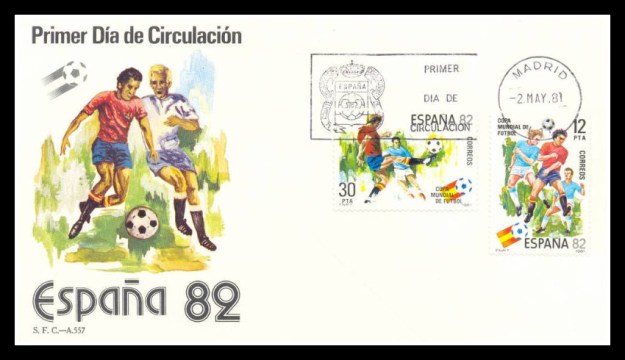
The Football Stamps of Spain – Los sellos de fútbol de España

“Following on from yesterdays post featuring the football stamps of the Netherlands today it’s the turn of fellow 2010 World Cup finalists Spain. The first Spanish stamps to feature a football theme were released in 1960 as part of a 12-value set commemorating various sports.” (footysphere)
Slavoz Zizek Predicts the World Cup Final
“Despite the parakeet, the octopus, and an assortment of other animals, only one entity can accurately predict the World Cup final: Slovenian philosopher and critical theorist Slavoj Zizek. We had a quaint chat with the man to wax Marxism, the Lacanian real, and Mark Von Bommel. What he had to say will probably only confuse you, unless of course you obtained a doctorate from the European School of Philosophy. But not the University of Chicago – everybody knows those hacks just say really big words. Ahem. Now onto the interview!” (futfanatico)
Thirteen World Cup Theses
“1) Nobody plays “total football” any more, so please stop referring to it unless you are providing helpful historical context. Even if you call it Totaalvoetbal, teams would get slaughtered if they tried it against modern tactical sides. 2) The current Dutch team aren’t the “heirs” of anything except perhaps the drills created and overseen by coaches and trainers at Ajax’s football academy. 3)…. (Run of Play)
Zero Hour in South Africa
“There are two games left. The third place playoff takes place on Saturday, Uruguay against Germany in a game often described as one nobody wants to play in. It can be well worth watching though—teams have been known to forget about tactics and play with something approximating wild abandon, which in this World Cup will come as some relief. Then on Sunday, it’s Spain against Holland; one of two favorites going into the tournament against the perennially-highly-fancied World Cup bridesmaids.” (The Paris Review)
The Beautiful War – Rinus Michels & The Reinvention Of Dutch Football
“One of the more surprising requirements made of the Dutch team playing in this week’s World Cup final is that it is not enough for them merely to win the tournament. They are still widely expected to win it with style, and this level of expectation is largely the responsibility of one man – Rinus Michels. Never mind the fact that the Netherlands has a population that is one-third that of England, or that they didn’t even qualify for the finals of the competition between 1938 and 1974. The Dutch team that Michels built inspired such awe that the burden of expectation continues to cast its long shadow more than three and a half decades after it made its debut.” (twohundredpercent)
Myths Of The Near Past
“I’m loathe to mention him here, particularly in a vaguely positive light, but Nick Hornby once said something interesting about football. It was in Fever Pitch, if I remember rightly, and it was to do with the way that supporters tend to use players as a mirror of their own values. So, a certain kind of middle class, thinking man’s fan will praise players for their intelligence and their artistry, particularly ones with a ‘cultured left foot’.” (Minus the Shooting)
Stars as Teammates: Not a New Concept
“Welcome to the World Cup, where every team is the Galácticos. The nickname refers to Real Madrid, the most famous and successful soccer club in the world, which has made a practice, in the past generation, of spending enough money to recruit Zidane and Beckham and Cannavaro. Oops, almost forgot Cristiano Ronaldo.” (NYT)
And Then We Came to the End
“In the World Cup, as in any tournament, half of the field is eliminated in the first round, and half again in each succeeding round—a method of crowning a champion devised by Zeno and guaranteed to bring the whole thrilling spectacle to a buyer’s-remorse anticlimax. (You can see the diminishing interest in the now-trickling coverage in outlets both mainstream and semi-pro.) Whichever second-rate European nation triumphs on Sunday—if they can control the midfield as smugly as they did against Germany in Wednesday’s semifinal it will surely be Spain—will look a lot less truly top-dog than simply last-man-standing.” (The Paris Review)
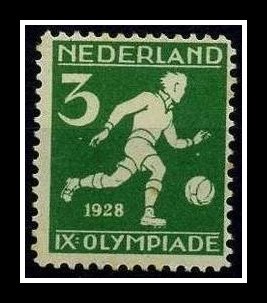
Football Stamps of the Netherlands

“It’s the World Cup Final this coming Sunday between Holland and Spain and to celebrate this Footyphila will take a look at a selection of the football-related stamp issues of both countries. First up is Holland or more correctly the Netherlands.” (footysphere)
Tiki-taka and Total Football
“Spain Soccer News Topics are currently averaging 1.17 goals per game at this World Cup Soccer News Topics, sitting right behind the United States (1.25) in 12th place out of the 32 teams who started the tournament. Of course, unlike all but one of those teams above them (the Netherlands, in 3rd place, averaging 2.00 goals per game), they still have a chance to win the whole thing. But that hasn’t stopped the criticism of Spain’s ‘dull’ play.” (Big Soccer)
Orange Devolution

“Like all soccer writers, I have a debilitating nostalgic streak, and like all soccer writers, I love Holland. The Dutch, who face Spain in Sunday’s World Cup final, are soccer’s most gorgeous losers, a team defined by a single generation of players who brilliantly failed to reach their potential. The Dutch teams of the 1970s—led by the mercurial Johan Cruyff, who’s widely considered the greatest European player of all time—launched a tactical revolution, played one of the most thrilling styles of their era, and lost two consecutive World Cup finals in memorable and devastating ways.” (Slate)
How to Stop Them? (Part 1/2)
“The semifinals of the World Cup 2010 have come and go. Holland managed to overcome the resilient but under strength Uruguay in a thrilling 3-2 encounter, while Spain finally managed to shake off their ‘flopping on a big stage’ curse and cruised to the final to face Holland after totally turning off the goal tap of Germany and finished them off by a narrow 1-0 scoreline. Holland and Spain will battle it out in a high stakes battle to become the very first European nation to win the trophy outside of their own continent and also for each of them to win the thing for the very first time in their respective histories. One main question which is undoubtedly in the minds of everyone associated with the respective teams the moment Spain defeated Germany 1-0 last night is surely just like what the title above is saying, ‘How to stop them?’. The following will be some possible ways that could be employed by the respective teams to halt the other in their quest for glory. In this first part, it will be about how to stop the first team that reached the final, and that’s Holland.” (Beopedia – How to Stop Them? (Part 1/2), How to Stop Them? (Part 2/2)
The Question: What have been the tactical lessons of World Cup 2010?
“This has been the tournament of 4-2-3-1. The move has been apparent in club football for some time; in fact, it may be that 4-2-3-1 is beginning to be supplanted by variants of 4-3-3 at club level, but international football these days lags behind the club game, and this tournament has confirmed the trend that began to emerge at Euro 2008. Even Michael Owen seems to have noticed, which is surely the tipping point.” (Guardian)
Homage to Catalonia
“There’s no doubt that Germany looked magisterial against Argentina. Late last year, I watched a team pummel Diego Maradona’s team in similar fashion. They ran all over them with astonishing ease, making them look like a third division team on the brink of the brink of relegation. This was a particularly low moment for Maradona, the winter when his team was more messy than Messi. Still, the side that beat them clearly possessed players of superior quality. That was last December when the albiceleste ventured into Barcelona’s Nou Camp. They left the stadium that day defeated 4-2. The team that thrashed Maradona’s men didn’t qualify for the World Cup. In fact, it can’t. FIFA won’t let it. But anyone who has paid attention to this tournament knows its best players well.” (TNR)
Holland 3-2 Uruguay: fortune favours the brave
“Holland progress – they shaded the contest, and took the initiative to try and win the game by throwing on an extra attacking player at half-time. Both teams named the expected starting XIs, and both set out broadly as predicted in the preview. Uruguay’s midfield was a cross between a standard four-man system and a diamond, with Walter Gargano playing much further up the pitch than we are used to seeing him. Alvaro Pereira stayed wide, whilst Diego Perez played a reserved role on the right.” (Zonal Marking)
Dutch flair returns against Uruguay
“At last. It took until three quarters of the way through its 3-2 semifinal victory against Uruguay, but the Netherlands that sparkled in its last three pre-tournament friendlies finally arrived at the World Cup on Tuesday. It is not the fluency of Oranje myth (which hasn’t existed since 1974), but there was finally a pleasing crispness to the passing of the front four, a directness and an incisiveness that had been absent in South Africa, and it wrenched a game that had seemed to be slipping away back into Dutch hands.” (SI)
The World Cup and National Narratives
“As I mentioned when we discussed what constituted an American-style of play here a couple of weeks ago, outsiders like to form a stereotypical view of how a national team plays based all-too roughly on certain past performances. It helps us organise stories in our heads about each team when the World Cup rolls around every four years.” (Pitch Invasion)
Uruguay 2 – 3 Netherlands

Cape Town
“Arjen Robben emerged from the bottom of an Oranje mosh pit, mud on his brow and a smile on his face. For good measure, he threw kisses at his teammates and fans. His goal gave the Netherlands a 3-2 victory over Uruguay and a spot in the World Cup final. Now that’s a Dutch treat!” (ESPN)
Uruguay 2-3 Netherlands – Video Highlights, Recap, Match Stats – World Cup – 6 July 2010
“The first semifinal of the 2010 FIFA World Cup took place on Tuesday, July 6, 2010 with the Netherlands taking on Uruguay. The Dutch would be favored in the match but Uruguay have had one of the best players in the World Cup, Diego Forlan.” (The 90th Minute)
World Cup 2010: Uruguay 2-3 Netherlands
“At times they looked like making heavy weather of it, particularly in the last couple of minutes of stoppage time. Indeed, for the first twenty minutes of the second half it looked as if both teams playing in this World Cup semi-final were going to sleepwalk their way into extra-time, but eventually the Netherlands out-muscled Uruguay to book themselves a place in the World Cup final for the first time since disco was in vogue. The question now is whether they will be set up for a Central European derby match against their biggest rivals, Germany, or a match against the World Cup semi-final debutants, Spain.” (twohundredpercent)
Criticism of a more defensive approach by the Dutch is misplaced

Pretoria
“The Dutch have won every World Cup game so far, but their progress to the semifinal has been accompanied by very somber tones in the international media. Many pieces have read like full-blown obituaries: ‘Total Football,’ the famous free-flowing, attacking philosophy of the Oranjes, is dead, they say, replaced by an ugly, win-at-all-costs mentality epitomized by serial agitator and all-around bad guy Mark van Bommel.” (SI)
Holland v Uruguay: tactical preview
“Holland have so far used the same 4-2-3-1 shape in every game, whilst Uruguay have used at least three different formations. Oscar Tabarez is the man with more dilemmas ahead of this contest. So how will he approach this one? Firstly, we must note that he is without two players who would have started. Luis Suarez will be absent after his handball against Ghana, whilst Jorge Fucile, the left-back who has had an excellent tournament, is also suspended. Tabarez has again named his side a day before kick-off – but with slight injury doubts over a couple of key players, there could be late changes.” (Zonal Marking)
Europe is still football’s dominant force
“Wasn’t it just a few glasses of Chardonnay ago that European soccer was melting faster than a wedge of warm Brie? France, Italy and England — three of the continent’s soccer superpowers — had gone home in various levels of disgrace. To make matters worse, all five of South America’s entrants had moved on to the knockout round, with all but Chile winning its group.” (ESPN)
The Currents of History: What does it take to win the World Cup?

Giovanni Battista Di Jacopo, Pieta
“‘What does it take to win the World Cup?’ asked Henry D Fetter of The Atlantic a couple of days ago, in a post called ‘What It Takes To Win The World Cup’.” (Pitch Invasion)
Özil the German
“No player has fascinated me more at the World Cup than Mesut Özil. He has the languid self-assurance on the ball that comes only to the greatest footballers. Where others are hurried, he has time. He conjures space with a shrug. His left foot can, with equal ease, caress a pass or unleash a shot.” (NYT)
Tap-in and Taboo
“If this happens, what will people say about Bryan Thomas (on Twitter, in newspapers, on comment threads)? Will anyone say that he has violated the ethics of the game, that he deserves further punishment? Will anyone argue that the rules of the game need to be changed so that teams cannot benefit from committing a penalty? I suspect, rather, that Thomas will be generally credited with a very smart play. How is what Luis Suárez did at the end of yesterday’s match against Ghana any different?” (Run of Play)
when i get older
“Brian at the Run of Play did a very good job crushing the idea floated in The Atlantic that countries with an authoritarian history play more winning football. The idea memed, nonetheless. (Shocked that highbrow soccer dorks — my favourite phrase this World Cup, used by TNR Goalpost to describe their ideal reader base) appear not to check RoP before coffee.) Laughable, snobbish solipsism — it’s not just for FIFA anymore, kids.” (Treasons, Statagems & Spoils)
Time Can Do So Much
“What I want to know is whether we’ll remember any of this in ten years, or if we’ll look back on it as the mass blackout during which we all wrote mystic texts. I can’t remember two more deranged or thrilling days of soccer, or four more shocking games, in any recent tournament, and Euro 2008 made me compare Aphrodite to a Toyota Prius. It was all the more stunning because it came out of nowhere—that’s not to say this World Cup had been boring, but it had rolled along at a pretty regular tempo and, apart from a few moments of madness and bliss, within a fairly livable emotional band.” (Run of Play)
Argentina Flounder Before German Unity
“Out of the chaos of the quarter-finals of the 2010 World Cup has come some degree of consensus. If today’s newspapers have one theme running through them, that theme is that Germany are currently the best football team in the world and that, to a point, it would be a travesty if they didn’t win the competition. All of this is somewhat odd, since it is effectively an admission that they got their predictions wrong before the start of the tournament (there weren’t many in the mainstream press that didn’t predict Brazil or Spain), but this groundswell of opinion has been building for the last few days.” (twohundredpercent)
Europe dominates semifinal lineup
“So much for South Americans dominating this World Cup. Three sides from the continent were eliminated in the quarterfinals, leaving Uruguay, the last team to qualify for the competition after a playoff win over Costa Rica, as its only representative. In similar fashion, the demise of the European nations appear to have been exaggerated with Germany, Spain and the Netherlands advancing to the final four.” (SI)
Brazil Undone By Dutch Pragmatism

“Never meet your heroes, they say. It is possible that a lot of people met theirs yesterday in the form of the 2010 version of the Brazilian national football team. A team that was widely-tipped to win the competition is out at the quarter-final stage for the second time in a row, and it seems unlikely that many people will actually miss them that much. On more or less any other day of the tournament – of any tournament – this would have been big, big news. Events in Port Elizabeth were overshadowed by what was to follow in the evening, but this doesn’t mean that it isn’t worth having a quick look at how they managed to get things wrong.” (twohundredpercent)
The Dutch Risk It All
“This afternoon in Port Elizabeth, South Africa, the Netherlands takes the field against Brazil in the World Cup quarterfinals. The Dutch are famous for playing a stylish kind of football that is short on defense, sometimes even short on goals, but never short on entertainment. In the 1974 World Cup final, it famously scored before its West German opponents had even touched the ball and then spent the rest of the game trying to create a highlight reel instead of a victory. The Dutch lost 2-1. But it’s reputation wasn’t harmed.” (Vanity Fair)
Oranje: Don’t Look So Surprised
“Holland just downed Brazil two to one, leaving the contents of the tournament co-favorite (let’s not forget about Spain) to scatter across Western Europe in returning to their home clubs. I like the Dutch and I tend to root against Brazil, but this is no Oranje flag-waving piece. I’m not of Dutch descent and I didn’t leap into TYAC writer Puck’s arms whenever the Netherlands scored, that’s reserved for clinical Landon Donovan penalty kicks to draw the Yanks level. So with the disclaimer out of the way, here’s my issue: Why is such a large portion of the footballing world in such shock over this result?” (Yanks are coming)
Holland 2-1 Brazil: poor defending from set-plays costs Dunga

Wesley Sneijder
“Brazil are out. A dominant first half, a shocking second half – Holland took advantage of their defensive mistakes to record a famous victory. We know the starting line-ups both managers like to field, because both give their first XIs the numbers 1-11. In this match, however, injury to Elano and Joris Mathijsen meant we saw both No 13s from the start – Daniel Alves played on the right of midfield, whilst Andre Ooijer was a late change after Mathijsen was injured in the warm-up.” (Zonal Marking)
Sneijder’s goal in 68th minute decisive; Brazil unravels in second half
“Don’t call the Dutch underachievers anymore, not after the way the Netherlands rallied to upset five-time champion Brazil 2-1 in the World Cup quarterfinals Friday. After waking themselves up at halftime, the title that has eluded the Dutch for all these years is now just two wins away.” (ESPN)
Brazil Betrays Itself
“To be very honest, Brazil’s defeat did not surprise me. From the very beginning, I found the team rigid, overly physical and lacking in authentic creativity. It tells you something abut the Brazilian team that everybody’s been gushing about Lucio and Juan and the rest of Dunga`s defensive set-up.” (TNR)
Brazil vs. Holland – Beauty, Bottom Line, Redux
“So, we’ve had this debate before. Still, the result, Netherlands 2-1 over Brazil, will fuel the fire of the torch wielding “joga bonito acolytes,” screaming about the exclusion of Ronaldinho and Pato and hundreds of other Brazilians that can pull off an elastico with ease. After all, Dunga’s reliance on results and the discourse of efficiency to justify his team selection collapses into one currency by which to measure success – wins. Not goals. Not style. Wins. And today, Brazil lost.” (futfanatico)
World Cup 2010: Netherlands 2-1 Brazil
“Into the quarter-finals then, and now it starts getting serious.This was the first clash between two teams with serious winning credentials – or at least, Brazil’s pedigree was beyond dispute. Maybe there were still some doubts about the Netherlands, coming into this game, for all their long unbeaten run and their hundred percent records both in qualifying and in the group phases it still remained to be seen how they’d fare against top class opposititon. And to be honest, for all that they won this extraodinary match, I’m still not entirely sure. The game was turned on its head by a series of critical Brazilian errors in the second half, in a game they looked to have well in control, and they’ll go home wondering quite how it happened.” (twohundredpercent)
Netherlands 2-1 Brazil – Video Highlights, Recap, Match Stats – World Cup – 2 July 2010
(The 90th Minute)
Forget total football, Holland just need total success
“Walk up to a Dutch supporter and say these words: “Remember 1974?” Do so and you’ll bring to mind the vivid series of events that defined how an entire generation views football. It was the 1974 World Cup in Germany that gave the Dutch a glimpse of football at its breathtaking best and the world, seeing such a spectacle for the first time, christened the flurry of orange: total football.” (Guardian)
World Cup Quarters – “& Then There Were 8″
“The typical suspects have overcome group stage difficulties to rise to the top. However, no smoking gun has appeared to point out the single culprit most likely to win the tournament. Using a really big magnifying glass, a trench coat, a smart talking sidekick, and intuition, we embarked on an investigation of the remaining teams in this World Cup quarterfinals, searching for clues in a sea of uncertainty. Our conclusion as to who will win the World Cup?” (futfanatico)
World Cup tactics: How the quarter-finalists line up
“On the eve of the World Cup, Football Further asked whether the 4-2-3-1 formation would continue to dominate as it did at the last tournament in 2006. The average position diagrams below, taken from all eight last-16 matches, demonstrate that while it remains the most popular shape in the international game, variations in tactics mean that it is being deployed in very different ways.” (Football Further)
Facing the Two-Day Football Fast
“It’s alarming to even consider, but for the next two days there will be no World Cup matches. After gorging ourselves on football of varying quality for the past weeks, we suddenly have to think of others things to do. Read a book? Take a walk? But to what end and purpose, when all we have known for weeks is the spectacle of the fates of nations unfolding before our eyes?” (Soccer Politics)
Holland 2-1 Slovakia: long balls towards wingers win it for the Dutch
“Another quiet but effective win for Holland, who progress to the quarter-final, where they’ll face a stronger test from either Brazil or Chile. Holland welcomed back Arjen Robben, who made his first start of the competition, having appeared as a substitution in the final group game against Cameroon. He replaced Rafael van der Vaart, who himself had become injured. The rest of the side was as expected.” (Zonal Minute)
Netherlands advance to quarters on goals from Robben, Sneijder
” Impressive as Arjen Robben and his Dutch teammates were in advancing to the World Cup quarterfinals, they seek much more. The Netherlands reached the final eight Monday when standouts Robben and Wesley Sneijder scored in each half of a 2-1 victory over Slovakia.” (ESPN)
World Cup second round preview (part two)

Xavi
“ZM’s tactical preview of the second half of the World Cup second round ties, being played on Monday 28th and Tuesday 29th of June.” (Zonal Minute)
World Cup scouting: The 32 – Week Two

Rene Krhin (Slovenia)
“The following 32 names represent Football Further‘s players to watch at the 2010 World Cup. We’ll be following their performances closely over the course of the tournament, with weekly scouting reports rounding up their progress.” (Football Further), (Football Further – Week One)
Holland 1-0 Japan: Little tactical excitement
“There have been a few low-key games at the World Cup so far, but this was one of the worst. Holland continue to disappoint with a lack of attacking flair, whilst Japan were content with a draw, and didn’t threaten until the 90th minute. Both sides kept faith with their opening day line-ups. Holland continued to play both Rafael van der Vaart and Wesley Sneijder despite the impressive substitute appearance of Elijero Elia against Denmark. Arjen Robben was not fit enough for consideration.” (Zonal Marking)
Netherlands 1-0 Japan – Video Highlights, Recap, and Match Stats – World Cup – 19 June 2010“The Netherlands, one of the countries who has yet to win the World Cup but always a threat, faced off against Japan in Group E on Saturday, June 19, 2010. The winner would be in great position to win the group while a loss wouldn’t hurt either side as both had three points going into the match.” (The 90th Minute)
XI. World Cup Factoids and a Few Observations
“Today we complete the first set of 2010 World Cup group play games. I’ve watched more than 90% of all the minutes – and yet managed to miss five goals live (Holland, Argentina, Slovakia, Brazil’s second and North Korea’s). It’s been an educational experience. I’ve learned many interesting factoids (many acquired by virtue of this being the first Twitter World Cup) and made a few observations as well.” (Pitch Invasion)
Germany 4-0 Australia – Video Highlights, Recap, and Match Stats – World Cup – 13 June 2010

Durban Transport
“One of the most consistent teams in the history of the World Cup, Germany, began the 2010 tournament against AFC side Australia. The Socceroos surprised last year with some great play that moved them into the round of 16 and looking to build on that in 2010. The match was a 20:30 local time start on Sunday, June 13, 2010.” (The 90th Minute)
Germany 4-0 Australia: Germany excellent, but quality exaggerated by poor Australian tactics
“We’ve now seen half of the 32 teams that will be contesting this tournament, and whilst we haven’t yet sampled the three most exciting sides – Holland, Brazil and Spain – it is undeniable that Germany have been by far the most impressive so far.” (Zonal Marking)
World Cup 2010: Germany 4-0 Australia
“It’s a conundrum for English national team fans, who to support out of the football and cricket arch-enemies. But it’s not a problem for long as the game is over as a debating point within the first quarter. In the ITV studio, Edgar Davids is making it clear that it’s “C’mon Aussie, C’mon” for him. He looks perplexed when Adrian Chiles brings up England’s propensity to lose to Oz at rugby and cricket. He’s clearly not sure what rugby and cricket are; but he looks just as puzzled at every question Chiles asks.” (twohundredpercent)
Holland 2-0 Denmark: Dutch struggle to break down a disciplined Danish defence
“A quiet game won by two scrappy goals – not really the performance we were hoping for from Holland. Some credit should go to Morten Olsen – his tactics stifled Holland’s creative players and Denmark did have chances to score. Holland lined up as expected considering the injury to Arjen Robben – Rafael Van der Vaart played on the left, Dirk Kuyt was on the right, and Welsey Sneijder played behind Robin van Persie.” (Zonal Marking)
Lack of depth tempers Dutch expectations
“You would be hard-pressed to find anyone in the media here – or indeed in the country as a whole – who doesn’t think the Dutch will win their opening Group E match against Denmark. This may smack of overconfidence, but it’s probably more accurate to describe it as justifiable optimism. The team’s long unbeaten run and impressive performances in the last three practice matches before leaving for South Africa – banging in 12 goals against Hungary, Ghana and Mexico – has instilled a healthy degree of self-belief.” (WSC)
World Cup 2010: Netherlands 2-0 Denmark
“Half way through the opening set of fixtures then, and we’ve already seen two of the semi-finalists in action. Only Germany have really looked good enough to be worthy of it so far, but the lower half of the draw contains more big guns, with favourites Spain and Brazil, not to mention holders Italy, all to come shortly.” (twohundredpercent)