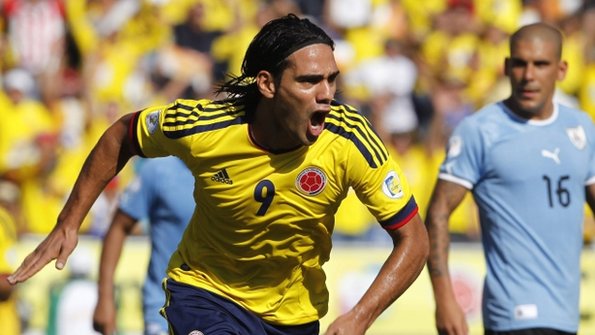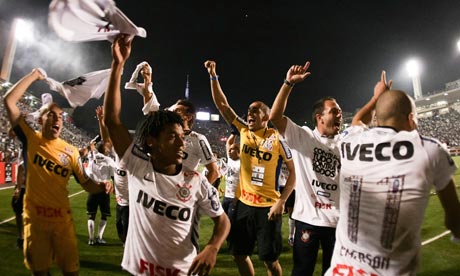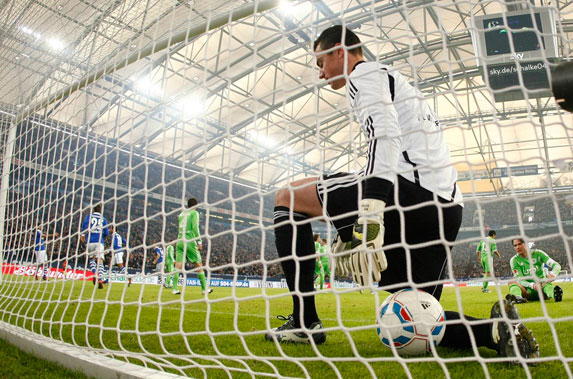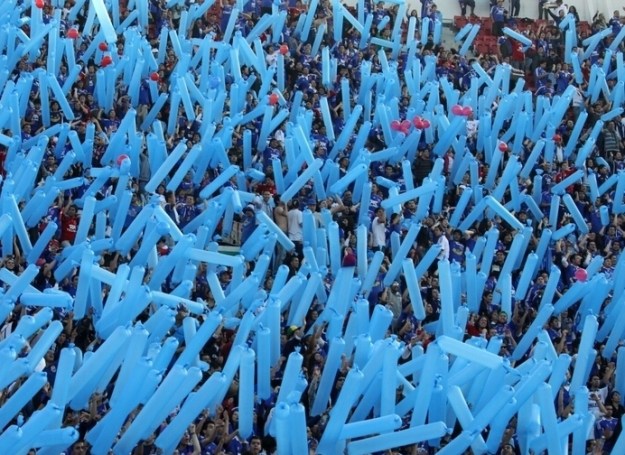
“SANTIAGO, Chile — A haunting yellowish glow radiates from the tiny section of empty wooden benches and crumbling concrete behind the north goal at Estadio Nacional. All around this space there is noise: 47,000 soccer fans screaming and jumping in delight as Chile’s national team plays Ecuador in the opening game of the Copa América. But no one sits on those benches. They are reserved in perpetuity, a somber memorial to the thousands of people who were beaten and tortured here 42 years ago in the home of Chilean soccer. Estadio Nacional, the site of six games in this year’s Copa América, including the final on July 4, is perhaps the most infamous sports arena in the world. For nearly two months after the Sept. 11, 1973, military coup that overthrew Chile’s democratically elected Marxist president, the stadium served as a makeshift prison camp where as many as 20,000 men and women suffered at the hands of a military junta, led by the right-wing army chief, Gen. Augusto Pinochet, that had seized control of Chile. …”
NY Times
Tag Archives: Chile
Arturo Vidal and Neymar subplots in a Copa América rich with stories
“There is nothing quite so effective at removing stains of ignominy as victory. Chile’s game against Bolivia on Friday began with Arturo Vidal’s name being cheered by the 45,000 fans at the Estádio Nacional, a clear message of support after he was charged with drink-driving. It ended with Chile having won 5-0 after a display of exhilarating football and, to the local media at least, questions about whether Vidal should have been allowed to play on were fading before the thought that this Chile squad is probably better equipped than any other in the country’s history to win the Copa América. A wait that began in the very first continental tournament in 1916 may be about to come to an end.” Guardian – Jonathan Wilson
Arturo Vidal, Chile cruise past Bolivia to finish atop Group A in Copa America
“Led by a brace from Charles Aranguiz, host Chile cruised to a 5–0 win over Bolivia on Friday in its final group stage game in the Copa America. The victory meant Chile finished atop Group A, while second-place Bolivia will also advance to the quarterfinals. Here are three thoughts on Chile’s win.” SI – Jonathan Wilson
Claudio Bravo and Chile held by Mexico in six goal thriller (3-3)
“Chile missed out on to the opportunity to become the first team to make it through to the last eight of the Copa América following an exhilarating 3-3 draw against Mexico in Group A. Arturo Vidal scored twice and Vargas claimed the other but it was not enough for victory for the side captained by blaugrana Claudio Bravo. Mexico took the lead twice in the first half through Vuoso and Raúl Jiménez and then Vuoso scored again in the second to level things up at 3-3. Mexico proved they are not simply in South America to make up the numbers and still have a chance of making it to the knock out stage with their final group game still to come against Ecuador. Chile face Bolivia in their last fixture in the opening phase.” FC Barcelona
Chile time at the Copa America

“In the 99-year history of the world’s oldest continental competition, 37 of the 43 titles have been snapped up by Uruguay, Argentina and Brazil. Other than the traditional big three, Bolivia has won it, Colombia has won it while Paraguay and Peru have both won it twice. Chile does not appear on the list of Copa America champions – even though it took part as far back as the inaugural tournament in 1916. The current side, by popular consensus, is the best in Chile’s history. As 2015 host, then, the pressure is on it to bring the long, dry run to an end. And coach Jorge Sampaoli is worried about the pressure. He has first hand experience of what it can do.” The World Game – Tim Vickery
Brazil hope their new Fred does better than the old one in Copa America
“Two weeks ago, Fred, the diminutive Shakhtar Donetsk forward, made his home debut for Brazil in a friendly against Mexico in São Paulo. When his name was read out before kickoff, he was roundly booed: the crowd did not realise he was the 22-year-old Frederico Rodrigues Santos, and assumed he was the other Fred, the 31-year-old Frederico Chaves Guedes, the Fluminense striker who was one of the chief scapegoats for the disaster of the World Cup.” Guardian – Jonathan Wilson
Copa América Tickets, Finally, Are Hard to Come By
“Eduardo Santa Cruz has been attending Copa América games in Chile since 1955, when he was 5 years old and his parents took him to games in Santiago. A professor of journalism and the author of two books on soccer and mass culture, Santa Cruz has a better recollection of the 1991 tournament, for which he said tickets in Santiago were readily available. This year, though, as the popularity of the Copa continues to grow, he expects tickets will be hard to find. Santa Cruz and his family will be watching from home.” NY Times
Palestino – Getting shirty in Chile
“‘A win for Palestino is a joy for the suffering Palestinian people’ so believes Maurice Khamis Massu president of Chilean football team Palestino, a club founded by the sizeable Chilean Palestinian community and are defined by the ties that they proudly share with their homeland. The club does not hold back when it comes to displaying its identity and is not afraid of a little controversy or diplomatic incidents when it comes to representing Palestinian people both at home and abroad.” Football Pink
Eight wins out of eight – are Brazil a team reborn post-World Cup?
“When they sadly packed away their yellow shirts last July, most Brazil fans must have thought that it would be some time before they would be reaching back into the wardrobe for that particular item. The astonishing 7-1 World Cup semi-final defeat to Germany was then followed by the reappointment of the snarling Dunga as national team coach. Morale was low. Fast forward eight months, though, and the mood is more upbeat. Sunday’s 1-0 victory over Chile at the Emirates Stadium in London means that Brazil have now won eight consecutive matches.” BBC – Tim Vickery
Never forget your roots – Palmeiras’ illustrious history
“One of the most successful clubs in Brazil, Sociedade Esportiva Palmeiras have won eight league titles, as well as two Copa do Brasil trophies. The champions of South America in 1999, having beaten Colombian side Deportivo Cali to claim the Copa Libertadores, with their success culminating in the awarding of ‘Best Team of the 20th Century of Brazil’ by the Sao Paulo State Football Federation, they are a club of immense power and wealth. Palmeiras’ team is predominantly Brazilian, with ex Bayern Munich and Inter Milan defender Lúcio among their ranks. Apart from a smattering of Chilean, Argentinian and Uruguayan players, their squad is entirely made up of footballers from the ‘Futebol Nation’.” backpagefootball
Everything you need to know about the 2015 Copa Libertadores

“With the last of the group spots now finalised, the 56th edition of the Copa Libertadores – South America’s equivalent of the Champions League – properly gets underway this week and, as ever, it promises to be full of drama, excitement and shocks. The vast distances, not to mention the range of altitudes and climates, make it a highly challenging, unpredictable and captivating contest, while also offering the opportunity to catch a first glance at some of the continent’s emerging prospects. Argentinian side San Lorenzo won their first ever title last year, breaking the run of Brazilian triumphs and capping a remarkable turnaround for a club on the brink of relegation just two years before. With the last three victors being first time winners, could we see another maiden champion? Or will one of the established giants reclaim the continent’s top club prize? The following comprehensive group by group guide will take you through all the contenders.” Outside of the Boot (Part 1), Everything you need to know about the 2015 Copa Libertadores (Part 2)
Messi, Neymar, Sanchez: In search of South America’s next star
![]()
Angel Correa is leaving Argentina to play in Spain.
“For the crunch World Cup match against England last year, Uruguay were without their captain and centre-back Diego Lugano. In to replace him came Jose Maria Gimenez, a 19-year-old who had played in a grand total of one league match the previous season and one Copa del Rey fixture for Atletico Madrid. It is hard to imagine England, or another major European nation, throwing a youngster into the deep end in this way. But Uruguay had no qualms. Gimenez had been immaculate the previous year in the World Under-20 Cup, and that was good enough. This story helps to explain the importance of under-20 football in South America. There are plenty of others like it.” BBC – Tim Vickery
Chile vs. the United States: Five questions about the performance that we can answer before kickoff

“The United States’ men’s national team faces Chile tonight in what would be a rare out-of-FIFA-window friendly, if the U.S. didn’t do this every year. Tonight’s match against La Roja and next week’s affair with Panama mark the end to the team’s annual winter camp, affectionately if harshly known as ‘Camp Cupcake’ to fans and critics alike. Given that out-of-window nature of the game, it’s always difficult to discern lessons from these January affairs. Thankfully, our years of experience at being a website (that’s been up for less than a year) are here to help. Here are all the major questions that will be asked after tonight’s game, and their answers.” Soccer Gods
Panning for gold – the Sudamericano Sub-20
“As a beaming Lionel Messi wheeled away from an ugly goalmouth scramble after putting Barcelona’s victory over Atletico Madrid beyond doubt, he was set upon by the evening’s two other scorers. Neymar, Luis Suarez and Messi made their way back to the back to their positions arm-in-arm having together lifted a slightly deflated mood around the club beset by managerial pressure and rumours of their favourite son’s discontent. The victory left Barca just a point behind Real Madrid in the Liga BBVA and three ahead of Atletico and it was these three South American stars, each arriving at the club via hugely different paths, that were its architects. There’s nothing quite as marketable as a South American football star. By now the image has become something of a cliché: the young pibe winding through cobbled, uneven streets from dawn to dusk, with nothing but a rudimentary ball and a dream; carrying that childlike exuberance into the professional game and becoming a star.” backpagefootball
Delicate balancing act facing Alexis Sanchez
“Chile’s hopes in the upcoming Copa America – which it is hosting – rest largely on the diminutive shoulders of the sublimely talented Alexis Sanchez, whose performances for the national team over the next few months may rest on how much gas is left in the tank from his work with English Premier League club Arsenal.” The World Game – Tim Vickery
World Cup: Brazil defeats Chile on penalties

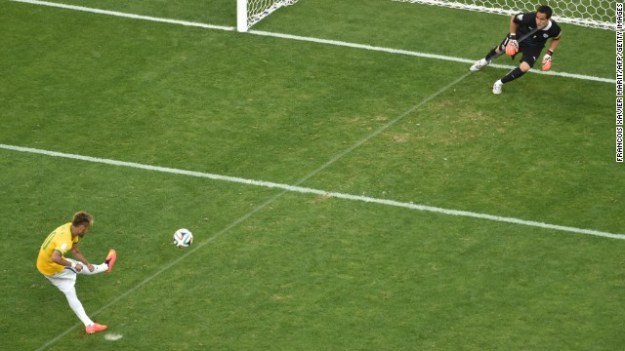
“And so the carnival carries on. Brazil, the team which manages to thrill and frustrate almost simultaneously, clinched its place in the quarterfinal of the World Cup following a tension-fueled encounter with Chile. A 3-2 victory on penalties following a 1-1 draw in Belo Horizonte means Luiz Felipe Scolari’s side’s quest to win the World Cup on home soil remains alive. It will now turn its attention to a last eight contest with Colombia — a team which has thrilled so far in this tournament. While Brazil will take the plaudits, Chile should be commended for a performance which at times defied the ability of the human body to run and hustle as its players did.” CNN (Video)
Brazil 1-1 Chile: Brazil progress by the finest of margins
“Brazil won on penalties after an incredibly tense and tiring contest. Luiz Felipe Scolari selected Fernandinho following his good impact in the win over Cameroon, with Paulinho on the bench. Jorge Sampaoli brought back Arturo Vidal after he was rested for the defeat to the Netherlands. The first half was an extremely fast-paced battle of pressing, and that tired both teams for the final 75 minutes, with the quality of football declining rapidly after half-time.” Zonal Marking
World Cup 2014: Brazil Survives Shootout Against Chile
“With the pressure of an anxious nation bearing down on them with each passing minute, the Brazilian players teetered on the brink of a defeat that would have wounded a country’s soul. Brave Chile was refusing to back down, demonstrating to 57,714 howling fans at Estádio Mineirão and millions more watching at homes, restaurants and bars that the team had the nerve to stand up to the mighty host nation through 120 minutes of the most tense and exhilarating soccer seen so far at the 2014 World Cup. After 30 minutes, it looked like the most fast-paced, breathtaking game of the tournament. After 90 minutes, the teams were even, at 1-1, after Chile had controlled play through much of the second half, leaving the Brazilian fans nervous and agitated. Through 30 draining minutes of extra time — which included a thunderous Chilean shot that struck the crossbar in the 120th minute, inches from knocking Brazil out — neither team could take a lead.” NY Times
Brazil shootout hero Júlio César: I have won the country’s trust back
“Júlio César, Brazil’s hero in the penalty shootout win against Chile, reflected on the prize of a World Cup quarter-final and said he felt he had won back the country’s trust after being the scapegoat in South Africa four years ago. Júlio César saved Chile’s first two penalties and referred immediately to his mistake in the quarter-final against Holland at the last World Cup.” Guardian
World Cup 2014: Might Brazil be the next victims of Chile?

“Shortly after the World Cup draw was made in December, Brazil coach Luiz Felipe Scolari named the opposition he wished to avoid should his men reach the last 16. ‘I hope Chile don’t qualify,’ said Scolari. ‘I’d rather play any of the others. They’re a pain to play against. They’re well organised and intelligent. It’s better to face a European team.’ The 65-year-old was tempting fate and it came to pass when Chile finished second in Group B and Brazil won Group A, setting up an mouthwatering contest in Belo Horizonte on Saturday. It is the coming together of two attacking powerhouses and, while Brazil cannot contemplate defeat as they pursue a title viewed by the host nation as a birthright, Chile intend to spoil the party.” BBC
Chile will press on against Brazil
“In years to come, when the 2014 World Cup is remembered, most of the focus will fall on the knock out matches. What came before, Luis Suarez and open attacking play included, is all prelude. One fear, then, is that when the competition reaches the business end it might suddenly go cautious; as sapping conditions take their toll and the less ambitious teams seek to grind out their passage into the next round by taking the tie to a penalty shoot out. But there would seem to be little danger of caution playing much part in the first knock out match, the all South American clash in Belo Horizonte between Brazil and Chile.” ESPN – Tim Vickery
Group B – ESPN
The Reducer: World Cup Winners and Losers
“Can I interest you in March Madness spiked with second chances? Because that’s what we’ve got on our hands. After a little more than a week of World Cup action, we’ve seen the defending champions go crashing out, the hosts wobble, new stars rise, and established stars cement their place in soccer boot ads for years to come. We’ve seen a German-born defender become an American hero, a Brazilian-born striker be partially blamed for Spain’s early exit, and Mexico’s manager turned into an anime character.” Grantland
Chile’s Jorge Sampaoli Is the World Cup’s Most Obsessive Coach
“Why Chile will continue to be the neutrals’ favorite in Brazil. Jorge Sampaoli was distraught. It was 2007, and his Sporting Cristal side had just been hammered 5–0 by Club America of Mexico in the Copa Libertadores. The Argentine coach was upset, not merely by the result, but by a fundamental failure to live up to his idol, Marcelo Bielsa. ‘I could not defend his style,’ Sampaoli would say after the match. ‘I did not live up to his ideal.’ The 54-year-old head coach of Chile’s World Cup team has spent his entire professional life attempting to do just that. ‘For me [Bielsa] is the best coach in the world, but I prefer him as a myth and to follow him closely, but not bother him [personally],’ he told El Grafico.” Fusion
World Cup Legends: Chile & George Robledo
“George Robledo – The Chilean with the Yorkshire accent. Robeldo was born in Iquique a Port City in the North of Chile in 1926 to a Chilean father and English mother. Chile was in the midst of political insecurity following a military coup in 1924 and in Iquique the Santa Maria de Iquique Massacre would have been still remembered. Aged 5, George’s mother Elsie Oliver took George and his two brothers back to her roots in South Yorkshire. Leaving school, Robledo began work in the coal mines and joined Huddersfield Town on amateur terms. In 1946 he joined Barnsley in a move which was to change his life. Signing professional terms got him out the mines. More importantly Barnsley would showcase a talent that would lead to greater things.” backpagefootball
World Cup 2014: group stage, day 2. NETHERLANDS 5-1 SPAIN. MEXICO 1-0 CAMEROON. CHILE 3-1 AUSTRALIA.

“… A truly extraordinary game of football – Spain took the lead, but the Netherlands repeatedly breached their high defensive line and recorded a historic victory. High lines. This match was all about high defensive lines, a concept that has become a key part of both Spanish and Dutch football – the two are strongly linked, of course. At the last World Cup, barely any teams were brave with the positioning of their defensive line, instead sitting deep and allowing space in front of their defensive block. Here, the space wasn’t in midfield, where no-one had time to put their foot on the ball, but instead in behind the opposition.” Zonal Marking
Three Points: Chile vs. Australia
“Three observations from Chile’s 3-1 win over Australia to open up their World Cup campaign. 1. The Chile Way… If you are going to play the Chile way, there can be no half measures. It has to be all or nothing. Chile seek to impose themselves on the game, throwing both full-backs forward at the same time in a ceaseless quest to create two-against-one situations, looking to play high-tempo, dynamic football in which they seek to suffocate the opposition by pressing them in their half of the field. In order for this to function, everyone needs to press. Chile made hard work of their 3-1 win against Australia because everyone did not press. Perhaps it was the heat of Cuiaba, Brazil. Or maybe there is a dollop of confusion and doubt in the mind of coach Jorge Sampaoli.” ESPN – Tim Vickery
Chile vs. Australia in GIFs
“Besides Belgium, no team has been as hyped coming into this World Cup as Chile. Led by coach Jorge Sampaoli and his high-pressing 3-3-1-3 formation, the Chileans have become the darlings of the international game. In their opening game, they got out to a fast start and were up 2—0 after the first quarter hour. But Australia were dogged. Led by Tim Cahill, it got a goal back and repeatedly found gaps in the Chilean defense. Only a late third goal by La Roja assured it of the three points. Here are a few of our favorite GIFs.” Fuion
World Cup 2014 Tactics: Analysing Chile’s tactical approach, formation, and set up
“Tasked with a difficult group but favoured by a familiar climate, Chile head to Brazil with a target of qualifying for the second round which will equal their best effort since the tournament expanded to 32 teams, having reached the last 16 in both 1998 and 2010. In South Africa, led by the innovative Marcelo Bielsa, they progressed from Spain’s group after running the eventual winners close in Pretoria and they once again face the World and European champions in Brazil. Group B also houses the Netherlands, losing-finalists last time out and coached by Manchester United’s Louis Van Gaal, and a rather transitional Australia who boast the least experienced squad of all in this World Cup.” Outside of the Boot
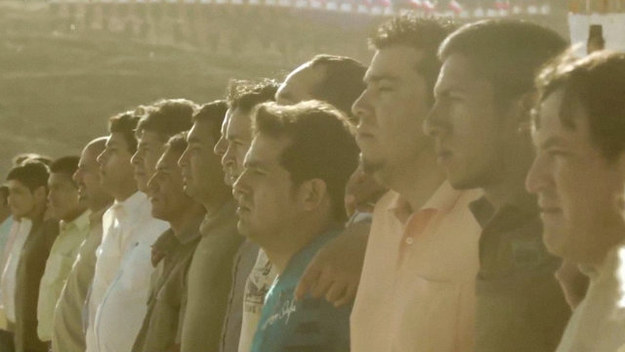
World Cup Commercial Featuring Chilean Miners Will Give You Goose Bumps

“Chile is once again rallying around the miners who were rescued after being trapped underground for 69 days. However, this time, the 32 men who survived the mining accident are not asking for food or prayers, but rather for support for the country’s soccer team as it heads into this year’s World Cup. And ’32 men’ is not a typo. Thirty-three workers were rescued; however, one of them was from Bolivia and is not featured in a new commercial from Banco de Chile. The bank is an official sponsor of the Chilean team and published its new commercial on YouTube on May 27.” Yahoo (Video)
2014 Fifa World Cup draw: Guide to Group B

Sergio Ramos
“Gary Lineker’s verdict. … Style & formation: Spain’s possession game, coupled with their determination to quickly win the ball when they don’t have it, has been wearing down the opposition for over seven years. Spain typically play 4-3-3, with full-backs Jordi Alba and Alvaro Arbeloa attacking like wingers and centre backs Sergio Ramos and Gerard Pique often joining in play beyond the halfway line. Strikers only tend to enter the box at the last minute for the element of surprise.” BBC – Spain, Netherlands, Chile, Australia
Chile tactics will ask a lot of the Socceroos
“In the final of the 2004 Copa America in Peru, Argentina dominated an experimental Brazil side. With three minutes to go La Albiceleste went 2-1 up. Surely the title was won. But with the last kick of the game, Brazil scored the equaliser. Argentina blundered into the penalty shootout with the air of men who had been blinded by the light, and Brazil kept its nerve to lift the trophy.” The World Game – Tim Vickery (Video)
World Cup 2014: Man Utd’s Valencia key to Ecuador in Brazil

“With his ability to fill in at right-back as well as his more customary position higher up the flank, Luis Antonio Valencia is an extremely useful member of the Manchester United squad. For Ecuador, though, he is much more than that. A year ago national team coach Reinaldo Rueda referred to him as ‘the main reference point for Ecuadorian football, as a result of everything he has achieved’. A British readership might be unaware how special it is for Ecuador to have one of their own playing at one of the world’s major clubs, and in action in the closing stages of the Champions League. Less than 30 years ago Ecuador was a Latin American Luxembourg in footballing terms.” BBC – Tim Vickery
Chile transformation is a real coup
“There is much wisdom in the old piece of advice that it is a mistake to meet your idols, because you are bound to be disappointed. Great ex-footballers, for example, have sometimes become dangerously accustomed to being listened to, even on subjects on which they have no special authority. It does not always make them the most agreeable company. There is a price to pay for being idolised. A few hours, ago, though, I came away from a meeting with a personal idol who did not disappoint. I am on a quick visit to Santiago, where I dropped in on Joan Jara, English-born widow of the great Victor Jara.” The World Game – Tim Vickery (Video)
The juggling act faced by all coaches
“On a phone in show recently a caller asked if players who had not featured in qualification should be taken to the 2014 FIFA World Cup. He did not mean it in a sense that governing body should prevent them from playing; rather, he suggested, that it might be in the best interests of the coach to stick with the group that earned a place in the party. I cannot agree. The example that instantly came to mind was that of Italy in 1978. During the qualification process the sweeper was the veteran Giacinto Facchetti. Come the World Cup, however, he had been replaced – elegantly and successfully – by Gaetano Scirea. And a jack in the box striker called Paolo Rossi had also emerged as a domestic star, and went straight into the first team in Argentina ’78, with impressive results.” The World Game – Tim Vickery
Chile making mark as a Bielsa team after win over England
“Alexis Sanchez trod in the footsteps of Marcelo Salas with his two goals to beat England at Wembley on Friday night. Salas scored his Wembley goals – also a 2-0 win – in a warm-up game for France 98, a tournament at which he once more gave evidence of his quality and where Chile had their moments. They made it out of their group but they did not win a single game, going down to Brazil in the second round after three consecutive draws. The current Chile side under Jorge Sampaoli are capable of better things, and not just because the 2014 World Cup is on their home continent.” BBC
South American sides to show World Cup credentials
“Over the next few days South America’s World Cup sides will present their case for the defence. The continent’s sides made a strong showing in South Africa 2010; all five made it out of the group phase, four reached the quarter-finals and Uruguay (who had finished fifth in qualifying) made it into the semis. Naturally, good things are expected next year when the World Cup finally returns to South America. But on the evidence of the 2014 qualifiers, there could be a problem. A common theme of the campaign was teams tended to be better in attack than defence.” BBC
Manuel Pellegrini & Mauricio Pochettino buck a coaching trend
“For more than an hour in last Wednesday’s Champions League matches, up and down the continent, every goal had been scored by players from either Argentina or Brazil – an extraordinary example of South America’s contribution to European club football. In comparison to the impressive feats of the players, surprisingly little of that contribution has come from coaches. There have been a few South American success stories on the other side of the Atlantic – Brazil’s Otto Gloria and Chile’s Fernando Riera spring to mind. But opportunities have been limited – hence the general surprise when Argentina’s Gerardo Martino was rushed into the Barcelona job, an appointment which suggests a desire to keep Lionel Messi content.” BBC – Tim Vickery
Five things we learned from South American qualifiers
“… 1 — ARGENTINA KNOW WHAT THEY ARE DOING. The first team from the continent to book their place in Brazil, Argentina’s qualification might seem predictable enough – but it looked anything but in the early stages of the campaign, when coach Alejandro Sabella’s side lost to Venezuela and drew at home to Bolivia. Since then, though, the side have made enormous progress. They are not perfect.” ESPN – Tim Vickery
An Obsession With Marcelo: No Madness at All
“On insanity, few have been more veracious than the Chilean writer Roberto Bolaño. In his own inimitable way the nomadic novelist and poet acknowledged what others often refuse to see; that we are all unhinged in our own delicate fashion. To some extent we will freely admit to our peculiarities, but largely our madness is defined by those around us, who witness our behaviour and for reasons of comfort believe it to be more abnormal than their own. How strange it is to be denied even the possession and enjoyment of our own madness by people who yearn to tell us that, yes, we are certainly mad.” In Bed With Maradona
Never a dull moment in Bolivian football
“Firstly, let me set the scene. It’s my first game from the Bolivian LFPB (Liga del Fútbol Profesional Boliviano) with Universitario de Sucre facing Oriente Petrolero, two teams languishing in the mid-table region of the Apertura half of the competition. Going in to the game, Oriente Petrolero had drawn a mind-boggling 8 of their 11 games, and had only lost once. Universitario were just a point better off but were playing at the Estadio Olímpico Patria, where they had a fine record. Football tends, more often than not, to follow certain formulae and basic principles. Being a Bolivian football newcomer (save for a few games in the Copa Sudamericana and a harrowing experience with Aurora in the Libertadores), I applied these principles to the game and assumed it would be a turgid, boring, low quality draw. Despite my inexperience with Bolivian football, I’ve commentated on scores of South American games from Brazil, Argentina, Uruguay, Paraguay, Peru – well, you get the picture.” World Soccer
Chile Boss Bichi Borghi Felling The Heat
“‘Fuera Borghi’ (Borghi out) was the message scrawled onto Chile’s Juan Pinto Durán training complex in Macul after the 3-1 defeat to Ecuador in the World Cup qualifier. Accompanied by ‘Vergüenza nacional’ (national shame) and ‘Ladrones’ (thieves), the message was clear: changes needed to be made as Borghi’s reputation had hit an all-time low amongst fans. The messages appeared after that defeat to Ecuador and before the game against Argentina. La Roja went out against Argentina like a team possessed; hunting down the ball when they didn’t have it and rampant when they did. They moved the ball, down the wings, at electrifying speed, bombarding the Argentina rearguard with crosses.” South American Football
Venezuela profit without kicking a ball
“A gap has opened up as South America’s World Cup qualification campaign reaches the halfway stage. Victories on Friday for Argentina, Colombia and Ecuador mean that three teams have pulled away from the pack. But the round had another winner, who did not even take the field on Friday. It was sixth-placed Venezuela’s turn to take a rest, and their position improved while they sat and watched as Uruguay and Chile, the teams above them, both lost. Three rounds ago Chile were first and Uruguay were second. Now they seem to be in free-fall. On Friday all they managed to accomplish was further damage to their goal difference – and things could get still worse for them in Tuesday’s 10th round.” BBC – Tim Vickery
Higher hopes for South America’s World Cup players

“World Cup qualification in Europe has a few good games along with plenty of mismatches. In South America, meanwhile, every game in the long campaign is resonant with rivalry and relevance. The best development in the history of the continent’s national teams was the birth of the Copa America in 1916 and its frequent, at times annual, staging in the early years. It did much to spread interest in the game and raise standards.” BBC – Tim Vickery
UEFA World Cup qualifying: Spain wins opener; England ties Ukraine
“World Cup champion Spain defeated Georgia 1-0 on an 86th-minute goal by Roberto Soldado on Tuesday, the first step by the Spaniards on their road to the 2014 World Cup. This was the 23rd consecutive victory in qualifying matches for Spain, which has three points in Group I and is tied with Georgia. Spain is attempting to win an unprecedented fourth consecutive major title after repeating as European champion this summer.” SI
Beaten Uruguay have no time to sulk

“In the context of a league campaign, a resounding win or a heavy defeat never ends at the final whistle. More important than the points won or lost can be the team’s reaction. Can it rally in the face of adversity, or guard against excessive euphoria? This is especially true in South America’s marathon 2014 Fifa World Cup qualifiers, when two rounds are played together, and a team can play at one end of the continent on Friday and the other the following Tuesday.” BBC – Tim Vickery
Uruguay have cause for World Cup concern

“World Cup qualification resumes in South America this Friday, with a question mark hanging over the team which have been the continent’s form side over the past two years. Might the London Olympics mark an unwelcome turning point for Uruguay? On the face of it there should be no cause for alarm. World Cup semi-finalists in 2010, Copa America champions last year, Uruguay’s senior side have gone 18 games without defeat. They have made a solid start to the 2014 qualifiers. Leaders Chile sit out Friday’s round, where a win for Uruguay would take them to the top of the table.” BBC – Tim Vickery
Sabella meshes Argentina’s abundance of attacking talent
“It is possible to have too much of a good thing. Lionel Messi, Sergio Aguero, Gonzalo Higuain, Carlos Tevez, Angel Di Maria, Javier Pastore, Ezequiel Lavezzi … no other nation comes even remotely close to Argentina in terms of attacking and creative talent. The problem has been trying to fit as many of them as possible into the same squad. It did for Diego Maradona and it did for Sergio Batista.” SI – Jonathan Wilson
Trouble atop the table, hope at the bottom
“With Euro 2012 followed by the season’s big kickoff and the excitement of the transfer window, only now is Europe turning its attention to the need to qualify for the next World Cup. South America, meanwhile, is in a very different situation. Sights are already firmly trained on winning a place in Brazil 2014. The continent’s marathon qualification tournament is a third of the way through. This Friday, action will get under way in the second year of a three-year campaign. So far the soccer has lived up to its billing as the most competitive World Cup qualifiers on the planet.” ESPN
Continental shift: why the Olympics mean so much to South America
“It is fair to say that, historically, South America has not made a huge impact on the Olympics. While it is true Brazil is working hard to broaden its sporting base, of the 20 gold medals the country has won, over half have come in the last four Games. Argentina has picked up 17 golds, but its glory days are long gone. In the late 1940s and early 1950s, the Peron government invested heavily in a wide range of sports and leading athletes were closely identified with the regime, but all that ended when Peron was deposed in 1955. Since then, Argentina has claimed just four gold medals – two of them in the last two football tournaments.” World Soccer – Tim Vickery
Future Kings Of Chilean Football

“South America is a haven for football scouts from all across Europe and further afield. Cast your gaze across European football’s landscape and most clubs posses a South American playing a prominent role in their team. Barcelona and Lionel Messi, Manchester City and Sergio Agüero, Napoli and Edison Cavani AC Milan and Thiago Silva to name but a few. And one South American nation, more than most, are making extra room for scouts as interest in their players increase. But it is not the traditional giants of Brazil and Argentina or even Uruguay who have achieved so much with such a sparse population. It is Chile. The land of Marcelo Salas and Ivan Zamarano, the Andes and Atacama, Colo Colo and Universidad de Chile.” In Bed With Maradona
South Americans ready to stop Spanish stroll
“Spain’s win at Euro 2012 – their third consecutive major tournament win – has sparked off all kinds of comparisons in the bar room debate over the best international team of all time. Of course, such conversations have a strong subjective component, but it is hard to formulate arguments against the facts – and a fourth consecutive trophy will surely tip the balance in Spain’s favour. But title number four looks set to be the hardest of the lot. It entails doing what no European team has ever done – winning the World Cup on South American soil when the world come to Brazil in 2014.” BBC – Tim Vickery
Corinthians finally break their duck as Emerson sees off Boca Juniors

“By the end, Boca Juniors had been so comprehensively beaten that, as the South American football expert Rupert Fryer joked, they could not even raise themselves for the traditional post-Copa Libertadores final punch-up. Corinthians won 2-0 after a 1-1 draw in the first leg but the gulf between the sides was so vast, the chances of a comeback so slight, that it may as well have been quadruple that. And so, in their centenary year, seven months after the death of Sócrates, the most iconic player in their history, Corinthians won the Copa Libertadores for the first time. No more will there be cracks about ‘the 100-year-old virgin’.” Guardian – Jonathan Wilson
Corinthian values
“The 2012 Copa Libertadores final ended up being fought out between two of South America’s biggest clubs. Boca Juniors, one of the competition’s most successful sides, who have six titles and are only one behind all-time record holders Independiente, and Corinthians, a club that despite their grand stature were hoping to win their first ever Copa. After a hard-fought couple of legs, it was Corinthians who came out on top, to become the 23rd different club to win the trophy.” ESPN
Making History In the Copa Libertadores Final

Independiente with the 1975 Copa Libertadores trophy
“This year’s Copa Libertadores final, between Boca Juniors and Corinthians, is a truly heavyweight clash. On and off the pitch, the two combatants are giants of South American football. They are both current national champions and hold 28 league titles and four national cup titles between them. They are the most popular clubs in their respective megacities, beloved for their working-class roots, and count their supporters in the tens of millions.” In Bed With Maradona
Corinthians close in on Libertadores dream
“Some 20 years ago, Corinthians director Luis Paulo Rosenberg made a promise to himself. He said, ‘[When we win the Copa Libertadores] I want to buy a bottle of cachaca (the local moonshine), drink it all myself and sleep in the gutter, drunk.’ He has never been closer to buying that bottle. In the 53rd version of the South America’s Champions League, the Brazilian giants have made it through to the final at last. They are two games away from lifting the trophy – the final is played on a home and away basis with the first match on 27 June and the return leg on 4 July.” BBC – Tim Vickery
Lionel Messi hat-trick leads Argentina to 4-3 win over Brazil
“The summer friendly has become a familiar genre for American fans, but this felt different. For one thing, Brazil and Argentina are perhaps the only teams in the world able to draw more than 80,000 people in the same time slot as Germany-Portugal — a European Championship game that actually matters. For another, it provided another chance to compare Neymar and Lionel Messi, excellent players in their own right and proxies in the cold war between Pele and Diego Maradona.” Guardian
4-4-2 G4M3 TH3ORY 4-3-2-1 4-2-2-2 3-4-1-2
“Brazil finds itself in an awkward position. After a desperately disappointing quarterfinal exit in the 2011 Copa América, the Seleçao has three years to put it right with only the Olympic Games this year and the Confederations Cup next in the way of ‘proper’ matches. (Even then, the Olympic Games allow only three players over the age of 23, and the quality of opposition in the Confederations Cup is questionable, as the major nations seem unsure of the tournament’s importance.) Other teams may complain about qualifiers, but they do at least offer an opportunity for competitive games.” Howler – Jonathan Wilson
Euro 2012 – a World Cup without Brazil?
“A Rio newspaper on Sunday asserted that the European Championship is a World Cup without Brazil and Argentina. It is an expression used on both sides of the Atlantic – but that does not make it fair. European teams have disputed the last two World Cup finals but the continent also provides some of the dullest teams in the tournament. The phrase is unfair on Africa and Asia, where South Korea have made a consistent contribution to recent World Cups. If they needed home advantage to reach the semi-finals in 2002, then so did England in 1966 and France in 1998 to register their only wins.” BBC – Tim Vickery
End of the road for Ronaldinho’s Flamengo
“While Europe’s Champions League is down to the last four, the South American equivalent, the Copa Libertadores, is whittling down its field to the 16 teams who will go into the knockout phase. Twelve places have so far been filled, with some high drama along the way. For a few sweet seconds, for example, Flamengo of Rio thought they had saved themselves from elimination.” BBC – Tim Vickery
Can Brazil rely on David Luiz?
“The World Cup can be a cruel thing. No matter how well the team is doing in the competition, it need not take a bad game, or even a bad half, for them to be eliminated. A bad few minutes can be enough – as Brazil know very well. Brazil’s team in the last World Cup in South Africa may not have been to everyone’s taste, but results were excellent in the two years leading up to the tournament, and at half-time in the quarter-final against Netherlands few would have bet against them. Yet, in a matter of minutes, a 1-0 lead evaporated into a 2-1 deficit, and they were back on the plane home.” ESPN – Tim Vickery
Tactics: winning ways with Universidad de Chile

“You wonder what Marcelo Bielsa must think of it all. In 2011 the two most successful club sides in the world have been Barcelona and Universidad de Chile. Both play hard pressing, attacking football, often going with three at the back. In other words, they both play Bielsista football – which raises the question of why the man himself is leading Athletic Bilbao to upper mid-table in Spain rather than managing one of the continent’s giants.” World Soccer – Jonathan Wilson (YouTube)
Copa Libertadores Week One Round-up
“All the results from week one of the 2012 Copa Libertadores. Velez Sarsfield secured a comfortable win in the tournament opener as they overcame Defensor Sporting 3-0 in Uruguay. After going up just before the break through David Ramirez there was no doubt they would see the game out. Mauro Obolo and Seba Dominguez, with a scorching free kick, added the other goals.” Purple Patch
Copa Libertadores a cradle of talent
“This year’s major international tournament, the European Championship, was first disputed in 1960 – which makes it a mere youngster in comparison with the South American version, the Copa America, held as far back as 1916. But in terms of club competitions, rather than national teams, the seniority is reversed. The competition now known as the Champions League, originally the European Cup, first kicked off in 1955. The South American equivalent, the Copa Libertadores, only came to life five years later – and was a conscious attempt to emulate the European competition, so that the champions of football’s two traditional continents could fight it out for the world title. Why the discrepancy? It is not too hard to explain.” ESPN – Tim Vickery
Diplomat Bielsa goes on the attack

Marcelo Bielsa
“If he needs help in his captaincy dilemma then perhaps Fabio Capello could take a leaf out of the book of Marcelo Bielsa. Currently with Athletic Bilbao after spells in charge of the national teams of Chile and his native Argentina, Bielsa believes that the role of the captain is to represent the squad – and on that basis he usually lets the players vote to determine who should lead them out. But that is where Bielsa’s democracy ends. In the late 90s when he first took the Argentine job there were some early problems – hardly a surprise given the unorthodox nature of his trademark 3-3-1-3 system.” BBC – Tim Vickery
Previewing the Chilean Apertura

“2011 was the year of Universidad de Chile. Winning the Apertura after a manic two-legged play-off final against rivals Universidad Católica was the warm-up for the season which will be the reference point for years to come; 36 matches undefeated, a Clausura title and a Copa Sudamericana win, prompting much attention and fascination in the way they played under Jorge Sampaoli – unbeaten throughout the tournament, conceding only two goals but thrilling fans with their exhilarating and dominant attacking play.” In Bed With Maradona
Jose Pekerman takes Colombia back to the future
“Pep Guardiola as coach of Argentina’s national team? It was an idea floated recently by Argentine FA boss Julio Grondona, but as nothing more than a pipedream. It is very, very hard to imagine Argentina having a foreign coach. Same with Brazil. The idea was debated briefly in the Brazilian press just over a decade ago. But that was in exceptional times, when the national team were in danger of not qualifying for the 2002 World Cup.” BBC – Tim Vickery
Vargas and Neymar battle for player of the year accolade
“In the last competitive game of the South American season, Eduardo Vargas scored a goal that made sure Universidad de Chile won the domestic title, and also highlighted why Napoli are taking him across the Atlantic. Vargas broke from the halfway line. Cobreloa defender Sebastian Roco, worried about his pace, kept backing off. Vargas’ control of the ball at pace was so good that he was able to do two things.” BBC – Tim Vickery
El Bielsa De Los Pobres

“In the presence of more illustrious South American nations – Brazil’s financial strength allowing clubs to compete with their European counterparts, Argentina’s continued production of the world’s most sought after forwards and Uruguay’s successful national team, reaching the World Cup semi-final and winning the Copa America in the last 18 months with a population similar to Wales – Chilean football is silently flourishing. Or it was, until Universidad de Chile, known as La U, decided to attract attention to the west coast of South America by creating history and breaking records, all while playing some of the most exciting football in world football.” In Bed With Maradoma
La U accomplishments unforgettable despite defeat
“It is finally over. After 36 games, the unbeaten run of Universidad de Chile came to an end last Thursday when they went down 2-1 to Santiago rivals Universidad Catolica (an interesting side themselves – look out for right-back Stefano Magnasco and left-footed striker Kevin Harbottle). The long awaited defeat of ‘La U’ (the previous one was in July) came in bizarre circumstances. At 1-1 and with the game in stoppage time, they looked in total control – until the usually excellent midfielder Marcelo Diaz misplaced a pass out of defence and Catolica’s Jose Luis Villanueva fired in a cross shot to win the game.” BBC – Tim Vickery
Universidad de Chile take the 2011 Copa Sudamericana crown in style

“The club of the moment? Universidad de Chile: sweeping up trophies in their domestic league, unbeaten in 35 games, and this week crowned Copa Sudamericana champions, their first ever continental title. More interesting than their success has been their style of play. Coming 18 months after Marcelo Bielsa took Chile to the World Cup having played dynamic, quick football with heavy pressing, usually in a 3-3-1-3 formation, his fellow Argentine Jorge Sampaoli is doing something similar.” Zonal Marking
Copa Sudamericana champions face uphill struggle to hold onto key players
“The best team in South America face an uphill struggle to hold onto their prize assets. With a crushing 4-0 aggregate victory over the formidable LDU Quito, Universidad de Chile secured their first ever continental title. The comprehensive victory ensures La U can be counted as one of the best teams on the continent. With Copa Libertadores football secured for 2012, they now face the task of holding on to their key players and push on to become one of the greatest teams in the recent history of South American club football.” Purple Patch
Paraguay’s hooligan problem is getting out of control
“Six games in 2011, four in just over a month, have been suspended in Paraguay due to crowd violence. The latest suspension came on last weekend’s crunch game between league leaders Libertad and title chasers Cerro Porteño, two points behind with three games to play. With Cerro Porteño leading one-nil at half time the players and officials came out ready for what was set to be a thrilling and potentially season-defining 45 minutes of football. But before the second half could begin a flare thrown from the Cerro Porteño end struck the linesman who had to leave the stadium in an ambulance.” World Soccer
Universidad de Chile target Barca showdown
“Crunch time is approaching for this year’s two outstanding South American clubs.
Over the next few days both Santos of Brazil and Universidad de Chile are seeking to scale new heights. The Chileans, ‘la U’ for short, extended their unbeaten run to 34 games on Sunday, brushing aside Union Espanola to book their place in the semi-finals of the local championship. This, though, is hardly the priority. They already have 14 Chilean titles to their name, including the first of the two played this year.” BBC – Tim Vickery