Tag Archives: Argentina

World Cup 2014: Rio horror show or a samba sensation?

“Last time the World Cup was held in Brazil, in 1950, it was designed as the propaganda centre-piece of Getúlio Vargas’s Estado Novo, the concrete sweep of the Maracanã, a modernist wonder that would be reflected in Oscar Niemeyer’s designs for the new capital, Brasília. Football, though, can be delightfully unpredictable and rather than consecrating the new Brazilian state, the World Cup offered a national disaster – ‘our Hiroshima’, as the playwright Nelson Rodrigues tastelessly put it – as Brazil, needing only a draw in the final game to seal the title, were beaten by Uruguay.” Guardian – Jonathan Wilson

Brazil will not be perfect but there should be much to savour over the coming weeks

“Inspired by the idea of covering the 2014 World Cup, Danish journalist Mikkel Jensen studied Portuguese and based himself in Brazil to observe the build up to the big kick off on June 12. But in the middle of April he went back home, proclaiming that ‘the dream has become a nightmare.’ He had come to the conclusion that the tournament was doing nothing to help the ordinary Brazilian – indeed, he felt that in some cases it was even making things worse, and he no longer wanted to be part of it.” World Soccer – Tim Vickery

2014 Fifa World Cup: Guide to Argentina’s Group F

x352
“Style & formation: Argentina often fielded a bold 4-3-3 formation in qualifying, although a more conservative 5-3-2 was deployed for tricky away fixtures. The former system allows Lionel Messi to play as a classic number 10 behind two strikers – typically Manchester City’s Sergio Aguero and Napoli’s Gonzalo Higuain – who stretch play. But with Angel Di Maria deployed as part of a midfield three, the formation offers little defensive protection.” BBC – Argentina, Bosnia-Hercegovina, Iran, Nigeria

World Cup 2014 Tactics: How will Argentina set-up at the 2014 FIFA World Cup?
“The two-time winners topped the South American qualification for the 2014 FIFA World Cup and, as ever, will go into the tournament as one of the favourites. An Albiceleste victory on Brazilian soil would be the perfect way to rub salt into the wounds of the hosts and Alejandro Sabella’s men will be desperate to repeat the feats of ’78 and ’86.” Outside of the Boot

Portrait Serial Winner Luis Suarez Soccer Most Beautiful Player

“BEFORE GETTING TO the alleged mob hit or the mystery of the missing referee, there should be an explanation about how this quest began. An assigned profile of Luis Suarez led to a stack of things to read about his past. Whether it was a tabloid calling him Cannibal! or The New York Times calling him Luis Alberto Suarez Diaz, the portrait is of a cheat and a lunatic. If someone breathes on him near the goal, he falls down like he’s been knifed. He has bitten an opponent. Twice. And, back in his childhood in Uruguay, there’s an oft-reported incident that serves as explanation, or maybe proof, that he is, in fact, batshit crazy. When Suarez was 15, overcome with anger, he headbutted a referee and received a red card in a youth match, making the man’s nose bleed ‘like a cow,’ as a witness said.” ESPN (Video)

UFWC World Cup Classics: Argentina vs Netherlands, 1978

“The Netherlands had beaten Italy 2-1 to reach their second consecutive World Cup final, and to deprive the Italians of the UFWC title. Dutch defender Ernie Brandts had scored for both sides in that game, with Arie Haan getting the winner. The Oranje were looking impressive despite the fact that they were without star man Johan Cruyff, who had stayed at home to consider his priorities following an alleged kidnap attempt on his family. The hugely experienced Dutch team still featured the likes of Jonny Rep, Johan Neeskens, big keeper Jan Jongbloed, and troublesome twins Willy and Rene Van der Kerkhof.” UFWC

San Lorenzo look to divine alignment to help break Copa Libertadores duck

San Lorenzo
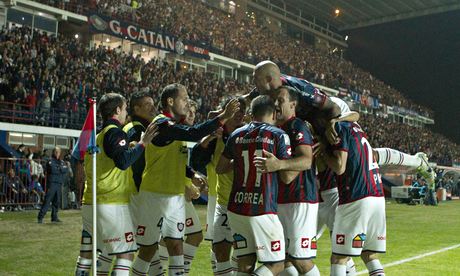
“These are unexpectedly heady times for San Lorenzo. They are the Argentinian champions, and Wednesday night’s 1-0 over Grêmio in the first leg of their last-16 tie took them a step closer to winning the Copa Libertadores for the first time. There’s a long way to go yet, but this is a ferociously competitive side blessed with an exceptional young forward in Ángel Correa and, moreover, they are playing with a self-belief that defies rational explanation.” Guardian – Jonathan Wilson

Argentina’s 10 Best Home-Based Talents Bound for Europe

hi-res-22d6e0344080326c183a1f655a0f57b6_crop_north
Natacha Pisarenko
“Argentina has a reputation as a footballing giant for a good reason. With the possible exception of Brazil, no other country exports so many wonderful talents across the world, giving leagues from Spain to Sweden and Italy to Israel a South American flavour. As the Torneo Final reaches its closing stages, many of the latest generation of youngsters are already being watched attentively by European scouts, hopeful of finding the next Messi or Kun Aguero. But who are the top young players currently playing in the Primera Division?” Bleacher Report

Brazil 2014 – Messi’s crowning glory?

“When Lionel Messi received the honour of a fourth successive Ballon d’Or in January 2013 the record books had been rewritten. The Argentinian forward had surpassed Michel Platini’s haul of three successive FIFA World Player of the Year awards with Juventus and cemented his place as one of footballs all time greats at a mere 25 years of age.” backpagefootball

Lionel Messi’s Argentina better for Carlos Tevez absence

“In a last-gasp attempt to get the stocky Juventus striker on the plane to Brazil, an Argentine musician has written a tango for Carlos Tevez. Daniel Ursini is using the medium of music to send a message to national team coach Alejandro Sabella, once an elegant midfielder for Leeds and Sheffield United. Entitled ‘Sabella, you’ve forgotten Carlitos’ the song’s melancholy tones accuse the coach of having taken the wrong path. ‘You can’t be so stupid as to leave out one of Argentina’s most popular players,’ argues Ursini. A year ago, Ursini wrote a song to mark the birthday of Lionel Messi, and separate songs for the two stars may well have been a wise move because it could boil down to a choice between one or the other in the Argentina national team. And that is not a particularly difficult decision to take.” BBC – Tim Vickery

Chile tactics will ask a lot of the Socceroos

“In the final of the 2004 Copa America in Peru, Argentina dominated an experimental Brazil side. With three minutes to go La Albiceleste went 2-1 up. Surely the title was won. But with the last kick of the game, Brazil scored the equaliser. Argentina blundered into the penalty shootout with the air of men who had been blinded by the light, and Brazil kept its nerve to lift the trophy.” The World Game – Tim Vickery (Video)

World Cup 2014: Man Utd’s Valencia key to Ecuador in Brazil

br
“With his ability to fill in at right-back as well as his more customary position higher up the flank, Luis Antonio Valencia is an extremely useful member of the Manchester United squad. For Ecuador, though, he is much more than that. A year ago national team coach Reinaldo Rueda referred to him as ‘the main reference point for Ecuadorian football, as a result of everything he has achieved’. A British readership might be unaware how special it is for Ecuador to have one of their own playing at one of the world’s major clubs, and in action in the closing stages of the Champions League. Less than 30 years ago Ecuador was a Latin American Luxembourg in footballing terms.” BBC – Tim Vickery

Episode 137: Colón still lead the way, Independiente in meltdown & previewing Boca v River

“The hundred-and-thirty-seventh episode of Hand Of Pod sees Sam, Peter and Andrés joined by German Dan to discuss an interesting weekend of matches, at the end of which Colón were still top of the Torneo Final pile, and looking increasingly likely to avoid relegation, points deduction or no points deduction. There were surprising results on Saturday and more predictable ones on Sunday, which concluded with a dire goalless draw between Quilmes and Boca Juniors. Boca’s next match is of course at home to their arch rivals River Plate, so as ever we dedicate a chunk of this week’s pod to previewing the superclásico; will River get their first win in La Bombonera in a decade? Can Boca lift their game? We also discuss Dan’s side Argentinos Juniors, and what’s gone wrong for them, and Peter tries to give us a quick lowdown of what mentalness is happening at Independiente this week. All this and more awaits…” Hand Of Pod

World Cup path clear for Brazil v Argentina final

“The Rio samba schools steered well clear of the 2014 World Cup when they selected their themes for Carnaval. The winner based its parade on the idea of speed, with pride of place for Ayrton Senna. Another school paid tribute to Zico, and finished fifth. But no one wanted to touch the coming World Cup. One school in the Sao Paulo parade took the plunge – one from the Itaquera district, where the new stadium is being built. They were relegated. Even the weather turned against their parade, which celebrated the fact that the World Cup kicks off in their neighbourhood. They had to strut their stuff in heavy rain and a hailstorm. There are signs of protest fatigue, but it is obvious that the 2014 World Cup has a public relations problem with the Brazilian people, upset at how much it is costing and how little it is giving back.” BBC – Tim Vickery

Unlike Simeone’s Atletico, Seedorf’s AC Milan still searching for identity

“The most fascinating aspect of Atletico Madrid is how the club resembles its coach, Diego Simeone. The Argentine was a hugely talented central midfielder, winning titles in both Spain and Italy, while becoming the first Argentine to collect over 100 caps for his national side — only Roberto Ayala and Javier Zanetti, two of his contemporaries, have beaten his tally. Simeone could pass astutely, he scored more goals than expected, he was superb in the air and he was highly mobile.” ESPN – Michael Cox (Video)

Carlos Tevez should be at his peak, but is destined for World Cup despair

“A vineyard near Mendoza, June 2011. The manager had just learned I was a journalist covering the Copa América and was determined to find out why I thought Argentina were underperforming – which is to say, she was determined to tell me why she thought they were underperforming. I suggested there was a superabundance of attacking talent, that maybe Carlos Tevez and Lionel Messi couldn’t usefully play together. ‘Then we must drop Messi,’ she said.” Guardian -Jonathan Wilson

River Plate v Boca Juniors: Argentina’s ultimate rivalry

“Summer is a hellish time to be in Buenos Aires. First, because the temperatures are enough to wilt even the strongest constitution – I type this whilst sitting in the living room in my pants, with the air conditioning on, and thanks to the 40 degrees Celsius outside, I’m still sweating. But for the football fan, there’s a more prosaic reason: from mid-December until early February, the Argentine league shuts down, and with clubs relocating to coastal resorts or holiday towns far from the capital to undergo ‘pre-season’ (I use inverted commas because technically, we’re actually halfway through the season), there’s no competitive football to enjoy.” World Soccer

Ricardo Bochini’s long wait to become Argentina’s legend of la pausa

Ricardo Bochini, El Bocha
“With five minutes of the 1986 World Cup semi-final remaining and Argentina leading Belgium 2-0, Ricardo Bochini came on for Jorge Burruchaga. He was 32, and had been omitted from the squads in both 1978 and 1982. This time, though, Diego Maradona had demanded that he be picked. Those five minutes plus stoppage time would be the only World Cup football Bochini ever played. As he trotted on, Maradona ran over and shook his hand. ‘Maestro,’ he said, ‘we’ve been waiting for you’.” Guardian – Jonathan Wilson

World Cup 2014: Lionel Messi and Sergio Aguero can shine in Brazil

agueroandmessireuters
“Federico Insua is one of those number 10 playmakers that Argentine football produces in such quantity. With a nice left foot and a good range of passing he is an interesting player, although at 34 his best days are now behind him. He was not quite good enough to impose himself on the European game – he had disappointing seasons in Spain, Germany and Turkey – but he has been a strong club player in Argentina, where he currently turns out for Velez Sarsfield.” BBC – Tim Vickery

Monumental Rivalry

“Summer is a hellish time to be in Buenos Aires. First, because the temperatures are enough to wilt even the strongest constitution – I type this whilst sitting in the living room in my pants, with the air conditioning on, and thanks to the 40 degrees Celsius outside, I’m still sweating. But for the football fan, there’s a more prosaic reason: from mid-December until early February, the Argentine league shuts down, and with clubs relocating to coastal resorts or holiday towns far from the capital to undergo ‘pre-season’ (I use inverted commas because technically, we’re actually halfway through the season), there’s no competitive football to enjoy. Still, this is Argentina. And so it is that, amongst the phalanx of meaningless kickabouts involving the likes of Argentinos Juniors against a Uruguayan second division side playing two halves of 35 minutes each way in front of a crowd of ten people, we also have some equally meaningless – but far more famous – fixtures. Saturday night will bring the first of three (three!) pre-season friendlies between River Plate and Boca Juniors.” In Bed With Maradona

Juan Iturbe: Scout Report | The special ‘Juan’ from South America

“It’s taken a little longer than expected, but Juan Iturbe is finally starting to realise his enormous potential that led him to being dubbed ‘the new Lionel Messi’ only a few years ago. Of course, when any big talent emerges from Argentina, they are instantly dubbed and hyped up to be the next Maradona or the next Riquelme.” Outside of the Boot

The Suárez Conundrum

“I first made it to Montevideo shortly after Richard ‘Chengue’ Morales scored the winning goal against Australia in a World Cup playoff in 2001. Ragged horses and carts danced through the streets like Lipizzaner stallions. Children begging on the streets got extra portions of Pollo Milanese from diners leaving fine restaurants. Beautiful girls shared their grappamiel. And posters of Chengue, a bare-chested Afro-Uruguayan, waving La Celeste (the iconic sky blue Uruguay shirt) were in every shop window. It was a poor, but proud city. On my second visit in 2007, I saw the remarkable progress of the country under newly elected President Tabaré Vázquez. Under Vázquez all social and economic indices were up. He was the first member of the left wing Frente Amplio to be elected President. Poverty levels plummeted, child hunger was greatly reduced, smoking in public places was banned and Uruguay confronted the crimes committed in the military dictatorship years of 1973 to 1985.” Road and Kingdoms

Super Sunday in South America, with five titles up for grabs

sanlorenzo_ap
“South America staged its Super Sunday at the weekend – five domestic titles were up for grabs. In Argentina the fixture computer had played its part. Four teams still had a chance of glory, and they faced each other in a dramatic double header. Two draws meant that San Lorenzo, with the Pope’s blessing and an interesting crop of youngsters, came out on top. There was even more drama in Uruguay, where three teams went into the last day with a chance. Favourites were traditional giants Nacional, with a relatively straightforward home game against little Fenix. They took the lead, and with rivals River Plate losing they seemed well on course.” BBC – Tim Vickery

Heat is on for all but Argentina

“And so after the trip way out west to Cuiaba to take on Chile, it’s the frozen wastes of the south for Ange Postecoglou’s Socceroos. Winter can bite a little bit in the cities of Porto Alegre and Curitiba, where Australia will face Netherlands and Spain respectively. Whoever wins Group B is then in for something of a shock – up to Fortaleza in the north east for a second round match, which is due to kick off at 1pm local time. It will probably be hot enough to fry. A Brazilian first division game would never get going at such a time. A few days ago I was on a TV show with Tite, who has just stepped down from a hugely successful spell in charge of Corinthians – and who could well be the next Brazil coach, once the 2014 circus has packed up and left town.” The World Game – Tim Vickery

Argentina all set for epic four-way tussle in final-day title cliffhanger

“Whatever else is wrong with domestic football in Argentina – and it is a lot – it does have the huge advantage of being extremely competitive. Going into the final weekend (although a number of teams are already finished) of the Torneo Inicial, the top four are separated by two points – and are playing each other.” Guardian – Jonathan Wilson

South American sides to show World Cup credentials

“Over the next few days South America’s World Cup sides will present their case for the defence. The continent’s sides made a strong showing in South Africa 2010; all five made it out of the group phase, four reached the quarter-finals and Uruguay (who had finished fifth in qualifying) made it into the semis. Naturally, good things are expected next year when the World Cup finally returns to South America. But on the evidence of the 2014 qualifiers, there could be a problem. A common theme of the campaign was teams tended to be better in attack than defence.” BBC

The more things change, the more they stay the same

“Washington ‘Pulpo; Etchamendi never quite got the fame his quick wit and sharp tongue deserved. His top lip warmed by a pencil moustache, he was a portly figure, and no mean manager either. He spent much of his career in his native Uruguay with clubs like Defensor Sporting and Liverpool before taking charge of Nacional and leading the Montevideo side to three league titles and, in 1971, their first ever Copa Libertadores.” ESPN

Why a South American experiment could be a boost to Europe

saopaulo1_getty
“How can the prestige and profile of the Europa League be raised? A second cup competition always has the problem of being in the shadow of the first, like a consolation prize for those who have missed out on the main event. There is, though, a relatively simple means of improving things; use the prestige of the leading cup competition to help pull along the second. The winners of the 2014-15 Europa League will automatically qualify for the Champions League, giving clubs a powerful incentive to take the competition seriously and field their strongest sides.” BBC – Tim Vickery

Barrilete Cosmico: Malvinas, Maradona, Argentina and England

“The scoreline is familiar, as is the fateful date, but surely the title for this article should be ‘The Hand of God’? Everyone knows that this was the game when England’s brave Three Lions and the hapless officials were slyly deceived by the diminutive Argentine, and thus any retrospective of the game must take this key moment as its starting point? Or perhaps not…the moment we always hark back to, with a characteristic tone of moral indignation, is remembered quite differently outside England. The Quarter Final game may occupy a similar space in the Argentine collective memory in terms of its significance, but the epithet that is more commonly used in the Southern Cone, invoking the Uruguayan commentator’s interest in cosmology, refers predictably to the ‘other’ moment of otherworldly intervention that day.” In Bed With Maradona

Manuel Pellegrini & Mauricio Pochettino buck a coaching trend

“For more than an hour in last Wednesday’s Champions League matches, up and down the continent, every goal had been scored by players from either Argentina or Brazil – an extraordinary example of South America’s contribution to European club football. In comparison to the impressive feats of the players, surprisingly little of that contribution has come from coaches. There have been a few South American success stories on the other side of the Atlantic – Brazil’s Otto Gloria and Chile’s Fernando Riera spring to mind. But opportunities have been limited – hence the general surprise when Argentina’s Gerardo Martino was rushed into the Barcelona job, an appointment which suggests a desire to keep Lionel Messi content.” BBC – Tim Vickery

Five things we learned from South American qualifiers

“… 1 — ARGENTINA KNOW WHAT THEY ARE DOING. The first team from the continent to book their place in Brazil, Argentina’s qualification might seem predictable enough – but it looked anything but in the early stages of the campaign, when coach Alejandro Sabella’s side lost to Venezuela and drew at home to Bolivia. Since then, though, the side have made enormous progress. They are not perfect.” ESPN – Tim Vickery

Under-fire Uruguay rising to the challenge

“South America’s World Cup qualification campaign has featured 35 wins for the home side — and just 11 for the away. It is a statistic that puts the value of Uruguay’s last two results in stark context. The Sky Blues had a disastrous 2012-13, suffering four consecutive heavy away defeats and making it difficult for them even to finish fifth and claim the playoff slot. But Uruguay are seldom more dangerous than when they have their backs to the wall. They have since won away from home against their two rivals for fifth place — beating Venezuela 1-0 in June, and then winning 2-1 at Peru last Friday.” ESPN – Tim Vickery

Barcelona coach Gerardo Martino’s ideology shaped by Old Boys’ network

tatapartit.v1374515485
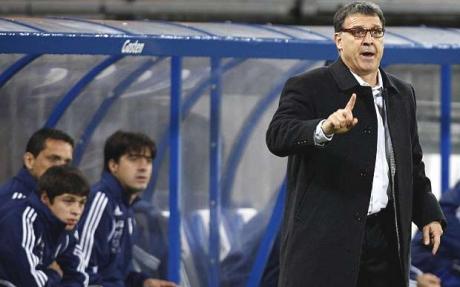
“For three days nobody saw Marcelo Bielsa. He was in his room at the Conquistador Hotel in Santa Fe but he had not emerged since arriving, chewed up by the 6-0 home defeat Newell’s Old Boys had suffered against San Lorenzo in the Copa Libertadores earlier that week. His project, his great plan, was falling apart and El Loco was suffering a crisis of faith. Newell’s had won the Apertura championship in 1990-91, playing brilliant, vibrant football but, exhausted, they had stuttered badly in the Clausura championship and were even worse in the Apertura in 1991-92.” Guardian – Jonathan Wilson (Video)

Martino planning for Messi and Neymar
“Gerardo ‘Tata’ Martino said he will have failed in his role as new Barcelona coach if he is unable to get Lionel Messi and recently signed Brazilian star Neymar to play to the best of their ability in his starting lineup. Martino, speaking at a news conference to announce his arrival at the Camp Nou on a two-year contract, has the task of accommodating two of world football’s biggest stars next season — one of them from his hometown of Rosario, Argentina. But he is certain that Neymar, who arrived this summer on a five-year deal, and four-time Ballon d’Or winner Messi will complement each other perfectly on a Barca team that he believes can go on winning for many years to come.” ESPN

Top 10 Young Football Managers

“Football, over the last couple of seasons, has been witnessing a ‘change of guard’. Players who we adored in their prime have retired, managers that headed some of the greatest sides in history have resigned. All this has given rise to the next generation of football personnel ranging from talented young footballers to talented young tacticians. In this piece we will be focusing on the Top 10 Young Football Managers, that could be at the helm of some of the biggest clubs in World Football, in the not-so-distant future.” Outside of the Boot – Part 1, Outside of the Boot – Part 2

Messi returns in Argentina draw

“Argentina stayed top of the South American World Cup qualifying table after being held to a goalless draw by Colombia in a match which saw both sides reduced to 10 men. With Barcelona star Lionel Messi on the bench, Alejandro Sabella’s team were aiming to move one step closer to Brazil 2014, but neither side could make a breakthrough and the key talking point came when Gonzalo Higuain and Cristian Zapata were dismissed in the first half.” ESPN (Video)

Room for improvement

“Of all the great football rivalries, my favourite is the one between the national teams of Brazil and Argentina. There is nothing to get in the way – no real military history between the two countries, as is the case with the Netherlands and Germany, for example, of England and Germany, and even England and Argentina. When Brazil meets Argentina the rivalry is one of pure football, a battle for supremacy on the pitch between two neighbours vying to be considered the number one nation of the global game.” The World Game – Tim Vickery

The Saints get their Pope

“Crowds thronging Saint Peter’s Square on Wednesday to welcome the new Pope knew that, quite apart from the fact his predecessor is still alive, they were witnessing an historic event. Francisco I (as he’s known on his home continent) is the first Latin American to become leader of the world’s Catholics, and also the first Jesuit. Of course, everyone who had their Papal fact-checking priorities right had only one question on their minds; which football team does this Argentine Pope support?” ESPN

Excursionistas

gente2A
“It is the 24th of April 2000 in Argentina, and the turn of a new millennium has seen the continued upturn in fortunes of Club Atlético Excursionistas, a Primera C side who have racked up ten successive victories under director técnico Néstor Rapa. Sitting pretty at the top of the table, they have a home clash versus Club Comunicaciones at Pampa y Miñones, the 8,000 capacity ground that hides, camouflaged, in the Belgrano neighbourhood of Buenos Aires.” In Bed With Maradona

In Argentina, Martino follows line of Bielsa disciples to success


Gerardo Martino
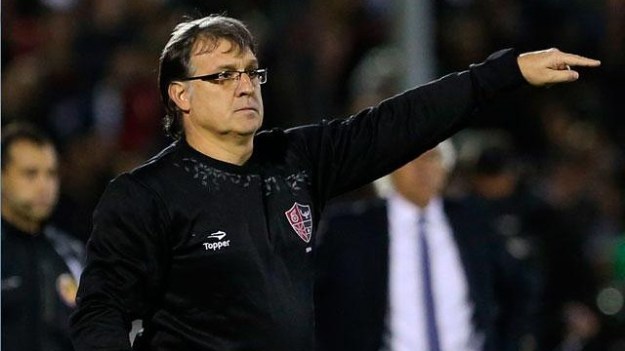
“He has a fluffy demi-mullet. He wears big, slightly academic glasses (although without a cord). He paces the technical area nervously during games (although without ensuring each perambulation takes 13 steps). Even without watching his side play, it’s not hard to work out who Gerardo Martino’s main influence as a coach is. Given he also preaches hard-pressing, ball-retention and verticality, it’s obvious that Martino is another follower of Marcelo Bielsa.” SI – Jonathan Wilson

Never a dull moment in Bolivian football

“Firstly, let me set the scene. It’s my first game from the Bolivian LFPB (Liga del Fútbol Profesional Boliviano) with Universitario de Sucre facing Oriente Petrolero, two teams languishing in the mid-table region of the Apertura half of the competition. Going in to the game, Oriente Petrolero had drawn a mind-boggling 8 of their 11 games, and had only lost once. Universitario were just a point better off but were playing at the Estadio Olímpico Patria, where they had a fine record. Football tends, more often than not, to follow certain formulae and basic principles. Being a Bolivian football newcomer (save for a few games in the Copa Sudamericana and a harrowing experience with Aurora in the Libertadores), I applied these principles to the game and assumed it would be a turgid, boring, low quality draw. Despite my inexperience with Bolivian football, I’ve commentated on scores of South American games from Brazil, Argentina, Uruguay, Paraguay, Peru – well, you get the picture.” World Soccer

Radamel “The Tiger” Falcao emerges as a ferocious scorer

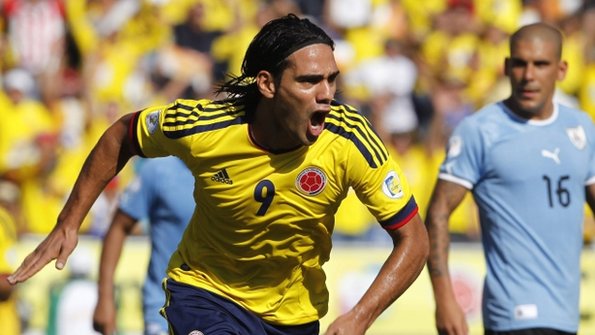
“Gonzalo Ludueña started it and now there’s no stopping it. Gonzalo was fourteen at the time. He played in the youth team at River Plate in Argentina and shared a dormitory with a handful of other players at the club’s residency. One day one of them scored twice in a game against Huracán and was awarded the Man of the Match Award, sponsored by the petrol company Esso whose adverts famously involved a prowling Tiger and whose slogan ran: Put a Tiger in Your Tank.” SI

Superclásico passion reignited as Boca Juniors and River Plate meet again


“The 2004, Observer Sports Monthly published its list of the “50 sporting things you must do before you die”. At number one was attending a ‘superclásico’, the passionate encounter between Argentina’s bitter rivals Boca Juniors and River Plate. The standard of the Argentinian league was declining even then – it has got a lot worse since – but the superclásico remains special. Sunday’s was ninth against fifth between two teams who, in all honesty, aren’t very good and yet el Monumental was packed, seething with noise and colour and passion.” Guardian – Jonathan Wilson

River Plate v Boca Juniors – where has the magic gone?
“The biggest occasion in South American domestic club football was back on Sunday when River Plate met Boca Juniors in a league match for the first time in almost 18 months. The big Buenos Aires derby is followed all over the continent for a number of reasons. One is the historic role played by Argentina in the consolidation of South American football. The British introduced the game to the South Cone. More than anyone else, the Argentines helped the spread of the game northwards. In terms of playing styles and fan culture, much of the continent takes its cue from Argentina.” BBC – Tim Vickery

Chile Boss Bichi Borghi Felling The Heat

“‘Fuera Borghi’ (Borghi out) was the message scrawled onto Chile’s Juan Pinto Durán training complex in Macul after the 3-1 defeat to Ecuador in the World Cup qualifier. Accompanied by ‘Vergüenza nacional’ (national shame) and ‘Ladrones’ (thieves), the message was clear: changes needed to be made as Borghi’s reputation had hit an all-time low amongst fans. The messages appeared after that defeat to Ecuador and before the game against Argentina. La Roja went out against Argentina like a team possessed; hunting down the ball when they didn’t have it and rampant when they did. They moved the ball, down the wings, at electrifying speed, bombarding the Argentina rearguard with crosses.” South American Football

Argentina 3-0 Uruguay: Messi the main man

“Argentina dominated the entire match, but took an hour to get the breakthrough. Alejandro Sabella kept a similar side to the XI that drew in Peru last month, with a couple of Manchester City players replacing a couple of recent Napoli players – Pablo Zabaleta replaced Hugo Campagnaro and Sergio Aguero returned in place of Ezequiel Lavezzi. Oscar Tabarez was without Diego Perez, Alvaro Pereira and Gaston Ramirez, so in came Walter Gargano, Martin Caceres and Alvaro Gonzales. Argentina were superior in every department – although particularly in the final third, thanks to the fluidity, movement and clever combinations of the attackers.” Zonal Marking

Venezuela profit without kicking a ball

“A gap has opened up as South America’s World Cup qualification campaign reaches the halfway stage. Victories on Friday for Argentina, Colombia and Ecuador mean that three teams have pulled away from the pack. But the round had another winner, who did not even take the field on Friday. It was sixth-placed Venezuela’s turn to take a rest, and their position improved while they sat and watched as Uruguay and Chile, the teams above them, both lost. Three rounds ago Chile were first and Uruguay were second. Now they seem to be in free-fall. On Friday all they managed to accomplish was further damage to their goal difference – and things could get still worse for them in Tuesday’s 10th round.” BBC – Tim Vickery

The Beautiful Game – Patrick Symmes


“‘There are two stories,’ a leader of the Rat Stabbers told me. We were filing through police lines toward the cylinder, the stadium of a powerful Buenos Aires soccer team called Racing. Inside, about 60,000 enemy fans waited to crucify us. His name was Jorge Celestre—Georgie Blueskies—but he was explaining the name of his fan club, the Rat Stabbers. They were the diehard supporters of Estudiantes, a pro soccer team southeast of Buenos Aires. The first story was about some medical students—owing to their lab work, ‘rat stabbers’—who founded Estudiantes more than a century ago. It was a nice story about a studious, successful Argentina, a country that started the 20th century with futuristic dreams and progressive ambitions.” Outside Online

The barra bravas: the violent Argentinian gangs controlling football
Saturday 20 August 2011: “Like many of those living in Villa Fiorito, one of Argentina’s most dangerous slums, Jose Mendez takes his shots at glory when he can – like the day five years ago when he slung the shirt of a rival football club over his shoulder and paraded through the streets of his neighbourhood like a returning warrior. Cigarette clamped between his teeth and basketball shirt hanging off his skinny frame, Mendez recounts the fight he waged to win his trophy: the crowded streets after a big match; the other fan putting up a struggle; Mendez, pumped up on chemicals and cheap beer, knocking him down into the street, smashing his face and kicking him until he could get the shirt off his back.” Guardian

Boca Juniors players got off their bus just to fight Tigre fans
April 12 2012: “Tigre beat Boca Juniors 2-1 with the help of an 88th-minute own goal from Boca’s Rolando Schiavi. After the match, when Boca got on their team bus to head home, Tigre fans decided to give them a taunting send-off because that’s what horrible people do. The Boca Juniors players didn’t appreciate this, but instead of telling their driver to peel out and disregard anyone in the way, they made the poor decision to get off the bus and start fighting the Tigre fans. Looking like a swarm of bumblebees, the Boca players attacked while police tried to break up the two sides. Rubber bullets were fired in the air and the players were eventually shoved back into the bus, but there were no winners here. Especially among the side fighting in matching outfits.” Dirty Tackle

Why Cruyff Boycotted Argentina 78

“The world cup of Argentina 78 has left a Proustian imprint on my memory. It was the first tournament I had watched in color. My mother had managed to scrape up the deposit on a color TV to replace the archaic black & white set and a whole new world was opened up to me. The color TV was rented to us by a company called Telebank. The TV ran on a meter that you fed with fifty pence pieces and at the end of the month the collector would call and take out the hire fee. Any amount over the hire fee was refunded to you, so in a strange way, you were actually rewarded by the amount of hours of television you watched.” Sabotage Times

Juan Roman Riquelme: A Quixotic Enigma

“Julio Falcioni was furious; his team disconsolate. The coach scanned his depleted dressing room, and found the one he was looking for: ‘You,’ he bellowed. ‘You’re not the coach, I am!’ His victim was shocked. Juan Roman Riquelme is a man defined by ambiguity, his face hard to read at the best of times, but Boca Juniors’ enigmatic and mercurial talisman was quite clearly stunned – and then just bloody angry.” In Bed With Maradina

Higher hopes for South America’s World Cup players


“World Cup qualification in Europe has a few good games along with plenty of mismatches. In South America, meanwhile, every game in the long campaign is resonant with rivalry and relevance. The best development in the history of the continent’s national teams was the birth of the Copa America in 1916 and its frequent, at times annual, staging in the early years. It did much to spread interest in the game and raise standards.” BBC – Tim Vickery

Beaten Uruguay have no time to sulk


“In the context of a league campaign, a resounding win or a heavy defeat never ends at the final whistle. More important than the points won or lost can be the team’s reaction. Can it rally in the face of adversity, or guard against excessive euphoria? This is especially true in South America’s marathon 2014 Fifa World Cup qualifiers, when two rounds are played together, and a team can play at one end of the continent on Friday and the other the following Tuesday.” BBC – Tim Vickery

West Germany v Austria, 1978: Unravelling the “Shame of Córdoba”

“Germany versus Austria, and a match that would find its place in history and footballing folklore. In Austria it would be known as Der Wunder von Córdoba or ‘the miracle of Córdoba’. In Germany meanwhile it would become known as Der Schmach von Córdoba, or ‘the disgrace of Córdoba’. While one could understand the reaction of the Austrians to what was ultimately a meaningless match – they had not defeated the Nationalmannschaft since 1931, after all – I have always wondered why it was seen as such a big deal in Germany. OK, Helmut Schön’s side had given their little Southern brothers a rare chance to engage in hysterical hyperbole, but in truth the 3-2 defeat didn’t really amount to much in the end.” Bundesliga Fanatic

Sabella meshes Argentina’s abundance of attacking talent

“It is possible to have too much of a good thing. Lionel Messi, Sergio Aguero, Gonzalo Higuain, Carlos Tevez, Angel Di Maria, Javier Pastore, Ezequiel Lavezzi … no other nation comes even remotely close to Argentina in terms of attacking and creative talent. The problem has been trying to fit as many of them as possible into the same squad. It did for Diego Maradona and it did for Sergio Batista.” SI

Uruguay have cause for World Cup concern


“World Cup qualification resumes in South America this Friday, with a question mark hanging over the team which have been the continent’s form side over the past two years. Might the London Olympics mark an unwelcome turning point for Uruguay? On the face of it there should be no cause for alarm. World Cup semi-finalists in 2010, Copa America champions last year, Uruguay’s senior side have gone 18 games without defeat. They have made a solid start to the 2014 qualifiers. Leaders Chile sit out Friday’s round, where a win for Uruguay would take them to the top of the table.” BBC – Tim Vickery

Sabella meshes Argentina’s abundance of attacking talent
“It is possible to have too much of a good thing. Lionel Messi, Sergio Aguero, Gonzalo Higuain, Carlos Tevez, Angel Di Maria, Javier Pastore, Ezequiel Lavezzi … no other nation comes even remotely close to Argentina in terms of attacking and creative talent. The problem has been trying to fit as many of them as possible into the same squad. It did for Diego Maradona and it did for Sergio Batista.” SI – Jonathan Wilson

Trouble atop the table, hope at the bottom
“With Euro 2012 followed by the season’s big kickoff and the excitement of the transfer window, only now is Europe turning its attention to the need to qualify for the next World Cup. South America, meanwhile, is in a very different situation. Sights are already firmly trained on winning a place in Brazil 2014. The continent’s marathon qualification tournament is a third of the way through. This Friday, action will get under way in the second year of a three-year campaign. So far the soccer has lived up to its billing as the most competitive World Cup qualifiers on the planet.” ESPN

Aguero & Messi – Argentina’s perfect partners

“Manchester City coach Roberto Mancini was frustrated when his striker Sergio Aguero was called up by Argentina for a friendly against Germany two weeks ago. And he is exasperated to see Aguero’s name in his country’s squad for the coming World Cup qualifiers. The trip to Germany came just a few days before City began their defence of the Premier League title. And Aguero’s injury means that he has limited chances of being fit in time to play for his country next month. A journey across the Atlantic is quite possibly not an ideal part of the player’s recovery. Mancini’s position, then, is totally understandable. But so too is that of Argentina boss Alejandro Sabella.” BBC – Tim Vickery

Maradona Collage By the Wild Bunch

“One of the best resources on the internet, The Wild Bunch website is a part French, part English language site which covers global football with a real retro slant. Featuring downloadable movies and an *huge* amount of great imagery, it’s unlikely you’ll not find something that raises a smile. The latest project for TWB is a hugely impressive collage of photographs featuring one Diego Maradona at various stages in his career. You’ll need to zoom in to get the full effect, but do check it out and make sure you bookmark The Wild Bunch.” In Bed With Maradona

The messy history of Olympic football has robbed it of a coherent narrative


“Part of the allure of the World Cup is that, despite changes to format, entrants, moments in early history when certain European countries refused to send teams to South America one year and vice versa the next, the tournament has managed to maintain a linear quality stemming from a basic competitive consistency. One can trace, for example, the narrative thread from Brazil’s 2002 World Cup win back to its lacklustre turn in 1994 when Baggio missed, through to its peak in 1970 when Pele hosted the Jules Rimet trophy, all the way to 1950 when Ghiggia scored Uruguay’s winning goal in the 79th minute leaving the Maracana in deathly silence. There are recurring heroes and villains, classic semifinals, great teams that never won (the Netherlands, Hungary), touchstone moments that changed the direction of the sport. Even the most casual soccer person will be able to recount in a reasonably dependable chronology.” The Score

Can Uruguay roll back the years at London 2012?
“The Paris Olympics of 1924 are best remembered in Britain for providing the backdrop to ‘Chariots of Fire.’ But for all the heroism of Messrs Liddell and Abrahams, something happened there with far greater consequences – the birth of modern football. No one knew much about Uruguay as they sailed their way across the Atlantic to take part in the football tournament. But they strolled to the gold medal, and did it with a balletic, artistic style of play which captivated spectators and set off a fever for the game. Four years later, to prove it was no fluke, Uruguay won the gold medal at the Amsterdam Olympics. Argentina came across as well, and they took the silver.” BBC – Tim Vickery

Strange things happen at a football Olympics – Simon Kuper
“In 1996, the Nigerian football team arrived at the Atlanta Olympics in their usual financial chaos. They stayed first in a college dormitory, later in a cheap motel. Most days they slept late, and then went for brunch at a Chinese restaurant. Their Dutch coach, Jo Bonfrere (known by Nigerian custom as ‘Bonfrere Jo’) paid for the meals out of his own pocket. On the field the Nigerians attacked frantically and won gold – the first African nation ever to do so in the football Olympics. Nwankwo Kanu, their ‘Lucky Skipper’, said of his last-gasp equaliser in the semi-final against Brazil (after Nigeria had been 3-1 down): ‘That goal was the most beautiful moment of my life.’” MIO Stadium

Olympic Football – The Real Thing?
“BBC football commentator Jonathan Pearce got through last Friday evening without once name-checking his current love…Cristiano bloody Ronaldo. He also avoided one word you would have thought key to his commentary on a football match between Great Britain and Brazil. Britain. In an age where succinct branding is so important (and Google “Bill Hicks advertising marketing” for my “view” on such things), “Team GB” is about as much detail as the modern sports fan is deemed capable of understanding. So Stuart Pearce’s hastily-flung together team of B-list England stars and most of the best of the Welsh were “Team GB” for the night. Maybe if they had the ball long enough to force Pearce to use two descriptions…” twohundredpercent
Continental shift: why the Olympics mean so much to South America

“It is fair to say that, historically, South America has not made a huge impact on the Olympics. While it is true Brazil is working hard to broaden its sporting base, of the 20 gold medals the country has won, over half have come in the last four Games. Argentina has picked up 17 golds, but its glory days are long gone. In the late 1940s and early 1950s, the Peron government invested heavily in a wide range of sports and leading athletes were closely identified with the regime, but all that ended when Peron was deposed in 1955. Since then, Argentina has claimed just four gold medals – two of them in the last two football tournaments.” World Soccer – Tim Vickery

South Americans ready to stop Spanish stroll

“Spain’s win at Euro 2012 – their third consecutive major tournament win – has sparked off all kinds of comparisons in the bar room debate over the best international team of all time. Of course, such conversations have a strong subjective component, but it is hard to formulate arguments against the facts – and a fourth consecutive trophy will surely tip the balance in Spain’s favour. But title number four looks set to be the hardest of the lot. It entails doing what no European team has ever done – winning the World Cup on South American soil when the world come to Brazil in 2014.” BBC – Tim Vickery

Corinthians finally break their duck as Emerson sees off Boca Juniors


“By the end, Boca Juniors had been so comprehensively beaten that, as the South American football expert Rupert Fryer joked, they could not even raise themselves for the traditional post-Copa Libertadores final punch-up. Corinthians won 2-0 after a 1-1 draw in the first leg but the gulf between the sides was so vast, the chances of a comeback so slight, that it may as well have been quadruple that. And so, in their centenary year, seven months after the death of Sócrates, the most iconic player in their history, Corinthians won the Copa Libertadores for the first time. No more will there be cracks about ‘the 100-year-old virgin’.” Guardian – Jonathan Wilson

Corinthian values
“The 2012 Copa Libertadores final ended up being fought out between two of South America’s biggest clubs. Boca Juniors, one of the competition’s most successful sides, who have six titles and are only one behind all-time record holders Independiente, and Corinthians, a club that despite their grand stature were hoping to win their first ever Copa. After a hard-fought couple of legs, it was Corinthians who came out on top, to become the 23rd different club to win the trophy.” ESPN