Category Archives: World Cup

World Cup Tales: Did Il Duce Fix It? Italy, 1934

“When Joao Havelange claimed, in 2008, that the 1966 and 1974 World Cups were fixed, his claims were largely laughed out of court. Depending on who you listened to, he was either deliberately misconstruing events or demonstrating little more than the first signs of senility. What was, however, curious about his comments was what he missed out. No mention was made of the 1978 tournament, which many have pointed to as being a tournament of less than sturdy moral fibre (and was, coincidentally, the first held under Havelange’s tutelage) and, even more curiously, none was made of the second World Cup of all, which was held in the Italy of Benito Mussolini in 1934.” (twohundredpercent)

World Cup Moments


Johan Does the Cruyff Turn in 1974
“World Cups aren’t just about who lifts the trophy at the end. They’re also about the incredible moments that are shared by a global audience. In this series of feature posts, we focus in on such moments so football fans everywhere can relive (or maybe even learn about) the events of World Cups past. This is a menu of all our World Cup Moments feature posts. Simply click the title to read the full post.” (World Cup Blog)

World Cup Tales: Reflections Upon England In Italy, 1990


“The concept of England having a high level of expectation at the time of a World Cup finals is a comparatively recent one. As recently as 1990, most adults could remember their two successive failures to qualify for the whole event and, once there, they only seldom lit the tournament up. In 1982, a good performance in the opening match against France was followed by an almost linear deterioration in performance, which ended in their elimination in the second group round after two goalless draws against West Germany and Spain. Much was made of the fact that they were eliminated, due to the peculiar tournament structure, unbeaten, but they only scored one goal in their final three matches. Four years later, Diego Maradona’s various antics overshadowed a slow start that saw them lose to Portugal and draw with Morocco before Gary Lineker’s goals breathed some life into them.” (twohundredpercent)

Video Of The Week: G’ole, The Official Film Of The 1982 World Cup


“The Official World Cup Film is a film genre in its own right. It still exists, although FIFA tends to prefer to peddle goal compilations in the market place these days and its powers are now much diminished. A quarter of a century, though, they still mattered. “G’Olé”, the official film of the 1982 World Cup finals, is a classic of the genre. Narrated by Sean Connery, it is in turn fascinating, excrutiating and pretentious beyond belief, to the extent of having a soundtrack by… Rick Wakeman. When it hits its stride, though, it is stunning. The slow-motion footage of Marco Tardelli losing his mind is quite a thing to behold.” (twohundredpercent)

First XI: World Cup celebrations


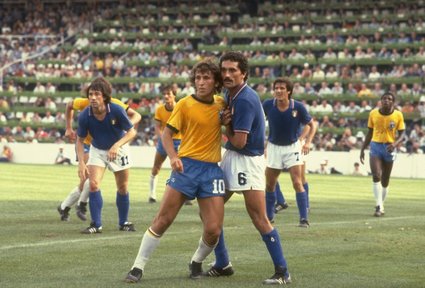
“Falcao: Brazil vs. Italy (1982). From the outside, Falcao was seen very much as the quiet man of the Brazilian side that travelled to Spain 1982. His equaliser in a losing cause against a Paolo Rossi-inspired Italy in the semi-final tie saw him cut inside onto his left foot, dragging three Italian defenders away from the goal and fire a fine shot into the net before charging towards the bench. With veins bulging from his forearms, he evaded Luizinho before doing his best impression of a kangaroo in front of the fans.” (ESPN), (Grand Inquisitor)

Gerd Muller: Der Bomber

“One of the most natural finishers ever to have played the game, Gerd Muller was an accomplished international poacher whose prolific World Cup record for West Germany is a testament to his striking prowess. Der Bomber – as he is affectionately known by the German public – netted an incredible 14 goals in just 12 World Cup games, culminating in the winning strike in the 1974 final.” (ESPN)

World Cup Tales: When The World Cup Legitimised A Dictatorship – Argentina, 1978


Camouflage Comics
“There have been, over the last eighty years or so, several questionable decisions made regarding the hosting of World Cup tournaments. None, however, have been met with quite the fury that met the hosting of the 1978 World Cup finals in Argentina. The decision made to award the 1978 finals to Argentina was made in July of 1966, but after a military coup in March 1976 left the country in the hands of a military dictatorship, there were calls for the tournament to be moved elsewhere in a clash of ideologies that pitted the liberal left of popular opinion in Western Europe against the more right-wing politics of FIFA.” (twohundredpercent)

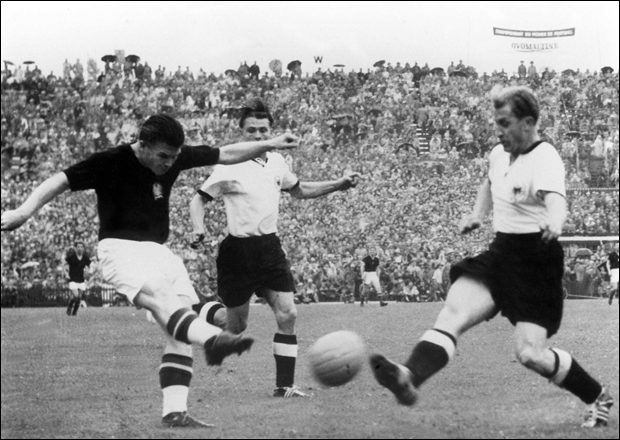
World Cup Tales – Magyarország! The Greatest Team Never To Win A World Cup? Hungary, 1954

“The story of football in the years immediately following the end of the Second World War often seemed to be following a pre-prepared script, but it was a script that, at the World Cup finals at least, the competing nations seemed unwilling to follow. In 1950, the tournament should have been a procession for the host nation, Brazil, but in the final minutes of the final match, Uruguay silenced the Maracana. And four years later, one of the greatest teams in the history of the game would come unstuck in similar circumstances. They were the ‘Golden Team’ – the Hungarian team of Ferenc Puskas, Nándor Hidegkuti and József Bozsik. This Hungarian team was, tactically, one of the most important in the history of the game, and it only lost one match in four years. It just so happened, however, that the match that they did lose was the most important of all.” (twohundredpercent)

Video Of The Week: Argentina vs Netherlands – The 1978 World Cup Final

“This week’s Video Of The Week is a little late due to other commitments, but it is an absolute belter – the 1978 World Cup final between Argentina and the Netherlands. There will be more on here about the Netherlands at the 1978 World Cup finals over the weekend, and this is something of a taster for it. We get to see the Argentinian protests over Rene Van De Kerkhof’s lightweight cast before the match, then the entire match itself, including extra-time. The Dutch team, often overlooked in comparison with their 1974 team, came very close to winning the match, as you will see.” (twohundredpercent)

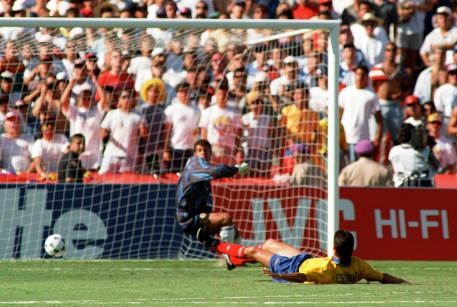
World Cup Tales: The Murder Of A Footballer, 1994


“In amongst the razzamatazz of the 1994 World Cup, which kicked off with Diana Ross putting a penalty kick wide of the goal during the opening ceremony and finished with Roberto Baggio putting one over in a penalty shoot-out that seemed pre-ordained to follow a desperately bad final between Italy and Brazil, the darkest of football’s dark hearts showed its face. It felt as if a parallel universe – a feudal world in which criminality rules and considerations of humanity take a back seat – had momentarily become entwined with ours, and it led to the death of a sportsman, quite possibly for the seemingly absurd reason that he made a mistake under highly pressurised circumstances that cost some very violent and very powerful people a lot of money.” (twohundredpercent)

World Cup Moments: Gheorghe Hagi Scores From There, ‘94.


Gheorghe Hagi, ‘Maradona of the Carpathians’
“Back at the ‘94 World Cup, Romania’s Gheorge Hagi was the bee’s knees. He was so good he was allowed to join that rarified group: players who’ve sidled up on each flank of El Clasico. Good throughout the tournament, but there was a moment, one singular moment, which reigns in the memories of all: that goal, from there.” (World Cup Blog)

World Cup Tales: The Story Of The First World Cup, 1930

“It should come as no great surprise to any seasoned FIFA watchers that the entire history of the organisation has been about its politicking, and still less that this has frequently extended itself into the hosting of its showpiece tournament, the World Cup. When we go back as far as to look at the formation of the organisation, we see one that was at its very formation unilateralist and was riven from its very early days with divisions between nations from different parts of the world. So, how did FIFA and the World Cup come to be, and how was it that an organisation that was largely based in Europe came to hold the first major tournament under its own complete control in a country of just three million people in South America?” (twohundredpercent)

World Cup Tales – Overcoming The Great Humiliation: Brazil, 1958

“As the second favourites to win the 2010 World Cup after Spain, Brazil are used to the pressure that comes with the eyes of the world being upon them. No other country on earth’s identity is so closely associated with football, yet much of the mythology that surrounds the Brazilian national team stems their failure to win the tournament that they hosted in 1950. It was this national trauma that was to provide the inspiration for what would become the most successful international team on earth, both stylistically and tactically. As such, the story of how Brazil won the 1958 World Cup began eight years earlier, in Rio de Janeiro.” (twohundredpercent)

The Dreaded Penalty Shootout


Roberto Baggio
“The dreaded penalty shootout. After 120 minutes of exhausting play finishing in a draw, 10 players are chosen to step up to the penalty spot and try to beat the goalkeeper from 12 yards. It sounds simple, but it isn’t. Each player is under immense pressure. The world is watching him kick the ball. The weight of a nation is on his shoulders. And because of this, sometimes the best players miss penalty kicks. It’s all about staying calm under pressure.” (World Cup Blog)

World Cup Tales: The Battle Of Santiago, 1962

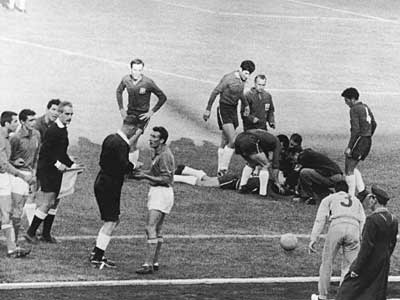
“We hear a lot about the decline and fall of western civilization these days, but moral outrage at the behaviour of footballers is nothing new and, indeed, players at the World Cup finals this summer will have to go a long way to outdo the most serious incidents of player-on-player violence in the history of the tournament, many of which considerably predate the coming of colour television, to say the least. In this respect, the group match between Chile and Italy at the 1962 World Cup finals probably remains the most infamous example of a World Cup match that became something else. It wasn’t the first – three players, for example, were sent off during a quarter-final match between Hungary and Brazil at the 1954 tournament in Switzerland – but, even now, it sets the high water mark for outright violence on the pitch during what is supposed to be football’s showpiece tournament.” (twohundredpercent)

World Cup Moments: Maradona & Saeed Owairan Do Solos, ‘86 & ‘94

“That goal? Surely not. Many forget that Maradona didn’t take one off after his dazzling heroics and choice words from the English in ‘86. In between the quarterfinal of legend against England and final against West Germany, there was a semifinal against Belgium. Sure, Belgium has scraped through twice by the very skin of their teeth and Maradona’s Argentina was Maradona’s Argentina, but one doesn’t make a World Cup semifinal entirely undeserved. (We know, England.)” (World Cup Blog)

Video Of The Week: Brazil vs Uruguay, 1970 World Cup Semi-Final


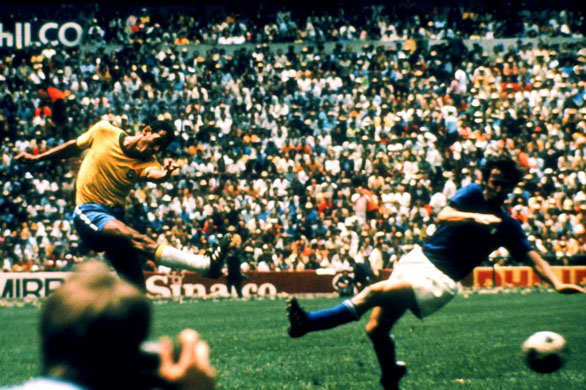
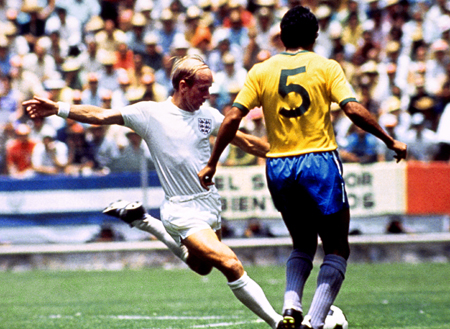
“This week’s Video Of The Week takes us back forty years to one of the greatest matches in the history of the competition – the semi-final match between Brazil and Uruguay from Guadalajara in 1970. In some respects, this was the match that started to cement reputation of this Brazil team as the greatest of all time. They had blown hot and cold in their previous matches, outstanding against Peru and Czechoslovakia but less than inspired against England and Romania, but set up against their South American rivals with a place in the final at the Azteca Stadium against Italy at stake, the watching audience finally got to see the very, very best of the Brazilians, and against top class opposition. There was a crowd of over 50,000 at the Estadio Jalisco to watch it and your commentary team are ITV’s Gerald Sinstadt and Bobby Moore. As the match is from YouTube, it is divided into ten minute sections, as ever.” (twohundredpercent)

1970: The definitive World Cup…
“Which is your World Cup? One of my pet theories is that we all have a mundial that, as it unfolds, feels less like a football tournament than a rite of passage, introducing us to idols, emotions and intrigue we will remember for the rest of our lives. Mine was 1970. I was nine then.” (FourFourTwo)

World Cup Tales: When The Two Germanies Collided, 1974

“The Cold War spread insiduously into every aspect of life between the end of the second world war and the end of the 1980s, and sport was no exception to this rule, whether it was the Soviets and Americans boycotting each others’ Olympic Games or Bobby Fischer facing off against Boris Spassky at chess in Rekjavik in 1972. Football was no exception to this rule, and perhaps the definitive meeting of captialism and communism on the football pitch came at the 1974 World Cup finals, when West Germany played East Germany in the group stage of the competition.” (twohundredpercent)

Real Films Meet Reel Football


“Abas Suan’s life straddles two worlds that seem inexorably locked in eternal conflict. Suan is an Arab citizen of the state of Israel, one of 1.4 million Muslim citizens of the Jewish state. Suan is a hero to the people who support his hometown club team, Bnei Sakhnin. Suan is also a beguiling figure among Israelis — an Arab who played on the country’s national soccer team and scored a crucial goal in a World Cup qualifying match against Ireland in the country’s abortive attempt to advance to the 2006 World Cup in Germany.” (NYT)

23 for 2010 – Holland: World Cup squad analysis Pt.1 (Keepers & Defenders)

“Much has changed in the Dutch national team since Euro 2008. Marco van Basten is gone as national coach and after a failed stint at Ajax all but forgotten. His successor, Bert van Marwijk, is probably best known for managing Feyenoord (with whom he won the UEFA Cup in 2002) and Borussia Dortmund, and is a more conservative manager than Van Basten in that he is far less inclined to experiment with tactical formations and his selection of players.” (Just Football: Pt. 1 – Keepers & Defenders), (Pt.2 – Midfielders & Strikers)

Italy finally going to the World Cup without a #10 headache

“Italy has always been known to produce some of the best creative players in the world. We’re talking about the #10 players, the players that can change games at any instant, the players that are worth the whole ticket price. In Italy, this player is called the “fantasista” (literally one that creates fantasy). Because of Italy’s traditional defensive mindset, years ago there was only room for one creative player on the field, and with usually two of these players on the roster, the whole debate would commence as to who would start and who would ride the pine. There have been many of these debates throughout the years.” (World Cup Blog)

1991-92 FA Cup Semi-Final, Portsmouth v Liverpool: Video Flashback

“In the build-up to the FA Cup Final today between Portsmouth and Chelsea, I thought it’d be interesting to enter the time machine and to go back to 1992 to watch the first ten minutes of the television broadcast of Portsmouth versus Liverpool in the FA Cup Semi-Final from Arsenal’s Highbury Stadium.” (EPL Talk)

USA World Cup History (Part I: 1930 – 1950)


USA vs Italy 2006
“If you’re not too familiar with the USA soccer team, then you’d be forgiven for thinking its World Cup history is all fairly recent. If so, then you’re in for a surprise. Though there’s a gigantic 40 year gap smack bang in the middle of this story, the USA’s World Cup history begins at exactly the same time as the tournament itself, as they were one of the teams competing in the inaugural 1930 World Cup.” (World Cup Blog), (Part II: 1990 – 2006)

World Cup Tales: Colombia 1986 – The World Cup That Never Was

“The upcoming World Cup will the first to take place in the entire continent of Africa but there are several countries that have already held the tournament more that once, such as Italy, France and Germany. The first team to earn the honour of hosting the World Cup finals twice, however, was Mexico and the story of how this came to pass is as much a story of the politics of FIFA as it is of the qualities of Mexico when it comes to hosting the finals of the tournament. The truth of the matter is that the hosts of the 1986 World Cup finals should have been Colombia.” (twohundredpercent)

Memories Of The UEFA Cup

“When I was growing up in the 1970s, it was always the UEFA Cup, of the three European club competitions, which caught my imagination. This was mainly, but not exclusively, because my team at the time, Tottenham, were winners, beaten semi-finalists and beaten finalists during my first three years following the game. It was never properly explained to me why the unlamented Cup Winners’ Cup remained officially regarded as Europe’s second tournament behind the old-fashioned Champions’ Cup (the historical reasons I’ll touch on below). It wasn’t just in England that some dippy teams won the Cup.” (twohundredpercent)

On Zidane, Aging, and the World Cup

“I watched Zidane: A 21st Century Portrait again over the weekend—this time on disc, so I had the chance to watch all the added features, including an interview with Zidane himself. If you missed it when it was showing briefly a year ago or so at Anthology Film Archives and the Brooklyn Academy of Music, you can catch it again at BAM in early June in the run-up to this year’s Cup. It’s more than worth seeing—it’s riveting soccer verité, focused completely on one extraordinarily compelling character: Zinedine Zidane. Multiple cameras follow him in real time through a La Liga match with Real Madrid against Villareal in April 2005.” (Vanity Fair)

Video Of The Week: The World Cup – A Captain’s Tale

“We’ve got a bit of a change from the normal for this week’s Video Of The Week, with a chance to see the rare drama, ‘The World Cup – A Captain’s Tale’. Produced by Tyne-Tees Television for ITV in 1982, it tells the story of the West Auckland FC team that travelled to Turin for the Sir Thomas Lipton Trophy in 1909 and 1911 – the tournament that became known as the first World Cup. It’s a well known story, but this is a well-crafted dramatisation of it and features a cast with some very well-known names in it, including Tim Healy, Nigel Hawthorne, Dennis Waterman and Richard Griffiths.” (twohundredpercent)

World Cup Moments: The Wasserschlacht, West Germany v Poland, 1974

“Just because it’s the World Cup doesn’t mean everything about it need be of World Cup quality. Take the pitch in the 1974 semifinal between hosts West Germany and Poland, for example – it looked like it belonged hosting the 400m butterfly at the Summer Olympics rather than a World Cup game. And that’s precisely why it became known as the Wasserschlacht, German for water fight.” (World Cup Blog)

’94 squad put U.S. soccer on the map

“The summer of 1994 will always be remembered as a defining moment in the history of American soccer. The World Cup brought the game’s international talent to a curious nation’s doorstep in the form of Baggio, Batistuta and Stoichkov as legions of budding American soccer fans began to learn what soccer at its highest level was all about.” (ESPN)

World Cup Moments: Eusebio In ‘66


Eusebio
“In doing the Portuguese history I popped across this video of Eusebio in his prime – the prime of his prime, even – running rampant all over England in ‘66, and it needs a spotlight. In a word: peerless. Nine goals led the tournament and earned him a wax statue at Madame Tussaud’s tells part of the story, but the gap of quality between he and those around him – Pele was quite injured – was simply staggering: bursting by defenders as though they weren’t really there; running full lengths of the half before stopping on a dime and cutting into the box; hitting balls with the ferocity of an angry jackhammer.” (World Cup Blog)

French artistry prevails in the Guadalajara heat

“France entered the 1986 World Cup in Mexico as newly crowned European Champions having annexed the title on home soil two years earlier. Michel Platini inspired his country to victory in that tournament and was still the heartbeat of a side desperate to bounce back from their harrowing penalty shoot-out loss to West Germany at Spain ‘82. France also included ace defender Manuel Amoros, Alain Giresse and renowned shot-stopper Joel Bats in their 1986 squad.” (Danger Here)

England Wary of a New American Revolution

“When England drew the United States, Slovenia and Algeria at the coming World Cup, The Sun tabloid ran a headline that said ‘EASY,’ and added, ‘best English group since the Beatles.’ The British actor Hugh Grant then appeared in New York on ‘The Daily Show’ and told the host, Jon Stewart: ‘I’m always surprised you have a male football team. It’s a female game here.’ As inventors of the sport, the British can be condescending and uninformed about the game in the United States, viewing American soccer with the same smugness that the United States might view English baseball. Not everyone is so dismissive.” (NYT)

Video Of The Week: Match Of The Eighties – 1980/81

“This week’s Video Of The Week may be a couple of days late, but it’s well worth the wait – it’s the first episode of the BBC’s ‘Match Of The Eighties’ series. ‘Match Of The Eighties’, hosted by Danny Baker, was a six-part series that first aired in 1997. It follows a fairly simple theme, telling the story of each of the first six seasons of the 1980s (the series stops at the point at which the BBC lost television rights to show Football League matches). There’s nothing too complex going on here, but the sheer volume of the BBC’s football archive carries it along.” (twohundredpercent)

Italy World Cup Team History


World Cup 1982
“We have trudged through to the final part, a portion which is vaguely familiar to many in the peninsula – some good, some bad. In fact, they just about ran the gamut of Italian emotions from ‘98 to ‘06: disappointment, anger and ecstasy. It all may change in June, but as of right now, this long labor of love that is Italian football history has an awfully nice bookend: they won their first and they won the last.” (World Cup Blog – Pt. I: 1934 & 1938), (Pt. II: 1950-1974), (Pt III: 1978 – 1994), (Pt. IV: 1998-2006).

World Cup Legends #1: Just Fontaine


Just Fontaine
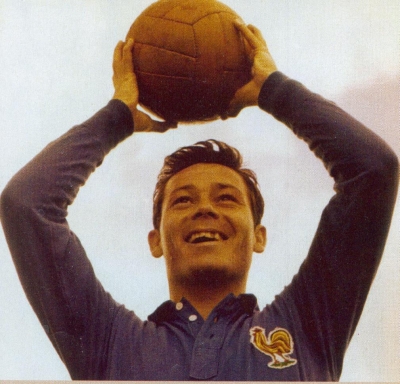
“Despite the superstars that have graced the World Cup over the decades, there is one record that may never be beaten by any player ever again. Only 3 times has a player scored double figures in a World Cup tournament, once in 1954, Sandor Kocsis scored 11, in 1970 the legendary Gerd Muller scored 10 goals. Yet one man surpassed both of these incredible efforts when he scored 13 goals at the 1958 World Cup, French legend, Just Fontaine.” (EPL Talk)

One Style Does Not Fit All: Deconstructing A Universal Football Style

“Africa has some of the best footballers in the world dominating some of the world’s best leagues. Yet African nations tend to struggle when their players come together for internationals. What gives? The easy answer to this conundrum almost always begins and ends with what has become a familiar refrain; African football lacks discipline. But if that’s the case, someone needs to explain why African teams have dominated for years at the youth level. Consistently beating the best footballing nations must require a certain level of organization and discipline even at the youth level, no? Surely the answer to this age old problem is more complex than discipline.” (Nutmeg Radio)

Quality time (1954 style)

“Ay ay all, and fit like theday? Today is a national holiday in The Netherlands, meaning I’ve got to spend quality time with the family, which as anyone with kids and a day off from work will know translates approximately as ‘get awa fae thon computer for once!’. So probably no updates today and probably no Four to Follow either; take a look at the piece we did yesterday for something approaching an SFL preview for this weekend.” (Inside Left)

Lev Yashin: Russian Revolutionary

“Soviet Union goalkeeper Lev Yashin was a true football revolutionary, who transformed the way people viewed his position and became a shining example to future generations of stoppers. Oozing charisma and talent in abundance, Yashin earned iconic status for pioneering a new approach to playing between the posts and is regularly attributed the title of ‘greatest goalkeeper to have played the game’.” (ESPN)

England World Cup History


Scientist – Wins the World Cup (1982)
“Before I start typing this, and before you start reading, I should ‘fess up that I’m an England fan. Hopefully I’m not too biased and can write a post about the World Cup history of England in an objective manner. Even when discussing the events of 1966 and 1986. But I thought it was only fair to warn you before we get started. The England football team is the joint oldest in the world, with he first international match being between England and Scotland in 1870. So England should have loads of World Cups, right? Unfortunately, England didn’t play at their first World Cup until 1950 Why? Mostly arrogance. England left FIFA in 1928 (two years before the first World Cup) and didn’t rejoin until 1948. So the Three Lions managed to miss the first three World Cup tournaments, which means we pick up the story in 1950.” (World Cup Blog – Part I, 1950 – 1970)), (World Cup Blog – Part II, 1982 – 2006)

Video: Noel Gallagher on His World Cup Memories

“English bands have been as important in my life as football has been. Ever since a friend of mine introduced me to The Clash some 15 years ago, the plethora of bands to emerge from the UK that have affected my intellect and overall well being have been staggering. Minus godfathers like the Beatles and the Rolling Stones, which, seemingly, everyone grew up with, bands like the Clash, the Smiths, the Jam, Joy Division, the Stone Roses, Radiohead, Oasis, Elbow and the Arctic Monkeys, to name just a few, are bands that are immensely important to me on a personal level.” (EPL Talk)

World Cup Moments: Zidane’s Other World Cup Final Headers


Zinedine Zidane
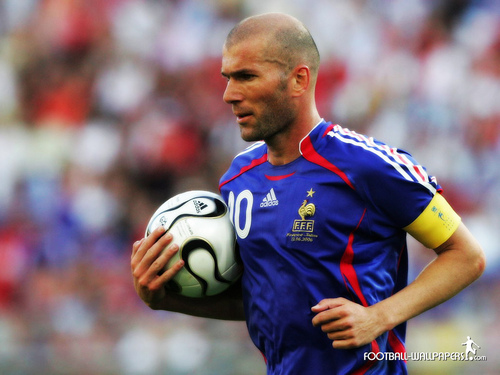
“For better or worse (probably worse) the one thing most people know about Zinedine Zidane is that he headbutted Marco Materazzi in the 2006 World Cup final. But when we asked for your favourite World Cup moments it was Zidane’s other World Cup final appearance that got the most mentions, and what Zizou did with his head in 1998.” (World Cup Blog)

WPS – Why I Love The Women’s Game

“Closed-minded pundits point to one simple moment, one single article of clothing, to represent the rise of the Women’s game in the US: the Chastain Sports Bra. This moment encapsulates the twisted history of women’s sports – the double standards and the fleeting big media attention. In a word, I hate and love this moment. As do many WPS fans.” (futfanatico)

Is the sweeper set for a return to prominence?


Matthias Sammer, a classic sweeper
“Jonathan Wilson recently wrote in his excellent ‘The Question’ series about the possibility of the return of the sweeper to football. The sweeper prospered as the ’spare man’ in a three-man central defence up against a two-man attack, so now we have two-man central defences up against one-man attacks, should one centre-back not become a sweeper? The idea is music to the ears of anyone who fondly remembers Euro 96. The player of the tournament was Matthias Sammer, the sweeper in the German 3-4-1-2 system that went onto win the tournament. As well as being the most important player in defence, clearing up behind the two markers, he also had license to go forward and launch attacks, and found himself scoring (in open play) on more than one occasion.” (Zonal Marking)

Neymar and Ganso the crown jewels of Santos’ new generation

“On the same day the Titanic struck that fatal iceberg in 1912, a club was founded that would raise the profile of Brazilian soccer. All around the world Santos are almost certainly the team from Brazil that most people have heard of. This is a remarkable achievement for a club representing a relatively small city. Santos is a port with a population under 500,000, an hour’s drive away from sprawling Sao Paulo, South America’s biggest city. But the seaside club have often punched well above its weight, getting the best of metropolitan rivals Corinthians, Palmeiras and Sao Paulo, and often anyone else who stood in its path as well.” (SI – Tim Vickery)

Milan’s No. 10 on the Champions League Semis, Messi and Kaka

“In his regular discussion with New York Times readers, Clarence Seedorf discusses the UEFA Champions League semifinals, some of the brightest stars of the international game, and whether or not he thinks doping is a major problem in international soccer. Read the AC Milan midfielder’s responses post your comments below.” (NYT)

Could personal technology stop a winning World Cup squad spirit?

“I have been back in England for a quick visit and I was struck by an outburst that Hull boss Iain Dowie aimed at his squad. ‘Sometimes the players have to forget about the iPods,’ he said. ‘They need to think about what really matters.’ He went on to admit: ‘I’m not a big fan of these big earphones on the way to games,’ and that ‘my thing with the iPod generation is that when they leave the ground and go away to their closeted little lives they shouldn’t forget what’s got them where they are and what impact they can have.’ It is, of course, the complaint of a member of one generation about the desocialising effect of technology on the next.” (BBC – Tim Vickery)

England’s chances of World Cup glory


Cesc Fàbregas, football icon
“When we began researching what would become our book Why England Lose & Other Curious Football Phenomena Explained, we decided not to believe a word that anyone said about the game. Instead we would test its shibboleths against data. It was about time, too. For decades, football had escaped the Enlightenment. Clubs are mostly run by people who ignore data and do what they do because they have always done it that way. These people used to ‘know’ that black players ‘lacked bottle’, and they would therefore overpay for mediocre white players. Today, they discriminate against black managers, buy the wrong players and then let those players take penalties the wrong way.” (FI – Simon Kuper and Stefan Szymanski)

Stoichkov: Bulgaria’s blessing


“There are some World Cup legends that made an impact in many different tournaments. Some only needed one to elevate themselves to a similar status and Bulgaria’s Hristo Stoichkov is one of them. Stoichkov is now viewed in the same breath as Georgi Asparuhov in his homeland and few have come close to emulating his achievements since – with Manchester United’s Dimitar Berbatov the closest of the current breed so far.” (ESPN)

First XI: World Cup defenders

“Following on from last week’s First XI goalkeepers, we have our selection of the top World Cup defenders. While Europeans – and particularly Italians – dominate the list, it’s worth remembering the contribution of South Americans to the art of defence, with the likes of Chile’s Elias Figueroa and Uruguayan Jose Santamaria missing out on the list but having made their mark on the world stage.” (ESPN)

The Question: Why is the modern offside law a work of genius?

“Nothing in football is so traduced as the offside law. Most seem to regard it as a piece of killjoy legislation, designed almost to prevent football producing too many goals and being too much fun, while for the punditocracy it has become the universal scapegoat, the thing that “nobody understands”. Just because Garth Crooks doesn’t get something, though, doesn’t make it a bad thing. The modern offside law may be the best thing that’s ever happened to football, and it is almost certainly the reason Barcelona have been so successful with a fleet of players whose obvious asset is their technique rather than their physique.” (Guardian)

Video Of The Week: Hooligan

“This week’s ‘Video Of The Week’ is ‘Hooligan’, a 1985 documentary made by Thames Television about a problem which, at the time, seemed to more or less intractably woven into the very fabric of English football. The film focusses upon the ICF, the West Ham United hooligan firm, but also offers a brief history of the problem within the game as well as a look at how the problem affected the English national team (although the makers chose to use footage of the notorious match between England and Belgium in Turin at the 1980 European Championship finals, although there is no doubt that there would have been more recent footage that they could have used in 1985), the growth of the problem abroad and some analysis of the psyche of the football hooligan, including an interview with John Williams, latterly of the Department of Sociology at Leicester University.” (twohundredpercent)