Category Archives: World Cup

My Favourite Footballer…Dennis Bergkamp (II)


“I guess it must be Dennis Bergkamp. He may have never won any of football’s major prizes – there were three UEFA Cups, but no Champions League, no European Championship, no World Cup – but who cares? Playing football should never be just about winning trophies, Johan Cruyff’s ‘best to be remembered by the style’ approach was one to be admitted, and Bergkamp was all about style – poise, control, use of space, thought and action.” (The Equaliser), (The Equaliser)

Video of the Week: Match of the 80s

“Good evening. If you’re reading this in Internet Explorer 7 (or the beta version of IE9, as it goes), there’s a good chance that everything looks a little bit wonky on the site this evening. It’s being sorted, and should be back to normal in the next couple of days or so. Please bear with us while we get it sorted out. Shouldn’t be long. In the mean-time, it’s time for this week’s Video Of The Week, and another peer back into the BBC’s magnificent football archive with the first of six episodes of “Match Of The 80s”, a bit of pre-season filler from the mid-1990s, starting with the 1980/81 season.” (twohundredpercent)

What Is Wrong With Hungarian Football?


Ferenc Puskas
“Let’s go back to 1956. Hungary had, arguably, the best football team that had ever lived, the ‘Mighty Magyars’. They lost narrowly in the World Cup final 3-2 to West Germany two years earlier after leading 2-0 inside the first 10 minutes, won the 1952 Olympics in Helsinki and famously beat England 6-3 at Wembley in 1953, to strike fear into countries around the World. The Hungarian club sides weren’t bad either, Honvéd, made up mostly of the Hungarian national team, were one of the best teams in Europe, losing narrowly on two occasions to the English champions Wolves in a competitive friendly before the European Cup had been introduced, and two years later to Atlético Bilbao in the 2nd ever European Cup. However, October 1956 changed everything.” (In Bed with Maradona)

Dig deep enough, you can find beauty in the most ugliest of things: West Germany, 1990.

“The 2010 World Cup was a World Cup that brought twenty-five year old men and above together for one reason – to collectively preach about how dismal the 1990 World Cup was. Such derision implanted an idea in this writer’s head that they need to watch the thing to let them know what they were missing out on. It is this apparent self-tortury that is all part of footballing character building, just what you know what boring, bland and characterless football is really like, or so I thought.” (Talking about Football)

Arsenal Win 1988-89 League Title In Injury Time: Friday Flashback Videos

“Twenty one years ago, Arsenal won the League title in the most unbelievable way by scoring an injury-time goal at Anfield. Arsenal was leading 1-0, but if the score had remained the same, Liverpool would have won the 1988-89 League title. Instead, the ball fell to Arsenal’s Michael Thomas who knocked the ball past Bruce Grobbelaar to win the match 2-0 to the Gunners and to crown Arsenal champions based on the same goal difference, but the Gunners scored one more goal than Liverpool.” (EPL Talk)

Football made in Nigeria | A short story by Uzor Maxim Uzoatu


Umuchu Lagos, 1989 Christmas tournament. The author stands in the rear, third from right.
“Editor’s note: Obi Nwakanma in a Vanguard essay in 2008 notes the achievement of Chinua Achebe‘s Things Fall Apart. Achebe, according to Nwakanma, a Nigerian poet born in 1966—eight years after publication of a novel since translated into 50 languages—helped a continent claim its memories and helped restore a people. Achebe’s father was an early agent of the Church Missionary Society, founded in London in 1799. He was, in Nwakanma’s words, a ‘native informer’.” (The Global Game)

Video Of The Week: The Game Of Their Lives

“Continuing on the political theme that we started last week with ‘Football & Fascism’, this week’s Video Of The Week continues on the same wavelength with another terrific BBC documentary, ‘The Game Of Their Lives’. This film, which is not to be confused with the atrocious American film of the same name about the 1950 World Cup finals, tells the story of the North Korean team of the 1966 World Cup finals, their brief love affair with the supporters of Middlesbrough Football Club and what happened to the team afterwards. Filmed on 2002 by Daniel Gordon, it goes beyond merely telling the story of their surprise elimination of Italy from the tournament from the point of view of the players and into the country of North Korea itself.” (twohundredpercent)

German club fans set for boycott


Triumph of Death – Pieter Bruegel
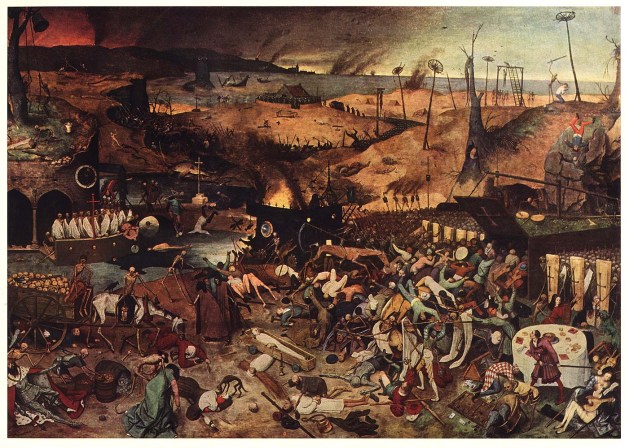
“Two historic matches take place in the industrial heartlands of England and Germany this Sunday that throw into focus just how little Premier League fans have been able to influence boardroom change. Thousands of Liverpool supporters will make the trip to watch their team play Manchester United at Old Trafford, with large majorities of both sets of fans unhappy about the way their clubs have been run by their respective American owners. Over in Germany, thousands of Borussia Dortmund fans are similarly unhappy – with the major difference that they will not be travelling to watch their team take on Schalke in the Bundesliga.” (BBC)

Footy Verse

“At least since the fifth century BC, when Pindar entreated his heart to sing the splendor of the Olympian in his victory odes, poets have found in sport a worthy subject. And soccer—as we know it, a game of relatively recent advent, despite a lineage that can be traced back thousands of years—has inspired many to write in praise of its glory and in lamentation of the heartache it can yield. As ‘the world’s game,’ perhaps no other sport has been written about by amateur and professional poets of so many nations. A commercial for the Museum of Soccer in São Paulo declares that ‘if soccer were a literary genre, it would be poetry,’ and, unsurprisingly, several of Brazil’s greatest poets—including Carlos Drummond de Andrade and João Cabral de Melo Neto—have taken inspiration from futebol.” (Poetry Foundation)

The Way We Were: Aston Villa vs Everton, November 1989

“Watching repeats of old football matches can be an unsettling experience at times. Watch any match over around thirty years old and everything looks and feels different. The levels of technical expertise and fitness may be lower than they used to be, and the look and feel of the spectacle of the match is strangely other-worldly. At what point, however, did this change? When did what we could describe as the modernisation of football begin? I was reminded of this the other evening whilst watching the semi-final match in the 1984 European Championship between France & Portugal.” (twohundredpercent)

Video Of The Week: Football & Fascism


“As some of you may have noticed, we’ve restarted the ‘Video Of The Week’ section on the site, and this week we have a particular treat for you in the form of the outstanding BBC documentary from 2003, ‘Football & Fascism’. This film traces the link between three fascist dictators of the twentieth century – Mussonlini, Hitler and Franco – and football, focussing on Mussolini’s, ahem, ‘hands on’ approach towards the 1934 World Cup finals, the importance placed upon Germany’s performances at the 1936 Olympic Games and the 1938 World Cup finals and General Franco’s use of Real Madrid to bolster his popularity in Spain.” (twohundredpercent)

The Forgotten Film of the 1938 World Cup in France
“Many of the official World Cup films are well-known and widely available, such as the classic 1966 movie Goal! and the Michael Caine narrated Hero from 1986. The official FIFA Films page lists 15 World Cup films from 1930 to 2006, all available on DVD. The first World Cup in 1930 has retroactively been given an official film recently made from archive footage, but there is nothing listed for 1934, 1938 or 1950, so we presume the first official World Cup film was commissioned in 1954.” (Pitch Invasion)

Volleys, Volleys and More Volleys


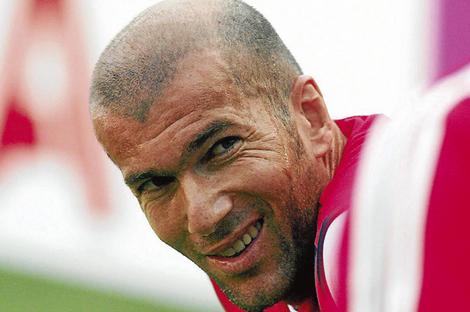
Zinedine Zidane
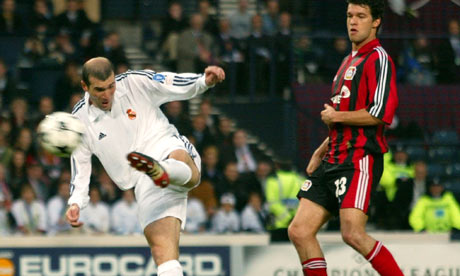
“Hamit Altintop’s thunderously crisp volley against Kazakhstan earlier this week was one of the finest strikes seen for quite some time and, with a nod to The Guardian’s “Joy of Six“ feature, got me thinking about some of the game’s greatest volleys. So, without further ado, here is a selection of some of the cleanest strikes ever witnessed. If you’ve got any more suggestions then please add them in the comments at the bottom of the page.” (The Equaliser)

The Ten Greatest Goal(post)s Of All-Time

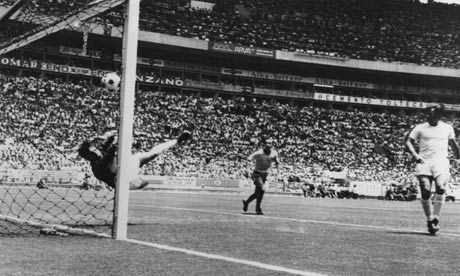
“One of the greatest blights of modern football is that it looks the same wherever in the world you go. Teams from Addis Ababa to Zurich play with equipment made by the same handful of manufacturers and, with this, we have lost something. The global game has become homogenised and stripped of a couple of the layers of its colour and panache, and perhaps the most visual aspect of this on the pitch are the goalposts and netting themselves. Almost all clubs and countries now avail themselves of the now ubiquitous free-standing box net style of goal, with two poles holding the nets up and out of harm’s way.” (twohundredpercent)

I Will Not Let World Soccer Magazine Die

“Glossy, shiny wonderful thing, sat on the newsagents shelf, ready to be plucked and digested. More sales than ever you say? but are you ok? really? IBWM editor Jeff Livingstone worries for a favourite publication. I was a little concerned to read recently that publishers IPC are looking to offload/sell World Soccer magazine.” (In Bed with Maradona)

Football’s Greatest Managers…#9 Vittorio Pozzo


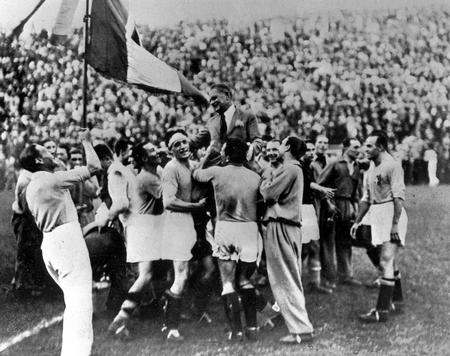
Pozzo is held aloft as Italy claim the 1934 World Cup
“A name that has unfortunately faded into obscurity in recent years, Vittorio Pozzo is undoubtedly one of the greatest managers of all time. One of the most relentlessly successful international coaches the game has ever seen, Pozzo led Italy to two World Cup triumphs and Olympic gold during his twenty years in charge of the Azzurri in three spells between 1912 and 1948.” (The Equaliser)

Great international hat tricks

“As well as upping weekend revenue for DIY stores everywhere, the international break produced two hat-tricks — one each for Jermain Defoe (England) and Klaas-Jan Huntelaar (Netherlands). Variety, technique, a dollop of selfishness, they all go into the mix to score a treble at this level, and competitive international hat tricks are getting harder to come by — the last three World Cups have produced about a quarter of the total produced by the first three. Argentina striker Gonzalo Higuain bagged one this summer with the same cool exterior as his predecessor Gabriel Batistuta, but an international hat trick of tournament-changing magnitude, of tear-jerking quality or just of eyebrow-raising novelty is a rare thing indeed. Here’s a list of memorable ones…” (SI)

Roberto Carlos wonder goal ‘no fluke’, say physicists

“Brazilian Roberto Carlos’s 1997 free-kick against France curved so sharply that it left goalkeeper Fabian Barthez standing still and looking puzzled. Now, a study published in the New Journal of Physics suggests that the long-held assumption that the goal was a fantastic fluke is wrong. A French team of scientists discovered the trajectory of the goal and developed an equation to describe it.” (BBC)

Pelé as a Comedian


“I’m thinking about David Foster Wallace’s essay on Roger Federer, the famous one that ran in the New York Times’s now-defunct sports magazine, Play, in 2006. If you don’t remember it for the argument, you might remember it for the title, ‘Roger Federer as Religious Experience,’ which even back in ’06 felt like a strange combination of terms. It’s a little hard to remember this now, with Federer’s career having settled into its gentle downward glide, but at that point Roger Federer was annihilating sports.” (Run of Play)

My Perfect 10: Rui Costa

“At his peak Rui Costa had the complete attacking game – he could dribble, shoot and pass brilliantly – defenders simply didn’t know how to deal with him. Add to that a tremendous footballing brain and his tendency to drift around the pitch and make things happen rather than waiting for the ball to come to him, and he was almost impossible to nullify. He was the archetypal playmaker because he was very much a team player, always looking for a pass rather than personal glory; he had an amazing ability to utterly dominate a game without finding himself in the headlines.” (FourFourTwo)

My Favourite Footballer…Rivaldo


Rivaldo
“So, why do I love Rivaldo? A player who I’ve hardly had the opportunity to see live, whose peak coincided with my milk teeth falling out, and whose reputation was tarnished by play-acting? Rivaldo’s own audacious brand of football is what endeared him to me. His fondness for the outrageous; stepovers, heel flicks, volleys, pannas, bicycle kicks, the list goes on – he tried, and executed, them all to perfection.” (The Equaliser)

RIP Francisco Varallo

“The football World Cup today lost one of its final links with its origins, when Francisco Varallo, the former Boca Juniors forward, died in the early hours in La Plata, aged 100 years and six months. He had been the last living player to take part in the final of the inaugural tournament in Montevideo, Uruguay in 1930, when Argentina lost to the host nation 4-2. When Martín Palermo finally, in 2008, became Boca Juniors’ highest goalscorer of the professional era, it was Varallo’s record he’d surpassed.” (Hasta El Gol Siempre)

Pelé as an Ideal


“The end of my years as a teenager is approaching, which means I am soon to leave behind my life’s last opportunity to believe that I know everything. Already I can feel uncertainty slipping into parts of my mind that were once ironclad, airtight. “Is America really the best country on earth?” I ask myself. “Is there any substantive evidence to suggest that my 8th grade Social Studies teacher is the devil?” The perfect life I designed for myself seems increasingly unlikely by the day.” (Run of Play)

Pelé in Brazil
“When I asked to interview Pablo and Dennis about Pelé they both responded with furrowed brows. Neither one liked Pelé, they explained. Pablo called him an idiot. ‘Perfect!’ I said. I chose Dennis and Pablo because they are both Brazilian. That’s it. Just being Brazilian may not seem like much to go on, but it’s a start. If we are really going to figure this Pelé thing out, we need to explore as many perspectives as possible. This is the perspective of two regular dudes that happen to be from Brazil.” (Run of Play)

World Cup Memories

“A month after the end of the World Cup, I think it is about time I close a few tabs on my browser that have been holding particularly memorable reflections on that delirious month in the early summer. Here are a few quotes. I like this from the English novelist Tim Parks, in the New York Review of Books. First, a nice observation about FIFA’s attitude to cheating…” (This Sporting Life)

Sports Writing Blues

“Lately, I find I do not have much to say. In June and July I watched all but two World Cup matches, read enormous amounts of football journalism, and contributed to the genre in my own way via this blog and daily podcasts for The People’s Game. I loved this – especially the podcasts which gave me a chance to talk with bloggers I’ve been reading, who define my ‘imagined community.’ But by the end, I found that I had less and less to say.” (From A Left Wing)

1950

“The 1950 FIFA World Cup was the first since 1938, mostly because of an intercontinental dust-up commonly known as World War II. Brazil was selected to host the tournament on the back of a third-place performance in the previous World Cup, and it was eagerly anticipated by the newly democratic country, which was looking to establish itself as a global power, in football and otherwise. The mayor of Rio de Janeiro was able to push forward construction His Socks Are Flagsof a controversial stadium named after the Maracanã neighbourhood, opening it about a week before the World Cup began.” (Run of Play)

Pelé as a Human


“At the end of the episode entitled ‘Brazil’ in the excellent documentary series The History of Football, Pelé offers the interviewer a few comments on his own footballing genius. He declares that just as there can only ever be one Michaelangelo and one Beethoven, so can there only ever be one Pelé. Why? Because, he says in Portuguese, “my father is a closed shop.” When the female interviewer fails to laugh, he repeats his words in English, and adds a snipping motion with his finger. ‘Do you understand?’ he says, now staring at the camera with his world famous grin. ‘My father is a closed machine.'” (Run of Play)

Pelé v. the Animals
“Why do you watch ESPN instead of Animal Planet? Cute uniforms aside, bears are stronger, giraffes are faster, and kangaroos can jump much higher. Why watch a species that struggles to lift over 300 pounds or run a mile in under four minutes? More intriguingly, how did such a feeble runt of a species come to rule the planet? Luckily, two classic moments from Pelé provide answers.” (Run of Play)

(Run of Play – Pelé)

The Best, The Best, and The Best


“I owned a football encyclopaedia as a child, dating from around 1980 and now sadly lost, in which Jimmy Greaves rates the top ten footballers of all time. Pelé is number two. Greaves notes that he can’t be considered the best ever, because he was never tested in the English League, the toughest competition in the world. So George Best gets the accolade instead.” (Run of Play)

The Synonym

“When People Who Don’t Like Football ask me why I do, I invariably answer: ‘You know Pelé? Well, it’s not because of him.’ Then I launch straight into the tragic story that is Garrincha’s life. I explain how he was Pelé’s direct opposite in so many ways. I’ve gotten pretty good at telling that story over the years. I try to make the game tangible for those poor lost souls. Lots of passion. Lots of Alegria do povo.” (Run of Play)

Stepchild of Time

“Over Brian’s last few posts about Pelé, we—RoP’s community of contributors/commenters and readers—have advanced the notion that history punishes perfection by consigning it to irrelevance. Perfection is so unrelatable that it becomes ahistorical. It supersedes the ordinary to such an extent that it isn’t even extraordinary: it simply doesn’t belong in any category of our own experience. We have so little truck with it that we forget to adapt it for the generations that will follow us.” (Run of Play)

Louis Vuitton and the Eternal Champion

“Science fiction and fantasy author Michael Moorcock has written an enormous sequence of novels about the Eternal Champion, the same hero reborn in dozens of different persons. Whether the Eternal Champion is named Elric of Melniboné, Oswald Bastable or Ulrich von Bek, he is always first and foremost the Eternal Champion. The particularities of each champion’s life and personality are different, but their role is the same every time, to restore balance to an off-kilter world.” (Run of Play)

The End

“By 1977, the disco starship of the NASL had already blasted off pretty far into its groovy cartoon orbit—that was the year the New York Cosmos dropped the ‘New York’ from their name. It was a league of John Oates mustaches—half the players looked like mellow plumbers—and haystack man-perms, a green festivity of daffy-eyed showmen in 100% cotton shorts. Pelé was in his third season with the Cosmos, deep in his ‘Black Pearl’ phase and now officially representing not only Studio 54 and Andy Warhol’s eight bzillionth Factory, but the glittering expanse of all creation, everywhere: Henry Kissinger went to his games. Pelé had been the MVP of the league the season before, but he was 36 and now he was going to retire.” (Run of Play)

Presenting the Trophy: 1929, 1954 and 1958

“In 1929, the crowd are more specifically spectators, and less participants, than they are today, at least at Wembley. Wembley was strange turf – an away ground for everyone present, of course, and it would be interesting to have e.g. a ‘talking picture’ from Stamford Bridge, Burnden Park or Maine Road to contrast the 1929 Final with.” (More Than Mind Games)

Announcing Pelé Week

“The Premier League season starts in about six minutes, so you’re probably expecting this site to revert back to blanket coverage of the tiny crinkle above Arsène Wenger’s nose. (‘It’s looking world-weary, Jim.’) But first, we’re going to make room for something else, because I keep thinking about the last post, and I’m convinced that this sad neglect of Pelé has to end.” (Run of Play)

Decent performance from England as Capello experiments with new systems


“A nervous performance, but overall a deserved win and a decent night for England in their first game since their embarrassing exit from the World Cup against Germany. The result and performance will largely be ignored in the mainstream media, thanks to the news that David Beckham’s England career is supposedly over. The determination to not give Capello or England any praise whatsoever means that the ‘announcement’ was superbly timed – no need to focus on what actually happened on the pitch.” (Zonal Marking)

Is Pelé Underrated?


Pelé
“I have a piece in Slate today about the Pelé-Maradona feud and how it’s the index of all meaning in soccer. The short version is that for all the old-mannish ego-nostalgia and general crappiness of its discourse, their rivalry is irresistible because the two players represent radically opposed imaginative possibilities…” (Run of Play)

Pelé and Maradona
“In the summer of 2000, FIFA, which does not understand computers, decided to celebrate the arrival of the millennium by hosting an online poll. Its object: to determine the best soccer player of the past 100 years, with the victor to be fêted at a gaudy banquet in Rome. The organizers of the vote assumed it would be won by Pelé, soccer’s silky ambassador, who’d been cheerfully ensconced in his Greatest of All Time sinecure for 40 years.” (Slate)

Football’s Greatest Managers: #19 Bela Guttmann

“A footballing nomad and a wandering tactical evangelical, the hot-tempered Bela Guttmann has come to be regarded as one of the most astute coaches to emerge from the sporting intellectual set that arose in Eastern Europe during the 1930s. An adventurous centre-half by trade, Guttmann’s playing career saw him undertake spells in his native Hungary, Austria and New York before he joined Hakoah Vienna in 1933 to embark on what would become a marvellously successful, if fragmented, coaching career.” (The Equaliser)

Whatever happened to Senegal?

“Cast your mind back, if you will, eight years to the 2002 World Cup. It’s a sultry night in Seoul and France, defending champions and one of the hot favourites for the title, are facing Senegal, a country playing its first ever game in a World Cup finals. A momentary lapse in concentration sees Youri Djorkaeef loses possession on the half-way line and the Senegalese break with Omar Daf putting El-Hadji Diouf – a relatively unknown forward plying his trade for Lens – away down the left side. Diouf, balanced and composed, comes slightly in-field and reaches the by-line before cutting the ball back into the box.” (The Equaliser)

The Ball


“Alive & Kicking balls are hand stitched out of local leather. They are tougher than imported synthetic balls, last far longer on rough ground and therefore give children in Africa lasting fun. Every ball carries a message about HIV/AIDS and malaria which can be used by teachers and sports coaches to broach discussions with children on deadly disease.” (Alive and Kicking)

For The Good Of The Game, Stop Using These Disgraceful Plastic Footballs

“Ask your average football fan the one thing they would like to see changed about the game, and the majority will reply with the word ‘technology’. There is no doubt that following the infamous Frank Lampard goal that never was in World Cup 2010 that something needs to be done to avoid such injustices occurring again, and that’s something we absolutely need to work on.” (Goal)

World Cup Technical Ecstasy

“Now that you know what Martin Samuel and Alan Shearer think, you might not be interested in any more expert views on the recently-finished World Cup. But amid the small print on the ‘past World Cups’ page of FIFA’s website is a link to a series of documents which provide a more fascinating insight into past tournaments than the title ‘Technical Study Group Report’ suggests. These reports were first commissioned after the 1966 finals in England, when national team coaches from the 16 finalists were interviewed to gauge their views on competition preparation and tactics.” (twohundredpercent)

The King of Football – Pele on Postage Stamps


“FIFA player of the century Pele is widely regarded as the greatest footballer of all-time. He is the all-time leading scorer of the Brazilian national football team and the only footballer to be a part of three World Cup-winning squads. In 1957 just 3 months short of his 17th birthday he made his international debut and scored. That goal making him the youngest player to score in a full international match. A year later he took the world by storm.” (Footysphere)

Watch the Narco-Soccer Documentary “The Two Escobars” on ESPN

“Jeff and Michael Zimbalist’s documentary The Two Escobars brings us a tale of a nation gripped by crime, drugs and a passion for soccer. At the time (circa 1994), Colombia was seen as one of the world’s most reviled narco-states and one of the world’s best soccer nations, at one point ranked 4th in the FIFA rankings. During this period, many Colombians were hoping that victory at the 1994 World Cup would help rebuild the country’s tattered image.” (Nutmeg Radio)

The Greatest of the World Cup’s Greats


Zinedine Zidane
“The race between Spain’s David Villa and Wesley Sneijder of the Netherlands to finish as leading scorer of the 2010 World Cup could be the decisive factor in Sunday’s final. It could also establish which of these players, each with five goals apiece, comes to define this tournament and joins the ranks of the World Cup’s greatest players. It would be difficult to dispute that either player deserves such recognition, but in whose exalted company would they stand?” (WSJ)

Triumphant procession down the road of quease

“Take, if you will, Hungary’s Golden Team. The story may be familiar to you: a near-perfect marriage of radical tactics with great players (Puskás, Hidegkuti, Kocsis, Bozsik, Czibor…), producing a new, adventurous style which was seemingly irresistible; an Olympic gold medal, won with five straight wins by an aggregate score of 20-2; a tying-up of the loose ends of the Dr. Gerö Cup; the Wembley 6-3, with the “people from outer space” and the “fire engine heading to the wrong fire” and the ‘utter helplessness’; the 7-1 return in the Népstadion; the four-year, 28-game unbeaten run (if we don’t count a loss to a Moscow representative selection. And we don’t, apparently) the team took into the 1954 World Cup, and not just any unbeaten run, but one in which they truly trounced opponents; the breeze through the group stage (two games, seventeen goals); the Battle of Berne; the thrilling victory over champions Uruguay in the semi-final; the final against a West Germany team they had beaten 8-3 (a real 1954 score, that) earlier in the tournament; the two early goals that would surely see them on their way to fulfilling their destiny as the greatest ever football team; Germany’s quick replies to level the affair; a third German goal with five minutes to go…” (Sport Is A TV Show)

The Forgotten Film of the 1938 World Cup in France

“Many of the official World Cup films are well-known and widely available, such as the classic 1966 movie Goal! and the Michael Caine narrated Hero from 1986. The official FIFA Films page lists 15 World Cup films from 1930 to 2006, all available on DVD. The first World Cup in 1930 has retroactively been given an official film recently made from archive footage, but there is nothing listed for 1934, 1938 or 1950, so we presume the first official World Cup film was commissioned in 1954.” (Pitch Invasion)

Who Said Cheating Doesn’t Pay Off?

“Uruguay is back in the World Cup semifinals. The little country had to cheat big-time to get there, but that’s another matter. In an epic quarterfinal Friday night, Uruguay defeated Ghana on penalty kicks after a 1-1 draw to reach the semifinals, improbably returning to the sport’s biggest stage despite being one of its smallest countries.” (WSJ)

Better to be Feared

“In his 2006 book How Soccer Explains the World, author and editor Franklin Foer examined the role that a given nation’s government plays in its World Cup success. As it turns out, the correlations between repression and good soccer seem to be closely related. With the exception of 1998 champions France (its 1940-44 Vichy regime notwithstanding), only one World Cup champion since 1970 can boast of a fascist-, strongman-, or junta-free twentieth-century history. Notably, 1970 champions Brazil and 1978 hosts and winners Argentina won their titles while toiling under authoritarian military juntas.” (Laphams Quarterly)

Henry Winter Interview: World Cup, Premier League and Custard Creams

“EPL Talk’s Laurence McKenna had an opportunity recently to sit down with Henry Winter, one of the most accomplished English football authors and writers in the United Kingdom. Just minutes before the England versus Mexico friendly at Wembley, McKenna had a chat with Henry Winter, outside the hallowed Wembley Stadium, about several fascinating topics revolving around the World Cup, England national team and the Premier League including…” (EPL Talk)

Family of 1950 hero vs. England has high hopes for Jozy Altidore (Video)

“It is the dream of Joe Gaetjens’ surviving family that U.S. striker Jozy Altidore score against England with a diving header. Poetry of this measure would live forever. A Haitian soccer player and later a political victim of former Haitian president Francois Duvalier, Gaetjens scored the winning goal for the United States in a 1-0 victory against England in the 1950 World Cup.” (mlive)

Video Of The Week: “The Match Of The Century” – Italy vs West Germany, 1970


Italy, Gennaro Gattuso; Germany, Arne Friedrich
“The other week, we brought you the 1970 World Cup semi-final between Brazil and Uruguay in its entirety, and this week it’s time for the other semi-final from that tournament between Italy and West Germany. Italy had started the 1970 World Cup finals slowly. They won their group, but only managed one win, by a solitary goal against Sweden, and two goalless draws, against Uruguay and Israel, to make the quarter-finals of the competition. It was at this stage that they finally sparked into life, beating the host nation Mexico by four goals to one in Toluca after having gone a goal down early on in the match.” (twohundredpercent)

The 2010 World Cup On Twohundredpercent


Homeless people in Cape Town
“The 2010 World Cup will undoubtedly inspire a good deal of comment – some of it outstanding, some of it appalling – in the media. Here at Twohundredpercent, we’re not going to make any bold claims about the quality of what we’re putting up, only that we will do what we can to provide a build-up to and coverage of the tournament that follows the basic guideline that we always try to apply – to offer an alternative to the World Cup coverage elsewhere on the internet.” (twohundredpercent)

World Cup Tales: Eleven Goals In Strasbourg, 1938
“As the entrants lined up for the 1938 World Cup finals in France, storm clouds were building up the horizon, and the tournament itself wasn’t exempt from such global concerns. Three months prior to the start of it, German tanks had marched into Austria, annexing the country through the Anschlüss agreement. Within a couple of months, the Austrian national football team, which had got to the semi-finals of the previous tournament in Italy and was one of the favourites for this one, was no more.” (twohundredpercent)

The World Cup Balls


“The book features the original balls of every Football World Cup between 1930 and 2010; it describes the stories and legends surrounding these balls and makes observations on footballs in general. In his extensive interview, German goalkeeper legend Sepp Maier talks about his love for these spherical objects.” (The World Cup Balls), (NYT – The World Cup Balls)

World Cup Tales: The Creation Of A Design Classic, 1970

“It is one of the curious anomalies of our game that when we close our eyes and think of a football we tend to think of a specific type of football and, moreover, that the type of football that we are likely to think of is a specific type of ball which hasn’t been widely used in major tournaments for over thirty years. To geometrists, it would be known as spherical polyhedron, but we would be more likely to know it as a 32-panel football, a Buckminster ball or a ‘bucky ball’, it made its international debut at the 1970 World Cup finals in Mexico, and it is a perfect example of the application of science to commercial design.” (twohundredpercent)