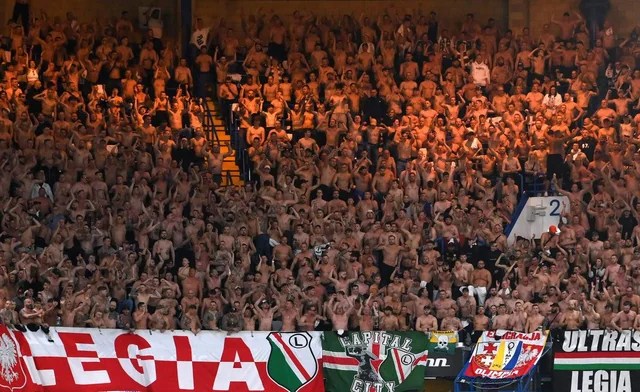
 Legia Warsaw fans show their support
“There is no doubt that the Ekstraklasa — the highest division of Polish football — is the most competitive top flight in European football. There is now a compelling argument that this league season is the craziest ever. With less than a third of the 34-game Ekstraklasa season remaining, all 18 clubs can mathematically either win the title or be relegated. Across the division, there are storylines that defy logic. Zaglebie — who begun this weekend as league leaders — are from tiny Lubin, whose 70,000 inhabitants ranks it outside the top 50 largest cities in Poland by population. Zaglebie finished 15th last season, just one place above the relegation zone. …”
NY Times/The Athletic (Video)
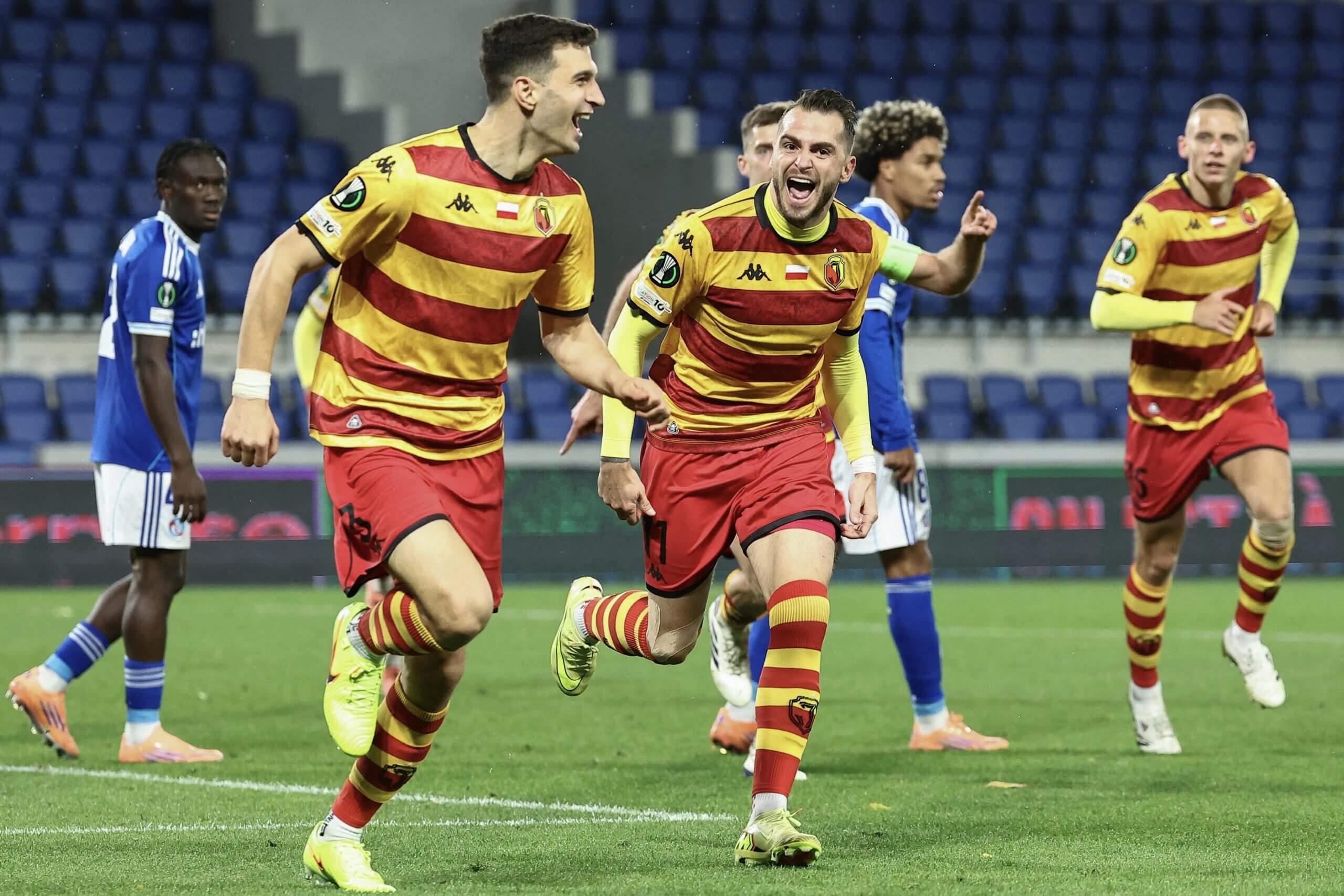 Jagiellonia Bialystok’s players celebrate a goal against Strasbourg in the UEFA Conference League
Welcome to the wild Polish league, where all 18 teams can still win the title… or be relegated
Leave a reply
 “Liverpool’s return to the summit of the Premier League last season dovetailed with a return to profitability, and the club’s 2024-25 financials, publicly released last Thursday, unveiled the platform from which they launched last summer’s £400million transfer splurge. The champions booked a £15.2million profit, their best financial result since the 2018-19 season and a first profitable year in three. Revenue shot up £89m and 15 per cent to £702.7m, easily a club record, making Liverpool only the second English side, after Manchester City, to top £700m in annual turnover. …”
 Scissors Kick