“Brazil’s ousting in the quarter-final stage was the talking point, but Peru’s run along-with Chile’s impressive showing has kept enthusiasts intrigued. Though Argentina remain as favourites with online sports betting at Sportsbook.ag, it may not be as simple to call these games. Paraguay too who eliminated Brazil for the second successive Copa America, have shown they aren’t to be overlooked. Finley Crebolder picks his four players that defined the quarter-final stage, a stage that has left us with two enticing fixtures.” Outside of the Boot
Category Archives: Chile
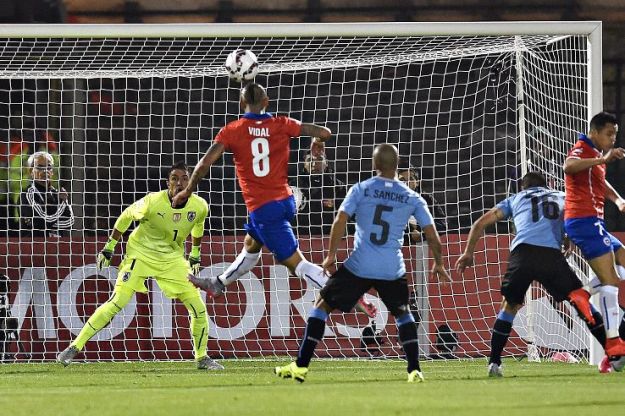
Chile end Copa America quarterfinal curse by defeating feisty Uruguay

“And so Chile did not fall foul of the Copa America curse of the quarterfinals. In four of the past five tournaments the hosts have been eliminated at this stage — three times by Uruguay. This time, though, there were no slip ups, and Uruguay were beaten 1-0. Ninety-nine years ago they kicked off the first Copa America — against Uruguay — and they are still looking for their first tournament win. Their golden generation is at its peak. They are at home, with all of their games taking place in Santiago’s National Stadium. But for a long time on Wednesday night, it was looking like a case of ‘if not now, when?’ for the Chilean team.” ESPN – Tim Vickery
A Guide to Copa America, in Queens

El Gauchito, 94-60 Corona Ave in Queens.
“Copa América, the South American soccer championship, is in its third week in Chile, and has given the world everything it could handle from a tournament: dramatic comebacks, shocking suspensions, all-out scoring feasts, and acts of idiocy and manslaughter off the pitch. Now, after the end of the group stages, eight of the original 12 teams remain, and they will begin the direct elimination rounds today. There is still plenty of action to catch—with some potential classic matchups coming up—and as we wrote during the World Cup, there is no finer place to watch international soccer than New York City. So if you aren’t able to make your way over to Chile, your next best shot at living the fever of South American soccer is right here, in the almost impossibly diverse borough of Queens. From Astoria to Sunnyside, bars, bakeries and butcher shops are turning their establishments into prime viewing spots. Here are the upcoming matches and the best places to catch them with diehard fans from each country.” ROADS & KINGDOMS
Uruguay have the history to hit Copa América heights against Chile
“Chile have scored more than twice as many goals as anybody else in this Copa América. They will be playing at home in front of 40,000 red-shirted fans. They have played with a verve and a fluidity nobody else in this tournament has matched and, if anything, Arturo Vidal’s drink-driving charge, which could have been a destabilising influence, seems to have given them an enhanced sense of purpose. Uruguay scraped through their group in third place, having scored only two goals. Other sides in their position might have approached Wednesday night’s quarter-final like lambs to the slaughter but not Óscar Washington Tabárez’s team. This is the sort of situation Uruguay have traditionally relished.” Guardian – Jonathan Wilson
Copa America: Group C’s key tactical system, game-changing performance, and best young player
“Group C has easily been the Copa America’s most engaging, as shock wins by Venezuela and Colombia saw all four teams level on points entering the final match day. With a resurgent Thiago Silva leading Brazil to victory over Venezuela to top the group, the final placing may not seem like much of a surprise. However, with Brazil needing a last-minute winner to beat Peru, Neymar’s suspension, and a host of strong defensive performances, many from unsung, domestically based players, these six games provided us with multitudes of knife-edge tension. As the three survivors lick their wounds ahead of the quarterfinals, here is a brief look back at some of the keys to the way things played out.” Outside of the Boot
Copa America quarterfinals: Argentina and Brazil face tense challenges
“Chile vs. Uruguay. All the momentum is with Chile, but all the history is with Uruguay. The hosts have looked to be far and away the best team in this tournament so far, scoring twice as many goals as everybody else, but Uruguay have by far the best record in spoiling such house parties. On the past three occasions that the latter have met the home team — Argentina 2011, Venezuela 2007 and Paraguay 1999 — they have eliminated them. That’s all the more relevant here because it reflects just how good the Uruguayans are at digging in and disrupting more exciting and excitable sides. Oscar Tabarez’s current side are experts at that, and abnormally difficult to beat. … ” ESPN
The Copa America heats up now for Chile

“These days, the Copa America tournament serves as a warm-up for the qualifiers. Of course, once the Copa kicks off, everyone wants to win. There is always pressure on Brazil and Argentina to go home with the trophy, and that is especially true this year, with La Albiceleste waiting for a senior title since 1993 and Brazil anxious to cover up that huge stain on the carpet left by its performance in the World Cup. The focus of most coaches, though, is firmly on preparing a team for the World Cup qualifiers. More than anything else, the Copa America is about the host, which really wants to put on a show in front of its own public. And that, too, is especially true this year, with Chile gunning for a maiden continental title. As expected, there has never been a dull moment during Chile’s group phase. Indeed, there was more incident than anyone had bargained for.” The World Game – Tim Vickery
Fatigue is proving Chile’s biggest obstacle to ending its 99-year drought
“Jorge Sampaoli looked on, ensuring his players kept their heads while all around them men were losing theirs. He’d seen the opposition weep before games had even begun. Now they wept before a penalty was even kicked. Its captain, world renown defender Thiago Silva, sat atop a ball on the sideline away from his colleagues; rocking back and forth, whispering frantically into closed fists; refusing to even get involved, let alone lead. Silva’s goalkeeper, Júlio César, peered into the Belo Horizonte sun though eyes bloodshot red, terrified at the prospect of being the next Barbosa.” Fusion
In Chile’s National Stadium, Dark Past Shadows Copa América Matches

“SANTIAGO, Chile — A haunting yellowish glow radiates from the tiny section of empty wooden benches and crumbling concrete behind the north goal at Estadio Nacional. All around this space there is noise: 47,000 soccer fans screaming and jumping in delight as Chile’s national team plays Ecuador in the opening game of the Copa América. But no one sits on those benches. They are reserved in perpetuity, a somber memorial to the thousands of people who were beaten and tortured here 42 years ago in the home of Chilean soccer. Estadio Nacional, the site of six games in this year’s Copa América, including the final on July 4, is perhaps the most infamous sports arena in the world. For nearly two months after the Sept. 11, 1973, military coup that overthrew Chile’s democratically elected Marxist president, the stadium served as a makeshift prison camp where as many as 20,000 men and women suffered at the hands of a military junta, led by the right-wing army chief, Gen. Augusto Pinochet, that had seized control of Chile. …”
NY Times
Arturo Vidal and Neymar subplots in a Copa América rich with stories
“There is nothing quite so effective at removing stains of ignominy as victory. Chile’s game against Bolivia on Friday began with Arturo Vidal’s name being cheered by the 45,000 fans at the Estádio Nacional, a clear message of support after he was charged with drink-driving. It ended with Chile having won 5-0 after a display of exhilarating football and, to the local media at least, questions about whether Vidal should have been allowed to play on were fading before the thought that this Chile squad is probably better equipped than any other in the country’s history to win the Copa América. A wait that began in the very first continental tournament in 1916 may be about to come to an end.” Guardian – Jonathan Wilson
Arturo Vidal, Chile cruise past Bolivia to finish atop Group A in Copa America
“Led by a brace from Charles Aranguiz, host Chile cruised to a 5–0 win over Bolivia on Friday in its final group stage game in the Copa America. The victory meant Chile finished atop Group A, while second-place Bolivia will also advance to the quarterfinals. Here are three thoughts on Chile’s win.” SI – Jonathan Wilson
Claudio Bravo and Chile held by Mexico in six goal thriller (3-3)
“Chile missed out on to the opportunity to become the first team to make it through to the last eight of the Copa América following an exhilarating 3-3 draw against Mexico in Group A. Arturo Vidal scored twice and Vargas claimed the other but it was not enough for victory for the side captained by blaugrana Claudio Bravo. Mexico took the lead twice in the first half through Vuoso and Raúl Jiménez and then Vuoso scored again in the second to level things up at 3-3. Mexico proved they are not simply in South America to make up the numbers and still have a chance of making it to the knock out stage with their final group game still to come against Ecuador. Chile face Bolivia in their last fixture in the opening phase.” FC Barcelona
Chile time at the Copa America

“In the 99-year history of the world’s oldest continental competition, 37 of the 43 titles have been snapped up by Uruguay, Argentina and Brazil. Other than the traditional big three, Bolivia has won it, Colombia has won it while Paraguay and Peru have both won it twice. Chile does not appear on the list of Copa America champions – even though it took part as far back as the inaugural tournament in 1916. The current side, by popular consensus, is the best in Chile’s history. As 2015 host, then, the pressure is on it to bring the long, dry run to an end. And coach Jorge Sampaoli is worried about the pressure. He has first hand experience of what it can do.” The World Game – Tim Vickery
Brazil hope their new Fred does better than the old one in Copa America
“Two weeks ago, Fred, the diminutive Shakhtar Donetsk forward, made his home debut for Brazil in a friendly against Mexico in São Paulo. When his name was read out before kickoff, he was roundly booed: the crowd did not realise he was the 22-year-old Frederico Rodrigues Santos, and assumed he was the other Fred, the 31-year-old Frederico Chaves Guedes, the Fluminense striker who was one of the chief scapegoats for the disaster of the World Cup.” Guardian – Jonathan Wilson
Copa América Tickets, Finally, Are Hard to Come By
“Eduardo Santa Cruz has been attending Copa América games in Chile since 1955, when he was 5 years old and his parents took him to games in Santiago. A professor of journalism and the author of two books on soccer and mass culture, Santa Cruz has a better recollection of the 1991 tournament, for which he said tickets in Santiago were readily available. This year, though, as the popularity of the Copa continues to grow, he expects tickets will be hard to find. Santa Cruz and his family will be watching from home.” NY Times
Eight things we learned from the Internet about Copa América 2015

“For the next three weeks, the pulse of South American futbol beats from Chile, where the continent’s 10 national teams plus invitees Mexico and Jamaica will battle it out for a piece of international silverware that’s been contested for 99 years. This is the Copa América, a tournament renowned for its storied rivalries, vibrant fan support, politically-charged history, and incredible star power on the pitch; a competition which, for the past near-century, has ignited a continent. With just days left until the tournament kicks off, we turned to the world’s greatest source for information on the tournament — Wikipedia — and came back up with a few gems. The Copa América, it turns out, is a weird, weird tournament.” Fusion
Copa America preview roundtable: Games, players, stories to watch
“For a second straight summer, a massive international prize is on the line in South America, and even though it may not carry the weight of the World Cup, the 2015 Copa America features plenty of star power and a winner’s medal that includes a ticket to the 2017 FIFA Confederations Cup. Days after winning the Champions League together, two-thirds of Barcelona’s record-setting front line–Lionel Messi and Neymar–will be on display as adversaries (the third member, Uruguay’s Luis Suárez, is still banned internationally for his World Cup bite of Giorgio Chiellini); Brazil puts its undefeated mark under Dunga (this time around, anyway) on the line in its first meaningful games since last summer’s disappointment on home soil; host Chile and Colombia aim to build on the success they enjoyed last summer; and a series of upstarts look to spring surprises in what promises to be an intense 12-team competition. Jonathan Wilson and James Young are on the ground in Chile, and here are some of their games, story lines and other items to watch over the next three-plus weeks…” SI – Jonathan Wilson
Palestino – Getting shirty in Chile
“‘A win for Palestino is a joy for the suffering Palestinian people’ so believes Maurice Khamis Massu president of Chilean football team Palestino, a club founded by the sizeable Chilean Palestinian community and are defined by the ties that they proudly share with their homeland. The club does not hold back when it comes to displaying its identity and is not afraid of a little controversy or diplomatic incidents when it comes to representing Palestinian people both at home and abroad.” Football Pink
Eight wins out of eight – are Brazil a team reborn post-World Cup?
“When they sadly packed away their yellow shirts last July, most Brazil fans must have thought that it would be some time before they would be reaching back into the wardrobe for that particular item. The astonishing 7-1 World Cup semi-final defeat to Germany was then followed by the reappointment of the snarling Dunga as national team coach. Morale was low. Fast forward eight months, though, and the mood is more upbeat. Sunday’s 1-0 victory over Chile at the Emirates Stadium in London means that Brazil have now won eight consecutive matches.” BBC – Tim Vickery
Never forget your roots – Palmeiras’ illustrious history
“One of the most successful clubs in Brazil, Sociedade Esportiva Palmeiras have won eight league titles, as well as two Copa do Brasil trophies. The champions of South America in 1999, having beaten Colombian side Deportivo Cali to claim the Copa Libertadores, with their success culminating in the awarding of ‘Best Team of the 20th Century of Brazil’ by the Sao Paulo State Football Federation, they are a club of immense power and wealth. Palmeiras’ team is predominantly Brazilian, with ex Bayern Munich and Inter Milan defender Lúcio among their ranks. Apart from a smattering of Chilean, Argentinian and Uruguayan players, their squad is entirely made up of footballers from the ‘Futebol Nation’.” backpagefootball
Everything you need to know about the 2015 Copa Libertadores

“With the last of the group spots now finalised, the 56th edition of the Copa Libertadores – South America’s equivalent of the Champions League – properly gets underway this week and, as ever, it promises to be full of drama, excitement and shocks. The vast distances, not to mention the range of altitudes and climates, make it a highly challenging, unpredictable and captivating contest, while also offering the opportunity to catch a first glance at some of the continent’s emerging prospects. Argentinian side San Lorenzo won their first ever title last year, breaking the run of Brazilian triumphs and capping a remarkable turnaround for a club on the brink of relegation just two years before. With the last three victors being first time winners, could we see another maiden champion? Or will one of the established giants reclaim the continent’s top club prize? The following comprehensive group by group guide will take you through all the contenders.” Outside of the Boot (Part 1), Everything you need to know about the 2015 Copa Libertadores (Part 2)
Messi, Neymar, Sanchez: In search of South America’s next star
![]()
Angel Correa is leaving Argentina to play in Spain.
“For the crunch World Cup match against England last year, Uruguay were without their captain and centre-back Diego Lugano. In to replace him came Jose Maria Gimenez, a 19-year-old who had played in a grand total of one league match the previous season and one Copa del Rey fixture for Atletico Madrid. It is hard to imagine England, or another major European nation, throwing a youngster into the deep end in this way. But Uruguay had no qualms. Gimenez had been immaculate the previous year in the World Under-20 Cup, and that was good enough. This story helps to explain the importance of under-20 football in South America. There are plenty of others like it.” BBC – Tim Vickery
Chile vs. the United States: Five questions about the performance that we can answer before kickoff

“The United States’ men’s national team faces Chile tonight in what would be a rare out-of-FIFA-window friendly, if the U.S. didn’t do this every year. Tonight’s match against La Roja and next week’s affair with Panama mark the end to the team’s annual winter camp, affectionately if harshly known as ‘Camp Cupcake’ to fans and critics alike. Given that out-of-window nature of the game, it’s always difficult to discern lessons from these January affairs. Thankfully, our years of experience at being a website (that’s been up for less than a year) are here to help. Here are all the major questions that will be asked after tonight’s game, and their answers.” Soccer Gods
Panning for gold – the Sudamericano Sub-20
“As a beaming Lionel Messi wheeled away from an ugly goalmouth scramble after putting Barcelona’s victory over Atletico Madrid beyond doubt, he was set upon by the evening’s two other scorers. Neymar, Luis Suarez and Messi made their way back to the back to their positions arm-in-arm having together lifted a slightly deflated mood around the club beset by managerial pressure and rumours of their favourite son’s discontent. The victory left Barca just a point behind Real Madrid in the Liga BBVA and three ahead of Atletico and it was these three South American stars, each arriving at the club via hugely different paths, that were its architects. There’s nothing quite as marketable as a South American football star. By now the image has become something of a cliché: the young pibe winding through cobbled, uneven streets from dawn to dusk, with nothing but a rudimentary ball and a dream; carrying that childlike exuberance into the professional game and becoming a star.” backpagefootball
Delicate balancing act facing Alexis Sanchez
“Chile’s hopes in the upcoming Copa America – which it is hosting – rest largely on the diminutive shoulders of the sublimely talented Alexis Sanchez, whose performances for the national team over the next few months may rest on how much gas is left in the tank from his work with English Premier League club Arsenal.” The World Game – Tim Vickery
The long haul in South America is yet to begin

“While the 2016 UEFA European Championship qualifiers commenced this week, the cream of South American football was running around in mickey mouse games that will have little bearing on what will occurs next year when the likes of Brazil and Argentina play for something far more important than bragging rights and some cash to stock up the coffers.” The World Game – Tim Vickery
Brazil’s World Cup Was Never Simple, Always Irresistible
“They had a soccer tournament, and the best team won. If only the 2014 World Cup in Brazil were as simple as that. Let’s look backward—before Germany’s extra-time victory over Argentina in the final, before the host country’s agonizing, indelible 7-1 loss in the semifinals, before the individual greatness of Lionel Messi, Miroslav Klose, James Rodríguez, Neymar Jr. and Tim Howard. Before 20,000 fans jammed Grant Park in Chicago to watch the U.S. team. Before Luis Suárez launched his infamous incisors. Let’s go back to the beginning, to the original idea: a World Cup in Brazil.” WSJ
World Cup retrospective

“Well that was fun, wasn’t it? Previous World Cups have kind of come and gone from my consciousness: I was 8 for Italia ’90 and have very little recollection of it at all; I remember snatches from USA ’94, largely a grudging admiration for Taffarel; France ’98, a blur of blue and enormous jealousy that my sister was in Paris on a French exchange for the final; Japan and South Korea ’02, drunkenly going to first year university exams having watched games that started at 7, and manically cheering Senegal as my sweepstake team, especially after that win; and Germany ’10, revelling in that Spanish team. But, having started to write about football and, more importantly in many ways, become part of a community who talk and think about football, this is the first World Cup where I’ve really inhaled it, really been carried by the highs and lows of such a glorious celebration of football. So I thought I’d do a quick look-back. A good place to start would be the piece I did in The Football Pink: Issue 4 – The World Cup Edition, which was a group-by-group preview. And boy did I get some things wrong.” Put Niels In Goal
amazon: The Football Pink: Issue 4 – The World Cup Edition [Kindle Edition] $1.50, amazon: £0.97
World Cup 2014: BBC pundits pick their best moments in Brazil
“After 32 days, 64 games and 171 goals, there was only one winner. Germany are the new world champions after grabbing the glory at the 2014 World Cup in Brazil. The tournament will be remembered for its exciting games and spectacular goals but also some of the biggest shocks of recent times, with the hosts Brazil and defending champions Spain both suffering humiliating defeats. England, meanwhile, only lasted eight days and two games before being eliminated. BBC Sport’s TV and radio football presenters and pundits look back on the action and choose their best goal, best player and most memorable moment of the tournament, before considering how far away England are from being contenders.” BBC
2014 FIFA World Cup Awards: Best Player, Best Young Player, Best XI and many more
“With the World Cup drawn to a close, many are left disappointed while others celebrate their achievements. Germany won the World Cup, but many other individuals & teams left admirers in their wake. While FIFA gave out it’s individual honours with Messi the choice for Golden Ball particularly bewildering football enthusiasts. We at Outside of the Boot thought long & hard before deciding our choices which might just be a bit more fair & rational than FIFA’s choices! There are some surprises, and also occasions where the hipsters may not be pleased. Nevertheless, here are the best performers at the World Cup divided into Primary Awards, Talent Radar Awards and Secondary Awards.” Outside of the Boot
Die Größte Show Der Welt
“It’s staring at me, that wallchart. It’s a little bit frayed and crumpled now since the move back from Greece and after finding its way around Jesse’s sticky fingers and teething gums. Since Sunday, I haven’t been able to summon the requisite will to complete the final vacant space. The one that states that Germany beat Argentina, one-nil, AET. It’s the finality that daunts me; the knowledge that once complete it becomes a historical artefact, no more a tantalising map of an unknown future. All those games, all those goals, all those hours. Gone forever.” Dispatches From A Football Sofa
World Cup Expectations Rankings: Brazil’s over- and underachievers

Cesare Prandelli
“Teams come to the World Cup with their own expectations. For some, just being there is enough, reaching the last 16 an almost impossible dream. For others, so exalted were their ambitions that even a quarterfinal feels like a disappointment. This is an attempt to grade teams according to how they did against their own expectations, looking both at results and at how well they played…” SI – Jonathan Wilson
World Cup 2014: Goals, drama & that bite – is Brazil the best?

“Record goals, Suarez gnaws, that James Rodriguez strike, passion, drama, colourful fashion – what a World Cup this has been. It was a tournament that started with a bang as the hosts came from behind to beat Croatia, and has since delivered fantastic entertainment almost game after game. Here, BBC Sport’s chief football writer Phil McNulty and the BBC’s much-loved and most experienced commentator John Motson consider whether this has been the best ever World Cup.” BBC
O Jogo Bonito
“A little more than halfway through Brazil’s horrible, galling victory over Colombia last Friday, I began to wonder what type of foul might actually persuade the Spanish referee Carlos Velasco Carballo to issue a yellow card: A studs-up, two-footed, kung-fu fly-kick to the chest, like the one launched by Eric Cantona against a fan in the stands back in 1995? Any one of the number of egregious fouls, including punches to the head, committed by Italy against Chile, and then by Chile on Italy, in the infamous Battle of Santiago in World Cup 1962? Maybe multiple Suárez-type bites by a hyena pack of players on a prostrate Colombian felled by a scything tackle might have done the trick.” The Paris Review – Jonathan Wilson
World Cup: Brazil defeats Chile on penalties

“And so the carnival carries on. Brazil, the team which manages to thrill and frustrate almost simultaneously, clinched its place in the quarterfinal of the World Cup following a tension-fueled encounter with Chile. A 3-2 victory on penalties following a 1-1 draw in Belo Horizonte means Luiz Felipe Scolari’s side’s quest to win the World Cup on home soil remains alive. It will now turn its attention to a last eight contest with Colombia — a team which has thrilled so far in this tournament. While Brazil will take the plaudits, Chile should be commended for a performance which at times defied the ability of the human body to run and hustle as its players did.” CNN (Video)
Brazil 1-1 Chile: Brazil progress by the finest of margins
“Brazil won on penalties after an incredibly tense and tiring contest. Luiz Felipe Scolari selected Fernandinho following his good impact in the win over Cameroon, with Paulinho on the bench. Jorge Sampaoli brought back Arturo Vidal after he was rested for the defeat to the Netherlands. The first half was an extremely fast-paced battle of pressing, and that tired both teams for the final 75 minutes, with the quality of football declining rapidly after half-time.” Zonal Marking
World Cup 2014: Brazil Survives Shootout Against Chile
“With the pressure of an anxious nation bearing down on them with each passing minute, the Brazilian players teetered on the brink of a defeat that would have wounded a country’s soul. Brave Chile was refusing to back down, demonstrating to 57,714 howling fans at Estádio Mineirão and millions more watching at homes, restaurants and bars that the team had the nerve to stand up to the mighty host nation through 120 minutes of the most tense and exhilarating soccer seen so far at the 2014 World Cup. After 30 minutes, it looked like the most fast-paced, breathtaking game of the tournament. After 90 minutes, the teams were even, at 1-1, after Chile had controlled play through much of the second half, leaving the Brazilian fans nervous and agitated. Through 30 draining minutes of extra time — which included a thunderous Chilean shot that struck the crossbar in the 120th minute, inches from knocking Brazil out — neither team could take a lead.” NY Times
Brazil shootout hero Júlio César: I have won the country’s trust back
“Júlio César, Brazil’s hero in the penalty shootout win against Chile, reflected on the prize of a World Cup quarter-final and said he felt he had won back the country’s trust after being the scapegoat in South Africa four years ago. Júlio César saved Chile’s first two penalties and referred immediately to his mistake in the quarter-final against Holland at the last World Cup.” Guardian
World Cup 2014: Might Brazil be the next victims of Chile?

“Shortly after the World Cup draw was made in December, Brazil coach Luiz Felipe Scolari named the opposition he wished to avoid should his men reach the last 16. ‘I hope Chile don’t qualify,’ said Scolari. ‘I’d rather play any of the others. They’re a pain to play against. They’re well organised and intelligent. It’s better to face a European team.’ The 65-year-old was tempting fate and it came to pass when Chile finished second in Group B and Brazil won Group A, setting up an mouthwatering contest in Belo Horizonte on Saturday. It is the coming together of two attacking powerhouses and, while Brazil cannot contemplate defeat as they pursue a title viewed by the host nation as a birthright, Chile intend to spoil the party.” BBC
Chile will press on against Brazil
“In years to come, when the 2014 World Cup is remembered, most of the focus will fall on the knock out matches. What came before, Luis Suarez and open attacking play included, is all prelude. One fear, then, is that when the competition reaches the business end it might suddenly go cautious; as sapping conditions take their toll and the less ambitious teams seek to grind out their passage into the next round by taking the tie to a penalty shoot out. But there would seem to be little danger of caution playing much part in the first knock out match, the all South American clash in Belo Horizonte between Brazil and Chile.” ESPN – Tim Vickery
Five Burning Questions for the World Cup Knockout Rounds
“I am here to tell you about fire. The group stage of the 2014 World Cup was one of the most spectacular phases of a soccer tournament in recent memory. We’ve had torrential rains. We’ve had jungle heat. We’ve had moths the size of magazines. We’ve had wild upsets and crushing defeats; we’ve toppled the entire world order. We’ve seen more goals than in any major conflict since at least the French Revolution. And now — at last — this tournament is about to get serious.” Grantland
What we learned in the group stage
“Footballers are known for spouting clichés whenever possible, and when Marcelo was asked to summarise Brazil’s goalless draw against Mexico in the second round of group games, he immediately responded with a classic. ‘At the World Cup,’ he began, ‘there is no easy game.’ Bingo! There are no easy games at the World Cup, despite the fact that some teams are drawing upon the best players in the world, and others are selecting footballers plying their trade in second divisions across Europe. The World Cup sees the greatest players on the greatest stage, but sometimes also features the greatest (apparent) mismatches too. Argentina against Iran? How will the scoreboard cope?” ESPN – Michael Cox
World Cup: Do Latin Americans care more?
“… So too did world champions Spain, much-fancied Italy as well as England, who managed just one point from three games in a group that saw Costa Rica and Suarez’s Uruguay reach the last 16. Remarkably Costa Rica topped one of the tournament’s toughest groups with two impressive wins over Uruguay and Italy and a draw against England. For European observers, who perhaps don’t have the chance to watch much Latin American football, this has been a World Cup that has arguably showcased the tactical innovation and passion of the Americas.” CNN
Passing the World Cup’s Soccer Idealist Torch From Spain to Chile
“Soccer ideology on the international level is a rare thing. Managers are faced with a limited, static pool of talent and a training schedule that consists of, at most, a couple of weeks at a time most years. The ultimate result is qualifying for and performing well in the World Cup. It’s a goal that prioritizes getting results right now, because if you don’t you’re out, and if you’re out you’ve failed. Losing games in the present makes it hard to focus on building for the long term.” Grantland
World Cup 2014: group stage, day 12. NETHERLANDS 2-0 CHILE. SPAIN 3-0 AUSTRALIA. MEXICO 3-1 CROATIA. BRAZIL 4-1 CAMEROON.
“… Mexico would have been happy with the draw – but were the better side for long periods, and deserved the victory. Croatia wingers v Mexican wing-backs. This was always likely to be the key battle, considering both Mexico’s previous opponents had problems containing their wing-backs. But the Croatian wingers had been extremely impressive in terms of their work rate and discipline in this tournament, and had constantly looked the most likely players to find the target. Could they pin back the Mexico wing-backs, or find space in behind them?” Zonal Marking
World Cup Tactical Analysis | Netherlands 2 – 0 Chile: Dutch successful on counter
“With both teams already qualified for the knockout stages, this match would decide which team would finish top and which team would have to be content with second. While the winner would gain first place outright, a draw would be enough for the Dutch to qualify first on goal difference. Both teams knew the importance of first place, with the second placed team most likely facing the daunting possibility of a round of 16 match-up with hosts Brazil. Even though the Netherlands beat Brazil in the quarter-finals in 2010, Brazil at home are a different proposition. Chile, of course, are well acquainted with their South American counterparts; in their last two World Cups (1998 and 2010), Chile were knocked out in the Round of 16 by Brazil. Neither team wanted to lose, setting up a cagey, tactical battle.” Outside of the Boot
World Cup 2014: Netherlands Defeats Chile, 2-0, to Win Group B
“Both the Netherlands and Chile entered the final match of group play knowing they were through to the knockout stage, but the Dutch are moving on as the champions of Group B thanks to 2-0 victory. The Chileans had their chances, controlling much of the possession and play early in the first half, but after the 35th minute it felt very much like the Netherlands’ game. The first goal didn’t come until the 76th minute, on a header by Leroy Fer. The Dutch offered a final exclamation point in stoppage time, when Arjen Robben raced up the left side and sent a cross to Memphis Depay.” NY Times
Group B – ESPN
The Reducer: World Cup Winners and Losers
“Can I interest you in March Madness spiked with second chances? Because that’s what we’ve got on our hands. After a little more than a week of World Cup action, we’ve seen the defending champions go crashing out, the hosts wobble, new stars rise, and established stars cement their place in soccer boot ads for years to come. We’ve seen a German-born defender become an American hero, a Brazilian-born striker be partially blamed for Spain’s early exit, and Mexico’s manager turned into an anime character.” Grantland
Laid Bare
“The same day that, in Chile, more than twenty previously unknown works by Pablo Neruda were discovered in the most unlikely of places—a drawer—Spain thought it was a good idea to continue their monarchy by changing the constitution so the prince could replace the abdicating king. I rejoiced at one and shrugged at the other. Fittingly, Chile beat Spain 2-0 yesterday. Chile showed the extent to which Spain is past its sell-by date. Spain has become a product, a collection of starry names to sell to a depressed populace.” The Paris Review
Spain undone by their own revolution

“It has been eight long years since Spain were last eliminated from a major international tournament. A 3-1 defeat to France in World Cup 2006 ensured Spain retained their status as Europe’s biggest bottlers, with no hint they were about to become the world’s most successful side — arguably in the game’s history. Amazingly, no fewer than seven players in the starting XI that day — Iker Casillas, Sergio Ramos, Xavi Hernandez, Xabi Alonso, Cesc Fabregas, David Villa and Fernando Torres — were in Spain’s squad for this World Cup, too. That summarises how Spain were simply too old, too tired. Nevertheless, some of the other names from the 2006 side indicate how far Spain have progressed. Mariano Pernia? Pablo Ibanez? They’d also been eliminated from Euro 2004 in embarrassing circumstances, against close rivals and hosts Portugal, failing to progress from the group stage.” ESPN – Michael Cox
Spain’s reign ends with a whimper after six years of dominance
“To watch the collapse of Spain, eliminated from the World Cup after a 2-0 defeat to Chile, was to be reminded of Hemingway’s comment on bankruptcy. The end came gradually, and then suddenly. Over the past couple of years, slight signs of vulnerability have appeared, in the 3-0 loss to Brazil in the 2013 Confederations Cup final and in surprising defeats in friendlies, which perhaps shouldn’t have been blamed as readily as they were on weariness brought on by the Spanish federation’s determination to flog its champions around the world in search of lucre. Players aged, hunger waned, doubts crept in.” SI – Jonathan Wilson
Fearless Chile end Spain’s reign
“Chile supporters made the most of Rio — indeed, a ticket-less band of them literally invaded the Maracana stadium before the game, charging in through the press entrance in a bid to watch their team. On the morning of the game in the streets of Copacabana, when groups of Chileans ran into each other they would clap and shout out that they were going to send Spain back home — and they seemed to believe it. Such is the faith in the side led by electric little coach Jorge Sampaoli, who seems to run on batteries as he paces up and down the touchline.” ESPN – Tim Vickery
Mighty Spain Goes Out of the World Cup Meekly
“The chants at the game between Spain and Chile began slowly, first from one side of Estádio do Maracanã, then from the other. By the time the final minutes had ticked off the clock Wednesday, tens of thousands of fans had joined in. ‘El-im-in-a-do! El-im-in-a-do!’ — eliminated — said those fans, who were leaping so wildly in their red shirts that they made the stands look like a supersize swath of roiling scarlet cloth. But those fans were not wearing the red jerseys of Spain, the defending World Cup champion and two-time European champion. They were wearing the red shirts of Chile, which eliminated Spain from this tournament in the first round, after Spain had played two games. No past World Cup defending champion had been knocked out of the tournament so quickly.” NY Times
World Cup 2014: group stage, day 7. NETHERLANDS 3-2 AUSTRALIA. CHILE 2-0 SPAIN. CROATIA 4-0 CAMEROON.
“… Spain’s incredible run of success is over – they were pressed into submission by a terrifyingly energetic Chile side. Pressing with caution. Spain suffered in the first game because of the Netherlands’ intense pressing, and therefore it was obvious approach Chile would take. They switched system to replicate the Dutch 3-4-1-2, taking out their number ten Jorge Valdivia, with Francisco Silva coming into the side at the back. Chile are better at pressing than any other international side, and from the outset showed their usual high-intensity approach, closing down Spain in midfield extremely quickly.” Zonal Marking
Chile’s Jorge Sampaoli Is the World Cup’s Most Obsessive Coach
“Why Chile will continue to be the neutrals’ favorite in Brazil. Jorge Sampaoli was distraught. It was 2007, and his Sporting Cristal side had just been hammered 5–0 by Club America of Mexico in the Copa Libertadores. The Argentine coach was upset, not merely by the result, but by a fundamental failure to live up to his idol, Marcelo Bielsa. ‘I could not defend his style,’ Sampaoli would say after the match. ‘I did not live up to his ideal.’ The 54-year-old head coach of Chile’s World Cup team has spent his entire professional life attempting to do just that. ‘For me [Bielsa] is the best coach in the world, but I prefer him as a myth and to follow him closely, but not bother him [personally],’ he told El Grafico.” Fusion
World Cup Legends: Chile & George Robledo
“George Robledo – The Chilean with the Yorkshire accent. Robeldo was born in Iquique a Port City in the North of Chile in 1926 to a Chilean father and English mother. Chile was in the midst of political insecurity following a military coup in 1924 and in Iquique the Santa Maria de Iquique Massacre would have been still remembered. Aged 5, George’s mother Elsie Oliver took George and his two brothers back to her roots in South Yorkshire. Leaving school, Robledo began work in the coal mines and joined Huddersfield Town on amateur terms. In 1946 he joined Barnsley in a move which was to change his life. Signing professional terms got him out the mines. More importantly Barnsley would showcase a talent that would lead to greater things.” backpagefootball
World Cup Tactical Analysis: Chile 3-1 Australia
“Chile came into the World Cup as potential dark horses, with many viewers impressed with the level of football played by Sampaoli’s men. Australia are the lowest ranked team in the entire tournament and the focus for them has been the youth, with the future of the sport more important that this tournament, given the difficult group. With Spain’s loss earlier, Chile knew that they could put real pressure on the defending champions with a win, and while they started off strong, Australia gave a good case of themselves and may have even been unlucky to not come away with more than just pride.” Outside of the Boot
World Cup 2014: group stage, day 2. NETHERLANDS 5-1 SPAIN. MEXICO 1-0 CAMEROON. CHILE 3-1 AUSTRALIA.

“… A truly extraordinary game of football – Spain took the lead, but the Netherlands repeatedly breached their high defensive line and recorded a historic victory. High lines. This match was all about high defensive lines, a concept that has become a key part of both Spanish and Dutch football – the two are strongly linked, of course. At the last World Cup, barely any teams were brave with the positioning of their defensive line, instead sitting deep and allowing space in front of their defensive block. Here, the space wasn’t in midfield, where no-one had time to put their foot on the ball, but instead in behind the opposition.” Zonal Marking
Three Points: Chile vs. Australia
“Three observations from Chile’s 3-1 win over Australia to open up their World Cup campaign. 1. The Chile Way… If you are going to play the Chile way, there can be no half measures. It has to be all or nothing. Chile seek to impose themselves on the game, throwing both full-backs forward at the same time in a ceaseless quest to create two-against-one situations, looking to play high-tempo, dynamic football in which they seek to suffocate the opposition by pressing them in their half of the field. In order for this to function, everyone needs to press. Chile made hard work of their 3-1 win against Australia because everyone did not press. Perhaps it was the heat of Cuiaba, Brazil. Or maybe there is a dollop of confusion and doubt in the mind of coach Jorge Sampaoli.” ESPN – Tim Vickery
Chile vs. Australia in GIFs
“Besides Belgium, no team has been as hyped coming into this World Cup as Chile. Led by coach Jorge Sampaoli and his high-pressing 3-3-1-3 formation, the Chileans have become the darlings of the international game. In their opening game, they got out to a fast start and were up 2—0 after the first quarter hour. But Australia were dogged. Led by Tim Cahill, it got a goal back and repeatedly found gaps in the Chilean defense. Only a late third goal by La Roja assured it of the three points. Here are a few of our favorite GIFs.” Fuion
World Cup 2014 Tactics: Analysing Chile’s tactical approach, formation, and set up
“Tasked with a difficult group but favoured by a familiar climate, Chile head to Brazil with a target of qualifying for the second round which will equal their best effort since the tournament expanded to 32 teams, having reached the last 16 in both 1998 and 2010. In South Africa, led by the innovative Marcelo Bielsa, they progressed from Spain’s group after running the eventual winners close in Pretoria and they once again face the World and European champions in Brazil. Group B also houses the Netherlands, losing-finalists last time out and coached by Manchester United’s Louis Van Gaal, and a rather transitional Australia who boast the least experienced squad of all in this World Cup.” Outside of the Boot
World Cup Commercial Featuring Chilean Miners Will Give You Goose Bumps

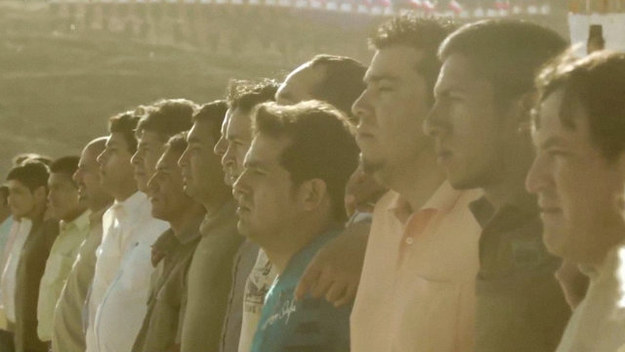
“Chile is once again rallying around the miners who were rescued after being trapped underground for 69 days. However, this time, the 32 men who survived the mining accident are not asking for food or prayers, but rather for support for the country’s soccer team as it heads into this year’s World Cup. And ’32 men’ is not a typo. Thirty-three workers were rescued; however, one of them was from Bolivia and is not featured in a new commercial from Banco de Chile. The bank is an official sponsor of the Chilean team and published its new commercial on YouTube on May 27.” Yahoo (Video)
2014 Fifa World Cup draw: Guide to Group B

Sergio Ramos
“Gary Lineker’s verdict. … Style & formation: Spain’s possession game, coupled with their determination to quickly win the ball when they don’t have it, has been wearing down the opposition for over seven years. Spain typically play 4-3-3, with full-backs Jordi Alba and Alvaro Arbeloa attacking like wingers and centre backs Sergio Ramos and Gerard Pique often joining in play beyond the halfway line. Strikers only tend to enter the box at the last minute for the element of surprise.” BBC – Spain, Netherlands, Chile, Australia
World Cup Watch: Mario Balotelli, Sergio Aguero, Louis van Gaal
“The World Cup is only 37 days away, with the opening match between host nation Brazil and Croatia taking place in Sao Paulo on 12 June. BBC Sport, with the help of European football expert Andy Brassell, is taking a weekly look at happenings from across the world of football and what impact they could have on the tournament in the summer.” BBC
The problem with the Copa America Centenario

“The oldest continental competition in the world, the Copa America, was first played in 1916. Four countries participated — one of them was Chile, who have still never won it. The others were Argentina, Brazil and Uruguay, who between them have gone on to accumulate nine World Cup wins. The seeds for such triumphs were planted in the early years of the Copa America — played almost annually until the Great Depression.” ESPN – Tim Vickery
Chile tactics will ask a lot of the Socceroos
“In the final of the 2004 Copa America in Peru, Argentina dominated an experimental Brazil side. With three minutes to go La Albiceleste went 2-1 up. Surely the title was won. But with the last kick of the game, Brazil scored the equaliser. Argentina blundered into the penalty shootout with the air of men who had been blinded by the light, and Brazil kept its nerve to lift the trophy.” The World Game – Tim Vickery (Video)
World Cup 2014: Man Utd’s Valencia key to Ecuador in Brazil

“With his ability to fill in at right-back as well as his more customary position higher up the flank, Luis Antonio Valencia is an extremely useful member of the Manchester United squad. For Ecuador, though, he is much more than that. A year ago national team coach Reinaldo Rueda referred to him as ‘the main reference point for Ecuadorian football, as a result of everything he has achieved’. A British readership might be unaware how special it is for Ecuador to have one of their own playing at one of the world’s major clubs, and in action in the closing stages of the Champions League. Less than 30 years ago Ecuador was a Latin American Luxembourg in footballing terms.” BBC – Tim Vickery
Chile transformation is a real coup
“There is much wisdom in the old piece of advice that it is a mistake to meet your idols, because you are bound to be disappointed. Great ex-footballers, for example, have sometimes become dangerously accustomed to being listened to, even on subjects on which they have no special authority. It does not always make them the most agreeable company. There is a price to pay for being idolised. A few hours, ago, though, I came away from a meeting with a personal idol who did not disappoint. I am on a quick visit to Santiago, where I dropped in on Joan Jara, English-born widow of the great Victor Jara.” The World Game – Tim Vickery (Video)
We Went There: A 72-Hour Whirlwind Tour of European Football
“Stuttgart’s Mercedes-Benz Arena used to be called the Gottlieb-Daimler Stadion, which used to be called Neckarstadion, which used to be called Century Stadium, which was first called the Adolf-Hitler-Kampfbahn when it was built in 1935. And it was in the shadows of this stadium that I was handed a VIP card — with ‘Einttritt frei!’ on it — for a strip club called Macabu Four Roses. I don’t know if it was because we didn’t speak German and therefore couldn’t say ‘no,’ but people kept trying to hand us stuff. Our hands were full of beers and bratwurst — we’re tourists, all right? — but that didn’t stop the women from Commerzbank from coming over, multiple times, and handing us schedules for the World Cup. And it didn’t stop the older woman in the German-flag smoking jacket from slipping us a card for the only-€84.95 Germany Jacket, which she casually suggested we buy as an ‘alternative jersey’.” Grantland
The juggling act faced by all coaches
“On a phone in show recently a caller asked if players who had not featured in qualification should be taken to the 2014 FIFA World Cup. He did not mean it in a sense that governing body should prevent them from playing; rather, he suggested, that it might be in the best interests of the coach to stick with the group that earned a place in the party. I cannot agree. The example that instantly came to mind was that of Italy in 1978. During the qualification process the sweeper was the veteran Giacinto Facchetti. Come the World Cup, however, he had been replaced – elegantly and successfully – by Gaetano Scirea. And a jack in the box striker called Paolo Rossi had also emerged as a domestic star, and went straight into the first team in Argentina ’78, with impressive results.” The World Game – Tim Vickery
2014 Fifa World Cup: Gary Lineker’s guide to the eight seeds

“England have been drawn in Group D for the 2014 World Cup, meaning they will face seeded team Uruguay as well as Italy and Costa Rica. Hosts Brazil are in Group A, reigning world and European champions Spain are in Group B and three-time champions Germany are in Group G. Match of the Day presenter Gary Lineker, speaking before the draw was made, takes a closer look at the eight seeded national teams…” BBC
Chile making mark as a Bielsa team after win over England
“Alexis Sanchez trod in the footsteps of Marcelo Salas with his two goals to beat England at Wembley on Friday night. Salas scored his Wembley goals – also a 2-0 win – in a warm-up game for France 98, a tournament at which he once more gave evidence of his quality and where Chile had their moments. They made it out of their group but they did not win a single game, going down to Brazil in the second round after three consecutive draws. The current Chile side under Jorge Sampaoli are capable of better things, and not just because the 2014 World Cup is on their home continent.” BBC
South American sides to show World Cup credentials
“Over the next few days South America’s World Cup sides will present their case for the defence. The continent’s sides made a strong showing in South Africa 2010; all five made it out of the group phase, four reached the quarter-finals and Uruguay (who had finished fifth in qualifying) made it into the semis. Naturally, good things are expected next year when the World Cup finally returns to South America. But on the evidence of the 2014 qualifiers, there could be a problem. A common theme of the campaign was teams tended to be better in attack than defence.” BBC
World Cup Qualifying: Standings and scenarios for Tuesday’s games

“World Cup dreams will be realized, dashed or deferred on Tuesday as qualifying continues around the globe. On the home front, the U.S. booked passage to Brazil last month and then clinched first place in CONCACAF’s Hexagonal with Friday’s 2-0 win over Jamaica. The only thing left to play for on Tuesday night in Panama is a seed next summer. Unfortunately for Jurgen Klinsmann and Co., chances are slim. The top seven sides in next month’s FIFA ranking (beside Brazil) will be anointed. According to ESPN statistican Paul Carr, the U.S. would have to defeat Panama while the Netherlands loses at Turkey, Switzerland loses to Slovenia, Poland ties or beats England, Ecuador ties or beats Chile and Uruguay misses out on qualifying altogether. Here’s a summary of what’s at stake elsewhere. Ties in group play are broken by goal differential in all games, goals scored in all games and then assorted head-to-head criteria.” SI